Category Archives: Faith and Family

Witness to History: Ruth Gruber

In 2019, my husband Larry and I were browsing the shelves of Book Passages, an independent bookstore in San Francisco’s Ferry Building. Larry held up a book he had found in the history section: Haven–The Dramatic Story of 1,000 World War II Refugees and How They Came to America.

“Do you remember the exhibit at the New York State Museum regarding the only Jewish refugees brought to the United States during World War II?” he asked me.

“Yes,” I said. My mind flashed back to walking through the Albany museum’s exhibit with its pictures, displays, and sign boards depicting a group of refugees who were housed in Fort Ontario (Oswego, NY). 

“This book is a first-hand account by the woman responsible for getting the refugees to the United States—Ruth Gruber,” he explained on his way to pay for the book. 

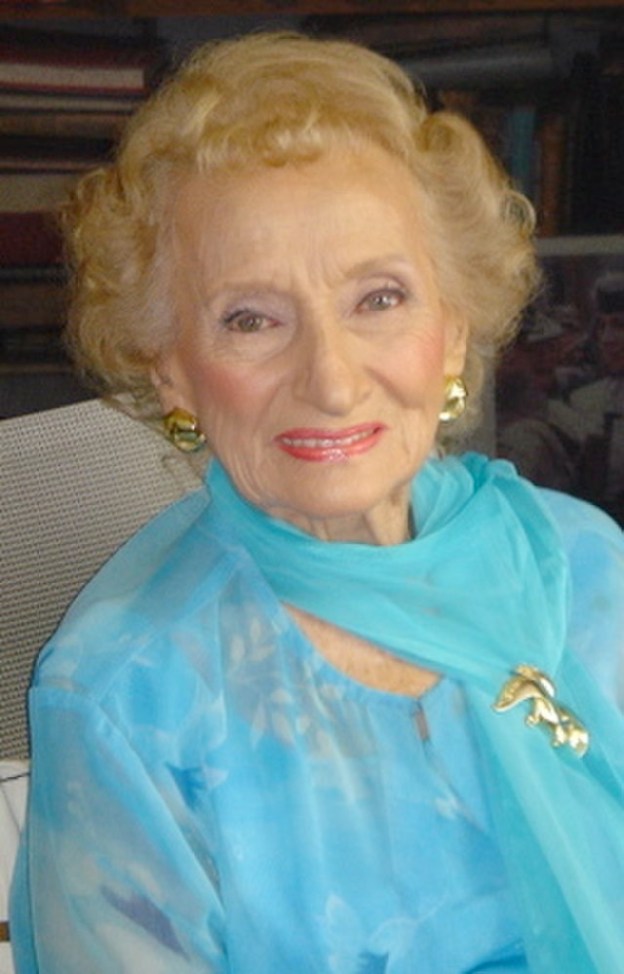
Six years and much reading later, Larry and I agree: Ruth Gruber, American journalist, photographer, writer, humanitarian, and United States government official, is one of the most interesting people who ever lived. 

Gruber was born in 1911 in Brooklyn, the fourth of five children of Russian-Jewish immigrants. She graduated from high school at 15 years old. After earning an undergraduate degree from New York University at 18, she won a fellowship at the University of Wisconsin, where she obtained a master’s degree in German and English literature. She subsequently received her doctorate from the University of Cologne in Germany at 21, making her at the time the youngest person with a doctorate.

After returning to the United States, Gruber became a correspondent for the New York Herald. The only reporter to be allowed to travel across the Soviet Arctic, she saw firsthand how people lived there and witnessed the Siberian Gulag. 

During World War II, she worked for the Department of the Interior where, as a special assistant to U.S. Secretary Harold L. Ickes, she became its field representative in Alaska. In June 1944, she was to undertake what she later considered “the most important assignment” of her life.

Reading the Washington Post at breakfast, Gruber, then 33, learned that President Franklin D. Roosevelt had signed an executive order allowing 1,000 refugees gathered in Italy, 90% Jewish, to be admitted to the United States. After years of this country’s refusal to allow Jews to escape the Nazi horrors of World War II, this was the only government authorized attempt to bring European Jews to America under the protection of the U.S.

Rejoicing that something was finally being done, Gruber rushed into Ickes’ office to express her concern for their well-being.

“Mr. Secretary, these refugees are going to be terrified — traumatized,” Gruber recalled in a 2010 interview in the Sunday Telegraph of London. “Someone needs to fly over and hold their hand.”

“You’re right,” Ickes responded. “I’m going to send you.” The fact that she was young, Jewish, and could speak both German and Yiddish made her an ideal person for the job. Oswego was chosen as a location for housing he during World War II primarily because of the availability of Fort Ontario, a decommissioned military base, which was converted into a temporary refugee shelter.

After flying to Italy, Gruber boarded the Army troop transport USNS Henry Gibbins and greeted the refugees. “I would like … to know who you are, what kind of people you are. What you’ve gone through to survive,” she recounted in her 2000 book Haven: The Dramatic Story of 1,000 World War II Refugees and How They Came to America “You are the living witnesses.”

Throughout the two-week Atlantic crossing to the United States, Gruber proved to be a calming, empathetic listener and a communicator and advocate for the refugees who came from 18 countries. She intervened in disputes, taught English, cared for the seasick, and comforted the refugees, some who had miraculously escaped the Nazis and others who had spent time in concentration camps.

During the voyage, “Mother Ruth,” as she was often affectionately called, became a witness herself, listening to and writing down many of the refugees’ stories. “Get all the terror,” said Dr. Henry Macliach, a doctor from Yugoslavia. “We lived it. We will live with it for the rest of our lives. But you are the first one we can tell it to. Yes, write it down so the world will know.”

On Aug. 3, 1944, the ship arrived safely in New York City, and Gruber accompanied the refugees to Oswego. Initially, the site of the cold, desolate fort surrounded by barbed wire brought back memories and fears of what many had faced in Europe. Through Gruber’s guidance and the support of many others, including the residents of Oswego, government officials, and even Eleanor Roosevelt, the place became a “haven” from the ravages of war. 

“Thus I became a witness and participant,” Gruber wrote. “I experienced their joys and pain, rejoicing in their marriages and love affairs, sharing pride in their children, mourning those who died by their own hand or by acts of God.”

FDR’s initial executive order stated that the refugees were “guests” of the United States under the condition that they must return to their origin countries after the war. In late 1945, the federal government changed its mind and allowed all who wished to stay to become U.S. citizens. The final chapter of Haven lists the successes of the new U.S. citizens, who would establish careers in many fields, including medicine, technology, education, law, business, and the arts.

In recent years, New York legislators in both the U.S. House and Senate have been working to designate Fort Ontario and its associated museum, Safe Haven, as a National Historical Park. In 2018, Senator Kirsten Gillibrand (D-NY) passed a bill directing the Secretary of the Interior to conduct a special resource study, the first step in the process to designate a site as a unit of the National Park System. In 2024, the SRS was finalized and concluded that the two-acre portion of Fort Ontario representing the fort’s use as a World-War II European refugee shelter meets all necessary criteria. The bill passed the Senate but failed to become law. In February 2025, Gillibrand, Senator Charles Schumer (D-NY), and Representative Claudia Tenney (R-NY) reintroduced the bipartisan bill.

“The Holocaust Refugee Shelter at Fort Ontario was a place of safety and hope during a dark moment in history, and it deserves recognition in the National Park System,” said Senator Gillibrand. “I am proud to once again be introducing this legislation to achieve this goal and am determined to work across the aisle to get it done.”

Gruber was profoundly impacted by her participation in the refugees’ “journey out of despair and death, to hope and life and light.” Although she was born a Jew, she became a Jew. “I knew my life would forever be inextricably interlocked with Jews,” she wrote in Haven.

The rest of her life was a testament to that commitment. After World War II, she witnessed the scene at the Port of Haifa where Jewish refugees on board the ship Exodus were not allowed to enter Palestine. She then followed them to France and Germany. While on a ship off the coast of France, the refugees conducted a hunger strike. The only reporter allowed on the ship to report firsthand on the unfolding story was Ruth Gruber. Her book, Exodus 1947, became the basis for the 1960 film Exodus. She later covered Israel’s war for independence. She became Ben-Gurion’s friend and conducted a first in-person interview when he became Israel’s first president.

In 1951, Gruber married, had two children, and continued her journalistic endeavors. In 1985, at 74 years old, she visited Jewish villages in Ethiopia and chronicled the rescue of the Ethiopian Jews to Israel. Throughout her life, she chronicled her adventures through her photography, articles, and 18 books. Gruber died at 105 on November 17, 2016.

“I had two tools to fight injustice — words and images, my typewriter and my camera,” she was quoted in her New York Times obituary. “I just felt that I had to fight evil, and I’ve felt like that since I was 20 years old. And I’ve never been an observer. I have to live a story to write it.”

A typewriter. A camera. Empathy. With my iPhone camera nearby, I click away on my computer keyboard, hoping each of my stories displays the same empathy Ruth Gruber showed throughout her life. She is not only the most interesting person I’ve ever encountered. Ruth is my hero and my role model. I’m so grateful to have learned her story. 

Originally published May 11, 2025.

Making a difference in the new year

This article was originally written for Rosh Hashanah 5785 (September 2024). It may be a little late for the High Holy Days, but the message is also valuable as we begin the secular year of of 2025.

The High Holy Days is a time for us to turn inward, to reflect on our lives, not only where we have been but also where we hope to go in the coming year. So much of the world needs our help. What can one person do? How can one person make a difference? 

In the Pirkei Avot, Rabbi Tarfon writes,“It is not incumbent upon you to complete the work but neither are you at liberty to desist from it.” That quote has been in my email signature for several years and serves as a reminder to me and those that read it that we can all can make a difference. No, we cannot save the world. But our inability to do EVERYTHING does not give us a pass on doing nothing. 

This truth is found in the often-told starfish parable. An old man is walking along the beach in which hundreds of starfish have been washed along the shore during high tide. As he walked, he came across a little girl who is throwing the starfish back into the ocean. “You realize that you will not be able to make much of a difference,” the old man tells the little girl. She picked up another starfish and threw it as far into the water as she could. “I made a difference to that one.” 

It reminds me of “starfish” moment. On a recent trip to the beach, Larry and I were walking along the edge of the water. As Larry was enjoying the waves and the birds, I was picking up garbage and sticking it in a plastic bag I brought with me for that purpose. A broken styrofoam cup. A short length of cord. A lone flipflop. And a dozen or so plastic caps from water bottles. 

“You can’t pick up every bit of litter on the beach,” Larry said.

“Yes. But I can do something!”

 Yes, Larry was right. I am not going to pick up every piece of litter on a beach. But I can at least fill up a plastic bag with some of it. 

Giving away my freshly baked challahs also gives me a chance to do something . Early into the pandemic, I started baking three or four challahs a week. At least one of the challahs went to someone in our community who needed cheering. The first one went to a friend whose wife was in a memory unit at the hospital. Week after week, we delivered challahs to people who had lost their spouse, who faced illness; who got bad news from their families. My small challahs were small tokens of love and caring. My challah baking has slowed down in recent months, and I usually make extras to tuck in the freezer to pull out as needed. It just filled my need to do SOMETHING!

For the past ten years, my writing has been a way for me to feel as if I am making a difference. Initially my writing focused on my family stories. In the past eight years, I have become captivated by telling other people’s stories, the lives of Holocaust survivors. So much has been written already: fictional accounts, memoirs, graphic novels, poetry, plays. Many of have become classics: Elie Wiesel’s Night;Prima Levi’s Man’s Search for Meaning; William Styron’s Sophie’s Choice, and Anne Frank’s Diary of a Young Girl. Then why do I continue to interview Holocaust survivors and their families?

Writing these stories allows me to do my part to make the world never forget. Each story is a statement against Holocaust denial. And having each story published has brought feelings of pride, comfort, and maybe some peace to the subjects and their family. Following Rabbi Tarfon’s advice, my inability to write everything doesn’t mean I cannot continue to do something. 

And what happens when one person joins others to make a difference? Fortunately, I am surrounded by people in my 55+ community who are also doing their part to help people in the greater Poinciana area. Solivita has over 200 clubs, and many of them support the local community. The Do Unto Others Initiative (DUO) has raised over $260,000 in 11 years to support the work of the St. Rose of Lima Food Pantry. Another club, Solivita Friends Helping Those In NEED, provides similar support for St. Vincent de Paul St. Ann’s Food Pantry in Haines City. Solivita Friends of Elementary Education Schools (SoFEEs) provides nourishment, school supplies and seasonally appropriate clothing to local elementary schools. In the past nineteen years, Stonegate Women’s Golf Association (SWGA) has been able to provide over $300k to local community charities. The Solivita Performing Arts Council (SPAC, Inc.) has raised over $139,000 since its inception, providing grants to help local schools purchase and maintain instruments, fund band and choir concerts, produce school theatrical productions, fund thespian workshops and support art projects. SOLABILITY, a club consisting of individuals of varying abilities, provides activities accessible to all. Members of the Butterfly Club provide financial support for our beautiful butterfly garden; volunteers keep it weeded and in control. Our Book Circle, which has over 30 book clubs under its umbrella, donates books and financial help to Polk County Schools. The Shalom Club makes an annual contribution to the Perlman Food Pantry or Jewish organizations supporting local families. The organizations above represent only a small sample of ways individuals have joined together to help those in need. 

So, yes, one person can make a difference. Wishes for a sweet, healthy 5785. May it be a year in which each of us make a difference. 

Solivita’s butterfly garden

Published in Rosh Hashanah 2024 issues in Capital District New York’s The Jewish World and Orlando’s Heritage Florida Jewish News.

Solivita is a 55+ community for active adults in Poinciana, Florida.

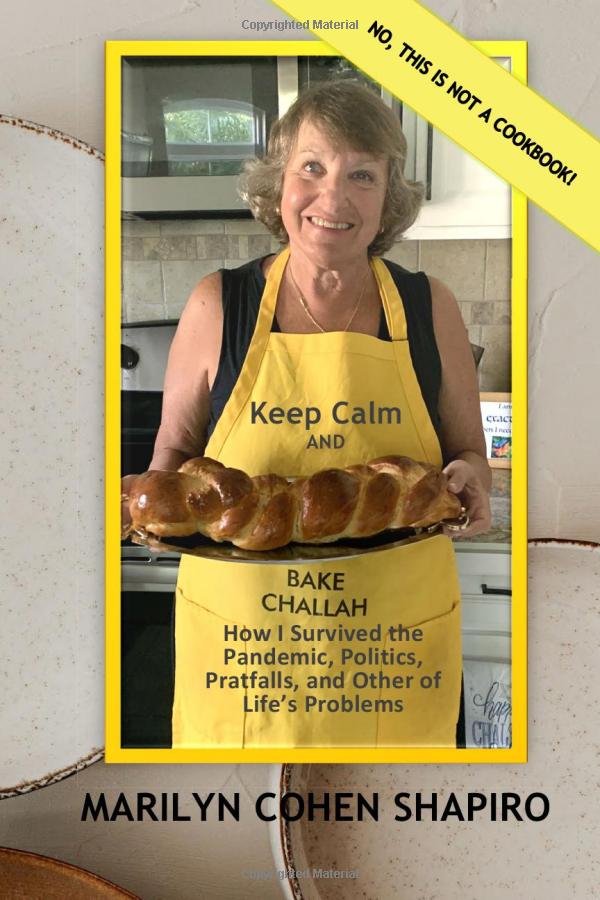
Keep Calm and Bake Challah is on Amazon!!

I am proud to announce that my fourth book, Keep Calm and Bake Challah: How I Survived the Pandemic, Politics, Pratfalls and Other of Life’s Problems,is out and available on Amazon in both Kindle and paperback formats.Hope you enjoy reading the the fifty-three articles I wrote during the pandemic as much as I enjoyed writing them! For those who have been following my blog for a while, you will now have many of those posts in one place for your reading pleasure.

Below are a sampling of the story topics:

Guess Who Got Covid?

Note: As I post this article, Larry and I had just finished up our Special Olympics Florida state meet with our track and field team. We had a wonderful, exhausting, and incredibly rewarding two days with all of our “stars.” In this article, I reflect back on last year’s 2022 SOFL State Games and its aftermath.

Guess who contracted COVID?

After months and months of being careful, I had pressed my luck. As Special Olympics Track and Field coaches, Larry and I attended the Florida State Special Olympics game with eleven athletes from Osceola County on May 20 and 21, 2022. All of our events, which took place in the ESPN Wide World of Sports Complex in Orlando, were supposed to be outdoors. Plans changed quickly when torrential rains and strong winds swept in moments after we had parked our car. Our team, along with several other teams from a variety of sports, spent the first two hours sheltering in the Advent Health Building lobby. The “close encounters of the super-spreading kind” happened again that night when rain delayed and then finally resulted in the cancellation of opening ceremonies. Although Larry opted not to wear a mask, I made sure I had my KN95 covering my face whenever I was inside. Outside, however, I eschewed protection, hoping for the best. 

Fortunately, the weather improved the second day of competition. By Saturday afternoon, however, I was exhausted. I tried to hydrate, but I was totally wiped. “Maybe I’m getting too old for this,” I thought to myself. Or maybe I was just feeling the effects of two sleep-deprived nights, two mornings of 6 a.m. alarms, and my putting on at least eight miles corralling our athletes to various venues in 90 degree heat and 90% humidity.

By the time our last athlete had claimed his second place medal in the 400 meter walk, even Larry, who had shown no signs of slowing down, was ready to get out of the heat and go home. We stopped for a late lunch, drove home and collapsed on our couch. After a slow walk on Sunday morning, we went to Publix for our second booster shot. Then we spent the rest of Sunday with a repeat performance on the couch.

On Monday, I attempted my usual walk but felt as if I were plowing through mud. By Tuesday afternoon, exhaustion was accompanied by congestion and a runny nose. “Just a head cold,” I thought. It took me until Wednesday to administer the home test.

You know how it usually takes 15 minutes to see the results? Forget that. Within thirty-seconds of putting the disgusting drops into the assigned spot on the test strip, the “positive” line showed up.

“I have COVID,” I texted my husband, who was at a ROMEO [Retired Old Men Eating Out] luncheon. Unfortunately, he didn’t read the text and only learned the news on a phone call when he was driving home. His passenger quickly put on a mask. Sorry Rich! That is the proverbial “Shutting the barn door after the horse has bolted.” Fortunately Larry and he didn’t come down with it.

I never have been a good “patient” in that I have no patience for being sick. When Larry came home from his outing, he found me on the computer, a box of Kleenex and a cup of tea by my side, interviewing someone for my Holocaust Torah story while typing away. “Get off the damn computer, put on a mask, and go lie down,” he told me.

Exhausted, congested, and realizing that I couldn’t leave the house anyway, I gave up. I spent the next three days sacked out on the couch catching up on Outlander. Note: There is no better way to veg out than spending twenty hours with Jamie and Claire as they romped their way through pre-Revolutionary War America.

Later than evening, Larry made dinner for both of us, something he did every night for the next eight nights. And to top it off, he made me an ice cream sundae every night to help “soothe your scratchy throat.” At least that is the way we justified 350 calories of pure bliss. Larry, meanwhile, was earning enough “Best Husband in the World” points for a lifetime.

By Sunday, I was feeling well enough to resume my work on the Holocaust Torah story. I even had enough energy to take a short (masked) walk and to water my drooping houseplants. As was the case for so many others who contracted “the plague,” however, it took me another two weeks to get over the fatigue. 

Do I have any regrets about going to the Special Olympics State meet? Not one bit. Seeing our athletes competing in their events, coming down off the awards platform, finding their way to their parents, and beaming with pride, brings so much joy it was worth spending the two days in a sure fired “petri dish.”And how could I not hug my athletes when they finished a great race or threw the softball farther than they ever had or showed me their medal?

So where do we go from here? Yes, I may get COVID again, but having it may have helped me build up some immunity. Larry was spared this round but will he contract it in the future? Only time will tell.

On March 25, 2020, Jewish World published my first “pandemic” story. “As I write this, we are in the second week of our own national crisis,” I stated. “Larry and I worry about our friends and family—especially our own children.” Over the ensuing months, I wrote about how COVID and its forced locked-down impacted us: our first sad Passover seder for two; our hours and hours on Zoom; our trimmed down wardrobe (on my not slimming down body); our hopes for a more sensible approach to COVID with a new president; our tentative steps back into the world with masks and bottles of hand sanitizer and vaccines and boosters; our joy in finally reuniting with our children and grandchildren, and, of course, my baking dozens of loaves of challahs I baked throughout the long months.

It is now time to put all these stories, published every two weeks in Jewish World, into a book. Keep Calm and Bake Challah: Surviving the Pandemic, Politics, Pratfalls, and Other of Life’s Problems will be finished and available on Amazon in June 2023.

And it is time to move on. Yes, we will test before visiting our children. Yes, we will mask when necessary, especially in unavoidable crowded venues including planes and other public transportation. Meanwhile, I will continue to keep calm, bake challah. and learn to live in the “new normal” in the Age of Covid.

A version of this article originally appeared in the Jewish World News, a bi-weekly subscription-based newspaper in upstate New York.

Today I am a woman: My adult bat mitzvah

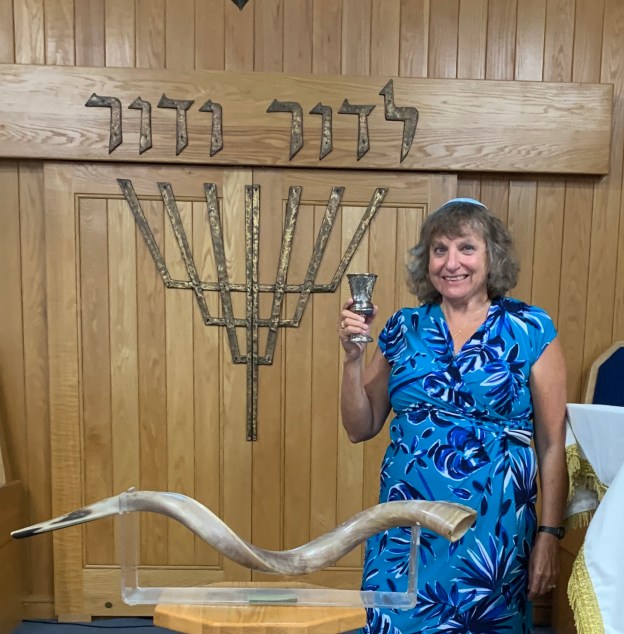
I am publishing this on the thirtieth anniversary of my adult bat mitzvah, which was held at Congregation Beth Shalom, Clifton Park, NY.

My education at Congregation Beth Shalom in Plattsburg, New York, was strong in Jewish history and traditions, but it was very weak in Hebrew. If I wanted to learn the language needed to follow the service,  I either had to attend twice during the week, difficult with its one hour round trip, or I had to be preparing for a bat mitzvah, not something females did in the 1960’s in Upstate New York.

Our father had grown up in New York City in the Depression. His bar mitzvah ceremony was celebrated with several other boys in his Eastern Parkway synagogue, including the president of the shul’s son. The honor conferred on this golden boy was his reading most of the Torah portion and the haftorah and giving a  speech while the remaining b’na mitzvoth were left with very short prayers and shorter participation. The party consisted of some sponge cake and wine back at my father’s house followed by playing sandlot baseball.

As a result of my father’s experience, his son was to have everything denied the father. Jay’s bar mitzvah was a huge celebration. Over 120 people were invited to the service, including relatives we had never seen before and never saw again. Immediately following the service, my parents hosted a lovely reception at the Cumberland Hotel in Plattsburg. We all got new clothes for the party; I remember how special I felt in the “balloon” dress that was popular in 1961. 

As was the tradition in our reform synagogue, one’s Jewish education officially ended at sixteen years old with a Sunday morning confirmation service . My class consisted of three girls: Susan Singer, Andrea Siegel, and me, none of us who had had bat mitzvahs. We recited prayers and gave speeches. Mine was on anti-Semitism.  How in the world my teacher ever encouraged that topic and how I ever summarized its history in less than ten minutes I’ll never know, but I felt proud in my white robe and mortar board cap. A reception followed. What I remember most was how one of my teachers gave Susan and Andrea cards with cash gifts and completely ignored my presence. Not the sweetest memories to carry from my simchas.

Despite the snub,I loved learning about Jewish history and traditions. I attended classes with the grade behind me and even helped out in the primary grade classrooms. Once I left for college at Albany State, I attended services for Rosh Hosanna and Yom Kippur at Beth Emeth, but I was not involved in Hillel nor did I take any classes in Judaic Studies that were beginning to be offered.

It was not until my children were born that I began to be interested in studying Judaic topics again. Over the years, I took some basic Hebrew and playbook Hebrew classes so I could better follow the service. In the years I stayed home with my children, I seriously considered going back to school for a second master’s in Jewish Women’s Studies. When time constraints ruled out classes, I began a self-tutorial, reading books by Anzia Yezierska, Tillie Olsen,Cynthia Ozick, Grace Paley, and other noted Jewish female writers. This all went on the back burner when I returned to a full-time teaching position in 1986. 

In 1993, however, Flo Miller, one of  Congregation Beth Shalom’s teachers, suggested that I take a Haftorah trope class that summer with two other interested women. The four of us met each week around Flo’s kitchen table. By the end of the summer, each of us had chosen our own Haftorah for our adult bat mitzvah. I chose Mishpatim, the Torah portion whose  date for reading that year fell on the week of  my father’s ninetieth birthday to honor him and, coincidentally in the year of my forty-third birthday to reaffirm my link to Judaism on what would have been the thirtieth anniversary year of my own bat mitzvah. Over the next several months, my lunch hours at work consisted of a quick bite and at least two practice sessions with the Haftorah. Once a week, Flo would call me on the phone, and I would again read the Haftorah to show her how well I had progressed. By winter, Flo, Rabbi Harry Levin and I decided that I would also read two Torah portions at the service.

My bat mitzvah, which was held on February 4, 1993,  was not a huge affair. My parents and Larry’s parents could not come from Florida, and my siblings were too spread out across the country. Many members of the the synagogue attended, however, along with Larry’s sisters and brother-in-laws and a few close friends, I A Kiddish followed, and then my family and friends went to a Chinese restaurant for a celebratory meal.Meanwhile, I taped a full rendition of the Haftorah and Torah readings and sent it to my father for his birthday.

I would love to say that the experience resulted in many more Torah and Haftorah readings at Congregation Beth Shalom. Unfortunately, learning Hebrew did not come easy to me. It never flowed off my tongue, and even though I enjoyed the musicality of the tropes, I continued to stumble over the Hebrew letters and vowels. My next experience reciting Haftorah for a service proved to be even more difficult for me than the first, and I have not tried again. I continue to enjoy attending services and have high respect for the congregants who volunteer to read Haftorah and Torah portions. And through Jewish book clubs and my own independent reading, I will continue to study and appreciate my chosen faith.

A version of this article originally appeared in the Jewish World News, a bi-weekly subscription-based newspaper in upstate New York, in the August 20, 2015, issue.

Happy Japchae Day!

Thanksgiving is hands down my favorite holiday. I love celebrating with a large group of family and friends. I love reflecting on all for which I am thankful. And I love foods that we traditionally load onto our holiday table: the turkey (especially tasty when eaten while it is being carved), Ocean Spray whole cranberry sauce, my mother’s stuffing recipe, Marilyn’s World Famous Chocolate Chip Cookies, Anita’s rugelach, Adam’s vodka infused apple pie, and Hannah’s japchae.

Wait! Japchae? What is a Korean recipe that features translucent sweet potato noodles, thinly sliced beef, and vegetables doing on our Thanksgiving table?

For many years, Larry and I spent Thanksgiving with our cousins Freya and Randy. We literally had to travel over the river and through the woods to their Washington County home—which I referred to lovingly in Yiddish as in ekvelt— to share the day with at times over 30 family members and friends. Their daughter-in-law Hannah, a first-generation Korean-American, brought japchae every year, and I considered that to be as traditional as apple pie. In 2014, the holiday was especially sweet as our daughter Julie and her husband Sam had told us that they were expecting a baby in mid July. Larry and I were so grateful to harbor the secret throughout that memorable weekend. 

True, a few Thanksgivings were not exactly times of gratitude. Larry’s 78-year-old grandmother Bubbie Rose passed away on Thanksgiving morning in 1974, three and a half months after she beamed throughout our September wedding. My father passed away a week before the holiday in 2008, much to the annoyance of the congregant who was responsible for arranging for the food at the traditional Jewish gathering after the funeral. “I hope you realize this is a lousy time to ask people to help set up a shiva minyan,” she informed me. Fortunately, members of our Upstate New York shul gladly showed up. And despite our grief in both occasions, we were all grateful for their long lives and all the blessed memories we share.

In 1984 the day before our family’s planned departure to visit my Pennsylvania siblings for Thanksgiving, a section of our garage door hit Larry on the head when the spring snapped. Fortunately, Larry avoided what could have been a catastrophic injury by mere millimeters. Upon the advice of our doctor, however, we cancelled our traveling plans. A quick supermarket run to secure a turkey and all the fixings and a Blockbuster run (remember those?) for a stack of family friendly movies resulted in a quiet cozy long weekend. We were grateful for that unexpected intimate family time. 

The most sobering Thanksgiving came in 2016. As we were packing for our flight the next day to Colorado for a gathering with our son-in-law Sam’s family in Fort Collins, our daughter Julie called to tell us that our 15-month-old granddaughter was in the hospital with pneumonia in a hospital a mile from their Rocky Mountain home. By the time our plane had landed, she had been rushed to Denver’s Children’s Hospital. 

The next few days are still etched in my memory: Our wan granddaughter, connected to oxygen and IV’s, rushing to hug her Zayde. Julie and Sam holding their daughter as she watched endless repeats of Frozen on their iPad. Her wails every time a nurse entered the room. Our 120 mile round trips to the hospital while listening to the depressing news of the recent presidential elections. Adam rolling out a vodka-infused crust for the apple pie. Sharing a lovely Thanksgiving dinner with Sam’s family around a table missing three important people.

As Larry and Adam headed to the airport, I remained behind to provide needed help as Mountain Girl continued her recovery. Despite the circumstances, I have to say that week caring for my granddaughter, still connected to oxygen by a three foot hose because of the 9100 foot altitude, was precious. We sang and danced to “Wheels on the Bus” and “Rubber Duckie” and “The Alphabet Song.” We stacked toys and put together puzzles. She learned how to walk up and down the stair. I fed her so many blueberries, her favorite food, that she had numerous “blueberry blowouts,” for which Gammy was responsible. It was not the Thanksgiving we had planned. But we were thankful for modern medicine that saved her life and that provided the needed interventions, including a twice a day nebulizer, that resulted the healthy, thriving second grader she is today.

By the following year, Larry and I, who had moved to Florida that June, headed up north. Thanks to dear friends who let us “house sit” while they visited relatives for a week, we again shared a wonderful Thanksgiving with Larry’s huge extended family. Freya and Randy had passed the Thanksgiving reins to our niece Laura and her husband Paul, who had recently purchased a home in Guilderland, New York. The buffet table was laden with almost all the Shapiro traditional food except one. Hannah bypassed on making japchae. Oh well! We still had plenty to eat.

Maybe it was because airports were especially crowded on this holiday weekend. Maybe because we weren’t used to the cold. Or maybe it was because I no longer could depend on Hannah for japchae. In 2016, Larry and I decided to join a large group of friends from around the country and the world at a nearby resort. By the second year of shredded salty turkey over gluey mashed potatoes and subpar pies, our friend Peter declared that Larry and I should host a Thanksgiving potluck at our home. 

We happily agreed. Plans were going smoothly until we realized a few days before our scheduled Thursday feast that Peter and his wife Margaret were flying home on Thanksgiving Day. “I thought you Americans had all your holidays on Monday,” he said. No, Peter, I explained. Thanksgiving is ALWAYS on Thursday!

Fortunately, everyone was able to adjust their schedule, and we celebrated Thanksgiving on Ere of Yontiff—Wednesday. I prepared a 22-pound turkey, stuffing, mashed potatoes, and my World Famous Chocolate Chip Cookies. Everyone else filled in with their own favorites. I was hoping the Hunters would bring scones and clotted cream. Instead, their contribution of two bottles of Moet & Chandon champagne worked out, as did the orchid they brought that continues to bloom. Not surprisingly, no one brought japchae.

We got to celebrate our International Thanksgiving one more time before COVID shut down the world, necessitating that Larry and I share our 2020 meal with extended family on Zoom. By 2021, however, we were up and running with the understanding that everyone bring their favorite dishes and COVID-vaccine infused arm. 

What a joy it is to know that 2022 is ushering in what I hope to be a new string of large gatherings of friends and family!

You may be reading this the day after Thanksgiving when Larry and I will be eating leftover turkey, stuffing, and apple pie. Meanwhile, we will have had what we hope will have been a wonderful day with many of our “regulars” as well as several new friends. We hope the day will be joyful and uneventful. If not, I will find reasons to be grateful—no matter what challenges pop up and even if we don’t have japchae!

Remembering wonderful past Thanksgivings, including our 1979 gathering with our family in Pennsylvania!

Holocaust Stories Needed!

“You really need to talk to Harry.”

My friend Marilyn Glaser gave me this advice before one of our Friday night Shabbat services in our Florida synagogue. I was aware that Harry Lowenstein was a Holocaust survivor. But Marilyn, the shul president, knew I was a writer, and she knew his story needed to be preserved.

By this time, I had been writing for the (Capital Region, NY) Jewish World for over four years. The majority of my stories had been about my family: growing up in a small North Country town in New York; meeting my husband in 1973 to learning to live with him after our retirement in 2010; raising two children; moving to “The Sunshine State” in 2015. Up until that point, I had not tackled biographies. Fortunately, Harry was a willing story teller.

 As I sat at his kitchen table, I was riveted by his description of four years of hell, first in a ghetto and then in Nazi concentration camps. After liberation, Harry returned home to find that every one of his relatives had been murdered by the Nazis. He eventually made it to the United States, married Carol Sainker, raised three children, and owned and operated a clothing store in Kissimmee. Meanwhile, he was determined to carry on his family’s legacy. “I saw a synagogue burn,” said Harry, “and I was determined to build another one.” With the contributions from friends and fellow Holocaust survivors, the Lowensteins raised enough money to build our synagogue.

After Harry’s story was published, my writing became more diversified. I was still writing my sometimes funny, sometimes poignant family stories, but I also took pleasure from interviewing what I referred to as “ordinary people with extraordinary lives.” A woman who has raised over $150,000 for cancer research after losing her 32 year old daughter to leukemia. A man whose introduction to a doomed ship as a boy resulted in his becoming a “Titanic fanatic;” a group of former Catskill workers celebrating a reunion.

But the stories that moved me the most were about who lived through—or died in—World War II. Jewish soldiers. Concentration survivors who were haunted with their memories until their passing. Righteous gentiles who had rescued others from the horrors. 

I have never been shy about my retirement avocation and never fail to tell friends and strangers I am a writer. This summer, I shared this information with Eva Nozik, who was visiting Summit County, Colorado. 

“My aunt, Golda Goldin Gelfer, who recently passed away, was a Holocaust survivor,”Eva said.”You need to talk to her children.” 

She set up a Zoom call with Anna Livits and Sofia Zukerman, Golda’s two daughters, and other members of the Goldin family. The Nazis, they told me, invaded Glusk, Belarus, on June 22, 1942, Golda’s 14th birthday. Six months later, Germans and local supporters rounded up and murdered over 1000 Jews, including Golda’s mother Elke and her two sisters, Chaisoshe (19) and Malka (8). Golda and her father Meir escaped certain death by hiding in an attic and eventually finding their way into the forest. The two soon joined Soviet partisans in their efforts to sabotage the Nazi offensive until Belarussian liberation on July 4, 1944. Several revisions (and many nightmares about the Holocaust) later, it was finished and ready The Jewish World’s next issue.

Even before it was published,, Anna expressed her gratitude. “I don’t have enough words to thank you for the work you have done,”she wrote me in a December 13 email. “I had a dream today that my mom was smiling. It’s like  she was in peace that we remember her family, Elke, Chaisoshe, and Malka.”

The descendants of Meir and Elke Goldin have more stories to tell. They are eager to recount Golda’s time in the woods, her life in the Soviet Union after the war, her move with her children to the United States. They also want me to connect with the son of a cousin who survived “murder by bullets” by falling into the pit.And, by the way, they have a friend whose parents survived the Warsaw ghetto. 

Meanwhile, I have other stories on my “To Be Written” file. My cousin Eric (Z’L) Silverman came over on a stolen visa just before the war. Trudi Larkin Wolfe’s parents, both concentration camp survivors, recently passed away, but their oral history is preserved on video as part of Stephen Spielberg’s Shoah project, and she and her sister will fill in any gaps. Ruth Gruber, a brilliant Jewish woman who was appointed by the FDR administration to oversee the Oswego Project, a refuge for Jews that is the subject of a New York State Museum exhibit. And I made a promise to a friend that I would write an article about his father, who came to the United States in the early 1900s via, of all places, China.

After hearing Golda’s story at the most recent meeting of SOL Writers, my group of fellow writers said that I am “a woman on a mission.” “You make the unbearable bearable,” one said. “Keep writing.”

Despite my passion, I initially questioned about pursuing more stories about this terrible time in humankind’s history.The Holocaust has already been the subject of innumerable novels, memoirs, plays, movies, and, and even children’s books.

I found the answer in a teaching from Pirkei Avot, a compilation of the ethical teachings and maxims from Rabbinic Jewish tradition. It is not incumbent upon you to complete the work,” wrote Rabbi Tarfon (46 CE-117 CE), “but neither are you at liberty to desist from it.” (Pirkei Avot 2:21) When the Anti-Defamation League reports that Facebook, Instagram, and other social media platforms have “cracks in enforcement” that allow Holocaust deniers to disseminate hate speech; when a school administrator in Texas can tell a group of educators during a training session to “have an opposing view” when teaching the Holocaust; when 77 years after Soviets liberated Auschwitz, anti-semitism is on the rise; I must continue to tell the stories. My writing will certainly not “complete” the work of masters such as Elie Wiesel, Victor Frankel, and Steven Spielberg. But I cannot use that as an excuse.Whether my articles and, in the future, my book is widely read or languishes in an Amazon warehouse, at least I did not “desist.”

But I need help. If any of you have a Holocaust story you would like to be preserved in writing, please contact me via email at shapcomp18@gmail. com. Those who were lost as well as those who survive deserve to have their lives remembered and honored. Never again.

A version of this article originally appeared in the Jewish World News, a bi-weekly subscription-based newspaper in upstate New York.

I am exactly where I need to be!

Happy Summer!  Have you kept your New Year’s resolution?

Odds are, you haven’t. Each year, Strava, the social network for athletes, predicts the exact day when most people are likely to ditch their annual commitment to themselves. Whether it be the goal to lose weight, exercise more, or stop smoking, the majority throw in the towel (or throw out the scale) on the second Friday in January. A full 80% will have given up on it by mid-February.

If you have made it to the last days of spring, Mazel tov!

Up until this year, my list of resolutions were endless, so reflective of the person I am. On top of my list (for at least six decades) was to lose weight. Along with that annual goal, I have promised myself in the past to exercise more; read more books, watch more movies, play more piano, see more of family and friends, and write more articles, for starters.

But as I head into a third year where pandemic still hangs over our heads like the sword of Damocles, I have made peace with myself, My one and only resolution is based on an affirmation I stumbled across this past winter. Drum roll please!

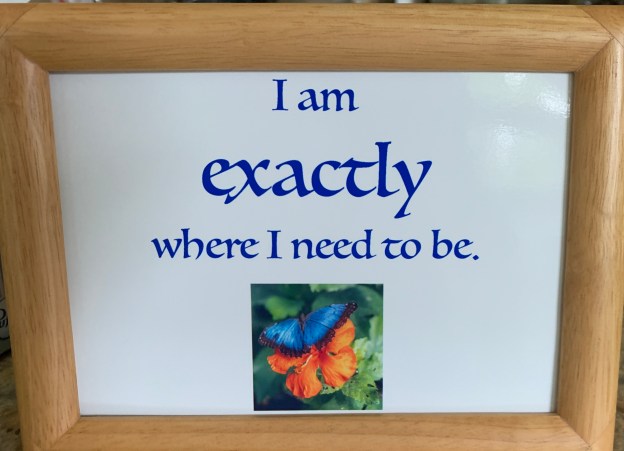
“I am exactly where I need to be.”

These eight words summarize an entire philosophy based on the idea that I can be happy where I am at this very moment. It has grounded me when I find my mind racing with what I need to do next: the challah that needs to be baked, the article I have to get to Laurie Clevenson by the Monday morning deadline; the book I have to finish before it disappears off my Kindle. 

Full disclosure: Knowing myself, I will still working on those same items I have listed in the past. (I am already looking forward to writing several biographies of Holocaust survivors.) But I understand that I can reach those milestones without the help and pressure of resolutions. I can be happy in the “now,” not the future. I have given myself permission to focus on the journey, not some numerical destination.

Since I made this resolution on November 17, I already have over two months of practice behind me. I made a copy of it which I keep on my kitchen window sill When I find myself “falling off the wagon,” I quietly recite it to myself and get grounded again. It has the making of a habit! And speaking of habits…

I cannot remember where I originally saw this quote. Facebook? A friend’s blog? A recent book? It took me a few weeks—and the help from my Catholic friend—to find out my first person quote actually came from a prayer from St. Teresa of Avila, a revered leader of the Discalced Carmelite Sisters in 16th century Spain. The opening lines of her original prayer read, “May today there be peace within you. Trust God that you are exactly where you are meant to be.”

It took a little more digging to find a Jewish connection (Yes! There IS a Jewish connection!) St. Teresa’s paternal grandfather, a wealthy tax collector, was a Jew who was forced to covert to Christianity. He was condemned by the Spanish Inquisition for allegedly returning to the Jewish faith and was punished by being forced to parade around Toledo for one day a week with other insincere converts. He was later able to assume a Catholic identity. 

St. Teresa, aware of her ancestry, did not acknowledge it publicly because of prejudice in Spain at the time against Jews and Jewish converts. It appeared, however, that her heritage impacted her career in the church. She was recognized for bring a mystical Jewish strain reminiscent of Kabbalah and for giving comfort to many converts from Judaism who struggled to maintain a connection to Jewish belief and practice. As a leader and “doctor,” she directed her convents not to comply with the “statutes of purity of blood” which excluded Jewish converts to Catholicism from most religious orders, from the military, higher education, civil and church offices. 

In the 2012 off-Broadway play, Teresa’s Ecstasy, starring the Columbian playwright Begonya Plaza as well as Linda Larkin and Shawn Elliott, the nun’s Jewish heritage was seen as a driving force in her life and work. Plaza’s character, who in the midst of a divorce, and Larkin’s character, her Jewish lesbian lover, realize how much Teresa has become their role model in her commitment to faith, compassion, and human dignity.Yes, St. Teresa is a nun with a Yiddishkeit neshome, a Jewish soul. 

So now an adaption of a prayer written by a Catholic saint is now part of this Jew’s daily routine. It is the one of last thing I tell myself each night. I follow that with Jewish prayers, positive affirmations, and reflections on things for which I a grateful. I fall back to sleep quickly, and I sleep in peace, knowing I am exactly where I need to be.

A version of this article originally appeared in the Jewish World News, a bi-weekly subscription-based newspaper in upstate New York.

SOURCES

https://en.wikipedia.org/wiki/Teresa_of_Ávila

https://finance.yahoo.com/news/quitter-day-coming-not-another-205100681.html?fr=yhssrp_catchall

https://jewishweek.timesofisrael.com/a-nun-with-a-jewish-touch/

https://news.yahoo.com/news/saint-still-changing-lives-teresas-ecstasy-002524863.html?fr=yhssrp_catchall

https://www.inc.com/jeff-haden/a-study-of-800-million-activities-predicts-most-new-years-resolutions-will-be-abandoned-on-january-19-how-you-cancreate-new-habits-that-actually-stick.html

Bye bye Boomer? Who shall live and who shall die?

Was it time for us to retire Boomer to that Stuffed Bear Den in the Sky?

A couple of days after our son was born, my husband Larry came to the hospital with a huge brown teddy bear, his first gift to Adam. We named the stuffy “Boomer,” the moniker we had given to my ever expanding stomach during my pregnancy as well as a salute to our Baby Boomer status. 

Boomer occupied a place in Adam’s room in our family home through nursery school and beyond When the shiny nose fell off, I sewed on another one with black yarn. When the paws got torn up after too many rides on Adam’s Big Wheels, I covered up the bear’s bare spots with yellow felt patches. On Adam’s first day of kindergarten, we took a picture of Adam holding on to his bear before boarding the school bus.

By his bar mitzvah, Adam relegated Boomer to the top shelf in his bedroom. When Adam headed off to the University of Rochester in 1996, he left his companion behind. [Three years later, our daughter Julie brought her lovey Rerun with her to college. It now has a place of honor on her daughter’s bed.]. We put the brown bear on the pillow on Adam’s bed in the quiet, empty, amazingly clean room. Boomer waited patiently through Adam’s grad school and first jobs and trips across country and to Israel and Belize and law school. Alas, Adam never sent for him. 

When we packed up to move to Florida, I sent texts to our children with pictures of the things they left behind with the simple request: “Toss or send to you?” Adam claimed his Star Wars action figures, Zayde Ernie’s World War II helmet, and a couple of framed pictures. Boomer got a thumbs down.

In the end, Larry and I loved Boomer more than Adam did. Larry and I didn’t have the heart to throw Boomer in the trash. After some discussion, we carted him to Kissimmee, where he earned a spot on a bookshelf with our other cherished tchotchkes: Larry’s Otto the Orange mascot, a plush toy I had given him one Chanukah that played the Syracuse University’s marching song when we squeezed his hand. My two 7 inch high dolls in Mexican attire my father had purchased for me at a gift shop in Montreal’s Chinatown after wontons and fortune cookies at the Nan King restaurant; Julie’s doll with the green dress and matching bonnet that had prompted our then-fourteen month old daughter’s first complete sentence on the way back from a shopping trip to buy her a bed: “Oh-oh! Left Baby Bobbie on mattress at Macy’s,” she cried behind me from her car seat. “Go Back!”

I thought Boomer would find his way back home to Adam when our son’s wife Sarah delivered their own little Boomer in 2020. My hopes that I could pack him up in a box and ship him to California were quickly dashed. “I really don’t want it,” Adam told me. “And after 42 years, goodness knows what germs live in that toy! Toss it!”

Taking a good look at Boomer, I almost had to agree with Adam. I took pride in the fact that the black nose and yellow felt paws and feet I had sewn on over forty years ago were still intact. After too many years dealing with Florida humidity, however, the poor stuffed animal was definitely worse for wear.His now graying stuffing was peeking out of his right leg and exploding out of a side seam. His head wobbled, held onto the body with unraveling brown thread. His “fur” had begun to resemble that of a mangy dog. Still, we put him back on the shelf.

Eighteen months later, Boomer’s future was again jeopardy. Larry and I had managed to fit all that was needed for a seven week trip to visit our children in California and Colorado in two medium sized suitcases. If we had survived all summer with so little, why were our closets and drawers still packed with all the clothes we hadn’t bothered to bring?

It wasn’t just the clothes. Despite our purge when we made the move to Florida from Upstate New York in 2015, we (especially me) had somehow again acquired too much stuff. A kitchen full of housewares. Closets filled with unworn clothing. Old books that I was finally going to read while sheltering in place. A two-foot stack of nearly untouched New Yorker magazines. I was ready for a “pandemic purge.” The day before Rosh HaShanah, while looking in my closet to find an outfit for services, I found two dresses that I had not worn in three years. I threw them onto the guest bed. I followed them up with more items to recycle—clothes, linens, books, heavy sweaters I had saved “just in case.” By Yom Kippur, the pile covered the entire double bed. It was a new year, a new start.

But some things were non-recyclable, including a tattered teddy. “Maybe it’s time to say goodbye to Boomer,” I said to Larry. 

“No way!” he cried. “Besides, we need to keep him at least until our grandson is able to come to Florida to visit. He has to meet Boomer.”

Larry was right. The idea of putting Boomer into the trash broke both our hearts. I took out my sewing kit, pushed the stuffing back into worn cloth, and stitched him up. We called Adam and Sarah and asked them to mail us a couple of our grandson’s outgrown tee-shirts to cover up all the stitches. And then  Boomer will resume his special place on our shelf. Yes, in the end, we couldn’t—forgive the pun—bear to part with him. 

Boomer at 43.

Fradel’s Story: Fulfilling a Daughter’s Promise

I am posting this blog on September 1, 2021, what would have been my beloved mother’s (“Z”L) 104th birthday. It is with pride and love I announce the publication of my third book, Fradel’s Story.

What better way to start off Rosh Hashanah, the Jewish New Year, than to publish a new book? Fradel’s Story, my third book since 2016, is especially sweet as it was co-written with my mother, Frances Cohen.

Ever since I could remember, my mother was the family storyteller. Give her an opening, and Fran, or “Fradel” as she was known to her close family, would regale any audience with family stories any audience with stories of her grandparents’ and parents’ lives in Russia, her early years of marriage to “My Bill” Cohen, their life in small towns in the North Country. She told of raising four children, watching them leave for college and for marriage, and their returning with her grandchildren to visit her and my father in their beloved cottage on Lake Champlain. 

As my parents got older, my mother realized that she needed to record these stories. We never were one for video cameras and tapes, so she began jotting them down on lined paper, usually the five by eight notepads. The writing was messy, with words misspelled and whole sections crossed out, but she began to keep a written history. 

In 2006, after a number of health setbacks, my three siblings, our spouses, and I insisted that my parents sell their condo in Florida and move back up north That May, they moved into Coburg Village, an independent living facility only four miles from our home. 

Soon after moving in, my mother called me to tell me she was joining Coburg’s monthly writing group to finally finish all those stories she carried in her head and on those scraps of paper. When she brought her first story to the group, her accounting of why she and my father moved to Coburg, she was surprised to find that the group enjoyed her writing style. “They loved my story, Marilyn!” she told me. “They said I have a real flair for storytelling!” After that, my mother’s voice in phone calls after the monthly Wednesday meetings was filled with pride. 

Mom rarely had difficulty finding a topic and writing it down with pen on paper. However, the group leader requested that the stories be typed so they could eventually be published in the semi-annual collection and distributed to Coburg residents. My mother asked me to type them. While I was at it, could I, “My daughter the English major,” do some proofing and minor revisions so that they would read more smoothly? 

Thus began our five-year collaboration. Every month, about a week before the group met, my mother would give me her hand-written story. I would do some editing, including spelling, grammar, and even some tightening of the narrative. Her oral stories evolved into polished narratives,— funny, poignant, sad, and sometimes painful, but always entertaining.

When my father passed away in November 2008, my mother’s contribution for December was an open letter to my father. She wrote that she was moving into a smaller apartment down the hall. “Wherever I go, you also go in spirit,” she wrote. Grieving quietly, she continued with her life at Coburg, going to the concerts, visiting with friends and family who were always stopping by to see her, and continuing with her writing. All the children asked her to write about our births and early childhood, but she always postponed those stories, focusing on the Old Country, her childhood, her Bill. 

On December 22, 2010, my mother had a heart attack. The doctors recommended hospice care and living her remaining time to the fullest. She complied, enjoying visits and calls from the children, grandchildren, her extended family, and the many friends she and my father had made in Coburg and in their lifetimes. She kept writing. 

In February 2011, with my sister Laura and me sitting close by, my mother shared her story, “The Birth of My First Child,” with her writing group. She described her joy in having a beautiful little girl and her fears that she would not be able to be a good mother. The last words, written in pencil on the bottom, were “To be continued….” She died four weeks later, the day of the club’s March meeting. 

I had made a promise to myself that one day I would gather her stories in a book. When COVID-19 shuttered so many of my activities, I decided that it was time. Over the past eighteen months, I have worked on editing, filling in the gaps, and finally ordering the stories in chronological order to make the book flow smoother.

I too had family stories, articles I had written over the years capturing memories of our old Victorian in Upstate New York, our cottage on Lake Champlain, my father’s obsession with boats, bugs, and bats; my mother’s words of wisdom; my siblings’ accomplishments. I decided to include those in the book.

By this March, I was ready to send my first draft to my editor, Mia Crew. She was responsible for formatting the book for paperback and Kindle format as well as inserting the 80+ photos, many of them family pictures that dated back to 1914. Fradel’s Story has been launched on Amazon, in time for my target, September 1, what would have been my mother’s 104th birthday. 

My parents were not wealthy people. They had little of material value: a wedding ring, my Grandmother Ethel’s engagement ring, two beautiful, framed pictures of my father at thirteen and my mother at six, a few nice dishes. As my siblings and I sadly dismantled Mom’s apartment, my daughter was surprised that I wanted so little. “It’s okay, Julie,” I said. “I have her stories.” 

And now, I can share them with my large close knit family, with an incredible network of friends who personally knew my parents or knew their legacy, and hopefully hundreds of others who may find their own lives reflected in this collection.

Marilyn and Fran at Coburg Village, Rexford, New York, October 2006.

A version of this article originally appeared in the Jewish World News, a bi-weekly subscription-based newspaper in upstate New York.