Category Archives: Feature Stories

Tale of two survivors united by the Shoah: Jacob and Rachel Kazimierek

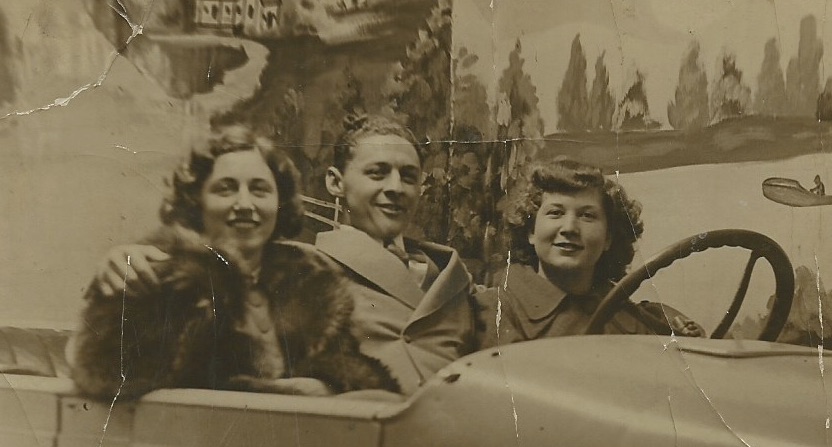
Two Polish Holocaust survivors from Poland. United by shared tragedies and strengthened by the love for the children they raised. Here is their story. 

Yakov “Jacob” Kazimierek was born in Mlawa, Poland, on December 10, 1926, one of the seven children of Abraham and Hannah (Granaska) Kazimierek. The family farmed and raised cattle, which they milked or slaughtered. 

After Germany’s invasion of Poland in 1939, thousands of the country’s Jews were subjected to the Nazis’ persecution, terror, and exploitation. Through the Nazi’s newly established “protective detention” orders, the Kazimierek family, along with other Jews, were moved to a Jewish ghetto. In 1942, Nazis deported the family to Treblinka. Hannah and the four youngest children were immediately sent to the gas chambers.

Physically failing under the brutal demands of forced labor, Abraham was selected for murder in the gas chamber. Another brother, Hans, eventually succumbed to disease and malnutrition.

The two surviving brothers endured years of starvation diets, forced labor, and brutal beatings.“[Jacob] had to hide his food or others would take it and he would die,” his cousin Regina Markowicz wrote in an account of his life. “He worked very hard and was treated like an animal. He slept on a wood or cement slab and endured terrible winters without adequate clothing, bedding, or shoes.” Jacob bore the physical signs of his imprisonment—scars on his back from the metal slats in his bed, one finger permanently disfigured from a beating, and of course, the tattoo number “76341,” the number tattooed on his arm—on his body—for the rest of his life.

Shortly before the liberation of Auschwitz, Jacob managed to escape. Although the exact details vary in family lore—in one scenario, he escaped on a bicycle; in another telling, he and two friends escaped posing as Germans—Jacob spent the remainder of the war hiding in forests and cellars, subsisting on food foraged in the woods, stolen, or given by kind Polish Christian. After Auschwitz was freed, Jacob was reunited with his brother Aaron, leaving them as the only two of nine members of the Kazimierek family to survive. 

Sweden, a neutral country during the war, took in about 15,000 refugees, and Jacob and Aaron were among them to be sent to a displaced person’s camp in Jönköping, Sweden. Remembering the skills learned at his family’s home in Poland, Jacob worked in a slaughterhouse. In 1948, fleeing from a girlfriend who was pressing him into getting engaged, Jacob moved to Israel and enlisted in Haganah, the Zionist paramilitary organization that fought for Israel’s independence. Four years later, he returned to Jönköping, where he met a twenty-three-year-old woman, a fellow Holocaust survivor whose story was as tragic and heartbreaking as Jacob’s. 

The only child of a Jewish couple from Poland, Rachel Abromowitz Kazimierek was born on July 6, 1929. At the age of ten, she and her family were interred in the Lodz Ghetto. At the age of 13, she and her parents were among thousands of Jews deported to the concentration camps. After arriving at Auschwitz, she never saw her parents again. Rachel was placed in Bergen Belsen and assigned to work in the Wieliczka salt mines. Each day, she and other women were herded several miles each night, working in deplorable condition underground. She was freed on April 15, 1945. Her years of forced labor would have serious impacts on her visional health. 

Jacob, newly returned from Israel, and Rachel met at a dance in the displaced person’s camp. According to their daughter Hannah Lewanowski, their match was not as much born of love as of necessity. As the United States gave preference to married refugees, the couple married in November 1952. Their first child, Hannah, was born thirteen months later. Jacob’s surviving brother, settled in Sweden, where he lived with his wife and three children until his death in 1979. 

In 1954, Jacob, Rachel, and Hannah came to the United States, first settling in New Haven, Connecticut and then relocating to Waterbury. Initially working as a butcher at Bargain Food Center, he opened his own store, Brass City Beef in 1953, which he operated, with Rachel’s help, until his retirement in 1990. 

In a March 15, 2015, article in the Hartford Courant (“Holocaust survivor built new life in Waterbury”), Jacob was praised for the store’s personal service and competitive prices. “He had a good following,” said Tony Nardella, a former Waterbury police officer and customer. “He was well liked and always had a smile and a joke.”

“He came to this country with no money,” said Hannah.“He had no English. He worked seven days a week. He made it.” The Kazimiereks developed a strong community with other Holocaust survivors. They socialized with each other, often sitting around a large table sharing schnapps and pastries while the children played together. 

Meanwhile, Rachel continued to deal with eye infections, possibly a result of working in the mines. In 1961, she had her left eye surgically removed and was fitted with a prosthetic eye. In 1966, she had a detached retina, which resulted in vision loss in her right eye. From that time on, the children were cared for by a nanny. Determined, Rachel moved on with her life, using a cane to walk. Despite her initially limited English, Rachel volunteered at the local Easter Seals to help other visually impaired individuals and visited schools to share stories of her Holocaust experiences. 

Jacob passed away in 2014. Rachel, 95, remains in the home she and Jacob originally purchased in Waterbury, Connecticut. She has 24-hour-care but still prides herself in her independence and cognitive abilities. “My brain, sweetheart, is very clear and very good,” she shared during a February 2025 interview. “I still remember birthdays and anniversaries,” she said, rattling off the important dates of her children and grandchildren. Freida Winnick, a daughter who lives near her in Connecticut, provides additional support and care.

Rachel attends monthly Holocaust survivor luncheons in West Hartford, Connecticut. She also attends presentations organized by “Voices of Hope,” a non-profit educational organization created by descendants of Holocaust survivors from across Connecticut to raise social awareness. 

Rachel emphasizes that she holds no ill will despite her harrowing past. “I am not against anyone,” she said. I get along with everybody.” 

Originally published May 15, 2025

My Mom and Ol’ Blue Eyes

“What’s that you have in your ear?”

We were on our way home from a family event in New York City in March, 2009. Larry was driving, and my sister Laura was in the passenger seat, and I was sitting in the back with my mom. “This is my iPod. I can listen to music on it.”

“Can I try?” 

“Of course!”

I removed the earbuds from my ears and put them in my mother’s. Then I scrolled through my playlist. Nearly 90% were Broadway musicals. I knew my mom would love them.

For the next two hours, my mom was in Broadway heaven. She zoned out on the music, sometimes singing along tunelessly.

I knew I had to get my mother a similar device. We had lost our father in November 2008, and my mother was now alone in her independent living apartment. She was doing amazingly well. “Life is about change, and you have to move on,” she told us. But the evening hours were long, and she missed “MY Bill. That week, I ordered a iPod Shuffle from the Apple website. The device was very simple. It could store 100’s on songs in its small flash drive, which resembled a Bic lighter. Placing the one earbud into one’s ear was also easy to use.  I loaded it with Mom’s favorites: Dozens of my Broadway musicals, Judy Garland, and, of course, Frank Sinatra.

Ah, Ol’ Blue Eyes! Mom was married with a toddler when the skinny Italian from Hoboken,New Jersey first came crashing onto the scene. She may have not been a “Bobby Socker,” the name given adolescent girls in the 1040’s. But she loved his choice of songs, his voice, and especially his sense of timing. “Just listen to him, Marilyn,” she would tell me. “No one can sing as well as him!” 

My mother was thrilled with her new toy. She used the Shuffle for the next two years. Thankfully, it took little work on my part. I left a charger at her apartment to use as needed. Outside of that, she could listen to music to her heart’s content. I would often walk into her apartment and find her sitting in her favorite Lazy-Boy, singing along to Frank.

On December 22, 2010, four days after I had retired, Mom had a heart attack. At the hospital, the emergency room doctor cautioned my husband Larry and me that she may not make it home. If she did, she had three to six months at best. Her 92-year-old body was failing. 

You couldn’t tell a day after her heart attack. She sat up in her hospital bed, catching up with family and friends on the phone and endearing herself to the nurses who tended to her. I brought the Shuffle to the hospital, and she spent time in between phone calls listening to her favorites.

She also used the Shuffle over the next few months. In late February, she read her last book, did her last Word Search, and balanced her checkbook. Then she had a stroke. As all her children and her wonderful Hospice nurse watched over her, she slipped into unconsciousness. I placed the Shuffle on her ear as she slept.

Mom passed away early morning on March 2, 2011. My three siblings and I worked quickly to clear the apartment, knowing we would be responsible for the full month’s rent if we weren’t out by March 5th.

I remember taking home the Shuffle, but a week later, it was nowhere to be found. I searched everywhere with no luck. It was gone. It was just “stuff,”, but somehow that little device was important to me. I grieved for its loss.

Fast forward to Late May, 2015. Larry and I had made the decision to move to Florida, and we were packing up the house. I was cleaning out the three drawer oak chest that was in our foyer. When finished, I pulled it out from the wall to make sure I didn’t miss anything behind it. Stuck in one of the slats was what looked like a Bic cigarette lighter. “How did that get there?” I thought.

It was Mom’s Shuffle. Obviously, I had brought it home, placed it on the top of the dresser, and it had slipped off and “adhered” itself to the back of the oak chest. 

I charged it up and VOILA! Frankie crooned in my ear. 

June 1st will make ten years since we made our move. I still have Mom’s Shuffle. It has been replaced for the most part with my iPhone and my Alexa. But there are days when I miss my mom and want to feel close to her. So I pull it out of my electronics box, charge it up, stick it in my ear, and sing along with Frank. “I’ve got you under my skin,” he croons.” You make me feel so young!” And of course, “I did it myyyyy way!” “I shed some tears, think of Francis Albert Sinatra and Frances Evelyn Cohen, and I feel my mother’s love all over again. 

Mom and Ol' Blue Eyes

“To err is humor”–Mangled words, gaffes, and malapropisms.

A long-time fan of Jeopardy, I have even become more interested in recent months watching popular quiz show’s championship series that pits the best against the best.

Watching it with Larry, we enjoy playing along, supplying our own questions to the clues given in numerous categories. . As was true for the two of us in our Trivial Pursuit days, I do well in the arts and entertainment areas, especially literature. Larry does well in history, geography, and sports. We don’t do as well in the sciences.

I know that I will never be a Jeopardy champion. Nor do I even have hopes to come in second. My pressing that buzzer would be similar to my pressing a self-destruct button. It’s not only because I don’t have a head for all the trivia. I would also bomb out because of my misuse of words. 

In response to the Jeopardy clue, “Company created by Steve Jobs that was sold to Disney in 1985,” I would offer “What was Pixie?” Another contestant would quickly supply the correct line. “What is Pixar.” I unfortunately would have no place to hide.

And Ken may completely lose it when my answer to “French singer famous for La Vin en Rosa” was “Who is Edith Pilaf?” Poor Ken would have to fight the urge to burst out laughing before getting the correct answer—“Who is Edith Piaf?”—from another contestant. “Yes,” Ken would comment, “We were looking for a name, not a rice dish that sings.”

I used to think my problem was mispronunciations. But it’s worse. I am guilty of using malapropisms. Malaprops, whose name come the eponymous character in Richard Brinsley Sheridan’s 1775 play The Rival, occur when one uses an incorrect word instead of another similar-sounding one, resulting in a nonsensical, often humorous sentence. An example of a malapropism is when someone says, “dance a flamingo” instead of “dance a flamenco.”

I come from a long line of “malapropists.” My father’s misuse of words bordered on Archie Bunker territory. And my poor mother was also guilty, The one that sticks with me was her using “orgasm” when she meant “organism.” 

My own history of mispronunciations started young. In high school, my fiery rant about the radical “Storky” Carmichael. brought my fellow classmates to hysterics when I talked about that radical “I think you meant “Stokely,” suggested Mrs. Clute when the laughter died down. I was in college before I realized that Sigmund Freud and Sigmund “Froid”were one and the same Austrian psychologist.

My most embarrassing transgression came as an adult, when I walked into a garden shop in Upstate New York and asked for a well known pest spray.

“Can you tell me where I can find the Spermicide?” I asked the clerk.“Sorry, lady,” the clerk responded. “You won’t find any spermicide here, but I do have Spectricide.” I wonder if my request has become one of their favorite stories to retell again and again. 

I join a long line of famous people whose malapropisms have become part of their history.Yogi Berra was so famous that his expressions ranked their own name, “Yogi-isims.” He once said, “He hits from both sides of the plate. He’s amphibious” instead of saying ambidextrous. In another instance, “Texas has a lot of electrical votes.” (electoral votes)

Yogi may have made such “errors” an art, but other legendary historical quotes were—well—hysterical.Australian Prime Minister Tony Abbott once stated that no one “is the suppository of all wisdom” instead of saying repository or depository. Chicago Mayor Richard J. Daley incorrectly referred to Alcoholics Anonymous as Alcoholics Unanimous and called tandem bicycles “tantrum” bicycles.

More recent American politicians have faced ridicule for their public gaffes. President George W. Bush famously stated “The law I sign today directs new funds… to the task of collecting vital intelligence… on weapons of mass production” (destruction). In 2022, Republican Senate candidate Herschel Walker was mocked online after claiming “this erection is about the people” (election), during an interview on Fox News. Congresswoman Marjorie Taylor Greene has also been excoriated for her misuse of words, including references to “peach tree dish”(petri dish) and “gazpacho police”(Gestapo), and “fragrantly violated. (flagrantly), among others.

President Joe Biden also has been mocked for his verbal missteps. On March 31, 2024, he asked all his guests at the annual Easter Egg Hunt say ‘hello’ to oyster bunnies.” He famously mixed up the names of world leaders with their (deceased) predecessor, referring to French President Emmanuel Macron as Francois Mitterrand and German Chancellor Angela Merkel as Helmut Kohl. But he knows it. ”I am a gaffe machine,” admitted Biden in a 2018 speech.

And then we have Donald J. Trump. In a a research paper published in 2020, Dr. Sajid Chaudhry examined 500 viral tweets posted on Twitter by the former president. Along with the hundreds of misspellings of common homonyms (waist/waste; boarder/border; taxis/taxes; eminent/imminent; Barrack/Barak), the paper cited numerous malapropisms, including references to a “Smocking Gun” and a claim that the media said that he wanted “a Moot stuffed with alligators and snake” at the Southern border. “The way he mangles words,” states Dr. Chaudhry at the end of his report, “ it looks like the ghost of Mrs. Malaprop haunts his vocabulary.”

So, it looks like I am not the only one who may experience major failures on Jeopardy. I take solace in my limited knowledge of Yiddish and Hebrew, which means I know not to call our Passover meal a “cedar,” our beautiful braided egg bread a “CHA-lah,”and our Day of Atonement “Yam KIP-per.” 

My personal favorite malapropism was spoken by a non-Jewish friend when she asked how I met Larry. 

“We met at a Purim party,” I said.

Dead silence. Long pause.

“I can’t believe you are so open about your meeting your husband at a PORN party,” my friend said incredulously. 

I wonder how Ken Jennings would react to that!

The famous Edith “Pilaf”!

Sources and links

A “Chili” Story for A Chilly January

In mid-December, Central Florida was experiencing a cold snap, and I decided to make chili. I had the canned tomatoes and chopped green chilis and the soy meat crumbles for the recipe, and I had all the ingredients for cornbread, a must whenever I made it.

Once I checked my pantry, however, I realized I was out for canned beans. No problem! I had been meaning use up the dried red kidney beans tucked away for a while.

What I quickly realized that the “while” was at least 9 years. Yes, as evidenced by its Price Chopper label, I had brought the beans with me when we moved here in 2015. Meanwhile, I had no idea how long ago before our move from Upstate New York to Florida when I had purchased them. I knew that archeologists had found barley and other foodstuffs in storage in Masada, and a woman in Minnesota had grown pole beens from 15,000 year old seeds. What did I have to lose? 

So, on that cold Friday, as per instructions, I soaked the beans overnight. The next morning, I boiled the beans and then let them simmer for another hour. As I was going to make the chili on Monday, I put the beans in a large container, covered them with water, and placed them in the refrigerator. The beans weren’t as soft as they should be, but I figured the extra soaking would do its magic.

On Monday morning, I placed the drained beans in my slow cooker with all the other ingredients for the dish. Despite the 36 hour soak, the beans STILL were a little hard, but I reasoned ten hours in the slow cooker would resolve the issue. 

That evening, I made the cornbread and assembled the shredded cheese, onions, and sour cream to top the chili. We were ready to eat. I dished out two large bowls for Larry and me.

My teeth bit into a red kidney bean. Al dente is fine for pasta, but for chili? The dish was barely edible. We picked around them and filled up on cornbread and the other chili ingredients. The glass of red wine also helped. 

As we began to clean up, I realized we had made only made a small dent into the chili. “Maybe if we freeze the leftovers, they will soften a bit,” I told Larry, portioning out another meal into a frozen container. I still had another meal in the pot.

Time to consult Chef Google! The first thing I learned was those ancient beans and barley may have been found, but they had not been cooked. And nine-plus-year-old-beans were too old. Farther down the website, Chef Google suggested adding baking soda to beans to soften them. 

Okay! I pulled out my Arm and Hammer and spooned out a heaping teaspoon into the still warm chili. Immediately, the mixture began to erupt like a volcano. Fearing they would explode out of the crock pot, I screamed to Larry to empty the sink so I could dump the mess down the garbage disposal. Fortunately, they stopped their explosion and even didn’t result in a clog.

I guess I should have read the instructions better. The baking soda should have been added to the “virgin” beans when I first boiled them. Adding the sodium bicarbonate to the chili mixture, which contained acidic tomatoes, replicated what happens when one combines baking soda and vinegar. Remember your childhood/children’s science experience? Yep! That kind of explosion.

Over the next few days, I shared my experience with several friends. Betty, a retired home economics teacher, suggested newer beans. Several others suggested using canned beans. Marcella, who grew up in Costa Rica and was an expert on rice and beans, suggested I trade in my slow cooker for a new appliance.

“I make beans in my Instant Pot© all the time,” Marcella told me. “They cook in 20 minutes.”

Five days later, Amazon had a 9-in-1 Instant Pot© on sale for 40% off. What perfect timing! I quickly ordered it and, a day later, took it out of the box. 

I was a little intimidated with the instruction manual, which began with 27 IMPORTANT SAFEGUARDS!!! along with two more pages of warnings that rivaled those found at nuclear power plant. A highlighted block stating “Failure to adhere to safety instructions may result in serious personal injury or property damage” was repeated five times. 

After doing a test run, I spent the next few days trying out my new toy. Hard boiled eggs? Perfect! Rice? Perfect! A whole roasting chicken in 28 minutes? Perfect! Butternut squash? Perfect! The only fail was my attempt at mashed potatoes. The finished spuds were brownish grey and turned into a sticky mess when mashed. Those went in the freezer (Maybe they could serve as a base for my potato latkes later that month?) next to the container labeled “11/20/2023 Chili with Bad Beans.”

And the chili? Larry purchased a fresh, one pound package of red kidney beans on one of his recent shopping trips. They are still sitting in the pantry waiting for another cold snap.

As I write this, we are approaching the secular New Year’s Day, January 1, 2024. According to Southern tradition, eating black-eyed peas on New Year’s Day will bring a year’s worth of good luck and/or monetary gain. Google came up with over 5 million hits for “Black Eyed Peas Chili. [Black-eyed peas are also traditionally served on Rosh Hashanah. Who knew?] Maybe it’s time for another run to the supermarket to start our own tradition, hopefully sans Mount Vesuvius. I’ll keep you posted. 

Versions of this story were publishedinThe Jewish World and the Heritage Florida Jewish News.

More beans than I ever imagined at the Ferry Building Farmer’s Markey, January 6, 2024

Yes, I am a woman now….

In today’s crazy world, it is hard to find things for which to be thankful. So I have been trying to find gratitude in the small things: a FaceTime with my children and grandchildren; a good cup of coffee with a piece of warm challah; a special moment with Larry. Recently, I reached back fifty four years to remember an evening that still holds a special place in my heart 

 In 1969, my brother Jay, who was going for his Masters at Cornell University , invited me out to spend the weekend.Jay arranged for me to stay with Leslie, his girlfriend—and his future wife—on the Ithaca College campus.

As a freshman at Albany State, and I was looking forward to the weekend.What made it especially exciting was that Jay and Leslie had arranged for double dates for both Friday and Saturday. 

After bringing me back from the bus stop to his dorm, Jay introduced me to Date One: his roommate Charlie. My first impression of him was not favorable; he looked like a computer nerd and acted like he was roped into an evening for which he had little interest. We all agreed to meet back in Jay’s room after dinner. 

I guess Charlie’s first impression of me was not any better. Charlie was a no-show. Leslie and Jay insisted that it was Charlie, but I was hurt and embarrassed. In my mind, I believed he was turned off by my own nerdiness and my before-contact-lens-coke-bottle glasses. “He probably took one look and headed for the hills,” I thought.

Despite the rough start, the three of us enjoyed our evening and the next day. I already loved Leslie and knew she would be in our lives for a long time. Saturday night, I got ready for Date Two with a great deal of trepidation. Would I be stood up again? Thankfully, Jay’s choice for Date Two made up for Charlie tenfold.. Denny was a Robert Redford doppelgänger: tall, blonde, with a British accent to add to the allure.

Our plans for Saturday evening were to see Gary Puckett and the Union Gap, who was my favorite musical group at the time.I was not alone in my passion. They were one of a very select group of touring acts to achieve prominence worldwide.In 1968 , they earned six consecutive gold records and sold more 45 rpm records than any other recording act-including the Beatles. They played a command performance at the White House for Prince Charles and Princess Anne by special invitation of the president.I had worn out my 78 rpm recording of their first eponymous album, swooning to “Woman, Woman;” “This Girl Is A Woman Now,” and “Young Girl.” Seeing them on stage, live, with handsome, sweet, attentive Denny at my side was special.

When Denny said goodnight, he gave me a gentle kiss—a kiss I still remember for its compassion and kindness. Did Jay tell him about the Charlie catastrophe? Or did Denny just sense my vulnerability and lack of confidence? I never saw Denny again, but I will never forget that cold night in Ithaca, New York where a kind stranger made me feel like a beautiful “woman woman,” with no cheating in her heart.

Move ahead to July 2023. An email blast from one of our social clubs announced that Gary Puckett and the Union Gap on was performing in our 55+ community’s ballroom on Sunday, November 6. Despite Larry’s ambivalence (he barely remembered the group), I scooped up two tickets for the 8 pm show. I was psyched, despite the fact that Gary Puckett had just turned 81 two weeks before the concert. Judging from his website, he didn’t look like the handsome young man in the group’s trademark Civil War uniform I knew back then, but—heck— I was also a little older looking myself.

We arrived a half an hour before the show and took our seats.Soon, the seats next to us were taken by my friend Maryellen. She introduced us to her husband Ed. We commented on the large crowd who had come to see the the show. “I am looking forward to this,” Ed said. “The last time I saw Gary Puckett and the Union Gap was at Cornell in 1969.” I gasped and stared at him. “I was at the same concert,” I told him. 

At 8 pm, the lights dimmed, the three “Union Gappers” took their places on the stage. As the introductory chords played, Gary Puckett burst onto the stage, singing “Lady Willpower.” I am not sure if he asked the audience to sing along to warm us up or to rest his old vocal cords. but we all fell right into his warmth and charm.

Gary Puckett still had a great voice, albeit a little choppier and less smooth than I remembered.He missed a few high notes and forgot some of the lyrics to a song by the Beach Boys. He turned to the audience, apologized, and asked“So, how is your memory doing?” The audience roared with laughter.

A little over an hour later, the group finished off with “Young Girl,” which is how I felt that evening. There was an opportunity to wait in a long line for a picture, but Larry, who had enjoyed the concert more than I hoped, agreed that I probably would be walking home if I stayed.

So, I am thankful. Thankful for that memorable evening in Ithaca. Thankful that Jay married Leslie and gave me a much beloved sister-of-my-heart.Thankful that Gary Puckett was still alive and kicking and entertaining the crowd. And, most of all, thankful that Larry—not Charlie or even Denny—was sitting next to me. As we walked to our car, my husband of almost 50 years, gave me a not-so-gentle kiss. Yes, that girl is a woman now, and she knows how to live.

Today I am a woman: My adult bat mitzvah

I am publishing this on the thirtieth anniversary of my adult bat mitzvah, which was held at Congregation Beth Shalom, Clifton Park, NY.

My education at Congregation Beth Shalom in Plattsburg, New York, was strong in Jewish history and traditions, but it was very weak in Hebrew. If I wanted to learn the language needed to follow the service,  I either had to attend twice during the week, difficult with its one hour round trip, or I had to be preparing for a bat mitzvah, not something females did in the 1960’s in Upstate New York.

Our father had grown up in New York City in the Depression. His bar mitzvah ceremony was celebrated with several other boys in his Eastern Parkway synagogue, including the president of the shul’s son. The honor conferred on this golden boy was his reading most of the Torah portion and the haftorah and giving a  speech while the remaining b’na mitzvoth were left with very short prayers and shorter participation. The party consisted of some sponge cake and wine back at my father’s house followed by playing sandlot baseball.

As a result of my father’s experience, his son was to have everything denied the father. Jay’s bar mitzvah was a huge celebration. Over 120 people were invited to the service, including relatives we had never seen before and never saw again. Immediately following the service, my parents hosted a lovely reception at the Cumberland Hotel in Plattsburg. We all got new clothes for the party; I remember how special I felt in the “balloon” dress that was popular in 1961. 

As was the tradition in our reform synagogue, one’s Jewish education officially ended at sixteen years old with a Sunday morning confirmation service . My class consisted of three girls: Susan Singer, Andrea Siegel, and me, none of us who had had bat mitzvahs. We recited prayers and gave speeches. Mine was on anti-Semitism.  How in the world my teacher ever encouraged that topic and how I ever summarized its history in less than ten minutes I’ll never know, but I felt proud in my white robe and mortar board cap. A reception followed. What I remember most was how one of my teachers gave Susan and Andrea cards with cash gifts and completely ignored my presence. Not the sweetest memories to carry from my simchas.

Despite the snub,I loved learning about Jewish history and traditions. I attended classes with the grade behind me and even helped out in the primary grade classrooms. Once I left for college at Albany State, I attended services for Rosh Hosanna and Yom Kippur at Beth Emeth, but I was not involved in Hillel nor did I take any classes in Judaic Studies that were beginning to be offered.

It was not until my children were born that I began to be interested in studying Judaic topics again. Over the years, I took some basic Hebrew and playbook Hebrew classes so I could better follow the service. In the years I stayed home with my children, I seriously considered going back to school for a second master’s in Jewish Women’s Studies. When time constraints ruled out classes, I began a self-tutorial, reading books by Anzia Yezierska, Tillie Olsen,Cynthia Ozick, Grace Paley, and other noted Jewish female writers. This all went on the back burner when I returned to a full-time teaching position in 1986. 

In 1993, however, Flo Miller, one of  Congregation Beth Shalom’s teachers, suggested that I take a Haftorah trope class that summer with two other interested women. The four of us met each week around Flo’s kitchen table. By the end of the summer, each of us had chosen our own Haftorah for our adult bat mitzvah. I chose Mishpatim, the Torah portion whose  date for reading that year fell on the week of  my father’s ninetieth birthday to honor him and, coincidentally in the year of my forty-third birthday to reaffirm my link to Judaism on what would have been the thirtieth anniversary year of my own bat mitzvah. Over the next several months, my lunch hours at work consisted of a quick bite and at least two practice sessions with the Haftorah. Once a week, Flo would call me on the phone, and I would again read the Haftorah to show her how well I had progressed. By winter, Flo, Rabbi Harry Levin and I decided that I would also read two Torah portions at the service.

My bat mitzvah, which was held on February 4, 1993,  was not a huge affair. My parents and Larry’s parents could not come from Florida, and my siblings were too spread out across the country. Many members of the the synagogue attended, however, along with Larry’s sisters and brother-in-laws and a few close friends, I A Kiddish followed, and then my family and friends went to a Chinese restaurant for a celebratory meal.Meanwhile, I taped a full rendition of the Haftorah and Torah readings and sent it to my father for his birthday.

I would love to say that the experience resulted in many more Torah and Haftorah readings at Congregation Beth Shalom. Unfortunately, learning Hebrew did not come easy to me. It never flowed off my tongue, and even though I enjoyed the musicality of the tropes, I continued to stumble over the Hebrew letters and vowels. My next experience reciting Haftorah for a service proved to be even more difficult for me than the first, and I have not tried again. I continue to enjoy attending services and have high respect for the congregants who volunteer to read Haftorah and Torah portions. And through Jewish book clubs and my own independent reading, I will continue to study and appreciate my chosen faith.

A version of this article originally appeared in the Jewish World News, a bi-weekly subscription-based newspaper in upstate New York, in the August 20, 2015, issue.

The Lost Mural

My father, Bill Cohen, (Z”L) loved to play Jewish geography, and he proudly shared with us how the  first synagogue in Burlington was founded in his grandfather’s kitchen.  As we lived on the New York side of Lake Champlain, we visited many aunts, uncles, and cousins who lived in the Queen City and the surrounding areas. One was Uncle Paul Pearl (born Pesach Ossovitz), who learned the peddling trade from his uncle Archic Perelman and went on to oversee 27 Pearl’s department stores in Upstate New York and Vermont. And then there were Uncle Moe Pearl, who owned several businesses in the area, and his wife Bess; Ruth (Pearl) Kropsky and her husband Isidore; and Aunt Ida and her husband Max Ahrens. May their memories be a blessing and live on in Congregation Ohavi Zedek and its beautiful “Lost Mural.”

When the Pels family attended the High Holy Day services in September, 2022, Congregation Ohavi Zedek had a welcome addition: the restored “Lost Mural” in the foyer, completed in June 2022 by the Lost Mural Project. The story of the mural began almost 150 years earlier, in the kitchen of one of its founding members, Isaac Perelman.

Although Jews had settled in Burlington as early as 1848, the 1880s saw an influx of Eastern European Jews facing persecution by Russians in all phases of their personal, professional, and religious lives. Others came up from New York City to escape work in the sweatshops; a few migrated from Plattsburgh, New York, as it didn’t have an orthodox shul. Most became peddlers in northern Vermont, selling their wares from horse or man-drawn carts. 

Initially, a group of ten Jewish men—only two had families with them, met for services in members’ homes, a former coffin shop, or the second floor of an office building. By 1885, the Jewish community of Burlington, Vermont, recognized the need to organize a synagogue. Eighteen men met in the kitchen of Isaac Perelman, an immigrant from Čekiškė, Lithuania. Having already procured a lay leader/Kosher butcher, they purchased a lot for $25, formerly the site of an old stone shed at Hyde and Archibald streets. With $800, they built a synagogue building, naming their new shul Congregation Ohavi Zedek (Lovers of Justice).

Over the next few years, the Jewish population of Burlington continued to grow, fed by the founders. Isaac and his wife Sarah alone had six surviving children; his brothers Aaron and Jacob also had large families. By  1906, there were 162 Jewish families. The area in Burlington, dubbed “Little Jerusalem,” was laid out like the shtetls in the residents’ native Lithuania with houses and kosher bakery, kosher dairy, and a kosher butcher. The Jewish community built two more synagogues, including Chai Adam (Life of Man), and Ahavath Gerim (Love of Strangers). In 1910, the three synagogues built a Hebrew Free School together in 1910, the Talmud Torah.

In 1910, Chai Adam commissioned a 24-year-old Lithuanian immigrant and professional sign painter named Ben Zion Black to create a mural for $200. Upon completion, the project featured prayer walls and a painted ceiling. The centerpiece was a 25-foot-wide, 12-foot-high three part panel, created in the vibrant and colorful painted art style present in hundreds of Eastern European wooden synagogue interiors in the 18th and 19th centuries. The mural featured the Ten Commandments in its center and golden Lions of Judah on either side, with the artist’s rendering of the sun’s rays adding light. Blue and red curtains and pillars filled the side panels, all representing the artist’s interpretation of the Tent of the Tabernacle as described in the Book of Numbers and the Book of Exodus.

In 1939, amid a decline in the Jewish population, Chai Adam merged with Ohavi Zedek. After 1952, several buyers purchased the former Chai Adam building, which later became a carpet store and warehouse. In 1986, a developer purchased it with plans to renovate the building into multiple apartments. Recognizing that the future of the mural was in jeopardy, Aaron Goldberg,  the archivist for Ohavi Zedek synagogue and a descendant of Ohavi Zedek’s founding immigrants, persuaded the new owner to seal the mural behind a false wall, in 1986. Goldberg, archivist Jeff Potash; Shelburne Museum’s curator of collections, Richard Kershner; and architect Marcel Beaudin hoped to reclaim the mural at a later date.

Before being hidden, Ben Zion Black’s daughters took and paid for archival quality photographs of the mural. Renovations destroyed much of the painting, but a wall covered the mural over the ark.

In 2010, Goldberg partnered with his childhood friend and former Trinity College of Vermont history professor Jeff Potash to establish the Lost Mural Project with plans to establish a new home for the mural and restore the work to its original glory. They reached an agreement with the Offenhartz family, the next owners of the Chai Adam building, that the mural would be uncovered and donated to the Lost Mural Project. This was done with the understanding that the Lost Mural Project would be solely responsible for all costs of stabilizing, moving, cleaning and restoring the Lost Mural. 

In 2012, after over two decades, workers removed the false wall. A curator reported that Black’s creation had sustained extensive damage with “the painting hanging off its plaster base like cornflakes.” Over the next three years, the Lost Mural Project raised substantial funds from individuals, businesses, and foundations for the mural’s paint to be stabilized. In May 2015, workers moved the mural, encased in steel and weighing approximately 500 pounds, to Ohavi Zedek. 

Following the mural’s move, the Lost Mural Project committee incorporated, rebranded and tirelessly sought funding for the mural’s cleaning and full restoration with the help of its board and Madeleine Kunin, the former Vermont governor and US ambassador to Switzerland. By 2022, they had raised over one million dollars from local, state, national, and international donors.

In 202, two conservators hired by the Lost Mural Project began the painstaking task of cleaning the mural. Using the archival photos taken in 1985, they used a gel solvent and cotton swabs to remove darkened varnish, dirt, and grime from the painting’s surface. The next year, a second team of conservators from Williamstown Art Conservation Center in Massachusetts began the infill, coloring and final restorations. According to Goldberg, the COVID-19 pandemic was a blessing, as it gave the team of workers the space and quiet needed to complete the project in the shuttered shul. 

“So many things could have gone wrong with the mural, but it survived through fate and circumstance,” says Goldberg. “It’s not just a surviving remnant. It’s a surviving piece with an astonishing history.” 

Ohavi Zedek’s Senior Rabbi Amy Small, who saw the 2022 restoration step by step, views the Lost Mural Project as a universal immigrant story. “It’s significant not only to the Jewish community and the descendants of those early settlers of Burlington, but also to other immigrants in the United States, which offered safety for Jewish and other families fleeing from many parts of the world.”

The Preservation Trust of Vermont presented the Friends of the Lost Mural with its 2022 Preservation Award. “The Lost Mural…not only exemplifies the rich history of creativity and resilience in Burlington’s Jewish community,” stated Ben Doyle, its president. “It inspires all of us to remember that the Vermont identity is dynamic and diverse.”

In June 2022, the completed project’s unveiling took place amid much fanfare. The Friends honored Governor Kunin for her contributions, and a Vermont Klezmer band provided the music. Dignitaries both in attendance and through Zoom highlighted the importance of the project. Joshua Perelman, Chief Curator & Director Of Exhibitions And Collections, National Museum Of American Jewish History called the mural “a treasure and also a significant work, both in American Jewish religious life and the world of art in this country.”

Many of the descendants of the original Lithuanian Jews who settled in Burlington over one hundred and fifty years earlier were present, including descendants of Isaac and Aaron Perelman. 

“[The mural] tells us a remarkable story of a thriving Jewish immigrant community from Lithuania and the successful efforts of their descendants to preserve their cultural legacy today,” H. E. Audra Plepyte, the ambassador of Lithuania to the United States stated in remarks shared with Ohavi Zedek. “The Lost Mural is not lost anymore.

The Lost Mural Project, an independent secular nonprofit, is seeking donations to replicate the green corridors on the original painting that did not survive. Its educational mission is to share the story of the Lost Mural and the lost genre of the East European wooden painted synagogues with people and facilities around the world.More information, including details of the Mural’s miraculous journey, can be found at https://www.lostmural.org/donate.

Originally published September 20, 2022. Updated May 26, 2025.

SOURCES

Thanks to Aaron Goldberg , Jay Cohen, Janet Leader, Rob Pels, and Rosie Pels for their contributions to this article. 

Rathke, Lisa. “Long-hidden synagogue mural gets rehabbed.” August 17, 2022. AP Wire story; numerous sources.

Sproston, Betty. Burlington Free Press. February 22, 1995.

https://lostmural.squarespace.com/ekik-lithuania

https://www.news4jax.com/entertainment/2022/08/16/long-hidden-synagogue-mural-gets-rehabbed-relocated/

https://www.sevendaysvt.com/vermont/burlingtons-lost-mural-is-restored-to-its-original-glory/Content?oid=35853053

https://www.smithsonianmag.com/smart-news/synagogue-mural-restoration-vermont-apartment-180980614/

I am exactly where I need to be!

Happy Summer!  Have you kept your New Year’s resolution?

Odds are, you haven’t. Each year, Strava, the social network for athletes, predicts the exact day when most people are likely to ditch their annual commitment to themselves. Whether it be the goal to lose weight, exercise more, or stop smoking, the majority throw in the towel (or throw out the scale) on the second Friday in January. A full 80% will have given up on it by mid-February.

If you have made it to the last days of spring, Mazel tov!

Up until this year, my list of resolutions were endless, so reflective of the person I am. On top of my list (for at least six decades) was to lose weight. Along with that annual goal, I have promised myself in the past to exercise more; read more books, watch more movies, play more piano, see more of family and friends, and write more articles, for starters.

But as I head into a third year where pandemic still hangs over our heads like the sword of Damocles, I have made peace with myself, My one and only resolution is based on an affirmation I stumbled across this past winter. Drum roll please!

“I am exactly where I need to be.”

These eight words summarize an entire philosophy based on the idea that I can be happy where I am at this very moment. It has grounded me when I find my mind racing with what I need to do next: the challah that needs to be baked, the article I have to get to Laurie Clevenson by the Monday morning deadline; the book I have to finish before it disappears off my Kindle. 

Full disclosure: Knowing myself, I will still working on those same items I have listed in the past. (I am already looking forward to writing several biographies of Holocaust survivors.) But I understand that I can reach those milestones without the help and pressure of resolutions. I can be happy in the “now,” not the future. I have given myself permission to focus on the journey, not some numerical destination.

Since I made this resolution on November 17, I already have over two months of practice behind me. I made a copy of it which I keep on my kitchen window sill When I find myself “falling off the wagon,” I quietly recite it to myself and get grounded again. It has the making of a habit! And speaking of habits…

I cannot remember where I originally saw this quote. Facebook? A friend’s blog? A recent book? It took me a few weeks—and the help from my Catholic friend—to find out my first person quote actually came from a prayer from St. Teresa of Avila, a revered leader of the Discalced Carmelite Sisters in 16th century Spain. The opening lines of her original prayer read, “May today there be peace within you. Trust God that you are exactly where you are meant to be.”

It took a little more digging to find a Jewish connection (Yes! There IS a Jewish connection!) St. Teresa’s paternal grandfather, a wealthy tax collector, was a Jew who was forced to covert to Christianity. He was condemned by the Spanish Inquisition for allegedly returning to the Jewish faith and was punished by being forced to parade around Toledo for one day a week with other insincere converts. He was later able to assume a Catholic identity. 

St. Teresa, aware of her ancestry, did not acknowledge it publicly because of prejudice in Spain at the time against Jews and Jewish converts. It appeared, however, that her heritage impacted her career in the church. She was recognized for bring a mystical Jewish strain reminiscent of Kabbalah and for giving comfort to many converts from Judaism who struggled to maintain a connection to Jewish belief and practice. As a leader and “doctor,” she directed her convents not to comply with the “statutes of purity of blood” which excluded Jewish converts to Catholicism from most religious orders, from the military, higher education, civil and church offices. 

In the 2012 off-Broadway play, Teresa’s Ecstasy, starring the Columbian playwright Begonya Plaza as well as Linda Larkin and Shawn Elliott, the nun’s Jewish heritage was seen as a driving force in her life and work. Plaza’s character, who in the midst of a divorce, and Larkin’s character, her Jewish lesbian lover, realize how much Teresa has become their role model in her commitment to faith, compassion, and human dignity.Yes, St. Teresa is a nun with a Yiddishkeit neshome, a Jewish soul. 

So now an adaption of a prayer written by a Catholic saint is now part of this Jew’s daily routine. It is the one of last thing I tell myself each night. I follow that with Jewish prayers, positive affirmations, and reflections on things for which I a grateful. I fall back to sleep quickly, and I sleep in peace, knowing I am exactly where I need to be.

A version of this article originally appeared in the Jewish World News, a bi-weekly subscription-based newspaper in upstate New York.

SOURCES

https://en.wikipedia.org/wiki/Teresa_of_Ávila

https://finance.yahoo.com/news/quitter-day-coming-not-another-205100681.html?fr=yhssrp_catchall

https://jewishweek.timesofisrael.com/a-nun-with-a-jewish-touch/

https://news.yahoo.com/news/saint-still-changing-lives-teresas-ecstasy-002524863.html?fr=yhssrp_catchall

https://www.inc.com/jeff-haden/a-study-of-800-million-activities-predicts-most-new-years-resolutions-will-be-abandoned-on-january-19-how-you-cancreate-new-habits-that-actually-stick.html

Bye bye Boomer? Who shall live and who shall die?

Was it time for us to retire Boomer to that Stuffed Bear Den in the Sky?

A couple of days after our son was born, my husband Larry came to the hospital with a huge brown teddy bear, his first gift to Adam. We named the stuffy “Boomer,” the moniker we had given to my ever expanding stomach during my pregnancy as well as a salute to our Baby Boomer status. 

Boomer occupied a place in Adam’s room in our family home through nursery school and beyond When the shiny nose fell off, I sewed on another one with black yarn. When the paws got torn up after too many rides on Adam’s Big Wheels, I covered up the bear’s bare spots with yellow felt patches. On Adam’s first day of kindergarten, we took a picture of Adam holding on to his bear before boarding the school bus.

By his bar mitzvah, Adam relegated Boomer to the top shelf in his bedroom. When Adam headed off to the University of Rochester in 1996, he left his companion behind. [Three years later, our daughter Julie brought her lovey Rerun with her to college. It now has a place of honor on her daughter’s bed.]. We put the brown bear on the pillow on Adam’s bed in the quiet, empty, amazingly clean room. Boomer waited patiently through Adam’s grad school and first jobs and trips across country and to Israel and Belize and law school. Alas, Adam never sent for him. 

When we packed up to move to Florida, I sent texts to our children with pictures of the things they left behind with the simple request: “Toss or send to you?” Adam claimed his Star Wars action figures, Zayde Ernie’s World War II helmet, and a couple of framed pictures. Boomer got a thumbs down.

In the end, Larry and I loved Boomer more than Adam did. Larry and I didn’t have the heart to throw Boomer in the trash. After some discussion, we carted him to Kissimmee, where he earned a spot on a bookshelf with our other cherished tchotchkes: Larry’s Otto the Orange mascot, a plush toy I had given him one Chanukah that played the Syracuse University’s marching song when we squeezed his hand. My two 7 inch high dolls in Mexican attire my father had purchased for me at a gift shop in Montreal’s Chinatown after wontons and fortune cookies at the Nan King restaurant; Julie’s doll with the green dress and matching bonnet that had prompted our then-fourteen month old daughter’s first complete sentence on the way back from a shopping trip to buy her a bed: “Oh-oh! Left Baby Bobbie on mattress at Macy’s,” she cried behind me from her car seat. “Go Back!”

I thought Boomer would find his way back home to Adam when our son’s wife Sarah delivered their own little Boomer in 2020. My hopes that I could pack him up in a box and ship him to California were quickly dashed. “I really don’t want it,” Adam told me. “And after 42 years, goodness knows what germs live in that toy! Toss it!”

Taking a good look at Boomer, I almost had to agree with Adam. I took pride in the fact that the black nose and yellow felt paws and feet I had sewn on over forty years ago were still intact. After too many years dealing with Florida humidity, however, the poor stuffed animal was definitely worse for wear.His now graying stuffing was peeking out of his right leg and exploding out of a side seam. His head wobbled, held onto the body with unraveling brown thread. His “fur” had begun to resemble that of a mangy dog. Still, we put him back on the shelf.

Eighteen months later, Boomer’s future was again jeopardy. Larry and I had managed to fit all that was needed for a seven week trip to visit our children in California and Colorado in two medium sized suitcases. If we had survived all summer with so little, why were our closets and drawers still packed with all the clothes we hadn’t bothered to bring?

It wasn’t just the clothes. Despite our purge when we made the move to Florida from Upstate New York in 2015, we (especially me) had somehow again acquired too much stuff. A kitchen full of housewares. Closets filled with unworn clothing. Old books that I was finally going to read while sheltering in place. A two-foot stack of nearly untouched New Yorker magazines. I was ready for a “pandemic purge.” The day before Rosh HaShanah, while looking in my closet to find an outfit for services, I found two dresses that I had not worn in three years. I threw them onto the guest bed. I followed them up with more items to recycle—clothes, linens, books, heavy sweaters I had saved “just in case.” By Yom Kippur, the pile covered the entire double bed. It was a new year, a new start.

But some things were non-recyclable, including a tattered teddy. “Maybe it’s time to say goodbye to Boomer,” I said to Larry. 

“No way!” he cried. “Besides, we need to keep him at least until our grandson is able to come to Florida to visit. He has to meet Boomer.”

Larry was right. The idea of putting Boomer into the trash broke both our hearts. I took out my sewing kit, pushed the stuffing back into worn cloth, and stitched him up. We called Adam and Sarah and asked them to mail us a couple of our grandson’s outgrown tee-shirts to cover up all the stitches. And then  Boomer will resume his special place on our shelf. Yes, in the end, we couldn’t—forgive the pun—bear to part with him. 

Boomer at 43.

Route to Jewish life in States not always the same story

My family, like those of most of my Jewish friends, can trace their roots from Eastern Europe and Russia. The stories of our lives have been captured again and again in movies and literature: Our grandparents, facing religious persecution and the fear of pogroms in Russia and Eastern Europe, fled to the Goldene Medina, the Golden Country—America. Most landed at Ellis Island and started their lives and the lives of their children in New York City’s Lower East Side. But other friends have shared stories that represent a more circuitous route. One such person is Gilda “Hilda” Kilman Gallant, whose own history starts not on Hester Street but in Havana.

Hilda’s parents, Simon Kiman and Golda Szejerman, were both born in Poland. When they were small children, their families immigrated to Cuba in 1925 and 1929, respectively. Growing up in the same Jewish neighborhood in Havana, the two eventually fell in love and married in 1950. Hilda was born eleven months later. By 1957, the Kimans were a family of five, with the birth of two more daughters, Rose and Julie. 

Despite political tensions and the 1952 coup that resulted in the subsequent dictatorship under Fulgencio Batista, the Kimans lived a happy, comfortable life. Simon and his brother owned and managed a successful small variety store, while Golda was a full-time homemaker. Although they continued to speak Yiddish within their home, they also learned Spanish, the language of their adopted country. Hilda and Rose attended a Jewish parochial school, where they were taught secular subjects, including Spanish, in the morning. After a break for lunch, the traditional main meal, they returned in the afternoon for Hebrew lessons and Judaic studies.

In 1959, Cuba’s political world was upended. Open corruption and oppression under Batista’s rule led to his ousting by the 26th of July Movement, and Fidel Castro soon assumed leadership. Under his communist rule, Castro nationalized all businesses. The communist government prohibited private ownership, resulting in Simon and his brother losing their store and livelihood. As conditions in all areas, including education, deteriorated, the family decided to leave Cuba. Failing to secure American visas, Simon and Golda applied to and gained acceptance into Israel. A few months later, Hilda’s maternal aunt, uncle, and grandmother also emigrated to Israel and lived across the hall from the Kiman’s. Simon’s family eventually immigrated to the States and settled in Philadelphia.

Out from under Castro’s iron thumb, Simon and Golda still found life in the United States very difficult. Simon, who had no formal education or training, worked a job in an orange packaging factory. Golda supplemented his salary by learning the diamond cutting trade. Struggling with Hebrew, they continued to mostly speak Spanish and Yiddish with other immigrants of similar background. Hilda and her sisters adjusted well to life in Israel as children.

When Hilda was approaching her 16th birthday, Simon and Golda yearned to be with their family in the States. They sent her to Philadelphia to live with her father’s sister and husband and her paternal grandmother. She shared a room with her cousin Henry in a tiny home. Although she received much love, she missed her parents and sisters very much. 

Although she found math and science courses relatively easy, Hilda found courses that required English proficiency a struggle. Fortunately, several wonderful teachers took her under their wing and provided extra help before and after school. “Henry also helped by introducing me to American TV,” said Hilda. “It turned out to be a great tool in learning a new language.”

Rose soon followed, and in 1968, just before Hilda’s high school graduation, her parents, youngest sister and grandmother finally obtained visas to enter the US. The family was finally reunited. Hilda’s parents purchased a small food/variety store and then a clothing store, and the entire family found happiness in the very large and tight-knit Cuban Jewish presence in Philadelphia.

After high school, Hilda’s aunt insisted she continue her education. “You are in America,” she told Hilda. “Women don’t rush off to get married and have babies after high school. You need to go to college.”

Hilda enrolled at Gratz College in the Judaic studies program. She worked full time during the day as a bookkeeper to help support her family and took classes at night and on Sunday. Because of her time in Israel, Hilda spoke fluent Hebrew and became friends with many of her Israeli classmate, along with a part-time native Philadelphian.

Stuart Gallant had grown up in the “City of Brotherly Love,” the only child of first-generation Americans and the grandson of Eastern European/Russian refugees. Along with his public school education, Stuart attended the usual 3-days-a-week Hebrew school through his bar mitzvah. The rabbi of their Conservative synagogue, of which his parents were co-founders, enticed Stuart and some other boys to engage in additional learning, including Torah reading and leading services. Raising the stakes, the rabbi then insisted that his students attend Shabbat services weekly “Until my high school graduation, I became a fixture at the shul,” Stuart said. “I read Torah on Saturday morning, taught Hebrew school and bar/bat mitzvah students, lead junior congregation and, in my senior year, served as president of the local chapter of United Synagogue Youth.”

After he graduated high school, Stuart enrolled into Drexel University for a degree in electrical engineering. Struggling to balance his new classes and the slew of Jewish holidays that fell on during his first weeks on campus, Stuart had to cut back on his attendance at services. His “school vs. shul” decision resulted in falling out with the rabbi. He stopped going to services, even avoiding driving near his synagogue. 

Despite his estrangement from formal religion, Stuart enrolled in Gratz College part-time to further his Jewish education. During one of his classes, he noticed the lovely young woman who spoke fluent Hebrew. Intrigued by what he thought was her Israeli background, Stuart asked her out. On their first date, however, Hilda called her parents to alert them she might be late coming home because of the bad weather. “She certainly wasn’t speaking Hebrew,” said Stuart. It was only after that phone call he learned about Hilda’s Cuban-Jewish background. As a matter of fact, throughout their courtship and their marriage, Stu could not converse with Hilda’s grandmother since he never learned fluent Spanish—or Yiddish. 

After completing his masters at Drexel, Stuart began a career in biomedical engineering that took him and Hilda to Minneapolis, Baltimore, and eventually to California. Hilda initially stayed home to raise their two sons, Joshua and Avi. She eventually used her strong accounting skills in several jobs, including Stuart’s own medical device start-up company.

The “school vs. shul” decision long behind him, Stuart, along with Hilda, became actively involved in their synagogues through their lives. Stuart has served on synagogue boards; Hilda called on her background in Judaic Studies to teach in a Jewish-nursery school. 

For Hilda, the journey that started in Cuba has recently brought her only 400 miles from her birthplace (although she stated she would never visit!). In 2021, Hilda and Stuart moved to Florida to be closer to their children and grandchildren, who live on the East Coast. Wherever they go, Hilda and Stuart’s rich background and warm presence will be a blessing.

Originally published May 27, 2021.Updated May 25, 2025.