As we prepare to celebrate Passover, I contemplate my ancestors’ flight out of Egypt. If the Exodus happened today, I am not sure if I would ever make it out of Egypt.
According to the midrash, the Pharoh commanded the Israelites to leave immediately following the tenth plague. As we all know, they had so little time that the bread had no time to rise. As a woman who loves to bake challah, I could live with whipping up the dough and foregoing the rising process. As long as I had butter and raspberry preserves matzoh would work until the manna rained down. (Hopefully, mine would taste like vanilla ice cream.)
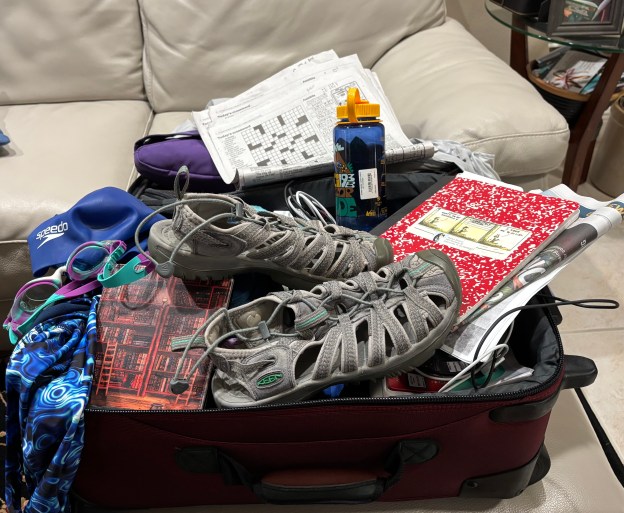
My first problem is that there is no way in the world I would have had time to pack.
Friends I know who pack the night before any trip would have done well that evening. Those carefree individuals would pull out their sachets, throw everything in, and figure they could pick up whatever else they needed at the closest desert oasis.
Unfortunately, I am not one of those people. I start filling my suitcase at least a week before scheduled departure, often packing and repacking several times. Too many shoes. Too few tops. Do I need a dress in the desert? And what about my denim jacket? I love pairing it with almost everything in my closet, but maybe a fleece would be more practical and take up less room. How in the world could I pull this off before we headed out?
Full disclosure: I don’t even leave my house for a few hours without packing enough for an overnight stay. Along with my essentials—wallet, iPhone, sunglasses, lipstick—I need to cover all my bases. A book. My notebook and a pen in case I get hit with a writing inspiration. A phone charger. A sweater or fleece in case I get cold. Shorts in case I get hot. My water bottle. A Quest bar in case I get hungry. I stuff more into my oversized handbag for a simple errand than the Israelites grabbed in the middle of the night.
Even if I’d managed to pack my bags and prepare the challah that turned into crackers, I would have had to dash back home for the items I’d forgotten. My phone. My keys. My sunglasses. No matter my preparation, I always leave something behind when departing. The Red Sea would already close by the time I made it to the shore. I would wave to everyone while watching all of Pharoh’s soldiers being drowned.
And could I ever have left my home in the first place?
According to scholars’ interpretation of Rashi’s comment, only one-fifth of the Israelites left Egypt. Eighty percent stayed put, out of fear of the unknown or feeling comfortable despite their inferior status in the kingdom. Eighty percent! But thinking about it, would I have been in the majority? Would I have given up freedom to stay put? Could I have left my familiar life and my stuff behind?
As Dan Schur writes in an April 22, 2022, article for the Jewish Journal, “the overwhelming majority of the children of Israel chose a compromised but familiar existence over the potential dangers that more dramatic and assertive actions might have brought.”
Could I leave my piano? My lanai that overlooks a pond? A house that brings me so much joy?
So, maybe I wouldn’t have left in the first place. I would have packed Larry some matzoh and lots of water, given him a kiss, and would have waved goodbye. Who knows? Maybe those 40 years of wandering would have somehow led him back to me.
Dr. Michael Lozman’s dream of a permanent Holocaust memorial in the Capital Region of New York became a reality on December 1, 2025, when Governor Kathy Hochul signed legislation establishing a New York State memorial to honor Holocaust victims and survivors.
“With the first ever state-sponsored Holocaust Memorial, we are honoring the victims and survivors of the Holocaust while ensuring that all visitors have a place to remember and reflect on what the Jewish community has endured,” Governor Hochul stated in a press release. “New York has zero tolerance for hate of any kind, and with this memorial, we reaffirm our commitment to rooting out antisemitism and ensuring a peaceful and thriving future for all.”
Legislation S5784/A7614 directs the state Office of General Services (OGS) to oversee the design, programming, and location on the Empire State Plaza in Albany of the New York Holocaust Memorial. The memorial will join others on the Plaza that are special sites of remembrance and tribute, offering visitors the opportunity to reflect on issues that touch the core of our society.
The late Dr. Michael Lozman was an area orthodontist and a passionate advocate for Holocaust remembrance. Lozman began his quest honoring victims of the Holocaust when he turned his attention to restoring desecrated Jewish cemeteries in Eastern Europe and, in doing so, educating future generations about the atrocities of the Holocaust. Working with several US colleges, Lozman organized and led fifteen trips through 2017 that resulted in the restoration of ten cemeteries in Belarus and five cemeteries in Lithuania.
Around 2017, Lozman began his pursuit of building a Holocaust memorial in the Capital District in New York. He had forged a friendship with Roman Catholic Diocese of Albany’s Bishop Edward B. Scharfenberger, who graciously donated two acres of land for the development of a memorial in Niskayuna. The gift from the diocese for a Holocaust project was the first known collaboration, for this type of memorial, between a Jewish community and the Roman Catholic Church. In 2018, Lozman founded the Capital District Jewish Holocaust Memorial (CDJHM). The board consisted of a group of individuals from the local community, including Scott Lewendon, Jean “Buzz” Rosenthal, Dr. Robin Lozman Anderson, Tobie Lozman Schlosstein, Warren Geisler, Gay Griffith, Howard Ginsburg, Judy Linden, and Linda Rozelle Shannon. “Michael was always grateful for each member’s sacrifice and sense of duty to the project,” recalled his wife Sharon.
Lozman’s initial concept for the physical memorial met resistance as being too literal a representation. Dan Dembling, an Albany architect, and Michael Blau, a theming solutions expert located in the Capital Region, were recruited to be part of the redesign effort that involved both the CDJHM and the Jewish Federation of Northeastern New York. Many iterations later, the Town of Niskayuna approved Dembling’s design in June 2019.
The planned memorial, as envisioned by the board,consists of walls arranged in the shape of the Star of David. Visitors will be guided around the six-sided structure, where they will be connected to significant events that occurred during the Holocaust. The six columns in the center represent the six million Jews murdered in the Holocaust. Initially estimated to cost $4.5 million, the board increased its fundraising efforts, but they were slowed down by the COVID-19 pandemic. In October 2023, Lozman decided to step back and leave the board. He asked Dembling, whom Lozman considered very capable and enthusiastic, to join the board and to become its president. After careful consideration, Dembling agreed. “Michael set the groundwork for me to think big,” said Dembling in an April 2025 Zoom call. “He was excited to transition the mission to me.”
Faced with new estimates due to inflation to $6 million, the board began exploring other locations that could provide already established restrooms and parking. Dembling proposed shifting the location from Niskayuna to the Empire State Plaza. It was felt that it would provide an ideal place for students and tourists who were visiting New York’s capitalcityan opportunity to learn about the Shoah. To further emphasize its expanded audience, the memorial will be renamed the New York State Holocaust Memorial (NYSHM). As the official state-sponsored Holocaust memorial, it is expected to draw contributions from the estimated 1.6 million Jews and other citizens of New York.
On October 11, 2024, one year to the day when he had called Dembling to take on the presidency, Lozman died. Continuing his work, the board sought letters of support from government, religious, and private entities. Armed with over forty letters, the board approached local legislators to establish the memorial at the Empire State Plaza. Senator Patricia Fahy and Assemblywoman Gabriella Romero drafted companion bills for their respective houses. Lozman’s vision moved closer to reality when both houses passed the bills unanimously. Governor Hochul’s signature moves the project to the NYS OGS, which must work with an “organization that provides Holocaust education services and programs” to deliver the memorial. The next step in creating the New York State Holocaust Memorial is up to the NYS OGS. The new law charges OGS with selecting an organization to work with on the memorial’s final design and location on the Empire State Plaza. The CDJHM hopes that it will be that organization.
Sharon Lozman, Dr. Robin Lozman Anderson, and other members of the CDJHM board were at the signing. Sharon received the newly signed bill from Governor Hochul as a lasting reminder of her husband’s legacy.
Along with the physical memorial, the board also added components that further incorporate Lozman’s vision of education. Under the guidance of Evelyn Loeb, a longtime Holocaust educator, the CDJHM partnered with Echoes & Reflections, an international Holocaust education program, to create an innovative educational program, which will include a historical timeline of Holocaust events and NYS Holocaust survivors’ testimonies. In addition, the CDJHM will sponsor a fleet of traveling memorials that use the same online educational program and will travel the state to schools, churches, synagogues, and other community locations. Both educational programs are scheduled to launch in the first quarter of 2026.
The Jewish Federation has been one of the many organizations that has supported the work of the CDJHM. At its annual meeting on June 17, the Federation honored three of its members. Dr. Michael Lozman was posthumously awarded the President’s Award; Buzz Rosenthal was also honored with a President’s Award; and Dan Dembling was awarded the Sidney Albert Community Service Award.
In a December 1, 2025, press release, Dembling thanked the governor for her signature. “Since our organization’s founding by Dr. Michael Lozman, we have been dedicated to creating a permanent space in the Capital Region to honor the victims of the Holocaust and educate future generations. At this time when antisemitism is so high and rhetoric is reminiscent of the Nazi era, the need to remember the Holocaust is critically important. As envisioned, this memorial will have statewide impact by helping to educate people about the consequences of prejudice left unchecked and hopefully inspire New Yorkers to stand up against hate in all its forms.”
“Michael planted the seed for all of this,” said Dembling. “His unwavering commitment to honoring the past ensures that the memories of those lost will continue to inspire and educate future generations.”
The Capital District Jewish Holocaust Memorial is a 501(c)(3) not-for-profit organization and is raising funds for the permanent memorial, traveling memorials, and educational programming. Those wishing to donate or find more information can go to their website athttps://www.cdjhm.org/or email atinfo@cdjhm.org.
December 01, 2025- Albany, NY- Governor Hochul signs Bill to create a New York State Holocaust Memorial during a Hanukkah Reception at the Executive Mansion (Darren McGee/ Office of Governor Kathy Hochul)
Dr. Michael Lozman
Photograph of CDJHC vision of Holocaust Memorial courtesy of Capital District Jewish Holocaust Committee, Inc. Dan Dembling, President.
Photograph of group at bill signing courtesy of the Press Office of New York State Governor Kathy Hochul. Darren McGee, photographer.
Two Polish Holocaust survivors from Poland. United by shared tragedies and strengthened by the love for the children they raised. Here is their story.
Yakov “Jacob” Kazimierek was born in Mlawa, Poland, on December 10, 1926, one of the seven children of Abraham and Hannah (Granaska) Kazimierek. The family farmed and raised cattle, which they milked or slaughtered.
After Germany’s invasion of Poland in 1939, thousands of the country’s Jews were subjected to the Nazis’ persecution, terror, and exploitation. Through the Nazi’s newly established “protective detention” orders, the Kazimierek family, along with other Jews, were moved to a Jewish ghetto. In 1942, Nazis deported the family to Treblinka. Hannah and the four youngest children were immediately sent to the gas chambers.
Physically failing under the brutal demands of forced labor, Abraham was selected for murder in the gas chamber. Another brother, Hans, eventually succumbed to disease and malnutrition.
The two surviving brothers endured years of starvation diets, forced labor, and brutal beatings.“[Jacob] had to hide his food or others would take it and he would die,” his cousin Regina Markowicz wrote in an account of his life. “He worked very hard and was treated like an animal. He slept on a wood or cement slab and endured terrible winters without adequate clothing, bedding, or shoes.” Jacob bore the physical signs of his imprisonment—scars on his back from the metal slats in his bed, one finger permanently disfigured from a beating, and of course, the tattoo number “76341,” the number tattooed on his arm—on his body—for the rest of his life.
Shortly before the liberation of Auschwitz, Jacob managed to escape. Although the exact details vary in family lore—in one scenario, he escaped on a bicycle; in another telling, he and two friends escaped posing as Germans—Jacob spent the remainder of the war hiding in forests and cellars, subsisting on food foraged in the woods, stolen, or given by kind Polish Christian. After Auschwitz was freed, Jacob was reunited with his brother Aaron, leaving them as the only two of nine members of the Kazimierek family to survive.
Sweden, a neutral country during the war, took in about 15,000 refugees, and Jacob and Aaron were among them to be sent to a displaced person’s camp in Jönköping, Sweden. Remembering the skills learned at his family’s home in Poland, Jacob worked in a slaughterhouse. In 1948, fleeing from a girlfriend who was pressing him into getting engaged, Jacob moved to Israel and enlisted in Haganah, the Zionist paramilitary organization that fought for Israel’s independence. Four years later, he returned to Jönköping, where he met a twenty-three-year-old woman, a fellow Holocaust survivor whose story was as tragic and heartbreaking as Jacob’s.
The only child of a Jewish couple from Poland, Rachel Abromowitz Kazimierek was born on July 6, 1929. At the age of ten, she and her family were interred in the Lodz Ghetto. At the age of 13, she and her parents were among thousands of Jews deported to the concentration camps. After arriving at Auschwitz, she never saw her parents again. Rachel was placed in Bergen Belsen and assigned to work in the Wieliczka salt mines. Each day, she and other women were herded several miles each night, working in deplorable condition underground. She was freed on April 15, 1945. Her years of forced labor would have serious impacts on her visional health.
Jacob, newly returned from Israel, and Rachel met at a dance in the displaced person’s camp. According to their daughter Hannah Lewanowski, their match was not as much born of love as of necessity. As the United States gave preference to married refugees, the couple married in November 1952. Their first child, Hannah, was born thirteen months later. Jacob’s surviving brother, settled in Sweden, where he lived with his wife and three children until his death in 1979.
In 1954, Jacob, Rachel, and Hannah came to the United States, first settling in New Haven, Connecticut and then relocating to Waterbury. Initially working as a butcher at Bargain Food Center, he opened his own store, Brass City Beef in 1953, which he operated, with Rachel’s help, until his retirement in 1990.
In a March 15, 2015, article in the Hartford Courant (“Holocaust survivor built new life in Waterbury”), Jacob was praised for the store’s personal service and competitive prices. “He had a good following,” said Tony Nardella, a former Waterbury police officer and customer. “He was well liked and always had a smile and a joke.”
“He came to this country with no money,” said Hannah.“He had no English. He worked seven days a week. He made it.” The Kazimiereks developed a strong community with other Holocaust survivors. They socialized with each other, often sitting around a large table sharing schnapps and pastries while the children played together.
Meanwhile, Rachel continued to deal with eye infections, possibly a result of working in the mines. In 1961, she had her left eye surgically removed and was fitted with a prosthetic eye. In 1966, she had a detached retina, which resulted in vision loss in her right eye. From that time on, the children were cared for by a nanny. Determined, Rachel moved on with her life, using a cane to walk. Despite her initially limited English, Rachel volunteered at the local Easter Seals to help other visually impaired individuals and visited schools to share stories of her Holocaust experiences.
Jacob passed away in 2014. Rachel, 95, remains in the home she and Jacob originally purchased in Waterbury, Connecticut. She has 24-hour-care but still prides herself in her independence and cognitive abilities. “My brain, sweetheart, is very clear and very good,” she shared during a February 2025 interview. “I still remember birthdays and anniversaries,” she said, rattling off the important dates of her children and grandchildren. Freida Winnick, a daughter who lives near her in Connecticut, provides additional support and care.
Rachel attends monthly Holocaust survivor luncheons in West Hartford, Connecticut. She also attends presentations organized by “Voices of Hope,” a non-profit educational organization created by descendants of Holocaust survivors from across Connecticut to raise social awareness.
Rachel emphasizes that she holds no ill will despite her harrowing past. “I am not against anyone,” she said. I get along with everybody.”
Originally published May 15, 2025
Kazimierek Family Photos of Jacob and Rachel Kazimierek
As we have done since our Mountain Girl was born in 2015, Larry and I are settled into our rental in Summit County, Colorado, to escape the Florida heat and to enjoy family time.
Each summer, we look forward to attending performances of the National Repertory Orchestra (NRO). Eighty young musicians are selected every year through national auditions to perform with the NRO. NRO alumni may be found in countless orchestras both the in the United States and abroad. Along with performances at the Riverwalk Center in Breckinridge, the talented performers take part in free “pop up” concerts offered throughout the county. We have fortunately been able to attend several NRO events throughout our stay.
For the past three years, we have attended the Pops concert, led by conductor, showman, and clarinet player extraordinaire Carl Topilow. Now serving as Conductor Laureate, he was Music Director and Conductor of the NRO for 42 years. In addition to his appearances with the NRO, Topilow is the Founding Conductor and Music Director of the Cleveland Pops Orchestra and has appeared as guest conductor for over 130 orchestras.
Carl Topilow, the son of first-generation Jewish immigrants, grew up in a close-knit, extended family in Bayonne, New Jersey.in Bayonne, New Jersey. His mother Pearl, the daughter of Austrian immigrants, was born on New York City’s Lower East Side. Six of his father Jacob’s eight siblings were born in Russia before the family immigrated to the United States at the turn of the 20th century. His enjoyment and appreciation of his rich family history infuse his performances.
“I’ve been told that even when I play Dixieland or jazz, a Yiddish twang seems to be part of my musical vocabulary,” Topilow shared in a 2025 email. “My eclectic musical tastes include performing Klezmer [the dance-oriented Jewish tradition from Eastern Europe] and traditional Yiddish music. Recognizing the fact that so many of the great Broadway composers were Jewish—Jerome Kern, George and Ira Gershwin, Steven Sondheim, Richard Rodgers, Irving Berlin, Alan Menken, and Jules Styne—to name just a few, is a source of pride”
A 2011 article by Violet Spevack in the Cleveland Jewish News spoke of Topilow’s performances in Jewish venues, including at Yom Kippur services and Sisterhood meetings. “Topilow is endearingly ‘one of us,’” wrote Spevack, “with his Yiddish ta’am (flavor) and chutzpadik (audacious) shticks.” He and his brother and pianist Dr. Arthur Topilow often perform together, including for a July 2016 NRO event that included klezmer music.
On July 8, 2023, Larry and I brought our then eight-year-old granddaughter to her first concert performance, billed as “Topilow Pops.” Before the event, we explained to her about the protocols for the concert: her need to sit quietly, to be attentive, to applaud at the appropriate times, and to avoid any actions that would distract from other concert goers. Outside of asking if there would be a ‘half time’ (she and her father are huge Denver Nuggets fans), our Mountain Girl was well prepared. She even jumped up and yelled, “Bravo” at the end of several numbers. Carl Topilow would be proud of her appreciation for his concert!
The highlight for us came when Topilow included the Shofar sounds into his rendition of Fiddler on the Roof.Tekiah! Teruah! Shevarim! echoed through the concert hall. The audience—especially those well-versed in the sweet sounds heard on Rosh Hashanah and Yom Kippur—clapped their appreciation.
In 2024, Larry and I again attended NRO’s pops concert.Topilow and his iconic red clarinet lead a small line of brass and wind musicians into Riverwalk with a somber rendition of “Just a Closer Walk with Thee,” a gospel song frequently played at New Orleans jazz funerals. Once on stage, he led the orchestra in a rousing “When the Saints Go Marching In.” He showed off his clarinet expertise in the final number, the Cantina theme from John Williams Star Wars soundtrack.
Okay, no traditional Jewish music at this concert. But articles about Star Wars’ link to Judaism fill the internet. In a December 16, 2015, article in the Forward, Seth Rogovoy makes an interesting case for the secret Jewish history of the George Lucas franchise. “You don’t have to be a linguist to figure out that the Jedi knights, who use “the Force”–the spiritual power of good deeds, aka the mitzvot—to do good in their battle with the “Dark Side,” the yetzer hara, or the evil urge within us all, bear the Anglicized name of a Jew. In other words, Jedi = yehudi = Jew.” And did you know that in Hebrew, Yoda means “one who knows”? And who cannot fall to compare Darth Vader and his Storm Troopers to Hitler and his SS? Or the motley ragtag band of heroes as modern day Maccabees? And John Williams’ main movie theme is eerily similar to Czech-born Jewish Hollywood composer Erich Wolfgang Korngold’s theme to “King’s Row”? (Google it! It’s amazing!) So Carl Topilow may, just may, be delving into his family’s immigrant past when he belts out the music from the Cantina scene on his iconic red clarinet. May the Force be with you, Carl!
Originally published July 20, 2024. Updated May 26, 2025.
Sources
A special thank you to Carl Topilow for his input into the article and for permission to use photos.
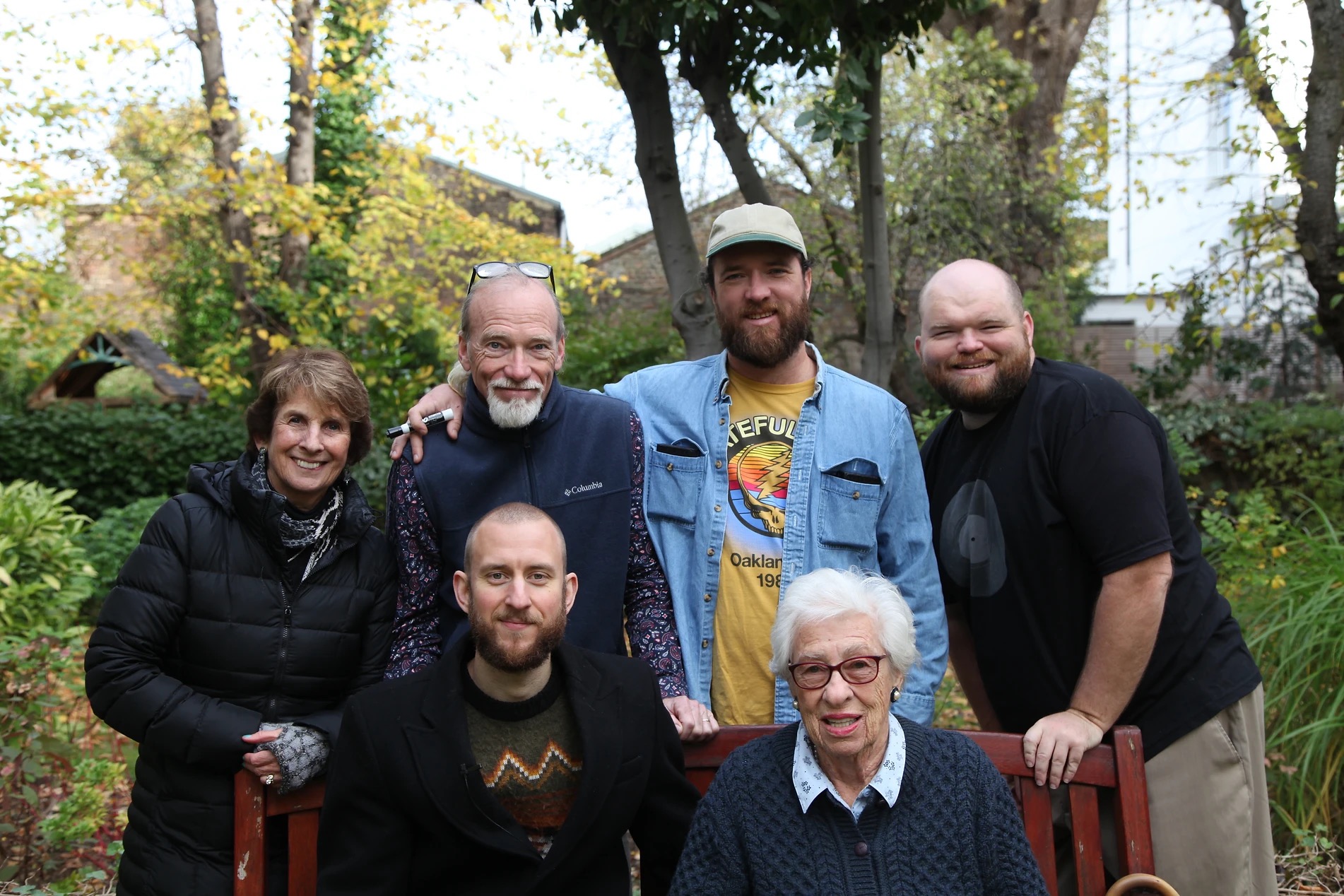
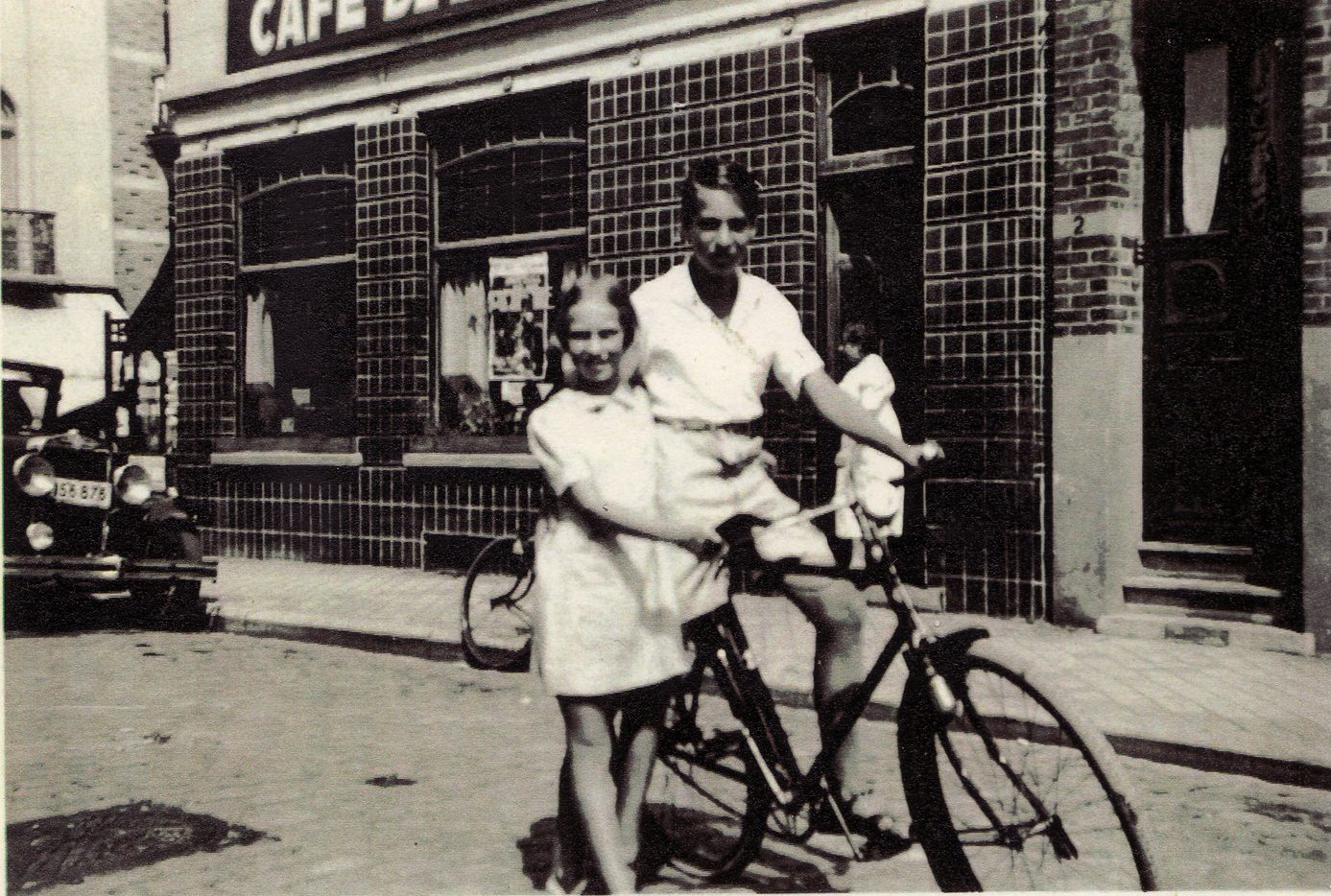
Filming Eva’s Promise in London. Seated: Eric Schloss, Eva Geiringer Schloss. Standing: Susan Kerner, Steve McCarthy, Justin McCarthy, and Ryan McCarthy.Eva and Heinz in Amsterdam before they went into hiding.
PHOTO CREDITS:
Photograph of production team and Eva and Heinz in Amsterdam courtesy of Susan Kerner and Eva Schloss.
This article was originally written for Rosh Hashanah 5785 (September 2024). It may be a little late for the High Holy Days, but the message is also valuable as we begin the secular year of of 2025.
The High Holy Days is a time for us to turn inward, to reflect on our lives, not only where we have been but also where we hope to go in the coming year. So much of the world needs our help. What can one person do? How can one person make a difference?
In the Pirkei Avot, Rabbi Tarfon writes,“It is not incumbent upon you to complete the work but neither are you at liberty to desist from it.” That quote has been in my email signature for several years and serves as a reminder to me and those that read it that we can all can make a difference. No, we cannot save the world. But our inability to do EVERYTHING does not give us a pass on doing nothing.
This truth is found in the often-told starfish parable. An old man is walking along the beach in which hundreds of starfish have been washed along the shore during high tide. As he walked, he came across a little girl who is throwing the starfish back into the ocean. “You realize that you will not be able to make much of a difference,” the old man tells the little girl. She picked up another starfish and threw it as far into the water as she could. “I made a difference to that one.”
It reminds me of “starfish” moment. On a recent trip to the beach, Larry and I were walking along the edge of the water. As Larry was enjoying the waves and the birds, I was picking up garbage and sticking it in a plastic bag I brought with me for that purpose. A broken styrofoam cup. A short length of cord. A lone flipflop. And a dozen or so plastic caps from water bottles.
“You can’t pick up every bit of litter on the beach,” Larry said.
“Yes. But I can do something!”
Yes, Larry was right. I am not going to pick up every piece of litter on a beach. But I can at least fill up a plastic bag with some of it.
Giving away my freshly baked challahs also gives me a chance to do something . Early into the pandemic, I started baking three or four challahs a week. At least one of the challahs went to someone in our community who needed cheering. The first one went to a friend whose wife was in a memory unit at the hospital. Week after week, we delivered challahs to people who had lost their spouse, who faced illness; who got bad news from their families. My small challahs were small tokens of love and caring. My challah baking has slowed down in recent months, and I usually make extras to tuck in the freezer to pull out as needed. It just filled my need to do SOMETHING!
For the past ten years, my writing has been a way for me to feel as if I am making a difference. Initially my writing focused on my family stories. In the past eight years, I have become captivated by telling other people’s stories, the lives of Holocaust survivors. So much has been written already: fictional accounts, memoirs, graphic novels, poetry, plays. Many of have become classics: Elie Wiesel’s Night;Prima Levi’s Man’s Search for Meaning; William Styron’s Sophie’s Choice, and Anne Frank’s Diary of a Young Girl. Then why do I continue to interview Holocaust survivors and their families?
Writing these stories allows me to do my part to make the world never forget. Each story is a statement against Holocaust denial. And having each story published has brought feelings of pride, comfort, and maybe some peace to the subjects and their family. Following Rabbi Tarfon’s advice, my inability to write everything doesn’t mean I cannot continue to do something.
And what happens when one person joins others to make a difference? Fortunately, I am surrounded by people in my 55+ community who are also doing their part to help people in the greater Poinciana area. Solivita has over 200 clubs, and many of them support the local community. The Do Unto Others Initiative (DUO) has raised over $260,000 in 11 years to support the work of the St. Rose of Lima Food Pantry. Another club, Solivita Friends Helping Those In NEED, provides similar support for St. Vincent de Paul St. Ann’s Food Pantry in Haines City. Solivita Friends of Elementary Education Schools (SoFEEs) provides nourishment, school supplies and seasonally appropriate clothing to local elementary schools. In the past nineteen years, Stonegate Women’s Golf Association (SWGA) has been able to provide over $300k to local community charities. The Solivita Performing Arts Council (SPAC, Inc.) has raised over $139,000 since its inception, providing grants to help local schools purchase and maintain instruments, fund band and choir concerts, produce school theatrical productions, fund thespian workshops and support art projects. SOLABILITY, a club consisting of individuals of varying abilities, provides activities accessible to all. Members of the Butterfly Club provide financial support for our beautiful butterfly garden; volunteers keep it weeded and in control. Our Book Circle, which has over 30 book clubs under its umbrella, donates books and financial help to Polk County Schools. The Shalom Club makes an annual contribution to the Perlman Food Pantry or Jewish organizations supporting local families. The organizations above represent only a small sample of ways individuals have joined together to help those in need.
So, yes, one person can make a difference. Wishes for a sweet, healthy 5785. May it be a year in which each of us make a difference.
Solivita’s butterfly garden
Published in Rosh Hashanah 2024 issues in Capital District New York’s The Jewish World and Orlando’s Heritage Florida Jewish News.
Solivita is a 55+ community for active adults in Poinciana, Florida.
I love Christmas. I love looking at all the lights on people’s homes and all the twinkling trees inside. I love holiday cookies. And I love how some people fill every inch of their house with Christmas decorations. That being said, I am very happy to celebrate the season vicariously.
With a name like Marilyn Cohen Shapiro, you probably have realized that I have never actually celebrated Christmas. Growing up as the only Jewish family in a tiny upstate New York town, we never had a Christmas tree or strung red and green lights across our eaves. Once I married Larry under a chuppah in 1974, I continued our own Jewish traditions in December: lighting the menorah, making potato latkes, giving gifts to each other and to our children over the eight days. And never once in my life have I had the urge to celebrate the secular elements of the Christians’ beautiful religious holiday. In honor of Hanukkah, here are my eight reasons why.
I cannot untangle the wires on my earbuds. How would I ever manage to take yards and yards of Christmas lights out of storage and unwind them to put on a tree?
In 1996, Larry climbed up on a ladder to shovel snow off the roof. He slipped and fell, shattering his heel. That was the end of his running life. It was also the end of Larry ever climbing up on the roof. The idea of stringing all those lights onto the eaves is frightening prospect!
I look terrible in red and green. While all my Christian friends “don their gay apparel” from Thanksgiving to January 1, I am content to pull out my Israeli blue sweater, tuck my dreidel earrings into my lobes, and enjoy the holiday season with colors that compliment my blue eyes.
Remember I said I love to EAT holiday cookies? That doesn’t mean that I want to BAKE them. I have never done well making sugar cookies, which requires mixing the dough, rolling it out, and then cutting them into cute little shapes. I either made them too thin (i.e. burnt) or too thick (underdone).. And forget about decorating them with tubes of frosting. I can’t DRAW a straight line! How am I to master all those borders and curlicues?
Speaking of cookies, I gave up on cookie swaps years ago. I don’t need to start baking thirty kinds of cookies in October so I could share with friends whose cookies always looked prettier and tasted better than mine. I will stick to my yearlong custom of baking what are known as “Marilyn’s World Famous Chocolate Chip Cookies” and not share a single one.
I have friends that have bins and bins of Christmas decorations stored in their attic, garage, or expensive storage units. Every inch of their house becomes a winter wonderland. They have multiple trees, dozens of nutcrackers, Christmas towels, napkins, and even toilet paper. My friend Bonnie, who loves to decorate for every holiday, even has a twinkling alligator holding a candy cane and sporting a Santa hat! While I love walking through their homes, I am so glad I am not responsible for putting out all the tchotchkes and then packing them up for storage in January. My single decoration—an electric menorah that sits in my window throughout the eight days of Hanukkah is just fine, thank you very much!
As my readers know, I love Hallmark Christmas movies. I get to see everything I have written about above in various permutations of the standard rom-com: The setting: an idyllic small town in United States where everyone, no matter what their occupation, has thousands and thousands of dollars to spend on Christmas decorations. The Plot: either boy meets girl or or two high school sweethearts reconnect; boy and girl dance around a relationship (Think “Kiss the Girl” from The Little Mermaid;); 20 minutes before the end of the movie, boy and girl face a conflict; 20 seconds before the credits roll, boy and girl kiss as snow flakes gently fall on their perfect locks as Christmas music plays softly in the background. Perfect people. Perfect families. Perfect smiles.Why face the reality of a real family when you can kvell for a perfect one?
And speaking about Christmas music, I only learned recently many of the most popular holiday tunes were written by Jews. The most famous is White Christmas by Irving Berlin [born Israel Beilin]. Here is just a sampling of my other favorites: “Chestnuts Roasting on an Open Fire” by Mel Torme [born Melvin Howard Torme]; “The Christmas Waltz” by Sammy Kahn [born Cohen] and Jule Styne; “Santa Baby” by Joan Javits and Phil Springer; “I’ll Be Home for Christmas” by Kim Gannon and Walter Kent [born Kaufman]; “It’s The Most Wonderful Time of the Year” by George Wyle [born Bernard Weissman] and Eddie Pola [born Sidney Edward Pollacsek]. Even “Rudolph the Red-Nosed Reindeer” got his shiny nose from two Jews from New York City’s suburbs. Johnny Marx, who also went on to write “Rocking Round the Christmas Tree” and Burl Ives’ classic “Have a Holly Jolly Christmas,” never—like me—actually celebrated the holiday. Marks’ co-writer Robert Louis May allegedly shared with multiple sources that the lyrics actually represented the ostracism May felt growing up as a Jew with a large nose. Hey, what better way for Jews to live vicariously through Christmas by realizing those songs you are hearing everywhere were written by members of The Tribe!
So, as Larry and I walk through the neighborhood during this surprisingly cold December in Florida, I will rejoice in the shining lights and lovely music and delicious smells of Christmas emanating from my Christian friends’ homes. Then we will go home, light our hanukkiah and enjoy some hot chocolate and chocolate chip cookies as the candles flicker and burn, content in knowing that, for the Shapiros, that is enough. Dayanu.
Source: Albert, Maddy. “11 Iconic Christmas Songs That Were Written By Jews.” Kveller. December 22, 2020.
Bonnie’s wonderful decorations.My preferred way to celebrate! I look good in blue!
As we look forward to Hanukkah this year, which falls on Christmas Day, Larry and I are looking forward to our long-standing holiday traditions. Eating potato pancakes with applesauce. Lighting candles each night. “Betting” on which candle lasts the longest. Watching Hallmark Christmas movies.
Wait! Hallmark Christmas movies? When did that become a tradition?
For as long as I can remember, I have watched Hallmark movies. For many years, the famous card company aired shows specific to the holidays—Thanksgiving, Christmas, and of course Valentine’s Day. Each two-hour made-for television episode touched my heart. Many were based on classic novels, such as The Secret Garden or Sarah Big and Tall. Others were originals, such as What the Deaf Man Heard. And as much as I loved the shows themselves, I especially enjoyed the tear-jerking commercials (Did you know you can Google them? Watch them with a box of Kleenex next to you!)
In 2001, after the major networks dropped the specials, the company launched The Hallmark Channel. Building on its many fans during the holidays, Countdown to Christmas began in 2009, a promotion of 24/7-blast of cheer that is still running today. Cookie-cutter stories, many based loosely on more expensive big screen movies, have been churned out at an amazingly fast rate, with 136 to date. That is a great deal of Deck the Halls and Jingle Bells, their favorite songs as the movies are touted to be about the spirit of the season, not religion.
Even though Larry and I watched the movies frequently over the years, what sent me over the edge was November 2016, when the election results triggered such fear and anxiety that my doctor suggested Xanax. Dr. Larry suggested an additional remedy: Turnoff MSNBC and tune into Hallmark. I was off the anxiety medication less than three months, but I still have my weekly dose of sap and sugar.
If you have watched only one or two of the productions, you have pretty much seen them all. The Christmas plot fall into two categories. Plot One: A high powered business dynamo needs to learn the real meaning of life and that he/she can only find in a small idyllic town inhabited by incredibly cheerful people who despite their low-paying occupations (cupcake bakers, store clerks, and staff at huge inn with no guests in sight except the small cast seem to be a favorite) still can afford enough Christmas decorations to cover EPCOT. Plot Two: A poor but kind woman finds out that the incredibly handsome mystery man she is dating is actually the king of a tiny but wealthy country named after a countertop (Cambria) or china pattern (Winshire). Just before the commercial twenty minutes before the show ends, a conflict based on a misunderstanding erupts. No worries! It will be resolved with a kiss one minute before the snow starts and two minutes before the credits roll.
Until recently, Hallmark was all about white heterosexual Christians. People of color were only seen as the best friend or the minister who marries the happy couple. Gays and lesbians were never seen. This type casting was blown out of the water in December 2021 when the channel first aired then immediately pulled an advertisement for an event planning site that featured two women kissing at the altar. Within hours of its removal, the incident was all over the news. Within days, the president resigned. Within weeks scriptwriters began churning out stories in which gay, lesbian, and interracial romances are highlighted. By Christmas 2021, diversity was fully integrated into the holiday story lines.
And those holiday story lines included those about Jewish families celebrating Hanukkah. Up until 2020, the channel’s attempts at representing a Jewish perspective were major fails for me. Holiday Date. one of three 2019 Hallmark movies with a Jewish twist, involved a Joel, a nice Jewish boy who pretends to be the boyfriend of Brittany, a nice shiksa from an idyll small town in Pennsylvania. “Hilarity” ensues when Joel, who grew up in New York City surrounded by at least one or two Christians, has no idea how to decorate a tree or make a right-sided gingerbread house or sing “Deck the Halls.” (There is that song again!) My favorite moment is when, once the ruse is uncovered, Brittany’s mother comes out of the kitchen holding a tray full of potato latkes and wearing an “Oy Vey” apron that she managed to find on the first night of Chanukah in the town’s only store. The plots of the other two, both involving interfaith romances, made Holiday Date look like Casablanca.
In recent years, Hallmark has redeemed itself with three great Hanukkah movies: Eight Gifts of Hanukkah (2021); Hanukkah on Rye (2022); and Round and Round (2023). These three fine movies contain with a (mostly) Jewish cast and great story lines. Sure, as are all of the channel’s movies, they are schmaltzy, but they will make you kvell with Yiddishkeit pride!
So why do I—along with many others who will not come out of the closet—love the shows? Simple. They are mindless, sweet, non-political, non-violent, and always guarantee to result in a happy ending. I still cry every time King Maximillian and Allie embrace at the end of A Crown for Christmas.(Take that, you wicked Countess!) What held true for me in 2016 holds true in 2024. I need a break from news about wars and politics and environmental disasters. Grab the dreidel shaped sugar cookies and hot chocolate. It’s time for a Hallmark Christmas movie!
Thanks to a wonderful tour director, a great itinerary, and perfect weather, our recent trip to Italy was all that we had hoped for and more. My husband Larry and I stayed in medieval buildings that had been converted to hotels, drove the stunning Amalfi coast, made our way through the Coliseum, tread over the ancient streets in Pompeii, enjoyed wine tasting in Umbria and Tuscany, climbed numerous stairs to churches and bell towers, and rode on a gondola in Venice. We enjoyed fabulous pasta dishes and ate gelato every day.
In each city we visited, we tried to connect with the Jewish elements of Italy, a history that dates back over two thousand years to the Roman Empire. We viewed one of the most famous reminders of the Judea-Roman connection at the Roman Forum, where we saw the Arch of Titus. I immediately recognized the seven branched menorah in the relief that depicted the Romans celebrating their 70 CE victory over the Jews as they carried their spoils of war from the gutted Second Temple.
We arrived in Rome on Simchas Torah, preventing access to its synagogue We did, however dine at Nonna Betta’s, a kosher Italian restaurant in the Jewish Quarter. We feasted on carciofo alla Giudia, the fried artichokes (Their menu read “Life is too short to have the wrong Jewish-style artichoke!”) along with delicious pasta dishes.
After lunch, I headed to the small Judaica shop adjoining the restaurant. As I paid for my purchases, I did my typical “Marilyn the Writer thing” and began asking questions. I learned that Francesca, the “cashier,” and her husband Umberto were owners of the shop and the restaurant. When I told her about my interest in Holocaust stories, Francesca told me that Nonno Betta, Umberto’s 93-year-old mother who lived above the shop and founded the restaurant, was herself a survivor. Although I was able to speak briefly to Umberto and share emails, further attempts to learn more of Nonna Betta’s individual story failed. Through the United States Holocaust Memorial Museum’s Holocaust Encyclopedia, I learned that when the Nazis occupied Rome in September 1943, they sought to include the city’s Jews in the Final Solution. As Italian police did not participate in these roundups and most Italians objected to the deportations, one out of ten Roman Jews were able to find refuge in the Vatican, which retained neutrality, or hide in Catholic homes, churches, and schools. Sadly, 1800 Roman Jews, with a total of 7600 Jews in Italy, were murdered in Auschwitz.
With only one jam-packed day in Florence, we did not time to visit The Great Synagogue. But I fulfilled a dream I had since reading Irving Stone’s The Agony and the Ecstasy in 1966: I saw Michelangelo’s David in the Accademia in all his 17 feet, six ton plus glory. Along with some discussion among our tour group his anatomy (Was he circumcised or not?*), we took twenty-one photos, about four times more pictures than we took of each other throughout the trip. Mamma Mia! David was that impressive!
In Siena, we and four of our travel companions attempted to visit its synagogue and museum. Unfortunately, we found the building shuttered with an “In ristrutturazione” (under renovation) sign posted on the door. I slipped one of my business cards into the door with (little) hope of hearing from them.
We were more successful in Venice. Our hotel was a five minute walk to the Ghetto Ebraico, and we strolled through at sunset on a Saturday evening as Orthodox Jews were ending Shabbat. I met Noa, a thirty-something very pregnant woman overseeing her other children playing soccer in the courtyard. She shared with me that she was born in Israel, but she and her husband had been part of the city’s Jewish community comprised of 400 mostly Orthodox Jews for several years.. She invited us to come to their Shabbat dinner, but hearing that the men and women sat in separate rooms, we opted for our pre-arranged dinner plans with friends later that evening.
It was in Venice that we learned the etymology of the word ghetto. The rise of Catholicism under Empire Constantine (306 to 337 CE) lead to an increasing number of restrictions on the Jewish communities, culminating in 1555 when Pope Paul IV introduced laws forcing Jews to live in a walled quarter whose two gates were locked at night. The word ghetto, according to a Smithsonian article, came from the Italian word getto (foundry) because the first ghetto was established in 1516 on the site of a copper foundry in Venice. As Germany adapted the word for their own “Jewish Quarters,” which they originally called Juddengasse, their guttural pronunciation resulted in changing the spelling to ghetto.
On our second stroll through the area on Sunday, we noticed that someone was looking down onto the sidewalk. I pulled Larry over where we saw one of the 207 pietres d’inciampo (In German Stolpersteine; in English: “stumbling stones”), the plaques commemorating victims of the Nazi regime, that are located in Italy. Now aware, we found several more that evening before we met our tour group for dinner.
What moved Larry and me the most, however, was not even on our itinerary. Sara Basile, our guide, told us she had a surprise for us that could be pulled off if and only if we all met at our appointed meeting time in Florence. Another wine tasting? I wondered. Yet another church?
As our bus pulled off the highway onto a quiet road flanked by Tuscan cypress trees, we saw the entrance gates of the Florence American Cemetery and Memorial.
“My Sicilian parents were always grateful to Americans for defeating Mussolini’s fascist government,” Sara told us. “Taking you here is my way of passing on our country’s gratitude.”
Sara introduced us to our American guide, who gave us the memorial’s history. After the liberation of Rome on June 5, 1944, the U.S. Fifth Army and British Army, supported by the Mediterranean Allied Air Forces, pushed northward. The long and bloody Allied campaign ended on May 2, 1945, when all German forces in Italy surrendered.
The 70 acre Florence memorial, the site of one of the battles, was dedicated on July 25, 1960. Next to a sculpture representing the spirit of peace is a tablet wall listing the 1409 persons missing in action. Larry and I wandered through the graves area, which contains the headstones of 4398 soldiers, of which 4322 are Latin crosses and 76 are Stars of David. As Larry and I followed the Jewish tradition of placing stones on the Jewish graves, I was overcome with gratitude to The Greatest Generation, who had fought in World War II to defeat the Nazis and their cohorts.
The most moving moment was yet to come. At 4:45 PM, as our tour group and other visitors gathered around the flagpole, taps played from the visitors’ center. Blake, a member of the Coast Guard who was on the tour with his bride of 10 months, slowly lowered the flag into the waiting arms of several members of our group who, in turn, folded the flag. A picture of our group with Blake in the center holding the red, white, and blue parcel captured the solemnity.
We are now back in the United States looking forward to sharing Thanksgiving with a group of friends. As always, we will go around the table and share for what we are grateful. Family. Friendship. Good health. And, for Larry and me, gratitude that we were able to visit Italy.
*The debate continues. Theories include a smaller form of circumcision; ignorance on the part of the Christian Michelangelo as to what it was; and attempts off the Catholic Church to erase David’s Jewishness.









 There Goes My Heart
