Category Archives: Jewish Interests

Music to our ears; NRO pop concerts

As we have done since our Mountain Girl was born in 2015, Larry and I are settled into our rental in Summit County, Colorado, to escape the Florida heat and to enjoy family time.
Each summer, we look forward to attending performances of the National Repertory Orchestra (NRO) in Breckinridge.. Eighty young musicians are selected every year through national auditions to perform with the NRO.  NRO alumni may be found in countless orchestras both the in the United States and abroad.  Along with performances at the Riverwalk Center in Breckinridge, the talented performers participate in free “pop up” concerts offered throughout the county. We have fortunately been able to attend several NRO events throughout our stay.
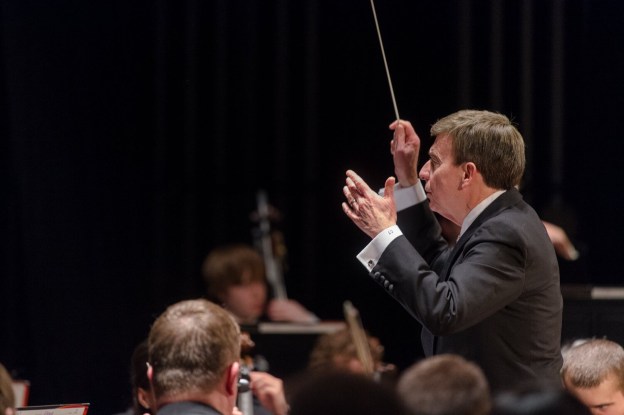
For the past three years, we have attended the Pops concert, led by conductor, showman, and clarinet player extraordinaire Carl Topilow.  Now serving as Conductor Laureate, he was Music Director and Conductor of the NRO for 42 years. In addition to his appearances with the NRO, Topilow is the Founding Conductor and Music Director of the Cleveland Pops Orchestra and has appeared as guest conductor for more than 130 orchestras.  
The son of Jacob and Pearl Topilow, he was raised in Bayonne, New Jersey.  A 2011 article by Violet Spevack in the Cleveland Jewish News spoke of Topilow’s performances in Jewish venues, including at Yom Kippur services and Sisterhood meetings. “Topilow is endearingly ‘one of us,’wrote Spevack, with his Yiddish ta’am (flavor) and chutzpadik (audacious) shticks,” He and his brother and pianist Dr. Arthur Topilow, often perform together, including for a July 2016 NRO event that included klezmer music, the dance-oriented Jewish tradition from Eastern Europe.  
On July 8, 2023, Larry and I brought our then eight-year-old granddaughter to her first concert performance. In the days before the event, we explained to her about the protocols for the concert: her need to sit quietly, to be attentive, to applaud at appropriate times, and to avoid any actions that would distract from other concert goers. Outside of asking if there would be a ‘half time’ (she and her father are huge Denver Nuggets fans), our Mountain Girl was well prepared. She even stood up and yelled “Bravo!” at the appropriate times.
The entertaining concert included themes from The Wizard of Oz, The Lion King, and The Godfather, as well as Topilow’s signature selections from Fiddler on the Roof.  We particularlyenjoyed Topilow’s imitation of the sounds of the shofar on his clarinet — Tikiah! T’Ruah! Shevarim,—played by the illustrious violinist Issac Stern in the movie version of the Jerry Bock/Sheldon Harnick classic.
Later in the season, we took our granddaughter along with her parents to a performance of The Lion King. The Disney animated classic was shown in its entirety on the big screen above the orchestra as 80 musicians, led by conductor Jason Seber, performed the score in precise timing with every scene. “Once you watch a movie accompanied by the power of a live orchestra, you’ll be spoiled for life,” wrote Shauna Farnell in an NRO article in July 2023. She was right. We loved it!
This year, Larry and I repeated our Pops visit. Topilow and his iconic red clarinet lead a small line of brass and wind musicians into Riverwalk with a somber rendition of “Just a Closer Walk with Thee,” a gospel song frequently played at New Orleans jazz funerals. Once on stage, he led the orchestra in a rousing “When the Saints Go Marching In.” He showed off his clarinet expertise in the final number, the Cantina theme from John Williams Star Wars soundtrack.
Although she was unable to attend this year’s Pops concert, our Mountain Girl was she joined us for the NRO’s showing of Star Wars: The New Hope, again replete with the symphony lead by Jason Seber replacing the entire musical score. The Force was with us, as we enjoyed every minute. 

Sources
A special thank you to Carl Topilow for his input into the article
Farnell, Shauna. “The National Repertory Orchestra presents Disney’s ‘The Lion King’ in Concert Live to Film.” www.nro.org website. July 23, 2023.
NRO website. www.nro.org
Spevack, Violet. “Maestro Carl Topilow, Cleveland Pops mark a decade together.” Cleveland Jewish News. October 4, 2011.
Topilow, Carl. www.carltopilow.com


Come hell or high water, the celebration must go on!

A version of this story was published in the (Capital Region, New York) Jewish World on October 26, 2016.

As we Floridians were waiting out Hurricane Matthew’s departure on a very rainy, windy Friday, I was thinking about those people up and down the East Coast who were more strongly impacted by the storm. Would their homes survive intact? Will family and friends be safe? Along with these worries, I thought of people who had had the misfortune to be celebrating a special event— a wedding, a bar mitzvah, a retirement party— in the middle of this major weather system. 

What do you do when bad weather creates chaos? Reflecting on our own experiences and the shared experiences of friends and relatives, I’ve learned that most people let their smile be their umbrella—or snow suit!

My brother Jay and his wife-to-be Leslie planned their engagement party on December 28, 1969, in Rockland County. My parents, my sister Bobbie, and I were scheduled to make the trip from Upstate New York the day before when a crippling snowstorm hit the Northeast.  With my father white knuckled at the wheel, we made it down the Northway to Albany only to find the Thruway was closed. Determined that the four of us would not miss the party, Dad continued the trip down Route 9.  What should have taken six hours took us twelve. The storm, which dumped over twenty-six inches of snow by the time it ended, is still recorded as the third greatest snowstorm in Albany’s history. The memories of our ride from hell were forgotten as we celebrated Jay and Leslie’s engagement the next day in sunshine and relatively warm temperatures. 

On  June 12, 1968, Betty Schoenberg was walking into Washington Square Park for   her NYU graduation when the skies opened up, and the rain fell in torrents.  Many attendees —including Betty— gave up and left, but a few hardy souls shivered under umbrellas. The storm made the front page of the next day’s New York Post:  “Soaked! “ the caption read. “The show did indeed go on despite the rain that pelted the assemblage without a letup.”

When Betty got home, she realized that the rain had soaked through her white dress, her black raincoat, and her purple graduation gown. Her clothes were ruined, and her skin had turned black from the raincoat’s dye run-off. She wrote a letter of complaint to the graduation committee, who offered to pay for her cleaning bills. She never did follow through, but almost fifty years later she still has the letter, the dry cleaning receipt, and  a clipping of the newspaper article in her memory box. 

My friend Lynn Urgenson recalls going to her daughter’s college graduation at CW Post on Long Island. The day before the event was warm and sunny, but by that morning, the temperature dropped into the low forties. Lynn wore several layers of clothing over her original outfit, but her only pair of shoes were her sandals. “ I wound up putting my feet into my purse,” said Lynn. “My teeth were still chattering hours after Caren had picked up her diploma.” 

In 2000, a spectacular mid 70-degree day preceded the largest snowfall of the entire winter season in the Capital Region and the second heaviest all time April snowstorm on record.  For the Huber family, it made Debi’s daughter Arielle’s bat mitzvah more memorable. “Some of my husband’s relatives from Florida definitely freaked out,” said Debi, “as they weren’t used to snow at that point in their lives with many years of living in the Sunshine State.” Fortunately, all of the guests had arrived before the freak storm, and the celebration went on as planned—once the parking lot of the synagogue was plowed out.

Not that the weather is always perfect in Florida. Rosanna and Norm Steele’s son and his bride were to be married on the beach near the Steele’s condo on Siesta Keys on September 25, 2004. The day before the wedding, Jeff called his parents to say that he and Julie were getting married that night as Hurricane Jeanne was bearing down on Florida the next day. Fortunately everyone— the caterer, the photographer, the florist, the violinist—worked with the wedding planner to pull the event off as planned. What was to be the rehearsal dinner became the “After Wedding Dinner,” safely held in a near-by clubhouse. The hurricane rolled in as Rosanna was bringing in the last of the food she had prepared. “Luckily, we didn’t lose power until the dinner was over,” Rosanna said. 

The Steele wedding story didn’t end there. With all flights cancelled, all of the out-of-town guests stayed longer than expected in the rented rooms—without power, cable, and air-conditioning. “ The good far outweighed the bad, “ recalled Rosanna.”   We got to spend some very valuable time together as a family.”

Jason  Freeman and Gretchen Walker’s  wedding day in the spring of 2008 was bright and sunny with one small glitch— fifty mile per hour wind gusts. The four chuppah holders  became flag bearers when the white traditional covering shredded in the wind. “The weather didn’t ruin the wedding at all,” recalled Jason, “as everyone relaxed and didn’t worry about the details.” 

Fortunately for us, Hurricane Matthew took a little hook to the right just in time for the Orlando area to miss the brunt of the storm. By Friday afternoon, I had baked a pumpkin bread and invited a group of women over to play mah jongg. Other areas of the coast were not so lucky. And some day, someone in those effected will be sharing the story of a special event in his/her life in which an unwanted guest named Matthew played a part. 

Where did the last fifty years go?

Come my love and we will wander, just to see what we can find. If we only find each other, still the journey is worth the time. 

Along with school opening and all that is happening in the world, September is a memorable month for Larry and me. 

 Fifty years ago on September 8, 2024, Larry and I got married in Upstate New York. For those who have been reading my column for a while, you may remember many of the stories. We met at a Purim (not porn as some people misheard!) party held by the Jewish singles club in Albany New York. It was love at first sight, and we got engaged six months later. Our wedding was held on a relatively hot September afternoon, the week after Labor Day to accommodate Larry’s parents’ store’s school opening weekend and at two p.m. to accommodate Hebrew school hours. Despite the fact that the rabbi barely knew us, he gave a very long talk, of which we remember nothing. The reception was provided by the Sisterhood, who served chicken, peas (Larry hates peas!), and un-Kosher wine provided by my mother whose label was covered with aluminum foil. The band forgot the words to our first dance (“He Touched Me,” by Barbra Streisand. On reflection, it was a dumb choice. If we got married today, Larry and I would choose “Moon River.”) My father got a little tipsy (totally out of character) and thanked Keeseville National Bank for the loan that paid for the wedding. 

If the wedding and reception was not perfect, our honeymoon was a disaster. Twelve hours into our stay in Quebec City, Larry woke up in agonizing pain from what was later diagnosed as a kidney stone. The next morning, I drove Larry to a hospital and drove myself to a $9 a night rooming house across the street. Three days later, newly relieved of his stone through surgery, Larry sat in the passenger seat while I started the drive back to my parent’s home on Lake Champlain. Mistaking the Canadian kilometer per hour speed limit for the United States miles per hour speed limit, I hit 90. Larry told me to pull over, and he would drive. When we arrived three days early at my parents’ cottage on Lake Champlain, they initially thought the marriage had already tanked. (Fifty years later, despite the fact that I am an excellent driver, I still defer to Larry to drive when we are in the car together.)

Thus began the “getting to know you” stage of our marriage. In that first year, a co-worker of Larry’s noticed that my usually slow-to-anger husband was banging drawers and mumbling expletives under his breath. “What IS your problem?” Helen asked. “Never get married!” Larry shouted. “She leaves her shoes in the middle of the room,” he steamed. “When I got up to go to the bathroom, I tripped over them.”

A half a century later, we have learned to accept each other’s quirks. Larry is a terrible backseat driver; I leave cabinet doors open, lights on, and discarded shoes all over the house. Larry is quiet and private; I am talkative and too forthcoming. Larry thinks often in mathematics and statistics; I am more focused on the written word. Case in point: Larry thought our 49th anniversary was more exciting because 49 has a square route; I had to use this column to share an essay on our fiftieth. In the glow that surrounded our memorable anniversary, I could come up a handful of things about Larry that bother me. Larry came up with fewer. 

When my parents celebrated their fiftieth anniversary, we had a huge party at our home in Clifton Park. The four children and their spouses had chipped in to give Mom and Dad their first ever and only cruise. I will never forget the joy and amazement when they opened up the envelope with the voucher.

Of course, we all thought they were old. As a matter of fact, I had commented earlier that summer that it was a ridiculous that a couple were getting divorced after 35 years of marriage. Why bother starting over at that late stage?

Now, we are the ones celebrating a milestone anniversary. The past fifty years have flown by in a flash, a blur, a nano-second. We have a lifetime of memories and experiences and ups and downs and ins and outs. We have enjoyed working in career fields we loved, raising two children, watching them grow, spread their wings, and fly onto new adventures; sharing friendships; and sharing close family ties only enhanced most recently by mishpachah (extended family) and three grandchildren.

Despite the speed the last half century has sped by, I will not trade one moment of our lives together for anything else. Larry is my best friend, my soul mate, my companion, the wonderful father of my children and the amazing Zayde of our grandchildren. For his 75th birthday, I wrote a list of the same number of things I love about him. In the past year, I’ve added several more. 

How will we celebrate? Our children gave us a weekend at a beautiful bed and breakfast. Later this fall, we will be taking a trip to Italy.. But most importantly, I will never ever lose sight of the fact that marrying my Larry was the best decision I ever made. And thankfully, he feels the same way about marrying me.

Celebrating our Fiftieth in Winter Park, FL

Celebrating in the Big Easy

A version of this story was originally published in The Jewish World and the Heritage Florida Jewish Journal in October 2018.

Simchas and celebrations are wonderful, but New Orleans celebrates every day of the year. A city brimming with restaurants, clubs, and street musicians, it was easy to see why The Big Easy is listed consistently in the top five party cities in the United States. 

First and foremost, it is a city for foodies. The minute my husband Larry and I got into the shuttle taking us and our four friends to our lovely bed and breakfast, our driver Ryan started listing all the restaurants we needed to try. “Cafe Du Monde for breakfast; Napoleon’s for lunch; Arnauds for dinner; Dragos for a snack; Mothers for the debris Po’Boys; Rum House for tacos; Dat Dogs for franks…… ” 

“How many times can we eat in one day?” I asked as I quickly scribbled down the names.

The answer is —errr—more than three. Our first dinner was at the Cochon, where I experienced the milder Creole food while Larry got a mouthful of the hotter Cajun style. We then headed down to Royal and Bourbon Streets, the heart of the evening action. At the Spotted Cat, we listened to a fantastic jazz combo and even got an unexpected treat. The group’s leader announced that his wife had just arrived from Paris. Accompanied by the clarinet, bass, and sax, she sang a beautiful rendition of La Vie en Rosa, Edith Piaf’s signature song. Magnifique!

The next morning, we took a two-hour walking tour of the French Quarter. Our guide Kathy, a New Orleans native, laced her information with colorful stories of the founders, the builders, the business owners, and famous New Orleanians: . musicians Louis Armstrong and B.J. King; writers Truman Capote, William Faulkner, and Tennessee Williams; the pirate Jean LaFitte, and Chef Emeril Lagasse 

When I asked about the Jewish influence, Kathy shared stories about Judah Touro, who funded both the synagogue and hospital that bears his name; Malcolm Woldenberg, a New Orleans businessman whose philanthropy is honored in a park that holds the city’s Holocaust Memorial; and Allan and Sandra Jaffee, natives of Philadelphia who in 1961 turned an art gallery used for occasional concerts into Preservation Hall, forevermore beloved by jazz musicians and fans around the world.

For lunch, we each sampled the muffuletta—a sandwich that is made with Italian charcuterie and a spicy Creole olive salad—al fresco at the Napoleon. An hour later, we boarded the Steamboat Natchez, one of only two true steam powered sternwheelers on the Mississippi River today. On our two hour ride, we had a good view of another of New Orlean’s nickname, Crescent City, as the land sits like a crescent shaped bowl on the banks of the river. We went past industrial parks reflecting the economic importance of the river, areas still recovering from Hurricane Katrina in 2017, and lovely homes almost hidden by rebuilt levees that locals hope will never breach again.

After the ride, we stopped fat Cafe Beignet for the world-famous square pastries. Once finished, we hauled our confectionary-sugar-covered bodies to Drago’s for dinner. After a walk back from Riverwalk, we headed back for a swim and a soak in our B&B’s hot tub before our exhausted bodies fell into bed. 

The next day’s Garden Tour added to our appreciation of another view of New Orleans. Originally developed by the French to keep those pesky Americans out of the French Quarter, the Garden District is known for its tree-lined streets, palatial homes, and fine dining. 

We toured the Lafayette cemetery, an egalitarian final resting place for Christians and Jews; rich and poor; and, unfortunately due to multiple outbreaks of yellow fever throughout the city’s earlier history, the very young and very old.

Because of the high water table, all remains are interred in family or organization tombs, including one for destitute children and one for firefighters. Remember the expression, “I won’t touch that with a ten foot pole!”? We learned the meaning in that cemetary as room for the newly deceased is made by pushing back previous bodies to the back of the crypt with the long pole used for that purpose.We then were escorted past the homes of other famous city residents, including Sandra Bullock, John Goodman, and—the most popular—the Manning family of football fame. 

After tacos at The Rum House, we all boarded the St. Charles streetcar for a ride past Touro Synagogue, Audubon Park, and Loyola and Tulane Universities. Our timing was perfect as it started raining soon after we boarded and came down in torrents until shortly before we departed. That was my only regret that weekend: Larry and I hadn’t chiseled out time to check out the synagogue and meet with one of its rabbis, Todd Silverman, who is the son of long-time friends from Upstate New York. 

Our final dinner was at Arnaud’s, a beautiful five star restaurant off Royal Street. We had reservations in the Jazz Room, where the food, service, and ambiance were wonderful. Our meal was enhanced by a three piece jazz band that at one point stopped by each of the tables to take requests. Larry’s choice of Sweet Georgia Brown was a hit.

The next morning, we all made a dash over to the World War II Museum to view as much as we could in the two-hour window before we headed back to the airport. Yes, New Orleans is known for its music and food, but this fantastic museum is ranked by TripAdvisor as the top attraction in the city, named by USA Today as the “#1 Best Place to Learn US Military History,” and designated by Congress as America’s official museum about World War II. Artifacts and videos brought the terrible war and its history to life. 

We had arranged for Ryan, our original driver, to pick us up at the our bed and breakfast. We gave him a rundown of all the restaurants we had managed to eat our way through in three days. Then Larry and he discussed that night’s upcoming New Orleans Saints/Washington Redskins game. Before boarding our flight, two of our friends tasted po’ boy sandwiches and the rest of us ate pralines, two of the few specialities that we hadn’t consumed in the past 36 hours. It was time to leave The Big Easy—but there was one more surprise left.

Larry and I got home in time to throw in some laundry and turn on the New Orleans Saints and Washington Redskins football game. Drew Brees threw a 62 yard touchdown pass that resulted in his overtaking Peyton Manning’s record—another hometown native— to become the National Football League’s career passing leader. When I texted my “mazel tov” to Ryan, he texted back a thank you and a picture of the scoreboard proclaiming the Saint’s quarterback’s accomplishment.

Between the levees on the Ole Mississippi and the levity on Bourbon Street, I may not want to live in New Orleans. But Larry and I are already thinking of another trip. After all, we need to spend more time in the city’s museums. We need to enjoy a visit with Todd, and we have at least another 1,200 restaurants to try. As they say in Louisiana creole, “Laissez le bon temps rouler!” (Let the good times roll!) 

10/18/18

As a Jew, I will not vote for Donald Trump as he fails to reflect my values. [Revised 10/10/2024]

On November 5, 2024, Americans will be voting in what many view as the most consequential elections in our history. As I make my selections, it will be imperative that my choices reflect the values that are important to me not only as a Jew but also as a human being, those values concerning freedom, truth, justice, equality, intelligent leadership, and empathy. 

In a recent poll by the Jewish Democratic Council of America, 72% of Jewish voters backed Vice President Kamala Harris, and 25% supported former President Donald Trump. In 2021, the Pew Research Center published “Jewish Identity and Belief, ” a study based on a survey of Jews as to what attributes are most essential to being a Jew. Based on five of its most essential, here are some of the possible reasons why so few Jews back candidate Trump:

Remembering the Holocaust:” DonaldTrump has praised dictators, including Vladimir Putin (“a genius” and savvy”) Victor Urban (“fantastic”); and Kim Jung-un (“tough, smart guy.”) This alone should disqualify him for office. Taking a page from his dictator friends’ playbook, he recently posted on his website Truth Social that he will lock up political opponents.”“WHEN I WIN, those people that CHEATED will be prosecuted to the fullest extent of the Law, which will include long term prison sentences.” Furthermore, according to the Jewish Democratic Council of America (JDCA), Donald Trump has mirrored the fascist rhetoric of Hitler and Mussolini through his antisemitic tropes, including the vile “duel loyalty” lie. He has accused Jewish Democrats as hating Israel and their religion, calling them “fools” and needing to have “their head examined.” On September 19, 2024, Trump asserted, “If I don’t win this election the Jewish people would have a lot to do with that,” (Note: Jews make up only 2.5% of the U.S. adult population).Even J.D.Vance, Trump’s vice president choice, wrote privately to an associate in a 2016 email that he viewed Trump as “America’s Hitler.”

Trump’s recent rhetoric has been as disconcerting if not more dangerous. In two separate talks to Jewish groups in Washington D.C. on September 19, Trump asserted, “If I don’t win this election the Jewish people would have a lot to do with that.” 

His comments were immediately excoriated by prominent Jewish groups. including the American Jewish Committee. “Whoever a majority of the Jewish community votes for, Jews — roughly 2% of the U.S. population — cannot and should not be blamed for the outcome of the election. Setting up anyone to say ‘we lost because of the Jews’ is outrageous and dangerous. Thousands of years of history have shown that scapegoating Jews can lead to antisemitic hate and violence.” 

“Leading an ethical and moral life:” According to the Washington Post, Trump made 30,573 false or misleading claims over the 4 years of his presidency. Along with six corporate bankruptcies, his legal woes include indicted or alleged crimes including Trump University, hush money payments, sexual abuse and defamation, falsified business records, and attempts to overthrow the results of the 2020 election show. Most recently, Trump’s lies about the federal response to Hurricane Helene, with claims that hurricane money was spent to house illegal immigrants, has complicated the recovery. “It is paramount that every leader, whatever their political beliefs, stops spreading this poison,” White House spokesman Andrew Bates wrote in the memo, adding: “This isn’t about politics — it’s about helping people.”

Working for Justice and Equality in Society:” Coupled with his being on the wrong side of the law as enumerated above, Donald Trump has known to align himself with and has emboldened dangerous far-right wing extremists. He dismissed the neo-Nazi and white supremacists’ 2017 deadly demonstration in Charlottesville, North Carolina, with his infamous,“There were good people on both sides.” He has disparaged immigrants, the disabled, Gold Star parents, veterans, prisoners of war, veterans, Haitians, Blacks, Muslims and, as noted above, all his political opponents. 

Being Intellectually Curious:” In 2018, Trump defended himself against negative reports regarding his mental capacity to handle the presidency with a tweet stating he was “very smart” and “a very stable genius. On 5/21/2021, New York Times reported on information shared by 10 then-current and former officials involved in the president’s intelligence briefings. They stated Trump frequently ignored information with which he disagreed, veered off in tangents, demonstrated a short attention span, and relied on conservative media and friends for information. 

Caring about Israel:” Trump repeatedly states that as president he did more for Israel than any other president, citing the 2020 Abraham Accords. As we commemorate the first anniversary of the October 7, 2023, massacre, however, his rhetoric demonstrates his serious lack of support for Israel. His initial comments a few days later were to praise Hezbollah, another terrorist group, as “very smart,” Recently, on the event’s first anniversary, he used a conservative talk show’s podcast to put the spotlight on his own grievances.“Israel has to do one thing. Israel has to get smart about Trump,” he was quoted in The Times of Israel,” because they don’t back me.” John Bolton, Trump’s former national security advisor, warns that the former president cannot be trusted. “ Trump’s support for Israel in the first term is not guaranteed in the second term, “ said Bolton, “because Trump’s positions are made on the basis of what’s good for Donald Trump, not on some coherent theory of national security.”

When someone shows you who they are,” wrote Maya Angelou, “ believe them the first time.” This election day, we can choose a path, a future in which democracy can continue forward. Please join me in voting for Kamala Harris.

Sources:

Britzky, Haley. “Everything Trump says he knows ‘more about than anybody.’” Axios. January 5, 2019.

Cillizza, Chris. “Trump’s ‘very stable genius’ tweet shows he isn’t.” CNN. January 7, 2018. 

DeValle, Lauren et. Al. “Jury finds Trump must pay $83.5 million to E. Jean Carroll. CNN. January 26, 2024. 

“Hear Trump praise dictators at New Hampshire rally.”CNN. November 12, 2023

Holmes, Kristin Andrew Millman,  “Trump praises ‘fantastic’ Viktor Orbán while hosting Hungarian autocrat at Mar-a-Lago for meeting and concert.” CNN March 3, 2024.

Jewish Democratic Council of America Website https://jewishdems.org/

Kelly, Laura. “Trump says ‘Jewish people would have a lot to do’ with his loss ‘if that happens.” The Hill. September 20, 2024.

Kessler, Glenn, Salvador Rizzo, and Meg Kelly. “Trump’s false or misleading claims total 30,573 over 4 years.” Washington Post. January 24, 2021.

Magid, Jacob.“Trump: ‘Israel has to get smart about Trump, because they don’t back me’”The Times of Israel. October 7, 2024.

Markoe, Lauren. ‘Outrageous and dangerous’: Jewish groups blast Trump after he said Jews would bear blame if he loses.” Forward. September 20, 2024.

Pew Research Center. “Jewish identity and belief.” May 11, 2021 (https://www.pewresearch.org/religion/2021/05/11/jewish-identity-and-belief/)

Rodriguez, Sabrina and Justine McDaniel. “As Trump makes false claims about hurricane relief, White House calls it ‘poison.’” Washington Post. October 4, 2024

Savage, Charlie and Maggie Haberman, Jonathan Swan and Michael Gold. B “Trump Steps Up Threats to Imprison Those He Sees as Foes.” New York Times. September 9, 202

Sheffy, Steve. “Your Republican Friends need to know the facts.” The Times of Israel. September 11, 2024.

Soifer, Halie. “Not just about defeating Trump: Why Kamala Harris is the next president that Jews need.” Forward. August 22, 2024.

Slattery, Gram and Helen Coster. “J.D. Vance once compared Trump to Hitler. Now they are running mates.”Reuters. July 15, 2024.

U.S. News Staff. “All of Trump’s Legal Woes” U.S. News. Aug. 28, 2024.

What’s your resolution? White Rabbit vows to be on time.

“I’m late / I’m late / For a very important date. / No time to say “Hello, Goodbye”. / I’m late, I’m late, I’m late.” White Rabbit in Alice in Wonderland, by Lewis Carroll

Lewis Carroll’s classic novel has always been one of my favorite children’s books, and I often dreamed of being Alice, falling down a rabbit hole, and meeting the Chesire Cat and the Mad Hatter.. I never realized until recently that I wasn’t Alice.  I was the White Rabbit.

My epiphany came on Rosh Hashanah, while I dashed around getting ready to leave for shul.  My husband, who was unable to attend services due to recent leg surgery, commented on the fact that I was still trying to leave at 10 am, an hour after services began. “You’re running late,” he commented. “You seem to be doing that a lot lately.”

Initially I was going to make some snide remark about how taking care of his needs as well as all the household responsibilities that he had not been able to do as a result of his surgery had contributed to my problem.  I, being the good wife, bit my tongue and headed out to shul.

As I spent time in synagogue reflecting on my morning rush, however, I realized that my lateness was not limited to those last few weeks.  Friends had been left waiting at restaurants, movie theaters, and book stores, with a quick telephone call from me saying, “I’m running a little late! I should be there in ten or fifteen minutes.” And this had been going on for a while.

The irony in this situation is that I have always been the Calendar Queen. For years, I lugged around a Franklin Planner, meticulously writing down every appointment and writing elaborate To-Do lists.   I was always the person given responsibility for event planning and date tracking.  For at least twenty years, I have been secretary of my book club.  If anyone needs to know what book we are reading, or which member is hosting, or what date we are meeting, I am the person.  Now that I have moved from the Franklin Planner to the electronic version, I drive Larry crazy with all the dings and beeps and twills that signal an upcoming event.  It’s just that all these reminders don’t get me out the door when it is necessary. To paraphrase Marilyn Monroe, “I’ve been with a calendar, but I’ve never been on time!”

Lateness was not an issue for many years.  For my twenty-five years of teaching, I was in my classroom on time, and I became impatient with the stragglers.  It was when I moved out of the classroom into an administrative position that my ability to be on time became a question.

My new job required that I wear many hats:  I was responsible for public relations, institutional research, grant writing, special events, as well as any “duties as assigned.”  Although I enjoyed what I did, my job often required that I multi-task; as a matter of fact, my boss felt strongly that the ability to handle numerous balls in the air was a sign of a good administrator.  As a result, I got into the habit of not only working on numerous projects at one time, but also switching quickly from one task to another. (Do you hear the sounds of balls bouncing?)  In order to handle the myriad of responsibilities, I also found myself trying to complete just one more thing.  As a result, I was always sweeping into a meeting a couple of minutes late. Of course, since everyone I worked with was also trying to multitask, I was not always the last one in conference room.  Larry also noticed it on the home front, as my necessity to finish up something resulted in my coming home one or two hours late.

These bad habits carried into my personal life, and even when I retired, I still found myself trying to squeeze in “one more thing” before heading out the door. Whether it be making that one phone call or checking Facebook or finishing my Cryptoquote, I often was running late, just like that proverbial White Rabbit in Wonderland. Which was where I was on that Rosh Hashanah morning.

So I decided then and there that I would start the new year with the resolution to improve my track record for promptness. I would stop multi-tasking, No last minute phone calls. No checking emails. No last minute laundry folding. No, the new me would be showered, dressed, ready, and packed up ten minutes before any estimated time of departure.

Or not.  Despite best intentions, it doesn’t always work out.  I can try my best, but life does get in the way.  Recently, I was heading out the door to the YMCA when my brother and sister-in-law called, and we chatted until I begged off, saying I had to get out the door. Pulling the car out of the garage, I realized it had started snowing, which meant it took twice as long to make the four-mile trip to the Y. Once I got there, I ran into Tim, who caught me up on his winter running woes, and Lily, who shared with me that she was celebrating the holidays with her children from Chicago.I finally got on to the elliptical, and it took me about five minutes to untangle the wires on my earbuds.  I had to cut my ride short to make it to class, which, because of the snow, was comprised of the instructor and four brave souls. OK. I tried! And I did get to class on time, unlike the unfortunate woman who showed up at 11:55 (Friday start time) for our 11:30 am Tuesday class, a feat I had pulled myself on a few occasions.

One of the advantages-or maybe disadvantages-of being Jewish is that we have two opportunities a year to make resolutions: our sacred Rosh Hashanah and our secular New Year’s Day.   So, for the secular New Year, my resolution is to continue working on the promise I made to myself this past September to be on time.  Whoops! look at the clock!  Need to cut this short to get to the Y for an 11 o’clock spinning clas……

A version of this article originally appeared in the Jewish World News, a bi-weekly subscription-based newspaper in upstate New York.

Like the White Rabbit, I am late!!

A version of this article originally appeared in the Jewish World News, a bi-weekly subscription-based newspaper in upstate New York.

One of the advantages-or maybe disadvantages-of being Jewish is that we have two opportunities a year to make resolutions: our sacred Rosh Hashanah and our secular New Year’s Day.   

My Rosh Hashanah resolution came directly from a comment from my husband.  Larry had just had surgery for a ruptured Achilles tendon, and he spent the High Holy Days in a Lazy Boy with ice packs on his huge cast.  Services started at 9 am, and I was still getting ready at 10 a.m.

“You’re running late,” he commented, as I dashed back and forth in front of his spot in the family room.  “You seem to be doing that a lot lately.”

Initially I wanted to make some snide remark about how taking care of his needs as well as all the household responsibilities that he had not been able to do as a result of his surgery had contributed to my problem. 

As I spent time in synagogue reflecting on my morning rush, however, I realized that my lateness was not limited to those last few weeks.  Friends had been left waiting at restaurants, movie theaters, and book stores, with a quick telephone call from me saying, “I’m running a little late! Should be there in 10…or 15 minutes.” And this had been going on for a while.

Lateness was not an issue for many years, especially when I was teaching. I used to be the first one at a party or restaurant, and I made sure I was at doctors’ office with time to spare. For my twenty five years of teaching,  I was in my classroom on time, and I became impatient with the stragglers.  It was when I moved out of the classroom into an administrative position that my ability to be on time became a question.

My new job required that I wear many hats.  I was responsible for public relations, institutional research, grant writing, special events, as well as any “duties as assigned.”  Although I enjoyed what I did, my job often required that I multi-task; as a matter of fact, my boss felt strongly that the ability to handle numerous balls in the air was a sign of a good administrator.  As a result, I got into the habit of not only working on numerous projects at one time, but also switching quickly from one task to another.  In order to handle the myriad of responsibilities, I also found myself trying to complete just one more thing.  As a result, I was always sweeping into a meeting a couple of minutes late. Of course, since everyone I worked with were also trying to multitask, I was not always the last one in conference room.  Larry also noticed it on the home front, as my necessity to finish up something resulted in my coming home one or two hours late.

These bad habits carried into my personal life, and even when I retired, I still found myself trying to squeeze in “one more thing” before heading out the door. Whether it be making that phone call or paying that bill or putting away that load of laundry, I always was running late, just like that proverbial White Rabbit in Wonderland. Which was where I was on that Rosh Hashanah

Since September, I have worked hard to focus on being on time. That means being ready  in advance. No last minute showers. No running around trying to find the sweater I planned on wearing. No, the new me is dressed, ready, and packed up ten minutes before any estimated time of departure.

Or not.  Despite best intentions, it doesn’t always work out.  I can try my best, but life does get in the way.  On Tuesday, I was heading out the door to  the YMCA when my brother and sister-in-law called, and we chatted for fifteen minutes.  Pulling the car out of the garage, I realized it had started snowing, which meant it took twice as long to make the four mile trip. Once I got to the Y, I ran into Tim, who caught me up on his winter running woes, and Lily, who shared with me that she was celebrating the holidays with her children from Chicago.I finally got on the elliptical, and it took me about five minutes to untangle the wires on my earbuds.  I had to cut my ride short to make it to class, which, because of the snow, was comprised of the instructor and four brave souls. OK. I tried! And I did get to class on time, unlike the unfortunate soul who showed up at 11:55 (Friday start time) for our 11:30 am Tuesday class.

So, for the secular New Year, my resolution is to continue my quest to be on time.  Whoops! look at the clock!  Need to cut this short to get to an 11 o’clock spin clas……

A version of this article originally appeared in the Jewish World News, a bi-weekly subscription-based newspaper in upstate New York.

My Spot

A version of this story was first published in The Jewish World in October 2015. I am sharing the article for the first time on my blog.

Up until this past May, Larry and I sat in the same seats at Congregation Beth Shalom in Clifton Park. We always sat in the fourth row, left side of the bima, on the two end seats. The Elmans were on the middle aisle, the Grossmans were next to them, and the Toubs sat behind us. 

There was a reason for our seating choice. First of all, Larry and I chose to be with close friends. Second of all, Larry liked the end seats so we could get out easily if we needed to take a break. Finally one of two memorial plaque boards were next to us, and we sat right next to the plaques we had gotten in memory of our parents and an uncle. That was our spot every Shabbat service we attended for innumerable years. Sometimes, especially during Rosh Hoshanah and Yom Kippur, we would arrive late and someone else would have taken “our” seats. I am not sure if our angry glare burned a hole in the back of their heads. It would have served them right!

Having one’s spot is ingrained in our brain from our earliest years in school. We were given seats in elementary school, but it was even more formal in the upper grades when we were always seated alphabetically. In home room,  I, Marilyn Cohen, sat behind Stephen Bullis from seventh through twelfth grade, the same place we were assigned in many of our classes. Steve wore shirts with a loop in the middle under the seam, and I remember grabbing it and trying to pull it off. I thought my attempt at flirting was cute, but I am sure his parents didn’t like the fact that he was coming home with holes in the back of those nice button downs.

However, even when we are not assigned seats, humans, by habit, tend to choose the same place out of a psychological need. In his book Maximizing Project Success Through Human Performance, industrial psychologist Bernardo Tirado gives this action a name, seat marking. It is  a way in which we humans unconsciously mark our territory. ”Think of how many years you sat in assigned seats in school,” says Dr. Tirado. “That level of conditioning continues into our adulthood, even though our seats are no longer assigned.”

Larry and I certainly haven’t outgrown the habit. We eat in our “assigned seats” at our dinner table; we often request the same table and same chairs at a favorite restaurant; we sleep on the same sides of the bed no matter where we are. And when I go to one of my exercise classes, I choose the same spot on the dance floor to follow the instructor. I like to be in the first row in the middle with a clear view of the mirror. 

Of course, all this territoriality does cause problems. While taking a  Zumba class at the YMCA just before our  move, I choose the one empty spot in the first row. A minute before the class was to start, a woman took her place next to me, literally touching my left arm. “Excuse me,” I said. “I am standing here.” “No, this is my spot,” she informed me, and refused to budge.We almost came to blows until I found an empty space in the back of the room.

In our new home, I have also found another spot that is very important in my new life. When weather permits, I move one of the patio chairs in the middle of the open part of the lanai, between the two ferns the former owners left for us. With my feet on the matching hassock and with a cup of Earl Grey tea in my hand, I can look out at “our” pond. It is the best place to observe the bird life and the location of whatever alligator is inhabiting our pond on that particular day. Larry and I have plans of getting a double glider later this winter so that we both can enjoy the view. Not since I was a teenager on Lake Champlain, when I used to sit on the rocks on Willsboro Point overlooking the lake to Burlington have I had a particular place whereI can find such peace and contentment. 

Now that we have moved to Florida, I don’t know who sits in our seats at our Clifton Park shul. Has another couple moved into our seats, or are those two blue chairs sitting empty, waiting patiently for us to return? We are too new at Congregation Shalom Aleichem in Kissimmee to have found the place we want to sit on a regular basis. On the first day of Rosh Hoshanah, we found empty seats a few rows back next to a  couple we had met, and Wendy saved those seats for us for each of the Yom Kippur services. We’ll have to see if that place continues to work out for us.

After the morning Rosh Hoshanah services, two other couples joined us for a holiday meal. As we moved from the chopped liver and Manischewitz wine in the breakfast nook to the chicken in mushroom sauce, kasha varnishkis, and honeyed carrots at the dining room table, one of my friends asked, “Where would you like us to sit? Do you and Larry have your own special spots?”  Larry and I looked at each other questioningly. This was the first time we had ever even eaten in the dining room and had no idea where our spots were. But Larry gravitated to the head of the table, and I chose the seat closest to the kitchen. We all settled into place, said a haMotzi , the traditional prayer over bread, and began our meal.  Larry and I had found our spots, and our new new house felt more like our home.

How I wrote my first book

“It was a dark and stormy night. Suddenly shots rang out!” Snoopy

Poor Snoopy! For all his “dogged” attempts, Charles Schultz’s beloved beagle has not yet published his novel. Thanks to The Jewish World, however, I have been more successful. I have published a book.

Actually, it was a bright and sunny day in June 2013, when Josie Kivort, Hadassah Capital District’s Chapter Campaign Chair, and I paid a visit to the Jewish publication’s office. For the past several months, we were serving on the committee to plan the organization’s annual Special Gifts event. Jim Clevenson, the publisher of the Schenectady, New York,-based biweekly, Josie, and I met to discuss the timeline future press releases and advertisements. 

 I had communicated  with The Jewish World, mostly through press releases. For years, I had worked on publicity, first as a volunteer for several organizations in Clifton Park and later as part of my responsibilities at the Capital District Educational Opportunity Cente, a division of Hudson Valley Community College, in Troy, New York.. We had been in “virtual contact” as  I had been sending the newspaper  articles that I felt would be relevant to the Jewish community.

During our discussion, I mentioned to Jim that I had retired three years earlier. Jim asked if I would be  interested in doing reporting for the Jewish World. 

“I have  done enough press releases for a lifetime,” I told Jim. “However, would you be interested in publishing some short non-fiction pieces about my life as a Jewish woman, wife, and mother in Upstate New York?”

Jim agreed to give the idea a try, and he told me that I should send the articles to Laurie Clevenson, his sister and the paper’s editor-in-chief.

My first newspaper article appeared in the August 27, 2013, school opening issue. “There Goes My Heart” recalled how saying goodbye to my children—whether putting them on the bus the first day of kindergarten or dropping off at their dorms their first day of college or waving them off as they got in their own cars and drove cross country to new jobs—always brought me to tears. 

I had asked my mother if the farewells ever got easier. “Oh, Marilyn,” she said. “Every time any one of you gets into the car and drives away, I think to myself, ‘There goes my heart!’”

So started my regular contributions to The Jewish World. Every two weeks, I wrote a story and submitted it for the newspaper’s consideration. Growing up as the only Jewish family in a small Upstate New York town; experiencing anti-Semitism on my first teaching job in the Capital Region of New York; participating in a playgroup for our two-year-olds; adjusting to retirement; leaving the home we shared for thirty-six years to move to Florida—these many once-private moments became very public columns. 

Initially, I was  afraid I would run out of ideas. As the months progressed, however, I found that even the smallest event— biking up a steep mountain in the Rockies, visiting the Portland Holocaust Memorial, changing my granddaughter’s diaper—could morph from an idea to a story. Family and friends shared their experiences, and, with their permission, wove them into my articles.

Not that the stories always flowed easily from my brain to the Mac laptop. “Writing is easy,” wrote sports writer Red Smith. “All you do is stare at a blank sheet of paper until drops of blood form on your forehead.” I often found myself up at midnight before a deadline trying to polish what I had written. But, like some people I knew who devoted hours to quilting or photography or golf, I devoted hours to my writing. 

When I moved to Florida in 2015, I joined SOL Writers, a group of women who met twice a month to share their drafts or to participate in a free write. A few of the women were published authors; others, like me, had dreams of expanding their audience. I brought in pieces I had either completed or were working on for The Jewish World. The women were not afraid to criticize but they were also generous in their praise. “You seriously need to think about putting these essays into a book,” one of my writer friends suggested.

In March 2016, I got up enough courage to contact Mia Crews, a professional editor who would be responsible for formatting the manuscript, designing  the cover, and uploading the finished product to Amazon.

Nothing prepared me for the amount of work required to go from a collection of stories to a polished book. I started editing. And editing and editing. I thought I was close to finishing before we left for our summer trip out west. However, I worked on it on the plane to San Francisco, at nights in different hotels up the Oregon Coast, and during every spare minute during our six week stay in Colorado. I enlisted Larry’s help, and we sat together on the couch in our rented condo going over the manuscript with a fine tooth comb while  two political conventions and the Summer Olympics played on the television.

When we got back to Florida, Mia and I completed the final revisions, On September 3, my sixty-sixth birthday. There Goes My Heart was launched on Amazon. I had done it! I had written a real, live book with, as a friend commented, with a cover and pages and nouns and verbs and everything!

”A writer only starts a book,” wrote Samuel Johnson. “A reader finishes it.” Thanks to Laurie and Jim Clevenson for giving me the opportunity to publish my articles. Thanks to you, my readers, who have helped me reach the finish line of my lifelong dream. 

This article was first pubished in The Jewish World, soon after I launched There Goes My Heart in September 2016. is available in paperback and Kindle versions on Amazon.

Growing Up in Coney Island by Frances Cohen

I have published this blog on September 1, 2024, what would have been Frances Cohen, my mother’s 107 birthday.

I spent most of my early childhood in Coney Island. I loved living in that special section in the New York City borough of Brooklyn, especially during the summer.

We did not have many of the conveniences that we have today. Rather than a refrigerator, we had an icebox. The iceman delivered ice every other day. We
had a pan under the ice box. When we forgot to empty the pan, there would be a
huge puddle on the floor. There were no supermarkets, just local grocers. Milk,which was not homogenized, was purchased from the grocer. It was stored in a large metal buckets and ladled out. As the ladle was often left out with the milk uncovered, flies and roaches swarmed around the bucket. Mice licked the ladle until they were chased away by the store’s resident cat. When we brought the milk home, the cream was on the top, and my mother would make whipped cream with a hand beater. I grew up before radios, washing machines, dryers, and dishwashers. Even toilet paper was yet to be invented. We used orange wrappers and pages from the Sears catalog.

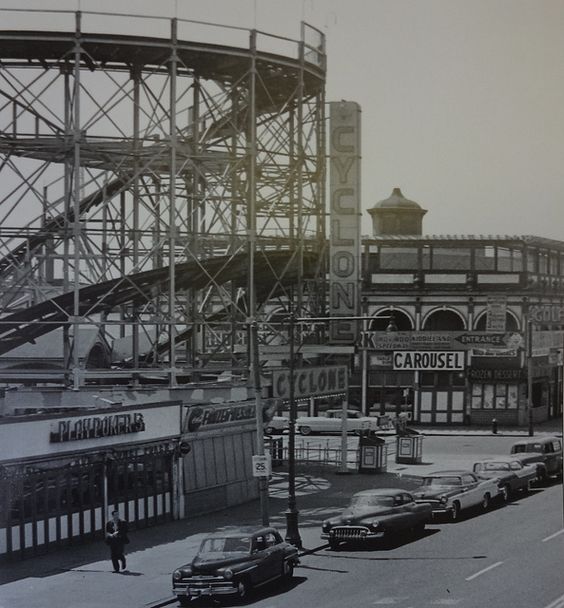
I lived two blocks from the beach and the boardwalk. I loved to go swimming in the ocean and walking the boardwalk. We had two big amusement parks within walking distance, Luna Park and Steeplechase. I preferred Luna Park as it had a circus. It was such fun watching the clowns, the animals, and especially the men and women on the trapeze. Nearby was the famous Nathan’s hot dog stand, where we could buy a hot dog with sauerkraut for five cents.

As there were no televisions, we went to the movies every Saturday. For ten cents, we saw a double feature along with newsreels, a serial, and cartoons. We bought a penny’s worth of candy and enjoyed the entertainment. On rainy days, we stayed indoors, drawing pictures with crayons and reading books from the library. We did not have as many toys as our grandchildren and great grandchildren have today, so we improvised. My brother made a train out of drawers from my father’s Singer sewing machine.

As all little girls, I loved to play with dolls. My mother had bought me a small celluloid doll with moving arms and feet that I could even bathe. I wanted a new doll carriage, but we were in the midst of the Great Depression, and my parents could not afford to buy me one from the store. So, we became creative. A shoebox became my doll carriage. My mother made a hole at the end of the shoebox and put a string through it so I could pull the carriage. The top of the box became the hood. She also gave me scraps of material which I made into a pillow, a carriage cover, and clothing for my doll. With a child’s imagination, I thought that my doll and doll carriage were the most beautiful in the world.

It was convenient to live near the beach, but my neighborhood was not the best. It was all pavement—no flowers and no lawns. One summer, my second-grade teacher thought it would be a good summer project to learn how things grow. The last week of school, she had us bring in a small wooden cheese box and a small potato. She helped us put the dirt that she supplied into the bottom of the box. We cut up the potato, placed it in the dirt, and then covered the potato with more dirt. I placed the potato plant on the fire escape and watered it every day. In July, I was happy to see some green leaves. My parents and teacher had never told me that potatoes grow underground. So, when August arrived, I got so angry that no potatoes had grown on the leaves, I just dumped the plant. I was so surprised to find four little potatoes!

Looking back, I had a very happy childhood. Although we did not have much money, I never felt deprived!

page30image60310128