Category Archives: Jewish Interests

Marriage 1940’s Style

My mother, Frances Cohen, was the family story teller. She wrote this story while in a writing club at Coberg Village, Rexford, New York, sharing details of her marriage to my father, Bill Cohen, on August 20, 1940. It is one of the stories I captured in my 2021 book, Fradel’s Story.

On May 1940, Bill and I officially became engaged when Bill presented me with an Elgin wristwatch. We began planning our wedding. My brother Eli and his fiancé Zelda had planned a big Sunday afternoon wedding for August 18. To make it convenient for our out-of-town guests to attend both weddings, we planned a smaller event for two days later on Tuesday evening, August 20, 1940.

We had a difficult time writing the wedding invitation as both my maiden surname and Bill’s surname were Cohen. To make it even more complicated, thanks to the officials at Ellis Island, both my father’s and future father’s-in-law names were Joseph Cohen. Even our mothers’ names matched: My mother was Ethel Annie Cohen; Bill’s mother was Annie Ethel Cohen. To make it clearer, we used the first letter of our first names as the middle initials of their names, left our mothers’ first names completely off, and had the invitation printed as shown here.

Wedding Invitation

Our wedding was not elegant. However, Bill and I made a handsome couple under the chuppa (wedding canopy), me in my rented wedding gown and floor length veil ($8), Bill in his rented tuxedo ($7), and both of us so happy we glowed. (Priceless!)

After the religious ceremony, the guests were served tea sandwiches, fruit, and wedding cake. Unfortunately, by the time the photographer finished taking our wedding pictures, most of the guests had left and most of the food was gone. We did keep the bride and groom figure from the top of our cake, which we still have in our china cabinet today.

Bill and I had a two-day honeymoon at the Hotel New York in a bridal suite at $10 a night. On Thursday morning, my cousin Elliot and my Aunt Rose met us at the hotel in his car to drive us to Malone in upstate New York where we were to make our first home. As this was before the Thruway and the Northway, the trip was over ten hours long. Bill and I planned to take advantage of long trip on the road by cuddling contentedly in the back seat, but that was not to be. The back seat was filled with suitcases, wedding gifts, and home furnishings, including a huge table lamp. Aunt Rose was prone to carsickness and needed to sit next to the window in the front seat. And so, we started the first chapter of our life together as Mr. and Mrs. Wilfred Cohen with me in the front seat between Elliot and Aunt Rose and with poor Bill squeezed into the back seat, balancing the lamp on his lap for the entire trip.

By September 1940, Bill and I spent our first few weeks as happy newlyweds living in Malone, New York, a small village only a few miles from the Canadian border. Bill had been working there for two years in the North Country and loved it. Since it was a new way of life for me, there were many adjustments to be made.

Before I was married, my life was very different. I worked in a job I loved, a bookkeeper for a large firm called the Dixie Dress Shop in the heart of New York City. At the end of the day, I took the subway home to Brighton Beach for five cents. I arrived home to the apartment I shared with my parents, warmed by the steam heat and the delicious aroma of my mother’s homemade meals she prepared for us each evening.

After we married, I moved from New York City to a tiny town in Upstate New York to be with Bill. I left a job making $19 a week to live with a man who was making $18 a week. That was before Women’s Lib. We were convinced that two could live as cheaply as one. We quickly found out that that wasn’t true.

Please do not misunderstand me. I loved being a married stay-at-home housewife, but I had so much to learn. I was now expected to prepare three meals a day on an old kerosene stove. My mother and mother-in-law were not much help living 350 miles away. Besides, they never cooked from a recipe, as their measurements consisted of a bisl (little) of this and shtik (piece) of that. My mother-in-law sent me more detailed recipe books and a mix master, and Aunt Rose, who lived close by, also gave me lessons. I eventually learned to cook and bake, but not without much trial and error.

My first experience cooking rice was a disaster. I started out following the directions exactly, using one cup of rice to two cups of water. After ten minutes, I checked the pot, and it didn’t look like one cup of rice would be enough for my husband’s hearty appetite. So, I added more rice and then more water and then more rice and then more water. By the time Bill came home for dinner, there were three huge pots of cooked rice sitting on the stove. For the next two weeks, we lived on tomato rice soup for lunch, rice casseroles for dinner, and rice pudding for dessert.

Soon after we were married, Bill was transferred to a Pearl’s department store in Rouses Point, New York. We were now farther from our family, and I often felt lonely. In the winter, the temperatures were always at least thirty degrees lower than New York City. The natives always described the winter weather as “a February thaw is thirty below and a hell of a blow.”

As the months wore on, I found it very difficult to adjust to all the snow and cold. Besides, our three-room furnished apartment was not fully winterized. The big potbelly stove with its dirty ashes sat in our living room, and that room was always too hot. The kitchen was just right, but the bedroom was always only forty degrees. I felt like Goldilocks!

I missed all the good things that the Big Apple had to offer. I missed browsing and shopping in the big department stores. I missed eating in Italian and Chinese and Jewish restaurants and in the automats. I missed the theater, the big glamorous movies houses with vaudeville shows, and Radio City Music Hall and the Rockettes.

But with a loving husband who was an optimist, I gradually changed my attitude. I started to look at the beautiful scenery of the Adirondacks and Lake Champlain and all the advantages a small town had to offer.

A version of this article originally appeared in the November 13, 2014, issue of the Jewish World News, a bi-weekly subscription-based newspaper in upstate New York.

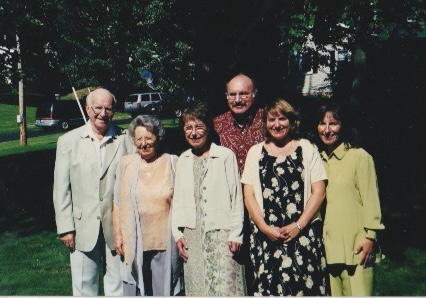
Does history repeat itself? Am I like my parents?

In 2015, Larry and I sold our home in Upstate New York and relocated to a community in Central Florida. As Larry and I have fully embraced our new life in the Sunshine State, let us compare our retirement life near Orlando to my parents’ retirement years near Fort Lauderdale.

When the last of the Cohen children headed for college, my parents spent a couple of weeks each winter in Florida. When they retired, they sold the house in Keeseville and moved into their cottage on Lake Champlain. They escaped to Florida for two or three months in the dead of winter, splitting their time between short-term rentals and relatives’ pull-out couches. In time, they purchased a one-bedroom condo in Hawaiian Gardens, a complex in Lauderdale Lakes that they had heard about through a friend who lived at the complex.

After years of living in a community with lots of snow and with few Jewish people, they thrived in the sunshine and in the company of Yiddishkeit, fellow Jews who had moved to the Sunshine State from New York City and Long Island. Their lives fell into a pattern. They shopped at Publix and went to their doctors’ appointments in the morning. By noon, they joined all the other retirees by the small community pool. The women splashed around in the water while the men kibitzed on their beach chairs under large umbrellas. The conversation consisted of bad jokes, condo gossip, politics, and discussions as to which restaurants offered the best early bird specials. My mother had grown up speaking Yiddish to her parents, and my father knew a few expressions, so they started a popular Yiddish Club that met once a week. Dad played poker; Mom went to flea markets with friends.

Outside of my father’s occasional game of golf, my parents got their exercise walking back and forth to the pool. Deerfield Beach was only a half an hour away, but my father hated the sun, the heat, and the sand. As a result, my mother, who didn’t drive in Florida, limited her visits to the ocean to when her children could take her when we visited.

Hawaiian Gardens offered entertainment in the clubhouse, usually a singer or a comedian who had worked on the Borscht Belt. The performers weren’t paid a great deal, many were a little beyond their prime, and the audience could be downright cruel. During one of our visits, a woman singer

134

was belting out Broadway tunes. When she asked if the audience would like her to do an encore, one of the residents yelled out, “No! You’re terrible! Get off the stage!”

Larry and I flew down at least once a year and joined them in their routine. In the morning, I would take my mother to the supermarket or the flea market. At noon, we headed to the pool. At three o’clock, no matter how beautiful the weather, we all went upstairs to get ready to leave their apartment by four o’clock for that day’s early bird special. The meals varied in quality, but there were tons of food with enough leftovers, extra bread, lemon slices, and a few Sweet ’n Low packets to take home for the next day’s lunch. Even when they relocated to a larger condo, their routine remained the same. And their lives always included visits from relatives and friends from New York as well as get-togethers with new friends they had made.

Although we enjoyed our visits, Larry and I could not picture ourselves living the sedentary East Coast Florida condo life that my parents enjoyed. When we moved to our adult active community in Central Florida, we felt we had found our own slice of heaven. Our home sat on a large scenic lot with plenty of room for family and friends to visit. Our community had two community recreational centers where I could take exercise classes and swim laps. Larry could play pickleball. We had miles of neighborhood streets where we could take long walks and longer bike rides. Many clubs and groups offered us innumerable ways to meet people from around the country and the world. Many of the activities revolved around the synagogue and the Shalom Club, but we also participated in club activities offered by groups with ties to Italy, England, the Caribbean, and Western Upstate New York. We had a full, diverse life.

Once we lived here for a few months, however, I realized how much we have in common with my parents. Has it been that different? We head to the pickleball courts, the pool, and fitness classes in the morning. Then we plan our doctors’ appointments and our trip to Publix in the afternoon. Flipped schedule, but…. We often head to our favorite restaurant by four o’clock so we can beat the crowds. Recent entertainment included a headliner from the Sixties whose toupee and fancy tux didn’t cover the fact that his body and voice were not what they were fifty years ago. The ocean is only ninety minutes away, but we don’t feel like fighting the traffic. We share a great deal of time with our family and our old friends from around the country. And, like my parents, we escape the summer heat by spending time in Frisco, Colorado. It’s not Lake Champlain, but at 9100 feet it certainly beats Florida’s summers.

Both of our children have visited us in our home in Florida. They and their families have repeatedly told us they were glad that we are so happy here. However, I doubt if either of them or their families would select the lifestyle we have chosen. Our daughter Julie and her husband Sam love living in the Rockies, where they have mountains, forests, and plenty of trails available for hiking and skiing. Our son Adam and his wife love living in San Francisco, enjoying all that wonderful city and California have to offer. I hope wherever my children live, they will enjoy sunny skies, good health, and lots of

activities to keep busy. Most importantly, I hope they find joy in wherever life takes them.

In her eulogy to Grandma Fran, Julie spoke of my mother’s legacy. “She taught me about the woman I’d like to be, one filled with love, generosity, wisdom, wit, empathy, and a belief that we can create our own happiness in life by searching for the blessings.” That is the life my mother, “Frances Fradel” Cohen, lived with her “Dear Bill.” May their memories— and the memories they shared with all who knew and loved them—be a blessing.

A version of this article originally appeared in the  July 2017 issue of the Heritage Florida Jewish News, a weekly subscription-based newspaper in Central Florida.

A version of this article originally appeared in the July 2017 issue of the Jewish World News, a bi-weekly subscription-based newspaper in upstate New York.

Never Mind the Bucket List! Just Live It!

One winter afternoon while living in the Capital District, Larry and I had lunch at a Chinese restaurant with a former co-worker of his who was planning on retiring in a few more months.

“Can you two give me some guidelines as to what I should do when I leave the job?” she asked. She knew that she had to do something. She couldn’t picture herself just sitting home and having no structure to her life. “I certainly don’t want to be bored!” she explained.

Four years earlier, Larry and I were both in our last months of work after long careers in public service and education. People were continually asking us what we were going to do after we retired. Larry had a simple, straightforward plan: We would travel, and we spend more time volunteering for Special Olympics. 

I, however, fearing boredom, felt the need to line up more ducks to keep me happy. What would I do with my life once I did not fill my time with a forty plus hour a week job? I too sought advice from friends and relatives who had retired before me on how I could survive all the “free time.”

“What free time?” commented a former superintendent of schools, who has spent his retirement volunteering on numerous boards and organizations. “If you want to be in control of your time, keep on working.“ 

“You’ll never look back,” a former co-worker stated. “You will wonder how you ever worked as your days will be so full.”

I wasn’t convinced.

Larry retired in May 2010, but I still headed to the office for seven more months. I left the house at 7:30 each morning after kissing my sleeping husband’s head as he nestled under the covers. He made up for it by having dinner ready for me when I arrived home. However, my desire to join him pushed me into a pre-retirement blitz at work. I confirmed my retirement date with my boss, went to a New York State Education Teacher’s Retirement System seminar to line up the paperwork, and began cleaning out my files. Then I turned my attention to creating and implementing my retirement bucket list.

First on the list were all those hobbies that had been put on the back burner. The short list, in addition to travel and Special Olympics, included the following:

  1. Read all the books on my “Read Before I Die” list;
  2. Complete the crewel piece I started twenty years earlier;
  3. Learn how to knit;
  4. Update my fifty photo albums;
  5. Organize the two drawers in my file cabinet filled with my children’s artwork, report cards, and special projects; 
  6. Relearn French;
  7. Learn Spanish;
  8. Put together all of my stories and my mother’s stories into a book. 

Yes, this woman was going to be productive in her golden years!

Although I already had a number of unread books on my book shelves, I hit a couple of used book sales and downloaded numerous classics onto my Nook. I purchased orange and royal blue yarn and needles to knit Larry a Syracuse University scarf. On impulse I also bought Red Sox theme flannel to make him a throw to commemorate his favorite baseball team.

At the office supply store, I selected new photo albums to replace the ones that were falling apart as well as file folders, labels, and markers for my home organization project. I downloaded a language app for my français redux and purchased a Spanish for Dummies for my español. Mom’s files were piled six inches thick into a drawer, ready to polish and publish.

Throughout this entire process, Larry looked on with a mix of mild amusement to outright incredulity that I needed to prepare so much. And he feared all these projects and books and anticipated classes were going to fill my dance card so much we won’t have time to just be.

After all the planning and anticipation, my last day of work arrived. On December 17, 2010, I fought the traffic on the Northway and Route 7 one last time. I completed the required written instructions to my successor, signed my exiting papers, and said my final goodbyes. Then I drove my last rush hour trip home to Clifton Park. It was time to tackle that bucket list!

I reflected on all this planning over the dinner with Larry’s co-worker. I thought of the hundreds of unread books on my shelves that had been passed over for more current ones in the local library. An added bonus: I could get them in big print, a big advantage for my “golden years” eyes.

I tried to work on the Elsa Williams crewel piece. My eyes had changed since I started it, and I doubted it would ever be finished. 

The knitting? Abandoned after four unsuccessful attempts at learning how to cast on. The Red Sox throw? I pinned it together, but I never took out the sewing machine to stitch up the sides. My friend, Judy Lynch, finished it up for me a few years later.

The pictures were still in envelopes, the photo albums still unwrapped. This was 2014, the digital age, and I needed to think of tossing most of them, scanning the favorites, and putting them into a digital album. My children strongly encouraged me to toss—not organize—all the childhood memorabilia I had saved. I haven’t had time to refresh my French or learn Spanish; I needed time to work on my own English as I edited and re-edited my stories and my mother’s story for The Jewish World. At least I was working on one of those items on my bucket list. 

So what did we do those first four years since we retired? We traveled to Machu Picchu, the Galápagos Islands, the Danube, Bryce and Zion. When we were home, we spent time volunteering for Special Olympics—coaching track and field and bowling. Yes, in the end, Larry’s simple, straightforward approach to retirement was the most realistic.

Most importantly, the most satisfying activities of the retirement years in Clifton Park were in many cases activities that were never on my radar. Weekly visits to a couple of friends at Daughters of Sarah nursing home evolved into my volunteering at their memory enhancement unit. After taking Zumba at a local elementary school, I realized how much I loved exercise classes and joined the YMCA. 

Over dim sum on that cold winter afternoon, Larry and I offered this advice to our friend: Yes, you can speculate as to what you would like to do once you leave your job for the last time. However, you may never get to many of them. As a matter of fact, you should just kick the bucket—the bucket list that is. Let life take you where you had only dreamed of going. And that is actually the best retirement advice of all.

Update as of February 2024,: Over fourteen years after my retirement, I am really proud that I accomplished #8 on my list, having published since my retirement four books! I was forced to organize the two drawers in my file cabinet filled with my children’s artwork, report cards, and special projects (#5) during our move to Florida. As to the other six, status pretty much unchanged, except my “Books to Read Before I Die (#1), it has only grown exponentially. So many books, so little time! Meanwhile, we are loving our life in Florida and our time with our children and three grandchildren ! We are very, very grateful!

A version of this article originally appeared in the January 30, 2014, issue of Jewish World News, a bi-weekly subscription-based newspaper in upstate New York.

Musings on Hemingway, cats, and anti-Semitism in literature

Ernest Hemingway loved cats. I knew the minute I walked into his former house in Key West. Despite the beautiful day and the open windows, the smell of felines permeated every room. Our tour guide Doug introduced us to Gloria Swanson, Rudolf Valentino, and Betty Grable, three of the forty plus six-toed cats that roamed the grounds. All were descendants of his first polydactyl cat, Snow White.

I also love cats. Our family alway had one or two when I was growing up.  We had to give away two Siamese beauties when we realized that they were using the space under the claw toothed tub as a litter box. Most of the time, however, the cats stayed with us until they disappeared. My favorites were Romeo and Juliet, the former renamed Rebishka when “he” delivered a litter of kittens on my bed while I was sleeping in it.

When our children were young, we were given a stray that we named Fluffy. She died of feline leukemia three years later. By this time, it was obvious that Larry was allergic. This didn’t stop me from adopting two more. “The children miss Fluffy,” I told Larry.

Salty, the orange tiger, was more loving than his misnamed sister Cuddles, a calico. He especially loved Larry, who sneezed and sniffled every time Salty sat on his lap. 

One evening, before Larry left for a synagogue board meeting, he gave me an ultimatum. “Find a new home for Salty or find a new husband.”  Soon after he left, I got a phone call from my friend Diane, who is even more allergic than Larry. 

“The kids brought home a stray kitten,” she said. “Could you please take it in until you can find it a home?” I couldn’t say no. Within five minutes after receiving the orange ball of fur,, Adam and Julie had named him Pumpkin.

Larry came home that night to THREE cats. Fortunately, I didn’t need to find a new husband. A co-worker immediately adopted Pumpkin, and a few days later another friend adopted Salty. We were back to a one-cat household.

To no one’s surprise, Larry became Cuddles’ favorite human. The two of them often played cat ball. Larry would roll up a piece of aluminum foil, skid it across the floor, and Cuddles would bat it around the house. When she was fourteen years old, our beautiful cat disappeared one night and never returned. (A friend consoled me with the suggestion that Cuddles was “fox food”). We found cat balls for months. Ten years later, while in the process of installing  a new dishwasher, we found no less than twenty of them  in the briefly emptied space.

By this time, we realized that all of us were allergic to cat dander, but I never have lost my love for them. When I visit a house with cats, I can’t wait to pet them and hear that wonderful purr. So at the Hemingway House, I petted each one that got within arms’s reach.

At one point, I also loved Ernest Hemingway, so much that I completed an independent study on him and his writing in my senior year at University at Albany. The Sun Also Rises, Farewell to Arms, The Old Man and the Sea—I admired his sparse style, his characters, and his complex search for the masculine ideal. I was, as I have shared with readers before, young, naive, sometimes clueless. 

It was not until many years later that my opinion of the author changed. Reading his novels and other material about Hemingway from a more mature eye, I saw more clearly the man behind the myth—a narcissistic, heavy drinking male chauvinist. As Bernice Kert stated in The Hemingway Women: Hemingway could not truly sustain any of his four marriages. “Married domesticity may have seemed to him the desirable culmination of romantic love, but sooner or later he became bored and restless, critical and bullying.”

His relationship with his third wife, the American journalist Martha “Marty” Gellhorn, clearly demonstrates these characteristics. Resentful of her long absences as she pursued international stories, Hemingway protested, “Are you a war correspondent, or wife in my bed?” The final straw for Gellhorn (and mine!) was when she learned that Hemingway had convinced Charles Cobaugh, her editor at Collier magazine, to send him to the European front instead of his wife. In her excellent novel Love and Ruins, Paula MacLean describes Gellhorn’s reaction to the betrayal. “You could have gone to any magazine in the world, absolutely any of them. I didn’t know you had such a cruel streak in you.” Gellhorn found another—albeit more dangerous—way to the front and divorced him soon after.

Hemingway also has been accused of being anti-Semitic. As Mary Dearborn writes in a 2017 article in The Forward, the author’s letters were laced with “nasty remarks about Jews.” She states that in his first novel The Sun Also Rises, his character Robert Cohn is described as an obnoxious individual,  a “kike” and a “rich Jew.” Although some critics have given his writing  as expressing the perceived fashionable anti-Semitism of the 1920s, I now find his treatment of Jews in his novels to be disturbing. 

Should I stop reading Hemingway’s novels? No. If I boycotted every classic that contain anti-Semitic references. I would have to shelf huge chunks of English literature. including Shakespeare, Nathanial Hawthorne, and Charles Dickens. Even Phillip Roth has been accused of perpetuating Jewish stereotypes in his literature. The list gets longer if I add on other classics that demonstrate other racial and ethnic slurs

So I will continue to read Hemingway and other renowned authors with a little less enthusiasm and a little more critical eye. And maybe, in the future, I will have on my lap while reading a lovely, Balinese —or another of the seven “hypoallergenic” breeds known to produce fewer allergens than other cats. In a tip of the hat to my favorite Hemingway wife, I will name my new love Marty. Take that, Ernest!

A version of this article originally appeared in the February 20, 2020, Jewish World News, a bi-weekly subscription-based newspaper in upstate New York.

Photo of Ernest Hemingway courtesy of Wikimedia Commons.

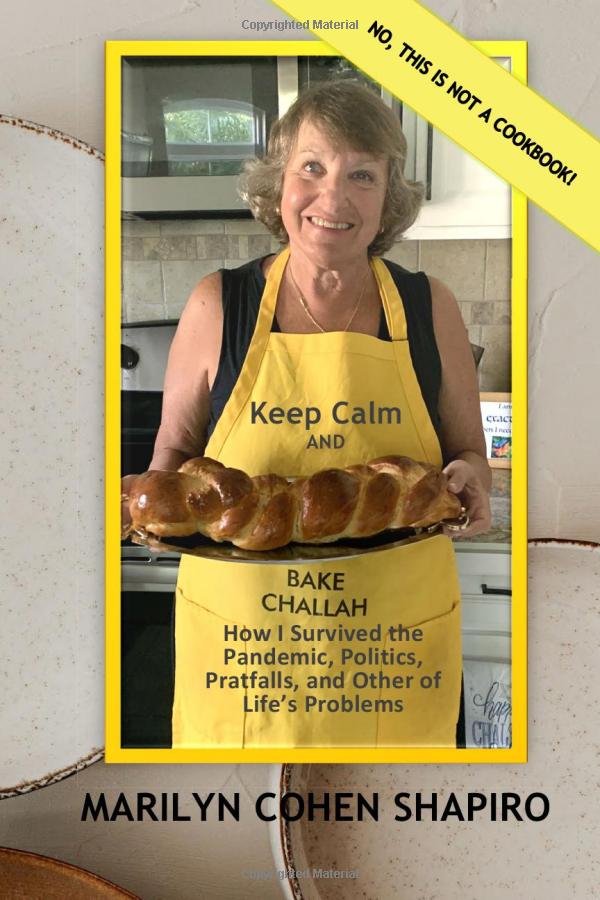
Keep Calm and Bake Challah is on Amazon!!

I am proud to announce that my fourth book, Keep Calm and Bake Challah: How I Survived the Pandemic, Politics, Pratfalls and Other of Life’s Problems,is out and available on Amazon in both Kindle and paperback formats.Hope you enjoy reading the the fifty-three articles I wrote during the pandemic as much as I enjoyed writing them! For those who have been following my blog for a while, you will now have many of those posts in one place for your reading pleasure.

Below are a sampling of the story topics:

A Survivor’s Tale: Dutch Nathan

Anne Frank, born on June 12, 1929, was the celebrated diarist who described her life while hiding with her family from the Nazis in an Amsterdam, Holland attic. After capture and deportation, she died in the Bergen-Belsen concentration camp in late winter 1945.The following story, first published in 2018, tells the story of another Jewish child who hid with his family in Holland during World War II and survived to share his story.

Anne Frank is one of the most well known figures from the Holocaust. But she and her family were not the only ones to go into hiding to avoid capture by the Nazis and their collaborators. While some Jews lived in the open with changed identities, others, like the Franks physically hid to avoid certain deportation and almost certain death. Dutch Nathan and his family were one of many who relied on others to help them. 

Gert “Dutch” Nathan was born on January 5, 1932, in Duren, Germany, the second son of Wilhelm (“Willy”)  and Hilde (nee  Friesem) Nathan. Willy had a cattle hauling business which extended throughout Europe. He did not have a formal education, but he was street smart—Dutch remembers that his father could “outcalculate a calculator.” The Nathans lived a mostly secular life in Germany, with observation of major Jewish holidays and his mothers’ lighting of Shabbat candles.

In 1938, after Hitler’s rise, the family moved sixty miles west to Valkenburg, The Netherlands. “Holland had proclaimed neutrality when war broke out in September 1939, as they had done in World I,” said Dutch, “so my father thought our family would be safe.”Willy took a job with the De Valk bus company, a former competitor, where he continued his cattle business.

On May 10, 1940, Hitler’s forces invaded the self-proclaimed “neutral” country. Five days later, after the bombing of Rotterdam, the Dutch forces surrendered. By 1942, the situation began to deteriorate for fellow Jews. Willy made the following arrangements with his friend, Johan Kengen, a member of the Dutch Underground:  If the Nathans were in danger of deportment. Willy would pay for the family to stay in the home of  Kengen’s fiancé’s aunt and uncle  for “a few days” until the Nathans could be spirited away to England. Willy also made arrangements for neighbors to move most of the furniture and bedding to the house next door. Whether the neighbors were paid or volunteered as an anti-Nazi action still remains a mystery to Dutch. 

The plan was put into effect a few month later. While walking from the bus station into the De Valk building, Willy was stopped by a friend and fellow employee:  Germans were waiting for him to arrest him and deport him and his family to the concentration camp.

Father quickly stole a bike and peddled the ten miles home. Dutch and his older brother Fredo were instructed to leave their house one hour apart to walk the two  miles to a house “located on the right hand side just before the road crossed the railroad tracks” with a warning to “not speak to a soul.” Willy and Hilde arrived later that evening, expecting to hear soon from the Underground of their clandestine trip to England. 

Unfortunately, the days turned into week, and the Nathans were still in hiding. Other people, including downed pilots, had priority in the Underground escape plan. To further cover the facts of extra activity in the “safe house,” an elaborate ruse was planned. Johan and the elderly couple’s niece Ann quickly arranged their wedding. At the reception, Johan picked a huge fight with Ann’s parents, who resolved that they would have no contact with the couple until Johan apologized. The newlyweds moved into the house by the railroad tracks, bringing the number to eight. 

As weeks turned into months, tensions grew. The Nathan’s spent most of their time in a small main floor bedroom. Ann was prone to hysterical outbursts, and Willy and Johan would have to physically restrain her to keep her from running outside and giving their situation away. Meanwhile, Hilde was anguishing over the fact that she had not been able bring her parents with them. She was haunted by their deaths in the concentration camp for the rest of her life.

Johan’s government job determining the number of animals that farmers could slaughtered provided a means to get extra meat and milk, but food was still scarce. Dutch and Fredo, 10 and 12 respectively, spent most of their days quietly reading books and avoiding the shaded windows so no shadows would be seen.

Along with possible discovery, the occupants lived in fear of the potential impact of living near the railroad track.The noise from the passing trains provided an extra buffer but also an extra danger:  Allies strafed German trains. They hoped that these attacks would not hit the house, either killing all of them or forcing the Nathans out into the open, thus exposing their dark secret. 

In the second half of 1944, the southern half of Holland was liberated by American troops. (The remaining areas of the Netherlands were not liberated until May 1945.) The Nathans stayed inside for a few more days to make sure they were safe. 

Once they realized they were actually free, the Nathans stepped into fresh  air for the first time in twenty-six months.  “I walked a few feet and collapsed,” remembered Dutch. When asked if he had been overcome with emotion, he said, “I hadn’t used my legs in 26 months and initially had no muscle tone to walk more than a few feet.

Before they could move back into their home, however, Americans bombed Valkenburg. One of the casualties was the Nathan’s home. “No one understood why the brick home next door burned so much,” said Dutch. “The furniture hidden in the attic acted like a tinderbox, and flames shot up in the air for hours.”

In May 1945, the remaining areas of the Netherlands were liberated. Free but homeless, the Nathan family moved into a neighbor’s home until 1946, when they obtained visas to move to United States, where several of Willy’s siblings lived. Willy built a crate the size of a truck and filled it with everything they had accumulated since the end of the war—including a piano. 

Dutch, now sixteen, enrolled in City College to learn English, adding to his previous background of German, French, and Dutch. At 18, he enlisted in the army and volunteered to go to South Korea. When he returned home, he found employment in whatever “made money.” 

In 1979, Dutch, who had been married twice before, met Sue Cohen. He proposed shortly after the meeting, but it took ten years for her to say yes. During this time, Dutch started the Stretch Lace, a Sharon Massachusetts-based company that manufactured and sold elastic shoe laces. (“Tie once, never Tie Again!”) Although his invention was successful, Dutch admitted that he didn’t know marketing and sales. He eventually sold the business, but Easy Laces are still available today and are worn by such celebrities as Brooke Shields. They lived in Sharon for most of their married life before retiring to Kissimmee, Florida, in 2007.

 In 1982, Sue and he were invited by residents of Duren, Germany, to return to the Nathan’s original home. They were treated royally and met with church members as well as school children. Sue’s main mantra to everyone she met was “Just remember! The Holocaust DID happen.” Although their visit was supposed to last a week, Dutch felt uncomfortable. He rented a car, and the two of them toured Europe, driving over 4000 miles before returning to Massachusetts 

Almost seventy-five years after his liberation, Dutch graciously shared the story that he spent most of his life trying to put those terrifying time behind him. “I try not to think about those things,” said Dutch. “It is over and cannot be undone.  His story, however, as those of the fewer and fewer remaining Holocaust survivors, must be told. As Sue Nathan told the people in Germany during the 1982 visit, “Remember. The Holocaust DID happen.” And we Jews and righteous people everywhere will never forget. 

A version of this article originally appeared in the November 8, 2018, issue of the Jewish World News, a bi-weekly subscription-based newspaper in upstate New York.

Unmoored

Originally published in Jewish World News on June 24, 2021, the following essay reflects my feelings after fifteen months of lockdown. This is one of the essays found in my fourth book, Keep Calm and Bake Challah: How I Survived the Pandemic, Politics, Pratfalls, and Other of Life’s Problems.

Since my husband Larry and I have had our second COVID shots, our pre-pandemic life and its commitments are slowly resuming. We have waded out into the unknown, first a toe into the water with outdoor concerts and patio-only dining, then walking up to our knees with visits and in-home dinners with vaccinated friends, then plunging in with indoor restaurant dining and non-virtual club meetings. Recently, I was in a restaurant with four friends when I realized I had walked in, sat down, ordered, and hadn’t thought of COVID or even masks for a full half hour. That, I say, is progress.

Then why am I feeling shaky? Uncertain? Unmoored? 

Since March 2020, when the world shut down, my husband Larry and I filled the empty hours that stretched in front of us with small gems. I finally put together Fradel’s Story, a collection of articles written by my mother and about my family. We took long walks and longer bike rides through unexplored areas of our community. We spent hours and hours on our lanai, reading, doing puzzles, eating leisurely dinners, and watching the wildlife in our pond. Each Friday, we celebrated Shabbat with candles and wine and homemade challah. And we spent hours and hours on video conferencing sessions with family, friends, our synagogue, and our clubs. 

Now our calendars is filling up and overflowing. We have not yet given up many of the activities that kept us going for sixteen months of isolation, but we are also adding more and more semblances of our previous life. And as what happens to me whenever I try to juggle too much I began dropping balls. I missed a planned luncheon, showed up an hour late for a book club, and completely forgot to call my brother and sister-in-law to wish them “Mazel tov” on their fiftieth anniversary. For goodness sakes, I even failed to send in an article to the Jewish World for its last issue, something I had not done for years. Had I learned nothing from the pandemic?

Jodi Rudoren captured many of my feelings in a March 5, 2021, editorial in the Forward where she admitted that she didn’t want to go back to the old “normal.” “This terrible, horrible very bad year of isolation has also had an abundance of silver linings,” she wrote, “and I worry we’ll snap back to our old ways without truly learning the lessons this crisis has brought.”

So now, like Ms. Rudoren and many others, I am finding my own “better normal.” I don’t want to give up some of the things I savored: the more leisurely life, our long dinners on the lanai with cold beer or coconut rum and (Diet) cokes or wine; the challah baking, the puzzles. On the other hand, I look forward to meeting friends for dinner and plays and indoor get-together, resuming exercise classes, and, most of all, traveling to see my family. 

I am not alone in my feelings, as I found out on a ZOOM with my SOL Writers group. Ginny said that she feels as if she was emerging from a long illness, where stepping back into the world in her weakened state is difficult. “I feel untethered,” she said. “It is as if I am floating around finding my center.” Gail shared that she felt as if she were in a “waiting room,” in between her old life and her “new normal.”

Along with the difficulty of finding one’s balance, there is still the specter of COVID-19 hanging over all of us. Although all of the SOL Writers have had both vaccines, each found that she still was a “little too vigilant,” “a little too cautious,” and most importantly, “a little distrustful.” When “accosted” by a fellow shopper who demanded to know why she was still wearing a mask, Ginny avoided confrontation by calmly saying, “You care as much about what I think as I care about what you think.” After ‘losing’ what she feels has been a year of her life, Mary Ann said she no longer has the energy or patience to squander what remains of her time for “idiots” who still think that the virus was a hoax. “These people are ‘energy vampires,’” commented Aya.

The reality of a resurgence has been felt by friends in England, who now are concerned of a virus variant from India that is more contagious. “Portugal opened up, and many people flew there for a vacation,” they  told us. “Then there was a spike in cases.”Portugal’s Covid rates increased enough for England to revoked their green status, resulting in vacationers scrambling to return home before they faced a 14-quarantine. Our friends are not optimistic about traveling for a long while. 

In the States, there is more confidence, and Larry and I are ready for our next big step. We will soon be flying out to see our son and daughter-in-law and meet our grandson, who was born one day before San Francisco closed down. Then we head to Colorado, to spend time our daughter, son-in-law, and beautiful granddaughter. Extra masks and hand sanitizer are already packed, along with gifts, warm layers for San Francisco “summers” and hiking clothes and boots for Rocky Mountain trails. 

We know that COVID and its aftermath will impact our visit. Outdoor concerts, farmers markets, and indoor plays and dinners are still “To Be Determined.”

No matter, Larry and I will just be happy to finally be with our family and return to at least that piece of normalcy. We will take long walks along the ocean in San Francisco and long hikes in the woods in Colorado. Each Friday, we will sit down with them for Shabbat dinners with wine, candles, and freshly baked challah. Larry will find quiet moments to do puzzles and read. I will put the final touches on Fradel’s Story [to be completed in time for what would have been my mother’s 104th birthday on September 1] and continue writing stories about living through the pandemic. And I will savor all that I learned as I move forward into our “new normal.”

Sources:

Demony, Catarina. “Portugal halts easing of COVID-19 rules in Lisbon as cases rise.” Yahoo News June 9, 2021.

Rudoren, Jodi. “Confessions of a Lockdown Addict.” Forward. March 5, 2021.

Rudoren, Jodi. “Small Talk and Other Skills I’m struggling to re-learn as we build a better normal.”  Forward. June 11, 2021

Photo courtesy of Nick Fewings on Unsplash.

A version of this article originally appeared in the June 24, 2021, Jewish World News, a bi-weekly subscription-based newspaper in upstate New York.

As hate crimes against Jews continue to rise, President Biden among others who are speaking out.

A shorter version of this story was published in the Orlando Sentinel on January 8, 2023. This is the full article as published in The Jewish World in its January 5 issue.

“In the end we will remember not the words of our enemies but the silence of our friends.” Martin Luther King, Jr.

On December 19, 2022, President Joe Biden used the White House’s Chanukah celebration to call out the rising anti-Semitism in  the United States. “Silence is complicity,” he stated. Biden joined Second Gentleman Doug Emhoff and other notable Jews in lighting the first ever official White House hanukkiah, which was created by the Executive Residence Carpentry Shop out of wood removed from the building in 1950 during a Truman-era renovation “Today, we must all say clearly and forcefully that anti-Semitism and all forms of hate and violence in this country have no safe harbor in America. Period,” Biden said.

This theme echoed the president’s tweet earlier in December.  The remarks came one day after Ye, the rapper, formerly known as Kanye West, announced “I like Hitler” during an anti-Semitic rant on right-wing conspiracy theorist Alex Jones’ InfoWars show and five days after Donald Trump dined with Ye and white supremacist Nick Fuentes. “The Holocaust happened. Hitler was a demonic figure,” stated Biden. “And instead of giving it a platform, our political leaders should be calling out and rejecting anti-Semitism wherever it hides. Silence is complicity.” Trump, meanwhile, has yet apologize  or to condemn the men he dined with at Mar-a-Lago. He has hidden behind an excuse of innocence, claiming he didn’t know who Fuentes was.

Condemnation

Some Republican leaders were swift of their condemnation of Trump’s actions.  “Trump was wrong to give a white nationalist, an anti-Semite and Holocaust denier a seat at the table,” stated former Vice President Michael Pence. “And I think he should apologize for it, and he should denounce those individuals and their hateful rhetoric without qualification.” Senate Minority Leader Mitch McConnell echoed Pence’s words. “There is no room in the Republican Party for anti-Semitism or white supremacy,” he said. “[A]nyone meeting with people advocating that point of view, in my judgment, are highly unlikely to ever be elected president of the United States.”

House Minority Leader Kevin McCarthy denounced Fuentes, stating that the white supremacist “has no place in this Republican Party,” but follow-up statement which supported Trump was blatantly untrue.  “I think President Trump came out four times and condemned him and didn’t know who he was.” According to CNN and other reputable news sources, Trump claimed four times that he didn’t know Fuentes but never denounced him or his views.

While condemning anti-Semitism, many other Republicans who spoke out condemned the ideology but avoided invoking the former president’s name. As a matter of fact, when PBS reached out to  57 Republican lawmakers to condemn the meeting, two-thirds never responded. Many, like McCarthy,  have put the blame on Ye and Fuentes for showing up.

The silence is also deafening in my own state of Florida .In January, a small band of white supremacists converged in Orlando, where they chanted “White power!” and roughed up a Jewish student. Governor Ron DeSantis’ press secretary suggested on Twitter that the white supremacists were actually “Democrats pretending to be Nazis.”The governor himself is yet to speak about the Trump/Ye/Fuentes debacle.  

In March 29, 2022, article in New York magazine, Jonathan Chait opined that DeSantis’ silence may be rooted in his own strategy  to obtain the 2024 Republican nod for the presidential candidate. Chait went soon to say that it may be even more deeply rooted in what Chait called the Republican presidential candidate hopeful’s  “unembarrassed courtship of right-wing extremists.”

Look Who Is Talking?

So who is speaking up? Certainly the Anti-Defamation League, whose response was immediate and unequivocal. “Former President Trump’s dinner with anti-Semites Ye and Nick Fuentes underscores the ugly normalization of extremist beliefs — including anti-Semitism, racism and other forms of bigotry,” said Jonathan Greenblatt, its National Director and CEO.  He went on to warn that the dinner further emboldened extremists. 

And thankfully, many others have refused to be silent. Government officials, religious leaders, journalists, athletes, entertainers, and many others have raised their voices against anti-Semitism.

In November, over 200 leaders of the entertainment industry, including Mila Kunis, Debra Messing and Mayim Bialik, released a letter through the non-profit entertainment industry organization Creative Community for Peace urging Amazon and Barnes and Noble to stop its sale of the highly inflammatory book and film, Hebrews to Negros: Wake Up Black America.  “At a time in America where there are more per capita hate crimes against Jews than any other minority, overwhelmingly more religious-based hate crimes against the Jewish people than any other religion, and more hate crimes against the Jewish people in New York than any other minority, where a majority of American Jews live,” the letter reads, “it is unacceptable to allow this type of hate to foment on your platforms.”

Survivors

There is another powerful but diminishing group that continues to bring the reality of the Holocaust and anti-Semitism to the forefront: Holocaust survivors. January 27, 2023, marks the 78th anniversary of the liberation of Auschwitz. Most of the survivors are in their eighties and beyond; the oldest known survivor, Yisrael Kristal, died at 113 in 2017. Through the efforts of Steven Spielberg , the Shoah Visual History Foundation has recorded over  55,000 stories Holocaust survivors in more than 50 countries and more than 30 languages. Events such as the International March for the Living and venues such as the United States Holocaust Memorial Museum and other Holocaust museums across the country and world also bear witness. 

“There are very few survivors left, and I want the world to know that there was a Holocaust,” Estelle Nadel, an 88-year-old Holocaust survivor who has talked to hundreds of groups for over forty years stated. “There’s so much denial, that every time I get a chance to tell my story, I feel like I’m doing something against it.”“Justice will not be served until those who are unaffected are as outraged as those who are,” wrote Benjamin Franklin. President Biden knows this, as should all who wish to push back agains hate.

Through the sands of time: A shul in St. Thomas?

Under a hot tropical sun, Larry and I wound our way first along the Caribbean Sea and then, in a couple of zigzags to the left, up a steep hill. We stood in front of a large stone edifice with its white plaster column and point-arch windows. Robert Kunkel, the docent/educator, opened up the black iron gate and led us up a set of stairs to the large point-arch entrance doors. After several trips to the Caribbean, Larry and I finally could visit the Hebrew Congregation of St. Thomas, the second oldest synagogue building in the western hemisphere and the oldest in continuous use under an American flag.

Stepping past the threshold, we immediately noticed a carpet of sand that covered the center of the room. We then took in the beautiful architecture. A domed ceiling holding the Eternal Light soared above us. The mahogany pews, finished by nineteenth century shipbuilders, were set up in on three sides to face the ark. A striking marble slab supported its base. Above the curtained doors, artisans had engraved two tablets representing the Ten Commandments into the native stone. More pointed-arch windows let in the bright light, while thick white plaster walls helped keep the interior cool. 

As we settled into the pews, Robert shared his vast knowledge of the synagogue and its important role in the history of St. Thomas, the largest of the three main islands that comprise the US Virgin Islands. But first he addresses our most pressing question: Why sand? He explained that the first Jews in the Caribbean were of Sephardic, or Spanish-Portuguese, descent. The unique floor, one of only five in the world, shows how the Spanish Inquisition (most active between 1480 and 1530) forced their Jewish ancestors in those two countries to practice their religion secretly in basements, covering the floors to muffle their footsteps and voices.

So how did these Iberian Jews land up in St. Thomas? Facing a choice of forced conversion or expulsion, victims of the Spanish Inquisition fled to European cities. Over the next four centuries, partially because of discrimination in other professions, Jews developed a mercantile trade which lead them to countries in both South America and the Caribbean, including St. Thomas. The number of Jews on this island remained small until the years after the American Revolution, when an influx of Sephardic Jews set up businesses in a climate of great tolerance and discrimination. In 1796, the Jews of St. Thomas founded B’racha V’shalom (Blessing and Peace). A fire destroyed the first structure along with several hundreds of building on the island. In 1812, the Jewish community purchased land and built a new synagogue. A growing population resulted in erecting a new expanded wooden structure with an expanded name: Congregation Beracha Veshalom Vegmiluth Hasadim, “Blessing and Peace and Loving Deeds.”

On December 31, 1831, another fire destroyed one quarter of the buildings on St. Thomas, including the shul. Not to be deterred, the Jewish community began an international fundraising effort to raise the $5000 needed to rebuild a house of worship made of stone, brick, and mortar. 

 The congregation and surrounding non-Jewish community had donated money, materials, and labor towards the project. In September 1833, the entire community celebrated the reconsecration of the building, which held the two Torahs and the Eternal Light that had been rescued from the fire. This was the building we were standing in almost 190 years later. 

As the synagogue grew, the congregation purchased a burial ground, established a Hebrew School, and began using the services of actual clergy. Like all synagogues, the following years brought the synagogue schisms over liturgy and rabbis, and fluctuating membership. Through it all, it remained a living, vibrant synagogue connected closely to its community. Most notably, two members of the congregation served as governors the Virgin Islands: Morris Fidanque De Castro (1950-1954) and Raphael Moses (Ralph) Paiewonsky (1961-1969).

As written in the museum’s online narrative, the St. Thomas Synagogue continues to follow in the footsteps of its ancestors, preserving their heritage and honoring their traditions. Part of this renewal was the congregation’s current search for a rabbi, as its most recent spiritual leader had moved to New Jersey to be closer to his family. 

After the narrative, the tour guide opened up the ark, which housed seven Torahs. The one Sephardic Torah was housed vertically in a beautiful wooden cylindrical case which followed the customs of the Spanish-Portuguese Jewry to both store and read the scrolls while standing in their cases. The six other Ashkenazi Torahs were dressed in the traditional Ashkenazi accessories each with a mantel (velvet covering); Atzei Chayim (wooden shafts) topped with keters (crowns); and a yad (pointer). They rested at an angle on the back of the ark. Because of my interest in the Shoah, my favorite was a Memorial Scrolls Trust Torah (MST #533) which was rescued from Budyně nad Ohří, a small town in Bohemia, Czech Republic. Jews had lived there from the 13th century. In 1942, the Nazis liquidated the town of its 50 Jews who still remained. 

With the guide’s approval, Larry and I took turns holding the Holocaust Torah before saying our goodbyes and thanks. We spent time in the museum gift shop, where we purchased a mezuzah, Through the Sands of Time: A History of the Jewish Community of St. Thomas, US Virgin Islands by Judah M. Cohen, and a T-shirt for Larry proclaiming “I Climbed Synagogue Hill.” We headed back to our cruise ship, thankfully a downhill journey, happy to know we finally got to see this living museum of Jewish sacrifice, survival, and strength. “The sands of time may pass over our shores again and again, changing our landscape, but the soul of our synagogue and its people remains eternal,” reads the synagogue’s website. “Our history does not end. Rather, with each generation, it begins anew.” 

On February 22, 2023, less than a week after our visit, the Hebrew Congregation of St. Thomas started a new chapter and welcomed Julia Margolis as its first female rabbi. Rabbi Margolis took a long, circuitous route to the shul. Born in Moscow, USSR, her family moved to Israel when she was 12. After graduating from high school and serving in the Israel Defense Forces, she completed undergraduate degrees in Jewish history, Islam, and art and a master’s degree in Jewish studies. Following in the footsteps of her mother, who was the first Russian-speaking female rabbi in Israel, Rabbi Margolis was ordained by the Abraham Geiger College in Germany. Closely connected to the Reform Movement, Rabbi Margolis was heading a synagogue in Johannesburg, South Africa, when she saw the synagogue was looking for a new leader. She submitted her application, but she was still surprised when the search committee contacted her. In the middle of their negotiations, her husband Greg tragically passed away. Following her heart, she made the move with her two children to St. Thomas, where she soon was “soaking in the beauty and the spirituality of this place.”

“God always has a plan,” Margolis shared in a March 21, 2023, article in the Virgin Islands Daily News. “It takes a lot of time sometimes to see that, but there is always a plan.”

Originally published May 25, 2023. Updated May 25, 2025.

Fun Trivia:

 The Mikvé Israel-Emanuel Synagogue in Curaçao is the oldest synagogue building in the Western Hemisphere. (1730)

The Touro Synagogue in Newport, Rhode Island, is the oldest synagogue building  in North America that is still standing. (1763)

The  Old New Synagogue of Prague in the Czech Republic is the oldest active synagogue in the world. (1270s)

The Ben Ezra Synagogue in Cairo, Egypt is the oldest synagogue in the world and also the longest serving. The original synagogue dates back to the ninth century. When Jews fled Egypt in the 1950s, it was turned into a museum. 

Temple Israel in Leadville, Colorado, holds the record for the highest synagogue in the world. Founded in 1884, the synagogue sits at an elevation of 10,152 above sea level. It is now a museum. 

A version of this article originally appeared in the May 25, 2023, issue of the Jewish World News, a bi-weekly subscription-based newspaper in upstate New York.

A version of this article originally appeared in the June 2, 2023 issue of the  Heritage Florida Jewish News, a weekly subscription-based newspaper in Central Florida.

College Dreams by Frances Cohen

As high schools and college students celebrate their graduations, I reflect back on my parents’ insistence that their children, unlike themselves, graduate from college.

My husband Bill and I always regretted that we did not have a college degree, but times were different in the 1930s during The Great Depression.

 When I graduated high school in 1935, there was no way that I could afford to go to college. Immediately after I finished school, I got a job as a bookkeeper. Most of my salary went to pay the rent of my parents’ apartment. 

Bill’s grandmother promised him that she would pay Bill’s tuition at the University of Vermont in Burlington. Those plans were crushed when his grandmother died after attending his high school graduation, and she left no provisions to pay for his education. Since he did not have the advantage of a college degree, he went into the retail business and spent many years associated with Pearls Department Store a family owned business in Keeseville, New York, that sold lower end merchandise. Things changed in the late 1960s when the Northway and the big box department stores in Plattsburgh opened. We found it difficult to compete. Fortunately, we had the opportunity to open the Village Bazaar, a very nice ladies’ store that catered to career women. It was successful, and we decided to close Pearl’s and concentrate on the Bazaar.  

While our children were growing up, we kept telling them, “You are going to college! You are going to college!” Beginning in 1964, our dreams of making sure our four children had college degrees became a reality. Our daughter Laura graduated from State University of New York at Geneseo with a degree in special education, a field in education that had just recently been created. Soon, our other children followed our oldest daughter’s footsteps. Our son Jay graduated Union College in 1968, Marilyn graduated from the University of  Albany in 1972, and our youngest Bobbie graduated from State University of New York at  Plattsburgh  in 1977. Two of the children completed masters degrees. Six of our  of our eight grandchildren have also received their undergraduate degrees and even completed advanced degrees. [Update: The seventh grandchild completed an undergraduate degree in 2015 (and is enrolled in a graduate program), and the eighth is currently attending undergraduate college full-time.]

At times, however, their education almost backfired on us. When Laura came home for Thanksgiving her first year, she began swearing up a storm, using four letter words that had never come into my home before. I decided to turn the tables on her and started using them myself. When Laura expressed surprise that I was swearing, I responded, “I’m paying $2000 a year to send you to college so that you can come home and swear like a sailor. I figured I could do it for free!” Laura never cursed in my presence again.

Jay also got a lesson in humility after his freshman year. He came home for the summer after he took, along with his other courses, a three-credit business class. He began criticizing the way Bill and I ran our businesses. He peppered us with questions. “Do you really know how to run a store? Do you understand what it takes to determine what to buy? What styles to order? How to deal with the bank?” I answered, ‘Sonny-Boy, your father and I have been running a business since before you were even born. We hired a buying office from New York City to inform us of the latest fashions. We learned that in Keeseville we sell more size 14 and 16’s. We learned that we needed to buy three pair of pants and five blouses to every blazer. We learned how to best deal with our customers. We learned this by the seat of our pants, which is better than any business course they teach at your fancy school.” 

There is an old saying that states:  I was amazed at how little my parents knew when I was 17 and how much they learned by the time I was 21.” Our son Jay learned that lesson that day.

Bill and I take pride in our children and grandchildren’s education, but we also take pride in the fact that we were self-taught, sometimes the best kind of education a person can have!

A version of this article originally appeared in the August 18, 2016, Jewish World News, a bi-weekly subscription-based newspaper in upstate New York.

Four children, four college graduates, seven degrees.