Category Archives: Jewish Interests

Strategy for positive aging: Life choice to keep learning

“What are you going to do when you retire?” As many of us edge closer to the age where we can hang up our shingle, that question comes to us from family and friends. Our spouses, however, usually have something to add: “I don’t want you to sit home and do nothing! You need to find something to get you out of the house!”

For Jay Golden, finding something led him to a new passion for which he only had imagined: Playing a musical instrument. 

Jay was born in 1938 in Manhattan to first generation Jewish parents. Eschewing their Orthodox households, the couple moved their family to Chicago. 

In 1951, the Goldens purchased a 13 inch black and white set. Jay, now a teenager, loved watching the shows featured on at the dawn of the televisions age. His favorites included Flash Gordon (Syndication 1954-1955), The Lone Ranger (ABC, 1949-1957), and Don Winslow of the Navy, a series that originally shown in movie theaters.

As much as he loved the stories, Jay was even more fascinated by the classical music that accompanied the shows. Through his research and visits to local record stores, he learned that the superhero Flash Gordon vanquished his enemies to the music of  “Les Preludes” by Franz Liszt.  “Don Winslow of the Navy” buoyed his patriotic spirt to the music of Felix Mendelssohn’s Hebrides Overture (“Fingals Cave.”). And how could any who grew up in the 1940s and 1950s forget the stirring opening from The Lone Ranger, which was the overture to “William Tell” by Gioachino Rossini?

Using money he earned through his allowance and odd jobs, Jay began collecting vinyl records of the classics. He graduated from the University of Illinois in 1962 and the University of Chicago in 1968. When he married Ellen Lewis in 1977, his 200+ vinyl collection soon gave way to the newer technology—compact discs (CD’s). His knowledge and appreciation of the music, composers, and the performers continued to grow. 

Fortunately,Jay and Ellen’s home town, Rochester, New York, provides ample opportunities for classical music. The University of Rochester’s prestigious Eastman School of Music hosted concerts by the Rochester Philharmonic Orchestra as well as performances by their students. Nearby Nazareth College offered a strong undergraduate and graduate music education program.

While Ellen pursued her career in law, Jay used his urban planning degree in partnership with shopping center developers and then as developer of affordable housing of projects in NY, OH, PA, and Puerto Rico. During that time, Jay served on the house committees of Temple B’rith Kodesh and Temple Sinai in Rochester, sharing his extensive experience with building maintenance, affordable housing development and property management. 

By 2005, Jay was thinking ahead to his retirement. Wife Ellen encouraged him to find a productive way to spend his spare time, especially during Rochester’s long cold winters. Although he had always loved listening to classical music, he had never played a musical instrument. He considered the violin, but decided was too difficult to begin learning in his seventies. He thought briefly about playing a trumpet, but the idea of “tooting his own horn” quickly dissipated.

One day, while listening to “The Moldau” the second movement of a six-movement suite, Má vlast (My Country), by Czech composer Bedrich Smetana, Jay found himself imitating the finger movement on the flute, which is used prominently in the piece. It was a revelatory moment for Jay, leading him to decide to pursue learning to play the wind instrument. Although he was still working full time, his boss was very supportive of Jay’s new avocation, giving him the time off needed for his lessons. He rented a Yamaha student flute from a local music store and began lessons with a doctoral candidate from the Eastman School.

From the beginning, Jay was aware he faced a steep learning curve. “When I began with the flute,” recalled Jay, “I knew nothing about reading music, much less how to play it.” 

After a year of lessons, Jay attended a tryout session at the Eastman Music School’s New Horizons. The music program, which is part of wider umbrella of programs that are offered throughout in the United States and Canada, provides experience for seniors who played at any of three levels of proficiency: beginner, intermediate, and advanced. The person who was responsible for the tryout, however, was unwelcoming and dismissive the aspiring flutist. He pointed to a small room and told Jay, “That room is for the newbies. Go in there.” Jay walked out.

However, Jay did not give up on the flute. Although his first teacher was an accomplished musician, he realized that teaching was not her forte. He began taking one-hour lessons twice a month with an adjunct professor  of flute at Nazareth College.

Three years after his negative encounter, Jay tried out again for the New Horizons Music Program and was, as he said, “more politely invited to participate” as one of the 150 seniors involved the three levels of bands. Jay described the diversity in experience.”There are many who played their instrument in middle or high school, put it away until they retired and wanted to have something to do,” said Jay. “Then there were quite a few who, like myself, had zero instrumental musical experience.” Jay started in beginner band and gradually worked his way up to intermediate level band. The band practiced one hour a week and provided not only a musical but also a social experience. 

For several years, Jay played on his rented Yamaha student flute until he recognized that his teacher’s flute sounded so much warmer. She told Jay, “If you can distinguish the difference in how my flute and yours sounds, you’re ready for a better instrument.” So Jay purchased a Wm. A. Haines “Amadeus” flute, which he now plays every day. “It is an absolutely beautiful instrument and a thrill to hold and play,” he said, proudly adding that the first and second chair flutes of the Rochester Philharmonic play the Haines flutes. 

After seven years, Jay left in New Horizons November 2021. He explained that the program’s repertoire focuses on more popular music, including Broadway show tunes, movie themes, and songs by The Beatles and Billy Joel. As his first love is classical music, he made the decision to “play for myself.” He has continued his twice a month one-hour lessons. Although he never was able to master Smetana’s Moldau score—“it is quite beyond my ability,” Jay mused—he has enjoyed playing many other classical pieces including several sections of “The Seasons” by Antonio Vivaldi.

At 85, Jay is still learning. Along with his monthly one-hour flute lesson, he also is studying German thorough Oasis, an adult learning program. Every Thursday, he takes back to back classes in both intermediate and advanced German. Jay noted that the advanced class is especially difficult in that students are required to translate from sections of a German language biography of Alexander Von Humboldt, one of the most influential scientists and thinkers of the nineteenth century, into English. Students are also required to speak the passages out loud, a test of pronunciation and diction.

This past month, Jay and Ellen extended their time at a destination wedding in Puerto Vallarta, Mexico, by five days to celebrate their 46th anniversary. Even though they did not look forward to returning to snow and cold of Upstate New York, Jay is looking forward to continuing his musical journey. He is also adjusting to some of the challenges of an octogenarian musician. Jay stated that the most important element of playing the flute, beside knowing what fingers to put down for what note, is embouchure. “The older I get the more difficult it becomes to keep my lips supple,” Jay said. “Nobody said it would be easy, but at least I don’t have arthritis to slow me down.” 

Nor does much else slow Jay Golden down! He, like many others after their retirement, has found a wonderful “second act.” May he go from strength to strength!

A version of this article originally appeared in the Jewish World News, a bi-weekly subscription-based newspaper in upstate New York, in the February 2, 2023 issue.

We cannot stand silent in the face of anti-Semitism

The following article was published as a guest commentary in the Orlando Sentinel on January 8, 2023.

On December 19, 2022, President Joe Biden used the White House’s Chanukah celebration to call out the rising anti-Semitism in  the United States. “Silence is complicity,” he stated. Biden joined Second Gentleman Doug Emhoff in lighting the first ever official White House menorah. “Today, we must all say clearly and forcefully that anti-Semitism and all forms of hate and violence in this country have no safe harbor in America. Period,” Biden said.

Biden reiterated his stand one day after Ye, the rapper formerly known as Kanye West, announced “I like Hitler” during an anti-Semitic rant on right-wing conspiracy theorist Alex Jones’ InfoWars show and five days after Donald Trump dined with Ye and white supremacist and Holocaust denier Nick Fuentes at Mar-a-Lago. “The Holocaust happened. Hitler was a demonic figure,” stated Biden. “And instead of giving it a platform, our political leaders should be calling out and rejecting anti-Semitism wherever it hides.” 

Some Republican leaders were swift in joining Biden in his condemnation of Trumps’ actions. “Trump was wrong to give a white nationalist, an anti-Semite and Holocaust denier a seat at the table,” stated former vice president Mike Pence. “ And I think he should apologize for it, and he should denounce those individuals and their hateful rhetoric without qualification.” Senate Minority Leader Mitch McConnell echoed Pence.”[A]nyone meeting with people advocating that point of view, in my judgment, are highly unlikely to ever be elected president of the United States.”  In Florida, Senator Rick Scott stated there was no room for anti-Semitism in his party, adding “Republicans should all condemn white supremacy.”

Then-House Minority leader  Kevin McCarthy denounced the ideology but avoided invoking the former president’s name. The Republican from California stated  that the white supremacist “has no place in this Republican Party,” but followed up with blatantly untrue statements supporting Trump.  “I think President Trump came out four times and condemned him and didn’t know who he was.” According to CNN and other reputable news sources, Trump, who infamously stated that there was “good on both sides” when the  white supremacists marched in Charlottesville, Virginia, in 2017,  has yet condemn the views of his dinner guests or apologize for his action. 

Senator Marco Rubio decried the actions while trying to protect Trump from criticism. “I hope [Trump] will [condemn Nick Fuentes]. Because I know [Trump] is not an anti-Semite.” When PBS reached out to  57 Republican lawmakers to condemn the meeting, two-thirds never responded. Those that did called the meeting a “bad idea” and stated antisemitism can’t be tolerated but stopped short of condemning Trump directly.

Governor Ron DeSantis  stands almost alone among prominent Republicans in refusing to denounce white supremacists and anti-Semitism. In January 2022,  a small band of pro-Nazis converged in Orlando, where they chanted “White power!” and roughed up a Jewish student. He remained silent while his press secretary suggested on Twitter that the individuals  were actually Democrats pretending to be Nazis. He remained silent when a confederate flag was flown TIAA Bank Field, home of the Jacksonville Jaguars, in November and December 2022. He remains silent about the Trump/Ye/Fuentes debacle. 

In comparison, Congressman Darren Soto was much more forceful in an 11/29/2022 tweet. “In Central Florida, diversity is our strength, and all are welcome to live, visit and pursue the American Dream.I strongly condemn Fmr Pres Trump for associating with these un-American bigots.”

Many more refuse to be silent, including the immediate and unequivocal response from the Anti-Defamation League. “Former President Trump’s dinner with anti-Semites Ye and Nick Fuentes underscores the ugly normalization of extremist beliefs — including anti-Semitism, racism and other forms of bigotry,” said Jonathan Greenblatt, its national director and CEO.  He went on to warn that the dinner further emboldened extremists. 

Another powerful but sadly diminishing group that continues to bring the reality of the anti-Semitism to the forefront: Holocaust survivors.Through the efforts of Steven Spielberg , the Shoah Visual History Foundation has recorded over  55,000 testimonies of Holocaust survivors. Events such as the International March for the Living and venues such as the United States Holocaust Memorial Museum and other similar museums across the country and world also bear witness. And there are those that recount their stories despite the pain, including an 88-year-old Holocaust survivor from Colorado . Estelle Nadel has talked to groups hundreds of times and still cries every time. “I re-live the whole scenario,” Estelle said. “There’s so much denial, that every time I get a chance to tell my story, I feel like I’m doing something against it.”

Silence is complicity. President Biden, Mitch McConnell,  and Stephen Spielberg know this, as should all who wish to push back agains hate.

Mandy Patinkin is about joy and doing mitzvahs!

My interview and subsequent story was published in this week’s (Capital Region NY) Jewish World. Mandy’s tour includes Proctors Theatre in Schenectady as well as several venues in Florida. Mandy is a real mensch! Catch his show if you can!
https://jewishworldnews.org/singing-acting-stories-mandy-patinkin-is-about-joy-and-doing-mitzvahs/

Photo credit: JOAN MARCUS

Tour dates: http://www.mandypatinkin.org/schedule.html

Should auld acquaintance be forgot?

“Should auld acquaintance be forgot and never brought to mind? Should auld acquaintance be forgot auld lang syne?” Traditional New Year’s Song

The first time Larry and I met Milt at a neighborhood pool, I thought he was one of the “tribe.” Milton? Loessberg? Sounded Jewish to me. But within ten minutes, Milt informed me that he and Kathy were newlyweds and had met through their church. So much for guessing someone’s religion by a name! Standing waist deep in water, the four of us found other things we had in common: politics, travel, enthusiasm for life, and—especially for Milt and me—a love for journalism and the news.

Milt’s father was a civilian worker for the US Army when he had a heart attack. Milt’s mother was a few months pregnant when she became a widow after her husband, a civilian worker for the US Army had a heart attack. She eventually remarried, and Milt’s step-father became the only father he ever knew.

Tapping into his strong English and writing skills, Milt decided to go into journalism. During his studies at the University of Missouri-Columbia, Milt learned how to interview people and find out about their lives. In the end, his newspaper career focused on advertising and sales, and those listening skills helped him. “People tended to open up about their own situations, their business careers, and sometimes even their personal lives,” said Milt. “My people skills made the job interesting and increased my sales.”

Milt explored all of California as he traveled through the state for his jobs with different newspapers. Wherever he went, Milt took a camera, photographed the places he visited and mailed the pictures to his mother, who always “helped me find my best traits.” She recognized that Milt had a talent for photography. When Milt came to St. Louis for a visit, she told Milt that she had gotten in touch with a company that produces post cards. “She told them that I would be very good at supplying postcard views of nature.”

Even though he didn’t get the postcard job, Milt kept taking pictures. Building on his mother’s encouragement, Milt enjoyed photography as a lifetime hobby, He had a show in a small gallery in Affton, Missouri, as well as in other venues. He also joined the Art Association of St. Louis and nature photography club. “Photography was a way to give others pleasure and fulfill a personal need,” Milt said.

Beginning in his fifties, Milt developed macular degeneration, and his eyesight deteriorated. Thanks to modern technology, he continued his photography. “It’s amazing how many pictures in my collection have been taken with my trusty iPhone,” said Milt. “Many people have been fooled into thinking that they were taken with a professional camera because they are professional grade photos. “

While living in California Milt got married, a union that lasted 25 years. When Milt got a job offer with the St. Louis Post Dispatch, however, his wife decided to stay on the West Coast while Milt returned home. He treasured those years as it gave him a chance to reconnect with his failing mother. And—eventually—to meet Kathy.

Milt and Kathy both had lamented to a mutual friend from their church how it was hard to meet people. They were introduced in 2010 and connected quickly.Their wedding on September 8, 2012, was a joyous affair, attended by all of Kathy’s nine siblings and their spouses, officiated by Reverend Sallie Fox, and preserved in a lovely video. 

As they had done during their courtship, the two newlyweds traveled throughout the heartland of America. Their most influential vacation was a guided bus trip from St. Louis to Albuquerque, New Mexico, which allowed them to see the Old West. They were especially fascinated with Route 66, an interest that lasted their entire marriage. “I can come up with sixty-six reasons we love Route 66,” Milt quipped. The iconic highway was filled with American history:  refurnished motels, antique shops, old cars, and quality and service reminiscent of another time. “Kitch and nostalgia doesn’t exist any other place else in the world,” said Milt.

Three years after they were married, Milt was diagnosed with pancreatic cancer. When Milt’s cancer went into remission, they made a deal that they would go to Florida for a few years, “as a four-year adventure” and would return to St. Louis when Kathy turned 65. They found a lovely home for the two of them, their cat Eddie, Kathy’s crafts, and Milt’s photos in Solivita, a fifty-five plus community near Kissimmee.

From the day they moved in, Milt and Kathy took advantage of every opportunity to soak in all Florida had to offer. Walt Disney World, Universal Studios, Bok Tower Gardens, Gatorland, St. Augustine, Sanibel Island, Captiva Island. If it was on the Florida map, they were headed to it. They bought a golf cart, and the two of them tooled around the neighborhood, checking out the best place to see alligators or catch a sunset. 

And we often joined them. On December 26, 2016, the four of us took long ride on their golf cart to all the homes that were decorated in Christmas splendor. No, there wasn’t any snow. But there were plenty of lights and Santas and reindeer in between the palm trees. 

By February 2017, however, Milt’s health declined as the cancer spread through his liver and kidneys. When Kathy went back to Missouri to visit her family in March, she called Milt to say she found “the perfect house.” They decided to move back to St. Louis, in part to make sure Kathy could be with family as they navigated through the last months of Milt’s illness. In June, the four of us took one last trip to City Walk at Universal. Milt was obviously in pain, but he wasn’t going to let that ruin his night. We ate Mexican food, took in the crowds, watched the roller coasters zoom over our heads. 

Kathy and Milt moved back to St. Louis that July. We communicated by email and by phone. When we Face-timed, I could see that. Milt was thin and pale. But he was still cheerful. “My father died at 32,” Milt told me. “I have had so many more years than he did. How lucky I am!”

Their last trip was by car to the annual balloon festival in Albuquerque, New Mexico, in October 2017. With Kathy at the wheel, they drove on parts of Route 66. The morning of the festival, the lines to get on the shuttle buses where ridiculously long. Kathy and Milt waited 45 minutes in the freezing cold and found out they weren’t even half way to the bus. Disheartened, they finally accepted the fact that Milt physically couldn’t handle the crowd and the weather. They went back to their hotel, opened up the curtains, and—-there up in the sky were the balloons in their full glory. “The view was as good as being there,” said Kathy. The trip was a success

Even in his final days, Milt was optimistic. “I got some good news,” he told me during one phone call. “The doctor said I wouldn’t benefit from anymore treatments. I am going on pain medication, and hospice will be coming. It’s wonderful that such help exists.” The last time I spoke to Milt, he was tired and confused from the disease and the morphine. True to form, however, Milt still had an enthusiasm for life despite his weakened state. He passed away less than ten days later, on December 15, 2017.

Five years later, Kathy is settled in St. Louis. She has not been back to Route 66 but hopes to complete the trip someday. Recently, however, one of Kathy’s sister and her family recently visited Santa Monica and sprinkled some of Milt’s ashes in their bay. Milt, you finally completed your journey. May your memory be a blessing to Kathy and all who knew you.

A version of this article originally appeared in the Jewish World News, a bi-weekly subscription-based newspaper in upstate New York.

Is This Any Way to Stop Hate?

In 2021, ADL reported 2717 antisemitic incidents throughout the United States, a 34% increase over 2020. The recent mass shooting in Highland Park, Buffalo, Colorado Springs, and Virginia, are deplorable testimonies to the level of hate in this country. More recently, the New York Times YT has reported on the “unsettling stream of anti-semitism. [“Between Kanye and the Midterms, the Unsettling Stream of Antisemitism,” 11/4/2022] More recently, the NYT has reported on the “unsettling stream of anti-semitism].Then why does the online behemoth Amazon continue to sell material that profits from that hate? And more personally, why am I trying to be a David to Amazon’s Goliath?

Much has been written recently about the Kyrie Irving’s eight-game suspension after the Brooklyn Nets’ basketball star tweeted a link to a documentary containing antisemitic messages. Hebrews to Negros: Wake Up, Black America, is based on book of the same name by Ronald Dalton, Jr, which espouses virulent misinformation including Holocaust denial and claims of an international Jewish conspiracy. 

Although too few members of the Nets team spoke out against Irving’s actions citing reasons as insubstantial as “I just want to play basketball,” other notable athletes spoke up.”Charles Barkley said that The National Basketball Association’s (NBA) commissioner, Adam Silver, himself Jewish, “dropped the ball” when the NBA didn’t immediately suspend him. Shaquille O’Neal said “we gotta answer for what this idiot has done.”

The most eloquent quotes came from Kareem Abdul Jabbar. In June 2020, the retired basketball player admonished celebrities who failed speak out against the antisemitic comments by Ice Cube, DeSean Jackson, and Stephen Jackson. “If we are going to be outraged by injustice, let’s be outraged by injustice against anyone.” He reiterated his concerns after what he perceived as a tepid response to the recent anti-Semitic comments by Kayne West and Kyrie Irving. “A number of Blacks expected support from Jews during the Black Lives Matter movement, and they got that help,” he stated. “But when the reverse was necessary, we ended up with silence…for weeks.” He went on to say, “If we don’t protect everyone, we don’t protect anyone. “

What many people, including myself until recently, may not be aware of is that Amazon offers both the book and DVD version movie on its website. The controversy has only caused a massive spike in sales. On November 4, Hebrews was the number one book in Amazon’s Religion and Spirituality and Social Sciences categories. As of Monday, November 28, the book was ranked #1 in the Christian education category in Kindle. What is even more disturbing to me is that Audible, a division of Amazon, is now offering the audio book as one of its free options with a trial membership. 

Requests by the Anti-Defamation League (ADL), and other groups to stop its sale were first met with deafening silence. In a letter addressed to Amazon’s CEO Jeff Bezos, Jonathan Greenblatt, ADL’s CEO, stated, “By platforming this film, and other clearly hateful content, you are knowingly and willingly propagating antisemitism.” 

Other influential groups have also taken on the fight. On November 10, over 200 leaders of the entertainment industry, including Mila Kunis, Debra Messing and Mayim Bialik, released a letter through the non-profit entertainment industry organization Creative Community for Peace urging Amazon and Barnes and Noble to stop its sale. “At a time in America where there are more per capita hate crimes against Jews than any other minority, overwhelmingly more religious-based hate crimes against the Jewish people than any other religion, and more hate crimes against the Jewish people in New York than any other minority, where a majority of American Jews live,” the letter reads, “it is unacceptable to allow this type of hate to foment on your platforms,” Soon after, Barnes and Noble, as well as Apple, removed the material. Amazon, however, had not. 

As I read all this disheartening news on the days leading up to Ere of Yontiff, the Wednesday before Thanksgiving, the Jewish activist in me kicked in. In the midst of my husband Larry and I prepping a 22-pound turkey, assembling stuffing, and peeling five pounds of potatoes for our eleven guests, I got onto Amazon’s customer service chatline, expressed my concerns, and then was told that my remarks were being forwarded to the business department. I then hammered out a letter to the editor regarding the issue and emailed it my local paper, Orlando Sentinel, who published it on Saturday, December 3, issue with the headline, “Kyrie Irvings hurtful views still spreading.” A victory!

On Cyber-Monday, I upped the ante when, through the same Amazon chatline, I requested a callback from a real person with whom to speak about my concerns. Judging from the typing in the background, the representative took copious notes. After a couple of brief holds, I was told that the issue was passed to the appropriate channels. My comments regarding what I regarded as “offensive” material would be reviewed and someone would be in touch at an indeterminant date. Later that day, I got a follow-up email from the Amazon representative. “I am delighted for the warm and nice approach you gave me on the call,” she wrote. “It was indeed a pleasure helping you.” As gratified as I was by her lovely note, I rightfully held off pressing “Yes” to the “Did I solve your problem?” button. 

I also Googled to find other outlets selling the book or DVD. Only one other retailer, BooksaMillion, has continued the sale. An Etsy seller removed its sale immediately after I wrote him stating that its sale was violating its anti-discrimination policies. Another victory!

Alas, in the end, requests by the Anti-Defamation League and other groups to stop its sale have been rejected. Amazon CEO Andy Jassy, himself Jewish, stated on 12/1/2022 that the online retail behemoth has “to allow access to those viewpoints, even if they are ….objectionable and they differ from our particular viewpoints.”

If the ADL and the Creative Community for Peace have not been able to persuade Amazon leadership, why am I entering the fray? I feel as if I am David battling Goliath, ending unknown. But stone by stone, I will keep using my slingshot. Or maybe, during this Hanukkah holiday, I should feel more like the Maccabees, who overcame incredible odds to vanquish a much larger enemy. 

I got encouragement from a fellow SOLWriter and a dear friend, Ginny Campbell, who wrote in response a draft to my Orlando Sentinel submission, stating that my letter and work as a writer was “shining a light in a dark world. ” What a beautiful metaphor for me to contemplate as we celebrate the Festival of Lights! Ginny’s words will add an extra glow to my Hanukkiah candles. 

In the midst of your holiday shopping please do your part to shine a light in a dark world. Please urge Amazon and other retailers to remove these titles and others that profit off attacks on targeted populations. Rather than give more stuff to people who already are overwhelmed with stuff, consider contributions to the ADL, which is fighting anti-Semitism every day. We all need to lessen the fire of hatred, not add to its flames. 

Happy Japchae Day!

Thanksgiving is hands down my favorite holiday. I love celebrating with a large group of family and friends. I love reflecting on all for which I am thankful. And I love foods that we traditionally load onto our holiday table: the turkey (especially tasty when eaten while it is being carved), Ocean Spray whole cranberry sauce, my mother’s stuffing recipe, Marilyn’s World Famous Chocolate Chip Cookies, Anita’s rugelach, Adam’s vodka infused apple pie, and Hannah’s japchae.

Wait! Japchae? What is a Korean recipe that features translucent sweet potato noodles, thinly sliced beef, and vegetables doing on our Thanksgiving table?

For many years, Larry and I spent Thanksgiving with our cousins Freya and Randy. We literally had to travel over the river and through the woods to their Washington County home—which I referred to lovingly in Yiddish as in ekvelt— to share the day with at times over 30 family members and friends. Their daughter-in-law Hannah, a first-generation Korean-American, brought japchae every year, and I considered that to be as traditional as apple pie. In 2014, the holiday was especially sweet as our daughter Julie and her husband Sam had told us that they were expecting a baby in mid July. Larry and I were so grateful to harbor the secret throughout that memorable weekend. 

True, a few Thanksgivings were not exactly times of gratitude. Larry’s 78-year-old grandmother Bubbie Rose passed away on Thanksgiving morning in 1974, three and a half months after she beamed throughout our September wedding. My father passed away a week before the holiday in 2008, much to the annoyance of the congregant who was responsible for arranging for the food at the traditional Jewish gathering after the funeral. “I hope you realize this is a lousy time to ask people to help set up a shiva minyan,” she informed me. Fortunately, members of our Upstate New York shul gladly showed up. And despite our grief in both occasions, we were all grateful for their long lives and all the blessed memories we share.

In 1984 the day before our family’s planned departure to visit my Pennsylvania siblings for Thanksgiving, a section of our garage door hit Larry on the head when the spring snapped. Fortunately, Larry avoided what could have been a catastrophic injury by mere millimeters. Upon the advice of our doctor, however, we cancelled our traveling plans. A quick supermarket run to secure a turkey and all the fixings and a Blockbuster run (remember those?) for a stack of family friendly movies resulted in a quiet cozy long weekend. We were grateful for that unexpected intimate family time. 

The most sobering Thanksgiving came in 2016. As we were packing for our flight the next day to Colorado for a gathering with our son-in-law Sam’s family in Fort Collins, our daughter Julie called to tell us that our 15-month-old granddaughter was in the hospital with pneumonia in a hospital a mile from their Rocky Mountain home. By the time our plane had landed, she had been rushed to Denver’s Children’s Hospital. 

The next few days are still etched in my memory: Our wan granddaughter, connected to oxygen and IV’s, rushing to hug her Zayde. Julie and Sam holding their daughter as she watched endless repeats of Frozen on their iPad. Her wails every time a nurse entered the room. Our 120 mile round trips to the hospital while listening to the depressing news of the recent presidential elections. Adam rolling out a vodka-infused crust for the apple pie. Sharing a lovely Thanksgiving dinner with Sam’s family around a table missing three important people.

As Larry and Adam headed to the airport, I remained behind to provide needed help as Mountain Girl continued her recovery. Despite the circumstances, I have to say that week caring for my granddaughter, still connected to oxygen by a three foot hose because of the 9100 foot altitude, was precious. We sang and danced to “Wheels on the Bus” and “Rubber Duckie” and “The Alphabet Song.” We stacked toys and put together puzzles. She learned how to walk up and down the stair. I fed her so many blueberries, her favorite food, that she had numerous “blueberry blowouts,” for which Gammy was responsible. It was not the Thanksgiving we had planned. But we were thankful for modern medicine that saved her life and that provided the needed interventions, including a twice a day nebulizer, that resulted the healthy, thriving second grader she is today.

By the following year, Larry and I, who had moved to Florida that June, headed up north. Thanks to dear friends who let us “house sit” while they visited relatives for a week, we again shared a wonderful Thanksgiving with Larry’s huge extended family. Freya and Randy had passed the Thanksgiving reins to our niece Laura and her husband Paul, who had recently purchased a home in Guilderland, New York. The buffet table was laden with almost all the Shapiro traditional food except one. Hannah bypassed on making japchae. Oh well! We still had plenty to eat.

Maybe it was because airports were especially crowded on this holiday weekend. Maybe because we weren’t used to the cold. Or maybe it was because I no longer could depend on Hannah for japchae. In 2016, Larry and I decided to join a large group of friends from around the country and the world at a nearby resort. By the second year of shredded salty turkey over gluey mashed potatoes and subpar pies, our friend Peter declared that Larry and I should host a Thanksgiving potluck at our home. 

We happily agreed. Plans were going smoothly until we realized a few days before our scheduled Thursday feast that Peter and his wife Margaret were flying home on Thanksgiving Day. “I thought you Americans had all your holidays on Monday,” he said. No, Peter, I explained. Thanksgiving is ALWAYS on Thursday!

Fortunately, everyone was able to adjust their schedule, and we celebrated Thanksgiving on Ere of Yontiff—Wednesday. I prepared a 22-pound turkey, stuffing, mashed potatoes, and my World Famous Chocolate Chip Cookies. Everyone else filled in with their own favorites. I was hoping the Hunters would bring scones and clotted cream. Instead, their contribution of two bottles of Moet & Chandon champagne worked out, as did the orchid they brought that continues to bloom. Not surprisingly, no one brought japchae.

We got to celebrate our International Thanksgiving one more time before COVID shut down the world, necessitating that Larry and I share our 2020 meal with extended family on Zoom. By 2021, however, we were up and running with the understanding that everyone bring their favorite dishes and COVID-vaccine infused arm. 

What a joy it is to know that 2022 is ushering in what I hope to be a new string of large gatherings of friends and family!

You may be reading this the day after Thanksgiving when Larry and I will be eating leftover turkey, stuffing, and apple pie. Meanwhile, we will have had what we hope will have been a wonderful day with many of our “regulars” as well as several new friends. We hope the day will be joyful and uneventful. If not, I will find reasons to be grateful—no matter what challenges pop up and even if we don’t have japchae!

Remembering wonderful past Thanksgivings, including our 1979 gathering with our family in Pennsylvania!

You can go home again!

Thomas Wolfe famously stated, “You can never go home again.”  Larry’s sister and brother-in-law are living proof that one should never say never.

When he returned from military service after the Korean War, Larry’s father Ernie collected Doris and their two children Anita and Larry from Bubbie Rose’s house in Syracuse, and they moved into an older house on Avery Street in Saratoga Springs. By the mid-sixties, the family had expanded with the birth of Marilyn Pearl and Carole. Mom and Dad decided to build a new house less than a mile away, on the corner of Lake and Iroquois Drive.

When construction was finished in July 1964, Anita was already away at college in Rochester, and Larry, who missed the old house and neighborhood, would live in the new house for only eighteen months before he headed to college in Boston. Marilyn Pearl and Carole were young enough to adjust quickly to the move and, in retrospect, to live enough years  at Iroquois Drive to create many happy childhood memories. Dad loved the oversized two car garage that held his tools, a large workbench, and his golf club, and the family room that had a section for a regulation sized pool table. 

It was Mom, however, who was most excited about her “dream” house. She loved the new kitchen with its ample cabinets, and, as she hated the heat, appreciated the central air conditioning. Her mahogany table and buffet, which barely squeezed into the house on Avery Street, worked well in the new dining room. A large china cabinet displayed her crystal and china, and the living room was large enough to hold an oversized couch, several chairs, tables, and a piano. Mom took a great deal of pride in her new home, and it showed. She was  a meticulous housekeeper, and it was rare to see anything out of place or cluttered.  Every tabletop shined, the floors were polished, the carpets were vacuumed, the closets and drawers were organized, the bathrooms gleamed; even the laundry and storage rooms were spotless. Even though she employed outside help, she  was known to clean before and after the cleaners. As a matter of fact, one of our  favorite ‘Doris’  stories is that Mom scrubbed her kitchen sink  so vigorously that she literally wore a hole through the porcelain.

Mom also loved to entertain.  She was a wonderful cook and baker, and she enjoyed having her children, grandchildren, friends, and out-of-town relatives to her house whenever she had the opportunity. She often spent the weeks before major Jewish holidays planning her menu, cooking, baking, and freezing much of the food in preparation. Once the holiday arrived, she would open up the dining room table to its full length, her china and crystal would be set, and at her dinners the table would be laden with her specialities: brisket on Rosh Hoshanah, tongue and chopped eggplant at the Yom Kippur Break-the Fast, and matzoh ball soup and roasted chicken on Passover. And when the dinner was over, Mom insisted on doing the dishes as “No one can do them as well as I can.” As she got older, we worried that all her cooking and cleaning was too much for her, but she told us that she loved doing it, and we knew better than to argue with Doris Shapiro.

After they retired, Mom and Dad spent part of the winter in Florida in a condo. Dad loved the sunshine, the pool, the golf courses, and the activities, but Mom missed her friends and her home in Saratoga. When I visited her in early April 1994, she was already packing up the apartment and looking forward to returning to Iroquois Drive and her beloved Saratoga Springs and to get ready for the Passover seder.

She never made it home. On the way up North, Mom had a heart attack while visiting Carole in Charleston, South Carolina, and passed away during open heart surgery on April 26, 1994.  Dad was devastated by the loss of his beloved Doris. He himself had to have open heart surgery that summer, but when he died on December 20, the doctor said that Dad had succumbed not from cardiac disease  but from a broken heart.  

After Dad’s funeral, their beautiful home sat empty and quiet. It seemed as if the house, as well as the family, was in mourning. We initially discussed cleaning out the house and putting it up for sale, but the grief was still too raw to do put these thoughts into action.

Fortunately, the house never had to go on the market. After many years of living all over the country, Carole’s husband Bill was to retire from the Navy in June 1996. Throughout the years, they had always said how much they missed being close to the family. With Mom and Dad gone, they were even more certain that their hearts and lives belonged in Saratoga. They had the perfect solution:  They would buy the house from the estate and move from Charleston, South Carolina, to Iroquois Drive.

Eighteen months after Dad’s passing, when the Leakakos family pulled into the driveway on a beautiful June afternoon, even the house seemed to be smiling. That first summer,  the four siblings and their spouses amicably divided up the contents, some as designated by Mom through handwritten notes, some as chosen by each for sentimental reasons. Then it fell to Carole and Bill to figure out what to do with the remainder of the contents Mom and Dad had accumulated over their thirty years in the house. Many of the duplicated and unwanted items were given to local charities; with the help of a rented dumpster, the outdated or unusable were tossed. Within a year, Mom and Dad’s vacant house became the warm, welcoming Leakakos home, and the six people and one dog settled comfortably into their new residence.

We all agreed that Mom must have rolled over in her grave when her house, her pride and joy, changed hands. Mom may have been a meticulous housekeeper, but Carole, by her own admission, did not follow in her footsteps. Her style was more “I have two active boys and a dog that sheds” casual. In addition, despite the effort to merge the two households, Carole and Bill had difficulty parting with many of the duplicates, and the house seemed a little crowded for quite a while.  Carole had also collected crafts and treasures while moving around the country, and many of the items she had collected filled any remaining nooks and crannies. Not surprisingly, no one cared that the house was not up to the old standards as long as the house was again filled with the Shapiro family.

And very often, it was. Carole may not have inherited her mother’s insistence for an immaculately clean home; however, she did inherit her mother’s love of entertaining.  She and  Bill have continued the tradition of having Iroquois Drive be the center for family gatherings, birthday and graduation parties, and holiday dinners.  Their Passover seders are epic: they have had up to thirty-five people in attendance, with people seated not only at the massive dining room table but also at as many extra tables as they could as needed. The china and crystal have been replaced with paper plates and disposable silverware, but it is unimportant to all those who gather around their table.  Everyone who is invited brings their own specialties to share, and we all share in the clean-up. Carole and Bill are excellent hosts: welcoming, relaxed, gracious. 

So, Mr. Wolfe, you can go home again.  And to my dear Carole and Bill, we are glad you did.

A version of this article originally appeared in the Jewish World News, a bi-weekly subscription-based newspaper in upstate New York, in the March 14, 2014, issue.

Where have you gone,Bullet Joe?

Like many other boys who grew up during the 1950s and early 1960s, my husband Larry collected baseball cards. Each spring and summer, Larry would walk, run or bike to the corner market near his home in Saratoga Springs, New York, where he would exchange his nickel for a new hot-off-the-presses pack of cards. Once he entered high school, Larry lost interest and never again got caught up in the rush of completing a major league season’s set. There was only one exception, a caramel-coated summer when Larry took our family on a sweet journey to complete a set of cards highlighting baseball players from almost eight decades before.

Through the classic song, “Take Me Out to the Ballgame,” baseball has always been linked with a popular popcorn and peanut confection that included a prize in each red, silver, and blue box. In the summer of 1993, one of the snacks’ promotions was a series of reproductions of two dozen 1915 baseball cards. Larry decided to buy a three-pack combo in order to see what the cards looked like.

Of course, like the saying associated with a famous potato chip, Larry just couldn’t stop at just one. After obtaining his first three cards, replicas of Christy Mathewson, Napoleon Lajoie, and Walter “Rabbit” Maranville, he was hooked—and determined to collect all twenty-four cards. Every time he went shopping, he brought home three to six more boxes to see which cards he could add to his pile. 

Our children, Adam and Julie, more than happy to eat the sweet treat, soon joined their father in his quest. Forty-five boxes later, along with thirty duplicates, we were up to fifteen of the two dozen cards. As we all became more determined, we bought and ate more boxes. We learned that the hot summer weather would make the contents of open boxes sticky and soft, and the solution was to keep them in the refrigerator. The sugar coated treat became the snack of choice and the number one offering to anyone who came to visit. 

As the weeks progressed, and the refrigerator became more filled with half-eaten, somewhat stale boxes, the quest became even more difficult. Seventy-two boxes later, we had collected twenty-one cards, as well as doubles, triples, and even quadruples of baseball immortals such as Ed Walsh of the Chicago Americans and Fred Clarke of the Pittsburgh Nationals. Unfortunately, there was not a Honus Wagner, Tris Speaker, or Leslie “Bullet Joe” Bush to be found. 

In frustration, Julie wrote a letter to the company asking if she could be sent the three missing cards. (She decided not to add a suggestion that there be more peanuts in each box.) She received a relatively quick but, alas, disappointing response. The letter politely stated that it would not be fair to the collectors of their toys and cards if obtaining such items was as simple as writing and asking for them. As an act of good will, the company provided her with a fifty cent coupon good on her next purchase and a print-out listing fellow card collectors with whom she might be able to negotiate a trade. 

Rather than giving up our quest for the last three cards, we not only used the coupon but also kept buying and eating more. Larry was thrilled when, after 90 boxes, he finally got Honus Wagner. Unfortunately, almost every card for the next six boxes was—you guessed it—Honus Wagner. Tris Speaker arrived just before we left for Cape Cod for our annual vacation. We now needed one more card: “Bullet Joe” Bush

My hope that our vacation would include a respite from the snack was not answered. The day we arrived at our rented cottage at the Cape, I unpacked while the rest of my family headed out to pick up groceries. They came back with a week’s supply of food and a two-week supply of the snack.

Then three days into our vacation, while Larry was on a day trip to Nantucket with a friend, Adam opened a box and found the elusive Bullet Joe. Three months and 138 boxes into our mission, our collection was complete.

We were still not done. Larry realized that with so many duplicates, we were only a few cards short of two complete sets. It took another two weeks—twenty-one boxes—to complete the search.

Our family still reminisces about the summer of 1993 and our quest to find the elusive Leslie Bush. Even today, when we head to a spring training game or even a regular season match-up, Larry will buy the familiar red, silver, and blue box to get into the spirit of the game. I, for one, settle for the peanuts.

Photo courtesy of Wikimedia Commons.

Was teaching high school a good idea?

I realized early in my adult life that there is a big difference between the career I envisioned and the job I actually had.

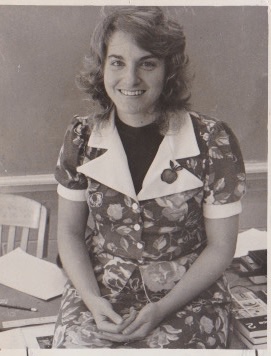
I wanted to be a teacher for as long as I can remember.  I would set my dolls around my stand up chalk board and teach them the alphabet. By the time I was in high school, I knew I wanted to go to college for a degree in teaching. My love of reading, combined with my interest in creative writing, made English education the right choice. Keeseville Central had a day every spring called Student Teacher’s Day.  Those of us who were interested and considered responsible were allowed to take over the classes of the teachers for the entire day.  In both my junior and senior years, I had the opportunity to take over for two of my English teachers.  I spent hours preparing lessons  on Greek and Roman mythology, The Outsiders by S. J. Hinton, and vocabulary.  I absolutely loved this opportunity to play “teacher for a day,” and it confirmed my career path. 

For my first two years at Albany State, I fulfilled several credits taking required courses, including American and English literature survey courses as well as biology, French, and music.  By my junior year, however, I was taking classes that allowed me to learn and participate in the classroom. My methods course required our putting together a unit plan on a specific topic, and my submission on the theme of War and Youth, not only received an A but also was used as a model for several years in the English education department. In my senior year, I finally had a chance to actually teach through my student teaching assignment in a high school in Schenectady, New York.

I thrived in front of a class, and I flourished putting together the lesson plans, the quizzes, the tests.  I spent hours planning and producing the necessary paperwork, but it was worth every minute to implement it. I was rewarded in the end with a five plus out of five score for my student teaching, with my advisor writing in his evaluation that I was a born teacher who was a natural in front of the classroom.

As the graduation date grew near, I started applying for a teaching position.  It was a tough time to get a job; there were not very many openings, and despite excellent evaluation, I couldn’t even get an interview.  In late June, however, a month after graduation, a break came through.  A high school English teacher had handed in his resignation the last day of school as he had decided to start a master’s program, and the principal wanted to fill the position before he left for his summer vacation.  I interviewed for the job and was hired on the spot.  

There was only one difficulty: the teacher I was replacing taught very unusual classes. Along with a standard tenth grade English class, he also taught numerous electives on such topics of supernatural fiction, science fiction, the police state in literature, and the American cinema. Because students had already chosen their courses that spring, I would be responsible for developing and implementing the curricula for the classes.  Over that summer, I read the novels and started creating plans.

The tenth grade students I greeted that first day took the change in teachers in stride, but the juniors and seniors who had signed up for the electives were disappointed to find that their anticipated teacher was gone and instead had a new, young teacher with high ideals and higher expectations.

This challenge was even made more difficult by what I learned from the students.  My predecessor had held seances during the supernatural classes, and the students in the cinema had spent time making movies. The initial comments from many entering my classroom were “Who are you? And what happened to the fun guy?”

I was at a complete loss in the Police State in Literature course:  The books ordered for the class included Brave New World, 1984, and Night. Meanwhile, many of the students were reading two or three years below grade level, certainly way below the level of the novels attached to the course. Especially problematic for me was teaching about the Holocaust. I was one of two Jewish teachers in the entire district in a school district with no Jewish students.

The result was an absolute disaster.  Despite a supportive principal and and supportive faculty, I was in over my head.  I spent every minute out of class working on lesson plans, projects, quizzes, including most weekends, but the plans that had served me so well in Methods and student teaching fell flat.  In addition to my difficulty with the implementation, I also was challenged by maintaining discipline. I was twenty-two years old, highly idealistic, and totally out of tune with those students who lacked motivation and any interest in what I was trying to do.  Although the majority of the students were good, a small group made it a point to see if they could disrupt my class. They talked, they threw spitballs, they refused to participate. It was a horrible year. After spending years dreaming about being a teacher, I realized that nothing I had done in college had ever prepared me to handle a real class, a real job.

By June, I was exhausted, stressed, and seriously wondering if I could learn enough from my first year to handle a second year in the classroom.  But the worst moment of that first year was yet to come.  About three weeks before graduation, yearbooks came in, and students were passing around their own copies for signatures from classmates and from teachers.  Two seniors, the children of highly respected members of the community,  came up to me with their yearbooks. With big smiles on their faces, asked me to autograph my picture. When they handed them to me, I was shocked and stunned to see that they had both drawn swastikas around my picture. I slammed the books shut, refusing to sign and making some comment about how some day they would look back on their yearbooks with shame. I told the principal, who called them in, but I don’t remember  the outcome of that discussion.

I did return in September.  I was more confident, more organized, more prepared, but I found teaching high school an uphill battle, a completely different experience than what I had dreamed.  I left in January, eighteen months after I started, enrolled in University of Albany’s master program in reading, and subsequently got a job teaching adult education.  It was in that scenario that I found my niche; classes were small and individualized, low-key, and I found it easy to relate to adult students, many of them highly motivated and focused in their wish to improve their reading and writing skills and obtain their General Equivalency Diploma (GED).

It has been almost fifty years since I walked out of my first teaching position.  I still think back to that experience and wonder if I could have done more to find a way to hold on until I gained enough experience and maturity to handle the real high school classroom.  I also wonder what happened to those two students who got so much pleasure that day from seeing my face when I saw those hated Nazi symbols next to my picture. Did they forget about it as soon as they graduated? Did their yearbooks land up on a dusty shelf, never to be looked at again?  Or do they occasionally pull out that book like I have done with my own high school yearbook, reminisce over pictures of their friends and their club shots.  Or do they come across my picture and felt regret, embarrassment, and shame? 

A version of this article originally appeared in the Jewish World News, a bi-weekly subscription-based newspaper in upstate New York, in the February 27, 2014, issue.

My Love Affair with an Old Oak Table by Frances Cohen

My mother Frances Cohen (Z”L) wrote this story for her writing group in Coburg Village, Rexford around 2007.. It is included in the book she and I co-wrote,Fradel’s Story, available on Amazon.

For over fifty years, I’ve had a love affair with my old oak dining room table. Everyone prizes something more in his or her home than others do, and for me it is a 100-year-old piece of furniture.

Our family had recently moved to Keeseville from a tiny house in Potsdam, New York that had little furniture. One day, a customer shopping in our store told us that their parents were giving up their home on the farm and were moving in with them. They asked if we knew anyone who would be interested in buying their parents’ old oak table and chairs.

Bill and I told them that we would love to look at the dining room set. We fell in love with it the minute we saw it. The table was over fifty years old, but it was in good shape, had beautiful lion claws at the end of the legs, and would fit perfectly into the dining room of our old Victorian house. It could seat six, but when the four oak extension leaves were added, there was even more to love! We paid ten dollars for the table and five dollars for each of the six chairs. As soon as the table arrived in our home, it became part of the family.

If the table could talk, it would talk all about the wonderful times it shared with the Cohen family. Birthdays, anniversaries, Thanksgiving, Passover—all were celebrated around the oak table.

The table would also say that it felt elegant when it was dressed up in a beautiful damask tablecloth and matching napkins, and when the food was served on Bavarian china with sparking silverware and the drinks were served in stem glassware.

Even at more casual times, the table was always laden with tons of food. When anyone asks me if I was a good cook, I always said, “I’m not a gourmet cook. I just cook quantity!” With four growing children, a hungry husband, and lots of company, I had no choice. And the oak table always supported my spreads.

The table was not only for dining. The children preferred doing their homework on the table instead of the desks in their rooms. Sundays through Thursday nights during the school year, the table was buried in schoolbooks and papers. The table was also used as a game table. The children played card games like Fish, War, and Old Maid and board games like Monopoly and Scrabble. They put together 1000-piece jigsaw puzzles and set up toy soldiers in formation on its surface. On rainy days, a double sheet draped over the top turned the table into a tent, a stagecoach, or a playhouse. Bill and I played bridge and card games with couples. Several timesa year, Bill served as host for his poker game. The dining room was filled with smoke as the men drank soda and beer and snacked on Brach bridge mix and peanuts.

Our four children still talk about the birthday parties they celebrated with friends around the oak table. The menu was always the same: hot dogs and rolls, Heinz vegetarian beans, and potato chips for the meal, followed by a homemade birthday cake. The birthday child always got to help bake the cake from scratch or as the years went by, from a mix. Then the child helped frost the cake with confectionary sugar frosting and decorate it with the candies that came on a cardboard sheet that spelled out Happy Birthday and held the candles.

The table had its problems. One day there was a huge crash in the dining room. The old chandelier that hung above the table fell into the middle of the table. We were thankful that no one was hurt and that the table escaped with just a couple more scratches. Within a couple of days, the chandelier was replaced, and the table was back in service.

Time passed, and the table became the gathering place for celebrations of high school and college graduations and engagement parties. The children moved away, and we began spending more time in our cottage on Lake Champlain. In 1982, with retirement looming, we decided to sell the house in Keeseville and split our time between the cottage and Florida. We sold most of our furniture, but the oak table moved with us to the cottage. It fit beautifully in the large dining area. In the summer of 1983, we celebrated our retirement with a party of over fifty people. We set out tables and chairs on the lawn, but everyone came into the cottage for the buffet that was set up on our precious oak table.

Time passed, and grandchildren came to spend time at the cottage. The oak table again became the play table, as they loved to paint, color, and play games on the table.

By the year 2000, Bill and I were in our eighties, and we realized it was getting too much for us to maintain the cottage and decided to spend all our time in Florida. We were delighted when our son Jay and daughter-in-law Leslie opted to buy the cottage and keep it in the family. We could not make it up to the cottage for two summers. When we moved into Coburg Village in 2006, however, we finally had the opportunity to go up to the camp. When we visited, we realized that another generation is now enjoying the table. The top is a bit more worn and scratched, but the lion paws still shine and look like new. And so, our family’s romance with the one-hundred-year-old table continues.

A version of this article originally appeared in the Jewish World News, a bi-weekly subscription-based newspaper in upstate New York.