Tag Archives: #Books

A sister’s promise fulfilled: Eva Geiringer Schloss

This is an updated version of Eva Geiringer Schloss’s story that was originally published in November 2023.

On June 12, 1942, Anne Frank was given a diary for her thirteenth

birthday. Less than a month later, she and her family went into

hiding from the Nazis. The story of Eva Schloss Geiringer may

not be as well-known as Anne Frank: The Diary of a Young Girl. Through a

chance meeting with a passionate New Jersey college educator, however, Eva’s

amazing life of sacrifice, survival, and strength is finally gaining the recognition

it deserves.

On a train to Auschwitz, fifteen-year-old Eva made a promise to her

brother, Heinz Geiringer. If he did not survive the camps, Eva promised to

retrieve the paintings and poetry Heinz hid under the floorboards of his attic

hiding place. The film Eva’s Promise, an important addition to the annals of

Jewish Holocaust history, introduces its audiences to Heinz, his artistry, and

Eva’s efforts to find and share her brother’s remarkable legacy.

Heinz Geiringer and Eva Geiringer Schloss’s Holocaust story is chillingly

parallel to that of their classmates, Margot and Anne Frank. Faced with Hitler’s

rise, Erich, Elfriede (“Fritzi”), and their two children, fled from their home and

comfortable life in Vienna, Austria, and settled in the Netherlands, hoping

its history of neutrality would provide a safe haven. Their worst fears came to

pass when Germany invaded Holland.

“As of 15 May 1940, we were living under Nazi occupation, and we had

nowhere else to go,” Eva recalled in her 2013 memoir After Auschwitz: A Story

of Heartbreak and Survival by the Stepsister of Anne Frank. Soon after, the Nazis

implemented the increasingly harsh measures against the Jews that were part

of their Final Solution. In May 1942, Heinz received orders to report for a

deportation to a Germany factory. That evening, the family went into hiding.

As no place was large enough for four people, they were forced to split up. Erich

and Heinz in one apartment; Fritzi and Eva in another. For Eva, her time was

to be “a mixture of two emotions, utter terror and mind-numbing boredom.”

161Remembrance and Legacy A Sister’s Promise Fulfilled: Eva Geiringer Schloss

Meanwhile, Heinz, having to give up his musical interests, spent his time

painting and writing poetry. “I could hardly believe the detailed and impressive

oil paintings that he showed me,” said Eva, recalling the furtive visits she and

Fritzi made to the men’s apartment. “In one, a young man, like himself, was

leaning his head on the desk in despair. In another, a sailing boat was crossing

the ocean in front of a shuttered window.”

On May 11, 1944, Eva’s fifteenth birthday, the Geiringer family was

captured after being betrayed by a double agent in the Dutch underground.

A train took them on an arduous three-day trip across Europe, in what would

be the last time they would be together as a family.

During their ride, Heinz made Eva promise that if he didn’t survive, she

would retrieve the paintings he had stashed under the floorboards of the house

where he and his father had hidden them. “Please, Eva, please,” Heinz told his

sister. “Go and pick it up and show to the world what I achieved in my short

life.” Eva grudgingly agreed.

When the trains reached the concentration camps, Erich and Heinz

were sent to Auschwitz; Fritzi and Eva, to Birkenau. Through sheer luck and

resourcefulness, Eva and Fritzi survived but were barely alive when Soviet

troops freed them in 1945. “I never gave up hope, or the determination that I

would outlast the Nazis and go on to live the full life that I and all victims of

the Holocaust deserved,” Eva said.

Tragically, Heinz and Erich perished in Ebensee, a subcamp of Mauthausen

following the forced march from Auschwitz that came just before the war

ended. The two women eventually returned to Amsterdam and settled into

their family’s apartment, which had remained untouched.

After the war, Otto Frank, their old neighbor, the only surviving member

of his family and his “Annex” companions, took comfort in visits with Fritzi

and Eva. In 1953, Eva became the posthumous stepsister of Anne Frank when

Otto and Fritzi were married. The couple dedicated the rest of their lives to the

publication and promotion of what would be the world’s most famous diary.

In the meantime, Fritzi and Eva had retrieved Heinz’s work, which included

paintings, a sketchbook, and poems, from his and Erich’s last hiding place. For

many years, Eva and her mother kept the paintings and poems in the family.

Eva eventually moved to London, where she married Zvi Schloss, a German

refugee, raised their three daughters, ran a successful antique store, and quietly

moved on with her life despite her recurring nightmares. It was a few years after

Otto Frank passed away in 1980 that Eva, now in her late fifties, began publicly

sharing her wartime experiences in person and through her memoir, Eva’s

Story: A Survivor’s Tale by the Stepsister of Anne Frank (1988). “As soon as I

started talking, I became calmer and didn’t have nightmares anymore,” she said

in her film Eva’s Promise. During one of her talks in Philadelphia, she shared

Heinz’s work for the first time.

A chance meeting with Susan Kerner led Eva to further expand her audi-

ence. In 1994, Kerner, the education director at the George Street Playhouse

in New Brunswick, New Jersey, directed a production of The Diary of Anne

Frank. Kerner reached out to Ed Silverberg, a friend of Anne Frank’s who

had survived the war by successfully hiding, to talk to the cast about life in

Amsterdam after the invasion.

Around the same time, Young Audiences of NJ reached out to Kerner with

a request to work with a playwright to create a play about Anne Frank to tour

schools. The Anne Frank Center in NYC suggested they create a piece about

two hidden children who survived the Holocaust who had a connection with

the now-famous German author.

“I already knew Ed,” recounted Kerner in a 2023 article in the Jewish

Standard Times of Israel. I wanted a woman, and I wanted her to be a camp

survivor.” They put her in touch with Eva Schloss. George Street Playhouse

commissioned playwright James Still to write the play. The final product, And

Then They Came For Me: Remembering the World of Anne Frank, is a gripping

multimedia experience, which combines videotaped interviews with the two

survivors playing behind the actors who portrayed scenes from their lives.

162 163Remembrance and Legacy A Sister’s Promise Fulfilled: Eva Geiringer Schloss

Thirty years later, the play continues to tour around the world.

A lifelong friendship developed between Eva and Kerner, who met peri-

odically. As the success of the play grew, Schloss sold her antique shop and

became a full-time Holocaust educator, traveling in Europe, Asia, and the

United States and participating in talkbacks following performances of the

play in many countries.

More importantly, Eva came to grips with the unfulfilled promise she had

made to her older brother. In 2006, over sixty years after the Holocaust, Eva

gave Heinz’s works to the newly established Het Verzetsmuseum, the Dutch

Resistance Museum in Amsterdam. Soon after, she published her second

memoir, The Promise (2006), followed by her final memoir, After Auschwitz

(2013). She now focused her efforts on preserving Heinz’s’ legacy. “It became

my task that people would remember who he was … and what he achieved,”

Eva said.

As the COVID-19 pandemic shut down the world, Eva realized that she

wanted to do even more to preserve Heinz’s legacy. She reached out to Kerner,

who suggested a documentary film. Kerner recruited Steve McCarthy, her

Montclair State University colleague and an Emmy Award-winning filmmaker,

to direct and coproduce what would become Eva’s Promise. Eva had only two

requests: “Get it done. And hurry.”

Despite the pandemic, the team, which now included McCarthy’s two

sons, flew to London to tape twelve hours of interviews with Schloss. They also

interviewed the staff of the Amsterdam museum that houses Heinz’s work.

The film was completed in 2022.

Kerner and McCarthy worked tirelessly and without pay to produce

the film. Screenings took place across the United States, including a show-

ing at the Ronald Reagan Presidential Library and Museum in Simi Valley,

California. Kerner hopes that the documentary can be used as an educational

tool to counteract the recent dramatic rise of antisemitism as a result of the

Gaza–Israeli War. In 2024, she and McCarthy tested the film in a school with

eleven- to thirteen-year-old children. “The kids were very engaged and had

lots of thoughtful comments and questions,” said Kerner.

Beginning in 2024, Eve’s Promise has been presented on 17 PBS stations.

The film has been screened in film festivals, museums, JCCs, synagogues, and

theaters. Several colleges have included it in course curricula, and the film is

beginning to get adopted in secondary schools. Eva’s Promise was presented

at an Anne Frank exhibit in Columbus, Ohio, in February 2025. The Heinz

Geiringer story, including his poems and paintings, will be featured in an

upcoming New York State Holocaust resource guide along with a clip of the

film. Kerner envisions the resource guide will lead to greater national and even

international exposure.

Until recently, Eva continued her active involvement in Holocaust educa-

tion and advocacy. She has spoken around the world, with a special place in her

heart for her meetings with schoolchildren. She was part of the 2018 campaign

to convince Mark Zuckerberg to ban Holocaust deniers from Facebook,

and she is prominently featured in the Ken Burns 2022 documentary, The

U.S. and the Holocaust. In January 2023, Eva attended the screening of Eva’s

Promise at JW3, a Jewish community center in London. Now nearing her

ninety-sixth birthday, she has stepped back to rest and is enjoying time with

her first great-grandchild. Her grandson Eric, who is featured in the film, now

shares her work.

Before they were forced into hiding, Eva’s father Erich gave his children

the following advice: “I promise you this, everything you do leaves something

behind; nothing gets lost. All the good you have accomplished will continue in

the lives of the people you have touched. It will make a difference to someone,

somewhere, sometime, and your achievements will be carried on.”

Through her books, her films, and her tireless work in Holocaust educa-

tion and advocacy, Eva Schloss has not only kept her promise to her brother

Heinz but also has made the memory of the six million and all who have been

subjected to hatred a blessing and an inspiration.

Please contact Susan Kerner at kerners@montclair.edu for information on showing “Eva’s Promise” in your community.  The film’s website is https://ryanreddingtonmcca.wixsite.com/evaspromise.
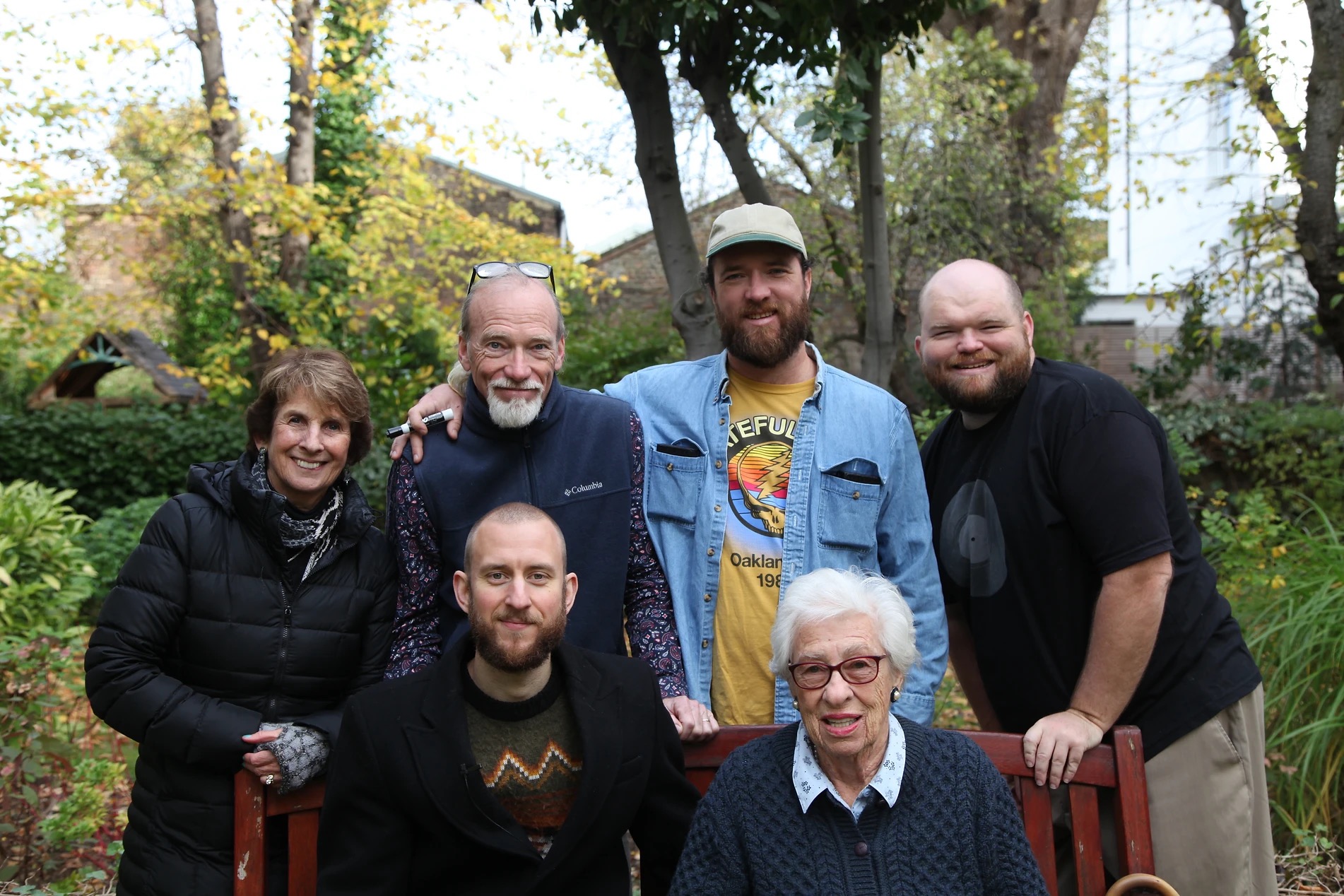
Filming Eva’s Promise in London. Seated: Eric Schloss, Eva Geiringer Schloss. Standing: Susan Kerner, Steve McCarthy, Justin McCarthy, and Ryan McCarthy.
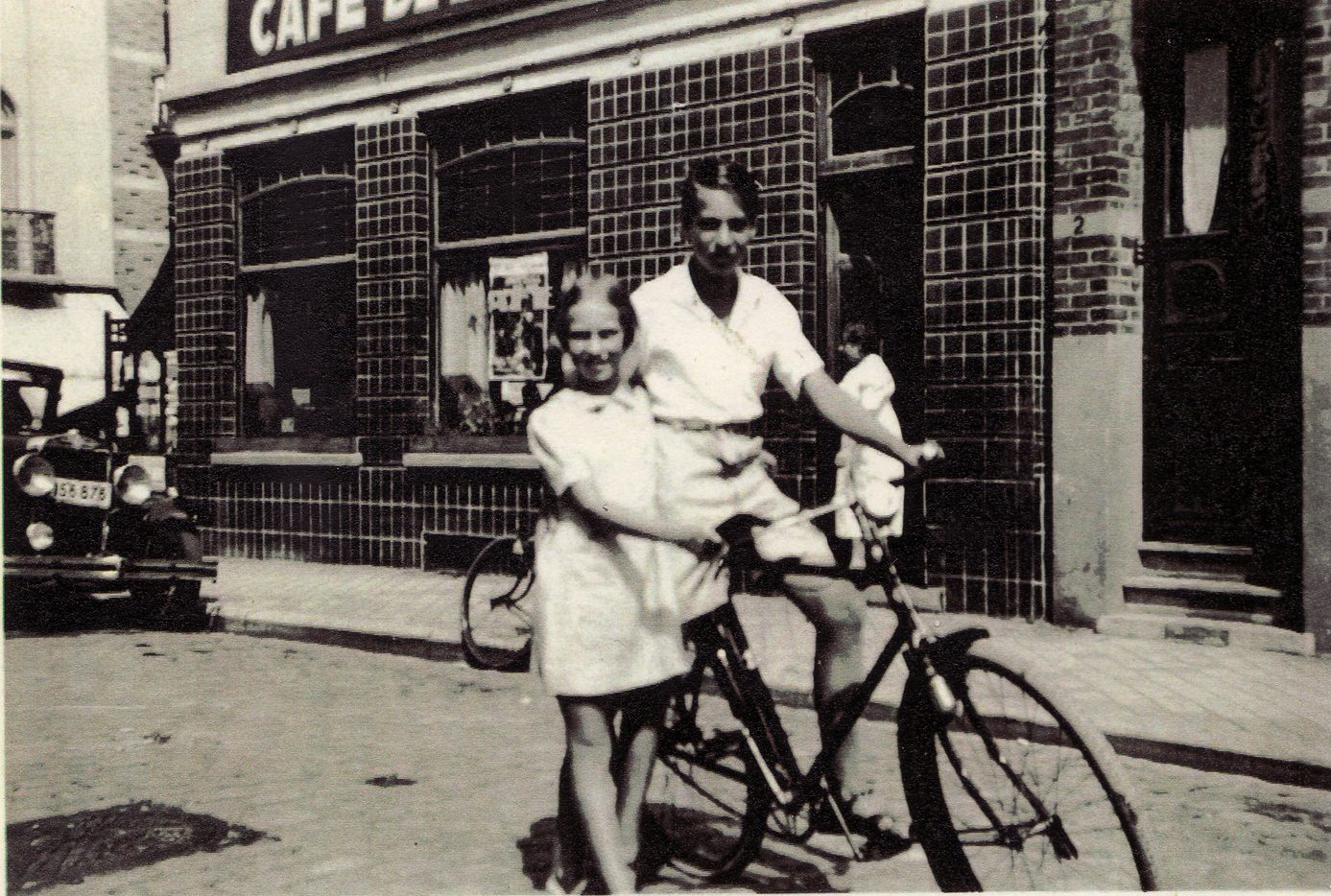
Eva and Heinz in Amsterdam before they went into hiding.

PHOTO CREDITS:

Photograph of production team and Eva and Heinz in Amsterdam courtesy of Susan Kerner and Eva Schloss.

Photograph of Eva Schloss : John Mathew Smith and http://www.celebrity-photos.com.“Colonel Zadok Magruder High School.” August 10, 2010. Creative Commons Attribution-Share Alike 2.0 Generic license. Wikimedia Commons. https://commons.wikimedia.org/wiki/File:Eva_Schloss_5.jpg 

Another meaning to “Through the glass darkly”!

In ancient times, Jewish brides may have brought into marriage a nedunyah, or dowry, “those assets of the wife which she of her own free will entrusts to her husband’s responsibility.” This could take the form of money, slaves, or cattle. As Larry and I look forward to our fiftieth anniversary this fall, I reflect back on the “dowry” I brought into our marriage: a collection of Warner Brothers Looney Tunes glasses. 

Larry and I announced our engagement to our families on October 6, 1973. Fresh out of graduate school, Larry was working at his parents’ store, Shapiro’s of Schuylerville, making an astounding $78 a week. Meanwhile, I was in my second year of teaching high school English in a suburb of Albany, with a starting salary of $5200

 We obviously were not coming into this marriage as “well off.” But we had a plan for starting our new household. Who needed a wedding registry, where we could list china and silverware that we could never use? I just needed to stock up on free glassware from the nearby hamburger joint. 

My apartment in Rensselaer, New York, was a short distance up Route 9 from a Carrols. The burger chain, which was founded in 1960 in Syracuse, New York, by Herbert N. Slotnik, was viewed as “incredibly popular as an alternative to 

McDonalds,” with over 150 outlets, mostly in upstate New York and Pennsylvania.

During our engagement, Carrols was running a promotion sponsored by the Pepsi Corporation. For the price of a large soda product, each customer received a Looney Tunes glass with Warner Brothers’ characters painted on the outside. Daffy Duck! Bugs Bunny! Elmer Fudd! And, over the course of several months, fifteen more glasses were released. My quest was to get all eighteen options, which was a great deal of Diet Pepsi. 

Each week, whatever day the newest one was up for sale, I would stop by, order a Diet Pepsi, slurp it up, and then bring the prize home. To be honest, I can’t even remember if I purchased the their signature Club Burger! Six glasses in, I wasn’t even bothering to drink the soda. I dumped it out, wash out the glass when I got home, and tucked it away in a cupboard.

After our September 1974 wedding, we moved into our tiny apartment in Guilderland. Thanks to a bridal shower and gifts, we had a kitchen stocked with a Corelle dinnerware set for eight, Oneida silverware, Farberware pots, and several pieces of the classical Corningware with the blue flowers. And, thanks to Carrols, we had over two dozen Looney Tunes glasses, many with duplicates. 

We did receive a lovely set of glassware from Tiffany’s, with an S engraved on each one. They went onto the top shelf of our apartment’s galley kitchen. Why would we use those when The Roadrunner and Wile E. Coyote could fight it out at our tiny kitchen table? Beep! Beep!

Bugs and the Gang came with us to our first home and, two years later, to our second. By the time he was five, Adam was old enough to graduate from sippy cups to Sylvester. Julie progressed to Petunia Pig three years later. Of course, a few met their untimely death on our kitchen floor, but we managed to hold on to many of them. About fifteen years ago, I found some replacements at a secondhand store. Again, more were lost to breakage, but we still had five remaining when we made the move to Florida in 2015. 

By then, the painted characters had faded, and the glasses were cloudy. The former owners of our Kissimmee home had left a set of glasses in the cupboard, and we opted to use those for every day use. Our Looney Tunes treasures only came out on special occasions, and we only lost one over eight years, until the college football playoff in January 2023.

We had met our friends Joel and JoAnn Knudson, from a tiny town in North Dakota, many years earlier at a Jamaican resort. That began a close friendship that we maintained through a few more trips to Jamaica, a visit they made to Albany just before Hurricane Sandy, and time together in Florida. We were thrilled when they purchased a home in our 55+ community. 

Soon after their move, the Knudsons, lifelong fans of North Dakota State University’s football team, were looking forward to the January 5, 2023, championship match between their beloved Bisons and their arch rivals, South Dakota State University. As their television set hadn’t arrived yet, we invited them over to watch the game on our big screen. 

At the end of the first quarter, the two teams were tied 7-7. By halftime, however, NDSU was behind 14-7. Time for refreshments! We replenished the chips and dip. I offered Joel a cold beer in one of our favorite Looney Tunes glasses, Bugs Bunny. 

“Get that @#?$ jack rabbit out of here!” Joel yelled. 

How was I supposed to know that the SDSU’s mascot was a jackrabbit??

I quickly transferred the Yuengling into a less threatening Elmer Fudd. According to Joel, however, the damage was done. The Bisons faced a blistering 45 to 21 defeat by the despised Jackrabbits. The Knudsons went home disappointed; both Bugs and Elmer went into my dishwasher to see another day. 

Two days later, I was reading the newspaper on my kitchen counter.. As I turned the page, my hand brushed against my glass of iced tea. Seconds later, our beloved Bugs Bunny met his demise on my tile floor. Larry and I refer to it as “The Knudson Curse.”

Recently, with our Looney Tunes supply down to four glasses and the former owners “gift” set of glasses etched with cloudiness that no amount of Cascade or vinegar would remove, I pulled down the Tiffany glasses we got for our wedding. “What are we saving them for?” I asked Larry. After fifty years, the beautiful set are being used for everything from an orange juice to an Old Fashioned.

In retrospect, using that now collector’s set of Looney Tunes was not such a great idea. According to Tamara Rubin’s Lead Safe Mama webpage, tests run on athe paint on a sample Looney Tunes glass revealed that it contained 71,800 parts per million of lead, 800 times more than the 90 ppm considered unsafe for use! “Please do NOT let children in your life use them,” Rubin wrote in her 2/19/2019 article “I personally would not use something like this in my home for any purpose!” Yikes! For fifty years, I had been exposing my family and friends to high contents of lead, caladium, and arsenic. To quote Sylvester, “Thufferin’ Thuccotash!”

What happened to Carrols? By the mid 1970’s, Slotnick saw the writing on the wall as competition by sheer numbers from McDonalds and Burger King dwarfed his company. “He figured if you can’t beat ’em, join ‘em,” Alan Morrell wrote in a 10/25/2021 article for the Democrat & Chronicle. Slotnick cut a deal with Burger King in which all his restaurants would be converted into the home of the “Big Whopper.”

But the Looney Tunes “vintage” glassware continue to thrive on internet, where collectors can pay anywhere from $16.99 for Porky Pig on Amazon to $300 for a complete set of 18 on Ebay. I say, I say, maybe my Foghorn Leghorn still has some life in him yet!

Sources:

Morell, Alan. “Rochester loved the Looney Tunes glasses and Club Burger. Whatever happened to Carrols?” Democrat and Chronicle. October 25, 2022.

Pacheco, George. “Top 10 Most Iconic Looney Tunes Catchphrases.” Watchmojo.[Date unknown]

Rubin, Tamera. “1973 Warner Brothers Pepsi Collector Series Daffy Duck Drinking Glass: 71,800 ppm Lead (90 ppm is unsafe for kids.)” Lead Safe Mama. February 19, 2019.

Larry and I on our wedding day in 1974.. Who needs fancy crystal when we have Looney Tunes glasses?

Heritage writer has a blog to appease her “inner geek”

This article was published in the Orlando Heritage Florida Jewish News on February 23, 2024. Thanks to Christine Sousa, Editor, for all her support!

This March, Marilyn Shapiro celebrated a milestone in her writing career: the tenth anniversary of her blog, There Goes My Heart.

Wait! You don’t know she has a blog? And if you knew, you have never typed www.theregoesmyheart.me into your browser? Well, you don’t know what you have been missing!

In 2014, with only about 10 stories published in the Capital Region, New York’s The Jewish World, Shapiro decided that she needed a blog as another way to share her stories and to appease her inner geek. After researching a few options, she chose WordPress, “a web content management systems that was user friendly for even newbies like me,” she shared. 

Along with home page and contact pages, Shapiro posted her first 10 blog posts. Leading the list was “There Goes My Heart,” her very first article that was published in August 2013. Fittingly, Shapiro chose it as the name for her blog. She was in business!

When Shapiro and her husband, Larry, moved to Florida in 2015, with over 20 articles under her belt, she met with a neighbor who taught computer classes in the Shapiro’s community. Working with her, Shapiro was able to add more bells and whistles, including a Home Page menu that provided access to her increasing list of articles. A “Follow” button encouraged readers to sign up to get my blog post delivered to their email accounts. 

By 2018, with two published books to her credit, she added a “Marilyn’s Book” page. Along with a summary of her essay collections, it offered the user the ability to click directly onto the Amazon website, where one could purchase a Kindle or paperback version. 

Shapiro now has four books listed: “There Goes My Heart” (2016), “Tikkun Olam: Stories of Repairing an Unkind World” (2018), “Fradel’s Story” (August 2021), and “Keep Calm and Bake Challah: How I Survived the Pandemic, Politics, Pratfalls, and Other of Life’s Problems” (2023). She even offers a preview of her fifth book, “Under the Shelter of Butterfly Wings: Stories of Jewish Sacrifice, Survival, and Strength.” 

Many of Shapiro’s articles are personal: her ancestors’ lives in the shtetl before immigrating to America; her childhood in a small town in Upstate New York; meeting Larry at a Purim party, their years raising two children; their retirement years, their travels and their growing family. Some are humorous: Their love affair sealed in (a kidney) stone. Her daughter’s not-so-welcoming attitude when Shapiro volunteered to chaperone her daughter’s school trip. Receiving the moniker “Bubbe Butt Paste” after the birth of their first grandchild. And some are more profound: Larry and Marilyn’s visit to a Holocaust memorial after the Pulse tragedy in Orlando; wintering through the pandemic; reflecting on the Israeli-Gaza war during the eight days of Chanukah. 

In 2017, Shapiro wrote an article about Harry Lowenstein, a Holocaust survivor (published in the Heritage, “A Holocaust survivor revisits his past,” May 19, 2023). 

“Its impact on me resulted in expanding my writing to include heartfelt stories about ordinary people with extraordinary stories to tell: other Holocaust survivors, righteous gentiles, Jewish immigrants, cancer survivors, and advocates for the less fortunate. The interviews and research necessary to write the articles have expanded my knowledge on many topics, which I have hopefully passed on to my readers,” Shapiro said. 

Ten years later, Shapiro’s blog continues to grow and flourish. She has approximately 220 articles, many with accompanying photos. She has 447 followers, a number that I hope will continue to grow. And thanks to hashtags such as #Jewishlife, #Holocaust, #Hanukkah, #neworleans, and even #pickleball, I get “Likes” from around the world. The page “Marilyn’s published articles from around the world” now includes those from Orlando’s Heritage Florida Jewish News, as well as websites as far away as Australia.

If you are a subscriber and are enjoying Shapiro’s blog, she would love to hear from you. You can type a note in the “Comment” section at the end of the blog, and she will respond. Shapiro also encourages readers to share her posts and even her blog address with friends and family who may enjoy them.

“And for those of you who still haven’t given my blog a try, take a look!” Shapiro added. 

Shapiro’s blog is at www.theregoesmyheart.me. Usually she posts every two weeks, so you will not be overwhelmed with emails from her. 

Who knew that one article in 2013 would lead to so much? For this writer and computer geek, Shapiro is having fun!

From Golden Books to Goldbugs: Adventures in Reading Aloud

I am nestled in my mother’s arms in a living room chair. As I listen to Cinderella and The Brave Little Tailor, my two favorites from the Little Golden Books collection, her lap feels different. My four and a half year status as the youngest Cohen is coming to a close. Soon, my mother will be busy with the new baby. Not long after that, I would be reading on my own. At that moment, however, with my two older siblings at school, I am wrapped up in undivided love. 

As a lifetime bookworm, it is no surprise that one of my earliest memories involves my mother reading to me. When Larry and I became parents, we wanted to create these same memories.

Adam’s first favorite was also from the Little Golden Books collection. Corky, written by Patricia Scarry, is the story of a little black dog whose contentious relationship with his boy’s favorite teddy bear is redeemed when he finds the lost lovely. We read and re-read that little book until it was held together with scotch tape, hope, and a prayer. Corduroy, Don Freeman’s classic about nocturnal adventures of a shopworn teddy bear’s search for his missing button in a locked department store, became his second choice before lights out.

When we discovered Go Dog Go, Larry morphed into the master story teller. As Adam sat transfixed, Larry emoted each line of P. D. Eastman’s story about a group of highly mobile dogs who operate every conceivable conveyance  in pursuit of work, play, and their final mysterious goal SPOILER ALERT a dog party! Larry’s rendition of “Do you like my hat?” is etched into my auditory memory.His asides—“That’s so silly!” and “ Maybe they are going to the tree to pee?”—kept Adam and, later, Julie entertained for hours. Even today, whenever I see a several canines playing together—a very common site in Colorado—I repeat Eastman’s lines to anyone who will listen: “Big dogs and little dogs and white dogs and black dogs……

When both children graduated from picture books, Larry and I moved onto chapter books. When Julie was in first grade, I introduced to her Anne of Green Gables. She so loved L.M..Montgomery’s classic story of a Prince Edward Island orphan that she was reading it on her own by the next year. Her original paperback collection now has a place of honor on her daughter’s book shelf. 

The chapter books saga continued on a six hour trip from our home in Upstate New York to our Thanksgiving visit to my siblings in Pennsylvania. The miles flew by as we laughed and commiserated over Peter Hatcher’s attempts at dealing with his little brother Fudge in Judy Blume’s Tales of a Fourth Grade Nothing, Beverly Cleary’s Ramona series soon followed. We supplemented our own voices with books-on-tape, leading to Adam’s discovery and lifetime love of J. R. R. Tolkien.

The first Harry Potter came out in 2003, years after we stopped reading to our children. Three years later, Larry, Adam, and Julie caravanned cross country in two cars. Julie had J. W.  Rowling’s latest on cassettes, and the two siblings listened together,  often leaving Larry to drive solo. They finished in time for her to peel off in Colorado and for Larry and Adam to drive—Potterless—to California.

And then came grandchildren, and this Gammy was glad to read our Mountain Girl classics that she had read to her mother and uncle. She soon had her own copies of Corky, Corduroy, and Cinderella. Zayde gladly read her Go Dog Go, complete with asides and exaggerated , emotive expositions.

By 2015, a new group of classics had appeared on the scene. I, even more than our Mountain Girl, fell in love with William Stieg’s Sylvester and the Magic Pebble. I teared up every time the little donkey, who had accidentally turned himself into a rock, reappears as himself and knows that no desire is more important than a family’s love. Since my college Kiddie Lit course, I had loved the illustrations of Paul Zelinsky and purchased several of his books so I could share the artwork with my granddaughter. After reading, Anna Dewdney’s Llama Llama Red Pajama, I stopped some potential tantrums by laughing requesting that she stop her “llama drama.” 

During the pandemic, we were unable to see Mountain Girl in person for over 14 months. Thank goodness for FaceTime! Ever since she was three years old, Zayde had spent hours telling his granddaughter his creative stories about an entire cast of denizens of the forest, including the Big Bad Wolf, his wife Wendy and their triplets; the mayor of the forest Morty Moose and his wife Marion; and an imported Florida alligator named Allie. The Mountain Girl connected with Zayde on social media for up to four to five hours a week to hear his increasingly outlandish tales. When Larry’s voice gave out, I took over with either library or purchased book, culminating in my reading and then re-reading to her the entire Ramona/Beezus collection. 

Our San Francisco Kid was born the week the pandemic closed down his city. By the time he was two, he was fully engaged in playing with, watching, wearing, and reading anything about trucks. Go Dog Go was an early favorite as Eastman’s dogs were illustrated in every mode of transportation. Then he discovered Richard Scarry’s Cars, Trucks, and Things That Go. During our recent visit, we watched as he pored over the pictures with the fervor of a Yeshiva student pouring over his tractates. When I learned that a tiny goldbug was hidden on each page, I became obsessed with finding them. I then passed that obsession onto my grandson. “Goldbug!” he would shout when we located one, and we would slap each other five. A week after we left, Adam reported that his son had mastered finding the goldbug on every page, each discovery accompanied by “Goldbug!” and high five.

As our second granddaughter was born seven weeks prematurely this past spring, she is obviously a long way away from understanding the power of reading. As she was named after my mother, I will be supplying her with all the books in Russell Hoban’s Frances the Badger series.The stories have no trucks, but hopefully her big brother will like them anyway.

This past week, our Mountain Girl celebrated her seventh birthday. As Uncle Adam and Aunt Sarah watched on FaceTime, she unwrapped their presents, two classic trilogies.  Lord of the Rings was Adam’s obvious choice. His Dark Materials was Julie’s suggestion for Phillip Pullman’s strong female protagonist. After everyone signed off, our Colorado family cracked open Tolkien, our San Francisco family searched for Scarry’s Goldbug, and Gammy and Zayde kvelled that the joys of reading to children aloud—whether it be Golden books or Go Dog Go or goldbugs–continues,

A version of this article originally appeared in the Jewish World News, a bi-weekly subscription-based newspaper in upstate New York.

So Many Books, So Little Time!

Shortly after my parents were married, their first argument was about reading. With an $18-a-week income as a sales clerk in Alburgh, Vermont, my father was spending up to $4 a week on magazines and books. My mother managed to curb his spending, but neither curbed their love for the written word.

My parents were first-generation Americans, with three out of four of my grandparents Jewish Lithuanian immigrants. Children of the Depression, economic reality squelched any hopes for education beyond high school. My parents compensated for their lack of opportunity with a legacy of literature: books, magazines, newspapers, and frequent trips to the libraries in the small towns in Vermont and upstate New York where they raised their four children.

As a result, my siblings and I grew up in a house full of books. Two rooms had floor-to-ceiling shelves loaded with novels, second-hand encyclopedias, and American Heritage anthologies. I remember sitting on my mother’s lap as she read Golden Books to me. Birthdays and holidays always meant new books: The Wizard of Oz, Shirley Temple’s Story Book, and, in later years, the latest Nancy Drew mystery which my father would purchase in New York City on his business trips.

When the books in our house weren’t enough, I walked to the small but well-stocked library around the corner from our house in Keeseville. An early reader, I soon graduated from the six-foot bookshelf stuffed with picture books like The Cat in the Hat and Curious George and moved onto the twelve-foot high shelves with more challenging books. Pippi Longstocking and Alice in Wonderland were followed by Helen Keller’s autobiography and The Good Earth.

It was no surprise, then, that my four years of college focused on literature. I spent hours reading, discussing, and analyzing Shakespeare, Milton, Melville, and Hemingway. My literature courses were not work. They were an academic extension of those leisurely afternoons in the green lounge chair.

When I met Larry, one of the first qualities we found that we had in common was our interest in reading. His first gift to me was a copy of Paul Gallico’s The Snow Goose; my first gift to him was Thoreau’s Cape Cod.

As our parents did before us, Larry and I passed this legacy on to our own children. Bedtime was always a time for us to introduce them to our childhood friends—Francis the Badger, Amelia Bedelia, and Ramona the Brave—and meet new ones, including the Berenstein Bears, Corduroy, and Sylvester and his magic pebble. Books filled their shelves, and they got library cards as soon as they could write their own names. Adam became immersed in Tolkien and C. S. Lewis; Julie in L. M. Montgomery’s Anne of Green Gables series and Jane Austen. Our conversations with our children still include discussions of books we are reading. Now that we are grandparents, our special times include reading to them–Ramona for our granddaughter; Go Dog Go and anything with trucks for our grandson–whether in person or on FaceTime.

Those conversations have also been with friends. For thirty-four years, I was a member of a monthly book club in Upstate New York. The members of the group changed over the years as people moved away or had other commitments. The format, however, remained the same. Taking turns meeting in each other’s homes, we spent the first half hour socializing in the living room. We then moved to the dining room, where we discussed future book recommendations and scheduling over beverages and too many desserts—at least one had to have chocolate— candy, nuts, and fruit. Then we began our discussion about the pre-determined book of the month. 

The fiction and non-fiction we read reflected the stages of our lives. Books on raising children gave way to those on balancing work and family to dealing with aging parents to our own retirements. We often chose best-selling and/or critically acclaimed fiction and non-fiction. With some help from discussion questions from Reading Group Guides, the group took time to weigh in on our opinion of the selection. We all loved Ann Patchett’s Bel Canto; we all struggled through Annie Proulx’s Shipping News

 Elizabeth Gilbert’s Eat, Pray, Love literally split the table: One side thought the author was an irresponsible witch; the other side admired her independence and courage. 

The means with which we read our selections also evolved over the years. The hardcover and paperback books were replaced with audio books and electronic readers. My personal favorite, a reflection of my aging eyes, was anything in large print. No matter what the selection or the means, the discussions were lively, the food was plentiful, and the pleasure of spending an evening with fellow readers was immeasurable. Once I retired, I doubled my pleasure by joining Clifton Park’s Hadassah Book Club.

Saying good-bye to my book clubs when I moved to Florida was one of my hardest tasks. Not surprisingly, I immediately joined a new book club. The women in Book Babes have helped make my transition to Florida easier, as I again enjoying the company of bright, articulate women who love to read and to discuss good literature. The pandemic has had its perks: thanks to Zoom, I have “rejoined” my Upstate New York Hadassah book club. Most recently, the group chose Fradel’s Story, a book I wrote with my mother. Having the chance to discuss questions I had written and getting feedback from my friends gave me–and hopefully them–so much pleasure!

Dr. Seuss wrote, “The more that you read, the more things you will know. The more that you learn, the more places you’ll go.” So hundreds, maybe thousands of books later, I continue to grow from the legacy that was given to me by my parents and that I have shared with my family and friends. So many books, so little time! But what a good time I am having!

A version of this article originally appeared in the Jewish World News, a bi-weekly subscription-based newspaper in upstate New York.

This Bibliophile LOVES Libraries!!

Marilyn surrounded by one of her favorite things….books.

Recently, my husband Larry and I saw The Public. We knew little about the movie when we joined a sparsely filled ballroom in our community. By the time the end credits rolled, however, the two of us as well as others in the audience agreed it was one of the best movies of which we had never heard.

Written, directed, and starring Emilio Estevez, the plot centered on a fictionalized account of an act of civil disobedience that turns into a standoff with police when homeless people in Cincinnati take over the public library to seek shelter from the bitter cold. Sweet, interesting, and well-acted, the movie had not garnered much praise or hype, but it gave a compassion view of the homeless. More importantly, it was Estevez’s love letter to public libraries. The camera often captured not only the beauty of the building but also the beauty of literature, with views of large posters of Thoreau and Frederick Douglas and Jane Austin prominently displayed. 

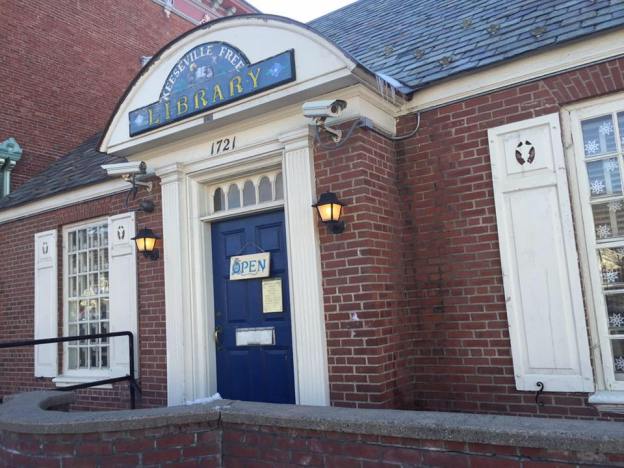
My own love of libraries started when I was five years old. When the books in our house weren’t enough, I walked to the small but well-stocked red brick building around the corner from our house in Keeseville. An early and voracious reader, I once did two trips to the library in one day to replace the picture books I had taken from the six foot shelf and finished in an hour. On my third trip, the librarian told me that I needed to read “bigger books” and walked me to the bookshelf that backed up to Cat in the Hat and Curious George. Embarrassed but intrigued,I soon fell in love with classics by such writers as E.B. White, Marguerite De Angeli, and Beverly Cleary. When I was thirteen, my father introduced me to Ed McBain and the 87th Precinct, and took out one a week, along with other popular fiction. That little brick building remains as one of my favorite places from my hometown.

By the time I went to college, the library became a source of research and studious solitude. Whether exploring the shelves or figuring out how to thread the microfiche into the machines, I used the library throughout my undergraduate and graduate studies, conscientiously detailing my information on 3X5 index cards. In those days before computers, I also spent hours painstakingly typing in the source information into footnotes on the bottom of the white paper I had rolled into my Smith Corona.

When Larry and I purchased our first home in Clifton Park, I signed up for my first card in the library that was housed in an old schoolhouse provided in 1971 by the local school district for $1 a year. It looked and smelled like my old haunt in Keeseville. I was a little sad when the town built a newer but more institutional-like building a few miles away.

 As a child, I had been told that when it came to food, my eyes were bigger than my stomach. When it came to books, my eyes were bigger than my brain. With the new library’s increased size and volume, I started on a habit that I continue to this day, often taking out eight to ten items at a time. Fiction, non-fiction, DVD’s, tapes, magazines…whatever the library had to offer went into a huge tote bag I brought with me for that purpose. I also took care of Larry’s love for non-fiction, bringing him home books by David McCullough and Walter Issacson.

By that time, our children Adam and Julie were born, the tote bag also held children’s books. As a rite of passage, got their first library card as soon as they could sign their names. 

By the early eighties, I was debating whether to return to work or return to college for a master’s in Jewish Women’s Studies. After viewing the cost and the time, I decided to go the independent studies route. The wonderful librarians filled my requests for numerous books both on the shelves and available in area public and college libraries. I immersed myself in everything from Susan Brownmiller to Betty Friedan to Anzia Yezierska.When I finally returned to the classroom in 1986, I continued using resources from our local library to keep up with their ideas.

Sometimes, the library provided us withTMI—too much information. In high school, Julie did a research paper on Charles Dodgson, better known by his pen name Lewis Carroll, an English author most well known for Alice’s Adventures in Wonderland and its sequel Through the Looking-Glass. Uncovering Dodgson history, which included a complicated relationship with the child Alice Liddell, who served as a basis for his most famous character, as well as his photographs of half nude children. In retrospect, Carroll is viewed as “a man you wouldn’t want your kids to meet.” 

In 2006, Shenendehowa opened up a beautiful new library almost triple in size of its previous facility. I visited the library at least once a week, carting home bags of books, magazines, and dvd. As many other town residents, I attended authors’ lectures, concerts, and special events, including a Holocaust Remembrance. 

When we moved to Kissimmee in 2015, Larry and I signed up for a library card even before all our boxes were unpacked. The Osceola library branch on Doverplum reminds me of the one story structure that Clifton Park built in the 90’s. Yes, t is smaller, but the librarians and its expansive website keep me in between the covers of enough books for me to satisfy my book addiction for the next hundred years.

Meanwhile, empty nesters since 2001, Larry and I travel more frequently. On one trip to Jamaica, I packed seven books for the seven day stay. Larry (and Larry’s back) protested. Soon after, I found out that the library had an extensive ebook collection. I now was able to travel with more books than I could ever read in one week on a device weighing less than 8 ounces. Although I still love the feel of a real book, I am grateful I have an alternative for travel (and reading in bed with the lights off). And through the miracles of the internet, I am now able to manage my account electronically, including my holds, loans, renewals, and all e-book downloads.

Not that we never buy books. I am a firm believer in independent bookstores, and I force Larry into everyone I see. We hit four in four cities in a recent trip in Alaska, and I visit The Next Page, a wonderful community resource in Frisco, Colorado. Each time my need to support these stores often wins over the need to stop stuffing our bookshelves. 

Thankfully, the easy access to libraries throughout my life has helped our pocketbooks. According to according to a 2018 study by Pew Research, the average hardcover book retails for an average of $27.50. As my yearly goal is to read 100 books, I save $2750 a year using my library, and that doesn’t even include the price of magazines and DVDs!

In The Public, the Jeffery Wright character states, just before he joins the standoff with the homeless, “The public library is the last bastion of democracy that we have in this country!” The American Library Association agrees. “Libraries ensure people have access to information and lifelong learning regardless of age, education, ethnicity, gender, language, income, physical limitations or geographic barriers,” states their website.  “With over 17,000 library buildings and bookmobiles in communities, public libraries are essential community institutions that deliver the resources their communities need to thrive.” Libraries have helped me and my family thrive, and I, like the characters in The Public, will continue to support them. 

A version of this article originally appeared in the Jewish World News, a bi-weekly subscription-based newspaper in upstate New York. in the October 17, 2019, issue.