Tag Archives: #Fradelsstory

My Mom the Story Teller

Ever since I could remember, my mother, Frances Cohen, was the family story teller. Give her an opening, and she would regal any audience with stories of her grandparents’ and parents’ lives in Russia, of her early years of marriage to “My Bill,” of their life in small towns and smaller apartments in the North Country, and of raising four children, watching them leave for college and for marriage, and their returning with her grandchildren to visit her and my father in their beloved cottage on Lake Champlain.

For many years, these stories were always told orally. Mom shared them when the family got together around the old oak table in the dining room, when she visited friends, and when her children’s friends came to visit. What was fascinating was that no one ever got tired of hearing them.  As a matter of fact, she was highly regarded as the family historian.  If anyone needed to know who was related to whom and how my father’s side was related to my mother’s side and what really happened between those two cousins—well, you just had to ask Fradyl, and the truth would be known.

As my parents got older, my mother realized that she needed to record these stories.  We never were one for video cameras and tapes, so she began writing them down on lined paper, usually from the six by eight notepads. .  The writing was messy, with words misspelled and whole sections crossed out, but she began to put them down on paper.  

My parents retired in 1981 and spent the next nineteen years living six months in Florida and six months on a cottage on Lake Champlain.  As it became too difficult to maintain two homes, they sold their cottage to my brother and sister-in-law, and my parents lived in Florida permanently.  When I went to visit, my mother would tell me the stories as I transcribed them onto paper.   Unfortunately, these scraps of paper remained in their original state for several years.

In 2007, after a number of health setbacks, we children insisted that my parents sell their condo in Florida and move back up North to be closer to the family.  Everyone decided that the best location would be close to Larry and me, and on May 1, 2007, they moved into Coburg Village, an independent living facility only four miles from our home.

Initially uncertain about leaving Florida, their friends, and their independence, my parents soon realized that this was an ideal living arrangement that provided nightly five-course dinners in a lovely dining room, a shuttle service that brought them to grocery stores and doctor’s appointments, live entertainment and numerous clubs.

Soon after moving in, my mother called me to tell me she was joining Coburg’s monthly writing group to polish all those stories she carried in her head and on those scraps of paper.  The night after her first meeting, however, she phoned to tell me she wasn’t sure she would fit in.  “Most of them have college educations and write beautifully, Marilyn,” she lamented.  “They will look down on my family stories as being silly and boring.” However, when she brought her first story to the group, her accounting of why she and my father moved to Coburg, she was surprised to find that the group enjoyed her writing style.  “They loved my story, Marilyn! They said I have a real flair for story telling!” After that, my mother’s voice in phone calls after the monthly Wednesday meetings was filled with pride.

Mom rarely had difficulty finding a topic and writing it down with paper in pen. However, the group leader requested that the stories be typed so they could be published in the semi-annual collection and distributed to Coburg resident.  My mother asked me, “my daughter the English major,” to type them, and, while I was at it, to do some proofing and minor revisions so that they would read more smoothly. 

Thus began our five-year collaboration.  Every month, about a week before the group met, my mother would give me her hand-written story, and I would bring over the typed version by Sunday afternoon.  If I didn’t have it done by Sunday night, the phone calls would begin.  “Marilyn, if you don’t have the time, just bring back my copy and I’ll read it from the original.”  I would assure her that it would be delivered in time for her meeting, even resorting to sending the final copy to her via the Coburg fax machine.

The oral stories evolved into written documents, always original, always entertaining. She wrote about the Old Country: how her mother’s mother died in childbirth and how the two children were raised at first by an uncaring stepmother and then by a loving women who raised them and the seven others that followed; how my father’s father escaped from Russia in a cart filled with hay; what it was like living in Regalia and Vilna at the turn of the century with the fear of pogroms always on the Jewish population’s mind.  She wrote about her mother’s family coming to America:  how her Uncle Sam saved enough money to bring over his sister Ethel; how Aunt Lil turned down a job at the Triangle Shirt Factory a month before the fire because she thought it looked unsafe; how Grandpa Joe left his future bride at the jeweler’s as collateral until he got a second opinion of the diamond ring they were purchasing.   And she wrote about our family: how she and Bill met on a blind date; how they raised four children in various small towns in the North Country, and, and how they came to buy their cottage on Lake Champlain.  The stories were funny, sad, and painful, but they were always ready the first Wednesday of every month for her meeting.

When my father passed away in November, 2008, my mother’s contribution for December was an open letter to my father. She wrote that she was moving into a smaller apartment down the hall, but “Wherever I go, you also go in spirit.” Grieving quietly, she continued with her life at Coburg, going to the concerts, visiting with friends and family who were always stopping by to see her, and continuing with her writing.  All of the children asked her to write about our birth and early childhood, but she always postponed those stories, focusing on the Old Country, her childhood, her Bill. 

On December 22, 2010, my mother had a heart attack. The doctors recommended Hospice and living her remaining time to the fullest.  She complied, enjoying visits from the children, grandchildren, her cousins, and the many friends she had made in Coburg and Clifton Park. She kept writing, and in February, with my sister Laura and I sitting close by, she shared her story: “The Birth of My First Child,” in which she described her joy in having a beautiful little girl and her fears that she would not be able to be a good mother.  The last words, written in pencil on the bottom, were “To be continued……” She died four weeks later, one day before the March meeting.

My parents were not wealthy people, and had little of material value: a wedding ring, two beautiful framed pictures of my father at thirteen and my mother at six, a few nice dishes.  As my siblings and I sadly dismantled Mom’s apartment, my daughter was surprised that I wanted so little.  “It’s ok, Julie,” I said, “We have her stories.”

And we do….Over one hundred typed pages as well as a file of her handwritten notes that she had kept over the years. What a gift to her family, her friends, and all who knew and loved this amazing woman!
Remembering COVID Fatigue and some (heavenly) family support

This essay was originally published in March 19. 2021, The Jewish World. It reflects how just before Passover, the deep connections with my family and the memories we made along the way helped me get through a low point in the pandemic. It can be found in my fourth book, Keep Calm and Bake Challah: How I Survived the Pandemic, Politics, Pratfalls, and Other of Life’s Problems.

Passover will not completely pass over us this year. When the spring holiday occurred last year, we were only three weeks into the reality of the pandemic. Larry and I had a small, quiet, seder for two. On March 27, we will have a virtual Zoom seder with our Kissimmee, Florida, synagogue.

My husband Larry and I have been fortunate. As were our Hebrew ancestors, our family and circle of friends have been spared the “angel of death” in that we lost no one to this (God willing) once in a lifetime scourge. Friends who contracted the illness have survived, albeit with some lingering effects that we hope and pray will result in a r’fuah sh’leimah, a ,complete recovery.

Despite my gratitude, too many times during this year of the pandemic felt that more than Passover had passed us by. I know I share the feelings of so many others that we have lost a year of our lives.It has not only been the life events—first birthday parties, bar mitzvahs, weddings, graduations, even funerals. It has also been the small things: a restaurant dinner with friends; a movie or play, a live sporting event, a simple hug from a friend.

This feeling of ennui especially hit me when February arrived. When we lived in Upstate New York, the second month of the year had always been difficult as I was tired of the cold, the snow, the bleakness of winter. Now that we were living in Florida, we were liberated from the end-of-winter blues. Larry and I still were able to enjoy long walks and long bike rides in the sunshine. Physically, I was doing fine. But emotionally, I felt sad and cold and dark. Would this pandemic ever end? Would our children and grandchildren be able to get vaccinated? Would we be able to travel to see them this summer?When would the world begin to turn to normal?

Getting on Zoom calls was a chore; if I did sign on, I remained quiet, content to work on my crewel piece or check my text messages.Telephone calls were even more difficult; it was just too much work to talk about our endless Groundhog Day routine: morning exercise; afternoon puzzles and projects; late afternoon dinners; and evenings on the couch watching Netflix or reading a book.

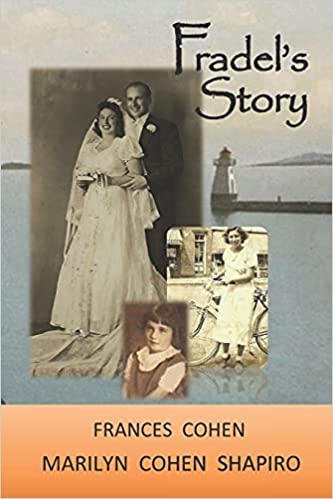
In the middle of all this, I was working on my third book. When completed, Fradel’s Stories will compilation of a number of essays my mother had written in the last five years of her long life as well as essays I had written about my parents and family, many which had been published in The Jewish World. My mother had passed away on March 2, 2011, and I was determined to get the first “run” to my editor to correspond with the tenth anniversary. I devoted hours to organizing, editing, and re-editing. What should have been a labor of love was turning into just labor. Of course, that put more pressure on me, something that I certainly didn’t need in my emotionally depleted state.

On the third Saturday in February, I opted out of my usual exercise-in-the-morning routine and continued editing the second hard copy of the manuscript. When I got to the chapter that Mom had called My Romance, I brightened “The saying goes, ‘You have to kiss many frogs until you meet your true love,’” my mom had written in one of my favorite stories. “Well, I knew many frogs.” She then went on to describe the Toms, Dicks, and Harrys she dated while living and working in New York City until she was introduced to Bill Cohen, her brother and her cousin’s co-worker in an Upstate New York clothing store. 

After a whirlwind three month courtship, my father proposed over ice cream on February 14, 1940. “We had just seen Gone With the Wind,”Mom wrote. “Bill must have thought I was Scarlett O’Hara, and I must have thought he was Rhett Butler.” They were engaged!

Over the next six months, they carried on a long-distance romance. Separated by over 300 miles, they saw each other infrequently but wrote each other often. Mom had kept the letters in her dresser her entire life.“Where are they now?” I thought. Then I remembered that I had found them when my siblings and I were emptying her apartment soon after my mother had passed away. They were in a metal box that held all my treasured correspondences.

Even though I had been known about my parents’ love letters for at least sixty years, I had never actually read them until that Saturday morning. The first one I read, from my father, spoke of feeling “sad and cold and dark. “ Oh my goodness! He was describing me! His remaining letters expressed his love and excitement about their pending marriage. My mom’s letters shared some of his romantic sentiments, but the majority of them described wedding preparations and constant reminders for Bill to get his Wassermann test before the August 20 ceremony. 

After reading them all, I called all three siblings to share the emotional news of my find. That triggered more memories, more family stories. Laura reminisced how her eight-year-old self had found our parents’ love letters and decided to play post office by delivering them to each of the mailboxes on Waverly Street. Jay remembered how, while living in that same Upstate New York house, he and a fellow five year old had called the fire department to report a “blaze” so the two of them could get a first hand look at the town’s new fire engine. Bobbie remembered another letter—the one my parents had written to her in 1977 when, as a recent college graduate, she was struggling to find a job—that she still has kept over 43 years later. 

After my phone calls, I went back to the kitchen table to resume work on my book, but I was no longer alone. My siblings’ stories echoed in my mind. More strikingly, I felt my parents’ strong presence, surrounding me with encouragement to keep writing and with quiet assurance that “This too shall pass.” Recalling through their stories how they had survived the Spanish Flu, the Great Depression, World War II, and their own nine decades of ups and downs, I knew my family and I would survive COVID-19 and its resulting tsouris-troubles.

Ten days later, I felt confident enough to send my manuscript to my editor. We still have months of work ahead— more editing, picture placements, cover design. But I know that on September 1, what would have been my mother’s 104th birthday, Fradel’s Stories will be launched on Amazon. 

Soon, I will give my house a thorough cleaning, make my chicken soup and matzoh balls, chop up my apples and nuts for the charotzes, set our table for our Zoom seder. With all the recent good news of the medical front, I have faith that next year’s seder will be a more crowded, joyous, affair. Meanwhile, Passover and spring are here. Thanks to the love and memories my parents and siblings have shared with me, I no longer was sad and cold and dark. I was happy and warm and filled with light.

A version of this article originally appeared in the Jewish World News, a bi-weekly subscription-based newspaper in upstate New York.

My parents, Frances and Bill Cohen, on their sixtieth anniversary, August 20, 2000.

Aunt Rose and Uncle Ruby by Frances Cohen

The article below was written by my mother, Frances Cohen. It is part of Fradel’s Story, a collection of stories I edited and published in book form in September 2022.

I’m so lucky that my mother had lots of siblings. I was surrounded with lots of loving aunts, uncles, and cousins. Of all the relatives, I was closest to my Aunt Rose, Uncle Ruby, and their older son Elliot.

My first memories of my Aunt Rose were when I was very young as she spent a great deal of time with me. She made clothes for me and even sewed some of the clothes for my trousseau. After Bill and I were married, Aunt Rose taught me how to cook. As the mother of two sons, she treated me as the daughter she never had.

Aunt Rose and Uncle Ruby had a wonderful marriage that lasted almost a half a century. They met under very romantic circumstances. Rose worked in New York City in a factory. One rainy day, she was walking home from work and went into a restaurant on Delancey Street to get out of the downpour. As fate may have it, Uncle Ruby was her waiter. Visiting over coffee, Ruby told the poor girl, who was drenched and disheveled, that he was to be finished very soon for the day. Since he had an umbrella, he would be glad to walk her to her home, which was just across the near-by Williamsburg bridge.

When Aunt Rose arrived home, her mother saw how infatuated Aunt Rose was with this tall, handsome guy. Her mother invited Ruby to stay for dinner. That first dinner led to many other dinners. Vichna, ready to feed everyone, would serve herring, boiled potatoes with sauerkraut, and homemade cake and challah. The romance flourished, and they were married within the year.

Soon after they were married, Uncle Ruby lost his job as a waiter. It was the Great Depression, and restaurants did not need as much help. Aunt Rose and Uncle Ruby moved up north to join the family in working at one of the many Pearl’s Department Stores. Ruby eventually opened his own store, Ruby’s, in Brushton, New York

Everyone loved Ruby as he had a wonderful sense of humor. When one of his customers complained that the underpants she bought at his store had holes in them, Ruby said that those were for ventilation. Uncle Ruby hated the Yankees, and he rarely missed their game on the radio just to cheer on the opposite team. At family get-togethers in our home in Keeseville, he would often sneak out to his car, turn on the radio, chew on Chiclets gum, and curse out “those damn Yankees!”

Aunt Rose and Uncle Ruby lived happily in Upstate New York and, although the only Jews in the town, were beloved by everyone. When Aunt Rose died just before their planned fiftieth anniversary party, her funeral was held in Burlington, Vermont. Even though that was 100 miles from their hometown, all the stores in Brushton were closed for the day so that everyone, including the local priest and the minister with his family, could attend the funeral,

Ruby missed his Rose. When he got lonesome, he would put a sign in the window of his store that stated, “Closed for Jewish Holidays” and travel to visit his children and grandchildren.

Ruby lived until he was ninety years old. His funeral, which was held in Burlington, Vermont, was also hugely attended as he was beloved by all the family and the many friends he and Rose had made during their lifetimes. During his eulogy, the rabbi said, “Ruby was not a religious man, but he took more time off for the Jewish holidays than anyone else I ever knew.”

As I mentioned before, Ruby and Rose had two sons, Elliot and Sol. I was especially close to their elder son, Elliot. When things were bad during the Depression, Elliot would spend the summers with my family in New York City. I’m forever grateful to him for introducing me to my husband. Elliot was best man at our wedding, and he drove the car that we took from New York City up north after our honeymoon. It an unforgettable trip. I sat in the front seat with Elliot and Aunt Rose. Bill sat in the back seat with all the wedding presents, including a floor lamp that Bill had to hold for the eight hours. As adults, we remained very close and have spent much time together in Florida and up north. Elliot and his wife Florence were at our fiftieth wedding anniversary. After Florence passed away, Elliot remarried. We have remained very close to Elliot and his second wife Marty. In May 2010, I went down to Staten Island to celebrate his daughter’s sixtieth birthday. I sat with Elliot and visited as if we were still children.

I am very grateful for our relationship with Ruby, Rose, and their family. They very much enriched Bill’s and my life.

Photo of Fran’s aunts and uncles is from Marilyn Cohen Shapiro’s family photo collection. Both Ruby and Rose are standing in the back row. Ruby is second from left; Rose is third from left.

My Love Affair with an Old Oak Table by Frances Cohen

My mother Frances Cohen (Z”L) wrote this story for her writing group in Coburg Village, Rexford around 2007.. It is included in the book she and I co-wrote,Fradel’s Story, available on Amazon.

For over fifty years, I’ve had a love affair with my old oak dining room table. Everyone prizes something more in his or her home than others do, and for me it is a 100-year-old piece of furniture.

Our family had recently moved to Keeseville from a tiny house in Potsdam, New York that had little furniture. One day, a customer shopping in our store told us that their parents were giving up their home on the farm and were moving in with them. They asked if we knew anyone who would be interested in buying their parents’ old oak table and chairs.

Bill and I told them that we would love to look at the dining room set. We fell in love with it the minute we saw it. The table was over fifty years old, but it was in good shape, had beautiful lion claws at the end of the legs, and would fit perfectly into the dining room of our old Victorian house. It could seat six, but when the four oak extension leaves were added, there was even more to love! We paid ten dollars for the table and five dollars for each of the six chairs. As soon as the table arrived in our home, it became part of the family.

If the table could talk, it would talk all about the wonderful times it shared with the Cohen family. Birthdays, anniversaries, Thanksgiving, Passover—all were celebrated around the oak table.

The table would also say that it felt elegant when it was dressed up in a beautiful damask tablecloth and matching napkins, and when the food was served on Bavarian china with sparking silverware and the drinks were served in stem glassware.

Even at more casual times, the table was always laden with tons of food. When anyone asks me if I was a good cook, I always said, “I’m not a gourmet cook. I just cook quantity!” With four growing children, a hungry husband, and lots of company, I had no choice. And the oak table always supported my spreads.

The table was not only for dining. The children preferred doing their homework on the table instead of the desks in their rooms. Sundays through Thursday nights during the school year, the table was buried in schoolbooks and papers. The table was also used as a game table. The children played card games like Fish, War, and Old Maid and board games like Monopoly and Scrabble. They put together 1000-piece jigsaw puzzles and set up toy soldiers in formation on its surface. On rainy days, a double sheet draped over the top turned the table into a tent, a stagecoach, or a playhouse. Bill and I played bridge and card games with couples. Several timesa year, Bill served as host for his poker game. The dining room was filled with smoke as the men drank soda and beer and snacked on Brach bridge mix and peanuts.

Our four children still talk about the birthday parties they celebrated with friends around the oak table. The menu was always the same: hot dogs and rolls, Heinz vegetarian beans, and potato chips for the meal, followed by a homemade birthday cake. The birthday child always got to help bake the cake from scratch or as the years went by, from a mix. Then the child helped frost the cake with confectionary sugar frosting and decorate it with the candies that came on a cardboard sheet that spelled out Happy Birthday and held the candles.

The table had its problems. One day there was a huge crash in the dining room. The old chandelier that hung above the table fell into the middle of the table. We were thankful that no one was hurt and that the table escaped with just a couple more scratches. Within a couple of days, the chandelier was replaced, and the table was back in service.

Time passed, and the table became the gathering place for celebrations of high school and college graduations and engagement parties. The children moved away, and we began spending more time in our cottage on Lake Champlain. In 1982, with retirement looming, we decided to sell the house in Keeseville and split our time between the cottage and Florida. We sold most of our furniture, but the oak table moved with us to the cottage. It fit beautifully in the large dining area. In the summer of 1983, we celebrated our retirement with a party of over fifty people. We set out tables and chairs on the lawn, but everyone came into the cottage for the buffet that was set up on our precious oak table.

Time passed, and grandchildren came to spend time at the cottage. The oak table again became the play table, as they loved to paint, color, and play games on the table.

By the year 2000, Bill and I were in our eighties, and we realized it was getting too much for us to maintain the cottage and decided to spend all our time in Florida. We were delighted when our son Jay and daughter-in-law Leslie opted to buy the cottage and keep it in the family. We could not make it up to the cottage for two summers. When we moved into Coburg Village in 2006, however, we finally had the opportunity to go up to the camp. When we visited, we realized that another generation is now enjoying the table. The top is a bit more worn and scratched, but the lion paws still shine and look like new. And so, our family’s romance with the one-hundred-year-old table continues.

A version of this article originally appeared in the Jewish World News, a bi-weekly subscription-based newspaper in upstate New York.