In 2019, my husband Larry and I were browsing the shelves of Book Passages, an independent bookstore in San Francisco’s Ferry Building. Larry held up a book he had found in the history section: Haven–The Dramatic Story of 1,000 World War II Refugees and How They Came to America.
“Do you remember the exhibit at the New York State Museum regarding the only Jewish refugees brought to the United States during World War II?” he asked me.
“Yes,” I said. My mind flashed back to walking through the Albany museum’s exhibit with its pictures, displays, and sign boards depicting a group of refugees who were housed in Fort Ontario (Oswego, NY).
“This book is a first-hand account by the woman responsible for getting the refugees to the United States—Ruth Gruber,” he explained on his way to pay for the book.
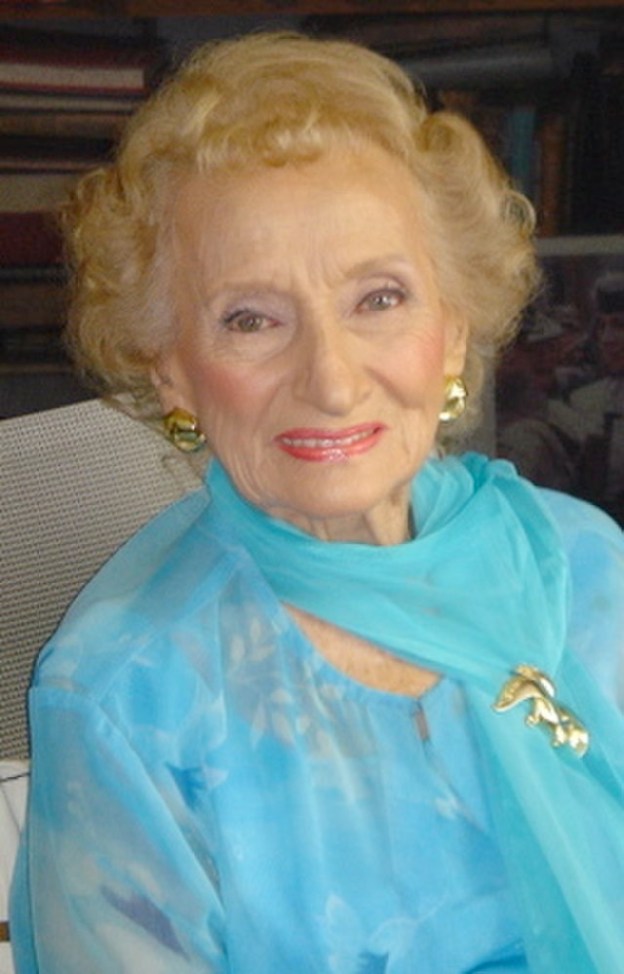
Six years and much reading later, Larry and I agree: Ruth Gruber, American journalist, photographer, writer, humanitarian, and United States government official, is one of the most interesting people who ever lived.
Gruber was born in 1911 in Brooklyn, the fourth of five children of Russian-Jewish immigrants. She graduated from high school at 15 years old. After earning an undergraduate degree from New York University at 18, she won a fellowship at the University of Wisconsin, where she obtained a master’s degree in German and English literature. She subsequently received her doctorate from the University of Cologne in Germany at 21, making her at the time the youngest person with a doctorate.
After returning to the United States, Gruber became a correspondent for the New York Herald. The only reporter to be allowed to travel across the Soviet Arctic, she saw firsthand how people lived there and witnessed the Siberian Gulag.
During World War II, she worked for the Department of the Interior where, as a special assistant to U.S. Secretary Harold L. Ickes, she became its field representative in Alaska. In June 1944, she was to undertake what she later considered “the most important assignment” of her life.
Reading the Washington Post at breakfast, Gruber, then 33, learned that President Franklin D. Roosevelt had signed an executive order allowing 1,000 refugees gathered in Italy, 90% Jewish, to be admitted to the United States. After years of this country’s refusal to allow Jews to escape the Nazi horrors of World War II, this was the only government authorized attempt to bring European Jews to America under the protection of the U.S.
Rejoicing that something was finally being done, Gruber rushed into Ickes’ office to express her concern for their well-being.
“Mr. Secretary, these refugees are going to be terrified — traumatized,” Gruber recalled in a 2010 interview in the Sunday Telegraph of London. “Someone needs to fly over and hold their hand.”
“You’re right,” Ickes responded. “I’m going to send you.” The fact that she was young, Jewish, and could speak both German and Yiddish made her an ideal person for the job. Oswego was chosen as a location for housing he during World War II primarily because of the availability of Fort Ontario, a decommissioned military base, which was converted into a temporary refugee shelter.
After flying to Italy, Gruber boarded the Army troop transport USNS Henry Gibbins and greeted the refugees. “I would like … to know who you are, what kind of people you are. What you’ve gone through to survive,” she recounted in her 2000 book Haven: The Dramatic Story of 1,000 World War II Refugees and How They Came to America “You are the living witnesses.”
Throughout the two-week Atlantic crossing to the United States, Gruber proved to be a calming, empathetic listener and a communicator and advocate for the refugees who came from 18 countries. She intervened in disputes, taught English, cared for the seasick, and comforted the refugees, some who had miraculously escaped the Nazis and others who had spent time in concentration camps.
During the voyage, “Mother Ruth,” as she was often affectionately called, became a witness herself, listening to and writing down many of the refugees’ stories. “Get all the terror,” said Dr. Henry Macliach, a doctor from Yugoslavia. “We lived it. We will live with it for the rest of our lives. But you are the first one we can tell it to. Yes, write it down so the world will know.”
On Aug. 3, 1944, the ship arrived safely in New York City, and Gruber accompanied the refugees to Oswego. Initially, the site of the cold, desolate fort surrounded by barbed wire brought back memories and fears of what many had faced in Europe. Through Gruber’s guidance and the support of many others, including the residents of Oswego, government officials, and even Eleanor Roosevelt, the place became a “haven” from the ravages of war.
“Thus I became a witness and participant,” Gruber wrote. “I experienced their joys and pain, rejoicing in their marriages and love affairs, sharing pride in their children, mourning those who died by their own hand or by acts of God.”
FDR’s initial executive order stated that the refugees were “guests” of the United States under the condition that they must return to their origin countries after the war. In late 1945, the federal government changed its mind and allowed all who wished to stay to become U.S. citizens. The final chapter of Haven lists the successes of the new U.S. citizens, who would establish careers in many fields, including medicine, technology, education, law, business, and the arts.
In recent years, New York legislators in both the U.S. House and Senate have been working to designate Fort Ontario and its associated museum, Safe Haven, as a National Historical Park. In 2018, Senator Kirsten Gillibrand (D-NY) passed a bill directing the Secretary of the Interior to conduct a special resource study, the first step in the process to designate a site as a unit of the National Park System. In 2024, the SRS was finalized and concluded that the two-acre portion of Fort Ontario representing the fort’s use as a World-War II European refugee shelter meets all necessary criteria. The bill passed the Senate but failed to become law. In February 2025, Gillibrand, Senator Charles Schumer (D-NY), and Representative Claudia Tenney (R-NY) reintroduced the bipartisan bill.
“The Holocaust Refugee Shelter at Fort Ontario was a place of safety and hope during a dark moment in history, and it deserves recognition in the National Park System,” said Senator Gillibrand. “I am proud to once again be introducing this legislation to achieve this goal and am determined to work across the aisle to get it done.”
Gruber was profoundly impacted by her participation in the refugees’ “journey out of despair and death, to hope and life and light.” Although she was born a Jew, she became a Jew. “I knew my life would forever be inextricably interlocked with Jews,” she wrote in Haven.
The rest of her life was a testament to that commitment. After World War II, she witnessed the scene at the Port of Haifa where Jewish refugees on board the ship Exodus were not allowed to enter Palestine. She then followed them to France and Germany. While on a ship off the coast of France, the refugees conducted a hunger strike. The only reporter allowed on the ship to report firsthand on the unfolding story was Ruth Gruber. Her book, Exodus 1947, became the basis for the 1960 film Exodus. She later covered Israel’s war for independence. She became Ben-Gurion’s friend and conducted a first in-person interview when he became Israel’s first president.
In 1951, Gruber married, had two children, and continued her journalistic endeavors. In 1985, at 74 years old, she visited Jewish villages in Ethiopia and chronicled the rescue of the Ethiopian Jews to Israel. Throughout her life, she chronicled her adventures through her photography, articles, and 18 books. Gruber died at 105 on November 17, 2016.
“I had two tools to fight injustice — words and images, my typewriter and my camera,” she was quoted in her New York Times obituary. “I just felt that I had to fight evil, and I’ve felt like that since I was 20 years old. And I’ve never been an observer. I have to live a story to write it.”
A typewriter. A camera. Empathy. With my iPhone camera nearby, I click away on my computer keyboard, hoping each of my stories displays the same empathy Ruth Gruber showed throughout her life. She is not only the most interesting person I’ve ever encountered. Ruth is my hero and my role model. I’m so grateful to have learned her story.
Originally published May 11, 2025.
 There Goes My Heart