Tag Archives: #upstateny

“A tiny person with a big heart:” Losing our Bubbe on Thanksgiving

Thanksgiving has always been our favorite holiday. When we lived in Clifton Park, we celebrated for many years by running the Troy Turkey Trot in the morning and then joining the family for dinner at Larry’s cousins’ home in Argyle, New York. Our most memorable Thanksgiving was also our saddest. In 1974, two and a half months after we married, Larry’s beloved grandmother passed away.

Bubbe Rose was the matriarch of Larry’s family. Her tiny stature — she was under five feet and weighed less than one hundred pounds — belied her powerful presence. Everyone loved her.

Bubbe Rose was instrumental in making sure Larry and I got married. We had been seeing each other for a little over two months, but Bubbe was getting impatient and decided to intercede.

“So what is your relationship with this woman?” Bubbe Rose asked her only grandson.

“We’re dating,” Larry responded. 

“You’ve dated long enough!” Bubbe said. “She’s a nice girl. Marry her.”

Fortunately for Bubbe, Larry and I didn’t waste much more time. We got engaged on Rosh Hashanah but waited to announce our plans after the Yom Kippur break-the-fast at the Shapiro’s Saratoga Springs home. As the holiday coincided that year with Larry’s father’s birthday, we held off until Ernie blew out the candles on his cake.

“I have a special present for you this year, Dad,” Larry said.

“Another stupid tie?” Larry’s sister Anita chimed in.

“No, I am giving you a daughter-in-law. Marilyn and I are engaged!” The family was thrilled, but no one was happier than Bubbe Rose. 

Rose [née Slominsky] Hurwitz was born in 1894 in what the family believes was Russia. At a young age, she emigrated to the United States and settled in Syracuse. There she met and married Mose Hurwitz, a coal merchant. Their daughter (and my future mother-in-law) Doris was born in 1920; their son Asher was born eight years later. Rose was a true balabusta, a competent and skilled homemaker, and her home became the gathering place for family and friends for the Jewish holidays. Doris and Ernie were married in the Hurwitz living room on June 20, 1942.

Bubbe’s home in Syracuse remained the heart of the family throughout the next two decades. Immediately following their wedding, Ernie reported for duty at his army assignment in Chapel Hill, North Carolina. Doris joined him but returned to Syracuse to deliver their first child, Anita, a year later. Five years later now living in Schuylerville, New York, Doris returned to Syracuse for the birth of their second child, Larry. Mose died less than a year later, and Asher took over the coal business. In 1950, Ernie’s mother Celia died, making Rose their only surviving grandmother.

When Ernie was called back to service during the Korean War, Doris, along with the two children, waited out his return at Bubbe’s home. Once Ernie was discharged, the family moved to Saratoga Springs, where Ernie resumed his pre-military career running Shapiro’s of Schuylerville. Every Rosh Hashanah and Yom Kippur was spent in Syracuse, along with frequent visits.

By the early sixties, Doris and Ernie had added two more children to their family: Marilyn in 1953 and Carole in 1959. Rather than Doris and Ernie packing up the six Shapiros for the drive to Syracuse, Bubbe Rose and Asher came to Saratoga Springs for most of the holidays and for at least one weekend a month. If the family couldn’t be in Syracuse, Bubbe and Asher brought Syracuse with them: baked goods from Snowflake Pastry Shoppe; white fish and cold cuts from one of the city’s kosher delis; and back issues of the Syracuse Herald-Journal so Doris could catch up with her hometown news.

Larry has two favorite stories about Bubbe’s legendary cooking skills. On March 29, 1959, Larry and Asher watched their beloved Syracuse Nationals defeat the Boston Celtics in the sixth game of the playoffs in the city’s War Memorial auditorium. (Unfortunately the Nats lost the critical seventh game, a loss Larry still remembers with regret.) The next day, Larry came down with the flu, necessitating his staying in Syracuse for the following week. Bubbe Rose believed that the only way to cure him was to feed him endlessly. 

In 1971, Larry was accepted to graduate school at Syracuse University, and he moved in with Bubbe Rose and Asher. He probably did not weigh more than 126 pounds when he arrived. Along with breakfast and dinner, Bubbe insisted on packing him elaborate lunches, which Larry shared with his envious fellow students. In less than two months, he had gained sixteen pounds, some of the weight taken off before he graduated. By the time we met at a Purim party in March 1973, he had settled into his adult weight..

We were married on September 8, 1974. Bubbe Rose attended the wedding, looking beautiful in a long pink gown. On November 23, she suffered a stroke. Doris immediately went to Syracuse to be with her. As the week progressed, her condition worsened; by Wednesday, she was unconscious and unresponsive. On Thanksgiving Day, November 28, Larry and I drove to Syracuse to see her for what we knew was the last time. We walked into the hospital room, quietly shared with her that we were there, and told her how much we loved her. To our surprise, she reached out and gently touched our hands. Moments later, she passed away. In a strange way, we got to spend one last holiday with her—a holiday we will always remember.

Was Rose Hurwitz a remarkable woman? She did not write any books. She did not make any scientific discoveries. She was not a movie star. To her children and their siblings, however, she was as remarkable as anyone who had ever lived.

How do you honor a person who meant so much to you? You pass her story onto your children and grandchildren. You have a daughter, a granddaughter, and niece who all have the middle name of Rose. And you always remember that Thanksgiving Day when she touched your hand for the last time.

Bubbe Rose front and center at our wedding

The Weather by Frances Cohen

This story was written by my mother, Frances Cohen, in ~2006, after she and my father, Bill Cohen, moved into Coburg Village, an independent living facility in Rexford, New York. A natural storyteller, my mother joined a writing group and wrote down many of her stories for posterity. It is a joy to share them with you!

The weather plays an important part of our life. At times, we wish that we could change the weather, but as we have learned it is one of the things in life we cannot change. 

Sometimes prayers help. On two occasions, our prayers were answered when we planned outdoor receptions. One was for the retirement party Bill and I planned at our cottage on Lake Champlain during the summer of 1983. The second was at the wedding reception for my granddaughter that was held on my daughter and son-in-law’s front lawn in Clifton Park in October 2007. At both parties, the weather was perfect: sunny, 72 degrees, with no wind. We considered it a miracle! 

Our prayers did not work when Bill, my daughter Marilyn and I had to travel from Keeseville to Rockland County for our son Jay and our future daughter-in-law Leslie’s engagement party in December 1970. A Nor’easter started the day we were supposed to leave, so we delayed the trip until the next morning in hopes the weather would improve. Unfortunately, the snow only got heavier. By the time we arrived in Albany, the New York Thruway was closed. Determined not t miss the party, we decided to take Route Nine for the rest of the trip. The roads and visibility were terrible. Atone point, Bill stopped at a railroad crossing as the gate was down and the lights were flashing. The snow was so thick that Marilyn, who was sitting in the back seat, thought we were actually on the tracks and began screaming in fear. When we all calmed down, we continued on the trip. We arrived in Pearl River at 11 o’clock at night, sixteen hours after leaving Keeseville for what should have been a four-to-five-hour trip. It was one of the most difficult trips we ever made. In 1980, the year before we retired, our cousins invited us to visit them in Florida. When the day of our flight arrived, we left our cottage on Lake Champlain to drive to Montreal, the closest airport. When we crossed the border to Montreal, the snow was piled so deep that drifts were at places two stories high. As we crossed over a bridge near the airport, Bill lost control of the car, and we did a complete 360-degree turn, landing in a soft snowbank. Fortunately, there was no damage, so we were able to continue the trip to the airport. When we arrived in Florida, it was 85 degrees, and our cousins welcomed us in summer attire. Bill and I looked at each other and said, “This is paradise!” We couldn’t change the weather, but we could change our location. Right then and there, we decided that before next winter, we would sell our business, have a going-out-of-business sale, and spend our winters in Florida and summer at our cottage by the lake. 

We were fortunate to be snowbirds for many years. It was the best of both worlds: Beautiful summers on Lake Champlain and warm, balmy winters in Florida. We thought we had it made—until Hurricane Wilma hit in 2005. 

At that point, Bill and I were living full time in a condominium in Wynmoor, an over-fifty housing complex in Coconut Creek, Florida. The Weather Channel and local officials had warned us in advance of the incoming hurricane, and we had made sure to purchase water, canned food, and extra batteries. The night the hurricane hit, we did a lot of praying. The winds and rain were very strong, and we were very frightened. We were so thankful that our building had been spared any serious damage. We woke up to no electricity and no air conditioning in the 85-degree heat. For the first few days, we stayed in our condominium, living on the canned goods that we had purchased before the hurricane. When the electricity finally came back in our condominium, we decided to go food shopping for milk, eggs, and other food to restock our pantry and refrigerator. At that point, we were able to see the actual extent of the damage in the area. We saw lots of fallen trees, some of which had crashed into parked cars. With all the wires down and traffic lights out, getting to even the supermarket was almost impossible. 

When we finally got to Publix, the store was dark and eerie as it was powered by back-up generators. We learned as the week went on that thousands of trees had been destroyed in our residential area. More tragically, a number of other residential areas, including Hawaiian Gardens, the original complex we had moved out of only four years before, were so badly damaged that they were unlivable and eventually had to be completely torn down. 

In the middle of all this stress, when I was getting in the car to take another trip to the supermarket a week after the hurricane hit, I caught my foot on the curb while trying to get out of our parked car and broke a bone in my leg. That was the final straw. Our children felt strongly that we needed to get out of Florida and its hurricanes and move back up north. By spring, 2006, we were settled in Coburg Village, four miles from my daughter and son-in-law. At Coburg, we don’t need to drive, as the shuttle takes us everywhere. Our children are close enough so they can go shopping for us if the weather is too bad. So, when bad weather comes, we are able to just look out the window and enjoy our cozy apartment. Now we can be thankful for the snow so that grandchildren can ski, the rain that makes our flowers and gardens grown, and the beautiful sun that makes us all happy. 

The photo of me with a rubber chicken was taken in Keesevile around 1954 after a bad snowstorm. No idea why I had a rubber chicken!

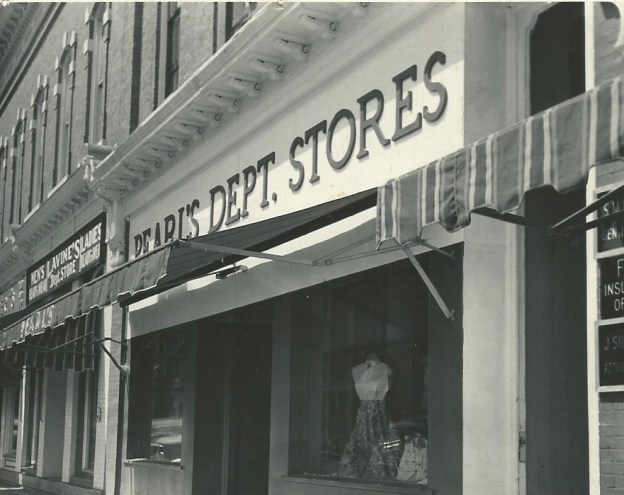
Our Family’s Business Pearl’s Department Stores Written by Frances Cohen

This story was written by Francis Cohen, my mother, soon after she and my father moved into Coburg Village in 2006 and my mother joined a writing group.

The story of Pearl’s Department Store is a very interesting one as it involves so many of my mother’s family, the Pearls.

Let’s start at the beginning. Uncle Paul, my mother’s twenty- year-old brother, was living on the lower East Side in New York City with his family in a crowded flat. With very little education and a short, skinny build, he was only able to get a job in a sweatshop making $7 a week. After seeing a doctor for a persistent cough, Paul was diagnosed with consumption, a direct result of poor working conditions and a poor diet. It was suggested that he leave the city.

My grandmother Vichna had a sister Ittel, and she, her husband Archik Perelman, and their family lived in Burlington Vermont. Lil encouraged him to pay them a visit. Paul liked the North Country, and his health improved in the country air near Lake Champlain. With Lil’s financial support, Paul started in the peddling business, learning the trade from Archik and initially following his routes.

Paul went door to door with a pack on his back peddling his wares throughout Vermont and Upstate New York. He soon expanded the business so that it would not compete with Archik’s territory. After saving enough money, Paul managed to get a horse and wagon. Since he was doing well, he asked his brother Joe to join him in his rounds.

As the two brothers peddled their way through Vermont, they realized that the farmers and families to whom they sold merchandise found it difficult to pronounce their last name, which was Ossovitz. The customers, who knew Paul and Joe as the nephews of the peddler Archik Perelman from Burlington, Vermont, referred the two of them as the “Perelman Boys.” For simplicity’s sake, my uncles gave their last name as Perelman.

A year after they started their partnership, Uncle Paul and Uncle Joe decided to open a store in the small village of Alburgh, Vermont. They bought a piece of land with a barn on it. While the store with its second- floor apartment was being built, Paul and Joe slept in the barn with the horse and wagon. Many years later, Paul related to me that they didn’t need an alarm clock as the horse would wake them. Simplifying their name even more, Paul and Joe named the new store “Pearl’s Department Store,” and the family legacy began. Three of the brothers, Joe, Paul, and Morris, eventually legally changed their name to Pearl. Sam, the oldest, was the only brother to keep the surname Ossovitz. Thereafter, however, all the relatives identified themselves as part of “the Pearl family.”

Paul and Joe soon established a second store in Swanton, Vermont. When war was declared in 1917, Uncle Paul was drafted into the Navy. Joe ran the store while Paul served his country. When the war was over, Paul was happy to come back to Alburgh. Soon after Paul’s return, Joe announced that he and his wife Leona wanted to go back to New York City.

In 1923, Paul married Bertha Leibesman, the second cousin born the year Lil came to America. They lived in the apartment over the store. “Birdie,” as she was known by her family, was very bright and was a big help in making Pearl’s Department Store a success. Within a few years, they were owners of a chain of twenty-two stores in upstate New York and in Vermont. They became very wealthy, the most successful of the nine Ossovitz children.

In the 1930s, the country was in the midst of The Great Depression. Many members of the family needed help, and Uncle Paul was in a position to do so. Uncle Paul’s philosophy was, “Helping someone with a handout only helps them temporarily. It’s more important to give a man a job.”

Over the years, many family members came to work for Pearl’s Department Store. Six of his siblings and/or their husbands worked for the chain, as did fourteen of the grandchildren. My husband Bill and I were one of the first grandchildren to work for Uncle Paul. Uncle Joe and his family also moved back up from New York City and resumed management of the Swanton, Vermont, store

All the stores were successful. The people in these small villages loved to shop at Pearl’s. The managers and their staff were friendly, and the store carried clothing and a great deal of other useful merchandise at prices the average family could afford. Stores were scattered throughout Vermont and New York. The central store and warehouse were in Glens Falls and were eventually run by Paul’s son Elliot and his family.

By the 1960s most of my aunts and uncles had retired.Most of the grandchildren had left Pearl’s to open their own businesses, and local people continued managing the stores. When Paul died in the 1990s, his son Elliot took over the management of the stores.

Time brings many changes. By the 1970s, many superhighways were completed, including the Northway. The small towns became bedroom communities. It brought an end to the small-town, family-owned stores. People now preferred to travel on the superhighways and shop in big malls.

The last Pearl’s Department Store went out of business in 1983, seventy years after who once was known as Pesach Israel Ossovitz had first started peddling with a pack on his back. But the Pearl family will always be grateful to our Uncle Paul for his setting up businesses for so many and supporting many others when they opened their own stores.

For more information about Pearls and similar businesses, check out #afamilyofstores.com. Managed by my brother, Jay Cohen, the website gives a detailed description of many of these stories, inlcuding those in Upstate New York and Vermont.

A version of this article originally appeared in the Jewish World News, a bi-weekly subscription-based newspaper in upstate New York.

Aunt Rose and Uncle Ruby by Frances Cohen

The article below was written by my mother, Frances Cohen. It is part of Fradel’s Story, a collection of stories I edited and published in book form in September 2022.

I’m so lucky that my mother had lots of siblings. I was surrounded with lots of loving aunts, uncles, and cousins. Of all the relatives, I was closest to my Aunt Rose, Uncle Ruby, and their older son Elliot.

My first memories of my Aunt Rose were when I was very young as she spent a great deal of time with me. She made clothes for me and even sewed some of the clothes for my trousseau. After Bill and I were married, Aunt Rose taught me how to cook. As the mother of two sons, she treated me as the daughter she never had.

Aunt Rose and Uncle Ruby had a wonderful marriage that lasted almost a half a century. They met under very romantic circumstances. Rose worked in New York City in a factory. One rainy day, she was walking home from work and went into a restaurant on Delancey Street to get out of the downpour. As fate may have it, Uncle Ruby was her waiter. Visiting over coffee, Ruby told the poor girl, who was drenched and disheveled, that he was to be finished very soon for the day. Since he had an umbrella, he would be glad to walk her to her home, which was just across the near-by Williamsburg bridge.

When Aunt Rose arrived home, her mother saw how infatuated Aunt Rose was with this tall, handsome guy. Her mother invited Ruby to stay for dinner. That first dinner led to many other dinners. Vichna, ready to feed everyone, would serve herring, boiled potatoes with sauerkraut, and homemade cake and challah. The romance flourished, and they were married within the year.

Soon after they were married, Uncle Ruby lost his job as a waiter. It was the Great Depression, and restaurants did not need as much help. Aunt Rose and Uncle Ruby moved up north to join the family in working at one of the many Pearl’s Department Stores. Ruby eventually opened his own store, Ruby’s, in Brushton, New York

Everyone loved Ruby as he had a wonderful sense of humor. When one of his customers complained that the underpants she bought at his store had holes in them, Ruby said that those were for ventilation. Uncle Ruby hated the Yankees, and he rarely missed their game on the radio just to cheer on the opposite team. At family get-togethers in our home in Keeseville, he would often sneak out to his car, turn on the radio, chew on Chiclets gum, and curse out “those damn Yankees!”

Aunt Rose and Uncle Ruby lived happily in Upstate New York and, although the only Jews in the town, were beloved by everyone. When Aunt Rose died just before their planned fiftieth anniversary party, her funeral was held in Burlington, Vermont. Even though that was 100 miles from their hometown, all the stores in Brushton were closed for the day so that everyone, including the local priest and the minister with his family, could attend the funeral,

Ruby missed his Rose. When he got lonesome, he would put a sign in the window of his store that stated, “Closed for Jewish Holidays” and travel to visit his children and grandchildren.

Ruby lived until he was ninety years old. His funeral, which was held in Burlington, Vermont, was also hugely attended as he was beloved by all the family and the many friends he and Rose had made during their lifetimes. During his eulogy, the rabbi said, “Ruby was not a religious man, but he took more time off for the Jewish holidays than anyone else I ever knew.”

As I mentioned before, Ruby and Rose had two sons, Elliot and Sol. I was especially close to their elder son, Elliot. When things were bad during the Depression, Elliot would spend the summers with my family in New York City. I’m forever grateful to him for introducing me to my husband. Elliot was best man at our wedding, and he drove the car that we took from New York City up north after our honeymoon. It an unforgettable trip. I sat in the front seat with Elliot and Aunt Rose. Bill sat in the back seat with all the wedding presents, including a floor lamp that Bill had to hold for the eight hours. As adults, we remained very close and have spent much time together in Florida and up north. Elliot and his wife Florence were at our fiftieth wedding anniversary. After Florence passed away, Elliot remarried. We have remained very close to Elliot and his second wife Marty. In May 2010, I went down to Staten Island to celebrate his daughter’s sixtieth birthday. I sat with Elliot and visited as if we were still children.

I am very grateful for our relationship with Ruby, Rose, and their family. They very much enriched Bill’s and my life.

Photo of Fran’s aunts and uncles is from Marilyn Cohen Shapiro’s family photo collection. Both Ruby and Rose are standing in the back row. Ruby is second from left; Rose is third from left.

Our Chanukah traditions: No, Santa did not  come down our chimney!

I love Chanukah. I love lighting the candles in our darkened dining room. I love potato pancakes served with applesauce. I love coming up with creative gifts for my children. What I don’t love about Chanukah is trying to make it more than it is.

Chanukah is a minor festival on the Jewish calendar that just happens to usually fall at the same time as the major holiday on the Christian calendar. While I was growing up in Keeseville, my parents never tried to compete with Christmas. However I think my friends felt sorry for me and tried to make it something it wasn’t. Their first response was often, “But you still have a Christmas tree, right?” No, we didn’t’ have a Christmas tree. And no, Santa did not come down our chimney. And no, we weren’t going to have a ham on December 25th, even if it was on sale at the local A & P for thirty nine cents a pound. 

The way we handled it was to share our holiday. We invited our friends to our house to help light our candles and eat potato pancakes, and we gladly went to their house to help decorate their Christmas trees. In that way, we all got to the best of both worlds, two holidays with two very different meanings, each of us maintaining our own identity. 

The yearly school challenge was the winter concert. I participated in both Keeseville High School’s band and chorus, and all the music for the December evolved revolved around Christmas carols and songs. Playing Silent Night on my clarinet was fine, but singing the lyrics with the chorus made me very uncomfortable. I would compromise by mouthing certain parts of the song, especially phrases that referred to Jesus as “Christ Our Savior.” As much as I felt overwhelmed by all the Christian songs, I felt even more uncomfortable with the token Chanukah song that was included in the program. The music teachers always chose Dredyl, Dreydl, Dreydl or some other lightweight piece of music that completely under-valued the meaning of our holiday. I think I would have been happier if the Chanukah song was left out entirely. It wasn’t a big holiday. And the fun came in the small things, the small traditions, traditions that Larry and I have carried down to our children. 

On top of the list is making potato pancakes. The first year we were married, I decided to make them in my new blender. The chunks of potatoes kept getting stuck on the bottom so I stopped the blender and scraped, then stopped the blender and scraped, then got lazy and just scraped. The moving blade picked up the spatula, flung it to the ceiling along with half the contents of the blender, and then dropped the mess on my head. My expletives brought Larry into the kitchen. He took one look at me, my face covered with potato pancake gook, and walked out. I took out the grater.

Potato latke making became easier when my mother-in-law gave me a food processor for Chanukah the following year. Even so, I’ve had a couple of missteps over the years in my attempts to making them healthy. I’ve made them in the oven to avoid the oil, but main reason they were healthy was that my family refused to eat them, much preferring the oil-laden version that makes the holiday. For them, and even for me, the taste of a crisp, oily potato pancake melting in the mouth is worth the calories, the mess preparing them, and the massive clean-up that usually involves scrubbing down all the cabinets to get the residue oil off them.

My children have fond memories of my sugar cookies that we cut out with the six-sided cookie cutter I had gotten in the Congregation Beth Shalom gift shop back in the early eighties. I always would start out with lots of enthusiasm, happily rolling out the dough and putting them on the aluminum baking sheets. This enthusiasm would last for about two baking sheets worth. Then the dough would start to tear, the thickness of the cookies would be inconsistent, the thin stem of the menorah would break, and the little tops of the dreydls would fall off. The children would settle for the stars and Torahs and scrolls as those shapes held up the best, holiday symbol be darned.

Another tradition has been the annual candle lighting race. Larry brought this tradition in from his home, and my children caught on very quickly. Each of us would choose a candle that we thought will win the “Burning the Longest” award. No jarring or poking was allowed, and the last wick to flicker out is the winner. As the days of the holiday and number of candles progressed, there was more to watch. By the final night, we usually sat around the candles to just savor the flickering lights and to cheer on the last one for that Chanukah season.

Gifts always have been part of our Chanukah tradition. When our children were very young, however, we realized quickly that a gift each night seemed forced, so we mixed it up with a dinner out, a movie, and a volunteer opportunity that worked especially well if Chanukah and Christmas fell around the same time. As our children now live in California and Colorado, managing long-distance gift giving is a challenge. Their presents have changed from Star Wars action figures to San Francisco Symphony gifts certificates for Adam and from Cabbage Patch dolls to Colorado photography for Julie. 

Larry and I decided a few years ago that Chanukah is more about candles and potato pancakes and time with friends, and we no longer exchange gifts. For the past few years, a group of us empty nesters have gathered around Toby and Arnie Elman’s dining room table, first to light the candles on our menorahs and then to share a dinner of dairy foods, potato pancakes, and Toby’s fantastic home-made plum laced applesauce. We top it off with fruit and my homemade chocolate chip cookies, a recipe that seems much more successful and crowd pleasing than my sugar cookies. 

This year, Thanksgiving and Chanukah will occur on the same day for the first time since 1888 and, according to one calculation, an event that won’t happen again for another 77,798 years, Larry and I will be celebrating Thanksgivukkah with over thirty people at our cousins’ annual get-together in Argyle. Our “traditional” meal has always been eclectic: the traditional turkey, stuffing, potatoes, squash, and cranberry sauce; the chapchae, an Asian noodle dish that our Korean cousin makes every year; the tofurkey for the vegetarians; the Asian pears brought in from New York City; my sister-in-law’s decadent broccoli casserole; the pies from Riverview Orchards; and the Krause’s chocolates from Schenectady. This year, our celebration will include, for the first time, potato pancakes and apple sauce. And maybe, just for the fun of it, I will make the sugar cookies. Dredyls and turkeys sound a good combination, at least for a once-in-a-lifetime Thanksgivukkah celebration!

A version of this article originally appeared in the November 21, 2013, Jewish World News, a bi-weekly subscription-based newspaper in upstate New York.

My Unforgettable Halloween

This story was written by my mother, Frances Cohen, in October 2010. What better day to publish than on Halloween!

By 1958, Bill and I were settled with our four children in our home in Keeseville.

Bill was very civic minded and president of the town’s Chamber of Commerce. That spring, he received a letter from a young optometrist who had just completed his time in the military. Dr. Jerome Resnick was interested in opening a practice in upstate New York and wanted to know what Keeseville had to offer.

Bill immediately wrote back a glowing letter about our small town. He stated that people in surrounding communities liked to shop in Keeseville as it was a thriving community with many retail stores and a large factory that manufactured television cabinets. Many doctors had practices in Keeseville, but there were no other eye doctors. Bill also said that Dr. Resnick would love living in Keeseville’s location. It was on beautiful Lake Champlain with its opportunities for boating, fishing, and swimming. There were three golf courses nearby, and if the doctor liked to ski, Lake Placid and Whiteface Mountain were less than an hour away. “Most importantly,” Bill stated, “half the population of Keeseville wore glasses and the other half needed them.” Bill ended the letter with an invitation for Dr. Resnick to visit Keeseville and stay as a guest of the chamber in a local hotel so the young doctor could learn more about the community.

Two weeks later, Dr. Resnick arrived, and as promised, Bill and other members of the chamber showed him around. The young doctor was impressed and asked if office space was available. Only one store on the main street of town was available to be converted into an office, but Bill gave him the name of a reasonable contractor. By the end of the summer, with Bill commandeering the construction, the office was completed, and Dr. Resnick was settled in an apartment and was ready for his new patients.

By this time, “Jerry” was a friend of the family. During one of his visits to our house, Jerry confided in us that his parents, who were from the New York City area, were very unhappy about his move to what they considered a small hick town in upstate New York. Jerry was encouraging them to come for a visit and see for themselves that he was happy, business was good, and the people in Keeseville, especially the Cohens, were wonderful, friendly, refined people.

Fall came, and with it came an invitation for Bill and me to attend a Halloween costume party at friends’ house the Saturday before October 31. Since parking was difficult at the hosts’ house, Bill and I arranged for neighbors to pick us up at 6:45 p.m.Everyone, including Bill and I, invited tothe party really enjoyed putting together the outfits for the costume party. The night of the party, the two of us were upstairs in our bedroom getting into our costumes. I had chosen to dress as Sadie Thompson, a “lady of the night,” who was a main character in a popular movie of the day. I was garbed in a very tight, low-cut sweater and a very short skirt. My hair was heavily teased, and I wore tons of eye make-up and lots of cheap jewelry. Bill was dressed as a hobo complete with size 52 pants tied with a rope, a ratty shirt covered with patches, a wig with a huge bald spot surrounded by lots of orange hair, and a clown nose that honked. An empty rum bottle finished the look.

At quarter of seven, our children called up to tell us that someone was at the door. Thinking it was our neighbors, we decided to make a grand entrance. I sashayed down the stairs, swinging my hips and twirling my pocketbook to beat the band. Bill stumbled behind me, taking swigs of his “rum” and honking his nose.

When we got to the bottom of the stairs, we were mortified to realize that the “someone at the door” was not our neighbors but Jerry and his parents, who stared with utter horror at the “wonderful, friendly, and refined” Cohens!

After a long moment of stunned silence, Jerry introduced us to his folks, and we hastily explained our appearance. Our neighbors, also costumed, soon arrived, and we were whisked off to the party, but not before we invited the Resnicks to dinner the next day to meet the real Cohens.

Jerry’s parents must have been somewhat appeased. Jerry kept his office for another 30 years until his retirement. When he married, he and his wife Lil remained our friends. But every Halloween, Bill and I remember our unforgettable Halloween almost fifty years ago.

A version of this article originally appeared in the Jewish World News, a bi-weekly subscription-based newspaper in upstate New York.

Picture of Bill and Fran Cohen “out of costume” is from Marilyn Cohen Shapiro’s photo library.

Photo below is movie poster of Gloria Thompson as Sadie Thompson. Courtesy of Wikimedia Commons.

Come hell or high water, the celebration goes on!

As we Floridians were waiting out Hurricane Matthew’s departure on a very rainy, windy Friday, I was thinking about those people up and down the East Coast who were more strongly impacted by the storm. Would their homes survive intact? Will family and friends be safe? Along with these worries, I thought of people who had had the misfortune to be celebrating a special event— a wedding, a bar mitzvah, a retirement party— in the middle of this major weather system. 

What do you do when bad weather creates chaos? Reflecting on our own experiences and the shared experiences of friends and relatives, I’ve learned that most people let their smile be their umbrella—or snow suit!

My brother Jay and his wife-to-be Leslie planned their engagement party on December 28, 1969, in Rockland County. My parents, my sister Bobbie, and I were scheduled to make the trip from Upstate New York the day before when a crippling snowstorm hit the Northeast.  With my father white knuckled at the wheel, we made it down the Northway to Albany only to find the Thruway was closed. Determined that the four of us would not miss the party, Dad continued the trip down Route 9.  What should have taken six hours took us twelve. The storm, which dumped over twenty-six inches of snow by the time it ended, is still recorded as the third greatest snowstorm in Albany’s history. The memories of our ride from hell were forgotten as we celebrated Jay and Leslie’s engagement the next day in sunshine and relatively warm temperatures. 

On  June 12, 1968, Betty Schoenberg was walking into Washington Square Park for   her NYU graduation when the skies opened up, and the rain fell in torrents.  Many attendees —including Betty— gave up and left, but a few hardy souls shivered under umbrellas. The storm made the front page of the next day’s New York Post:  “Soaked! “ the caption read. “The show did indeed go on despite the rain that pelted the assemblage without a letup.”

When Betty got home, she realized that the rain had soaked through her white dress, her black raincoat, and her purple graduation gown. Her clothes were ruined, and her skin had turned black from the raincoat’s dye run-off. She wrote a letter of complaint to the graduation committee, who offered to pay for her cleaning bills. She never did follow through, but almost fifty years later she still has the letter, the dry cleaning receipt, and  a clipping of the newspaper article in her memory box. 

My friend Lynn Urgenson recalls going to her daughter’s college graduation at CW Post on Long Island. The day before the event was warm and sunny, but by that morning, the temperature dropped into the low forties. Lynn wore several layers of clothing over her original outfit, but her only pair of shoes were her sandals. “ I wound up putting my feet into my purse,” said Lynn. “My teeth were still chattering hours after Caren had picked up her diploma.” 

In 2000, a spectacular mid 70-degree day preceded the largest snowfall of the entire winter season in the Capital Region and the second heaviest all time April snowstorm on record.  For the Huber family, it made Debi’s daughter Arielle’s bat mitzvah more memorable. “Some of my husband’s relatives from Florida definitely freaked out,” said Debi, “as they weren’t used to snow at that point in their lives with many years of living in the Sunshine State.” Fortunately, all of the guests had arrived before the freak storm, and the celebration went on as planned—once the parking lot of the synagogue was plowed out.

Not that the weather is always perfect in Florida. Rosanna and Norm Steele’s son and his bride were to be married on the beach near the Steele’s condo on Siesta Keys on September 25, 2004. The day before the wedding, Jeff called his parents to say that he and Julie were getting married that night as Hurricane Jeanne was bearing down on Florida the next day. Fortunately everyone— the caterer, the photographer, the florist, the violinist—worked with the wedding planner to pull the event off as planned. What was to be the rehearsal dinner became the “After Wedding Dinner,” safely held in a near-by clubhouse. The hurricane rolled in as Rosanna was bringing in the last of the food she had prepared. “Luckily, we didn’t lose power until the dinner was over,” Rosanna said. 

The Steele wedding story didn’t end there. With all flights cancelled, all of the out-of-town guests stayed longer than expected in the rented rooms—without power, cable, and air-conditioning. “ The good far outweighed the bad, “ recalled Rosanna.”   We got to spend some very valuable time together as a family.”

Jason  Freeman and Gretchen Walker’s  wedding day in the spring of 2008 was bright and sunny with one small glitch— fifty mile per hour wind gusts. The four chuppah holders  became flag bearers when the white traditional covering shredded in the wind. “The weather didn’t ruin the wedding at all,” recalled Jason, “as everyone relaxed and didn’t worry about the details.” 

Fortunately for us, Hurricane Matthew took a little hook to the right just in time for the Orlando area to miss the brunt of the storm. By Friday afternoon, I had baked a pumpkin bread and invited a group of women over to play mah jongg. Other areas of the coast were not so lucky. And some day, someone in those effected will be sharing the story of a special event in his/her life in which an unwanted guest named Matthew played a part. 

A version of this article originally appeared in the, October 20, 2016 issue of the Jewish World News, a bi-weekly subscription-based newspaper in upstate New York.

Photo: Weather hasn’t stopped me yet! Me and my rubber chicken, Winter 1953

Does history repeat itself? Am I like my parents?

In 2015, Larry and I sold our home in Upstate New York and relocated to a community in Central Florida. As Larry and I have fully embraced our new life in the Sunshine State, let us compare our retirement life near Orlando to my parents’ retirement years near Fort Lauderdale.

When the last of the Cohen children headed for college, my parents spent a couple of weeks each winter in Florida. When they retired, they sold the house in Keeseville and moved into their cottage on Lake Champlain. They escaped to Florida for two or three months in the dead of winter, splitting their time between short-term rentals and relatives’ pull-out couches. In time, they purchased a one-bedroom condo in Hawaiian Gardens, a complex in Lauderdale Lakes that they had heard about through a friend who lived at the complex.

After years of living in a community with lots of snow and with few Jewish people, they thrived in the sunshine and in the company of Yiddishkeit, fellow Jews who had moved to the Sunshine State from New York City and Long Island. Their lives fell into a pattern. They shopped at Publix and went to their doctors’ appointments in the morning. By noon, they joined all the other retirees by the small community pool. The women splashed around in the water while the men kibitzed on their beach chairs under large umbrellas. The conversation consisted of bad jokes, condo gossip, politics, and discussions as to which restaurants offered the best early bird specials. My mother had grown up speaking Yiddish to her parents, and my father knew a few expressions, so they started a popular Yiddish Club that met once a week. Dad played poker; Mom went to flea markets with friends.

Outside of my father’s occasional game of golf, my parents got their exercise walking back and forth to the pool. Deerfield Beach was only a half an hour away, but my father hated the sun, the heat, and the sand. As a result, my mother, who didn’t drive in Florida, limited her visits to the ocean to when her children could take her when we visited.

Hawaiian Gardens offered entertainment in the clubhouse, usually a singer or a comedian who had worked on the Borscht Belt. The performers weren’t paid a great deal, many were a little beyond their prime, and the audience could be downright cruel. During one of our visits, a woman singer

134

was belting out Broadway tunes. When she asked if the audience would like her to do an encore, one of the residents yelled out, “No! You’re terrible! Get off the stage!”

Larry and I flew down at least once a year and joined them in their routine. In the morning, I would take my mother to the supermarket or the flea market. At noon, we headed to the pool. At three o’clock, no matter how beautiful the weather, we all went upstairs to get ready to leave their apartment by four o’clock for that day’s early bird special. The meals varied in quality, but there were tons of food with enough leftovers, extra bread, lemon slices, and a few Sweet ’n Low packets to take home for the next day’s lunch. Even when they relocated to a larger condo, their routine remained the same. And their lives always included visits from relatives and friends from New York as well as get-togethers with new friends they had made.

Although we enjoyed our visits, Larry and I could not picture ourselves living the sedentary East Coast Florida condo life that my parents enjoyed. When we moved to our adult active community in Central Florida, we felt we had found our own slice of heaven. Our home sat on a large scenic lot with plenty of room for family and friends to visit. Our community had two community recreational centers where I could take exercise classes and swim laps. Larry could play pickleball. We had miles of neighborhood streets where we could take long walks and longer bike rides. Many clubs and groups offered us innumerable ways to meet people from around the country and the world. Many of the activities revolved around the synagogue and the Shalom Club, but we also participated in club activities offered by groups with ties to Italy, England, the Caribbean, and Western Upstate New York. We had a full, diverse life.

Once we lived here for a few months, however, I realized how much we have in common with my parents. Has it been that different? We head to the pickleball courts, the pool, and fitness classes in the morning. Then we plan our doctors’ appointments and our trip to Publix in the afternoon. Flipped schedule, but…. We often head to our favorite restaurant by four o’clock so we can beat the crowds. Recent entertainment included a headliner from the Sixties whose toupee and fancy tux didn’t cover the fact that his body and voice were not what they were fifty years ago. The ocean is only ninety minutes away, but we don’t feel like fighting the traffic. We share a great deal of time with our family and our old friends from around the country. And, like my parents, we escape the summer heat by spending time in Frisco, Colorado. It’s not Lake Champlain, but at 9100 feet it certainly beats Florida’s summers.

Both of our children have visited us in our home in Florida. They and their families have repeatedly told us they were glad that we are so happy here. However, I doubt if either of them or their families would select the lifestyle we have chosen. Our daughter Julie and her husband Sam love living in the Rockies, where they have mountains, forests, and plenty of trails available for hiking and skiing. Our son Adam and his wife love living in San Francisco, enjoying all that wonderful city and California have to offer. I hope wherever my children live, they will enjoy sunny skies, good health, and lots of

activities to keep busy. Most importantly, I hope they find joy in wherever life takes them.

In her eulogy to Grandma Fran, Julie spoke of my mother’s legacy. “She taught me about the woman I’d like to be, one filled with love, generosity, wisdom, wit, empathy, and a belief that we can create our own happiness in life by searching for the blessings.” That is the life my mother, “Frances Fradel” Cohen, lived with her “Dear Bill.” May their memories— and the memories they shared with all who knew and loved them—be a blessing.

A version of this article originally appeared in the  July 2017 issue of the Heritage Florida Jewish News, a weekly subscription-based newspaper in Central Florida.

A version of this article originally appeared in the July 2017 issue of the Jewish World News, a bi-weekly subscription-based newspaper in upstate New York.

Never Mind the Bucket List! Just Live It!

One winter afternoon while living in the Capital District, Larry and I had lunch at a Chinese restaurant with a former co-worker of his who was planning on retiring in a few more months.

“Can you two give me some guidelines as to what I should do when I leave the job?” she asked. She knew that she had to do something. She couldn’t picture herself just sitting home and having no structure to her life. “I certainly don’t want to be bored!” she explained.

Four years earlier, Larry and I were both in our last months of work after long careers in public service and education. People were continually asking us what we were going to do after we retired. Larry had a simple, straightforward plan: We would travel, and we spend more time volunteering for Special Olympics. 

I, however, fearing boredom, felt the need to line up more ducks to keep me happy. What would I do with my life once I did not fill my time with a forty plus hour a week job? I too sought advice from friends and relatives who had retired before me on how I could survive all the “free time.”

“What free time?” commented a former superintendent of schools, who has spent his retirement volunteering on numerous boards and organizations. “If you want to be in control of your time, keep on working.“ 

“You’ll never look back,” a former co-worker stated. “You will wonder how you ever worked as your days will be so full.”

I wasn’t convinced.

Larry retired in May 2010, but I still headed to the office for seven more months. I left the house at 7:30 each morning after kissing my sleeping husband’s head as he nestled under the covers. He made up for it by having dinner ready for me when I arrived home. However, my desire to join him pushed me into a pre-retirement blitz at work. I confirmed my retirement date with my boss, went to a New York State Education Teacher’s Retirement System seminar to line up the paperwork, and began cleaning out my files. Then I turned my attention to creating and implementing my retirement bucket list.

First on the list were all those hobbies that had been put on the back burner. The short list, in addition to travel and Special Olympics, included the following:

  1. Read all the books on my “Read Before I Die” list;
  2. Complete the crewel piece I started twenty years earlier;
  3. Learn how to knit;
  4. Update my fifty photo albums;
  5. Organize the two drawers in my file cabinet filled with my children’s artwork, report cards, and special projects; 
  6. Relearn French;
  7. Learn Spanish;
  8. Put together all of my stories and my mother’s stories into a book. 

Yes, this woman was going to be productive in her golden years!

Although I already had a number of unread books on my book shelves, I hit a couple of used book sales and downloaded numerous classics onto my Nook. I purchased orange and royal blue yarn and needles to knit Larry a Syracuse University scarf. On impulse I also bought Red Sox theme flannel to make him a throw to commemorate his favorite baseball team.

At the office supply store, I selected new photo albums to replace the ones that were falling apart as well as file folders, labels, and markers for my home organization project. I downloaded a language app for my français redux and purchased a Spanish for Dummies for my español. Mom’s files were piled six inches thick into a drawer, ready to polish and publish.

Throughout this entire process, Larry looked on with a mix of mild amusement to outright incredulity that I needed to prepare so much. And he feared all these projects and books and anticipated classes were going to fill my dance card so much we won’t have time to just be.

After all the planning and anticipation, my last day of work arrived. On December 17, 2010, I fought the traffic on the Northway and Route 7 one last time. I completed the required written instructions to my successor, signed my exiting papers, and said my final goodbyes. Then I drove my last rush hour trip home to Clifton Park. It was time to tackle that bucket list!

I reflected on all this planning over the dinner with Larry’s co-worker. I thought of the hundreds of unread books on my shelves that had been passed over for more current ones in the local library. An added bonus: I could get them in big print, a big advantage for my “golden years” eyes.

I tried to work on the Elsa Williams crewel piece. My eyes had changed since I started it, and I doubted it would ever be finished. 

The knitting? Abandoned after four unsuccessful attempts at learning how to cast on. The Red Sox throw? I pinned it together, but I never took out the sewing machine to stitch up the sides. My friend, Judy Lynch, finished it up for me a few years later.

The pictures were still in envelopes, the photo albums still unwrapped. This was 2014, the digital age, and I needed to think of tossing most of them, scanning the favorites, and putting them into a digital album. My children strongly encouraged me to toss—not organize—all the childhood memorabilia I had saved. I haven’t had time to refresh my French or learn Spanish; I needed time to work on my own English as I edited and re-edited my stories and my mother’s story for The Jewish World. At least I was working on one of those items on my bucket list. 

So what did we do those first four years since we retired? We traveled to Machu Picchu, the Galápagos Islands, the Danube, Bryce and Zion. When we were home, we spent time volunteering for Special Olympics—coaching track and field and bowling. Yes, in the end, Larry’s simple, straightforward approach to retirement was the most realistic.

Most importantly, the most satisfying activities of the retirement years in Clifton Park were in many cases activities that were never on my radar. Weekly visits to a couple of friends at Daughters of Sarah nursing home evolved into my volunteering at their memory enhancement unit. After taking Zumba at a local elementary school, I realized how much I loved exercise classes and joined the YMCA. 

Over dim sum on that cold winter afternoon, Larry and I offered this advice to our friend: Yes, you can speculate as to what you would like to do once you leave your job for the last time. However, you may never get to many of them. As a matter of fact, you should just kick the bucket—the bucket list that is. Let life take you where you had only dreamed of going. And that is actually the best retirement advice of all.

Update as of February 2024,: Over fourteen years after my retirement, I am really proud that I accomplished #8 on my list, having published since my retirement four books! I was forced to organize the two drawers in my file cabinet filled with my children’s artwork, report cards, and special projects (#5) during our move to Florida. As to the other six, status pretty much unchanged, except my “Books to Read Before I Die (#1), it has only grown exponentially. So many books, so little time! Meanwhile, we are loving our life in Florida and our time with our children and three grandchildren ! We are very, very grateful!

A version of this article originally appeared in the January 30, 2014, issue of Jewish World News, a bi-weekly subscription-based newspaper in upstate New York.

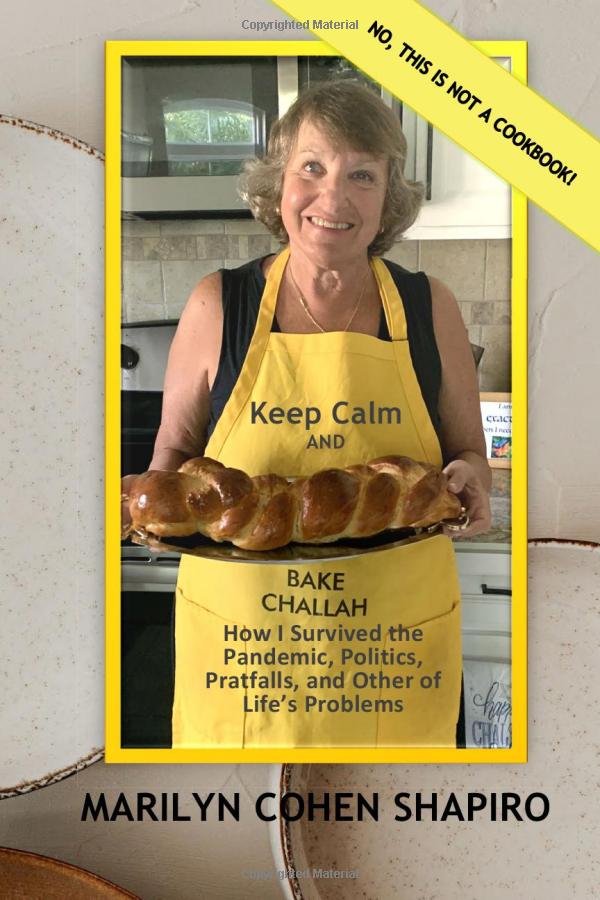
Keep Calm and Bake Challah is on Amazon!!

I am proud to announce that my fourth book, Keep Calm and Bake Challah: How I Survived the Pandemic, Politics, Pratfalls and Other of Life’s Problems,is out and available on Amazon in both Kindle and paperback formats.Hope you enjoy reading the the fifty-three articles I wrote during the pandemic as much as I enjoyed writing them! For those who have been following my blog for a while, you will now have many of those posts in one place for your reading pleasure.

Below are a sampling of the story topics: