Tag Archives: #weather

The Weather by Frances Cohen

This story was written by my mother, Frances Cohen, in ~2006, after she and my father, Bill Cohen, moved into Coburg Village, an independent living facility in Rexford, New York. A natural storyteller, my mother joined a writing group and wrote down many of her stories for posterity. It is a joy to share them with you!

The weather plays an important part of our life. At times, we wish that we could change the weather, but as we have learned it is one of the things in life we cannot change. 

Sometimes prayers help. On two occasions, our prayers were answered when we planned outdoor receptions. One was for the retirement party Bill and I planned at our cottage on Lake Champlain during the summer of 1983. The second was at the wedding reception for my granddaughter that was held on my daughter and son-in-law’s front lawn in Clifton Park in October 2007. At both parties, the weather was perfect: sunny, 72 degrees, with no wind. We considered it a miracle! 

Our prayers did not work when Bill, my daughter Marilyn and I had to travel from Keeseville to Rockland County for our son Jay and our future daughter-in-law Leslie’s engagement party in December 1970. A Nor’easter started the day we were supposed to leave, so we delayed the trip until the next morning in hopes the weather would improve. Unfortunately, the snow only got heavier. By the time we arrived in Albany, the New York Thruway was closed. Determined not t miss the party, we decided to take Route Nine for the rest of the trip. The roads and visibility were terrible. Atone point, Bill stopped at a railroad crossing as the gate was down and the lights were flashing. The snow was so thick that Marilyn, who was sitting in the back seat, thought we were actually on the tracks and began screaming in fear. When we all calmed down, we continued on the trip. We arrived in Pearl River at 11 o’clock at night, sixteen hours after leaving Keeseville for what should have been a four-to-five-hour trip. It was one of the most difficult trips we ever made. In 1980, the year before we retired, our cousins invited us to visit them in Florida. When the day of our flight arrived, we left our cottage on Lake Champlain to drive to Montreal, the closest airport. When we crossed the border to Montreal, the snow was piled so deep that drifts were at places two stories high. As we crossed over a bridge near the airport, Bill lost control of the car, and we did a complete 360-degree turn, landing in a soft snowbank. Fortunately, there was no damage, so we were able to continue the trip to the airport. When we arrived in Florida, it was 85 degrees, and our cousins welcomed us in summer attire. Bill and I looked at each other and said, “This is paradise!” We couldn’t change the weather, but we could change our location. Right then and there, we decided that before next winter, we would sell our business, have a going-out-of-business sale, and spend our winters in Florida and summer at our cottage by the lake. 

We were fortunate to be snowbirds for many years. It was the best of both worlds: Beautiful summers on Lake Champlain and warm, balmy winters in Florida. We thought we had it made—until Hurricane Wilma hit in 2005. 

At that point, Bill and I were living full time in a condominium in Wynmoor, an over-fifty housing complex in Coconut Creek, Florida. The Weather Channel and local officials had warned us in advance of the incoming hurricane, and we had made sure to purchase water, canned food, and extra batteries. The night the hurricane hit, we did a lot of praying. The winds and rain were very strong, and we were very frightened. We were so thankful that our building had been spared any serious damage. We woke up to no electricity and no air conditioning in the 85-degree heat. For the first few days, we stayed in our condominium, living on the canned goods that we had purchased before the hurricane. When the electricity finally came back in our condominium, we decided to go food shopping for milk, eggs, and other food to restock our pantry and refrigerator. At that point, we were able to see the actual extent of the damage in the area. We saw lots of fallen trees, some of which had crashed into parked cars. With all the wires down and traffic lights out, getting to even the supermarket was almost impossible. 

When we finally got to Publix, the store was dark and eerie as it was powered by back-up generators. We learned as the week went on that thousands of trees had been destroyed in our residential area. More tragically, a number of other residential areas, including Hawaiian Gardens, the original complex we had moved out of only four years before, were so badly damaged that they were unlivable and eventually had to be completely torn down. 

In the middle of all this stress, when I was getting in the car to take another trip to the supermarket a week after the hurricane hit, I caught my foot on the curb while trying to get out of our parked car and broke a bone in my leg. That was the final straw. Our children felt strongly that we needed to get out of Florida and its hurricanes and move back up north. By spring, 2006, we were settled in Coburg Village, four miles from my daughter and son-in-law. At Coburg, we don’t need to drive, as the shuttle takes us everywhere. Our children are close enough so they can go shopping for us if the weather is too bad. So, when bad weather comes, we are able to just look out the window and enjoy our cozy apartment. Now we can be thankful for the snow so that grandchildren can ski, the rain that makes our flowers and gardens grown, and the beautiful sun that makes us all happy. 

The photo of me with a rubber chicken was taken in Keesevile around 1954 after a bad snowstorm. No idea why I had a rubber chicken!

Come hell or high water, the celebration goes on!

As we Floridians were waiting out Hurricane Matthew’s departure on a very rainy, windy Friday, I was thinking about those people up and down the East Coast who were more strongly impacted by the storm. Would their homes survive intact? Will family and friends be safe? Along with these worries, I thought of people who had had the misfortune to be celebrating a special event— a wedding, a bar mitzvah, a retirement party— in the middle of this major weather system. 

What do you do when bad weather creates chaos? Reflecting on our own experiences and the shared experiences of friends and relatives, I’ve learned that most people let their smile be their umbrella—or snow suit!

My brother Jay and his wife-to-be Leslie planned their engagement party on December 28, 1969, in Rockland County. My parents, my sister Bobbie, and I were scheduled to make the trip from Upstate New York the day before when a crippling snowstorm hit the Northeast.  With my father white knuckled at the wheel, we made it down the Northway to Albany only to find the Thruway was closed. Determined that the four of us would not miss the party, Dad continued the trip down Route 9.  What should have taken six hours took us twelve. The storm, which dumped over twenty-six inches of snow by the time it ended, is still recorded as the third greatest snowstorm in Albany’s history. The memories of our ride from hell were forgotten as we celebrated Jay and Leslie’s engagement the next day in sunshine and relatively warm temperatures. 

On  June 12, 1968, Betty Schoenberg was walking into Washington Square Park for   her NYU graduation when the skies opened up, and the rain fell in torrents.  Many attendees —including Betty— gave up and left, but a few hardy souls shivered under umbrellas. The storm made the front page of the next day’s New York Post:  “Soaked! “ the caption read. “The show did indeed go on despite the rain that pelted the assemblage without a letup.”

When Betty got home, she realized that the rain had soaked through her white dress, her black raincoat, and her purple graduation gown. Her clothes were ruined, and her skin had turned black from the raincoat’s dye run-off. She wrote a letter of complaint to the graduation committee, who offered to pay for her cleaning bills. She never did follow through, but almost fifty years later she still has the letter, the dry cleaning receipt, and  a clipping of the newspaper article in her memory box. 

My friend Lynn Urgenson recalls going to her daughter’s college graduation at CW Post on Long Island. The day before the event was warm and sunny, but by that morning, the temperature dropped into the low forties. Lynn wore several layers of clothing over her original outfit, but her only pair of shoes were her sandals. “ I wound up putting my feet into my purse,” said Lynn. “My teeth were still chattering hours after Caren had picked up her diploma.” 

In 2000, a spectacular mid 70-degree day preceded the largest snowfall of the entire winter season in the Capital Region and the second heaviest all time April snowstorm on record.  For the Huber family, it made Debi’s daughter Arielle’s bat mitzvah more memorable. “Some of my husband’s relatives from Florida definitely freaked out,” said Debi, “as they weren’t used to snow at that point in their lives with many years of living in the Sunshine State.” Fortunately, all of the guests had arrived before the freak storm, and the celebration went on as planned—once the parking lot of the synagogue was plowed out.

Not that the weather is always perfect in Florida. Rosanna and Norm Steele’s son and his bride were to be married on the beach near the Steele’s condo on Siesta Keys on September 25, 2004. The day before the wedding, Jeff called his parents to say that he and Julie were getting married that night as Hurricane Jeanne was bearing down on Florida the next day. Fortunately everyone— the caterer, the photographer, the florist, the violinist—worked with the wedding planner to pull the event off as planned. What was to be the rehearsal dinner became the “After Wedding Dinner,” safely held in a near-by clubhouse. The hurricane rolled in as Rosanna was bringing in the last of the food she had prepared. “Luckily, we didn’t lose power until the dinner was over,” Rosanna said. 

The Steele wedding story didn’t end there. With all flights cancelled, all of the out-of-town guests stayed longer than expected in the rented rooms—without power, cable, and air-conditioning. “ The good far outweighed the bad, “ recalled Rosanna.”   We got to spend some very valuable time together as a family.”

Jason  Freeman and Gretchen Walker’s  wedding day in the spring of 2008 was bright and sunny with one small glitch— fifty mile per hour wind gusts. The four chuppah holders  became flag bearers when the white traditional covering shredded in the wind. “The weather didn’t ruin the wedding at all,” recalled Jason, “as everyone relaxed and didn’t worry about the details.” 

Fortunately for us, Hurricane Matthew took a little hook to the right just in time for the Orlando area to miss the brunt of the storm. By Friday afternoon, I had baked a pumpkin bread and invited a group of women over to play mah jongg. Other areas of the coast were not so lucky. And some day, someone in those effected will be sharing the story of a special event in his/her life in which an unwanted guest named Matthew played a part. 

A version of this article originally appeared in the, October 20, 2016 issue of the Jewish World News, a bi-weekly subscription-based newspaper in upstate New York.

Photo: Weather hasn’t stopped me yet! Me and my rubber chicken, Winter 1953

Storm lover wakes up to the realization that life is fragile

When I was six years old, I loved summer storms. As the sky turned dark, the thunder clapped, and the lighting shot across the sky, I would watch from the safety of our living room window. My mother assured me that the noise was just God bowling.

When I was sixteen, I loved summer storms. By that time, my parents had purchased a cottage on Willsboro Bay in Upstate New York  From the safety of our porch,  I would watch the rain come down in sheets and the waves rock our boat that was moored 200 yards off shore. 

When we moved to Florida, I still loved summer storms. But I soon learned to respect their intensity and duration. Our state has as many as 100 stormy days a year, and our climate means that these storms can happen any month of the year. Florida also has be dubious honor of being the lightning capital of the United States. I have been witness to their fury again and again from the safety of our lanai. And on several occasions, I have had to take shelter quickly as the weather changed too quickly for me to realize what was coming. 

But now, almost five years after our move, I now see these storms as a reminder as to how fragile our lives can be.

Last July, on what started out to be a beautiful July day a group of fellow residents were playing golf on the course in our 55+ community, Very suddenly, the sky darkened as huge black clouds moved in. The golfers, all seasoned Florida residents, knew what to do. They abandoned their game and headed for their golf carts and shelter. 

It was too late. A bolt of lightning struck two of the men. One was thrown to the ground, shaken but okay. The second person was struck full force, and the electric travelled through his body. By the time he was brought the the hospital, he was brain dead. The doctors kept him on life support long enough for his devastated wife and children to say their good byes. 

What are the chances of getting hit by lightning? According to Wikipedia, it is one in 700,000. For my neighbor, the odds were 1:1. 

What happened that fateful morning? Did they give each other a kiss before he headed out the door? And what were their last words to one another. “I love you! See you later.”Or was their conversation ordinary and mundane. “We need to pick up some milk” or “The Red Sox are playing the Yankees tonight.” Or were their last words those that she regretted? “You promised you would fix  that leaky faucet!”

I am 69, and my husband Larry is 71. The specter of death hangs over us a little more heavily than it did twenty—or even ten—years ago. Friends die suddenly from heart attacks or slowly from cancer. No matter, their loss is sad. 

Sad, but not tragic. To me,”tragic” is the death of a 31-year-old daughter to leukemia. Tragic is losing a nineteen year old granddaughter to a car accident on a rainy night one block from her home. Tragic is losing a sixteen year old grandson who had been severely disabled since he was a baby. And tragic is losing a husband from—literally— a bolt out of the blue. 

“Biz hundert un tzvantsig!” (May you live to 120!”) is  a popular Jewish blessing for a long healthy life. Each loss, whether the number of years were short or long, whether their death was sad or tragic, is my personal reminder to treat each moment with gratitude. “Life is so transient and ephemeral; we will not be here after a breath,” said Dr. Debasish Mridha,  an American physician and philosopher. “So think better, think deeply, think with kindness, and write it with love so that it may live a little longer.” 

Some of us are fortunate enough to live a great deal longer.My mother’s first cousin Eli Helfand passed away last April, three months after his 100th birthday. A World War II veteran and a graduate of Clarkson College, Eli spent almost all his working life in Richfield Springs, New York, where he owned and operated Ruby’s Department Store. He had two wonderful marriages, raised four strong, independent children, and got to enjoy his five grandchildren and two great-grandchildren. 

What I remember most about my cousin Eli are our strong family connections. During the Depression, when his parents were struggling to get their Upstate New York store afloat, Eli spent summers and school vacations with my mother and her family in New York City. He introduced my parents and served as best man at their wedding. Eli drove the car that the newlyweds took from the city to Alburgh, Vermont. Mom shared the front seat with Eli’s mother Rose while my father sat in the back seat with all the wedding presents, including a floor lamp that Bill had to hold for the eight hour trip. My parents remained close to Eli and Florence, who attended my parents’ 60th anniversary. When Florence passed away and Eli remarried, he and Marty became an integral part of not only my parents’ life but also of mine. We visited them at their homes in Otsego County in New York as well as their retirement home in in Englewood, Florida. 

Eli and I share another close connection. His daughter Marsha and I are only weeks apart in age.  We spent time with each other as children as well as our four years as students at University at Albany. We have attended each other’s weddings as well as those of our children. 

In August, 1962, I spent a week with Marsha and her family at their cottage on Canadarago Lake. We played and replayed Ray Steven’s (what now would be considered politically incorrect)song about Ahab, “the sheik in the golden sand.” We baked cookies. We went swimming and boating. And when the storm clouds moved in, we ran back inside. From the porch windows, we watched the lightning flash across the sky and listened to the thunder echo off the surrounding hills. We turned the Ray Stevens second back on and danced around the living room in our bare feet. We were safe in the childhood belief t that life would treat us kind and that we would  live forever—or at least for one hundred twenty years. 

A version of this article originally appeared in the Jewish World News, a bi-weekly subscription-based newspaper in upstate New York.

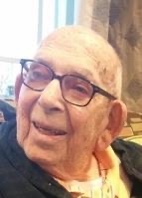
Eli Helfand (Z”L) 1919-2019