Author Archives: Marilyn Shapiro

Unknown's avatar

About Marilyn Shapiro

After thirty five years in education, I have retired and am free to pursue my lifelong dream of becoming a freelance writer. Inspired by my mother, who was the family historian, I am writing down my family stories as well as publishing stories my mother wrote down throughout her life. Please feel free to comment and share.

Leaving the Narrow: A Passover Reflection

This past month, I was spending time with Julie and The Mountain Girl at their home at 9100 feet in Summit County, Colorado while Sam was away.

On one particularly beautiful morning, I dropped my second grader off at school. With the help of trekking poles, I started a hike on the bike path that runs through the county. After an invigorating, lovely hour work-out, I considered expanding my hike to include the more secluded trails up the mountain to Rainbow Lake. Did I dare go into the woods alone? I debated for a while and then took a right turn onto a trailhead. Hey! I could always turn back!

Rejoicing In The Day

It helped that I soon met up with Karen, a local resident, who was walking with her dog Dickens. When I mentioned my own hesitancy following the Peak Trail, she assuaged my concerns. “Dickens and I take an hour hike almost every day of the year.” That was the final push I needed. Heeding Lady MacBeth’s advice, “Screw your courage to the sticking place,” I pushed up the trail. 

As I navigated my way up the snow-packed path, I took in the Rocky Mountain scenery. The cloudless sky was a cerulean blue; the peaks above me were dressed in white, and the trail through the leafless aspens was pristine and quiet. I silently thanked Julie for living in such a beautiful location and God for providing such a beautiful day.

Ironically, when I reached my destination , I was not alone. The Mountain Girl and her entire second grade class were on a field trip. They dotted the frozen lake, throwing snow at each other and making snowmen and (as I later learned) snow ducks. The Mountain Girl gave me a hug before I navigated the last mile down to my daughter’s home. So much for my adventure being—well—an adventure!

Eye Of The Beholder

Still, judging from my multiple postings including photographs on Facebook and the comments that followed, many of my family and friends thought of my winter trek as irresponsible, strange, even insane. Hadn’t I gladly moved to Florida to get away from Upstate New York winters? More importantly, am I crazy for hiking by myself in the woods? Aren’t I afraid of falling on one of the more tricky trails? Attacked by a mountain man? Eaten by the moose, elk, and bear that inhabit the forested areas where I venture?

Time to fess up. Unlike Cheryl Strayed, who set off on a three month long solo journey the Pacific Crest Trail (PCT) to find herself and then wrote about it in Wild, it had taken me a few days to eschew the easier walks on Frisco’s sidewalks and head up snow-packed, slightly steep, less populous trail in the winter. As a matter a fact, it took me a while to hike alone during our six-week summer rental when the trails are filled with tourists from around the country and world taking advantage of the Summit County’s spectacular but short summer. But I swallowed my fear and took the leap of faith.

Family Dogma

Growing up as a Cohen did not equate with courage; it was closer to cowardliness. We were not an adventurous family, in terms of our choices, our vacations, and especially our testing of our physical limits. Although my brother Jay played football and wrestled, the rest of the family considered strenuous exercise to be taking a leisurely walk. Case in point: when I had broken from the mold after marrying Larry, I took a three-mile jog on the back roads near my parents’ Lake Champlain cottage. When I got home, my father said, “You shouldn’t run like that! You can have a heart attack!” My 25-year-old self just smiled and walked away. We won’t even get into what he said about Larry’s running races, which included some marathons. I can’t imagine what he would think about our son Adam’s 60-mile bike rides; Julie’s skinning (skiing up hills!) in zero degree temperatures; and Sam’s 200 mile once-in-a-lifetime rafting trip through the Grand Canyon. So yes, I had to invoke Shakespeare’s MacBeth to get the courage to take an easy winter hike!

Pesach And Risk-taking

I have been thinking of courage and risks and taking chances in relationship to the upcoming major Jewish holiday,Passover. Based on interpretations by the medieval biblical and Talmudic commentator Rashi, not every Hebrew followed Moses on his trek out of Egypt across the Red Sea. “According to the biblical account (Exodus 13:18b), Israel left Egypt chamushim, often translated as “armed,” wrote Rabbi Norman S. Lipson in a 3/26/1999 article in the Sun Sentinel. Rashi, however, translated the Hebrew word one-fifth, which meant only 20 percent of all Israel left with Moses.“80 percent stayed in Egyptian slavery!” Lipson wrote.

Had We Been There…

Wow! So if the Cohen family had lived in Egypt at the time of exodus, knowing my father, I bet we would have stayed home. “Better the devil you know than the devil you don’t know!” he would say. While a small group of neighbors started packing and baked matzah, he and Jay would have gone back to building more pyramids while my mother, two sisters, and I would have been kneading more leavened bread for dinner. 

Even if Rashi’s interpretation was wrong, and most Jews did leave, I am sure one of us (the Cohens) would not have emulated Nachshon ben Aminadav, the hero in a midrash. Standing at the shores of the Red Sea with the pharaoh and his army bearing down on the fleeing Hebrews, this brave man risked his life and jumped into the churning waters. At the last moment, God interfered and split the sea, saving Nachshon and providing the path to safety for all the rest who feared to take the leap of faith.

Taking The Chance

In a 4/22/2022 article in the Jerusalem Post by Nathan Lopes Cardozo, dean of the David Cardozo Academy in Jerusalem, praised the “ Nachshons of every generation.” “Those who were prepared to jump into the sea, taking huge risks, were responsible for magnificent scientific discoveries, space travel, grand business deals, daring political decisions and waging wars on evil.” Others may have considered them as strange, irresponsible, even insane. Cardozo commented, but their willingness to take risks based on hope moves the world forward.

Okay. My taking the “road less traveled” by turning right on a bike path and heading up a mountain trail certainly does not qualify as an epic, world-changing event. But I think of Adam, Julie, and Sam, who dare to live a more adventurous life than my birth family. And I think of Nashshon, Judah Maccabeus, Theodore Hertzl, David Ben Gurion, Hannah Szenes, Anne Frank, Steven Spielberg, and so many other Jews whose vision, heroism, and courage paved the way for those who tend to hang back on the shore, waiting to see what will happen.

A version of this article originally appeared in the Jewish World News, a bi-weekly subscription-based newspaper in upstate New York, in the March 30, 2023 issue.

Taking chances at 9100 feet.

My Romance by Frances Cohen

My mother Frances Cohen wrote down her memoirs in her late eighties. This story, how she met my father Bill Cohen, is one of our family favorites. More of her stories can be found on this blog as well as in Fradel’s Story, a collection of her articles co-written with me.

Since today is Valentine’s Day, I thought I’d write about my romances until I met my true love. The saying goes, “You have to kiss many frogs until you meet your true love.” Well, I knew many frogs.

I was a senior in high school when I experienced my first romance. I thought that Bernie had the bluest eyes and the curliest hair. I was completely infatuated. The economy wasn’t the best. So, our date consisted mostly of walking and holding hands. Bernie was my date for the Senior Prom. Although he wore a very shabby suit and I borrowed a gown, I thought I was lucky to have a date to the prom with the guy I adored. Things changed after I graduated high school. I got my first job in a toy store for $10 a week six days a week. Bernie didn’t have a job, so in the fall when the leaves died, so did our romance.

That New Year’s Eve was not a happy one for me. Instead of giving me a gift on Christmas Eve, my boss told me he did not need my services anymore. Worse yet, I did not have a date!

Time passed. Both my girlfriends were going steady. Their problem was that their boyfriends did not have a car. Charley, one of their friends, did, so my girlfriends urged me to date him. I was not especially fond of him, but we all were fond of his car. Conveniently, Charley was able to drive the three couples around. The six of us even went to the midnight show at the Apollo Theater.

Financially, things improved for me when I finally got a good bookkeeping job that I loved. When summer arrived, I was given a week’s vacation with pay. I decided to spend it in a hotel in the Catskill Mountains. The hotel had all the ingredients for romance, including swimming, boating, entertainment, and dancing. The first night at the hotel, I was seated next to a tall, handsome guy named Harry. We spent the whole week enjoying all the activities, and by the end of the week, I was completely infatuated with him. We continued dating after I got back from my vacation. I was having a great time as I was dating Charley on Saturday and Harry on Sundays. That situation ended a month later when Charley wanted to get engaged. How could I marry Charley when I was wild about Harry?

When Harry invited me to a formal dinner dance at the Astor Hotel that his firm was sponsoring, I was delighted. I purchased a new black taffeta gown with a matching purse and matching shoes. When Harry arrived to take me to the dinner dance, looking handsome in a tuxedo with a corsage in hand, I was ecstatic. But shortly after the dance, he stopped calling. I was really hurt. I guess I was wild about Harry, but Harry wasn’t wild about me.

I didn’t date anyone interesting for quite a while. Now that I was almost twenty-two years old, my mother was eager to see me settled with a handsome, rich, Jewish man. Cupid stepped in to help. My brother Eli, our cousin Elliot, and their friend Bill Cohen were all working for my Uncle Paul, who had a chain of department stores in Upstate New York. The three of them came home one weekend to visit each of their families. Bill, who had seen my picture at my Aunt Rose and Uncle Ruby’s house, asked Elliot and Eli to fix me up on a “blind” date.

That night I finally met my true love. Bill and I were attracted to each other immediately, and there was instant chemistry from the first moment we saw each other that was to last for a lifetime. My mother’s prayers were answered—almost! Bill was handsome and Jewish. Rich he wasn’t, but two out of three was not bad!

It was to be a long-distance romance. Bill made the eight-hour trip to see me as often as he could, but we only saw one another less than ten times before we married. We wrote every day—I still have his letters in a blue satin bag I keep in my dresser! We had so much in common: our love of reading, our respect for education, our desire for children, and our large, close-knit families. We soon realized that our family trees even had connecting branches as both our families came from small villages near to each other in Lithuania.

Even more astounding, we had actually “met” over twenty years earlier as children through those connections. In 1919, when I was two years old, I contracted the Spanish flu. When my lungs filled up with fluid, the doctor saved my life by cutting an incision into my back to drain them. It was recommended that I spend time away from our tiny apartment in Brooklyn and breathe country air. My mother Ethel quickly made arrangements for the two of us to visit her stepmother’s sister Ittel [Levinson] and her husband Archik Perelman, who lived on a farm in Burlington, Vermont. While there, Ethel and I were visited by Archik’s brother and sister-in-law, Itsik and Sarah Perelman; their daughter Annie [Perelman] Cohen, and her six-year- old son, Bill. There is an expression “My father married my mother. Why do I have to marry a stranger?” Well, Bill didn’t feel like a stranger to me.

On Valentine’s Day, 1940, Bill made a special trip in to see me. We went to the movies and then went out for sundaes at an ice cream parlor. After spending three hours watching Gone with the Wind, Bill must have thought I was Scarlett O’Hara, and so he asked me to marry him. I must have thought he was Rhett Butler, because I said yes. We were married that summer and have spent the last sixty-six years celebrating Valentine’s Days, our anniversary, and our love for each other.

This story, along with others my mother shared with her children, is found in Fradel’s Story, available on Amazon

Eighty-seven years later, a small victory against anti-Semititsm

Recently, the University of Southern California renamed the school track and field Allyson Felix Field in honor of the USC alumna and its illustrious 11-time Olympic medalist. Most media sources did not include in its coverage the previous name of the venue: Cromwell Field. What is the story behind the change?

Dean Cromwell, known as the “Maker of Champions” headed the USC track and field team from 1909 through 1948. During his tenure, he guided the team to 12 NCAA team national championships and 34 individual NCAA titles. A darker story exists: As assistant coach for the 1936 Berlin Olympics, Cromwell was one of the people responsible for the expulsion of the only two Jewish American athletes on the track and field team – Sam Stoller and Marty Glickman. 

The decision to erase Cromwell’s name follows USC’s recent policy to remove the names of well-known figures with dark pasts. In 2020, USC removed the name of its seventh president, Rufus von KleinSmid, from one of its most prominent buildings, citing his support of eugenics as well as his tolerance and support of pro-Nazi faculty. Soon after, the college removed a John Wayne exhibit at their School of Cinematic Arts following student protests against the actor’s history of racism and homophobia.

Cromwell’s words and actions deserved the same fate. In 1936, he spoke at a Nazi-organized German Day celebration in Los Angeles, California. According to the American Jewish World, the venue was filled with swastika flags and people dressed as storm troopers. In his remarks, Cromwell said, “Oh boy, if I could only be that handsome boy Adolf [Hitler] in New York for an hour.” He also effused that he did not see “a single colored man, woman or children [sic]” during his Olympics time in Germany, adding he did not object if they decided to leave.

As reported in a June 26, 2020, article by Larry Elder on runblogrun.com, Cromwell was also known for his racism and belief that Blacks were not equal to humans. An excerpt in Cromwell’s 1941 book Championship Techniques in Track and Field, he noted “the Negro athlete excels because he is closer to the primitive than the white athlete.” 

Cromwell’s racist rant continued: “It was not so long ago that his ability to sprint and jump was a life-and-death matter in the jungle. His muscles are pliable and his easygoing disposition is a valuable aid to the mental and physical relaxation a runner and jumper must have.” Despite outcries from the Los Angeles community, he not only remained as coach but was later honored by USC’s naming of the venue he oversaw for almost 40 years.

Calls to boycott the games began soon after the Nazi’s rise to power. Avery Brundage, head of the U.S. Olympic Committee, was determined that the United States accept the invitation to Berlin. Known as a Nazi sympathizer and an antisemite, he brusquely dismissed such concerns as the work of “a Jewish/communist conspiracy.” 

The outcry grew louder in 1935, when the Reichstag, the Nazi-controlled parliament, passed the harshly restrictive Nuremberg Laws, which deprived Germany’s Jews of citizenship, forbade intermarriage and decreed that no German girls work as servants for Jews. Many feared the games would be a Nazi propaganda tool where, as stated in an article about Glickman in wwwl.jewishvirtuallibrary.org, Hitler would extol the superiority of “pure Aryans over nations that allowed Jews, blacks and other ‘mongrel’ races to compete on their behalf.”

Brundage travelled to Germany to investigate the anti-Jewish claims that favored the boycott. He returned to the U.S. praising Hitler and dismissing reports of discrimination “In forty years of Olympic history,” Brundage said, “I doubt if the number of Jewish athletes competing from all nations totaled 1 per cent of all those in the games.” [According to a 2020 article in The Nation, Brundage’s number was a fabrication.] In the end, the United States decided to participate in the 1936 Summer Olympics. Both he and Cromwell later joined the isolationist America First Committee, which attracted Nazi sympathizers.

Brundage chose two U.S. college coaches to oversee the men’s U.S. track and field team: Lawson Robertson, University of Pennsylvania, would serve as head coach; USC’s Dean Cromwell was named assistant track coach. Several runners, including Jesse Owens and Ralph Metcalf qualified for individual events. A second group of men qualified for the relays, including two Jewish college athletes: Marty Glickman, Syracuse University, and Sam Stoller, University of Michigan. Each were to run a 100-meter leg on the 400 meter relay team.

As Glickman later wrote in his memoir The Fastest Kid on the Block, his suspicions about Cromwell and the fairness of the relay team selection process began at the American Olympic team trials in New York. After a very close finish, films showed that Glickman had placed third behind Owens and Metcalf in the 100-meter dash. Under pressure from Cromwell, the judges ruled that he placed fifth, thus losing his place on the team as an individual participant to USC’s Foy Draper, who was openly favored by Cromwell. 

When the athletes arrived in Berlin, there was little public display of the horrors that would soon follow. Hitler had promised there would be no antisemitic demonstrations, and his propaganda minister, Joseph Goebbels, ordered all anti-Jewish signs removed from Berlin streets. But the swastikas flew everywhere and the stiff-armed Heil Hitler salute was a constant presence. In a special Olympic edition of Der Stürmer, the virulently antisemitic German weekly recognized as a cog in Hitler’s Nazi propaganda machine, a cartoon was printed that reviled the Jews and said, “Jews are our misfortune.” Earlier, Julius Streicher, the paper’s editor and a Hitler favorite wrote: “We waste no words here…Jews are Jews. And there is no place for them in German sports…Germany is the Fatherland of Germans, not Jews.” 

Hitler’s dreams of a display of his master Aryan race were soon dashed by the accomplishments of the American Black athletes, who won many of the medals.

In the days leading up to their event, Glickman, Stoller, and their teammates practiced diligently for their 4X100 relay, which the United States’ team was highly favored to win. The morning before the scheduled preliminary heats, however, Robertson and Cromwell called a meeting and announced that there were rumors of hidden German “super runners” who were to step into the relay. As a result, Glickman and Stoller would be replaced with two other faster runners, Jesse Owens and Ralph Metcalfe. 

According to an article from the United States Holocaust Memorial Museum, Owens, to his credit, protested against the move. Citing his exhaustion and the three gold medals he had already won, Owens told Cromwell, ” Let Marty and Sam run, they deserve it,” Cromwell pointed his finger at him and said, “You’ll do as you’re told.” Glickman told the coaches there would be a ‘big stink’ if the only two Jews on the track and field team were pulled. Cromwell cut him off. “We’ll worry about that.”

On Aug. 9, 1936, Glickman and Stoller watched from the stands as the United States team of Jesse Owens and Ralph Metcalfe, and USC track stars Foy Draper and Frank Wykoff won the 4X100 meter relay in a world record time of 39.8 seconds. With Owens and Metcalfe running the first and second leg, Hitler was spared the embarrassment of another Black man first crossing the finish line. The German ‘super runners’ never materialized, and the German relay team placed third behind United States and Italy, 1.4 seconds slower than the winning time.

Time and history have uncovered the truth. Avery Brundage wanted to spare Hitler the embarrassment of seeing Jewish runners cross the finish line first. Cromwell, also known for his antisemitism and racism, supported Brundage and also wanted his USC athletes in the race. The change in the members of the relay was not a result of lack of speed. It was a result of Brundage and Cromwell’s antisemitism. “What is absolutely clear is that the move was made to spare Hitler and Nazi Germany the embarrassment of having Jews standing on the podium,” said Rabbi Abraham Cooper, director of the Simon Wiesenthal Center in a July 4, 2020, article in the LA Times. “And if that isn’t antisemitism, I don’t know what is.”

Years later, Glickman reflected on his disappointment in The Fastest Kid on the Block. “Watching the final the following day, I see Metcalfe passing runners down the back stretch, he ran the second leg, and [I thought] that should be me out there. That should be me. That’s me out there.” Hopes for a second chance were lost with the onset of WWII. Upon his graduation from Syracuse, he became famous for his broadcasts of the New York Knicks basketball games and the football games of the New York Giants and the New York Jets. But he never forgot the 1936 Olympics or forgave the men responsible for blocking his and Stoller’s participation.

In 1998, the U.S. Olympic Committee awarded its first Gen. Douglas MacArthur medals to Stoller (posthumously) and Glickman. Citing the injustice done, USOC chairman William Hybl said, “We are not only atoning for this, but are [also] recognizing two great individuals.” 

In Judaism, there is an expression that reads “midah k’neged midah,” -measure for measure. One’s actions and the way they affect the world will eventually come to that person in ways one might not necessarily expect. Eighty-seven years after Berlin, the past has caught up with Cromwell with the removal of his name at the field he coached. Unfortunately, neither Stoller nor Glickman lived to see this happen. 

A version of this article originally appeared in the Jewish World News, a bi-weekly subscription-based newspaper in upstate New York, in the February 16, 2023 issue.

A version of this article also appeared in the (Orlando) Heritage Florida Jewish News, in its February 10, 2023 issue.

Today I am a woman: My adult bat mitzvah

I am publishing this on the thirtieth anniversary of my adult bat mitzvah, which was held at Congregation Beth Shalom, Clifton Park, NY.

My education at Congregation Beth Shalom in Plattsburg, New York, was strong in Jewish history and traditions, but it was very weak in Hebrew. If I wanted to learn the language needed to follow the service,  I either had to attend twice during the week, difficult with its one hour round trip, or I had to be preparing for a bat mitzvah, not something females did in the 1960’s in Upstate New York.

Our father had grown up in New York City in the Depression. His bar mitzvah ceremony was celebrated with several other boys in his Eastern Parkway synagogue, including the president of the shul’s son. The honor conferred on this golden boy was his reading most of the Torah portion and the haftorah and giving a  speech while the remaining b’na mitzvoth were left with very short prayers and shorter participation. The party consisted of some sponge cake and wine back at my father’s house followed by playing sandlot baseball.

As a result of my father’s experience, his son was to have everything denied the father. Jay’s bar mitzvah was a huge celebration. Over 120 people were invited to the service, including relatives we had never seen before and never saw again. Immediately following the service, my parents hosted a lovely reception at the Cumberland Hotel in Plattsburg. We all got new clothes for the party; I remember how special I felt in the “balloon” dress that was popular in 1961. 

As was the tradition in our reform synagogue, one’s Jewish education officially ended at sixteen years old with a Sunday morning confirmation service . My class consisted of three girls: Susan Singer, Andrea Siegel, and me, none of us who had had bat mitzvahs. We recited prayers and gave speeches. Mine was on anti-Semitism.  How in the world my teacher ever encouraged that topic and how I ever summarized its history in less than ten minutes I’ll never know, but I felt proud in my white robe and mortar board cap. A reception followed. What I remember most was how one of my teachers gave Susan and Andrea cards with cash gifts and completely ignored my presence. Not the sweetest memories to carry from my simchas.

Despite the snub,I loved learning about Jewish history and traditions. I attended classes with the grade behind me and even helped out in the primary grade classrooms. Once I left for college at Albany State, I attended services for Rosh Hosanna and Yom Kippur at Beth Emeth, but I was not involved in Hillel nor did I take any classes in Judaic Studies that were beginning to be offered.

It was not until my children were born that I began to be interested in studying Judaic topics again. Over the years, I took some basic Hebrew and playbook Hebrew classes so I could better follow the service. In the years I stayed home with my children, I seriously considered going back to school for a second master’s in Jewish Women’s Studies. When time constraints ruled out classes, I began a self-tutorial, reading books by Anzia Yezierska, Tillie Olsen,Cynthia Ozick, Grace Paley, and other noted Jewish female writers. This all went on the back burner when I returned to a full-time teaching position in 1986. 

In 1993, however, Flo Miller, one of  Congregation Beth Shalom’s teachers, suggested that I take a Haftorah trope class that summer with two other interested women. The four of us met each week around Flo’s kitchen table. By the end of the summer, each of us had chosen our own Haftorah for our adult bat mitzvah. I chose Mishpatim, the Torah portion whose  date for reading that year fell on the week of  my father’s ninetieth birthday to honor him and, coincidentally in the year of my forty-third birthday to reaffirm my link to Judaism on what would have been the thirtieth anniversary year of my own bat mitzvah. Over the next several months, my lunch hours at work consisted of a quick bite and at least two practice sessions with the Haftorah. Once a week, Flo would call me on the phone, and I would again read the Haftorah to show her how well I had progressed. By winter, Flo, Rabbi Harry Levin and I decided that I would also read two Torah portions at the service.

My bat mitzvah, which was held on February 4, 1993,  was not a huge affair. My parents and Larry’s parents could not come from Florida, and my siblings were too spread out across the country. Many members of the the synagogue attended, however, along with Larry’s sisters and brother-in-laws and a few close friends, I A Kiddish followed, and then my family and friends went to a Chinese restaurant for a celebratory meal.Meanwhile, I taped a full rendition of the Haftorah and Torah readings and sent it to my father for his birthday.

I would love to say that the experience resulted in many more Torah and Haftorah readings at Congregation Beth Shalom. Unfortunately, learning Hebrew did not come easy to me. It never flowed off my tongue, and even though I enjoyed the musicality of the tropes, I continued to stumble over the Hebrew letters and vowels. My next experience reciting Haftorah for a service proved to be even more difficult for me than the first, and I have not tried again. I continue to enjoy attending services and have high respect for the congregants who volunteer to read Haftorah and Torah portions. And through Jewish book clubs and my own independent reading, I will continue to study and appreciate my chosen faith.

A version of this article originally appeared in the Jewish World News, a bi-weekly subscription-based newspaper in upstate New York, in the August 20, 2015, issue.

Strategy for positive aging: Life choice to keep learning

“What are you going to do when you retire?” As many of us edge closer to the age where we can hang up our shingle, that question comes to us from family and friends. Our spouses, however, usually have something to add: “I don’t want you to sit home and do nothing! You need to find something to get you out of the house!”

For Jay Golden, finding something led him to a new passion for which he only had imagined: Playing a musical instrument. 

Jay was born in 1938 in Manhattan to first generation Jewish parents. Eschewing their Orthodox households, the couple moved their family to Chicago. 

In 1951, the Goldens purchased a 13 inch black and white set. Jay, now a teenager, loved watching the shows featured on at the dawn of the televisions age. His favorites included Flash Gordon (Syndication 1954-1955), The Lone Ranger (ABC, 1949-1957), and Don Winslow of the Navy, a series that originally shown in movie theaters.

As much as he loved the stories, Jay was even more fascinated by the classical music that accompanied the shows. Through his research and visits to local record stores, he learned that the superhero Flash Gordon vanquished his enemies to the music of  “Les Preludes” by Franz Liszt.  “Don Winslow of the Navy” buoyed his patriotic spirt to the music of Felix Mendelssohn’s Hebrides Overture (“Fingals Cave.”). And how could any who grew up in the 1940s and 1950s forget the stirring opening from The Lone Ranger, which was the overture to “William Tell” by Gioachino Rossini?

Using money he earned through his allowance and odd jobs, Jay began collecting vinyl records of the classics. He graduated from the University of Illinois in 1962 and the University of Chicago in 1968. When he married Ellen Lewis in 1977, his 200+ vinyl collection soon gave way to the newer technology—compact discs (CD’s). His knowledge and appreciation of the music, composers, and the performers continued to grow. 

Fortunately,Jay and Ellen’s home town, Rochester, New York, provides ample opportunities for classical music. The University of Rochester’s prestigious Eastman School of Music hosted concerts by the Rochester Philharmonic Orchestra as well as performances by their students. Nearby Nazareth College offered a strong undergraduate and graduate music education program.

While Ellen pursued her career in law, Jay used his urban planning degree in partnership with shopping center developers and then as developer of affordable housing of projects in NY, OH, PA, and Puerto Rico. During that time, Jay served on the house committees of Temple B’rith Kodesh and Temple Sinai in Rochester, sharing his extensive experience with building maintenance, affordable housing development and property management. 

By 2005, Jay was thinking ahead to his retirement. Wife Ellen encouraged him to find a productive way to spend his spare time, especially during Rochester’s long cold winters. Although he had always loved listening to classical music, he had never played a musical instrument. He considered the violin, but decided was too difficult to begin learning in his seventies. He thought briefly about playing a trumpet, but the idea of “tooting his own horn” quickly dissipated.

One day, while listening to “The Moldau” the second movement of a six-movement suite, Má vlast (My Country), by Czech composer Bedrich Smetana, Jay found himself imitating the finger movement on the flute, which is used prominently in the piece. It was a revelatory moment for Jay, leading him to decide to pursue learning to play the wind instrument. Although he was still working full time, his boss was very supportive of Jay’s new avocation, giving him the time off needed for his lessons. He rented a Yamaha student flute from a local music store and began lessons with a doctoral candidate from the Eastman School.

From the beginning, Jay was aware he faced a steep learning curve. “When I began with the flute,” recalled Jay, “I knew nothing about reading music, much less how to play it.” 

After a year of lessons, Jay attended a tryout session at the Eastman Music School’s New Horizons. The music program, which is part of wider umbrella of programs that are offered throughout in the United States and Canada, provides experience for seniors who played at any of three levels of proficiency: beginner, intermediate, and advanced. The person who was responsible for the tryout, however, was unwelcoming and dismissive the aspiring flutist. He pointed to a small room and told Jay, “That room is for the newbies. Go in there.” Jay walked out.

However, Jay did not give up on the flute. Although his first teacher was an accomplished musician, he realized that teaching was not her forte. He began taking one-hour lessons twice a month with an adjunct professor  of flute at Nazareth College.

Three years after his negative encounter, Jay tried out again for the New Horizons Music Program and was, as he said, “more politely invited to participate” as one of the 150 seniors involved the three levels of bands. Jay described the diversity in experience.”There are many who played their instrument in middle or high school, put it away until they retired and wanted to have something to do,” said Jay. “Then there were quite a few who, like myself, had zero instrumental musical experience.” Jay started in beginner band and gradually worked his way up to intermediate level band. The band practiced one hour a week and provided not only a musical but also a social experience. 

For several years, Jay played on his rented Yamaha student flute until he recognized that his teacher’s flute sounded so much warmer. She told Jay, “If you can distinguish the difference in how my flute and yours sounds, you’re ready for a better instrument.” So Jay purchased a Wm. A. Haines “Amadeus” flute, which he now plays every day. “It is an absolutely beautiful instrument and a thrill to hold and play,” he said, proudly adding that the first and second chair flutes of the Rochester Philharmonic play the Haines flutes. 

After seven years, Jay left in New Horizons November 2021. He explained that the program’s repertoire focuses on more popular music, including Broadway show tunes, movie themes, and songs by The Beatles and Billy Joel. As his first love is classical music, he made the decision to “play for myself.” He has continued his twice a month one-hour lessons. Although he never was able to master Smetana’s Moldau score—“it is quite beyond my ability,” Jay mused—he has enjoyed playing many other classical pieces including several sections of “The Seasons” by Antonio Vivaldi.

At 85, Jay is still learning. Along with his monthly one-hour flute lesson, he also is studying German thorough Oasis, an adult learning program. Every Thursday, he takes back to back classes in both intermediate and advanced German. Jay noted that the advanced class is especially difficult in that students are required to translate from sections of a German language biography of Alexander Von Humboldt, one of the most influential scientists and thinkers of the nineteenth century, into English. Students are also required to speak the passages out loud, a test of pronunciation and diction.

This past month, Jay and Ellen extended their time at a destination wedding in Puerto Vallarta, Mexico, by five days to celebrate their 46th anniversary. Even though they did not look forward to returning to snow and cold of Upstate New York, Jay is looking forward to continuing his musical journey. He is also adjusting to some of the challenges of an octogenarian musician. Jay stated that the most important element of playing the flute, beside knowing what fingers to put down for what note, is embouchure. “The older I get the more difficult it becomes to keep my lips supple,” Jay said. “Nobody said it would be easy, but at least I don’t have arthritis to slow me down.” 

Nor does much else slow Jay Golden down! He, like many others after their retirement, has found a wonderful “second act.” May he go from strength to strength!

A version of this article originally appeared in the Jewish World News, a bi-weekly subscription-based newspaper in upstate New York, in the February 2, 2023 issue.

We cannot stand silent in the face of anti-Semitism

The following article was published as a guest commentary in the Orlando Sentinel on January 8, 2023.

On December 19, 2022, President Joe Biden used the White House’s Chanukah celebration to call out the rising anti-Semitism in  the United States. “Silence is complicity,” he stated. Biden joined Second Gentleman Doug Emhoff in lighting the first ever official White House menorah. “Today, we must all say clearly and forcefully that anti-Semitism and all forms of hate and violence in this country have no safe harbor in America. Period,” Biden said.

Biden reiterated his stand one day after Ye, the rapper formerly known as Kanye West, announced “I like Hitler” during an anti-Semitic rant on right-wing conspiracy theorist Alex Jones’ InfoWars show and five days after Donald Trump dined with Ye and white supremacist and Holocaust denier Nick Fuentes at Mar-a-Lago. “The Holocaust happened. Hitler was a demonic figure,” stated Biden. “And instead of giving it a platform, our political leaders should be calling out and rejecting anti-Semitism wherever it hides.” 

Some Republican leaders were swift in joining Biden in his condemnation of Trumps’ actions. “Trump was wrong to give a white nationalist, an anti-Semite and Holocaust denier a seat at the table,” stated former vice president Mike Pence. “ And I think he should apologize for it, and he should denounce those individuals and their hateful rhetoric without qualification.” Senate Minority Leader Mitch McConnell echoed Pence.”[A]nyone meeting with people advocating that point of view, in my judgment, are highly unlikely to ever be elected president of the United States.”  In Florida, Senator Rick Scott stated there was no room for anti-Semitism in his party, adding “Republicans should all condemn white supremacy.”

Then-House Minority leader  Kevin McCarthy denounced the ideology but avoided invoking the former president’s name. The Republican from California stated  that the white supremacist “has no place in this Republican Party,” but followed up with blatantly untrue statements supporting Trump.  “I think President Trump came out four times and condemned him and didn’t know who he was.” According to CNN and other reputable news sources, Trump, who infamously stated that there was “good on both sides” when the  white supremacists marched in Charlottesville, Virginia, in 2017,  has yet condemn the views of his dinner guests or apologize for his action. 

Senator Marco Rubio decried the actions while trying to protect Trump from criticism. “I hope [Trump] will [condemn Nick Fuentes]. Because I know [Trump] is not an anti-Semite.” When PBS reached out to  57 Republican lawmakers to condemn the meeting, two-thirds never responded. Those that did called the meeting a “bad idea” and stated antisemitism can’t be tolerated but stopped short of condemning Trump directly.

Governor Ron DeSantis  stands almost alone among prominent Republicans in refusing to denounce white supremacists and anti-Semitism. In January 2022,  a small band of pro-Nazis converged in Orlando, where they chanted “White power!” and roughed up a Jewish student. He remained silent while his press secretary suggested on Twitter that the individuals  were actually Democrats pretending to be Nazis. He remained silent when a confederate flag was flown TIAA Bank Field, home of the Jacksonville Jaguars, in November and December 2022. He remains silent about the Trump/Ye/Fuentes debacle. 

In comparison, Congressman Darren Soto was much more forceful in an 11/29/2022 tweet. “In Central Florida, diversity is our strength, and all are welcome to live, visit and pursue the American Dream.I strongly condemn Fmr Pres Trump for associating with these un-American bigots.”

Many more refuse to be silent, including the immediate and unequivocal response from the Anti-Defamation League. “Former President Trump’s dinner with anti-Semites Ye and Nick Fuentes underscores the ugly normalization of extremist beliefs — including anti-Semitism, racism and other forms of bigotry,” said Jonathan Greenblatt, its national director and CEO.  He went on to warn that the dinner further emboldened extremists. 

Another powerful but sadly diminishing group that continues to bring the reality of the anti-Semitism to the forefront: Holocaust survivors.Through the efforts of Steven Spielberg , the Shoah Visual History Foundation has recorded over  55,000 testimonies of Holocaust survivors. Events such as the International March for the Living and venues such as the United States Holocaust Memorial Museum and other similar museums across the country and world also bear witness. And there are those that recount their stories despite the pain, including an 88-year-old Holocaust survivor from Colorado . Estelle Nadel has talked to groups hundreds of times and still cries every time. “I re-live the whole scenario,” Estelle said. “There’s so much denial, that every time I get a chance to tell my story, I feel like I’m doing something against it.”

Silence is complicity. President Biden, Mitch McConnell,  and Stephen Spielberg know this, as should all who wish to push back agains hate.

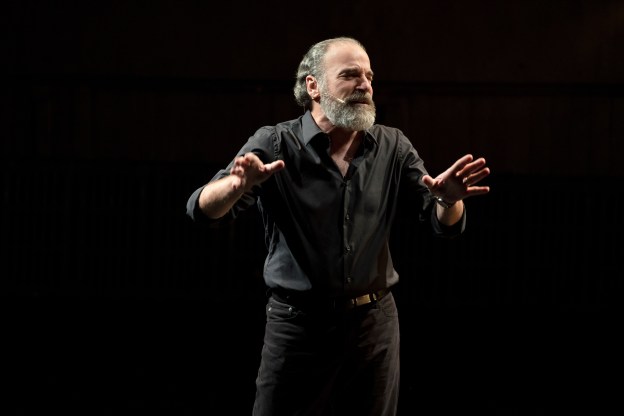
Mandy Patinkin is about joy and doing mitzvahs!

My interview and subsequent story was published in this week’s (Capital Region NY) Jewish World. Mandy’s tour includes Proctors Theatre in Schenectady as well as several venues in Florida. Mandy is a real mensch! Catch his show if you can!
https://jewishworldnews.org/singing-acting-stories-mandy-patinkin-is-about-joy-and-doing-mitzvahs/

Photo credit: JOAN MARCUS

Tour dates: http://www.mandypatinkin.org/schedule.html

“I want the world to know there was a Holocaust:” A survivor’s story

It was not until Estelle (nee Enia Feld) Nadel was in her forties that she could share with her grown children the full account of her experiences as a Holocaust survivor. Now, knowing that there are few left to speak out against those who deny that six million Jews were murdered in history’s most horrible chapters, she feels compelled to share her story with the world.

Estelle was five years old and living with her parents and four siblings in Borek, Poland, when World War II broke out. Her father Reuven and older sister Sonia worked in a nearby refinery; her older brother Moishe worked at an airport. Her mother Chaya supplemented their meager living by raising and selling vegetables. An excellent baker, Chaya used those skills for the weddings and christenings of their non-Jewish neighbors. 

Although life as Jews in Poland deteriorated rapidly under German occupation, Reuven, a devoutly religious man, remained optimistic. “He always told us that nothing will happen to us, that [God] will take care of us,” Estelle said. His attitude changed on a day in 1942, when the Germans ransacked the Feld home looking for weapons and valuables, of which they had none. 

Two weeks later, the Nazis began rounding up the Jews for deportation.  Chaya, Estelle, and her two younger brothers, Stephan and Mel, watched in horror as they crouched in a nearby field. Reuven, Sonia, and Moishe were herded into nearby cattle cars, taking them to places unknown. Realizing they could not return home, Chaya found a hiding place in the attic of a sympathetic neighbor’s  home. Three months later, another Polish neighbor recognized Chaya when she was on one of her nocturnal searches for food. She was arrested, brought to the local jail, and shot that morning by a German who was responsible for killing any found Jews. 

The three siblings remained together in their hiding place until Mel, who was fair and blond, left in hopes that he could pass as a non-Jew. Soon after, the Gestapo pulled Estelle and Stephan out of their hiding spot, beat Stephan, and moved them to the same jail in Jedlicze where Chaya had been killed three months earlier. The jailer threw the two into the basement, where they spent a cold, terrifying night, certain they would follow their mother’s fate in the morning.

A small barred window high up in the cell became their salvation. First Stephan squeezed through the tight opening. A few minutes later, Estelle also escaped. 

The seven-year-old found herself frightened and alone when she realized that her brother had abandoned her. She wandered into a garden in a nearby home, where a woman spotted her and furtively brought her inside. The woman, the wife of one of the Polish jailers, refused to hide her, but she agreed to Estelle’s pleas to take her through the fields to the local bathhouse. From there, Estelle found her way to where her uncle, her aunt, who was ill with cancer, and their daughter were being hidden by the Karowskis, a Polish Christian family. The following morning, Stephan joined them. The group hid for two years in an attic over a stable, where they could not even stand up. 

In 1945, Russian soldiers marched in and liberated the area where Estelle and her family had been hidden from the Germans. The group returned to Borek, and Estelle and Stephan were reunited with Mel. Her aunt died of cancer soon after the reunion. Despite their “freedom,” they knew people were still hunting down Jews. The refugees obtained false papers and left Poland first for Czechoslovakia and then Russian-occupied Hungary. The uncle, his sister with whom he had been reunited, and his daughter left for Australia upon the invitation of another relative. 

The three siblings then fled to a safer haven, American-occupied Austria, where they landed in a displaced person’s camp. An American soldier, hearing that they were orphans, suggested the three siblings go to America. The Joint Distribution Committee, part of the Hebrew Immigrant Aid Society (HIAS), agreed to sponsor the orphans. 

After two years of setbacks and red tape, and Estelle, now 12, and Stephan arrived in New York City on April 1, 1947. They reunited with Mel, who had arrived earlier and had already obtained work. “He already had a job in New Jersey and was all dressed up. He looked already like an American,” Estelle recalled in a January 27, 2022, interview with Dianne Derbey for KOAA News5 in Colorado.

While Stephan started his own job search, Estelle stayed in a hotel room watching American television to learn English. Soon after, Stephan told his sister that he could not care for her; she would be  better off in foster care. Initially crushed by her brother’s decision, Estelle was adapted by a Long Island family. They later relocated to California, where the seventeen-year-old Estelle met Fred Nadel. The couple married and spent most of their lives in the San Fernando Valley, California. Fred ran a  scrap metal business, and Estelle operated  a jewelry business while raising their three sons. 

It took many years for Estelle to talk about the six years of terror and displacement during WWII. Although she never hid the fact that she was a Holocaust survivor, it was only when her children were adults that Estelle could share her story with them. She took the advice of her daughter-in-law, who was a teacher, and began speaking about her experiences in a local school. Over the next forty years, Estelle told her story in hundreds of venues, including schools, religious organizations, and other public forums, first in California and later in Wyoming and Colorado, where she and Fred moved to be closer to their children and grandchildren. She and her two brothers also videotaped their experiences through Spielberg’s Shoah Visual History Foundation. 

Before their move to Colorado, Estelle, two of her brothers, and several other relatives visited Poland to retrace their past lives. They confronted the man who turned in their mother, who indefensibly had no remorse. The three had a tearful heartfelt reunion with members of the Karowski family. Stephan had a face-to-face with the German prison guard, who said that he had placed them in that particular cell in hopes they could escape through the barred window. 

On Holocaust Memorial Day on that same trip, Estelle and family members joined others in the annual International March for the Living (MOTL). The participants, who numbered in the thousands, walked silently from Auschwitz to Birkenau, the largest Nazi concentration camp complex built during World War II. It was there through its Book of Names that Estelle was able to confirm her father, sister, and brother had been murdered in Auschwitz. 

Estelle returned to the MOTL event four more times as both a participant and as one of the survivors through the Los Angeles-based Builders of Jewish Education (BJE), which sponsors an experiential education program for high school students to learn about their Jewish past, present, and future. In 2022, after a two-year hiatus because of the COVID-19 pandemic, the number of survivors able to attend had been so reduced that the first-person accounts were now being provided via Zoom. 

Surviving the Holocaust was a matter of faith; speaking about her experiences was a matter of truth. “It took me many, many years to be able to talk about it,” Estelle said. “I’ve talked now, hundreds of times, and things have not changed. I still cry every time. I re-live the whole scenario.” Before her death in November 2023, she completed a middle grade graphic book with co-author Bethany Strout and illustrator Sammy Savos. The Girl Who Sang: A Holocaust Memoir of Hope and Survival, describing her experiences, was published by Roaring Book Press in January 2024. 

Although her life was filled with pain and loss, she still called her survival and her life a miracle. As a witness to the Holocaust’s horrors, she felt compelled to speak out and to  rebuke those who deny that it happened. “There are very few survivors left, and I want the world to know that there was a Holocaust,” she was quoted in a May 19, 2020 article for BJE. “There’s so much denial that every time I get a chance to tell my story, I feel like I’m doing something against it.”  She also hoped that the efforts of her and other Holocaust survivors to tell their stories would prevent future holocausts. “People need to remember what can happen when others demonize races or ethnicities or religions,” she said. “When the stories remain crystalline, maybe the world will see fewer genocides.”

Originally published January 5, 2023.

Should auld acquaintance be forgot?

“Should auld acquaintance be forgot and never brought to mind? Should auld acquaintance be forgot auld lang syne?” Traditional New Year’s Song

The first time Larry and I met Milt at a neighborhood pool, I thought he was one of the “tribe.” Milton? Loessberg? Sounded Jewish to me. But within ten minutes, Milt informed me that he and Kathy were newlyweds and had met through their church. So much for guessing someone’s religion by a name! Standing waist deep in water, the four of us found other things we had in common: politics, travel, enthusiasm for life, and—especially for Milt and me—a love for journalism and the news.

Milt’s father was a civilian worker for the US Army when he had a heart attack. Milt’s mother was a few months pregnant when she became a widow after her husband, a civilian worker for the US Army had a heart attack. She eventually remarried, and Milt’s step-father became the only father he ever knew.

Tapping into his strong English and writing skills, Milt decided to go into journalism. During his studies at the University of Missouri-Columbia, Milt learned how to interview people and find out about their lives. In the end, his newspaper career focused on advertising and sales, and those listening skills helped him. “People tended to open up about their own situations, their business careers, and sometimes even their personal lives,” said Milt. “My people skills made the job interesting and increased my sales.”

Milt explored all of California as he traveled through the state for his jobs with different newspapers. Wherever he went, Milt took a camera, photographed the places he visited and mailed the pictures to his mother, who always “helped me find my best traits.” She recognized that Milt had a talent for photography. When Milt came to St. Louis for a visit, she told Milt that she had gotten in touch with a company that produces post cards. “She told them that I would be very good at supplying postcard views of nature.”

Even though he didn’t get the postcard job, Milt kept taking pictures. Building on his mother’s encouragement, Milt enjoyed photography as a lifetime hobby, He had a show in a small gallery in Affton, Missouri, as well as in other venues. He also joined the Art Association of St. Louis and nature photography club. “Photography was a way to give others pleasure and fulfill a personal need,” Milt said.

Beginning in his fifties, Milt developed macular degeneration, and his eyesight deteriorated. Thanks to modern technology, he continued his photography. “It’s amazing how many pictures in my collection have been taken with my trusty iPhone,” said Milt. “Many people have been fooled into thinking that they were taken with a professional camera because they are professional grade photos. “

While living in California Milt got married, a union that lasted 25 years. When Milt got a job offer with the St. Louis Post Dispatch, however, his wife decided to stay on the West Coast while Milt returned home. He treasured those years as it gave him a chance to reconnect with his failing mother. And—eventually—to meet Kathy.

Milt and Kathy both had lamented to a mutual friend from their church how it was hard to meet people. They were introduced in 2010 and connected quickly.Their wedding on September 8, 2012, was a joyous affair, attended by all of Kathy’s nine siblings and their spouses, officiated by Reverend Sallie Fox, and preserved in a lovely video. 

As they had done during their courtship, the two newlyweds traveled throughout the heartland of America. Their most influential vacation was a guided bus trip from St. Louis to Albuquerque, New Mexico, which allowed them to see the Old West. They were especially fascinated with Route 66, an interest that lasted their entire marriage. “I can come up with sixty-six reasons we love Route 66,” Milt quipped. The iconic highway was filled with American history:  refurnished motels, antique shops, old cars, and quality and service reminiscent of another time. “Kitch and nostalgia doesn’t exist any other place else in the world,” said Milt.

Three years after they were married, Milt was diagnosed with pancreatic cancer. When Milt’s cancer went into remission, they made a deal that they would go to Florida for a few years, “as a four-year adventure” and would return to St. Louis when Kathy turned 65. They found a lovely home for the two of them, their cat Eddie, Kathy’s crafts, and Milt’s photos in Solivita, a fifty-five plus community near Kissimmee.

From the day they moved in, Milt and Kathy took advantage of every opportunity to soak in all Florida had to offer. Walt Disney World, Universal Studios, Bok Tower Gardens, Gatorland, St. Augustine, Sanibel Island, Captiva Island. If it was on the Florida map, they were headed to it. They bought a golf cart, and the two of them tooled around the neighborhood, checking out the best place to see alligators or catch a sunset. 

And we often joined them. On December 26, 2016, the four of us took long ride on their golf cart to all the homes that were decorated in Christmas splendor. No, there wasn’t any snow. But there were plenty of lights and Santas and reindeer in between the palm trees. 

By February 2017, however, Milt’s health declined as the cancer spread through his liver and kidneys. When Kathy went back to Missouri to visit her family in March, she called Milt to say she found “the perfect house.” They decided to move back to St. Louis, in part to make sure Kathy could be with family as they navigated through the last months of Milt’s illness. In June, the four of us took one last trip to City Walk at Universal. Milt was obviously in pain, but he wasn’t going to let that ruin his night. We ate Mexican food, took in the crowds, watched the roller coasters zoom over our heads. 

Kathy and Milt moved back to St. Louis that July. We communicated by email and by phone. When we Face-timed, I could see that. Milt was thin and pale. But he was still cheerful. “My father died at 32,” Milt told me. “I have had so many more years than he did. How lucky I am!”

Their last trip was by car to the annual balloon festival in Albuquerque, New Mexico, in October 2017. With Kathy at the wheel, they drove on parts of Route 66. The morning of the festival, the lines to get on the shuttle buses where ridiculously long. Kathy and Milt waited 45 minutes in the freezing cold and found out they weren’t even half way to the bus. Disheartened, they finally accepted the fact that Milt physically couldn’t handle the crowd and the weather. They went back to their hotel, opened up the curtains, and—-there up in the sky were the balloons in their full glory. “The view was as good as being there,” said Kathy. The trip was a success

Even in his final days, Milt was optimistic. “I got some good news,” he told me during one phone call. “The doctor said I wouldn’t benefit from anymore treatments. I am going on pain medication, and hospice will be coming. It’s wonderful that such help exists.” The last time I spoke to Milt, he was tired and confused from the disease and the morphine. True to form, however, Milt still had an enthusiasm for life despite his weakened state. He passed away less than ten days later, on December 15, 2017.

Five years later, Kathy is settled in St. Louis. She has not been back to Route 66 but hopes to complete the trip someday. Recently, however, one of Kathy’s sister and her family recently visited Santa Monica and sprinkled some of Milt’s ashes in their bay. Milt, you finally completed your journey. May your memory be a blessing to Kathy and all who knew you.

A version of this article originally appeared in the Jewish World News, a bi-weekly subscription-based newspaper in upstate New York.

Is This Any Way to Stop Hate?

In 2021, ADL reported 2717 antisemitic incidents throughout the United States, a 34% increase over 2020. The recent mass shooting in Highland Park, Buffalo, Colorado Springs, and Virginia, are deplorable testimonies to the level of hate in this country. More recently, the New York Times YT has reported on the “unsettling stream of anti-semitism. [“Between Kanye and the Midterms, the Unsettling Stream of Antisemitism,” 11/4/2022] More recently, the NYT has reported on the “unsettling stream of anti-semitism].Then why does the online behemoth Amazon continue to sell material that profits from that hate? And more personally, why am I trying to be a David to Amazon’s Goliath?

Much has been written recently about the Kyrie Irving’s eight-game suspension after the Brooklyn Nets’ basketball star tweeted a link to a documentary containing antisemitic messages. Hebrews to Negros: Wake Up, Black America, is based on book of the same name by Ronald Dalton, Jr, which espouses virulent misinformation including Holocaust denial and claims of an international Jewish conspiracy. 

Although too few members of the Nets team spoke out against Irving’s actions citing reasons as insubstantial as “I just want to play basketball,” other notable athletes spoke up.”Charles Barkley said that The National Basketball Association’s (NBA) commissioner, Adam Silver, himself Jewish, “dropped the ball” when the NBA didn’t immediately suspend him. Shaquille O’Neal said “we gotta answer for what this idiot has done.”

The most eloquent quotes came from Kareem Abdul Jabbar. In June 2020, the retired basketball player admonished celebrities who failed speak out against the antisemitic comments by Ice Cube, DeSean Jackson, and Stephen Jackson. “If we are going to be outraged by injustice, let’s be outraged by injustice against anyone.” He reiterated his concerns after what he perceived as a tepid response to the recent anti-Semitic comments by Kayne West and Kyrie Irving. “A number of Blacks expected support from Jews during the Black Lives Matter movement, and they got that help,” he stated. “But when the reverse was necessary, we ended up with silence…for weeks.” He went on to say, “If we don’t protect everyone, we don’t protect anyone. “

What many people, including myself until recently, may not be aware of is that Amazon offers both the book and DVD version movie on its website. The controversy has only caused a massive spike in sales. On November 4, Hebrews was the number one book in Amazon’s Religion and Spirituality and Social Sciences categories. As of Monday, November 28, the book was ranked #1 in the Christian education category in Kindle. What is even more disturbing to me is that Audible, a division of Amazon, is now offering the audio book as one of its free options with a trial membership. 

Requests by the Anti-Defamation League (ADL), and other groups to stop its sale were first met with deafening silence. In a letter addressed to Amazon’s CEO Jeff Bezos, Jonathan Greenblatt, ADL’s CEO, stated, “By platforming this film, and other clearly hateful content, you are knowingly and willingly propagating antisemitism.” 

Other influential groups have also taken on the fight. On November 10, over 200 leaders of the entertainment industry, including Mila Kunis, Debra Messing and Mayim Bialik, released a letter through the non-profit entertainment industry organization Creative Community for Peace urging Amazon and Barnes and Noble to stop its sale. “At a time in America where there are more per capita hate crimes against Jews than any other minority, overwhelmingly more religious-based hate crimes against the Jewish people than any other religion, and more hate crimes against the Jewish people in New York than any other minority, where a majority of American Jews live,” the letter reads, “it is unacceptable to allow this type of hate to foment on your platforms,” Soon after, Barnes and Noble, as well as Apple, removed the material. Amazon, however, had not. 

As I read all this disheartening news on the days leading up to Ere of Yontiff, the Wednesday before Thanksgiving, the Jewish activist in me kicked in. In the midst of my husband Larry and I prepping a 22-pound turkey, assembling stuffing, and peeling five pounds of potatoes for our eleven guests, I got onto Amazon’s customer service chatline, expressed my concerns, and then was told that my remarks were being forwarded to the business department. I then hammered out a letter to the editor regarding the issue and emailed it my local paper, Orlando Sentinel, who published it on Saturday, December 3, issue with the headline, “Kyrie Irvings hurtful views still spreading.” A victory!

On Cyber-Monday, I upped the ante when, through the same Amazon chatline, I requested a callback from a real person with whom to speak about my concerns. Judging from the typing in the background, the representative took copious notes. After a couple of brief holds, I was told that the issue was passed to the appropriate channels. My comments regarding what I regarded as “offensive” material would be reviewed and someone would be in touch at an indeterminant date. Later that day, I got a follow-up email from the Amazon representative. “I am delighted for the warm and nice approach you gave me on the call,” she wrote. “It was indeed a pleasure helping you.” As gratified as I was by her lovely note, I rightfully held off pressing “Yes” to the “Did I solve your problem?” button. 

I also Googled to find other outlets selling the book or DVD. Only one other retailer, BooksaMillion, has continued the sale. An Etsy seller removed its sale immediately after I wrote him stating that its sale was violating its anti-discrimination policies. Another victory!

Alas, in the end, requests by the Anti-Defamation League and other groups to stop its sale have been rejected. Amazon CEO Andy Jassy, himself Jewish, stated on 12/1/2022 that the online retail behemoth has “to allow access to those viewpoints, even if they are ….objectionable and they differ from our particular viewpoints.”

If the ADL and the Creative Community for Peace have not been able to persuade Amazon leadership, why am I entering the fray? I feel as if I am David battling Goliath, ending unknown. But stone by stone, I will keep using my slingshot. Or maybe, during this Hanukkah holiday, I should feel more like the Maccabees, who overcame incredible odds to vanquish a much larger enemy. 

I got encouragement from a fellow SOLWriter and a dear friend, Ginny Campbell, who wrote in response a draft to my Orlando Sentinel submission, stating that my letter and work as a writer was “shining a light in a dark world. ” What a beautiful metaphor for me to contemplate as we celebrate the Festival of Lights! Ginny’s words will add an extra glow to my Hanukkiah candles. 

In the midst of your holiday shopping please do your part to shine a light in a dark world. Please urge Amazon and other retailers to remove these titles and others that profit off attacks on targeted populations. Rather than give more stuff to people who already are overwhelmed with stuff, consider contributions to the ADL, which is fighting anti-Semitism every day. We all need to lessen the fire of hatred, not add to its flames.