Author Archives: Marilyn Shapiro

Unknown's avatar

About Marilyn Shapiro

After thirty five years in education, I have retired and am free to pursue my lifelong dream of becoming a freelance writer. Inspired by my mother, who was the family historian, I am writing down my family stories as well as publishing stories my mother wrote down throughout her life. Please feel free to comment and share.

Happy Japchae Day!

Thanksgiving is hands down my favorite holiday. I love celebrating with a large group of family and friends. I love reflecting on all for which I am thankful. And I love foods that we traditionally load onto our holiday table: the turkey (especially tasty when eaten while it is being carved), Ocean Spray whole cranberry sauce, my mother’s stuffing recipe, Marilyn’s World Famous Chocolate Chip Cookies, Anita’s rugelach, Adam’s vodka infused apple pie, and Hannah’s japchae.

Wait! Japchae? What is a Korean recipe that features translucent sweet potato noodles, thinly sliced beef, and vegetables doing on our Thanksgiving table?

For many years, Larry and I spent Thanksgiving with our cousins Freya and Randy. We literally had to travel over the river and through the woods to their Washington County home—which I referred to lovingly in Yiddish as in ekvelt— to share the day with at times over 30 family members and friends. Their daughter-in-law Hannah, a first-generation Korean-American, brought japchae every year, and I considered that to be as traditional as apple pie. In 2014, the holiday was especially sweet as our daughter Julie and her husband Sam had told us that they were expecting a baby in mid July. Larry and I were so grateful to harbor the secret throughout that memorable weekend. 

True, a few Thanksgivings were not exactly times of gratitude. Larry’s 78-year-old grandmother Bubbie Rose passed away on Thanksgiving morning in 1974, three and a half months after she beamed throughout our September wedding. My father passed away a week before the holiday in 2008, much to the annoyance of the congregant who was responsible for arranging for the food at the traditional Jewish gathering after the funeral. “I hope you realize this is a lousy time to ask people to help set up a shiva minyan,” she informed me. Fortunately, members of our Upstate New York shul gladly showed up. And despite our grief in both occasions, we were all grateful for their long lives and all the blessed memories we share.

In 1984 the day before our family’s planned departure to visit my Pennsylvania siblings for Thanksgiving, a section of our garage door hit Larry on the head when the spring snapped. Fortunately, Larry avoided what could have been a catastrophic injury by mere millimeters. Upon the advice of our doctor, however, we cancelled our traveling plans. A quick supermarket run to secure a turkey and all the fixings and a Blockbuster run (remember those?) for a stack of family friendly movies resulted in a quiet cozy long weekend. We were grateful for that unexpected intimate family time. 

The most sobering Thanksgiving came in 2016. As we were packing for our flight the next day to Colorado for a gathering with our son-in-law Sam’s family in Fort Collins, our daughter Julie called to tell us that our 15-month-old granddaughter was in the hospital with pneumonia in a hospital a mile from their Rocky Mountain home. By the time our plane had landed, she had been rushed to Denver’s Children’s Hospital. 

The next few days are still etched in my memory: Our wan granddaughter, connected to oxygen and IV’s, rushing to hug her Zayde. Julie and Sam holding their daughter as she watched endless repeats of Frozen on their iPad. Her wails every time a nurse entered the room. Our 120 mile round trips to the hospital while listening to the depressing news of the recent presidential elections. Adam rolling out a vodka-infused crust for the apple pie. Sharing a lovely Thanksgiving dinner with Sam’s family around a table missing three important people.

As Larry and Adam headed to the airport, I remained behind to provide needed help as Mountain Girl continued her recovery. Despite the circumstances, I have to say that week caring for my granddaughter, still connected to oxygen by a three foot hose because of the 9100 foot altitude, was precious. We sang and danced to “Wheels on the Bus” and “Rubber Duckie” and “The Alphabet Song.” We stacked toys and put together puzzles. She learned how to walk up and down the stair. I fed her so many blueberries, her favorite food, that she had numerous “blueberry blowouts,” for which Gammy was responsible. It was not the Thanksgiving we had planned. But we were thankful for modern medicine that saved her life and that provided the needed interventions, including a twice a day nebulizer, that resulted the healthy, thriving second grader she is today.

By the following year, Larry and I, who had moved to Florida that June, headed up north. Thanks to dear friends who let us “house sit” while they visited relatives for a week, we again shared a wonderful Thanksgiving with Larry’s huge extended family. Freya and Randy had passed the Thanksgiving reins to our niece Laura and her husband Paul, who had recently purchased a home in Guilderland, New York. The buffet table was laden with almost all the Shapiro traditional food except one. Hannah bypassed on making japchae. Oh well! We still had plenty to eat.

Maybe it was because airports were especially crowded on this holiday weekend. Maybe because we weren’t used to the cold. Or maybe it was because I no longer could depend on Hannah for japchae. In 2016, Larry and I decided to join a large group of friends from around the country and the world at a nearby resort. By the second year of shredded salty turkey over gluey mashed potatoes and subpar pies, our friend Peter declared that Larry and I should host a Thanksgiving potluck at our home. 

We happily agreed. Plans were going smoothly until we realized a few days before our scheduled Thursday feast that Peter and his wife Margaret were flying home on Thanksgiving Day. “I thought you Americans had all your holidays on Monday,” he said. No, Peter, I explained. Thanksgiving is ALWAYS on Thursday!

Fortunately, everyone was able to adjust their schedule, and we celebrated Thanksgiving on Ere of Yontiff—Wednesday. I prepared a 22-pound turkey, stuffing, mashed potatoes, and my World Famous Chocolate Chip Cookies. Everyone else filled in with their own favorites. I was hoping the Hunters would bring scones and clotted cream. Instead, their contribution of two bottles of Moet & Chandon champagne worked out, as did the orchid they brought that continues to bloom. Not surprisingly, no one brought japchae.

We got to celebrate our International Thanksgiving one more time before COVID shut down the world, necessitating that Larry and I share our 2020 meal with extended family on Zoom. By 2021, however, we were up and running with the understanding that everyone bring their favorite dishes and COVID-vaccine infused arm. 

What a joy it is to know that 2022 is ushering in what I hope to be a new string of large gatherings of friends and family!

You may be reading this the day after Thanksgiving when Larry and I will be eating leftover turkey, stuffing, and apple pie. Meanwhile, we will have had what we hope will have been a wonderful day with many of our “regulars” as well as several new friends. We hope the day will be joyful and uneventful. If not, I will find reasons to be grateful—no matter what challenges pop up and even if we don’t have japchae!

Remembering wonderful past Thanksgivings, including our 1979 gathering with our family in Pennsylvania!

Still seeking the perfect gift: Holiday shopping!

As we gear up for Chanukah and Christmas, I am sharing on my blog a story I wrote for The Jewish World seven years ago.

I have never looked forward to holiday shopping.

It has little to do with spending the money. I don’t even resent the time in the malls with all the Christmas decorations and music and the token Chanukah menorah stuck sadly in a corner. My main problem is that I never feel up to the task of finding the “perfect” gift.

I have a few memories of shopping for the holidays when I was growing up.I had my stand-bys: “Night in Paris” for my mother, a carton of cigarettes and a bar of chocolates for my father. The first year my sister Laura came home from college, she gave me a beautiful cable sweater that I thought was the height of sophistication because it came from my “big sister.” Through my college years, finding funny and appropriate gifts for my suite mates made the days before we left for winter vacation enjoyable. 

It became more challenging once I married into Larry’s family. Chanukah was a much bigger deal than it had been in my family. My sibling and I had not exchanged Chanukah gifts for years, and here I was looking for presents for ten adults and the seven grandchildren. Even if we weren’t all together on the first night of Chanukah, Larry’s sisters seemed to know what to get everyone and have it delivered by mail if necessary. I just always wondered what to get everyone and second guessed all my choices. 

When gift giving became even more difficult was when, in 2000, I moved from the classroom into an administrative post. When I was teaching, we did a “Secret Santa,” which meant I was only finding little gifts for one person. Once I took on my coordinator position, the number of people to whom I gave gifts grew exponentially.  It would have been simpler if I had been a wonderful baker or a clever seamstress or a skilled woodcrafter. Unfortunately,  I had neither the talent nor the desire to pull together a “one gift fits all” idea and implement it by the time the holiday season arrived. Gifts reflecting my own holiday —sugar cookies in the shapes of menorahs and Star of Davids;  potato pancakes ready to reheat; a Chanukah bag with a dreidel, Chanukah gelt, and instructions on how to play—seemed inappropriate. 

So, I would land up wandering around malls or craft shows the weeks before the holiday searching desperately for gifts. I truly cared about the recipients and wanted to show that caring in appropriate gifts. I just was at a lost to find a “token” present that satisfied me.

Four years before I retired, I decided keep track of the financial impact on spending for just my workplace. I was shocked to realize that I had spent $500 on tchotchkes.* This had to stop.

So the following November, before Thanksgiving and the beginning of the holiday shopping season, I approached my fellow co-workers and asked if we could forego the gifts and instead make a contribution to a charity. They quickly signed on, and for the next few years, we pooled our gift money and sent a generous check to the Regional Food Bank. Everyone at my agency got a card with a note that said, in the spirit of the season, a gift had been made to the Regional Food Bank. What a relief!

The first December after I retired, the holiday season was mellower. Larry’s family got together for a Chanukah dinner, with all of us agreeing before hand that Chanukah presents would go to the two great-grandchildren but not to each other. We have continued that tradition.

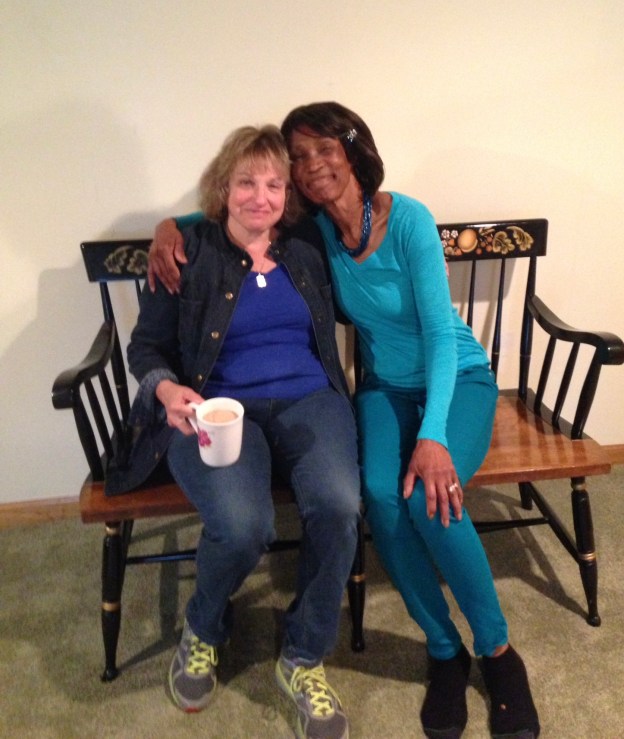
My perspective on gift-giving also changed when Larry and I purchased a fully furnished home in Florida and needed to divest ourselves of thirty-six years of house. Larry took it in stride, but I struggled with the process until I realized much of the stuff we decided to leave behind was someone else’s treasure. The couple that cleaned our house fell in love with a chalk drawing of a draw bridge in Shushan, New York,  that she and her husband drove past every day when they lived in Columbia County. Several of my crewel pieces found their way to relatives’ homes, and a photograph of waves crashing on a New England coastline went to a dear friend whose family has had a summer home near Brunswick, Maine, since 1925. Our Early American deacon’s bench is now situated in our next door neighbor’s sunroom. Moments before we backed out of our driveway on Devon Court for the last time, Blossom took a picture of the two of us on the bench, smiling through our tears.  How I wish I had gifts from the heart to offer to friends and family all the time no matter what the season!

This year will be our first Chanukah with a grandchild. My first inclination is to shop for eight gifts  to be opened each night, but I know at even her very young age, Sylvie Rose doesn’t need more toys or more clothes. I have already promised her that, when she is a LITTLE older,  I will take her to  Disney World and buy her a princess dress. I have children’s books written and signed by a member of my writing group. My journal includes stories of her life, and I hope to share all these stories, some as part of a book,  with her as she grows. Those will be, like those special pictures and that deacon’s bench, gifts from the heart. 

A version of this article originally appeared in the Jewish World News, a bi-weekly subscription-based newspaper in upstate New York, in the November 12, 2015 issue.

The Lost Mural

My father, Bill Cohen, (Z”L) loved to play Jewish geography, and he proudly shared with us how the  first synagogue in Burlington was founded in his grandfather’s kitchen.  As we lived on the New York side of Lake Champlain, we visited many aunts, uncles, and cousins who lived in the Queen City and the surrounding areas. One was Uncle Paul Pearl (born Pesach Ossovitz), who learned the peddling trade from his uncle Archic Perelman and went on to oversee 27 Pearl’s department stores in Upstate New York and Vermont. And then there were Uncle Moe Pearl, who owned several businesses in the area, and his wife Bess; Ruth (Pearl) Kropsky and her husband Isidore; and Aunt Ida and her husband Max Ahrens. May their memories be a blessing and live on in Congregation Ohavi Zedek and its beautiful “Lost Mural.”

When the Pels family attended the High Holy Day services in September, 2022, Congregation Ohavi Zedek had a welcome addition: the restored “Lost Mural” in the foyer, completed in June 2022 by the Lost Mural Project. The story of the mural began almost 150 years earlier, in the kitchen of one of its founding members, Isaac Perelman.

Although Jews had settled in Burlington as early as 1848, the 1880s saw an influx of Eastern European Jews facing persecution by Russians in all phases of their personal, professional, and religious lives. Others came up from New York City to escape work in the sweatshops; a few migrated from Plattsburgh, New York, as it didn’t have an orthodox shul. Most became peddlers in northern Vermont, selling their wares from horse or man-drawn carts. 

Initially, a group of ten Jewish men—only two had families with them, met for services in members’ homes, a former coffin shop, or the second floor of an office building. By 1885, the Jewish community of Burlington, Vermont, recognized the need to organize a synagogue. Eighteen men met in the kitchen of Isaac Perelman, an immigrant from Čekiškė, Lithuania. Having already procured a lay leader/Kosher butcher, they purchased a lot for $25, formerly the site of an old stone shed at Hyde and Archibald streets. With $800, they built a synagogue building, naming their new shul Congregation Ohavi Zedek (Lovers of Justice).

Over the next few years, the Jewish population of Burlington continued to grow, fed by the founders. Isaac and his wife Sarah alone had six surviving children; his brothers Aaron and Jacob also had large families. By  1906, there were 162 Jewish families. The area in Burlington, dubbed “Little Jerusalem,” was laid out like the shtetls in the residents’ native Lithuania with houses and kosher bakery, kosher dairy, and a kosher butcher. The Jewish community built two more synagogues, including Chai Adam (Life of Man), and Ahavath Gerim (Love of Strangers). In 1910, the three synagogues built a Hebrew Free School together in 1910, the Talmud Torah.

In 1910, Chai Adam commissioned a 24-year-old Lithuanian immigrant and professional sign painter named Ben Zion Black to create a mural for $200. Upon completion, the project featured prayer walls and a painted ceiling. The centerpiece was a 25-foot-wide, 12-foot-high three part panel, created in the vibrant and colorful painted art style present in hundreds of Eastern European wooden synagogue interiors in the 18th and 19th centuries. The mural featured the Ten Commandments in its center and golden Lions of Judah on either side, with the artist’s rendering of the sun’s rays adding light. Blue and red curtains and pillars filled the side panels, all representing the artist’s interpretation of the Tent of the Tabernacle as described in the Book of Numbers and the Book of Exodus.

In 1939, amid a decline in the Jewish population, Chai Adam merged with Ohavi Zedek. After 1952, several buyers purchased the former Chai Adam building, which later became a carpet store and warehouse. In 1986, a developer purchased it with plans to renovate the building into multiple apartments. Recognizing that the future of the mural was in jeopardy, Aaron Goldberg,  the archivist for Ohavi Zedek synagogue and a descendant of Ohavi Zedek’s founding immigrants, persuaded the new owner to seal the mural behind a false wall, in 1986. Goldberg, archivist Jeff Potash; Shelburne Museum’s curator of collections, Richard Kershner; and architect Marcel Beaudin hoped to reclaim the mural at a later date.

Before being hidden, Ben Zion Black’s daughters took and paid for archival quality photographs of the mural. Renovations destroyed much of the painting, but a wall covered the mural over the ark.

In 2010, Goldberg partnered with his childhood friend and former Trinity College of Vermont history professor Jeff Potash to establish the Lost Mural Project with plans to establish a new home for the mural and restore the work to its original glory. They reached an agreement with the Offenhartz family, the next owners of the Chai Adam building, that the mural would be uncovered and donated to the Lost Mural Project. This was done with the understanding that the Lost Mural Project would be solely responsible for all costs of stabilizing, moving, cleaning and restoring the Lost Mural. 

In 2012, after over two decades, workers removed the false wall. A curator reported that Black’s creation had sustained extensive damage with “the painting hanging off its plaster base like cornflakes.” Over the next three years, the Lost Mural Project raised substantial funds from individuals, businesses, and foundations for the mural’s paint to be stabilized. In May 2015, workers moved the mural, encased in steel and weighing approximately 500 pounds, to Ohavi Zedek. 

Following the mural’s move, the Lost Mural Project committee incorporated, rebranded and tirelessly sought funding for the mural’s cleaning and full restoration with the help of its board and Madeleine Kunin, the former Vermont governor and US ambassador to Switzerland. By 2022, they had raised over one million dollars from local, state, national, and international donors.

In 202, two conservators hired by the Lost Mural Project began the painstaking task of cleaning the mural. Using the archival photos taken in 1985, they used a gel solvent and cotton swabs to remove darkened varnish, dirt, and grime from the painting’s surface. The next year, a second team of conservators from Williamstown Art Conservation Center in Massachusetts began the infill, coloring and final restorations. According to Goldberg, the COVID-19 pandemic was a blessing, as it gave the team of workers the space and quiet needed to complete the project in the shuttered shul. 

“So many things could have gone wrong with the mural, but it survived through fate and circumstance,” says Goldberg. “It’s not just a surviving remnant. It’s a surviving piece with an astonishing history.” 

Ohavi Zedek’s Senior Rabbi Amy Small, who saw the 2022 restoration step by step, views the Lost Mural Project as a universal immigrant story. “It’s significant not only to the Jewish community and the descendants of those early settlers of Burlington, but also to other immigrants in the United States, which offered safety for Jewish and other families fleeing from many parts of the world.”

The Preservation Trust of Vermont presented the Friends of the Lost Mural with its 2022 Preservation Award. “The Lost Mural…not only exemplifies the rich history of creativity and resilience in Burlington’s Jewish community,” stated Ben Doyle, its president. “It inspires all of us to remember that the Vermont identity is dynamic and diverse.”

In June 2022, the completed project’s unveiling took place amid much fanfare. The Friends honored Governor Kunin for her contributions, and a Vermont Klezmer band provided the music. Dignitaries both in attendance and through Zoom highlighted the importance of the project. Joshua Perelman, Chief Curator & Director Of Exhibitions And Collections, National Museum Of American Jewish History called the mural “a treasure and also a significant work, both in American Jewish religious life and the world of art in this country.”

Many of the descendants of the original Lithuanian Jews who settled in Burlington over one hundred and fifty years earlier were present, including descendants of Isaac and Aaron Perelman. 

“[The mural] tells us a remarkable story of a thriving Jewish immigrant community from Lithuania and the successful efforts of their descendants to preserve their cultural legacy today,” H. E. Audra Plepyte, the ambassador of Lithuania to the United States stated in remarks shared with Ohavi Zedek. “The Lost Mural is not lost anymore.

The Lost Mural Project, an independent secular nonprofit, is seeking donations to replicate the green corridors on the original painting that did not survive. Its educational mission is to share the story of the Lost Mural and the lost genre of the East European wooden painted synagogues with people and facilities around the world.More information, including details of the Mural’s miraculous journey, can be found at https://www.lostmural.org/donate.

Originally published September 20, 2022. Updated May 26, 2025.

SOURCES

Thanks to Aaron Goldberg , Jay Cohen, Janet Leader, Rob Pels, and Rosie Pels for their contributions to this article. 

Rathke, Lisa. “Long-hidden synagogue mural gets rehabbed.” August 17, 2022. AP Wire story; numerous sources.

Sproston, Betty. Burlington Free Press. February 22, 1995.

https://lostmural.squarespace.com/ekik-lithuania

https://www.news4jax.com/entertainment/2022/08/16/long-hidden-synagogue-mural-gets-rehabbed-relocated/

https://www.sevendaysvt.com/vermont/burlingtons-lost-mural-is-restored-to-its-original-glory/Content?oid=35853053

https://www.smithsonianmag.com/smart-news/synagogue-mural-restoration-vermont-apartment-180980614/

You can go home again!

Thomas Wolfe famously stated, “You can never go home again.”  Larry’s sister and brother-in-law are living proof that one should never say never.

When he returned from military service after the Korean War, Larry’s father Ernie collected Doris and their two children Anita and Larry from Bubbie Rose’s house in Syracuse, and they moved into an older house on Avery Street in Saratoga Springs. By the mid-sixties, the family had expanded with the birth of Marilyn Pearl and Carole. Mom and Dad decided to build a new house less than a mile away, on the corner of Lake and Iroquois Drive.

When construction was finished in July 1964, Anita was already away at college in Rochester, and Larry, who missed the old house and neighborhood, would live in the new house for only eighteen months before he headed to college in Boston. Marilyn Pearl and Carole were young enough to adjust quickly to the move and, in retrospect, to live enough years  at Iroquois Drive to create many happy childhood memories. Dad loved the oversized two car garage that held his tools, a large workbench, and his golf club, and the family room that had a section for a regulation sized pool table. 

It was Mom, however, who was most excited about her “dream” house. She loved the new kitchen with its ample cabinets, and, as she hated the heat, appreciated the central air conditioning. Her mahogany table and buffet, which barely squeezed into the house on Avery Street, worked well in the new dining room. A large china cabinet displayed her crystal and china, and the living room was large enough to hold an oversized couch, several chairs, tables, and a piano. Mom took a great deal of pride in her new home, and it showed. She was  a meticulous housekeeper, and it was rare to see anything out of place or cluttered.  Every tabletop shined, the floors were polished, the carpets were vacuumed, the closets and drawers were organized, the bathrooms gleamed; even the laundry and storage rooms were spotless. Even though she employed outside help, she  was known to clean before and after the cleaners. As a matter of fact, one of our  favorite ‘Doris’  stories is that Mom scrubbed her kitchen sink  so vigorously that she literally wore a hole through the porcelain.

Mom also loved to entertain.  She was a wonderful cook and baker, and she enjoyed having her children, grandchildren, friends, and out-of-town relatives to her house whenever she had the opportunity. She often spent the weeks before major Jewish holidays planning her menu, cooking, baking, and freezing much of the food in preparation. Once the holiday arrived, she would open up the dining room table to its full length, her china and crystal would be set, and at her dinners the table would be laden with her specialities: brisket on Rosh Hoshanah, tongue and chopped eggplant at the Yom Kippur Break-the Fast, and matzoh ball soup and roasted chicken on Passover. And when the dinner was over, Mom insisted on doing the dishes as “No one can do them as well as I can.” As she got older, we worried that all her cooking and cleaning was too much for her, but she told us that she loved doing it, and we knew better than to argue with Doris Shapiro.

After they retired, Mom and Dad spent part of the winter in Florida in a condo. Dad loved the sunshine, the pool, the golf courses, and the activities, but Mom missed her friends and her home in Saratoga. When I visited her in early April 1994, she was already packing up the apartment and looking forward to returning to Iroquois Drive and her beloved Saratoga Springs and to get ready for the Passover seder.

She never made it home. On the way up North, Mom had a heart attack while visiting Carole in Charleston, South Carolina, and passed away during open heart surgery on April 26, 1994.  Dad was devastated by the loss of his beloved Doris. He himself had to have open heart surgery that summer, but when he died on December 20, the doctor said that Dad had succumbed not from cardiac disease  but from a broken heart.  

After Dad’s funeral, their beautiful home sat empty and quiet. It seemed as if the house, as well as the family, was in mourning. We initially discussed cleaning out the house and putting it up for sale, but the grief was still too raw to do put these thoughts into action.

Fortunately, the house never had to go on the market. After many years of living all over the country, Carole’s husband Bill was to retire from the Navy in June 1996. Throughout the years, they had always said how much they missed being close to the family. With Mom and Dad gone, they were even more certain that their hearts and lives belonged in Saratoga. They had the perfect solution:  They would buy the house from the estate and move from Charleston, South Carolina, to Iroquois Drive.

Eighteen months after Dad’s passing, when the Leakakos family pulled into the driveway on a beautiful June afternoon, even the house seemed to be smiling. That first summer,  the four siblings and their spouses amicably divided up the contents, some as designated by Mom through handwritten notes, some as chosen by each for sentimental reasons. Then it fell to Carole and Bill to figure out what to do with the remainder of the contents Mom and Dad had accumulated over their thirty years in the house. Many of the duplicated and unwanted items were given to local charities; with the help of a rented dumpster, the outdated or unusable were tossed. Within a year, Mom and Dad’s vacant house became the warm, welcoming Leakakos home, and the six people and one dog settled comfortably into their new residence.

We all agreed that Mom must have rolled over in her grave when her house, her pride and joy, changed hands. Mom may have been a meticulous housekeeper, but Carole, by her own admission, did not follow in her footsteps. Her style was more “I have two active boys and a dog that sheds” casual. In addition, despite the effort to merge the two households, Carole and Bill had difficulty parting with many of the duplicates, and the house seemed a little crowded for quite a while.  Carole had also collected crafts and treasures while moving around the country, and many of the items she had collected filled any remaining nooks and crannies. Not surprisingly, no one cared that the house was not up to the old standards as long as the house was again filled with the Shapiro family.

And very often, it was. Carole may not have inherited her mother’s insistence for an immaculately clean home; however, she did inherit her mother’s love of entertaining.  She and  Bill have continued the tradition of having Iroquois Drive be the center for family gatherings, birthday and graduation parties, and holiday dinners.  Their Passover seders are epic: they have had up to thirty-five people in attendance, with people seated not only at the massive dining room table but also at as many extra tables as they could as needed. The china and crystal have been replaced with paper plates and disposable silverware, but it is unimportant to all those who gather around their table.  Everyone who is invited brings their own specialties to share, and we all share in the clean-up. Carole and Bill are excellent hosts: welcoming, relaxed, gracious. 

So, Mr. Wolfe, you can go home again.  And to my dear Carole and Bill, we are glad you did.

A version of this article originally appeared in the Jewish World News, a bi-weekly subscription-based newspaper in upstate New York, in the March 14, 2014, issue.

Where have you gone,Bullet Joe?

Like many other boys who grew up during the 1950s and early 1960s, my husband Larry collected baseball cards. Each spring and summer, Larry would walk, run or bike to the corner market near his home in Saratoga Springs, New York, where he would exchange his nickel for a new hot-off-the-presses pack of cards. Once he entered high school, Larry lost interest and never again got caught up in the rush of completing a major league season’s set. There was only one exception, a caramel-coated summer when Larry took our family on a sweet journey to complete a set of cards highlighting baseball players from almost eight decades before.

Through the classic song, “Take Me Out to the Ballgame,” baseball has always been linked with a popular popcorn and peanut confection that included a prize in each red, silver, and blue box. In the summer of 1993, one of the snacks’ promotions was a series of reproductions of two dozen 1915 baseball cards. Larry decided to buy a three-pack combo in order to see what the cards looked like.

Of course, like the saying associated with a famous potato chip, Larry just couldn’t stop at just one. After obtaining his first three cards, replicas of Christy Mathewson, Napoleon Lajoie, and Walter “Rabbit” Maranville, he was hooked—and determined to collect all twenty-four cards. Every time he went shopping, he brought home three to six more boxes to see which cards he could add to his pile. 

Our children, Adam and Julie, more than happy to eat the sweet treat, soon joined their father in his quest. Forty-five boxes later, along with thirty duplicates, we were up to fifteen of the two dozen cards. As we all became more determined, we bought and ate more boxes. We learned that the hot summer weather would make the contents of open boxes sticky and soft, and the solution was to keep them in the refrigerator. The sugar coated treat became the snack of choice and the number one offering to anyone who came to visit. 

As the weeks progressed, and the refrigerator became more filled with half-eaten, somewhat stale boxes, the quest became even more difficult. Seventy-two boxes later, we had collected twenty-one cards, as well as doubles, triples, and even quadruples of baseball immortals such as Ed Walsh of the Chicago Americans and Fred Clarke of the Pittsburgh Nationals. Unfortunately, there was not a Honus Wagner, Tris Speaker, or Leslie “Bullet Joe” Bush to be found. 

In frustration, Julie wrote a letter to the company asking if she could be sent the three missing cards. (She decided not to add a suggestion that there be more peanuts in each box.) She received a relatively quick but, alas, disappointing response. The letter politely stated that it would not be fair to the collectors of their toys and cards if obtaining such items was as simple as writing and asking for them. As an act of good will, the company provided her with a fifty cent coupon good on her next purchase and a print-out listing fellow card collectors with whom she might be able to negotiate a trade. 

Rather than giving up our quest for the last three cards, we not only used the coupon but also kept buying and eating more. Larry was thrilled when, after 90 boxes, he finally got Honus Wagner. Unfortunately, almost every card for the next six boxes was—you guessed it—Honus Wagner. Tris Speaker arrived just before we left for Cape Cod for our annual vacation. We now needed one more card: “Bullet Joe” Bush

My hope that our vacation would include a respite from the snack was not answered. The day we arrived at our rented cottage at the Cape, I unpacked while the rest of my family headed out to pick up groceries. They came back with a week’s supply of food and a two-week supply of the snack.

Then three days into our vacation, while Larry was on a day trip to Nantucket with a friend, Adam opened a box and found the elusive Bullet Joe. Three months and 138 boxes into our mission, our collection was complete.

We were still not done. Larry realized that with so many duplicates, we were only a few cards short of two complete sets. It took another two weeks—twenty-one boxes—to complete the search.

Our family still reminisces about the summer of 1993 and our quest to find the elusive Leslie Bush. Even today, when we head to a spring training game or even a regular season match-up, Larry will buy the familiar red, silver, and blue box to get into the spirit of the game. I, for one, settle for the peanuts.

Photo courtesy of Wikimedia Commons.

Was teaching high school a good idea?

I realized early in my adult life that there is a big difference between the career I envisioned and the job I actually had.

I wanted to be a teacher for as long as I can remember.  I would set my dolls around my stand up chalk board and teach them the alphabet. By the time I was in high school, I knew I wanted to go to college for a degree in teaching. My love of reading, combined with my interest in creative writing, made English education the right choice. Keeseville Central had a day every spring called Student Teacher’s Day.  Those of us who were interested and considered responsible were allowed to take over the classes of the teachers for the entire day.  In both my junior and senior years, I had the opportunity to take over for two of my English teachers.  I spent hours preparing lessons  on Greek and Roman mythology, The Outsiders by S. J. Hinton, and vocabulary.  I absolutely loved this opportunity to play “teacher for a day,” and it confirmed my career path. 

For my first two years at Albany State, I fulfilled several credits taking required courses, including American and English literature survey courses as well as biology, French, and music.  By my junior year, however, I was taking classes that allowed me to learn and participate in the classroom. My methods course required our putting together a unit plan on a specific topic, and my submission on the theme of War and Youth, not only received an A but also was used as a model for several years in the English education department. In my senior year, I finally had a chance to actually teach through my student teaching assignment in a high school in Schenectady, New York.

I thrived in front of a class, and I flourished putting together the lesson plans, the quizzes, the tests.  I spent hours planning and producing the necessary paperwork, but it was worth every minute to implement it. I was rewarded in the end with a five plus out of five score for my student teaching, with my advisor writing in his evaluation that I was a born teacher who was a natural in front of the classroom.

As the graduation date grew near, I started applying for a teaching position.  It was a tough time to get a job; there were not very many openings, and despite excellent evaluation, I couldn’t even get an interview.  In late June, however, a month after graduation, a break came through.  A high school English teacher had handed in his resignation the last day of school as he had decided to start a master’s program, and the principal wanted to fill the position before he left for his summer vacation.  I interviewed for the job and was hired on the spot.  

There was only one difficulty: the teacher I was replacing taught very unusual classes. Along with a standard tenth grade English class, he also taught numerous electives on such topics of supernatural fiction, science fiction, the police state in literature, and the American cinema. Because students had already chosen their courses that spring, I would be responsible for developing and implementing the curricula for the classes.  Over that summer, I read the novels and started creating plans.

The tenth grade students I greeted that first day took the change in teachers in stride, but the juniors and seniors who had signed up for the electives were disappointed to find that their anticipated teacher was gone and instead had a new, young teacher with high ideals and higher expectations.

This challenge was even made more difficult by what I learned from the students.  My predecessor had held seances during the supernatural classes, and the students in the cinema had spent time making movies. The initial comments from many entering my classroom were “Who are you? And what happened to the fun guy?”

I was at a complete loss in the Police State in Literature course:  The books ordered for the class included Brave New World, 1984, and Night. Meanwhile, many of the students were reading two or three years below grade level, certainly way below the level of the novels attached to the course. Especially problematic for me was teaching about the Holocaust. I was one of two Jewish teachers in the entire district in a school district with no Jewish students.

The result was an absolute disaster.  Despite a supportive principal and and supportive faculty, I was in over my head.  I spent every minute out of class working on lesson plans, projects, quizzes, including most weekends, but the plans that had served me so well in Methods and student teaching fell flat.  In addition to my difficulty with the implementation, I also was challenged by maintaining discipline. I was twenty-two years old, highly idealistic, and totally out of tune with those students who lacked motivation and any interest in what I was trying to do.  Although the majority of the students were good, a small group made it a point to see if they could disrupt my class. They talked, they threw spitballs, they refused to participate. It was a horrible year. After spending years dreaming about being a teacher, I realized that nothing I had done in college had ever prepared me to handle a real class, a real job.

By June, I was exhausted, stressed, and seriously wondering if I could learn enough from my first year to handle a second year in the classroom.  But the worst moment of that first year was yet to come.  About three weeks before graduation, yearbooks came in, and students were passing around their own copies for signatures from classmates and from teachers.  Two seniors, the children of highly respected members of the community,  came up to me with their yearbooks. With big smiles on their faces, asked me to autograph my picture. When they handed them to me, I was shocked and stunned to see that they had both drawn swastikas around my picture. I slammed the books shut, refusing to sign and making some comment about how some day they would look back on their yearbooks with shame. I told the principal, who called them in, but I don’t remember  the outcome of that discussion.

I did return in September.  I was more confident, more organized, more prepared, but I found teaching high school an uphill battle, a completely different experience than what I had dreamed.  I left in January, eighteen months after I started, enrolled in University of Albany’s master program in reading, and subsequently got a job teaching adult education.  It was in that scenario that I found my niche; classes were small and individualized, low-key, and I found it easy to relate to adult students, many of them highly motivated and focused in their wish to improve their reading and writing skills and obtain their General Equivalency Diploma (GED).

It has been almost fifty years since I walked out of my first teaching position.  I still think back to that experience and wonder if I could have done more to find a way to hold on until I gained enough experience and maturity to handle the real high school classroom.  I also wonder what happened to those two students who got so much pleasure that day from seeing my face when I saw those hated Nazi symbols next to my picture. Did they forget about it as soon as they graduated? Did their yearbooks land up on a dusty shelf, never to be looked at again?  Or do they occasionally pull out that book like I have done with my own high school yearbook, reminisce over pictures of their friends and their club shots.  Or do they come across my picture and felt regret, embarrassment, and shame? 

A version of this article originally appeared in the Jewish World News, a bi-weekly subscription-based newspaper in upstate New York, in the February 27, 2014, issue.

My Love Affair with an Old Oak Table by Frances Cohen

My mother Frances Cohen (Z”L) wrote this story for her writing group in Coburg Village, Rexford around 2007.. It is included in the book she and I co-wrote,Fradel’s Story, available on Amazon.

For over fifty years, I’ve had a love affair with my old oak dining room table. Everyone prizes something more in his or her home than others do, and for me it is a 100-year-old piece of furniture.

Our family had recently moved to Keeseville from a tiny house in Potsdam, New York that had little furniture. One day, a customer shopping in our store told us that their parents were giving up their home on the farm and were moving in with them. They asked if we knew anyone who would be interested in buying their parents’ old oak table and chairs.

Bill and I told them that we would love to look at the dining room set. We fell in love with it the minute we saw it. The table was over fifty years old, but it was in good shape, had beautiful lion claws at the end of the legs, and would fit perfectly into the dining room of our old Victorian house. It could seat six, but when the four oak extension leaves were added, there was even more to love! We paid ten dollars for the table and five dollars for each of the six chairs. As soon as the table arrived in our home, it became part of the family.

If the table could talk, it would talk all about the wonderful times it shared with the Cohen family. Birthdays, anniversaries, Thanksgiving, Passover—all were celebrated around the oak table.

The table would also say that it felt elegant when it was dressed up in a beautiful damask tablecloth and matching napkins, and when the food was served on Bavarian china with sparking silverware and the drinks were served in stem glassware.

Even at more casual times, the table was always laden with tons of food. When anyone asks me if I was a good cook, I always said, “I’m not a gourmet cook. I just cook quantity!” With four growing children, a hungry husband, and lots of company, I had no choice. And the oak table always supported my spreads.

The table was not only for dining. The children preferred doing their homework on the table instead of the desks in their rooms. Sundays through Thursday nights during the school year, the table was buried in schoolbooks and papers. The table was also used as a game table. The children played card games like Fish, War, and Old Maid and board games like Monopoly and Scrabble. They put together 1000-piece jigsaw puzzles and set up toy soldiers in formation on its surface. On rainy days, a double sheet draped over the top turned the table into a tent, a stagecoach, or a playhouse. Bill and I played bridge and card games with couples. Several timesa year, Bill served as host for his poker game. The dining room was filled with smoke as the men drank soda and beer and snacked on Brach bridge mix and peanuts.

Our four children still talk about the birthday parties they celebrated with friends around the oak table. The menu was always the same: hot dogs and rolls, Heinz vegetarian beans, and potato chips for the meal, followed by a homemade birthday cake. The birthday child always got to help bake the cake from scratch or as the years went by, from a mix. Then the child helped frost the cake with confectionary sugar frosting and decorate it with the candies that came on a cardboard sheet that spelled out Happy Birthday and held the candles.

The table had its problems. One day there was a huge crash in the dining room. The old chandelier that hung above the table fell into the middle of the table. We were thankful that no one was hurt and that the table escaped with just a couple more scratches. Within a couple of days, the chandelier was replaced, and the table was back in service.

Time passed, and the table became the gathering place for celebrations of high school and college graduations and engagement parties. The children moved away, and we began spending more time in our cottage on Lake Champlain. In 1982, with retirement looming, we decided to sell the house in Keeseville and split our time between the cottage and Florida. We sold most of our furniture, but the oak table moved with us to the cottage. It fit beautifully in the large dining area. In the summer of 1983, we celebrated our retirement with a party of over fifty people. We set out tables and chairs on the lawn, but everyone came into the cottage for the buffet that was set up on our precious oak table.

Time passed, and grandchildren came to spend time at the cottage. The oak table again became the play table, as they loved to paint, color, and play games on the table.

By the year 2000, Bill and I were in our eighties, and we realized it was getting too much for us to maintain the cottage and decided to spend all our time in Florida. We were delighted when our son Jay and daughter-in-law Leslie opted to buy the cottage and keep it in the family. We could not make it up to the cottage for two summers. When we moved into Coburg Village in 2006, however, we finally had the opportunity to go up to the camp. When we visited, we realized that another generation is now enjoying the table. The top is a bit more worn and scratched, but the lion paws still shine and look like new. And so, our family’s romance with the one-hundred-year-old table continues.

A version of this article originally appeared in the Jewish World News, a bi-weekly subscription-based newspaper in upstate New York.

A Meshugganah Summer

This was, to say the least, a different summer in Rockies. No matter how well one can plan for time away, life still happens. Meshugganah!

After eight wonderful days in California with my son Adam and his family, we flew into Denver and then headed for my daughter Julie’s home in Summit County. While unpacking, I realized my Kindle was lost in transit. I wish I had been able to brush the loss off as a human error, but I spent too much time trying to track it down (no luck at Southwest Airlines, either airport, or Enterprise), deciding on whether to order a replacement (thank goodness for a well-timed Amazon Prime Days sale) and beating myself up for losing it in the first place.

Although Summit County normally experiences the monsoon season in late July, this year it started soon after we arrived. Two days were complete washouts, but “weather” came in most days in early afternoon. As a result, most evening outdoor concerts, a favorite summer activity we have done in the past with family and friends, were cancelled.

Meanwhile, as has happened throughout the country, this very contagious COVID variant hit Summit County hard—and close to home. On July 1, the day we moved into our rental, we stocked up on groceries at City Market, along with many other maskless vacationers. We brought home chicken, produce, ingredients for challah baking, and COVID. By July 3, Larry was feeling under the weather; by July 5, he tested positive.

My May encounter with the nasty virus somehow protected me from this variant, but Larry was not spared. He was down for the count for five days and, as he was still testing positive, isolated for five more. He missed out on our Mountain Girl’s birthday party, several trips to Main Street to get her mango bubble tea, and many games of Sorry! FaceTime may be a blessing when we are in Florida; it was a poor substitute when our rental was literally a stone’s throw from their house.

We also both passed on the planned weekend getaway with Sam’s family in Granby, Colorado. Sam’s parents, Marilyn and Bill, who are also our dear friends, cancelled their second attempt to see us when Larry was hit by a mean head cold.

Although I hiked almost every day during Larry’s illness by just walking out of our rental, we were able to take our first hike together two and half weeks into our stay. Outside of my taking another one of my famous pratfalls on one, Larry being attacked by mosquitos despite the bug spray on the second, our almost getting caught in a thunderstorm on the third; and encountering a snake on the fourth, we had finally were able to spend quality time together on the trail.

By this time, Larry was well past COVID and colds. On July 21, Marilyn and Bill drove up from Fort Collins with plans for the seven of us to attend the National Repertory Orchestra’s annual pop concert in nearby Breckinridge. An hour before we were supposed to leave, the Mountain Girl came home from the fourth day of science camp with a live jelly fish and a lively case of COVID. The four grandparents went to the concert while Julie and Sam stayed home. Wisely, Marilyn and Bill drove the two hours back home immediately following the concert to avoid further exposure. The parents, however, were not so lucky. All three—five if you include the dog and “Jelly”—were now in quarantine. Sigh! We are back to FaceTime visits.

Meanwhile, a funny thing happened on our way to the Lake Dillon Theater. Soon after the NRO family no-go, we got an email stating both musicals for which we had purchased tickets were cancelled due to a COVID outbreak among the cast and staff. Yes, any live indoor performances in any “forum” were just an “impossible dream.”

And yet, despite lost electronics; despite monsoons, despite curtailed concerts and cancelled curtain calls; despite pratfalls and pests and the pandemic, Larry and I remained focused on the positive (no pun intended). Several mornings, with the help of FaceTime, Larry and I followed the Tour de France with Adam (who loves cycling) and our grandson (who kept asking for Elmo on the “TV”). For eight nights, Larry and I watched historical wins at the World Track and Field Championships out of Eugene, Oregon (Go Sydney McLaughlin! Go Armand Duplantis!). I researched future stories, wrote, articles, worked on my fourth book, and updated my blog. One of the pictures I took on a hike was featured in a local newspaper, prompting a friend email with the subject line, “Thinking of you…as a photographer!”

Once healthy, Larry resumed playing pickleball with the Summit County Pickleball Club (“We play with an altitude!”), along with doing several more hikes with me. Thanks to the local library and my new Kindle, I read lots of books. And even though Southwest has yet to locate my old Kindle, I was assured by a lovely woman in the Denver office that as it is one of 9000 items accumulated by the central lost and found office, I have a good chance of it being recovered by Chanukah. (Chag Sameach, Larry! You have been regifted!)

By the time we left the mountains, all my family members had completed recovered from COVID. We were safe and in one piece. We did not have to cancel entire vacations due to illnesses, a fate that befell two close relatives. We are not grieving and traumatized like so many families in Buffalo, Ulvalde, Highland Park, and other sites of senseless violence. And no matter what the weather, we spent six weeks basking in the beauty and cooler temperatures of the Colorado Rockies.

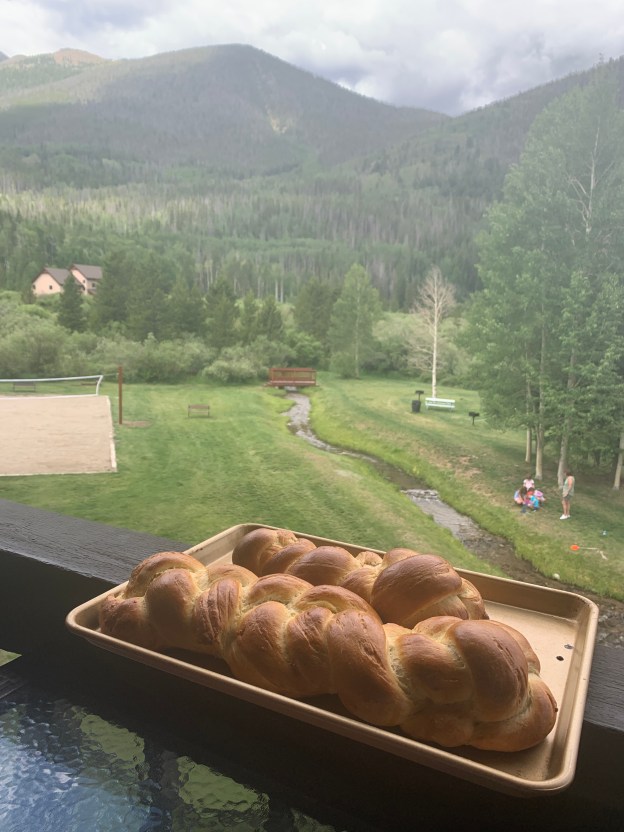
Furthermore, as I have done since the beginning of the pandemic, I kept calm and bake challah.On a Sunday afternoon, as a torrential rain storm raged outside our balcony, I cooked up dinner for my quarantined family—chicken, rice, carrots, and two freshly baked braided loaves. I kneaded in prayers for their quick recovery and prayers of gratitude for all the joy and happiness and love we have experienced this very different summer. 

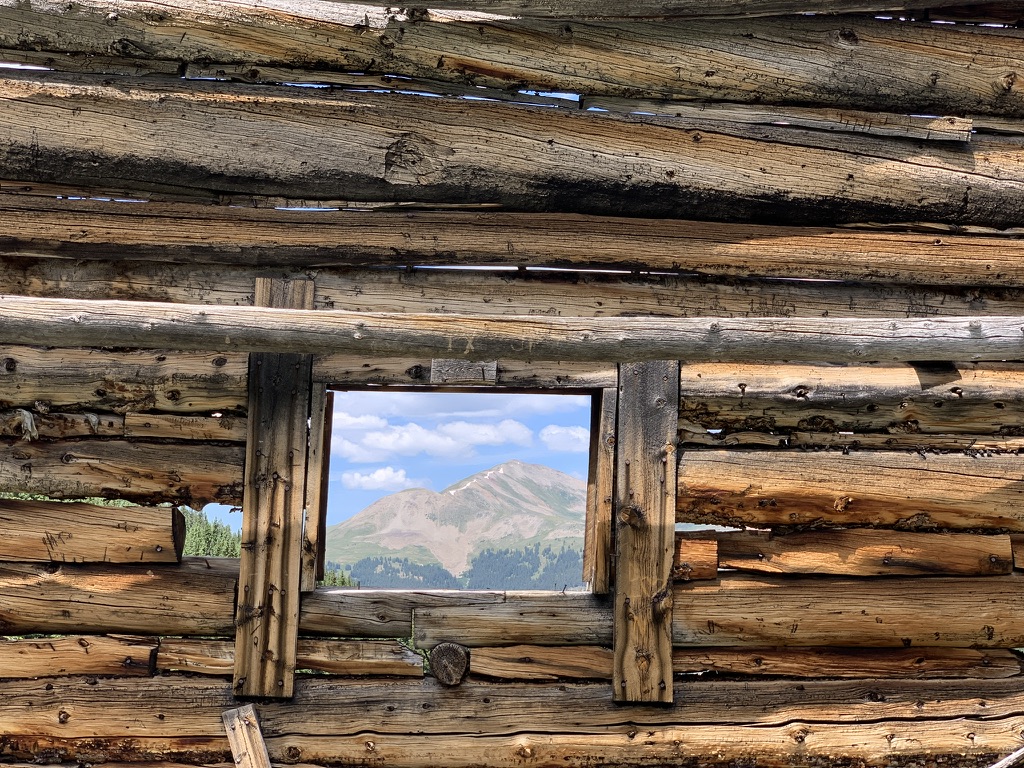
View of the Rockies at Mayflower Gulch. This picture was featured in an issue of the Colorado Summit Daily.

I would do it all over again: Dealing with Aging Parents

My parents would have celebrated their 82nd anniversary on August 20. In honor of their memory, I am publishing this article which was first published in The Jewish World on January 15, 2015.

When my parents moved up from Florida to Coburg Village in 2005, we knew they were settling into a place that offered them independence and the kind of life they wanted to lead. As it was only four miles from our home, Larry and I, as well as my siblings, had peace of mind knowing we were close enough to be there when they needed us and to watch over their physical and emotional health. At times, however, providing that oversight was not easy.

Every Sunday, Larry and I had a standing date with my parents to go out to eat at a local restaurant. Mom’s favorite choice was a Chinese buffet as she loved spareribs and anything fried. Dad said he preferred Italian, although his choices in those restaurants were sometimes more McDonalds than mangiare bene. He once insisted on our driving to an Italian restaurant in Schenectady in the dead of winter and proceeded to order minestrone soup and chicken nuggets.

One week, on the advice of friends, we decided to take them to Verdile’s, a landmark Italian restaurant in Troy. As was the custom, Larry and I picked them up in the front of their building. I helped my father get into the front passenger seat, helped my mother get into the back seat behind Dad, and took my place behind Larry. Larry put the car in gear and headed to our destination. Around two miles down the road, my father said, “Oh, damn! I forgot my teeth!”

“We’ll turn around and get them,” offered Larry.
“That’s okay,” said Dad. “I can just gum my food.”
Larry ignored him and turned the car around.
When we got back to Coburg, I took my parents’ keys, went through he foyer, ran up the stairs to their second-floor apartment, unlocked the door, grabbed a set of dentures out of a bowl in the bathroom, wrapped them in a paper towel, relocked the door, and headed back to the car.

“Thanks, Marilyn,” said Dad, as he started putting them into his mouth. A second later, he yelled, “Hey! These aren’t my teeth!”

“Oh, they must be mine!” Mom chimed in from the back seat. “I forgot them, too! Hand them back, Bill!”

As Mom was getting her bridge into her mouth, I went back to the apartment, found the second bowl with Dad’s teeth on the bathroom vanity, and ran back to the car. Now that all the dentures were in place, we were ready to complete our trip to Verdile’s.

All was fairly quiet for a couple of miles. “I read an interesting article in Consumer Reports this week about one of my prescription medicines,” Dad piped up. “You know how I am always having to run to the bathroom? Well, that’s one of the side effects of one of the damn pills I have to take.”

“You have congestive heart failure, Dad,” I said. “Your doctor put you on diuretics to prevent fluid from building up in your lungs. You’ve landed in the Ellis Hospital emergency room three times since you moved here when you failed to take them.”

“Well, the heck with all these doctors!” said Dad. “I am tired of constantly having to pee. I’ve decided to stop taking them. Haven’t swallowed any of those suckers for four days!”

I immediately conjured up in my mind another ambulance ride for Dad and another lost day of work for me. Meanwhile, I thought Larry was going to drive off the road.

Mom patted my hand and whispered to me, “I’ll take care of this, sweetheart. Don’t worry.” By the time we got to the restaurant, all four of us were on edge, hungry, and ready for a good dinner. Fortunately, Verdile’s lived up to its reputation. Our pasta-based meals were delicious, and the staff was friendly, kind and accommodating. Judging from the demographics of the people sitting around the room, the staff in the restaurant was obviously used to serving senior citizens.

As our waiter cleared the table before he brought coffee, my mother popped out her bridge and wrapped it in a napkin. Although I was used to this in our own homes, I was a little grossed out that she was doing it in public. I also worried she’d lose the bridge—an expensive proposition.

I started to stammer an explanation and warning to the waiter. “Err…please don’t take the napkin. My mother’s teeth are in it.”

He broke out in a big smile. “Don’t worry! We’re used to that here. Can’t tell you how many times we’ve had to do a dumpster dive for a set of false teeth or a hearing aid!”

We drank our coffee, paid the bill, and drove my parents back to Coburg Village. The next day, I called my mother, and she assured me that Dad was back on his water pills.

“Thanks for dinner, Marilyn,” Mom said. “Dad and I really enjoyed our afternoon with the two of you. We’ll have to come up with another fun place to eat next Sunday.”

“Sure, Mom,” I said aloud. “Let’s do that!” In my mind, however, I was thinking, ‘Let’s just make it less exciting.’

The four of us enjoyed many more Sunday outings until my father’s passing in November 2008. Larry and I kept up the tradition with my mother until her death in March 2011. To this day, despite the misplaced teeth, the medical revelations, and the not-so-healthy Chinese buffets, we fondly remember those Sunday dinners we shared with Mom and Dad.

Schooling in the Olden Days

While in Frisco, Colorado, in August 2015 to welcome our new granddaughter, Larry and I visited the nearby Dillion schoolhouse, a two-room museum that was built in 1883 and served as the town’s main educational facility until 1910. Walking into that old building with its wooden floors, dusty chalkboards, and old-fashioned seats transported me back in time to my own experience in a two-room school house in the 1950’s.

When our family moved to Keeseville, all classes from kindergarten to twelfth grade were held in a big brick structure on top of Main Street that was built in 1936, when improved methods of transportation allowed for consolidation of the the area’s small one-and two room school houses.By the mid-fifties, however, a growing population fueled by the near-by Plattsburgh Air Force base necessitated the construction of a new elementary school. In the meantime, students were shipped off to other locations. My brother Jay spent fourth grade in the town’s old shirt factory. Two years later, I was part of the the group of students who were bussed the four miles to the two-room school house in Port Kent. 

I am not sure how the teachers felt about being transported back in time one hundred years, but we students loved it. The building itself was comprised of two huge rooms that were linked by a connecting door. Two wooden stoves provided the heat, the old oak floors were scuffed and the bathrooms were far from modern.  However,  it was fun for us in Mrs. Smith’s second grade class to be next door to the third grade class. The school was set on a hill in a large grassy lot that overlooked Lake Champlain. Lessons were punctuated with the sounds of train whistles from the Port Kent railroad station and horns from the ferries that transported cars to and from Burlington, Vermont.

Each day, we would be taught reading, writing, and arithmetic. The school would transport lunches, and we would eat at our desks. We loved our teacher, Mrs. Smith, who was sweet and kind and looked a great deal like Loretta Young. My friend Julie Thompson Berman had special memories of Mrs. Smith: A left hander, her second grade teacher tried to “convert her” until Julie’s father set the teacher straight; having Mrs. Smith was a relief.

Most of the students walked up to the high school and took buses to Port Kent, but some of the students lived in Port Kent. Steven Bullis and Barbara Klages lived within walking distance of the school. Barbara lived in a huge house right next to the railroad tracks. The trains went roaring past her front porch several times a day, and I thought she was the luckiest person in the world. No matter where we lived, the intimacy of the small school resulted in friendships that have lasted a lifetime. Along with Barbara and Steve, I met Julie, Betsy, Linda, Betsy, and Mike in Port Kent, and most of us remained classmates and friends throughout our graduation in 1968. It was also while in Port Kent I had my first heartbreak: I was in love with Jay Sussdorf, who moved away at the end of second grade. 

One of my clearest memories was our performing in Hansel and Gretel. As I had been a witch that past Halloween, I got to play the villain to Julie’s starring role as Gretel; she pushed me into the “oven,” a table covered in black construction paper with a drawing of the fireplace.

The next September, we started the school year in Port Kent. The elementary school was finished over the winter vacation, and we started going to classes there in January, 1958. The new school was shiny and modern and beautiful. However, looking back, I have fonder memories my year and a half in that little red schoolhouse than I do about the new building.

Ironically, many years later, Adam and Julie had the opportunity to attend school in a similar building.  Both children went to the Clifton Park Nursery school in the little red school house on the corner of Moe and Grooms Road. As a cooperative preschool, Larry and I participated as a helping parent in Adam and Julie’s classrooms on a rotating basis. One of Julie’s earliest memories is Larry coming in on Halloween as a clown with a big red honking nose. She thought she was the luckiest child in the world to have such a funny, talented father. Both children loved going  to nursery school in that old building with its wooden floors, huge old windows, and parent-made shelves lining the walls filled with toys and books and arts and craft material.

My Mountain Girl’s elementary school in Frisco, a modern building with a huge playground, is only a few blocks from her home. I doubt if she will follow in the footsteps of her grandmother and mother. However, she is  learning  about the history of her small Rocky Mountain town: the Ute Indians who originally lived along its rivers, the mountain men who trapped beaver in this territory in the first half of the nineteenth century, the miners and their families who settled the town in the 1870’s. She enjoys picnics and concerts in the town’s historic park, where she plays in original buildings that once served as homes, a jail, a chapel, a saloon and brothel! And she can explore the the Schoolhouse Museum, with its wooden floors, dusty chalkboards, and wooden seats. And on one of our visits, I will share the stories of my own adventures in a two-room schoolhouse on top of a hill overlooking Lake Champlain. 

A version of this article originally appeared in the Jewish World News, a bi-weekly subscription-based newspaper in upstate New York, on August 6, 2015.

Larry’s classic clown outfit in 1985. Adam and Julie were delighted!