Author Archives: Marilyn Shapiro

Unknown's avatar

About Marilyn Shapiro

After thirty five years in education, I have retired and am free to pursue my lifelong dream of becoming a freelance writer. Inspired by my mother, who was the family historian, I am writing down my family stories as well as publishing stories my mother wrote down throughout her life. Please feel free to comment and share.

Chasing the Elusive Georgia O’Keeffe

A friend of mine just posted on FaceBook that she and her husband were visiting the O’Keeffe Museum in Santa Fe, New Mexico. It brought back memories of Larry and I attempting to chase down this American legend’s paintings!

In January 2016, Larry and I attended a lecture on Georgia O’Keeffe, part of an artist series offered in our Florida community. It was a relief to drive only three miles to the lecture. You see, we have been chasing Georgia across the country for years.

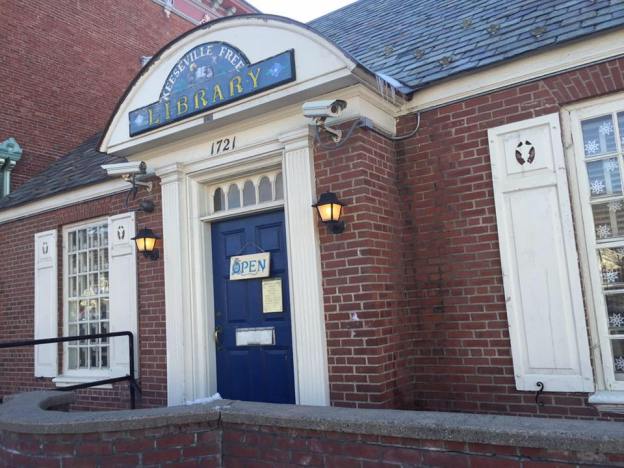
Growing up in Keeseville, New York, I had little opportunity to visit museums and galleries, much less to develop art appreciation. In college, I avoided “killer” Art History 101 as I was too obsessed with my grade point average to venture out too far beyond my literature and education courses. 

Larry took some art courses at Northeastern University and spent time in Boston museums. One of our first dates was a trip to the Sterling Clark Museum in Williamstown, Massachusetts. Our interest in art grew along with our marriage. Fall leaf peeping trips included the Norman Rockwell and Grandma Moses museums. In New York City, we explored the Metropolitan, the Guggenheim, and the Museum of Modern Art. As our travels expanded, we visited museums in San Francisco, Lima, and London. We knew what we liked: We walked quickly past Renaissance art with its stiff and tortured religious images and headed for the Impressionists—Monet, Manet, Degas. 

Although we had seen and appreciated Georgia O’Keeffe’s work when we viewed her occasional pieces in major cities, our interest was heightened as a result of a college visit. One of our nephews was accepted to St. Johns’ College in Santa Fe, New Mexico. Larry offered to fly out with him to see the school and explore the area. When they returned, Larry could not stop talking about the Georgia O’Keeffe Museum and its collection of her paintings. He loved the colors and the creativity. He promised that we would travel to Santa Fe together so he could share his find with me.

Less than a year later, we made plans to visit Santa Fe as part of our annual summer visit with Julie and Sam in Colorado. We researched lodging, restaurants, the art district, the historic downtown. On top of the list was the O’Keeffe Museum and Ghost Ranch, O’Keeffe’s New Mexico residence for many years.

Fate intervened from the start. A series of wildfires had hit New Mexico. As we traveled south on the highway, an ominous cloud of smoke loomed above us. At one point, we considered completely abandoning our plans and going back to Colorado. As we learned more about the situation, we scaled down our expectations. We would skip Ghost Ranch, which was closer to the fires, and limit our visit to just the historic city.

Our destination on our first full day in Santa Fe was the O’Keeffe museum. As we walked the short distance from our bed and breakfast, Larry chatted about diverse subjects that O’Keeffe painted—the New York cityscapes, the flowers, the Northern New Mexican landscapes. When we got there, however, we saw a huge sign announcing that the majority of O’Keeffe paintings were on tour in Europe. Instead, the museum was proud to present an exhibit of Norman Rockwell sketches and paintings. We could not believe that we had traveled so far to see O’Keeffe only to view drawings by the popular New England artist. Yes, we liked Rockwell and his iconic Saturday Evening Post covers. But we experienced his work every fall as part of our annual leaf peeping tour of New England. We had to drive less than one hour across the New York border to go to the Rockwell Museum in Stockbridge, Massachusetts. Needless to say, I was disappointed. 

We soon had another chance. In 2014, the Hyde Museum in Glens Falls, less than an hour north of us, was sponsoring a special exhibit entitled “Modern Nature: Georgia O’Keeffe and Lake George.” The family of O’Keeffe’s husband Albert Stieglitz owned a place in Lake George, and O’Keeffe had spent summers there during their marriage. We knew we weren’t going to be seeing many flowers, but seeing her interpretations of Lake George would be interesting.

The exhibit opened in the summer. Friends reported back to us that lines were long and the place was jammed. We decided to postpone our visit until after Labor Day when the crowds thinned. Stymied again! Larry tore his Achilles tendon. He underwent surgery and sported a bulky cast on his leg for eight weeks. By the time Larry felt up to going, the exhibit was long gone. 

The following February, Larry and I flew out to San Francisco to visit our son Adam. On the plane, we met a couple from the Capital Region. She had been involved in art and served as a docent for the Hyde Museum. We shared with her our sad saga of thwarted attempts to see the O’Keeffe exhibit. “Did you know the DeYoung Museum in San Francisco currently is running the same exhibit?” she asked. No, we didn’t know. As soon as we arrived in Adam’s apartment, we suggested to him that we go to the DeYoung together. It was a surprisingly short walk from his apartment to the museum, and we actually got to see the exhibit. We lingered over the paintings and portraits and even listened to a lecture. Our chase was over.

Larry and I enjoyed the lecture down in Florida. Forty minutes into her talk, however, and the speaker was still focusing on Stieglitz and his work. Only the last fifteen minutes focused on O’Keeffe. Maybe we are just not meant to experience Georgia up close and personal. Or maybe, just maybe, we need another trip to Santa Fe.

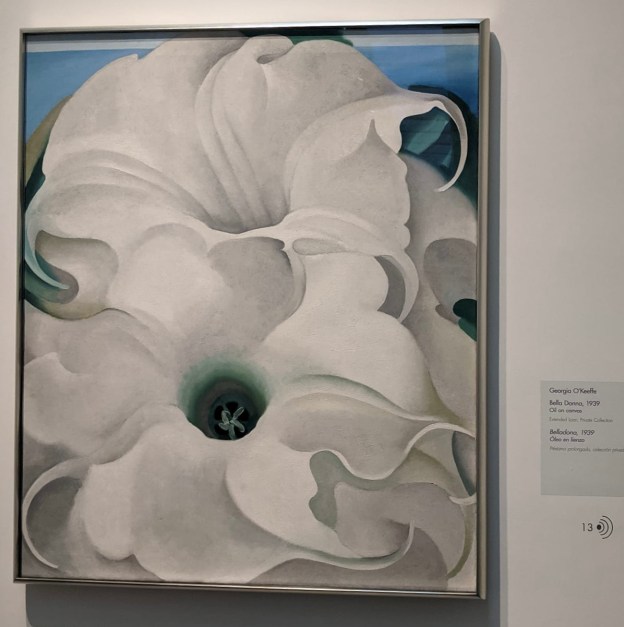
Photo of Georgia O’Keeffe painting taken by Christine Grossman at the Georgia O’Keeffe Museum in Santa Fe, New Mexico.

A version of this article originally appeared in the Jewish World News, a bi-weekly subscription-based newspaper in upstate New York.

No Opposing View to the Holocaust!

“You make sure that if you have a book on the Holocaust that you have a book that has an opposing view,” a Carroll County,Texas, administrator recently told a group of educators during a training session on what books were allowed in their library. Fierce backlash resulted in an apology and an investigation, but to many it hammered home the fear, denial, and outright ignorance that surrounds the teaching as well as recognition of the reality of the systematic murder of six million Jews. For that reason, there will never be “too many stories” about the Holocaust, including that of Galina “Golda” Goldin Gelfer (Z’L).

On June 22, 1941, Golda woke up on her 14th birthday to a beautiful sunny day in Glusk [now known as Hlusk], Belarus. Despite her family’s status as Jews in a highly anti-Semitic country, she and her family—her father Meir, her mother Elke, her eight year old sister Malke, and a large extended family— were happy in their small shtetl. Then, their world changed when news that Germany had declared war on the Soviet Union. Five days later, Nazis marched into their town. Soon after, Golda’s older sister, Chaisoshe returned home to join her family after Minsk University was evacuated, walking the last 30 miles with a friend. With limited means of escape, the entire Jewish population was trapped.

All Jews were registered and forced to wear yellow stars on the clothes and post the yellow stars on their homes. A Judencrat (Jewish council of three men) was formed to organize labor. While Chaisoshe remained hidden in their homeMeir and Golda worked long hours in menial jobs: cleaning and plowing the streets, digging up bricks, and mucking out horse stalls. All other work by Jews was forbidden.“We performed useless task mainly to make us feel we were slaves,” Golda later wrote in an autobiographic essay in The Holocaust DID Happen. (Southern California Council for Soviet Jews, 2010) 

For the next five months, as reports of mass executions of Jews in neighboring villages were reported, Golda and her family lived in absolute fear. On December 2, 1941, their worst nightmare was realized when they learned in the early morning hours that Nazis were beginning to round up all the Jews in Glusk for a “death march.” As the Goldin dressed in multiple layers of clothes and hastily packed bundles of food, they made plans to split up, run, and hide. Chaisoshe and a college friend were first to leave.“ You have some friends,” Elke told her husband. “Take a child. You may survive.” As Meir took Golda’s hand, Golda grabbed Malka’s. But Elke insisted that her youngest child hide with her in their shed.

Meir, Golda, and another relative they found in the street began frantically knocking on the doors of their Russian neighbors, begging for places to hide. But they were repeatedly turned away because of fear, ignorance, or indifference.The circle of Germans, politsaislocal collaborators, and dogs surrounding them grew tighter.

The three finally found refuge in the attic of an abandoned store on the main street. They climbed up to a loft filled with hay and silently watched the street below. The streets were soon filled with dushegubka, trucks modified to divert engine exhaust into a sealed internal gas chamber, As the Nazis forced women and children into the black-topped vans, Golda recalled in 2010 Yad V’Shem video, could hear a single woman screaming in agony as the van moved towards a former hospital that the Germans had converted into the slaughterhouse.

When these precursors to the gas chambers used in the concentration camps could no longer keep up with the number to be killed, the remaining Jews were herded together by Germans and the politsais. They were helped by local residents who joyfully made a game out of rounding up anyone trying to escape. “Jude! Jude,” they would yell to the Nazis, who would then shoot the “offender” and leave the corpse on the street. The numb, terrified victims could do little but march to their almost certain deaths.

Throughout the terrifying day, Meir, Golda, and the cousin heard the sounds of gunfire from Myslotino Hill, an area two and a half miles outside of Glusk. They learned later that over 1000 Jews men, women, and children were killed in a volley of bullets and then thrown in pits prepared earlier by the Germans. 

At two a.m., all was quiet. Praying that somehow members of their family had survived, the three fugitives descended from the hideout and began walking to the town’s outskirts.They narrowly missed falling into the hands of a roving band of Russian murderers who were “drunk on blood and vodka” and bragging about the number of Jews they had killed.

The threesome began their trek through deep snow and bitter cold to Zhivun, a village 23 miles from Glusk. As Meir had been born, raised, and, as an adult, done business there, they hoped to find help. While in route, Meir and Golda hid in the forest while the relative attempted to enlist the aid of friends. The two heard a volley of bullets, and the cousin never returned. 

Meir and Golda had better luck. For the next six months, Golda stayed with the local peasants helping with housework and, when necessary, being spirited from home to nearby forest to another home to escape discovery by the Nazis.Meanwhile, in between trips back to Zhivun, Meir worked with the partisans, members of the resistance movements who lived in the forest. The war had not lessened their anti-semitic feelings as they were initially reluctant to accept Meir into their circle. Meir, however, proved to be worthy comrades, helping the partisans to bomb railroads, ambush German convoys, and do whatever they could to fight the German forces.

During this time, two eleven year olds they encountered in Zhivun who had also escaped from Glusk gave Meir and Golda the bad news regarding the Goldin family. The two children initially had hidden with Elke and Malka until Elke told them to go back into the village where she correctly believed their blonde hair and blue eyes would help them blend in with the Gentile population. Two days later, a Belarussian neighbor and his son, with whom the Goldin had had a close relationship before the Nazi invasion, came to search for valuables and steal the cow. They found Elke and Malka hiding in the hay and turned them over the Nazis, who killed them. Chaisoshe and her friend met the same fate two days later when four local teenagers found their hiding place and turned them over to the Germans for bounty money. Meir and Golda later learned that 32 members of the Goldin family they had left behind had been killed.

Once he was established with the partisans Meir went back to Zhivun to get his daughter, who was at fifteen now old enough to participate in the guerrilla warfare. In addition, a Jewish doctor who joined the ragtag group enlisted the help of Golda and a 17-year-old Jewish refugee in providing needed medical assistance. (The two woman remained lifelong friends.)

Meir and Golda survived in the forest for the next two years, living as did the real-life partisans portrayed in the 2008 movie Defiance. They finally gained their “freedom” on July 4, 1944, when Belarus celebrated heir victory over the Germans (The Germans and Soviets continued fighting through May 1945).“Freedom,” however, still had its limitations. When they first met with Red Army soldier, their initial comment was, “I thought the Nazis killed all of you Jews!” Meir, Golda, and the new families they created after the war lived in the Soviet Union until the 1980s, when, upon Golda’s insistence, relocated to the United States.

Golda’s story has been saved for posterity in her two hour interview in Russian as part of Steven Speilberg’s Shoah project. In addition, her descendants continue to carry on her and the Goldin legacy through their family reunions, Zoom meetings throughout the pandemic, and through their sharing this story with me. No, Texas, there is no “opposing view to the Holocaust.” Just ask those, like Golda, who lived to tell their tale. 

A version of this article originally appeared in the Jewish World News, a bi-weekly subscription-based newspaper in upstate New York.

Close Encounters of the Moose Kind

As 2021 comes to a close, I have much for which to be thankful. The armadillo that took up residency under our house decided that we charged too much rent and moved out on its own before we had to call in an exterminator. Despite inflation pushing up the cost 25%, I still had the means to buy a 23 pound turkey for Thanksgiving at the supermarket, not necessitating my shooting one of the wild ones that wander our yard. And I am grateful that our close encounters of the wild kind have ended well for both us and the animals.

As Upstate New Yorkers, Larry and I rarely encountered threatening animals. Yes, we watched out for rattlesnakes while hiking the eponymous trail in Lake George. And, yes, our cats’ frequent skirmishes with skunks showed us the stinky scent of nature. But the closest I had come for most of my life to seeing “animals gone wild” was when we woke up to the sight of a herd of cows that had somehow escaped from a nearby farm grazing on the lawn of my parents’ cottage on Lake Champlain. When we opened the door to take a closer look, our Irish setter ran out and started barking at them, triggering a mini-stampede. At that very moment, our neighbor opened up her drapes to see a bunch of berserk bovines charging towards her sliding glass door. Local lore is that her screams still can be heard echoing throughout Willsboro Bay.

My first encounter with more dangerous beasts came in a 2012 trip to Florida. While Larry and I were waiting for the guided tour tram to take us through the Shark River section of the Everglades, I spotted a huge alligator less than 10 feet away. Naive—make that stupid!—me insisted Larry take my picture while I was kneeling near its tail. When I proudly showed the picture to one of the guides a short time later, she warned me against a repeat performance. “Alligators may look slow, but they can move quickly,” she said. “You were lucky you weren’t bitten.” 

After that encounter combined with research and “alligators in the news” stories, I now have a much deeper appreciation of these ancient reptiles. We usually have at least one alligator in the pond in our backyard, either sunning itself on its bank or floating just below the surface. It is not unusual to see one crossing the road or even lounging in a doorway or an open garage. Just this morning, a neighbor posted on our Next “Please be careful. There is a large gator is crossing the road on its way to Glendora Lakes.” We have learned to live by side with them by maintaining a healthy distance when walking near water and encouraging our guests to do the same.

Ever since her move to Colorado in 2003, our daughter Julie has shared with us her frequent close encounters with Rocky Mountain wildlife. In her first month there, she had to detour to avoid a brown bear who was helping itself to an unlatched garbage bin. Stories of other unexpected meet-ups with more bears, as well as elk, moose, fox, and coyotes, have always been part of our conversations with our daughter, her husband Sam, and since she could talk, our granddaughter. 

Julie and her Sam are both experienced backpackers and outdoors people. When they are hiking, they can recognize the presence of animals by their hoof prints as well as their scat (poop).They also know what to do when they encounter an animal, whether it be on the trail or in their backyard. Like alligators, the best approach is to distance oneself from any wild animal to avoid a confrontation. And they are sharing that knowledge with their daughter. 

Despite all their experiences, Larry and I had only seen wildlife from a safe distance. That changed this summer. We hiked up a popular trail and made our usual left turn only to find a huge moose less than 25 feet away. We quickly and quietly turned around and headed down the same trail. 

I shared the news with several friends on social media, many whose first question was, “Did you get a picture?”

“No,” I responded. “We just got the hell out of there!”

After waiting 18 years for our “Close Encounter of the Wild Kind,” I was not expecting to see another moose until 2039. However, less than three months later, on an early November before-the-snow-falls trip, my granddog Neva and I took a hike up to Rainbow Lake, my favorite spot in the world. On the way down, with only a slight pull on Neva’s leash as a warning, I caught sight of the back end of a moose in the trees about 10 yards in front of us. Now the seasoned moose-avoider, I quickly got us “the hell out of there.”

 While winding our way down a longer but hopefully safer trail, Neva pulled hard on the leash, straining to run after something. “Oh no!” I thought. “not another moose!” No, it was just a squirrel, which our granddog obviously rated higher on the “wildlife-of-interest” scale than a unpredictable half ton mammal. So much for feeling safer when hiking with my granddog!

Moose sitings continued. Later that day, when Larry and I avoided stepping in the piles of moose scat that adorned awns and sidewalks in the neighborhood. We learned later that soon after trick or treaters had headed home with their junk food stash, the moose had moved in and devoured all the Halloween pumpkins. 

The next morning, we were woken up to the sounds of our granddaughter clambering down the steps to the guest bedroom and her yelling, “Moose alert! Moose alert! A mommy and her two calves are in our front yard!”

Larry and I are now back in Florida, but we need to remain on the lookout. Oh well. At least alligators don’t leave scat. 

A version of this article originally appeared in the Jewish World News, a bi-weekly subscription-based newspaper in upstate New York.

Wrestle with COVID leaves survivor a changed woman

“When you come out of the storm, you won’t be the same person who walked in. That’s what this storm’s all about.” Haruki Murakami

Ever since the first cases of COVID-19 were identified, America has been divided regarding wearing masks, gathering in large groups, or, most recently, getting one of the variants of the vaccine. Heated arguments have occurred in government institutions to sports venues to houses of worship to classrooms to local bridge groups. For Kathy Glascott, a COVID-19 survivor, such protocols are not a matter of personal choice but a matter of social responsibility.

A former elementary school teacher, from Buffalo New York, Kathy Glascott was the happiest she had been in many years.  She had retired to a 55-plus community near Orlando, Florida, and, as was her style, she showed up for life. She was involved in several activities including the British Isles Heritage  Club, the Western Upstate New York club, and SOL Writers. A widow, she met her significant other Mike through the community’s Singles group, and they were having fun, going to concerts and dances and traveling to places of which she had only dreamed.“It was like being a teenager again,” she said.

Then, in February 2020, the unsettling news of a virus later identified as COVID-19 began to emerge. Heeding the early advice of medical experts, Kathy sheltered in place and tried to avoid exposure. Short on groceries, she took a risk and went for a quick supermarket run. “I didn’t have a mask because you couldn’t get them” Kathy reflected months later. “Looking back, I wish if had the damn groceries delivered.”

Soon after, Kathy began to feel unwell..One evening, exhausted and exhibiting symptom of what she thought was bronchitis exacerbated by her asthma, she had Mike take her to the nearby hospital’s ER. She had no idea that it would be  5 1/2 months until she would see anyone except through a plate glass door.

Kathy was diagnosed with bilateral pneumonia and COVID-19 and almost immediately placed in an induced coma in the ICU. She has vague memories of anything from March 27 until she woke up from anesthesia on May 5. “During that time,” she wrote months later, “my body was assaulted by machines that were surrogates for bodily organs—a feeding tube, a respirator, and catheters.”

Meanwhile, her brother Brian Joyce, a Methodist pastor in New Jersey, kept her large family and many friends abreast of Kathy’s life and death struggle through posts on her popular FaceBook page. On three occasions, Brian gave the grim news that she had been intubated and was near death. Even when the medical staff removed her from her induced coma, she was not out of the woods. She remained hospitalized for another six weeks and later continued her recovery in a rehab center where she had to learn again to hold her head up, sit, stand, walk, and swallow.

Brian warned his FaceBook followers against what he called “COVID-19 fairytales.” “It would be nice if Kathy’s story demonstrated a victory over the virus,” he posted on August 1 as his sister entered her 19th week of fighting for her life.“In reality her recovery is a daily journey through pain, loneliness, separation, therapy, small victories, and moments of great success and rising hope.”

On September 6, 163 days after she had been admitted to the hospital, Kathy was finally released. For the first two months, she stayed with her neighbor and closest friend Susan Schulman.After Kathy moved back into her own home, she continued to rely on Susan,  Mike, and others to provide a much-needed network of support. 

Over a year later, Kathy is still trying to make sense of what happened and “to fix what’s broken.” She mourns the six months of her life she lost to the virus in which her only contacts were her ever-present, albeit, wonderful medical staff members. 

Although not confirmed by her doctors, Kathy considers herself as a “long hauler,” one of unfortunate 10% of COVID-19 survivors who experiences prolonged effects of the illness. In her case, she struggles with vision problems, a chronic cough, reoccurring bronchitis, neuropathy in her feet, frequent fatigue, and bouts of PTSD. “I’m better, but I’m not the me I was before Covid,” wrote Kathy on a post in her blog This and That:Musings on Being a Writer.“I have a new normal that makes me feel diminished, stressed, joyful, discouraged, and grateful all at the same time.”

Kathy also recognizes that COVID has affected not only herself but also those with whom she is involved. This is especially seen in the impact her illness had on her daughter, Brenda Glascott, a college administrator who lives with her wife in Portland, Oregon. “Ever since I woke her in the middle of the night on March 28 to say, ‘I love you’ before I was intubated for the first time,” said Kathy, “Brenda has had to make a number of hard decisions on my behalf. And she made each one with courage and love.” Kathy has said that the hope of seeing her daughter and others who sustained her and kept her fighting in her darkest hours.

As a survivor, Kathy feels a responsibility to protect herself and others.“I try to honor the concern and love shown me by not taking unnecessary chances and by practicing safe protocols.” Those measures include limiting her exposure to others and wearing a mask even though she is fully vaccinated.

She is an outspoken opponent of those who reject such measures on the pretext of personal freedom. “If you hate wearing a mask,” reads one of her FaceBook posts, “you’re really not going to like the ventilator.” In another post, she quotes George Takei, the American actor and activist. “Telling me you are proudly unvaccinated is like telling me you’re a drunk driver. You’re not a patriot. You’re not a freedom fighter. You’re a menace.”

A writer and author of three previous books, Kathy is working on a fourth that will recount in detail her own “harrowing dance” with COVID-19. “When I think about the many people who were affected by my struggle, I am humbled by their love and concern and grateful for the outpouring of prayer and support I received,” she said. “I hope to pay it forward by sharing my own experience and encouraging others to take the necessary steps to protect themselves and help curtail the spread and continuance of this terrible pandemic.” 

A version of this article originally appeared in the Jewish World News, a bi-weekly subscription-based newspaper in upstate New York.

Mountain Mamas!!

“Don’t ask what the world needs. Ask what makes you come alive, and go do it. Because what the world needs is people who have come alive.” Howard Thurman 

The path of destruction created by COVID-19 is well-known: disrupted lives, cancelled events, shuttered businesses, on-line learning, short and long term illness, and, most tragically, over 700,000 deaths in the United States alone. But one of the positives I have seen again and again is what is known in Judaism as a kehillah kadoshah, a time when a community “circles the wagons” in order to support each other during a time of great need. I found this holy expression of compassion and caring exemplified seen in the story of a unique gift shop located in a small town in the Rockies.

On one of our FaceTime calls early in the pandemic, I commented to my daughter Julie that I loved her sweatshirt, a slate grey hoodie with a bright psychedelic mountain design and the words “Mountain Mama”emblazoned on it. When I asked where she got it, she told me Sunny Side Up, a popular local business, was selling them online as a way to stay afloat during the government-mandated shutdown. I ordered one for myself the next day. I enjoyed wearing my new top with leggings or yoga pants during Florida’s winter and felt good about supporting one of my favorite shops in Julie’s ‘Rocky Mountain 9100 Feet High’ community two hours west of Denver. Eighteen months later, Larry and I were finally able to fly out to Frisco to a summer rental. On my second day there, I donned my“Mountain Mama,” sweatshirt and headed down to Sunny Side Up to meet the owner in person and learn more about the story of “The Little Sweatshirt That Could.”

Ashlie Barclay Weisel was born and raised in Crown Point, Indiana, a small town 50 miles southeast of Chicago. She and Dan Weisel, high school sweethearts, were married in 2009. After graduation, Dan enlisted in the Air Force. They spent their next four years in Germany, where Ash was smitten by the mountains, the small picturesque towns and the quaint architecture. Ash also loved the opportunity and freedom their time overseas offered to her. “I could pull out my sketch book and create free-flowing fun designs wherever I was,” said Ash, “whether it be besides a flowing stream or on an airplane.”

When they returned to the States, Dan enrolled in University of Colorado at Boulder. Ash continued doing free lance illustration and setting up her happy art around art festivals in Colorado. She loved and followed the brand, Be Hippy, and started designing for them after meeting them at a festival in Keystone.

Two years later, confidence boosted by her success in with the Denver-based store, Ash decided to venture out on her own. On an anniversary trip , Ash and Dan stopped in Frisco, Colorado, and Ash immediately was reminded of towns they had visited in Germany. Ash split her time between Summit County and their home near Denver. Soon after, Dan, who now is employed as a state patrol officer, had a job transfer to Frisco. Ash began working for the art district in Breckenridge .

When space for a store opened up in 2018, Ash and Dan jumped at the chance to open her own business. As Ash’s personal art studio in Germany was on the second floor with a sunny terrace attached, Ash named her business Sunny Side Up. She had found a home for her art and her positive outlook on life, where she could “sell happiness.”

A bright, breezy space with a definite ‘hippy’ vibe, the store displayed Ash’s own original art work and offered tables for people to relax and create their own art projects supplemented by store’s supplies and inspiration. By summer of 2019 the business had been successful enough for Ash and Dan to open up a second location in nearby Breckinridge. 

Then, in March 2020, COVID-19 struck. Governor Jared Polis announced that all non-essential businesses were to close. Ash was forced to give up the Breckinridge store. Meanwhile, Ash and Dan had to find a way operate a business that had no customers.

Initially, Ash established an “honesty shop,” where she set up her tee-shirts, mugs, and affirmation posters in front of the store. She provided envelopes so people could slip the money for the purchases under the door.

Just before the pandemic, Ash had designed a sweatshirt that she felt captured the spirit of women who lived in the Rockies. Her Mountain Mama had “a different grit about her,” Ash later wrote. “She is raw and authentic and her soul is complete with mountains.” 

With hundreds sitting unsold because of the shutdown, she decided to cut the price and sell them on line to keep her store afloat. Cayla, her co-worker, along with friends, hand delivered the orders to local customers. Through word of mouth and Mountain Mama sightings, sales grew as more and more women, stuck at home, donned Ash’s creation over their sweatpants. Before she knew it, Ash had sold 200 of her tops. 

“Everyone just flocked to them,” said Ash. “The sweatshirt really became a symbol of hope and unity in our little mountain town.”

Women began posting pictures on social media of themselves in tops as a statement of solidarity in tough times. Shannon Bosgraaf, a local realtor, met Ash when she picked up her purchase on the business woman’s front porch. She photo shopped dozens of the individual pictures into one huge poster with the logo ‘Mountain Mamas: Stronger Together!’

“The community of women became super excited to show off their support, and it gave us all a focus on something bigger than ourselves,” said Shannon. 

In April 2020, Denver’s 9News picked up the story, and sales went through the roof.  “A lot of people are calling it their quarantine uniform,” Ash said in the televised interview. “The demand is so high we have had people all over the nation say they want them.”

To date, Ash has sold over 2000 Mountain Mama and its Mountain Chick spinoff sweatshirts. Ash replicated the design on tee-shirts and hats, which were sold in the store once the pandemic shutdown ended. When I visited the store this past summer, the place was buzzing with people purchasing Ash’s designs, including several variations of the Mountain Mama theme.

Ash is now moving Sunny Side Up in a new direction. She is closing the working studio section of her store and using the space to sell more of her own creations in clothing and accessories. Although the original Mountain Mama trademark design, Ash is working on a new design. The legend of “The Little Sweatshirt That Could,” however, lives on.

“When I see someone today with the sweatshirt, it reminds me of that pure joy that we together as a community did that,” Bosgraaf said. “Ash’s s amazing inspiration and art will continue.”

Ash Weisel and her daughter Rhein, her “greatest inspiration to continue creating, “in front of her studio in Frisco, Colorado

Bye bye Boomer? Who shall live and who shall die?

Was it time for us to retire Boomer to that Stuffed Bear Den in the Sky?

A couple of days after our son was born, my husband Larry came to the hospital with a huge brown teddy bear, his first gift to Adam. We named the stuffy “Boomer,” the moniker we had given to my ever expanding stomach during my pregnancy as well as a salute to our Baby Boomer status. 

Boomer occupied a place in Adam’s room in our family home through nursery school and beyond When the shiny nose fell off, I sewed on another one with black yarn. When the paws got torn up after too many rides on Adam’s Big Wheels, I covered up the bear’s bare spots with yellow felt patches. On Adam’s first day of kindergarten, we took a picture of Adam holding on to his bear before boarding the school bus.

By his bar mitzvah, Adam relegated Boomer to the top shelf in his bedroom. When Adam headed off to the University of Rochester in 1996, he left his companion behind. [Three years later, our daughter Julie brought her lovey Rerun with her to college. It now has a place of honor on her daughter’s bed.]. We put the brown bear on the pillow on Adam’s bed in the quiet, empty, amazingly clean room. Boomer waited patiently through Adam’s grad school and first jobs and trips across country and to Israel and Belize and law school. Alas, Adam never sent for him. 

When we packed up to move to Florida, I sent texts to our children with pictures of the things they left behind with the simple request: “Toss or send to you?” Adam claimed his Star Wars action figures, Zayde Ernie’s World War II helmet, and a couple of framed pictures. Boomer got a thumbs down.

In the end, Larry and I loved Boomer more than Adam did. Larry and I didn’t have the heart to throw Boomer in the trash. After some discussion, we carted him to Kissimmee, where he earned a spot on a bookshelf with our other cherished tchotchkes: Larry’s Otto the Orange mascot, a plush toy I had given him one Chanukah that played the Syracuse University’s marching song when we squeezed his hand. My two 7 inch high dolls in Mexican attire my father had purchased for me at a gift shop in Montreal’s Chinatown after wontons and fortune cookies at the Nan King restaurant; Julie’s doll with the green dress and matching bonnet that had prompted our then-fourteen month old daughter’s first complete sentence on the way back from a shopping trip to buy her a bed: “Oh-oh! Left Baby Bobbie on mattress at Macy’s,” she cried behind me from her car seat. “Go Back!”

I thought Boomer would find his way back home to Adam when our son’s wife Sarah delivered their own little Boomer in 2020. My hopes that I could pack him up in a box and ship him to California were quickly dashed. “I really don’t want it,” Adam told me. “And after 42 years, goodness knows what germs live in that toy! Toss it!”

Taking a good look at Boomer, I almost had to agree with Adam. I took pride in the fact that the black nose and yellow felt paws and feet I had sewn on over forty years ago were still intact. After too many years dealing with Florida humidity, however, the poor stuffed animal was definitely worse for wear.His now graying stuffing was peeking out of his right leg and exploding out of a side seam. His head wobbled, held onto the body with unraveling brown thread. His “fur” had begun to resemble that of a mangy dog. Still, we put him back on the shelf.

Eighteen months later, Boomer’s future was again jeopardy. Larry and I had managed to fit all that was needed for a seven week trip to visit our children in California and Colorado in two medium sized suitcases. If we had survived all summer with so little, why were our closets and drawers still packed with all the clothes we hadn’t bothered to bring?

It wasn’t just the clothes. Despite our purge when we made the move to Florida from Upstate New York in 2015, we (especially me) had somehow again acquired too much stuff. A kitchen full of housewares. Closets filled with unworn clothing. Old books that I was finally going to read while sheltering in place. A two-foot stack of nearly untouched New Yorker magazines. I was ready for a “pandemic purge.” The day before Rosh HaShanah, while looking in my closet to find an outfit for services, I found two dresses that I had not worn in three years. I threw them onto the guest bed. I followed them up with more items to recycle—clothes, linens, books, heavy sweaters I had saved “just in case.” By Yom Kippur, the pile covered the entire double bed. It was a new year, a new start.

But some things were non-recyclable, including a tattered teddy. “Maybe it’s time to say goodbye to Boomer,” I said to Larry. 

“No way!” he cried. “Besides, we need to keep him at least until our grandson is able to come to Florida to visit. He has to meet Boomer.”

Larry was right. The idea of putting Boomer into the trash broke both our hearts. I took out my sewing kit, pushed the stuffing back into worn cloth, and stitched him up. We called Adam and Sarah and asked them to mail us a couple of our grandson’s outgrown tee-shirts to cover up all the stitches. And then  Boomer will resume his special place on our shelf. Yes, in the end, we couldn’t—forgive the pun—bear to part with him. 

Boomer at 43.

Fradel’s Story: Fulfilling a Daughter’s Promise

I am posting this blog on September 1, 2021, what would have been my beloved mother’s (“Z”L) 104th birthday. It is with pride and love I announce the publication of my third book, Fradel’s Story.

What better way to start off Rosh Hashanah, the Jewish New Year, than to publish a new book? Fradel’s Story, my third book since 2016, is especially sweet as it was co-written with my mother, Frances Cohen.

Ever since I could remember, my mother was the family storyteller. Give her an opening, and Fran, or “Fradel” as she was known to her close family, would regale any audience with family stories any audience with stories of her grandparents’ and parents’ lives in Russia, her early years of marriage to “My Bill” Cohen, their life in small towns in the North Country. She told of raising four children, watching them leave for college and for marriage, and their returning with her grandchildren to visit her and my father in their beloved cottage on Lake Champlain. 

As my parents got older, my mother realized that she needed to record these stories. We never were one for video cameras and tapes, so she began jotting them down on lined paper, usually the five by eight notepads. The writing was messy, with words misspelled and whole sections crossed out, but she began to keep a written history. 

In 2006, after a number of health setbacks, my three siblings, our spouses, and I insisted that my parents sell their condo in Florida and move back up north That May, they moved into Coburg Village, an independent living facility only four miles from our home. 

Soon after moving in, my mother called me to tell me she was joining Coburg’s monthly writing group to finally finish all those stories she carried in her head and on those scraps of paper. When she brought her first story to the group, her accounting of why she and my father moved to Coburg, she was surprised to find that the group enjoyed her writing style. “They loved my story, Marilyn!” she told me. “They said I have a real flair for storytelling!” After that, my mother’s voice in phone calls after the monthly Wednesday meetings was filled with pride. 

Mom rarely had difficulty finding a topic and writing it down with pen on paper. However, the group leader requested that the stories be typed so they could eventually be published in the semi-annual collection and distributed to Coburg residents. My mother asked me to type them. While I was at it, could I, “My daughter the English major,” do some proofing and minor revisions so that they would read more smoothly? 

Thus began our five-year collaboration. Every month, about a week before the group met, my mother would give me her hand-written story. I would do some editing, including spelling, grammar, and even some tightening of the narrative. Her oral stories evolved into polished narratives,— funny, poignant, sad, and sometimes painful, but always entertaining.

When my father passed away in November 2008, my mother’s contribution for December was an open letter to my father. She wrote that she was moving into a smaller apartment down the hall. “Wherever I go, you also go in spirit,” she wrote. Grieving quietly, she continued with her life at Coburg, going to the concerts, visiting with friends and family who were always stopping by to see her, and continuing with her writing. All the children asked her to write about our births and early childhood, but she always postponed those stories, focusing on the Old Country, her childhood, her Bill. 

On December 22, 2010, my mother had a heart attack. The doctors recommended hospice care and living her remaining time to the fullest. She complied, enjoying visits and calls from the children, grandchildren, her extended family, and the many friends she and my father had made in Coburg and in their lifetimes. She kept writing. 

In February 2011, with my sister Laura and me sitting close by, my mother shared her story, “The Birth of My First Child,” with her writing group. She described her joy in having a beautiful little girl and her fears that she would not be able to be a good mother. The last words, written in pencil on the bottom, were “To be continued….” She died four weeks later, the day of the club’s March meeting. 

I had made a promise to myself that one day I would gather her stories in a book. When COVID-19 shuttered so many of my activities, I decided that it was time. Over the past eighteen months, I have worked on editing, filling in the gaps, and finally ordering the stories in chronological order to make the book flow smoother.

I too had family stories, articles I had written over the years capturing memories of our old Victorian in Upstate New York, our cottage on Lake Champlain, my father’s obsession with boats, bugs, and bats; my mother’s words of wisdom; my siblings’ accomplishments. I decided to include those in the book.

By this March, I was ready to send my first draft to my editor, Mia Crew. She was responsible for formatting the book for paperback and Kindle format as well as inserting the 80+ photos, many of them family pictures that dated back to 1914. Fradel’s Story has been launched on Amazon, in time for my target, September 1, what would have been my mother’s 104th birthday. 

My parents were not wealthy people. They had little of material value: a wedding ring, my Grandmother Ethel’s engagement ring, two beautiful, framed pictures of my father at thirteen and my mother at six, a few nice dishes. As my siblings and I sadly dismantled Mom’s apartment, my daughter was surprised that I wanted so little. “It’s okay, Julie,” I said. “I have her stories.” 

And now, I can share them with my large close knit family, with an incredible network of friends who personally knew my parents or knew their legacy, and hopefully hundreds of others who may find their own lives reflected in this collection.

Marilyn and Fran at Coburg Village, Rexford, New York, October 2006.

A version of this article originally appeared in the Jewish World News, a bi-weekly subscription-based newspaper in upstate New York.

Realizing What I Have Missed

Up until now, I thought that maybe I hadn’t missed that much in the past 16 months. My husband Larry and I had our health, had managed to keep a level of contentment throughout the pandemic. We missed our family terribly, but we had frequent Zoom calls with our children and grandchildren.

Even throughout our two weeks in California, I had felt pretty good. Larry and I had hugged our fifteen and a half month grandson, overwhelmed with emotion. I knew I had missed a huge chunk of his first year, but I took comfort again from the hours on Zoom and FaceTime. We were starting our in-person relationship late, but I didn’t dwell on what we had missed. He knew us. He came to us. We savored every minute with our visit with our son Adam, our daughter-in-law Sarah, and the beautiful little boy who had been named after two of his great grandfathers.

But then, after our flight to Denver and an easy drive  up to Summit County, we hugged our granddaughter. (She had been warned: We would be hugging her so hard that she would squeak!) But who was this taller, more beautiful, more poised person? Where was the little girl with whom we had last hugged goodbye in Florida in March 2020? The gap between her and this person who     poured her own tea, rode a two wheeler, swam underwater in her community pool was so great. Yes, we had missed time with her, with her new cousin, with all my children that we can never make up. 

And I hadn’t realized how much I had missed our time in the mountains. On our third day, I finally made the hike up to Rainbow Lake, a short distance from our daughter’s home and our summer rental. As I walked up the trail, I took in the columbines and the wild roses and the aspens. Then I reached the lake, my happy place, the spot in which I find peace and contentment. How could I forgotten how much I love this spot over 9100 feet above sea level in the Rockies? Had it been almost two full years since I had sat on the log and drank in the beauty that surrounded me?

Larry and I had spent the Fourth of July in Frisco for at least ten years. We watched the parade down Main Street with Sam and Julie, then, six years ago, Sam and a very pregnant Julie. The next few years, our granddaughter watched from her carriage, then her father’s arms, and then as a participant on a tricycle in the Cavalcade of Children. 

This year, however, we headed out of town and, by 11:30 a.m., five humans and one dog were floating down the Colorado River. Sam manned the raft while Julie completed the entire trip, including some level 1 and 2 rapids, on a paddle board. Larry, our granddaughter and I found spots on the raft and took in the beauty surrounding us. We spotted a bald eagle perched in a tree, Canadian geese gliding along the shore, red cliffs rising above us, the Rocky Mountaineer weaving its way on the train tracks above us, fellow travelers on rafts and kayaks and paddle boards and inner tubes catch the currents with us. It was a beautiful Fourth, made even more special in contrast to last year’s isolation in our Florida home. 

The day ended with our granddaughter reading Go Dog Go, one of our favorite children’s book, to Larry while sitting on his lap on a rocking chair in her bedroom. Behind them, the window gave us a view the sun set in the aspen tree. 

As we finish our time in the mountains, Larry and I  have also been able to connect with the friends and extended “mishpacha” (family) that we had not seen since August2019. We took in outdoor lunches and evening concerts with dear friends from North Carolina. We celebrated our granddaughter’s birthday with Sam’s family by riding the Georgetown Railroad, eating lunch along side Clear Creek, and singing “Happy Birthday” over cupcakes and a candle-that-refused-to-stay-lit in a breezy park. After two full years, we are again finding our Colorado rhythm. 

Mann Tracht, Un Gott Lacht is an old Yiddish expression meaning man plans and God laughs. Recent events have shown us how unpredictable life can be, whether exemplified in a terrible pandemic that has lasted for months or a catastrophic building collapse that happened in seconds. On a personal level, these past eight weeks of my reconnecting with family and friends has made me  realize how much I  have missed, how much time I have lost, and how important it is to never take what I cherish for granted. 

A version of this article originally appeared in the Jewish World News, a bi-weekly subscription-based newspaper in upstate New York, in July 2021.

The Pandemic in Three Pratfalls

On a beautiful morning in theRockies, I weave my way up the two mile Mount Royal Trail. Geared up in hiking boots, pants, and my new “Mountain Mama” teeshirt, I enjoy the solitude, the sounds of mountain streams and chirping birds, and the sight of butterflies that lead me up the path. Small wooden bridges span the occasional creeks. Arriving on the bank of Rainbow Lake, I take in the beauty surrounding me before starting the trip down the Aspen Trail. 

Despite my pure joy of being in my “happy place,” I know my family worries about my frequent solo hikes. It would be generous to say their fear emanates from possible encounters with moose, elk, or bear. Unfortunately, it actually comes from encounters with rocks and roots. No, they don’t fear my being eaten by a forest denizen. They fear I might trip on the gnarled tree roots, the patches of loose stone, or the small boulders that are a part of the hiking experience. 

Not that their concerns are unfounded. Over the past 16 months, COVID-19 has not felled me. It has been my own stupid feet.

My first trip down free fall lane came early in the pandemic.” With pools and exercise classes in our 55+ active community shuttered, my husband and I were taking one of our long morning walks. It was hot, as usual. It was humid, as usual. What wasn’t usual was the dead snake lying on the sidewalk in front of us a mile into our walk.

“Watch out!” I yelled to Larry. He crossed his right leg in front of me to avoid the snake, and I I fell fast. And hard. And as I slammed face first onto the pavement, all I could think was “Damn that snake!”

I felt incredible pain and tasted the blood that was pooling in front of me. For one of the few times in my life, I was grateful my nose was more Barbra Streisand that Amy Adams, as it appeared to have taken most of the hit.

When I gingerly stood up, Larry and I assessed the damage. Scraped elbows and knees that did not require stitches? Check. Bones intact? Check. Teeth whole and still in mouth? Check. Ability to walk home. With the help of an ice pack wrapped in a towel provided by a Good Samaritan who had witnessed the accident from her front porch, also CHECK!.

Fortunately, outside of two black eyes and multiple minor scrapes, I had avoided major injuries and a trip to the emergency room.

My second adventure in face plants occurred twelve months later when the world was finally opening up. Larry and I were visiting my brother and sister-in-law in Sarasota, Florida, our first time we had been able to connect with family since COVID hit. On the second day of our visit, the four of us took a trip to Spanish Point, a 30-acre outdoor museum site. We were weaving through a section which was being set up for an evening concert. As I was wearing the required face mask, sunglasses, and a wide brimmed hat, I didn’t see that the sound bar the sound technician had placed between the bottom rungs of two of the chairs. My foot caught on the pole, and I did a hard splat in the grass. It was a second lucky “break” in that I walked away with a scraped up face, another set of black eyes, and no ER visit. 

Three months later, my luck ran out. Larry and I were in San Francisco visiting our son, daughter-in-law and sixteen-month-old grandson. On a Saturday morning, we took an easy, scenic three mile round trip hike on the Tennessee Valley Trail in nearby Marin County. We were off the trail and walking over to our parked car when I tripped over a stupid rock—or is it that stupid me tripped over an innocent rock? Fortunately, I fell right in front of a doctor and his family who were about to begin their hike. He bandaged me up with the diagnosis that nothing appeared to be broken but the cut on my forearm was deep and required stitches.

After striking out at our attempts to get help at two urgent cares (One was closed; the second “didn’t do sutures.” ) our son dropped Larry and me off at University of California San Francisco’s emergency room. At first, judging from the number of people in the waiting area, I thought that I would get in and out quickly. Four and a half hours later, however, the ER manager announced that, along with those of us cooling our heels in the waiting room, there were at least 25 ambulances lined up outside with people in worse shape than us low priority patients with mere ear infections, head bumps, and cut forearms. We should expect a possible ten hour wait.

I was about to ask for a sewing kit and a prescription for antibiotics and call it a day when—thank goodness—I was taken into a room to get patched up. Six stitches and a tetanus shot later, I was good to go. Thankfully,I have had no lingering effects from Pratfall #3.

Initially I was worried that maybe I was having balance issues. In the days and weeks that followed, others of all ages have told me of similar situations that resulted in much worse endings—broken elbows, wrists, and legs. Yes, I consider myself lucky.

As I was getting ready for my first solo hike in Colorado, my daughter encouraged me to wait for her so that she could watch over me and make sure I didn’t fall. I said no, insisting that this almost-71-year-old body was still more than capable of hiking up and down trails, thank you very much. She did meet me halfway and showed me a longer but less steep trail that I have taken on my own as well as others with Larry and my granddog.Larry and I have also tackled longer, more difficult hikes without a scratch—or splat—between us.

Our most memorable Colorado hike this summer was the one Larry and I took with my granddaughter. When we reached the Rainbow Lake area, she insisted we ford a small stream by scrambling across the logs that spanned the water. Larry questioned whether she should attempt the crossing. “Don’t worry, Zayde!” she said. “I’m a Mountain Girl I got this..” Taking my cue from her, I successfully made my way across the logs, albeit slower, more cautiously, and certainly more awkwardly. But I did it. After all, as my new teeshirt proclaims, I am a Mountain Mama. I got this!

Epilogue: Soon after sharing this story with my writing group, Larry and I spend the afternoon exploring Vail Village. In one of the stores, I decided to try on a shirt that had caught my eye. As the salesperson led me to the changing rooms. he said, “Take the room on the left,There is a lip on one on the right, and I won’t want you to trip.” 

“Do I LOOK like someone who would trip?”I bristled. He quickly backtracked, “Well, even sixteen-year-olds have tripped over it.” Not surprisingly, I didn’t buy the shirt. Before I left the store, however, I sought out the salesperson and gave him my business card with my blog address. “My next article will be The Pandemic in Three Pratfalls,” I said.”Your comment will be in it!” 

A version of this article originally appeared in the Jewish World News, a bi-weekly subscription-based newspaper in upstate New York, August 5, 2021.

“Farklempt!” Overcome with Emotion!!

Yiddish may be one of the world’s more obscure language, but it has given us words which are no less than perfect. Someone may have “nerve,” but chutzpah reflects a shameless audacity that says it better. Being a “good person” is nice, but being a mensch brings that individual to a high level of honor, integrity, kindness, and admiration. One can complain, but when one “kvetches,” he also adds a layer of whining and fretting that really captures the moment.

Another word that Yiddish does best is farklempt, overcome with emotion. I can count on one hand how many times I have ever needed to use this word or felt its power. The day I held our newborn son. Three years later, when I held our daughter. And six years ago, when I lay eyes on my two-hour-old granddaughter. And now, I can use it again: When we were finally able to hold our grandson for the first time.

Our grandson as born in March 2020, a few days before the world closed down due to the pandemic. My husband Larry and I were on Indian Rocks Beach, Florida, with my daughter Julie, her husband Sam and our granddaughter when our daughter-in law-Sarah went into labor in a San Francisco hospital. Our son Adam announced their newborn’s  official arrival late that night via phone calls and texted pictures. 

By the time Julie and her family flew back to Colorado later that week, the impact of COVID-19 on our lives exploded. We promised our children that we would “stay safe” and shelter-in-place. Larry and I had made reservations to fly out to California later in the month, but we had no choice but to cancel and wait until things improved. Little did we know at that time that that wait would stretch out for over 15 months.

Thanks to social media, we got to see a great deal of our “San Francisco Kid.” Adam and Sarah called frequently and focused the camera on our beautiful new grandchild so we could watch him sleeping, nursing, bathing. Then, as the months dragged on, we saw him learning to crawl, learning to walk, speaking his first words. But we were unable to hold him in our arms.

Larry and I tried to repeat certain rituals so that our grandchild would know us. Each time we connected, I would sing “The Wheels on the Bus.” As the months progressed, I went beyond blinkers going “left right stop” and coins going “clink clank clink.” I introduced dogs barking and ducks quaking and pigs oinking and cows mooing, “Isn’t that crazy?” I would ask him 3000 miles away. “Ducks and pigs and cows on a bus??”Larry, meanwhile, would move two fingers against his lips and say, “Bu bu bu ba!” 

By the time our plane landed in SFA in mid-June, Larry and I were beyond excited and also a little nervous. How would our grandchild  react to these two people whom he had only seen on a small screen. Would he cry? Turn away? After hugging my daughter-in-law Sarah until she couldn’t breathe, Larry climbed in front of the Honda Civic with Sarah, and I tucked in the back next to our grandson’s car seat. He looked at me as if to say, “Who is this lady?” I gently touched his arm, but he pulled it away. I softly started singing “The wheels on the bus go round and round, round and round, round and round…” His eyes got big, and he burst out into a huge smile. And Larry? As soon as we got out of the car, Larry lifted him out of the car, held him with one arm, and with the other hand, did his “Bu bu bu ba! routine.”The baby laughed and, for the first time ever, imitated Zayde perfectly. Our grandchild knew us both.

Our visit has been Grandparent Heaven. It has been  filled with hugs; “besos for bebe” (kisses for baby!) in honor of his Hispanic caregiver; beautiful smiles; hours reading Go Dog Go and Brown Bear, Bear, Who Do You See?; innumerable playings of songs by Rafi; multiple trips to city parks;a special day at the San Francisco zoo; and a few very precious baby sitting stints. As promised, I even pulled off two Shabbat dinners with fresh baked challahs and candle lighting via Zoom with the rest of our family. 

Soon Larry and I will be heading for our second “farklempt” moment. We will be flying to Colorado to be united with Julie, Sam and our granddaughter, again over fifteen months in the making. Yes, we have spent hours and hours on FaceTime with our Rocky Mountain family, but I will be overcome with emotion when I can finally hold them in our arms.

Through the past year, Larry and I have said again and again how grateful we were for our physical, financial, and financial health. But again and again, what we missed most was family. The next step will be getting all eight of us under one roof. That moment will be for me the end of this long, difficult time. Until then, I will savor our time with our family, time that has become even more precious, more important, and more cherished after so long deprived. 

A version of this article originally appeared in the Jewish World News, a bi-weekly subscription-based newspaper in upstate New York.