After thirty five years in education, I have retired and am free to pursue my lifelong dream of becoming a freelance writer. Inspired by my mother, who was the family historian, I am writing down my family stories as well as publishing stories my mother wrote down throughout her life. Please feel free to comment and share.
On September 3, 2016, , I launched my first book, There Goes My Heart. This article was published in the Jewish World News. Ten years later, I am about to publish Book Five: Never Forget: Stories of Jewish Sacrifice, Survival, and Strength. Who ever thought this girl from Keeseville, who wrote her first short story when she was 16, would ever be published??
Marilyn Cohen Shapiro of Poinciana has announced the publication of “There Goes My Heart,” a collection of personal memoirs. The collection of over 40 personal essays captures special moments in a lifetime spent in Upstate New York, Florida, Colorado, and beyond. Her Amazon author page states, “Readers will empathize with these true stories of dating, marriage, raising children, and caring for elderly parents through the author’s wit edged with appreciation and love of family and friends.” The book is available on Amazon in both paperback and Kindle e-reader format. A graduate of University of Albany, Shapiro was employed for over 25 years at the Capital District Educational Opportunity Center, a division of Hudson Valley Community College, Troy, New York, first as an adult educator and later as Coordinator of Program Development and Research. Since 2013, Shapiro has been a regular contributor to The Jewish World, a Schenectady, New York,-based bi-weekly newspaper. Shapiro and her husband Larry moved to Poinciana in 2015. They are members of Congregation Shalom Aleichem in Kissimmee. Shapiro is a lifetime member of Hadassah and a recipient of a Hadassah leadership award. She is a 2008 recipient of the State University of New York Chancellor’s Award for Public Service. This is Shapiro’s first book.
My sister Laura Appel passed away after a short illness on Friday, August 29, 2025. I had written an earlier version of this story but am sharing a revised post in light of our family’s recent loss.
It is a hot day in late June. I wait impatiently on the front porch of our old Victorian house in our small upstate New York town. The blue sedan finally pulls into the driveway. My father climbs out from behind the wheel. As I skip down the steps and run across the yard, Dad opens the door on the passenger side. My mother holds a bundle wrapped in pink. I gaze in wonder upon a full head of black hair and an infant’s face crunched up and bright red from crying. “Meet your little sister, Roberta Jessica,” Mom said quietly.
That was my first memory. I was four years old, turning five and starting kindergarten three months later. I was thrilled to be a big sister.
I was probably the happiest member of the Cohen family that day. My sister Laura, upon hearing before her thirteenth birthday that another child was on the way, immediately weighed in. “Why didn’t you consult me first?” she demanded. When told she was not part of the decision-making process, she stated, “Well, if you think you have a built-in babysitter, you have it all wrong!”
Jay, who was nine, only wanted a brother. When Dad woke him on the morning of June 25 to tell him he had another sister, he groaned, pulled the covers over his head, and went back to sleep. I am not sure he gave the newest addition another thought.
And I am not sure how happy my parents were when they realized that they were to be a family of six. Dad barely made enough money managing a small store to support a family of five, much less another child. Mom was thirty-six, looking forward to putting her youngest in full-day kindergarten and having a life without diapers and bottles.
But from the moment Bobbie came home (“Roberta Jessica” would forevermore be saved for formal documents), I was fascinated. When my mother filled up the old bassinet with water to bathe her, I was right there beside her to help. When she needed to be pushed in the carriage, I wanted to be the one holding the handles. And when Bobbie needed casts on her legs to correct weak, turned-in muscles, it was I who watched over her in her crib, which was set up next to the twin beds in my room.
I have heard stories about older children being jealous of their siblings when they came home from the hospital. Children who resorted to tantrums. Children who wanted to know when the baby was going back to the hospital. A five-year-old who rode her bike up and down her street crying, “Does anyone want a little girl? My parents don’t love me anymore!” But I never remember being jealous. She was my little sister, my live baby doll.
If there were any difficulties between us, it was probably because everyone who met Bobbie immediately fell in love with her. She was always smiling, always happy, always easygoing. This was in stark contrast to me — moody, anxious, and often fearful. Little Miss Sunshine could charm her way into everyone’s heart, a direct contrast to my Little Miss Worrywart personality.
And Bobbie was beautiful. I was chubby, with thick glasses that covered my only good feature, my blue eyes. On the other hand, Bobbie had black hair, high coloring, freckles sprinkled across her nose, and eyes that rivaled Elizabeth Taylor.
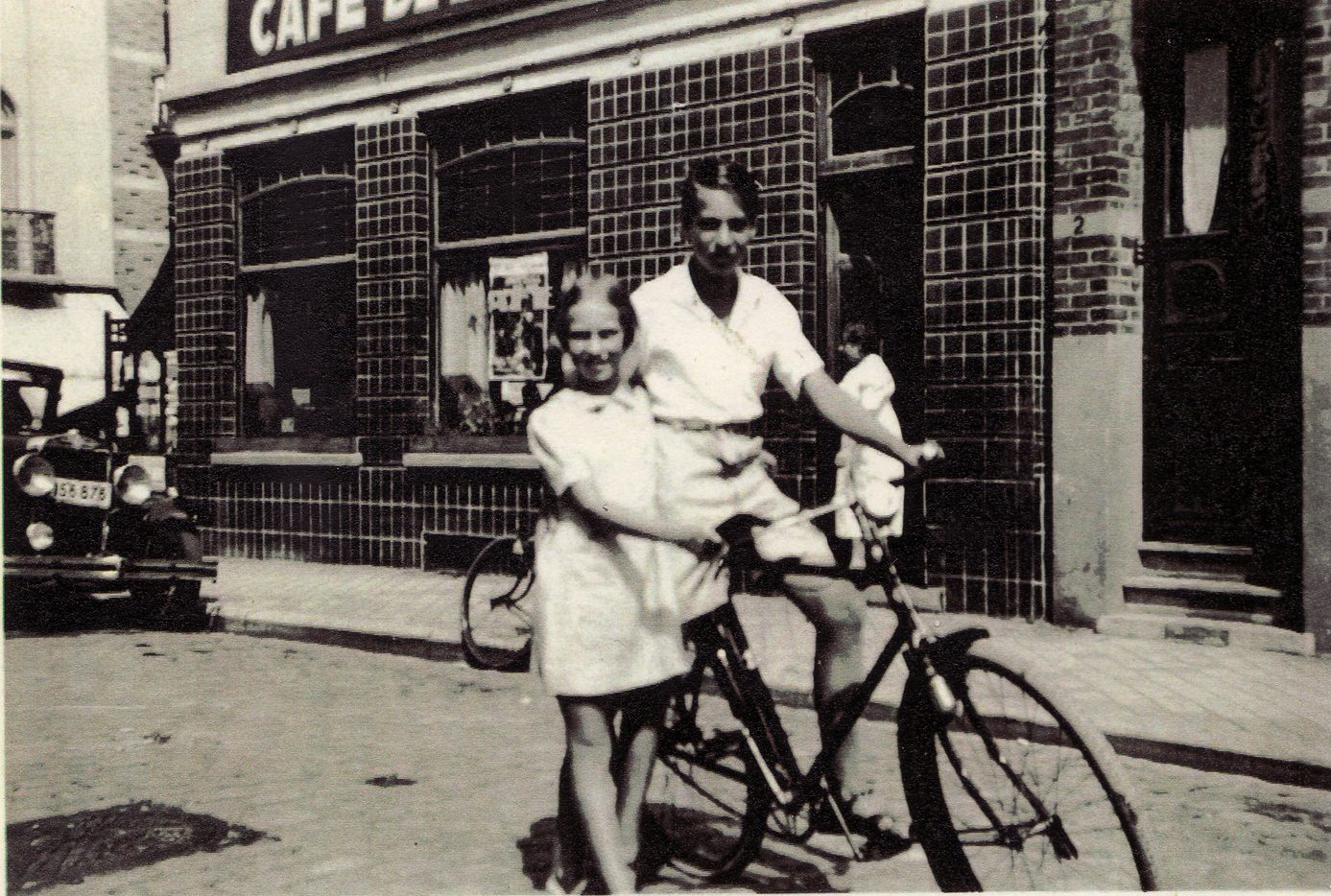
As we grew up, Bobbie and I continued to be inseparable. She was always part of my parties, my sleepovers, my bike rides. In every one of the few pictures we have of our childhood, Bobbie is always front and center, her smile lighting up the world. Years later, when I asked my mother what it was like to have a baby at thirty-six years old, she said, “I didn’t raise her. You did!”
The four Cohen children were fortunate indeed. Whereas some of our friends had strained or non-existent relationships with their siblings and/or their spouses, we all remained close—maybe even closer when we realized that life could change on a dime. When Bobbie called to share the news that she had breast cancer, our first thoughts were, “This can’t be happening to our little sister.” But it was her “Little Miss Sunshine” attitude that got her through surgery, radiation, chemo, and her recovery. When Laura had a stroke a few years later, she often referred to Bobbie’s spirit during her cancer ordeal and was determined to be as strong. She was.
And now one of us is gone. Laura, 83, had just completed a fabulous cruise to the British Isles with my brother Jay, his wife, Leslie, and a friend. Unfortunately, two days after she returned, she was hospitalized in Upstate New York with breathing problems. Doctors were trying to determine the exact cause of her symptoms when she took a turn for the worse. Diagnosis: a rare form of pneumonia. Grim news followed: Laura was on a ventilator in the intensive care unit. We had two days of optimism when she was taken off the ventilator. She was looking forward to her life after hospitalization and rehab: a highly anticipated move to San Diego, California, to be closer to her children and grandchildren. But her 83-year-old body failed. She passed away on Friday, August 29.
We three surviving siblings and our spouses, her children and grandchildren, and her many other relatives, and her friends will miss her terribly. As I told my 10-year-old granddaughter, who hated to see me so sad, we mourn because we experienced the privilege of loving our sister and being loved by her.
One of my parents’ favorite pictures of the four Cohen kids was taken just before Laura graduated high school. We are sitting on a couch in our house in Keeseville—Jay on the arm, followed by Laura, Marilyn, and Bobbie. In a home with few family pictures, that particular one graced my parents’ living room for the rest of their lives. We siblings all kidded my parents and each other, wondering, “Is this the best we ever looked?”
The evening after my mother’s funeral, we pulled out that picture. Bobbie’s husband Emil posed us all on my family room couch with the four of us trying hard to duplicate our fifty-plus-years-ago expressions. Then we took a more serious one, without the silly grins.
After that day, we continued the tradition. Each time we were together, whether it is at a bat mitzvah or a weekend reunion, we would line up—Jay, Laura, Marilyn, and Bobbie—snap a picture, and were grateful that the “Four Cohen Kids” were happy, healthy, and together again.
Sadly, the tradition will no longer continue. Rather than four siblings, there will be three shown and one residing in our hearts. So, I will share one word of advice: please give extra hugs to those you cherish and tell them you love them every time you speak to them. EVERY TIME. Life can turn on a dime. It did for us.
In 2019, my husband Larry and I were browsing the shelves of Book Passages, an independent bookstore in San Francisco’s Ferry Building. Larry held up a book he had found in the history section: Haven–The Dramatic Story of 1,000 World War II Refugees and How They Came to America.
“Do you remember the exhibit at the New York State Museum regarding the only Jewish refugees brought to the United States during World War II?” he asked me.
“Yes,” I said. My mind flashed back to walking through the Albany museum’s exhibit with its pictures, displays, and sign boards depicting a group of refugees who were housed in Fort Ontario (Oswego, NY).
“This book is a first-hand account by the woman responsible for getting the refugees to the United States—Ruth Gruber,” he explained on his way to pay for the book.
Six years and much reading later, Larry and I agree: Ruth Gruber, American journalist, photographer, writer, humanitarian, and United States government official, is one of the most interesting people who ever lived.
Gruber was born in 1911 in Brooklyn, the fourth of five children of Russian-Jewish immigrants. She graduated from high school at 15 years old. After earning an undergraduate degree from New York University at 18, she won a fellowship at the University of Wisconsin, where she obtained a master’s degree in German and English literature. She subsequently received her doctorate from the University of Cologne in Germany at 21, making her at the time the youngest person with a doctorate.
After returning to the United States, Gruber became a correspondent for the New York Herald. The only reporter to be allowed to travel across the Soviet Arctic, she saw firsthand how people lived there and witnessed the Siberian Gulag.
During World War II, she worked for the Department of the Interior where, as a special assistant to U.S. Secretary Harold L. Ickes, she became its field representative in Alaska. In June 1944, she was to undertake what she later considered “the most important assignment” of her life.
Reading the Washington Post at breakfast, Gruber, then 33, learned that President Franklin D. Roosevelt had signed an executive order allowing 1,000 refugees gathered in Italy, 90% Jewish, to be admitted to the United States. After years of this country’s refusal to allow Jews to escape the Nazi horrors of World War II, this was the only government authorized attempt to bring European Jews to America under the protection of the U.S.
Rejoicing that something was finally being done, Gruber rushed into Ickes’ office to express her concern for their well-being.
“Mr. Secretary, these refugees are going to be terrified — traumatized,” Gruber recalled in a 2010 interview in the Sunday Telegraph of London. “Someone needs to fly over and hold their hand.”
“You’re right,” Ickes responded. “I’m going to send you.” The fact that she was young, Jewish, and could speak both German and Yiddish made her an ideal person for the job. Oswego was chosen as a location for housing he during World War II primarily because of the availability of Fort Ontario, a decommissioned military base, which was converted into a temporary refugee shelter.
After flying to Italy, Gruber boarded the Army troop transport USNS Henry Gibbins and greeted the refugees. “I would like … to know who you are, what kind of people you are. What you’ve gone through to survive,” she recounted in her 2000 book Haven: The Dramatic Story of 1,000 World War II Refugees and How They Came to America “You are the living witnesses.”
Throughout the two-week Atlantic crossing to the United States, Gruber proved to be a calming, empathetic listener and a communicator and advocate for the refugees who came from 18 countries. She intervened in disputes, taught English, cared for the seasick, and comforted the refugees, some who had miraculously escaped the Nazis and others who had spent time in concentration camps.
During the voyage, “Mother Ruth,” as she was often affectionately called, became a witness herself, listening to and writing down many of the refugees’ stories. “Get all the terror,” said Dr. Henry Macliach, a doctor from Yugoslavia. “We lived it. We will live with it for the rest of our lives. But you are the first one we can tell it to. Yes, write it down so the world will know.”
On Aug. 3, 1944, the ship arrived safely in New York City, and Gruber accompanied the refugees to Oswego. Initially, the site of the cold, desolate fort surrounded by barbed wire brought back memories and fears of what many had faced in Europe. Through Gruber’s guidance and the support of many others, including the residents of Oswego, government officials, and even Eleanor Roosevelt, the place became a “haven” from the ravages of war.
“Thus I became a witness and participant,” Gruber wrote. “I experienced their joys and pain, rejoicing in their marriages and love affairs, sharing pride in their children, mourning those who died by their own hand or by acts of God.”
FDR’s initial executive order stated that the refugees were “guests” of the United States under the condition that they must return to their origin countries after the war. In late 1945, the federal government changed its mind and allowed all who wished to stay to become U.S. citizens. The final chapter of Havenlists the successes of the new U.S. citizens, who would establish careers in many fields, including medicine, technology, education, law, business, and the arts.
In recent years, New York legislators in both the U.S. House and Senate have been working to designate Fort Ontario and its associated museum, Safe Haven, as a National Historical Park. In 2018, Senator Kirsten Gillibrand (D-NY) passed a bill directing the Secretary of the Interior to conduct a special resource study, the first step in the process to designate a site as a unit of the National Park System. In 2024, the SRS was finalized and concluded that the two-acre portion of Fort Ontario representing the fort’s use as a World-War II European refugee shelter meets all necessary criteria. The bill passed the Senate but failed to become law. In February 2025, Gillibrand, Senator Charles Schumer (D-NY), and Representative Claudia Tenney (R-NY) reintroduced the bipartisan bill.
“The Holocaust Refugee Shelter at Fort Ontario was a place of safety and hope during a dark moment in history, and it deserves recognition in the National Park System,” said Senator Gillibrand. “I am proud to once again be introducing this legislation to achieve this goal and am determined to work across the aisle to get it done.”
Gruber was profoundly impacted by her participation in the refugees’ “journey out of despair and death, to hope and life and light.” Although she was born a Jew, she became a Jew. “I knew my life would forever be inextricably interlocked with Jews,” she wrote in Haven.
The rest of her life was a testament to that commitment. After World War II, she witnessed the scene at the Port of Haifa where Jewish refugees on board the ship Exodus were not allowed to enter Palestine. She then followed them to France and Germany. While on a ship off the coast of France, the refugees conducted a hunger strike. The only reporter allowed on the ship to report firsthand on the unfolding story was Ruth Gruber. Her book, Exodus 1947, became the basis for the 1960 film Exodus. She later covered Israel’s war for independence. She became Ben-Gurion’s friend and conducted a first in-person interview when he became Israel’s first president.
In 1951, Gruber married, had two children, and continued her journalistic endeavors. In 1985, at 74 years old, she visited Jewish villages in Ethiopia and chronicled the rescue of the Ethiopian Jews to Israel. Throughout her life, she chronicled her adventures through her photography, articles, and 18 books. Gruber died at 105 on November 17, 2016.
“I had two tools to fight injustice — words and images, my typewriter and my camera,” she was quoted in her New York Times obituary. “I just felt that I had to fight evil, and I’ve felt like that since I was 20 years old. And I’ve never been an observer. I have to live a story to write it.”
A typewriter. A camera. Empathy. With my iPhone camera nearby, I click away on my computer keyboard, hoping each of my stories displays the same empathy Ruth Gruber showed throughout her life. She is not only the most interesting person I’ve ever encountered. Ruth is my hero and my role model. I’m so grateful to have learned her story.
Two Polish Holocaust survivors from Poland. United by shared tragedies and strengthened by the love for the children they raised. Here is their story.
Yakov “Jacob” Kazimierek was born in Mlawa, Poland, on December 10, 1926, one of the seven children of Abraham and Hannah (Granaska) Kazimierek. The family farmed and raised cattle, which they milked or slaughtered.
After Germany’s invasion of Poland in 1939, thousands of the country’s Jews were subjected to the Nazis’ persecution, terror, and exploitation. Through the Nazi’s newly established “protective detention” orders, the Kazimierek family, along with other Jews, were moved to a Jewish ghetto. In 1942, Nazis deported the family to Treblinka. Hannah and the four youngest children were immediately sent to the gas chambers.
Physically failing under the brutal demands of forced labor, Abraham was selected for murder in the gas chamber. Another brother, Hans, eventually succumbed to disease and malnutrition.
The two surviving brothers endured years of starvation diets, forced labor, and brutal beatings.“[Jacob] had to hide his food or others would take it and he would die,” his cousin Regina Markowicz wrote in an account of his life. “He worked very hard and was treated like an animal. He slept on a wood or cement slab and endured terrible winters without adequate clothing, bedding, or shoes.” Jacob bore the physical signs of his imprisonment—scars on his back from the metal slats in his bed, one finger permanently disfigured from a beating, and of course, the tattoo number “76341,” the number tattooed on his arm—on his body—for the rest of his life.
Shortly before the liberation of Auschwitz, Jacob managed to escape. Although the exact details vary in family lore—in one scenario, he escaped on a bicycle; in another telling, he and two friends escaped posing as Germans—Jacob spent the remainder of the war hiding in forests and cellars, subsisting on food foraged in the woods, stolen, or given by kind Polish Christian. After Auschwitz was freed, Jacob was reunited with his brother Aaron, leaving them as the only two of nine members of the Kazimierek family to survive.
Sweden, a neutral country during the war, took in about 15,000 refugees, and Jacob and Aaron were among them to be sent to a displaced person’s camp in Jönköping, Sweden. Remembering the skills learned at his family’s home in Poland, Jacob worked in a slaughterhouse. In 1948, fleeing from a girlfriend who was pressing him into getting engaged, Jacob moved to Israel and enlisted in Haganah, the Zionist paramilitary organization that fought for Israel’s independence. Four years later, he returned to Jönköping, where he met a twenty-three-year-old woman, a fellow Holocaust survivor whose story was as tragic and heartbreaking as Jacob’s.
The only child of a Jewish couple from Poland, Rachel Abromowitz Kazimierek was born on July 6, 1929. At the age of ten, she and her family were interred in the Lodz Ghetto. At the age of 13, she and her parents were among thousands of Jews deported to the concentration camps. After arriving at Auschwitz, she never saw her parents again. Rachel was placed in Bergen Belsen and assigned to work in the Wieliczka salt mines. Each day, she and other women were herded several miles each night, working in deplorable condition underground. She was freed on April 15, 1945. Her years of forced labor would have serious impacts on her visional health.
Jacob, newly returned from Israel, and Rachel met at a dance in the displaced person’s camp. According to their daughter Hannah Lewanowski, their match was not as much born of love as of necessity. As the United States gave preference to married refugees, the couple married in November 1952. Their first child, Hannah, was born thirteen months later. Jacob’s surviving brother, settled in Sweden, where he lived with his wife and three children until his death in 1979.
In 1954, Jacob, Rachel, and Hannah came to the United States, first settling in New Haven, Connecticut and then relocating to Waterbury. Initially working as a butcher at Bargain Food Center, he opened his own store, Brass City Beef in 1953, which he operated, with Rachel’s help, until his retirement in 1990.
In a March 15, 2015, article in the Hartford Courant (“Holocaust survivor built new life in Waterbury”), Jacob was praised for the store’s personal service and competitive prices. “He had a good following,” said Tony Nardella, a former Waterbury police officer and customer. “He was well liked and always had a smile and a joke.”
“He came to this country with no money,” said Hannah.“He had no English. He worked seven days a week. He made it.” The Kazimiereks developed a strong community with other Holocaust survivors. They socialized with each other, often sitting around a large table sharing schnapps and pastries while the children played together.
Meanwhile, Rachel continued to deal with eye infections, possibly a result of working in the mines. In 1961, she had her left eye surgically removed and was fitted with a prosthetic eye. In 1966, she had a detached retina, which resulted in vision loss in her right eye. From that time on, the children were cared for by a nanny. Determined, Rachel moved on with her life, using a cane to walk. Despite her initially limited English, Rachel volunteered at the local Easter Seals to help other visually impaired individuals and visited schools to share stories of her Holocaust experiences.
Jacob passed away in 2014. Rachel, 95, remains in the home she and Jacob originally purchased in Waterbury, Connecticut. She has 24-hour-care but still prides herself in her independence and cognitive abilities. “My brain, sweetheart, is very clear and very good,” she shared during a February 2025 interview. “I still remember birthdays and anniversaries,” she said, rattling off the important dates of her children and grandchildren. Freida Winnick, a daughter who lives near her in Connecticut, provides additional support and care.
Rachel attends monthly Holocaust survivor luncheons in West Hartford, Connecticut. She also attends presentations organized by “Voices of Hope,” a non-profit educational organization created by descendants of Holocaust survivors from across Connecticut to raise social awareness.
Rachel emphasizes that she holds no ill will despite her harrowing past. “I am not against anyone,” she said. I get along with everybody.”
Originally published May 15, 2025
Kazimierek Family Photos of Jacob and Rachel Kazimierek
We were on our way home from a family event in New York City in March, 2009. Larry was driving, and my sister Laura was in the passenger seat, and I was sitting in the back with my mom. “This is my iPod. I can listen to music on it.”
“Can I try?”
“Of course!”
I removed the earbuds from my ears and put them in my mother’s. Then I scrolled through my playlist. Nearly 90% were Broadway musicals. I knew my mom would love them.
For the next two hours, my mom was in Broadway heaven. She zoned out on the music, sometimes singing along tunelessly.
I knew I had to get my mother a similar device. We had lost our father in November 2008, and my mother was now alone in her independent living apartment. She was doing amazingly well. “Life is about change, and you have to move on,” she told us. But the evening hours were long, and she missed “MY Bill. That week, I ordered a iPod Shuffle from the Apple website. The device was very simple. It could store 100’s on songs in its small flash drive, which resembled a Bic lighter. Placing the one earbud into one’s ear was also easy to use. I loaded it with Mom’s favorites: Dozens of my Broadway musicals, Judy Garland, and, of course, Frank Sinatra.
Ah, Ol’ Blue Eyes! Mom was married with a toddler when the skinny Italian from Hoboken,New Jersey first came crashing onto the scene. She may have not been a “Bobby Socker,” the name given adolescent girls in the 1040’s. But she loved his choice of songs, his voice, and especially his sense of timing. “Just listen to him, Marilyn,” she would tell me. “No one can sing as well as him!”
My mother was thrilled with her new toy. She used the Shuffle for the next two years. Thankfully, it took little work on my part. I left a charger at her apartment to use as needed. Outside of that, she could listen to music to her heart’s content. I would often walk into her apartment and find her sitting in her favorite Lazy-Boy, singing along to Frank.
On December 22, 2010, four days after I had retired, Mom had a heart attack. At the hospital, the emergency room doctor cautioned my husband Larry and me that she may not make it home. If she did, she had three to six months at best. Her 92-year-old body was failing.
You couldn’t tell a day after her heart attack. She sat up in her hospital bed, catching up with family and friends on the phone and endearing herself to the nurses who tended to her. I brought the Shuffle to the hospital, and she spent time in between phone calls listening to her favorites.
She also used the Shuffle over the next few months. In late February, she read her last book, did her last Word Search, and balanced her checkbook. Then she had a stroke. As all her children and her wonderful Hospice nurse watched over her, she slipped into unconsciousness. I placed the Shuffle on her ear as she slept.
Mom passed away early morning on March 2, 2011. My three siblings and I worked quickly to clear the apartment, knowing we would be responsible for the full month’s rent if we weren’t out by March 5th.
I remember taking home the Shuffle, but a week later, it was nowhere to be found. I searched everywhere with no luck. It was gone. It was just “stuff,”, but somehow that little device was important to me. I grieved for its loss.
Fast forward to Late May, 2015. Larry and I had made the decision to move to Florida, and we were packing up the house. I was cleaning out the three drawer oak chest that was in our foyer. When finished, I pulled it out from the wall to make sure I didn’t miss anything behind it. Stuck in one of the slats was what looked like a Bic cigarette lighter. “How did that get there?” I thought.
It was Mom’s Shuffle. Obviously, I had brought it home, placed it on the top of the dresser, and it had slipped off and “adhered” itself to the back of the oak chest.
I charged it up and VOILA! Frankie crooned in my ear.
June 1st will make ten years since we made our move. I still have Mom’s Shuffle. It has been replaced for the most part with my iPhone and my Alexa. But there are days when I miss my mom and want to feel close to her. So I pull it out of my electronics box, charge it up, stick it in my ear, and sing along with Frank. “I’ve got you under my skin,” he croons.” You make me feel so young!” And of course, “I did it myyyyy way!” “I shed some tears, think of Francis Albert Sinatra and Frances Evelyn Cohen, and I feel my mother’s love all over again.
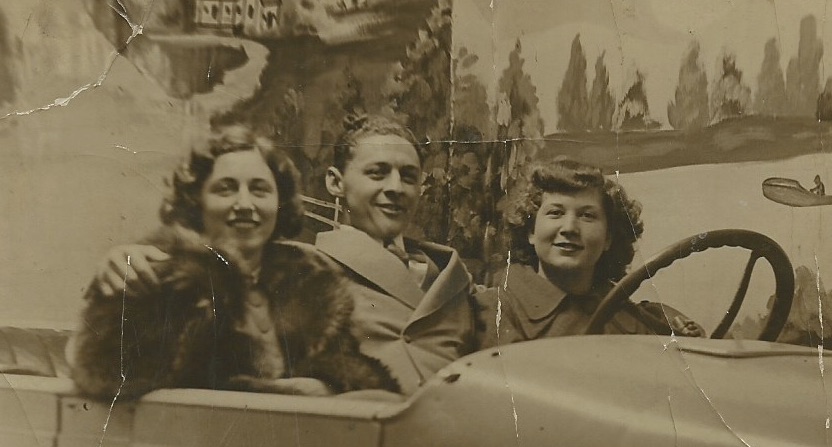
Mom and I at Coburg Village on a beautiful fall day.My mom, in the 1930’s. No, she wasn’t a “Bobby Socker!”
“The road to hell is paved with good intentions.” Source Unknown
The day of reckoning was finally here. For fifty years, Larry had been the designated driver. But rotator cuff surgery in the spring of 2023 changed our family dynamics. Guess who was now behind the wheel? And guess who was in the passenger seat?
Larry has told me repeatedly that he preferred to drive as part of our division of labor. “You do so much. The cooking. The majority of the cleaning.My driving when both of us are in the car allows you free time.” He is happy to turn on a Jimmy Buffett station and head to one particular harbor—or anyplace we need to go.
Which is true. My perch to the right allows me to read a book, play with my iPhone, or sleep. Furthermore, I can relax knowing that a person I consider an excellent driver is getting us where we need to be.
The challenge is that when I am driving, Larry feels the need to help. Needless to say, his “help” makes me anxious, nervous, and, at times, furious. Larry and I have had few fights in our 50 years of marriage. Some of the worst are a result of his backseat driving. It is just easier for me to let him take over the wheel.
The proverbial backseat driver (BSD) has been the butt of numerous jokes. Suggestions to cope abound: Turn up the music. Turn on the GPS. Give the offending party responsibility for another task. (“Can you Google some restaurants near by?”) Put the offender in the trunk or tied to the roof. Or just refuse to drive.
I’ve had my own ideas on how to cope. A month before his shoulder repair, Larry had surgery to fix his trigger finger. It only required a local anesthetic and someone to drive him home. Forty-five minutes after the procedure, the nurse was going over the final paperwork for his release. She asked if we had any questions.
“Do you have duct tape?” I asked
“Errr…no.” she replied.
“Then how about giving him a shot of Valium?” I said. “I need to keep him quiet for the 25 mile ride home.”
As I expected, the nurse refused. We didn’t make it out of the parking garage before Larry was compelled to start giving me directions.
“You need to go left up the ramp,” Larry instructed.
“No, I need to go right.”
“You need to go left.”
Aware that his sense of direction was better than mine, I went left. We got to have a nice tour of the upper floors of the garage before passing by our space on the way down to the exit. By the time I merged the car onto I-4, Larry had already notified me of two lane changes. [Full disclosure: I almost missed the ramp] Fortunately, he had the go-ahead to resume driving the next day.
This was obviously not the case for Larry’s rotator cuff surgery. His right arm was in a huge sling, and his limited shoulder movement meant he would not be driving for at least six weeks. Staying home was not an option. We had Special Olympics practices and state games, numerous doctors’ appointments, and outing to restaurants, supermarkets, Disney Springs, and Bok Tower.
Each trip came with its own set of instructions. “You need to be in the left lane for the upcoming turn.” (The turn wasn’t happening for three miles.)“Is there a reason you driving so slowly? (I was in a school zone.) “There’s a stop sign ahead.” (Really? I didn’t notice. Duh!)
My “Driving Mr. Larry” stories may bring a chuckle and a flash of recognition to some, but such “help” has a darker side.”A 2011 ‘Driver Distraction’ study, commissioned by Esure car insurance revealed that 51 percent of respondents have gotten angry while driving because of backseat commanders.The statistics get worse: 14 per cent of motorists have had an accident or near miss due to being distracted by a backseat driver.
Adding to the challenge is that from the day I got my permit, I have never been an enthusiastic driver. It didn’t help that my mother, who was extremely tentative behind the wheel, taught me how to drive. I can still envision her “braking” every time I got close to the stop sign during our tense practice drives. After taking my driver’s education classes at Keeseville Central School with Ken Goodspeed (I kid you not), it took me three tries with Plattsburgh’s DMV to pass the New York State driving test. (To this day, I hate parallel parking!).
Thousands of miles later, I take pride in having only one traffic ticket—going 47 miles in a school zone. Embarrassingly, my transgression occurred in front of Okte Elementary during Adam’s first grade recess. If I had any hope of not sharing my shame with Larry, it was dashed when Adam asked at dinner that night, “Mommy, why did that nice policeman stop you in front of the playground?”
I also take pride in our 1272 mile trip we took in 2015 to our new home in Florida. We came in two cars, Larry driving the Prius; me, the Camry. Despite the traffic jams, horrific rain storms and all the crazy drivers we encountered, we both completed our three-day trek successfully. Ten years later, I have managed to drive both by myself and with passengers with a level of assurance I hadn’t enjoyed when Larry is in the car.
In the five weeks following his surgery, Larry became more comfortable with my driving—commenting less and complimenting more. He was very appreciative of the miles I logged being the designated driver while he was incapacitated. Those miles gave me the valuable experience needed to drive in this crazy state of Florida, which autowise.com, an insurance site, ranked as the “official home of the horrible driver. “
I had hoped that there would be a silver lining hiding in Larry’s huge sling. Maybe Larry the Backseat Driver would morph into Larry the Happy Passenger, glad to hand over the driving to me and to enjoy the passing scenery. Confident in both my abilities and the GPS to get us safely to our destination, I would turn off Jimmy Buffett, turn on the On Broadway station on Sirius XM, and sing along with “Defying Gravity” on our way to our next doctor’s appointment or our next on-the-road adventure.
Unfortunately, that didn’t happen. Larry still prefers to take the wheel. So I have found a different silver lining. Safely ensconced in the passenger seat, I get to play with my phone, read a book, or take a snooze. Larry can have his “Cheeseburger in Paradise.” I have my license to chill.
As we have done since our Mountain Girl was born in 2015, Larry and I are settled into our rental in Summit County, Colorado, to escape the Florida heat and to enjoy family time.
Each summer, we look forward to attending performances of the National Repertory Orchestra (NRO). Eighty young musicians are selected every year through national auditions to perform with the NRO. NRO alumni may be found in countless orchestras both the in the United States and abroad. Along with performances at the Riverwalk Center in Breckinridge, the talented performers take part in free “pop up” concerts offered throughout the county. We have fortunately been able to attend several NRO events throughout our stay.
For the past three years, we have attended the Pops concert, led by conductor, showman, and clarinet player extraordinaire Carl Topilow. Now serving as Conductor Laureate, he was Music Director and Conductor of the NRO for 42 years. In addition to his appearances with the NRO, Topilow is the Founding Conductor and Music Director of the Cleveland Pops Orchestra and has appeared as guest conductor for over 130 orchestras.
Carl Topilow, the son of first-generation Jewish immigrants, grew up in a close-knit, extended family in Bayonne, New Jersey.in Bayonne, New Jersey. His mother Pearl, the daughter of Austrian immigrants, was born on New York City’s Lower East Side. Six of his father Jacob’s eight siblings were born in Russia before the family immigrated to the United States at the turn of the 20th century. His enjoyment and appreciation of his rich family history infuse his performances.
“I’ve been told that even when I play Dixieland or jazz, a Yiddish twang seems to be part of my musical vocabulary,” Topilow shared in a 2025 email. “My eclectic musical tastes include performing Klezmer [the dance-oriented Jewish tradition from Eastern Europe] and traditional Yiddish music. Recognizing the fact that so many of the great Broadway composers were Jewish—Jerome Kern, George and Ira Gershwin, Steven Sondheim, Richard Rodgers, Irving Berlin, Alan Menken, and Jules Styne—to name just a few, is a source of pride”
A 2011 article by Violet Spevack in the Cleveland Jewish News spoke of Topilow’s performances in Jewish venues, including at Yom Kippur services and Sisterhood meetings. “Topilow is endearingly ‘one of us,’” wrote Spevack, “with his Yiddish ta’am (flavor) and chutzpadik (audacious) shticks.” He and his brother and pianist Dr. Arthur Topilow often perform together, including for a July 2016 NRO event that included klezmer music.
On July 8, 2023, Larry and I brought our then eight-year-old granddaughter to her first concert performance, billed as “Topilow Pops.” Before the event, we explained to her about the protocols for the concert: her need to sit quietly, to be attentive, to applaud at the appropriate times, and to avoid any actions that would distract from other concert goers. Outside of asking if there would be a ‘half time’ (she and her father are huge Denver Nuggets fans), our Mountain Girl was well prepared. She even jumped up and yelled, “Bravo” at the end of several numbers. Carl Topilow would be proud of her appreciation for his concert!
The highlight for us came when Topilow included the Shofar sounds into his rendition of Fiddler on the Roof.Tekiah! Teruah! Shevarim! echoed through the concert hall. The audience—especially those well-versed in the sweet sounds heard on Rosh Hashanah and Yom Kippur—clapped their appreciation.
In 2024, Larry and I again attended NRO’s pops concert.Topilow and his iconic red clarinet lead a small line of brass and wind musicians into Riverwalk with a somber rendition of “Just a Closer Walk with Thee,” a gospel song frequently played at New Orleans jazz funerals. Once on stage, he led the orchestra in a rousing “When the Saints Go Marching In.” He showed off his clarinet expertise in the final number, the Cantina theme from John Williams Star Wars soundtrack.
Okay, no traditional Jewish music at this concert. But articles about Star Wars’ link to Judaism fill the internet. In a December 16, 2015, article in the Forward, Seth Rogovoy makes an interesting case for the secret Jewish history of the George Lucas franchise. “You don’t have to be a linguist to figure out that the Jedi knights, who use “the Force”–the spiritual power of good deeds, aka the mitzvot—to do good in their battle with the “Dark Side,” the yetzer hara, or the evil urge within us all, bear the Anglicized name of a Jew. In other words, Jedi = yehudi = Jew.” And did you know that in Hebrew, Yoda means “one who knows”? And who cannot fall to compare Darth Vader and his Storm Troopers to Hitler and his SS? Or the motley ragtag band of heroes as modern day Maccabees? And John Williams’ main movie theme is eerily similar to Czech-born Jewish Hollywood composer Erich Wolfgang Korngold’s theme to “King’s Row”? (Google it! It’s amazing!) So Carl Topilow may, just may, be delving into his family’s immigrant past when he belts out the music from the Cantina scene on his iconic red clarinet. May the Force be with you, Carl!
Originally published July 20, 2024. Updated May 26, 2025.
Sources
A special thank you to Carl Topilow for his input into the article and for permission to use photos.
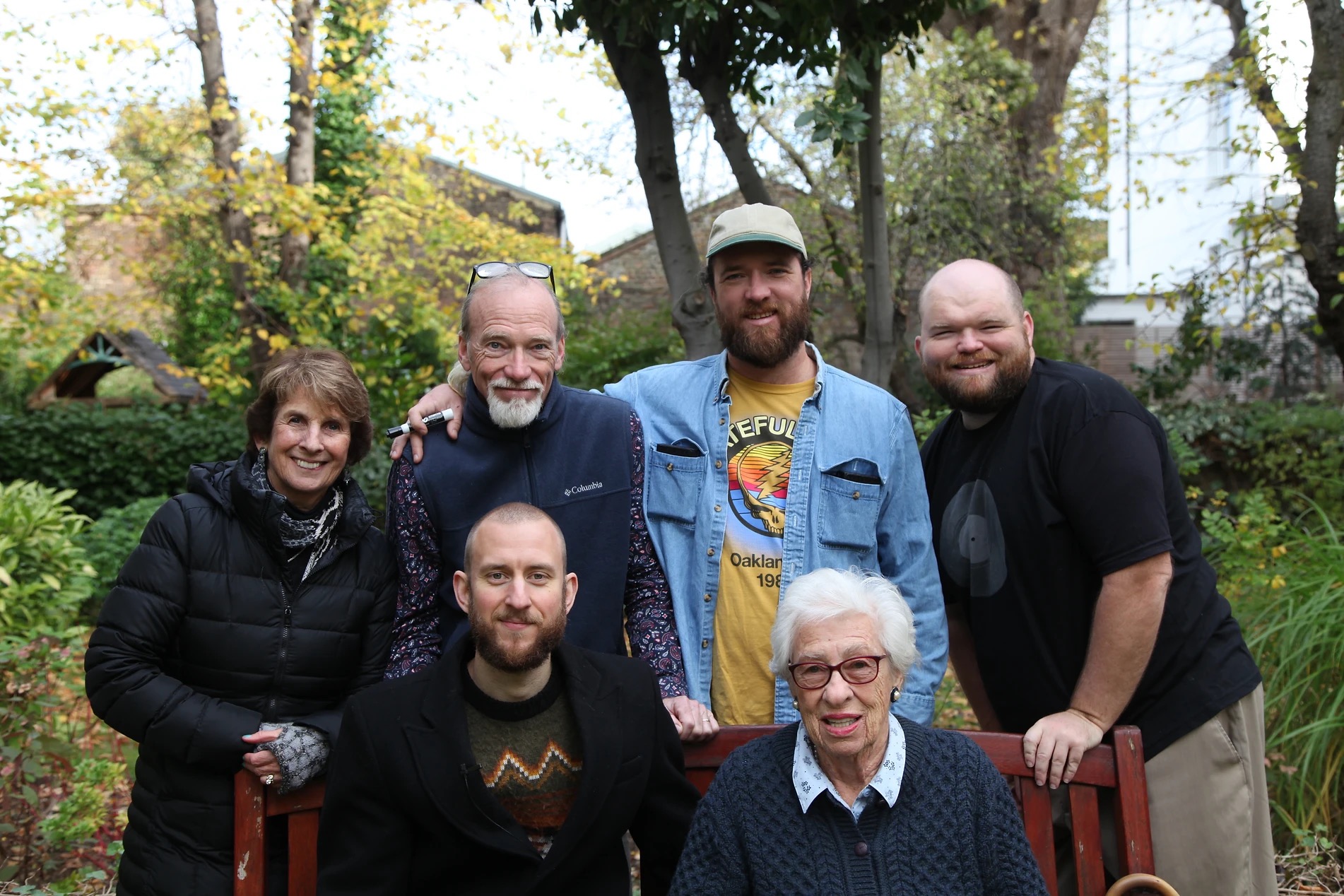
Filming Eva’s Promise in London. Seated: Eric Schloss, Eva Geiringer Schloss. Standing: Susan Kerner, Steve McCarthy, Justin McCarthy, and Ryan McCarthy.Eva and Heinz in Amsterdam before they went into hiding.
PHOTO CREDITS:
Photograph of production team and Eva and Heinz in Amsterdam courtesy of Susan Kerner and Eva Schloss.
One million paper clips are piled high on black construction paper on the stage, lit by a spotlight. Above it, the flickering black and white film of Jews walking to their deaths in a Nazi concentration camp is being shown on a theater-sized screen. And standing in front of the stage is the seventeen-year-old Edgewater High School (EHS), Florida, senior who orchestrated this scene, along with several other exhibits that make a powerful stand against antisemitism and many hate.
The first thing you notice about Adam Mendelsohn is his hair. Standing at six feet tall, Mendelsohn adds another two inches with his wild dark brown curls, complimented with a gray yarmulke perched in the back. As the organizer of the January 9, 2025, Hate Ends Nowcommunity event, Adam radiates a confidence and maturity that is unusual in such a young man.
The previous summer, Adam had attended a meeting of the local Jewish Student Union (JSU). Founded in 2002, the organization oversees 200 Jewish culture clubs on public high school campuses to provide Jewish teens with programs that strengthen their Jewish identity and connection to Israel. On that day, Rabbi Daniel Nabatian, the co-director of the Central Florida branch, encouraged the students to make an impact—no matter how small—to fight against the rising wave of antisemitism that had gripped the world since the Hamas attack on Israel on October 7, 2023.
Adam was determined to bring the JSU message to Edgewater High School students and staff. Following up on his memory of a similar exhibit, he contacted Hate Ends Now, a nonprofit whose mission is to combat hatred and indifference by educating people about the history of the Holocaust and all forms of bigotry. The organization offered not only artifacts from the Holocaust but also an exact replica of a World War Two-era cattle car that was used to transport Jews and other targeted groups to concentration and death camps. A twenty-minute, 360 degree immersive presentation offers an impactful educational experience. With the support of Dr. Alex Jackson, Edgewater’s principal, and his assistant, Valerie Lopez, Adam worked with Todd Cohn, the CEO of the nonprofit, schedule the event in Orlando for January 9, 2025.
Adam then started a fundraising campaign to pay for the cattle car and other expenses. Thanks to the generosity of many donors, including the Ginsberg Family Foundation and Massey Services, the seventeen-year-old raised over $30,000, enough to cover most of the expenses.
Adam’s next step was to contact local organizations whose mission aligned with the core values of the event to sign on. Participants included the Jewish Student Union (JSU); Chabad C-Teen; Shalom Orlando, the Holocaust Memorial Resource and Education Center of Florida; the Anti-Defamation League, and Central Florida Pledge, a network of community members in Florida who stand up against discrimination and hate.
Adam now began the search for a Holocaust survivor. Jasmine Flores, the community relations manager for the Greater Orlando Massey Services, connected Adam with Ludwig (Lou) Ziemba, an 82-year-old Kissimmee resident, through her involvement in Maitland Rotary. Ziemba was born in the Lodz Ghetto on September 9, 1942, one day before 13,000 children under ten were to be sent to an extermination camp. Arrangements were made for the infant to be hidden in a garbage truck and smuggled outside the Ghetto where a Christian Polish farmer retrieved him and took him home to be raised as his own. Miraculously, his parents survived and were able to retrieve their “hidden child” when they were freed three years later.
The paper clip exhibit was a last-minute miraculous addition to the event. On Sunday, through a conversation with Beth Landa, Ziemba’s wife, Adam learned about Paper Clips, a documentary that highlighted the 1998 efforts of middle school students from Whitwell, Tennessee, to collect six million paper clips representing the six million Jews killed by the Nazis. According to Wikipedia, at last count, over 30 million paper clips had been received.
A preliminary research of the documentary compelled Adam to see if he could locate a low-cost source of paper clips. The manufacturing plant of Bulk Office Supplies was in Tampa, but was closed for the weekend. Undeterred, he located the name of the founder and owner of the company, Alex Minzer, on Facebook. Encouraged by Minzer’s “Never Again,” hat, Adam messaged him; Minzer answered almost immediately. Alex Minzer had sold the company to Levi Haller, who was currently in Jerusalem. Alex helped connect Adam with a wholesaler in Tampa who would provide the paper clips at cost – and later that same day Levi Haller reached out to Adam to say that decided that Bulk Office Supply would donate the 1 million paper clips, inspired as he was by the project’s mission and Adam’s passion.
Next problem: how would the paper clips get from Tampa to Edgewater in time? Fortunately, Adam’s father Jason was returning from a business trip on Florida’s west coast on Wednesday. Adam quickly did the math, his favorite subject, to confirm all the boxes would fit into his father’s car. All good! The clips were successfully delivered at one o’clock, only 28 hours before the event was scheduled to open.
Adam and a group of student volunteers began the tedious task of opening the 10,000 small boxes of 100 paper clips and piling them onto a 7X7 foot square of construction paper that had been placed on the stage in the school’s auditorium. When the school day ended at 2 pm, Adam stayed on, working alone and then with his father, until 8 pm. “When I left, I looked at the pile and despaired,” said Adam. “I had no idea how the project could be completed.”
Adam returned to EHS the next morning at 5 am. By school opening, the whole student body was aware of the urgency to finish the job. “It was crazy!” Adam said. “Students were rotating in and out of the auditorium to provide help over the next several hours.” The pile was completed at 1 pm, twenty-four hours after the initial delivery. “I now hate paper clips,” Adam said with a laugh.
At five pm, the doors opened to the public. Over 500 people attended the three-hour event. They perused the display tables, munched sandwiches provided by Kosher Grill, listened intently to Ziemba, looked over the chilling artifacts on the Hate Ends Now tables, sat in the quiet auditorium to contemplate the million paper clips, and, at scheduled times, viewed the powerful immersive presentation in the cattle car parked just outside Edgewater’s entrance.
Dignitaries included United States Representative Maxwell Frost, Florida State Representative Anna Eskamani, staffers sent on behalf of Senator Rick Scott and United States Representative Darren Soto, and members of the EHS school board.
“This is an incredibly powerful experience,” said Frost. “I believe that every high school student should have the opportunity to witness the horrors of this tragic time in world history through such exhibits. This event serves as a reminder that when we lead with love, we can stop hate in all forms and make sure this type of history never repeats itself.”
Todd Cohn also commented on Adam’s project. “It’s rare to see such a young individual take on such a meaningful project with this level of commitment,” the Hate Ends Now CEO. “He made a lasting impact not only on us but on everyone who experienced the exhibit. Adam is a shining example of how one person can make a big difference.
Ziemba found sharing his story with a large and diverse audience to be exhilarating. Despite his history, Ziemba still believes love will prevail.
“Try to accept people,” Ziemba told Orlando’s Spectrum Cable News reporter Sasha Teman. “I know I grew up loving people, and I still love people.”
Adam is grateful to all involved in making the project a success. He also plans on sharing the message with him beyond high school “Barriers which prevent love and peace can be destroyed by understanding that we are all the same,” he said. “I plan on carrying the torch of compassion, acceptance and tolerance throughout my life.” And the one million paper clips? Plans are underway for the clips to be gathered in a lucite case with signage that will be placed in the Edgewater High School’s entrance hall. Adam’s hope to make a difference and to combat hate of all kinds will now be his lasting legacy.
Originally published January 25, 2025. Updated May 26, 2026
Those who wish to make a contribution to Hate Ends Now in honor of Adam Mendelsohn and his project, please click here.
All photos provided courtesy of Cara Dezso
One million paper clips are piled on the Edgewater High School stage. Ludwig “Lou” Ziemba talks to people at the Hate Ends Now event.Rabbi Daniel Nabatian, Todd Cohn, Maxwell Frost, and Adam Mendelsohn stand n front of the cattle car replica.
Katie Lynch, who would have been 47 on January 16, 2025, tragically succumbed to cancer in 2008. The following article was originally published in 2017. I am reposting it to update the story and to let my readers know of Judy and Charlie’s most recent fundraising efforts ancon behalf of their beloved daughter.
My husband Larry and I met Judy and Charlie Lynch and their two girls in 1984. It was the first day of Clifton Park’s tee ball practice, and our two six-year-olds were assigned to the same team. The parents and our two three-year-olds got to know each other while watching the games. Our son Adam spent most of his time in the outfield picking dandelions. Katie’s beautiful red hair couldn’t be contained under the maroon baseball caps all the pint-sized players wore.
In 1987, our families connected again at the Knolls Gang, a locally-run summer swim team. On the first day of practice, our daughter Julie brought over “my new friend, Julia” to meet us. The two older siblings remembered each other from tee-ball. The four adults spent the next several years sharing conversation and stopwatch duties at the meets.
Larry and I left swim meets behind when Adam and Julie got involved in running. Charlie and Judy continued to breathe chlorine at various Capital District pools as their two girls continued competitive swimming. Our four children shared classrooms and proms and family get-togethers.
Meanwhile, as the years passed, Judy and Charlie became two of our dearest friends. We frequently met for dinner or a movie, a concert at Saratoga Performing Arts Center, or a leisurely tour of the Clark Museum in Williamstown, Massachusetts.
Katie was co-valedictorian of the Shenenehowa graduating class of 1996. She went to Drew University on scholarship, where she was the captain of her swim team. In 2000, she graduated with honors, got a job with Ernst Young in New Jersey, and eventually met a wonderful man. Friends and family waited expectantly for an email announcing their engagement.
In September 2008, Judy sent out a completely different e-mail with devastating news. “Katie is sick” read the subject line. Katie had been diagnosed with acute myelogenous leukemia (AML), one of the deadliest forms of blood diseases. Because of her general health and young age, she had at best a 50/50 chance of recovery, and an aggressive medical approach was needed— immediately.
Katie, always one to accept a challenge, determinedly underwent everything the doctors threw at her: chemotherapy, numerous hospitalizations, painful side effects and biopsies, and countless blood tests, and transfusions.
While Katie was undergoing treatment, friends and family reached out to ask how they could help. Judy, a runner, had heard about Team in Training(TNT) through her many years of running, the flagship fundraising program for the Leukemia & Lymphoma Society (LLS). LLS is the world’s largest voluntary health organization dedicated to funding blood cancer research, education and patient services. TNT volunteers, many themselves survivors, train to complete a marathon, half marathon, cycle event, triathlon or hike adventure, while fundraising to support the fight against blood cancers.
In 2009, Judy signed up with TNT to raise money by her participation in the New Jersey Half Marathon. Katie had gone into remission, and Judy regarded the race as a victory lap, with Katie and her now-fiancé meeting Judy at the finish line. Friends and family, including Larry and I, donated money to LLS in Katie’s honor.
Katie would not watch her mother complete the race. The cancer reoccurred, and she was in the hospital preparing for a stem cell transplant. Judy’s fundraising became her fight for her daughter’s life. She raised over $12,500.
Tragically, Katie’s positive attitude, her strong will to live, and the undergoing of every conceivable treatment were not enough. Less than fourteen months after her diagnosis, the Lynch’s beautiful, sweet, intelligent daughter died on October 26, 2009. She was 31.
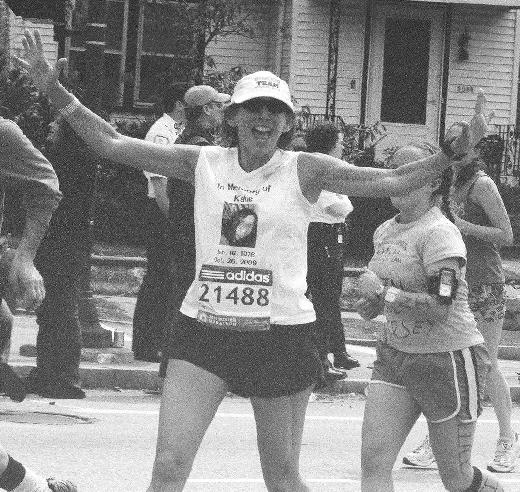
Before and during Katie’s illness, running had been Judy’s therapy, her go-to for coping and figuring things out. After Katie’s death, it was her bridge into life without her daughter, a way to move forward and memorialize Katie. She would tell the world about Katie at the marathon, wearing a shirt with her picture, her dates, and messages to fight leukemia, donate blood, and join the bone marrow registry. Immediately after the memorial service, Judy signed up for the 2010 Boston Marathon. A torn hamstring delayed that goal, but she found other races—in Atlanta, in the Capital District, and in 2011, her first Boston Marathon.
Judy felt the need for something positive to result from Katie’s tragic death. She made a personal commitment to do one event a year for TNT, raising as much money as she possibly could each time.
With Katie as her inspiration, Judy accepted challenges she never would have considered. Along with running races ranging from 6.1 miles to 26.2 miles, she expanded her fundraising efforts to include triathlons,bike rides, and even hikes in Rocky Mountain National Park and the Grand Canyon.
Charlie has been Judy’s number one supporter, joining her on her most recent fundraiser, a hike in the Grand Canyon, or cheering from the sidelines. Together, the Lynches have raised the amazing total of nearly two hundred and seventy-five thousand dollars for blood cancer research. This year, Judy will take part of the America’s Most Beautiful Bike Ride on with Team in Training on June 1 to raise more crucial funds for the Leukemia and Lymphoma Society’s (LLS) ground-breaking research and patient support.
“I run not only for Katie,” said Judy, “but also for the fighters, the survivors, those not yet diagnosed, and especially for those whose lives were cut short way, way too soon.”
On January 16, 2025, Katie would have turned 47. Through their tzedakah—their charity and giving, Judy and Charlie have kept Katie’s memory alive not only in their hearts but also in the hearts of their many supporters.
I often think of Katie’s determination, courage, and grace under terrible circumstances. And I deeply respect and admire my dear friends for their incredible fundraising efforts they have undertaken in memory of their daughter. Their hope is that other families can be spared the devastation of losing a child or loved one.
For more information or to donate to Judy Lynch’s cause and TeaminTraining, please click here.