Author Archives: Marilyn Shapiro

Unknown's avatar

About Marilyn Shapiro

After thirty five years in education, I have retired and am free to pursue my lifelong dream of becoming a freelance writer. Inspired by my mother, who was the family historian, I am writing down my family stories as well as publishing stories my mother wrote down throughout her life. Please feel free to comment and share.

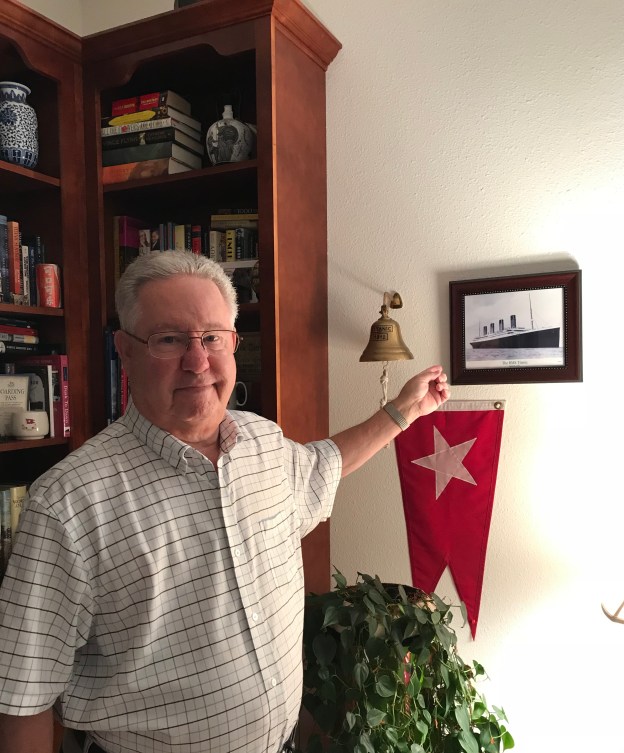
The Titanic Fanatic

On March 28, 1956, nine-year-old Steven Mattis sat mesmerized in his living room in Philadelphia as Kraft Theater’s adaptation of A Night to Remember unfolded. Based on the non-fiction book of the same name by Walter Lord, the one hour television production told the story of the maiden voyage of the RMS Titanic. At first enthralled by the beautiful ship, the glamour of the first class passengers, and the contrast to the third class passengers circumstances, Mattis’ fascination turned to horror as he viewed the shocking climax: Three hours after hitting an iceberg, the British ocean liner sank into the North Atlantic Ocean. Over one thousand five hundred men, women, and children perished. 

It was a life-changing event. That night, Mattis cried himself to sleep. “I realized that my parents could not save me from all of life’s dangers,” he remembered.

In the years that followed, Mattis spent much of his spare time reading and researching everything he could learn about the doomed voyage. His interest in the supposedly “unsinkable ship” has expanded over six decades. More recently Mattis has thrilled innumerable people who have listened to his lectures on the subject. 

The Titanic did not play into his professional career. For thirty-seven years, Mattis taught Spanish, first in Philadelphia and then for seven years in Fort Lauderdale,Florida. In 2005, Mattis moved to Solivita, an active 55+ community in Kissimmee. A seasoned traveler—he has been on 117 cruises so far—he joined Solivita travel club and  spent the next twelve years organizing and leading trips for its members. His travels have taken him and the travel club groups to China, Tahiti, Antarctica, Alaska, Hawaii, the Mediterranian, and safaris in Africa.

In April 2012, Mattis participated in the 100th Anniversary Titanic Memorial Cruise. The MS Balmoral, which sailed out of Southhampton, England, retraced the doomed liner’s fateful journey. For Mattis and many of its 1308 other passenger—seventy relatives of people who had died onboard or who had survived—the highlight was the moving memorial service. The ship sailed to the site of the sinking to be there exactly one hundred years to the hour. The commemorative ceremonies began at 11:40 p.m. on April 14 when Titanic struck the iceberg and ended at 2:20 a.m., April 15, when she sank under the sea. 

The following fall, Mattis presented a talk with accompanying slides on his “trip of a lifetime” to Solivita’s Travel Club.Before embarking on  a cruise on the Amazon the following year, Mattis posted a question to fellow cruisers: “Would any of you be interested in hearing my Titanic lecture?” The response was overwhelmingly favorable. Over forty people showed up at that first lecture. The cruise director, impressed with the depth of knowledge and passion Mattis conveyed, encouraged the “Titanic fanatic” to add additional lectures to his repertoire and offer the package on future cruises. Mattis and his best friend, Andy Miller, complied, adding three more lectures.The rest, as Mattis says, was history.  

Starting with groups in Solivita and local libraries, Mattis expanded his audience to multiple cruise lines, including Azamara, Royal Caribbean, Silversea, Princess and Celebrity. His audiences have been as large six hundred people, often growing over the length of the cruise as favorite word of mouth reviews spread throughout the ship. 

Mattis’ lectures are —no pun intended—a tip of the iceberg regarding people’s interest in the ill-fated voyage. Traveling expeditions, numerous museums, special events, television shows, and eight movies still draws crowds. (Mattis himself has seen A Night to Remember fifteen times and James Camerons’ Titanic close to fifty.) 

What brings people to Mattis’ lectures on a cruise ship when they could be sunning by the pool or learning how to fold napkins? Mattis believes that this is a story into which people can put themselves. Mattis said that the fact that the Titanic took close to three hours to go down puts people into the story.”’Who would I have been in the Titanic?’ people ask.” Mattis said. “Would I have been a hero? A villain? A first class passenger steeped in elegance? A third class immigrant in steerage?” 

The irony—the pure tragedy—also sparks peoples interest. “There was great hubris by both the designers and the captain in thinking that a ship—with a shortage of lifeboats for partly esthetic reasons—could be unsinkable and could run at full speed at night through ice fields after warning after warning of the danger.”

Mattis often  tailors his lectures to his audiences, as he did in 2015 when he gave a lecture on Jews on the Titanic for Solivita’s Shalom Club. Mattis, whose family belonged to Brith Israel, a conservative synagogue in Philadelphia, takes pride in the way prominent Jews handled their fate on the ship. 

As did many passengers, Benjamin Guggenheim, the fifth of seven sons of the wealthy mining magnate Meyer Guggenheim, initially did not realize the fatal consequences that would result from the ships’s collision with the iceberg. “We will soon see each other again! It’s just a repair,” he said to the women and children he and his valet were helping into lifeboats. Once he realized that he and many others would not survive, he returned to his cabin and donned his evening wear. “We’ve dressed up in our best and are prepared to go down like gentlemen,” said Guggenheim. Mattis said later accounts described the billionaire and his valet as last seen seated in chairs in the foyer of the Grand Staircase sipping brandy and smoking cigars, ready to accept their fate without fear or hesitation. Their bodies were never recovered.

Two other Jews who lost their lives on April 15, 1912, were German-born Isador Strauss, politician and the owner of Macy’s Department Store, and his wife Ida Strauss. The couple were on the Titanic traveling back from a winter in Europe. Once it was clear the Titanic was sinking, Isador refused to get into a lifeboat, stating firmly, “I will not go before the other men.”  Ida handed her fur coat to her maid, Ellen Bird, as she left the lifeboat, said, “As we have lived, so will we die, together.” In what eye witnesses later described as a”most remarkable exhibition of love and devotion.” Isidor and Ida were last seen on deck arm in arm.

Broadway producer Henry Birkhardt Harris was more successful in convincing his wife, actress Renee Harris to board a lifeboat without him. Earlier that day, Renee had broken her arm in a fall on the Grand Staircase. Convincing her that he could not save himself as well as his disabled wife, Henry refused a seat and also perished. His widow, who became New York City’s first woman theatrical producer, remarried three times and lived until 93. 

Not all Jews were first class passengers.Leah Rosen Aks, emigrating to America from London, was on the Titanic with her infant son Phillip. Leah and her son were separated in the confusion when they were being loaded on the lifeboats. “Filly” was thrown into another lifeboat; the inconsolable Leah was soon placed on Lifeboat 13. Soon after Carpathia rescued the survivors, Leah was walking on the deck when she recognized her son’s cry. However, the woman who had caught Phillip, regarding the baby as a “gift from God,” claimed it to be her own. In a scenario rivaling King Solomon, Leah pleaded her case to the Carpathia’s captain. Only when Leah was able to identify a distinguishable birthmark on his breastbone was Phillip returned to his birth mother. Leah and Phillip were reunited with her husband Sam in New York. They later had a second son, Harry, and a daughter, Sarah Carpathia—named after the rescue ship.

Mattis also related another note of Jewish interest: The Titanic had a kosher kitchen. On board was a “Hebrew” chef, a non-Jew from South Africa, who had trained with a rabbi in Southhampton on previous White Line cruises. A kosher option was available to all passengers, including those in third class.

Over one hundred years later, all the passengers are gone, not only those that died but those who survived. Millvina Dean, who was two months old when the vessel hit the iceberg, died in 2009 at the age of 97. 

Mattis regards the time he spends sharing the Titanic’s stories as his contribution to the legacy of the ship. “The fact that this story stays alive and is of interest to so many brings me joy,” says Solivita’s own Titanic Fanatic.

Originally published April 19, 2018. Updated May 26, 2025.

By Her Students She Was Taught….

The Parkland shootings, which took place in nearby Broward County, took place almost three months. I, along with many others, are trying to process this tragedy. Friends, family, former teachers, and current students are still sharing their thoughts with me, and those will be the topic of a future article. Meanwhile, I am sharing an article reflecting my own experience teaching a college preparation course almost twenty-five years ago:

May 28, 1993,  was graduation day at the Capital District Educational Opportunity Center, a division of Hudson Valley Community College which offers a wide range of programs and educationally  and economically disadvantaged adults.

During and after the ceremony, there were laughter, tears, and the inevitable thanks that we teachers receive from our students for the time we spent with them in the classroom. My college preparation students tanked me for guiding them through their term papers, helping them improve their study skills, and making sense out of difficult reading passages. What my students don’t realize is that I, as an adult educator, have learned as much from them as they learned from me.

I have learned about determination. Two and a half years ago, Michael was lying in a hospital bed, recovering from a construction accident that nearly killed him and ended his career. Rather than curing the powers that be, he decided, twenty years after finishing high school, to rebuild his life by pursuing a college degree.

“I’ve always believed that God never closes a door without opening a window,” Michael wrote in one of his essays. His window was going back to school. Despite the pain of his injuries, a long commute from Know to Albany, and family responsibilities, Michael came every day, motivated, determined, and optimistic that he would reach his goal. That same determination will serve him well at Hudson Valley Community College come September.

I have learned about courage. Sharon is a recovering agoraphobiac, a woman afraid to leave the shelter of her home. The first day of class, she learned that an oral presentation was a requirement of the course. She was terrified. Coming to school was enough of a challenge; speaking in front of a class was nearly impossible. The last week of class, however, her face white but determined, her hands gripping the podium for emotional and physical support, Sharon gave her speech to her supportive classmates. When she finished, the class broke into spontaneous applause.

I have learned about progress. Carmen was a D student at Colonie High School. Returning to our program at the age of thirty, he was convinced that he would barely complete my course. “I don’t think I deserve to pass,” he said. “I am not sure if I am smart enough to handle college.” His final essay belied his own belief. His piece on what was needed to succeed in college was nearly letter perfect and showcased the progress he had made this semester. “You deserved this A. You can succeed in college,” I wrote on his paper.

I have learned to be tough. Carol, a recovering addict who spent a friend time as a homeless person on the streets of Albany, a student who was repeating my course after failing in the fall, thanked me for taking off points every time she turned in a paper late. “It is important for me to take responsibility when I fail.” She also advised me to stop listening to the recovering addicts’ sob stories and start coming down hard on them for not completing assignments. “We know how to bulls**t you,Marilyn. Don’t listen,” she advised me.

I have learned about compassion. On the days that I was tired and ‘soul weary,’ as one of my  perceptive students said, the students cared about me. “Get some sleep Marilyn. We can wait for our papers.”

I also saw their compassion for each other: the student groups, the impromptu tutoring, the support that gave each other either in learning how to use the computer or in keeping up spirits when someone failed a test.

The students have given of themselves: a perspective comment, a good argument, a family story, and anecdote, a journal entry letting me know they are enjoying may class. I read essays about a very special Christmas, a child’s birth, a grandmother’s death, homeless families in bus depots, and numerous stories of recover.

I have been given much more. They have shared something of their lives. As a result, they have enriched me as both a teacher and a person. For this, I thank each one of them.

Who Made the Hamantaschen?


DSC_0037One of the nicest parts of our community in Florida is our diversity. Often, while I am working out in my exercise class or enjoying a concert or eating in our small bistro, I am struck by the number of people from all cultures, ethnicities, and countries that live here. An example of our melting pot was seen in the Shapiro’s Who-Made-the-Hamantashen Tale.
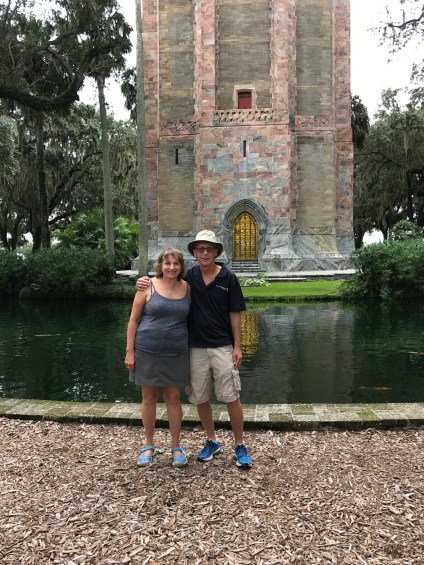

In May 2016, my husband Larry and I purchased tickets for a Flores de Mayo celebration that was being sponsored by our community’s Filipino Club. I had met several of its members through my cardio ballroom dancing class, and they had hyped up the event for several weeks before the May event. “Lots of fun! Great music,” one of the organizers told me. “Just bring a dish to share with your table.”

Although not familiar with Flores de Mayo, I knew of Cinco de Mayo, the Hispanic celebration held every year on May 5 that involved food and colorful costumes. We bought the tickets and made arrangements to sit with our friends Farida and Abdul whom we first met at a cocktail party for new residents of our fifty-five plus community.

Farida and I reconnected at the cardio ballroom class and struck up a friendship. She mentioned casually that she was involved in ballet when she lived in Egypt. One day, she shared a picture on her iPhone—a stunning portrait of her as Odette, a princess turned into a swan by an evil sorcerer’s curse in Tchaikovsky’s Swan Lake. Faridah was not just a dancer, she was a prima ballerina for an Egyptian ballet company. “Faridah,” I commented,” you are a ballet dancer like Billy Joel is a piano player!”  Not only was she involved in dance. Her daughter-in-law, a beautiful, vibrant Hispanic woman, taught the class.

I put the event on our calendar for the date in May and tucked the tickets away until I grabbed them on our way out the door that evening. When we arrived at the venue where the event was being held, the lobby filled with women in elaborate Filipino costumes and men in suits. For a moment I thought I was at a formal ball, not a Flores de Mayo program. When we entered the ballroom, we breathed a sigh of relief. Everyone in the audience was dressed in Florida casual—tropical shirts and shorts for men; capris or skirts and nice tops for the women.

We rushed to claim our two seats just as the formal program began. Filipino couples  began filing into the room, each group behind a large icon of the Blessed Virgin Mary. No, Flores de Mayo was obviously not related to the Hispanic holiday. Adapting quickly, we sat back and enjoyed the pageantry, the costumes, and the musical and dance entertainment that followed.

I later learned that Flores de Mayo is held each May to celebrate the finding of the True Cross in 320 C.E by Helena of Constantinople and her son Constantine the Great, emperor of the Roman Empire. The Santacruzan, which we had observed, is the ritual pageant held on the last day of religious Catholic celebration.

Once the program was over, we were able to say hello to our table mates. What struck me immediately was the diversity represented not only in the room but at our own table. Larry and I were enjoying a Filipino celebration of the Blessed Virgin Mary with Velma, our next door neighbor who was African American; our friends who had emigrated from Egypt and whose son was married to our Hispanic cardio ballroom instructor; and our down-the street-neighbor Nancy, whose last name spoke clearly to her husband’s Polish ancestry. We all unwrapped our “potluck” snack items: my hummus and chips; Velma’s fruit platter; Farida and Mohammed’s dukkah, a popular Egyptian dip made up of herbs, nuts and spices; and Nancy’s hamantashen.

Hamantashen??

“Nancy,” I asked. “Did you make the hamantashen?”

“Yes,” she said. “An old family favorite.”

“I didn’t know you were Jewish,” I said.

“I’m not,” she said. “My mother got the recipe from her German neighbor.”

“And she was Jewish?”

“No,” Nancy said. “She was Christian like us. She told my it was an old Russian recipe.”

So here were Larry and I, two Jews, at a table celebrating a Filipino Catholic holiday with an African American, two Muslims whose grandchildren were half Hispanic, and a Christian who made the best hamantashen I had ever eaten. Who knew?

The following March, I was in Colorado doing baby sitting duty for my granddaughter during Purim. Larry called me to tell me that someone had dropped off a plate of hamantashen. He didn’t recognize the woman, so I asked him to describe her.

“She is a woman about your age and your height with grey hair,” he said.

“That describes half the women in our community,” I said. “Maybe it was someone from the Shalom Club.” I listed a number of names with no success.

It wasn’t until I returned that I realized who had dropped off the hamantashen. While getting ready for my cardio ballroom class that was being taught by the Hispanic daughter-in-law of my Muslim friend, I spotted Nancy lining up in the back of the room.

“Nancy, did you bring hamantashen over to Larry last week?” I asked.

“Yes,” Nancy said. “I don’t think Larry recognized me.”

“No, he didn’t,” I said. “But he loved them and even saved some for me. How did you know it was Purim?”

“What’s Purim?”

It didn’t matter. Nancy’s hamantashen, no matter what her background, are the best. And her hamantashen will be served in our home this Purim. Chag Samaech!

A present-day Shabbos goy in Kissimmee

DkMVcT9VSEOPrz8DCpkOuQ

Cindy and Ruben Vazquez own Bellissimo Hair Salon in Kissimmee, Florida.

As I settled into my chair at the Shalom Club table at Solivita Club Expo, I put my pocketbook on the empty chair from the Bellisimo Hair Salon which was located next us. A few minutes later, a young Hispanic man asked me to move it so he could sit down.

“Hope you don’t mind,” he said.

“No problem!” I said. It’s your chair. And I put the bag on the floor.

A Shanda!

“It would be a “shanda” to put that nice bag on the floor!” he exclaimed.

I took a closer look at the speaker. He certainly looked Hispanic, not someone who is familiar with the Jewish word for shame or disgrace!

“Shanda!” I said. “Are you…errrr..are you Jewish?”

“No,” he said. “Better than that! I was a Shabbos goy on Long Island!”

For those who are not familiar with the term, a “Shabbos goy” is the Yiddish term for a non-Jew who performs certain types of work which Jewish religious law prohibits the Jew from doing on the Sabbath. And Ruben Vazquez, the son of Puerto Rican parents who came to New York in the 1960s is a self-acclaimed proud Shabbos goy!

A Warm Welcome

Ruben’s parents were born in Yabucoa Puerto Rico, and came to the Bronx in 1952 .  Ruben, their only child, was born in 1972. Ruben’s father, Ruben Vazquez Baez, was a professor of administration at City College in New York as well as a high school teacher at Park West on 50th St Manhattan. His mother, Gilda Vazquez was a supervisor at the Bank of America at the World Trade Center.

When Ruben was six, his family moved to Bayswater in Far Rockaway, Queens, on the border line of Long Island. At first, the Vasquez family was apprehension when they realized they were the only Hispanics—and the only non-Jews—in a modern Orthodox neighborhood. The first week they lived there, however, Mrs. Weiss brought them a pie. “Welcome to the neighborhood,” the rabbi’s wife exclaimed.

Ruben became friends with many of the children in the neighborhood. He remembers his friends and him using the yarmulkes as Frisbees. “The adults would not have been happy if they realized our game,” said Ruben.

 Learning the Rules

Ruben also began learning the complexities of the dietary laws. One day, he wandered into a friend’s garage while munching on a roast beef and cheese sandwich.

“Do you want half my sandwich?” Ruben asked his friend.

“No thanks,” his friend replied. “We don’t mix milk with meat.”

Ruben took the cheese off half the sandwich and offered the revised snack to his friend.

“Err…no thanks, Ruben,” said his friend. “I’ll pass.”

To earn money, Ruben started mowing lawns for his neighbors. He made more friendships and learned more about the “black hats.” They began to rely on him.

 A New Job

One Saturday, one of his friend’s mothers knocked on the Vasquez’ door. “Ruben, Moishe left the television set on in the upstairs bedroom. Do you think you could take care of it for me?”

Ruben gladly went over to turn off the set. Soon after, other Jews in the neighborhood were knocking on his door, discreetly mentioning hinting at some task that Ruben could “remedy.” His reputation as the Shabbos goy was set.

Meanwhile, Ruben was picking up many of the Yiddish expressions that peppered the conversations of his neighbors. They flowed off his tongue as easily as those who spoke the language of the “Old Country” regularly. He not only avoided sharing his sandwiches, but also understood the traditions that governed his adopted community.

 Cosmetology

When Ruben was going into is senior year of high school, his father asked him what he would like to study after his graduation.

“Cosmetology,” was Ruben’s quick reply. He had a great uncle and an aunt who were in the business, and Ruben had spent a great deal of time in their shops. “You can do anything you want—after college,” his father told him.

His first two years at Queens Borough Community College, Ruben studied liberal arts with a self-admitted minor in “looking for girls.” By his junior year, however, Ruben realized that he was interested in religion. A Catholic raised in a community of Jews, he completed a bachelors in theology. Over the next few years, he was involved in missionary work and even did some Pentecostal tent revival meetings. In between all of this, he got his certificate in cosmetology from the State of New York under an apprenticeship program.

He soon met Cindy Peguero, a transplant from Florida who also had a cosmetology degree. The two of opened two salons in Five Towns, Woodmere and Bensonhurst (Ragtime Brooklyn). They were also professors at Academy of Career Training and used their expertise to become platform artists and educators around the world , including Paris, England, Italy, Japan Thailand, South and Central America.

Jewish Clientele Again

In their shops in Woodmere, Ruben and Cindy catered to their modern Orthodox clientele. Ruben became an expert at cutting the hair and beards of the Orthodox men. He knew how to follow the Jewish rules on shaving, which were based on Leviticus: “You shall not round the corners of your head, neither shall you mar the corners of your beard (19:27)” .This involved very specific guidelines on how to shave the back of the neck and under the chin. Although most of the men didn’t wear payot, the long sidecars or sidelocks, the hair could not be cut above a certain spot on the cheekbone. Ruben could not work on the women’s hair (“That was a shanda!” said Ruben). That job fell to Cindy , worked with the women to cut their natural hair and fix their wigs.

Move to Florida

Ten years ago, Ruben’s parents retired and moved to Kissimmee, Florida. Ruben, Cindy, and their two children were spending more and more time in Florida. The visits increased when Ruben’s mother was diagnosed with cancer. The Vasquez’ decided to move south to be close to both their families. Ruben’s mother passed away in 2010. Ruben’s father has since remarried.

In 2016, Cindy and Ruben opened up Bellissimo’s, a salon down the street from a fifty-five community. They no longer are taking care of the modern Orthodox, but people from Solivita—many of them Jewish—have become their customers.

“Baruch HaShem!” said Ruben. With G-d’s help, my business will continue to grow!”

Originally published in The (Capital District) Jewish World, February 8, 2018

Floridian Shapiro notes her Tu B’Shevat refuge and credits its creator Edward Bok

IMG_1554

Larry and I in front of the Singing Tower carillon at Bok Tower Gardens.

Jews annually celebrate Tu B’Shevat, the day in which it is believed “trees come of age.” For those of us who live in Central Florida, there is no more fitting a place to honor the Jewish “Earth Day” than at Bok Tower Gardens. The sixty-acre sanctuary in nearby  Lake Wales was the gift of Edward Bok. Bok, the son of impoverished Dutch immigrants became a successful publisher, a Pulitzer Prize-winning author, a humanitarian and an advocate of world peace and the environment.

From Rags to Riches

Edward William Bok was born in Den Helder, Netherlands, in 1863. After a series of bad investments brought his father to financial ruin, the family immigrated to Brooklyn, New York, in 1870 to start a new life. Bok senior enrolled the children in school the day after they arrived in Brooklyn although neither of his sons could speak a word of English. 

Financial woes continued, and the family found itself in dire poverty. The two sons worked tirelessly to support their mother, who had lived most of her life with servants, by taking over all the household chores, picking up coal on the streets to light their fire and cook their food, and washing the windows of a bakery shop after school to supplement their father’s income. 

By 13, Edward Bok quit school and became an office boy for Western Union Telegraph Company.The youth used every spare minute in self-study, With his paltry savings, bought encyclopedia and studied to absorb its information.

Bok made an Horatio Alger journey in the publishing world. His rapid ascent included positions at the Henry Holt and Company, Charles Scribner’s Son, The Brooklyn Magazine and as co-founder with his brother, of the Bok Syndicate Press. In 1889, at the age of 26, he was hired as editor of Curtis Publishing Company’s The Ladies Home Journal. In 1896, he married the boss’s daughter, Mary Curtis, and they had two son. 

During his thirty year career, Bok used his position to champion causes, including social and environmental issues.

From Rags to Riches

By 1919, the 56-year-old self-made millionaire had achieved his two goals of education and achievement. He retired from the Journal, and wrote his autobiography The Americanization of Edward Bok, which won the 1921 Pulitzer Prize. It was now time to pursue his third goal: service to his country.

Throughout his life, Edward had been guided by his grandmother’s mantra to “make you the world a bit better or more beautiful because you have lived in it.” In the next several years, Bok used his wealth to create several awards, including the American Peace Award.

Edward also to help the world environmentally. During his family’s visits to their winter home in Lake Wales, Florida, he had often wandered up to nearby Iron Mountain,(a notable Florida “peak” at 298 feet above sea level) to view the vistas and the sunsets. Although acreage was initially targeted for development, Edward purchased the land to establish a place that would “touch the soul with its beauty and quiet.”

Sanctuary

In 1922, Edward commissioned Frederic Law Olmsted, Jr., an American landscape architect whose credits included the National Mall, the Jefferson Monument, and the White House grounds, to carry out the task. Under Olmsted’s direction, a year later, the barren sandhill had been transformed into a subtropical garden filled with trees, flowering bushes, flowers, and a reflecting pond that attracted squirrels and over one hundred varieties of birds. 

Not yet satisfied, Bok wanted to bring the gift of music to his garden. He commissioned architect Milton B. Medary and stone sculptor Lee Lawie to design and construct a 205-foot neo-Gothic and art deco Singing Tower carillon, one the world’s largest and, according to many carillioners, the most acoustically perfect bell tower in the world.

In December 2015, Larry and I visited Bok Tower Gardens for the first time. Impressed with its beauty, we took out a membership and have returned again and again—by ourselves or with family and friends. Sometimes we just walk through Olmsted’s well-designed garden paths, which offer hidden recesses, contemplative resting spots, picturesque vistas and breathtaking views of the Singing Tower. Each season brings its own beauty, including spectacular displays of azaleas, camellias, and magnolias.

Dutch Tikkun Olam

More often than not, we take a tour given by one of Bok Tower Gardens many volunteer guides. Each visit has brought greater appreciation for this hidden gem—its history, its flora and fauna, its music, its architecture, and more insight into the genius and generosity of Edward Bok. 

On the pathway leading into the gardens is an arch which is inscribed with Edward’s grandmother’s admonition to “make the world a bit more beautiful.” Each time I see those words, I think how closely they reflect tikkun olam, the Jewish concept that suggests humanity’s shared responsibility to heal, repair, and transform the world.

.Edward’s beautiful garden, stunning carillon, his sixty-five acres of trees and flowers and bushes and vistas, is his legacy, his gift, his way of making the world a better place. 

And in today’s political climate, I also think of how the son of impoverished Dutch immigrant contributed so very much to Central Florida and his chosen country. To Edward Bok and every other immigrant who has come to our country to find a better life and who, through their journey made our country better—I say thank you. 

Sources include The Edward Bok Legacy by Margaret Smith, Bok Tower Gardens website, and Wikipedia.

Originally published in The (Capital District)  Jewish World, January 25, 2018

The Creature Calls…..

PRXBGa7eSq6ep+GCoQFwxg

The Creature of the Black Lagoon display at Wakulla Springs State Park, Tallahassee, Florida.

While my husband Larry and I were visiting friends in Tallahassee, Florida, recently, the four of us went to Wakulla Springs State Park. The 6,000 acre wildlife sanctuary offers a magical forty-five minute boat ride that takes its passengers past cypress groves, lovely springs, and a plethora  of wildlife. Our tour guide, a woman named Connie, navigated the boat through a narrow, shaded section of the ride and announced that this was the area in which Creature of the Black Lagoon was filmed in 1954.

Fear, Shock, Disgust?

I was all too familiar with the Creature of the Black Lagoon. When the movie arrived in Keeseville, New York, in 1955, my nine-year-old brother Jay had made plans to see it with a group of his friends. My mother, busy with a newborn, insisted that Jay take me, his five-year-old sister, along. We walked around the corner to the old theater in our small Upstate New York town, my brother grumbling all the way. The first fifteen or so minutes were fine. The minute I saw the huge black amphibian-like creature emerge from the water, however, I became so frightened that I started screaming and crying. Jay had to leave his friends and popcorn behind to bring me home. “I told you I didn’t want to take her with me!” my brother loudly complained to my mother. It was years before he took me to the movies with him again. The next horror movie I saw in its entirety was Psycho, Alfred Hitchcock’s classic, when my college showed it on one of its movie nights.

Nightmares for Weeks!

I didn’t fare any better with scary television shows. On November 11, 1960, my parents hosted a party for a group of their friends. My sister Laura and my brother Jay were supposed to be watching me in the family room while the adults congregated in the living and dining rooms. I insisted on staying awake, even when the Twilight Zone came on. The episode Rod Serling introduced that night was “Eye of the Beholder.The now classic told the story of a young woman lying in a hospital bed, her head swathed in white bandages. She awaits the outcome of a surgical procedure performed by the State in a last-ditch attempt to make her look “normal”. In the end, the doctor and nurses, who are only heard but not seen, remove the bandages to reveal a beautiful woman. As the medical team gasp with disappointment and revulsion, the camera moves to their twisted, grotesque faces. Beauty, it seemed, was in the eye of the beholder. In a scene reminiscent of what happened five years before in the movie theater, I screamed in fear and went running into the living room. The guests all trickled out as my parents tried to calm down their hysterical ten year old. 

The end result was—well—“horror-able.” I had nightmares for weeks. Laura and Jay were grounded for months. And it took years for me to watch the complete episode—ten months short of forty years, to be exact. On New Year’s Eve, December 31, 1999, one of the cable stations offered a Twilight Zone marathon. The-episode-not-to be-named was shown between 11:30 pm and midnight. I watched it until the end, when the beautiful woman (played by Donna Douglas of later Beverly Hillbillies fame) was led out of the hospital by an equally handsome man to a place that accepted “ugly” people as their normal. It was only until the credits rolled did I turn the station to Dick Clark’s show and watch the ball drop at Times Square to mark the new millennium.

Avoidance Works

For my entire life, I have avoided scary movies unless they are very old (The original versions of Phantom of the Opera and Frankenstein), very funny (Little Shop of Horrors; Young Frankenstein), or very well acted. (Silence of the Lambs; The Sixth Sense).

However, let’s face it. Children’s movies can be scary. Larry was so traumatized by the Wicked Witch of the West when he first saw The Wizard of Oz as a four year old that he refused to watch the annual television broadcast for years. The evil queen in Disney’s Snow White was as frightening to me when I was a child as Hannibal Lecter was to me as an adult. And the sea witch Ursula in The Little Mermaid still chills me to the bone when she appeared in her plump purple presence both on film and on the stage. But these animated antagonists who provided the tension in the children’s classics didn’t scare me enough to turn them off.

Once I became a parent, I shared my love for fairy tales with all their heroes and heroines and scary villains with Adam and Julie. Thanks to Blockbuster and our VCR, we watched Dorothy, Snow White, Cinderella, Aladdin, and Ariel confront and conquer their demons again and again and again.

In 1991, when Adam and Julie were thirteen and ten respectively, Beauty and the Beast was released. It remains one of my favorite movies of all time, up there with Casablanca and Schindler’s List. I was drawn to Belle’s intelligence, her feminist streak, her strength. And I loved the Beast, with all his bluster and bellows, for his transformation into a loving, caring individual once he both received and gave the gift of love.

Monsters Everywhere

Julie told me this summer that my two-year-old granddaughter Sylvie loved the music from the movie, and I was more than willing to share my enthusiasm with her. Together Sylvie and I listened to the sound track, watched some clips on You Tube, danced to the title song across the living room floor, and sang the songs on the way to her daycare. By the end of the summer, I had purchased the movie and downloaded it to my laptop. Sylvie sat on my lap and watched mesmerized the entire length of the film.

When Larry and I returned to Colorado in October, however,  Sylvie’s attitude changed. Yes, “Little town, little quiet village…” was fine. But the minute the Beast arrived on the scene, Sylvie hid her face in her hands and said, “I no want to watch the Beast! I scared!” My showing her that short segment triggered a fear of all monsters, the ones in her closet, the ones under her bed, the ones hiding in the trees. 

So the movie is off the radar for a while. Maybe by next summer, she will realize that Gaston, the handsome but chauvinistic and selfish oaf, is much more frightening than the considerate, loving Beast. Maybe she will have to wait five or ten or even forty years to watch the movie in its entirety. And maybe, like Rod Serling’s classic, she will realize like my heroine Belle that beauty is in the eye of the beholder.

Originally published in The (Capital District) Jewish World, January 11, 2018

We’ll have a 27 with eggroll…… and a happy holiday to you.

On December 23, Larry and I traveled 400 miles to spend time with our friends, Chris and Bernie Grossman in their new home in Tallahassee, Florida, And on December 25, the Shapiros and Grossmans upheld tradition as steeped in Jewish culinary ritual  as brisket on Rosh Hashanah, potato latkes on Chanukah, and matzo ball soup on Passover. We ate Chinese food on Christmas Day.

Growing up in a small town in Upstate New York, my family  didn’t eat Chinese food on Christmas Day, or most other days of the year. If there was a Chinese restaurant in Plattsburg, the “big town” near us, I don’t remember ever going there.

Once or twice a year, my father would pile my mother and the four children into the station wagon and drive the ninety minutes to Montreal. We would weave our way into Chinatown and head to the Nanking Cafe. We would climb a set of steep stairs and crowd around a table in a booth. (Family lore tells of the time that my brother Jay drank the water in the finger bowl.) The wonton soup and noodles would be followed by chow mein (much better than the stuff we ate out of cans that we got at the local Grand Union). We would finish up with fortune cookies and vanilla ice cream and head back home. To be honest, that was the extent of our seeing Montreal until I visited the World’s Fair in 1968.

The Chinese food at Christmas tradition started for me after Larry and I married and bought a home in Saratoga County in 1976. Ling’s, near the corner of Routes 146 and 9 in Clifton Park, was the only restaurant open on December 25th. (It was also the only Chinese restaurant in a ten mile radius; there are now at least ten!) Larry and I met half the Jewish population of our community there.

By the next year, we were going to Ling’s with a group of friends. And by the time our children left home, we had a standing date for a December 25th dinner with the Grossmans and several  other couples in various Chinese restaurants throughout the Capital District. Wherever we chose to go, we could count on sharing the evening with tables of fellow Jews—including many rabbis and their families.

The tradition continued when we moved to Florida in 2015, when the Grossmans and another of our regulars, Joyce and Mel Toub joined us in Kissimmee for three days. Of course, we had reservations at the local Chinese restaurant on Christmas Day.

Last year, Chanukah started on December 24. Congregation Shalom Aleichem in Kissimmee held a community dinne. I was hoping we would be dining on huge metal pans filled with vegetarian or kosher style dishes  from one of the two Chinese restaurants close to our shul. To my disappointment, the committee planning the event opted for Italian. The next day, we joined my brother Jay, his wife Leslie, and their family for a traditional Chanukah meal in Sarasota.  This year, however, we are back on track for wonton and moo shu. This time we are doing the traveling—four hundred miles to Tallahassee—all to get into the Jewish ritual of eating Chinese food on December 25.

According to Mathew Goodman, author of Jewish Food: The World at Table, the Jews’ love dates back over one hundred years ago, where the Lower East Side of Manhattan was populated by Eastern European Jews, Italian, and Chinese. “Italian cuisine and especially Italian restaurants, with their Christian iconography, held little appeal for Jews,” Mark Tracy wrote in a 2011 Atlantic article. “But the Chinese restaurants had no Virgin Marys. And they prepared their food in the Cantonese culinary style, which utilized a sweet-and-sour flavor profile, overcooked vegetables, and heaps of garlic and onion”—all similar to Eastern European cuisine.

Another theory was included in a 1992 academic (seriously!) paper by Gayle Tuchman and Harry G. Levine in which they supported the idea that Chinese food was ‘Safe Treyf.’ True the dishes featured un-kosher foods including shellfish and pork. But it was chopped and minced and mixed with so many vegetables, it as disguised. As stated in a 2007 blog post Feed the Spirit, “If pork was in wontons (which looked very much like Jewish kreplach) or in tiny pieces in chop suey, it didn’t seem as bad as chowing down on a ham sandwich. And the Chinese typically don’t cook with dairy products, so no one had to worry about mixing milk and meat. “

The concept has made it to the highest court in our country. According to the Judaism 101 website, Justice Elana Kagen brought up the Jewish/Chinese food connection  up at her 2010 Supreme Court confirmation hearing. When a senator asked her where she was on Christmas, she said, “You know, like all Jews, I was probably at a Chinese restaurant.”

In 2009, Brandon Miller even penned a song: “I eat Chinese food on Christmas/Go to the movie theater, too/‘Cause there just ain’t much else to do on Christmas/When you’re a Jew.”

As you can tell by her undecidedly non-Jewish name, Chris was not born Jewish. She converted after she met Bernie at Grinnell College. Chris, whose Hebrew name is Chava, keeps kosher. So on December 15, in a Chinese restaurant in Tallahassee, she ordered the egg drop soup and a fish or vegetarian entree.

The rest of us, however, ate “Safe Treyf.” Larry ordered shrimp in garlic sauce. Bernie got the egg rolls and something with beef (“Bernie always eats something with beef, no matter what ethnic variety food we have,” quipped Chris).And I got my favorite—chicken moo shu chicken with wonton wrappers and plum sauce. After the main meal, we popped open our fortune cookies and shared the Chinese predictions for the upcoming year. Then we went back to the Grossmans and dined on my “world famous chocolate chip cookies,” another long-standing holiday tradition  for us friends. We raised a glass of wine, shout  L’Chaim (ToLife!) and anbei (sounds like: “gon bay”) the traditional Chinese toast which literally means ‘dry cup.’

The Hebrew year is 5778 and the Chinese year is 4715. That must mean, the old joke goes, that against all odds the Jews went without Chinese food for 1,064 years.As fortune (cookie) has it, however, this year we enjoyed Florida sunshine, friendships, and Chinese food.

(Capital District) Jewish World, December 28, 2017.

vsxbt0mfthmn21crtc79pq.jpg

The Grossman and Shapiros walking off our Chinese dinner.

Chanukah Gifts…giving and receiving


Larry and I have many “pets” in our home. A butterfly rests outside our front door, and two larger ones fly on our lanai wall. A two foot bear clutching his “Bear Feet Only” sign greets visitors on the front porch. Pedro the Parrot hangs on a curtain rod. And various bulldogs—stuffed, ceramic, and metal, are stationed around the house in honor of the nickname my boss gave me when I moved from the classroom to an administrative office.

However, I would have to say my favorite animals in our menagerie are three turtles and a pelican. These metal copper sculptures are the creative work of a talented  Albuquerque, New Mexico, artist who made last year’s Chanukah very special.

In July 2015, Larry and I were spending the summer in Frisco, Colorado, with our daughter Julie, her husband Sam, and their newborn daughter Sylvie Rose. We had arrived in the Rocky Mountains less than a month after we had moved into our new home in Florida. We had brought several pieces of art for our walls, but many other spaces were empty by choice. We knew that much of the art work that was on the walls from our Upstate New York—much of it reflective of the Adirondack Mountains fall scenes, Early American accents would not work in Florida, especially since we had purchased the very Florida furniture in our resale from the previous owners.

One area that was tricky for us to decorate was a shadow box effect in the living room. We needed to find something to fill a recessed space in a hallway that would reflect our now Southern address. In August, we were at an art show in downtown Frisco when we noticed some colorful, unique pieces in copper. Many of the objects were reflective of the Southwest: lizards, snakes, kokopellli. We introduced ourselves to Greg Gowen, the artist manning the outdoor booth.

Greg, a native of Texas, was born in 1968 and began welding at age eight under the guidance of his father and mother, Mike and Martha Gowen, both well known artists and gallery owners.“My daddy showed me how to sculpt,” he wrote on his webpage, “and my mother taught me to make it beautiful.” At the age of eighteen Greg turn to the art world for his career. He began participating in art shows around the Southwest. Galleries quickly became aware of his talent and began exhibiting and selling his work. Today, Greg’s sculptures are displayed in private collections, galleries, and museums throughout the United States and abroad.We were lucky to happen upon his beautiful copper sculptures. We were especially attracted to his turtle design.

After we emailed the the dimensions of the shadowbox when we returned home, Greg suggested we purchase three turtles, a “mother” and two “babies,” to fill the space.

The family of turtles arrived as ordered within the next few weeks. The colors, the size, the way they fit into the space-they were perfect. We named them—Mother Turtle Tessie and her two children Tommy and Tillie—and posted a picture on Facebook announcing their arrival. The three turtles were a conversation piece when we showed people our new home.

It was time to fill more walls. We found a photo of a beach scene mounted on wood that fit over our couch. We added a palm tree clock to the laundry room and a fish clock onto the lanai. In Key West, we found two signs for our guest bedroom: One read, “Honestly now. What’s Your Hurry? You’re here!” The second was a colorful road sign showing the mileage to Boston, New York City, and San Francisco.

What was missing was a piece for our guest bathroom. I was the butterfly lover and bulldog-moniker nickname bearer of the family, but Larry loved pelicans. I knew from his website that Greg had not done pelicans before, In May 2016, I contacted Greg via email to see if he could work his magic in creating a version of Larry’s favorite bird to hang over the toilet. Greg responded a couple of days later with his answer. Yes, he would love to create the figure. As I had already missed the deadline for Larry’s May birthday, he promised to have completed by Chanukah.

Greg and I were in touch over the summer. In late October, however, I realized I hadn’t heard from him, nor had any pelicans flown our way via UPS. When he failed to respond to an email, I sent him one more. If he couldn’t get it to us in time for Chanukah, I understood. I’d give it to Larry for his May birthday.

On December 24,Greg emailed me his apologies.  He wanted to surprise Larry and me with the pelican in time for Christmas but mailed it to the wrong address. He felt terrible as it won’t be under our Christmas tree.

I wrote him back immediately with the good news that we were Jewish. December 24 was not only Christmas Eve, but also the first night of Chanukah. Getting it on the third or fourth day of our holiday would be fine.

True to his word, the pelican arrived on the following Tuesday. “Peter the Pelican fits perfectly in our bathroom,” I wrote. “Larry and I are very happy with the newest member of our menagerie. How much do I owe you?”

“Nothing,” Greg wrote back. “I was late in getting it to you. It is my gift for the aggravation I caused.”

Larry and I were grateful for Greg’s generous offer, but we couldn’t accept. I wrote him a note thanking him but telling him we were very aware of the time he had taken to design and craft our pelican and ship Peter to his new home. I enclosed a check for $180. “The number 18 has special significance in Judaism,” I told Greg.”It signifies life. Use the money to  do something special for you or your grandchildren.”

A couple of months later, Greg emailed me to tell me that he had used our money to treat Greg, his wife Debbie, and Martha and Del Pettigrew, two fellow artists, to dinner at a lovely restaurant in Scottsdale, Arizona. The four of them raised their wine glasses in a toast to the Shapiro’s. “I love creating metal works for patrons like you!” wrote Greg in his thank you.  “May God richly bless you.”

I was happy to learn that our gift to him had created wonderful memories with his friends—memories that were more poignant when Del passed away a few months later. That special dinner was the last time they saw their dear friend.  “What a profound effect your generosity has had,” Greg wrote recently. “I will never forget!”

Greg continues to sculpt, drawing inspiration from all over. He carries around a sketch pad in case something sparks an idea. “My favorite part of my art is when I see a customer connect with a piece,” he wrote on another art gallery website. And through his turtles, his pelican, and mutual generosity, we have connected with Greg.

First published in The Jewish World, December 7, 2017.


Veterans Day: A WWII Jewish Sacrifice Remembered

A body of an American solider lying peacefully in the snow in a battlefield in Belgium. A Jewish boy in Brooklyn orphaned twice by World War II. And the  world-renowned photographer who connected the two. This is their story.

Samuel Tannenbaum was born on July 10, 1942, in Washington DC to Henry and Bertha Fiedel Tannenbaum. Less than two years later, Henry was drafted into the United States Army,  Bertha and Sam moved to  Williamsburg section of Brooklyn to be closer to their families. After training at Fort Meade, Maryland, Henry was assigned to the 331st Infantry regiment, 883rd division and was shipped to England. His rifle platoon subsequently fought in battles in France and Luxembourg, which garnered Henry several medals.

Between December 16, 1944, and January 25, 1945, on the border of Belgium and Luxembourg, Allied and German troops were engaged in what would later be known as The Battle of the Bulge, one of World War II’s deadliest fights. On January 11, Tannenbaum and his division were ambushed by German soldiers. Only one person—Platoon Sergeant Harry Shoemaker—survived.

When Shoemaker escaped and returned to regimental headquarters, he told the sentry, Corporal Tony Vaccaro, the details of the massacre. Vacarro and Shoemaker returned to the site the next morning . The two stared at the horrible carnage.If the soldiers had survived,  the Germans had murdered the wounded and had stripped the corpses of their watches and other valuables. Then the Germans had rolled their tanks over the dead and dying, crushing them into grotesque, mangled shapes.

Only one figure looked peaceful and untouched by death. The prone body of a lone soldier lay face down, his boots, backpack, helmet and rifle showing through the white snow that blanketed him.  Vacarro pulled out his Argus C vintage camera and captured the scene. Afterwards, Vaccaro and Shoemaker cleared away the snow to discover the dead soldier was their army friend, Private Henry Tannenbaum.

Henry Tannenbaum was buried in Henri-Chapelle Cemetery in Belgium with plans to bring his body home. Bertha Tannenbaum. his widow, falsely believed that the transfer would adversely affect her four-year old-son Sam’s war orphan benefits. She was against reinterment. Henry’s family fought Bertha’s decision and won. Henry’s remains were returned to New York in 1946. The disagreement caused the widow’s estrangement from the Tannenbaums, isolation from her family and her growing mental deterioration. In her mind, Bertha believed that Henry was still alive and working secretly for the FBI. Sam’s childhood was filled with his mother’s shouting at the ghost of her husband, several psychotic episodes, and even an attempt to kill her son and then commit suicide. “The bullet that killed my father also destroyed my mother’s mind and ended my childhood,” said Sam.

With “my father dead and my mother crazy,” Samuel was forced at a young age to raise himself. He took care of household chores, did the shopping, and, through conniving, even paid the bills. When he was thirteen, he arranged for his own bar mitzvah, fortuitously connecting with his father’s family through a Hebrew school classmate. Upon graduating high school, he moved into his own apartment and, supporting himself with a war orphan scholarship and odd jobs, graduated  from Brooklyn College.

While Sam was in college, Bertha was evicted from her apartment and was committed to a state mental institution. The eviction resulted in the destruction of the family’s belonging, including all artifacts of Sam’s family’s history. Outside of his name and the date of his death, Sam knew nothing about his father. Sam married (Bertha didn’t come; she thought it was another FBI plot), had a daughter Lisa, and divorced. Bertha met and fell in love with Sam’s fiancee Rachel, promising her that Henry would return in time for the wedding.

Meanwhile, with the help of the extended family, Sam was putting together pieces of his father’s past. Henry was regarded as intelligent with a great sense of humor. He had graduated from the same grade school, high school, and college as his son. Henry worked for the Office of Price Administration and taught Sunday school at a local synagogue. Henry had an inherited bleeding disorder which probably caused  the private’s  quick and peaceful death in Belgium on that bitter cold January day and that unfortunate disorder was passed on to his son.

In 1986, three years after his mother died, Sam invited his father’s family to his daughter Lisa’s bat mitzvah. His first cousin, Henry’s niece, gave Sam a victory mail correspondence that identified Private Henry Tannenbaum’s regiment. Sam now had the tool he needed to further research his father’s military history.

In 1995, he and his wife Rachel journeyed to Seattle to attend the first meeting of the American World War II Orphan Network, (AWON), an organization composed of the Gold Star children and others classified by the Veterans Administration as War Orphans.

At a second  AWON meeting in Washington DC in 1996,  Sam met several people from Luxembourg who came for the express purpose to meet and thank the children of their liberators. Sam invited several to his home. One of the guests, Renee Sclhoesser, a journalist, published the Tannenbaum story in a series of articles in a Luxembourg newspaper. Another attendee, Jim Schiltz, was also impressed with Sam’s search. When he returned to Luxembourg, Schiltz found a book of photographs of World War Two and specifically, of the 331 Regiment in Luxembourg taken by the sentry Tony Vacarro.

The picture taken on battlefield in Ottre was not the only one Tony Vaccaro had taken.  Michaelantonio Celestino Onofrio Vaccaro had carried his  Argus C with him when he, along with thousands of other Allied soldiers, stormed the beaches at Normandy on D-Day. Tony —at first surreptitiously and then with his superiors’ approval—went on to take thousands of pictures of Allied campaigns in Normandy and Germany.

After the war, Tony stayed in Europe through 1949 to document post-war life in Europe. When he returned to the States, Tony became a photo journalist for Life and Look magazine, photographing famous figures including John F. Kennedy, Frank Lloyd Wright, and Sophie Loren.  Throughout his career,  “White Death: Photo Requiem for a Dead Soldier, Private Henry I. Tannenbaum” had circled the world through multiple exhibits and books and had become the iconic image of the Battle of the Bulge.

Schiltz also found out that Tony was alive and living in New York City. In 1997, the orphan and the photographer met for the first time. Tony gave Sam a professional print of the photograph.Tony’s greatest joy besides meeting Sam and his family was taking a picture of Henry’s grave in Mount Hebron Cemetery, New York City. For Tony, that picture brought him closure after more than fifty years.

In 2002, Sam and Rachel Tannenbaum and Tony Vaccaro flew to Europe as guests of the grateful citizens of Luxembourg and Belgium. The Tannenbaums met with the countries’ war orphans. They visited the Henri-Chapelle American Cemetery where Henry was originally buried.In Ottre, Belgium, Sam and Tony placed a wreath at the AWON monument, dedicated to “PVT Henry Irving Tannenbaum and other members of the 83rd Infantry Division.” For Sam, it was a “trip of a lifetime.”

Fifty-seven years after Tony first shot “White Death,” Sam Tannenbaum and Tony Vaccaro visited a beautiful tree-filled spot in Ottre, Belgium. The former battle field is now a Christmas tree farm called Salm Sapin in French. And in German? Thanks to at the famous German folk song now identified with Christmas, it would be associated by many with “O Tannenbaum.”

Sam’s home in Kissimmee, Florida, is filled with artifacts from his family’s history—pictures, books, his father’s medals, and a replica of the bracelet Henry was wearing before it was stolen by the German soldiers. “I may not have had the opportunity to tell my parents that I love them,” said Sam. “Through telling their story, I believe I am honoring them. And that, is, after all, what the Fifth Commandment tells us to do.”

Samuel Tannenbaum next to his signed picture of “White Death,” photographed and signed by Tony Vacarro. Use of picture courtesy of Tony Vacarro/Tony Vacarro Archives.

Originally published in Capital Region, New York’s Jewish World, November 9, 2017.

Sources:

DeStafano, Anthony M.  newsday.com. June 7, 2017. https://www.newsday.com/news/new-york/at-94-tony-vaccaro-looks-back-at-his-brutal-images-of-wwii-1.13710291?view=print

“Finding Hope in the Depths of War.”  Before It’s News. June 28, 2011. http://beforeitsnews.com/international/2011/06/finding-hope-in-the-depths-of-war-photos-757981.html

Henry Irving Tannenbaum’s Story. http://www.indianamilitary.org/83RD/UnUsedItems/Henry%20I%20Tannenbaum%20story.txt

Mix, Ann Bennett. Lost in the Victory: Reflections of American War Orphans of World War II. University of North Texas Press.

Hadler, Susan Johnson and Ann Bennett Mix. Lost in the Victory: Reflections of American War Orphans of World War II.

http://www.awon.org/awfather.shtml

“Pvt. Henry I. Tannenbaum and 83rd Infantry Division Memorial.” American War Memorials Overseas. http://www.uswarmemorials.org/html/monument_details.php?SiteID=503&MemID=770

Roberts, Sam. “Viewing World War II Through a Soldier’s Camera Lens”. New York Times. March 4, 2013. https://cityroom.blogs.nytimes.com/2013/03/04/viewing-world-war-ii-through-a-soldiers-camera-lens/

Tannenbaum, Samuel. Interview. Sunday, October 29, 2017. Kissimmee, Florida.

Under Fire: The Untold Story of Pfc Tony Vaccaro. HBO http://tonyvaccarofilm.com

awtannen

Lost and Found: A Torah crown and family return to community


IMG_1715

A proper home: The Gutensohn family (L to R) Gabriel, Karen, Peter, Kelly, and Liza.

“That doesn’t belong here.”

Peter Gutensohn stared at the large tarnished sterling silver piece almost hidden in a dusty corner of Lanier’s Historic Downtown Marketplace.

Peter had come in to the antiques mall in Kissimmee, Florida, on an early spring day in 2016 to look for a silver serving platter for his wife Kelly. He was a frequent visitor, often successful in his search for a specific old, beautiful object. And sometimes he bought interesting items “just because.” A few years earlier, Peter had found a Kiddish cup and a prayer book. Kelly had polished up the sterling silver goblet to use at their weekly Shabbat dinners. Their son Gabriel, who was six years old,  had confiscated the prayer book, refusing to let any of his siblings see the treasure he kept next to his bed.

Unlike the previous Judaica he had purchased at Laniers, however, Peter had a differenT intent for that day’s find. Despite its sad appearance, Peter knew that he was looking at a Torah crown, an object made to cover, protect, and honor a Torah scroll, the sacred parchments on which the first five books of the Tanakh are meticulously inscribed.

Peter asked how such an object landed up in an antique store in Kissimee. The owners told Peter that the Torah crown was one of many objects stuffed into an abandoned storage locker. The identity of the original owner was unknown. Forgotten? Left behind? Abandoned as the monthly fees for the space in the storage facility had become unaffordable?

No matter. After the management of the storage facility had made a good faith effort to find the renter without success, the unit was put up for auction and purchased by Laniers. The Torah crown, one of many objects in the unit, had sat in a corner of the store for months, gathering tarnish and dust, until it had caught Peter’s eye.

Peter felt  a sense of loss that such a piece of Judaica sat unclaimed, unused, unappreciated, He purchased the crown—along with a silver tray for Kelly—and brought them to their home in St.Cloud.

A tragedy early in their marriage had led them to reclaiming their Jewish roots that had been lost over the previous three generations. Peter’s Jewish great-grandfather had married a Catholic and assimilated. Kelly’s great grandparents had changed their names to hide their Jewishness. Peter had memories of conversations with his grandfather about Jewish food, and music; Kelly had early memories of lighting Shabbat candles with neighbors who were observant Jews. Otherwise, neither Peter nor his Kelly were raised with any religious affiliations or traditions.

Peter and Kelly had much in common. They both were one of four children with similar birth years. Both of their fathers were career diplomats, jobs that took their families around the world. Kelly and Peter first met when they were fifteen and seventeen respectively outside the library at their high school in Bangkok, Thailand, where both of their “embassy families” were stationed. Subsequently, their fathers were assigned to Seoul, Korea, where Peter and Kelly both attended college.

After their graduations, Peter joined the Marines and Kelly married an Army officer. Five years and two children later, Kelly was divorced. She and Peter reconnected while both their families were living in Washington, D.C..They were married in 1989.

In 1990, while Peter was in Kuwait for the first Gulf War, their first child together was born. Tragically, Joel died when he was three months old of what was first diagnosed as Sudden Infant Death Syndrome. Authorities later determined that Joel and two other local children had succumbed to lead poisoning linked to lead in the pipes of their municipal water supply.

Devastated by their son’s death, Kelly and Peter began a search for answers—and faith. “We were looking for something we could give our children,” said Kelly. “We wanted something bigger than ourselves, something we had not had.” They explored different denominations, questioning chaplains, pastors, priests, and rabbis in hopes of finding a spiritual connection.

Kelly’s best friend, who was Jewish, knew of the Gutensohn’s quest.  She invited Kelly to a

Friday night service at her synagogue. “The first time I went, it felt like coming home,” said Kelly,” like the piece of me that was lost had been found.”

Soon after, Kelly prepared her first Shabbat dinner for Peter and her two children, complete with blessings over the candles, the wine, and the challah and a traditional meal.. As the family grew with the birth of eight more children, Kelly learned more about Judaism, its traditions, its holidays. She taught herself and her children Hebrew. The family observed the Jewish holidays.

The family attended conservative synagogues, but they were not comfortable with the strong focus on tradition and the literal interpretation of scripture. While Peter was stationed in Virginia with the Marines, however, they were involved with a group of fellow Jews who met in each other’s homes for Shabbat and the Jewish holidays. And they celebrated Shabbat every Friday, including the Friday before Peter came home with Torah crown from Laniers.

Moved by the  by crown’s hidden beauty and its mysterious past, Kelly and two of their daughters began the process of polishing and restoring the intricate metalwork to its full shine. Family obligations filled their lives, however, and the still tarnished crown was hidden away in one of their closets for several months. Finally, in January 2017, the Gutensohns began in earnest to find a “proper home” for the Torah crown.

Their original intent was to donate it to the Holocaust Memorial and Education Center in Orlando. On further consideration, the family decided that the crown belonged not in an archive but part of a living, active congregation.

The Gutensohns had  attended services at Congregation Shalom Aleichem on Pleasant Hill Road in Kissimmee. Remembering the shul’s warm, inclusive atmosphere, Peter contacted Rabbi Karen Allen, who assured them that his family’s generous donation would be not only accepted but also valued and cherished.

On a Friday night in May 2017, just before services were to begin, Peter walked into Congregation Shalom Aleichem carrying the huge crown on his shoulders. Two weeks later, Peter brought Kelly and three of their children—Liza, Karen, and Gabriel—to services. Harry Lowenstein, a Holocaust survivor and one of the founding members of the shul, had brought the crown home to shine it to its full glory and had placed it on the synagogue’s Holocaust Torah. The crown now has a home.

On Yom Kippur, with Kelly and three of their children watching, Peter was given the honor of holding the Holocaust Torah during Kol Nidre. They are now active members of the synagogue, attending services, sharing the break-the-fast, helping to build the Sukkah. Their fifteen-year-old daughter Karen will be participating in Birthright Israel this December.

“This beautiful artifact has brought them back more deeply—individually and as a family—to their Jewish roots and identity,” said Rabbi Allen.

“Every Friday night when I light the Shabbat candles, I think about my grandparents and great grandparents,” said Kelly. “They thought that religion was a small thing to sacrifice  Looking back over the past 150 years, I see my family members with no anchor, no roots, and no identity. They gave up more than they could ever know.”

Jewish World, October


fullsizeoutput_2e06

The Torah crown restored to its full beauty.