Author Archives: Marilyn Shapiro

Unknown's avatar

About Marilyn Shapiro

After thirty five years in education, I have retired and am free to pursue my lifelong dream of becoming a freelance writer. Inspired by my mother, who was the family historian, I am writing down my family stories as well as publishing stories my mother wrote down throughout her life. Please feel free to comment and share.

Seeing Italy through Grateful Jewish eyes

Mamma Mia!

Thanks to a wonderful tour director, a great itinerary, and perfect weather, our recent trip to Italy was all that we had hoped for and more. My husband Larry and I stayed in medieval buildings that had been converted to hotels, drove the stunning Amalfi coast, made our way through the Coliseum, tread over the ancient streets in Pompeii, enjoyed wine tasting in Umbria and Tuscany, climbed numerous stairs to churches and bell towers, and rode on a gondola in Venice. We enjoyed fabulous pasta dishes and ate gelato every day.

In each city we visited, we tried to connect with the Jewish elements of Italy, a history that dates back over two thousand years to the Roman Empire. We viewed one of the most famous reminders of the Judea-Roman connection at the Roman Forum, where we saw the Arch of Titus. I immediately recognized the seven branched menorah in the relief that depicted the Romans celebrating their 70 CE victory over the Jews as they carried their spoils of war from the gutted Second Temple. 

We arrived in Rome on Simchas Torah, preventing access to its synagogue We did, however dine at Nonna Betta’s, a kosher Italian restaurant in the Jewish Quarter. We feasted on carciofo alla Giudia, the fried artichokes (Their menu read “Life is too short to have the wrong Jewish-style artichoke!”) along with delicious pasta dishes. 

After lunch, I headed to the small Judaica shop adjoining the restaurant. As I paid for my purchases, I did my typical “Marilyn the Writer thing” and began asking questions. I learned that Francesca, the “cashier,” and her husband Umberto were owners of the shop and the restaurant. When I told her about my interest in Holocaust stories, Francesca told me that Nonno Betta, Umberto’s 93-year-old mother who lived above the shop and founded the restaurant, was herself a survivor. Although I was able to speak briefly to Umberto and share emails, further attempts to learn more of Nonna Betta’s individual story failed. Through the United States Holocaust Memorial Museum’s Holocaust Encyclopedia, I learned that when the Nazis occupied Rome in September 1943, they sought to include the city’s Jews in the Final Solution. As Italian police did not participate in these roundups and most Italians objected to the deportations, one out of ten Roman Jews were able to find refuge in the Vatican, which retained neutrality, or hide in Catholic homes, churches, and schools. Sadly, 1800 Roman Jews, with a total of 7600 Jews in Italy, were murdered in Auschwitz. 

With only one jam-packed day in Florence, we did not time to visit The Great Synagogue. But I fulfilled a dream I had since reading Irving Stone’s The Agony and the Ecstasy in 1966: I saw Michelangelo’s David in the Accademia in all his 17 feet, six ton plus glory. Along with some discussion among our tour group his anatomy (Was he circumcised or not?*), we took twenty-one photos, about four times more pictures than we took of each other throughout the trip. Mamma Mia! David was that impressive!

In Siena, we and four of our travel companions attempted to visit its synagogue and museum. Unfortunately, we found the building shuttered with an “In ristrutturazione” (under renovation) sign posted on the door. I slipped one of my business cards into the door with (little) hope of hearing from them.

 We were more successful in Venice. Our hotel was a five minute walk to the Ghetto Ebraico, and we strolled through at sunset on a Saturday evening as Orthodox Jews were ending Shabbat. I met Noa, a thirty-something very pregnant woman overseeing her other children playing soccer in the courtyard. She shared with me that she was born in Israel, but she and her husband had been part of the city’s Jewish community comprised of 400 mostly Orthodox Jews for several years.. She invited us to come to their Shabbat dinner, but hearing that the men and women sat in separate rooms, we opted for our pre-arranged dinner plans with friends later that evening. 

It was in Venice that we learned the etymology of the word ghetto. The rise of Catholicism under Empire Constantine (306 to 337 CE) lead to an increasing number of restrictions on the Jewish communities, culminating in 1555 when Pope Paul IV introduced laws forcing Jews to live in a walled quarter whose two gates were locked at night. The word ghetto, according to a Smithsonian article, came from the Italian word getto (foundry) because the first ghetto was established in 1516 on the site of a copper foundry in Venice. As Germany adapted the word for their own “Jewish Quarters,” which they originally called Juddengasse, their guttural pronunciation resulted in changing the spelling to ghetto. 

On our second stroll through the area on Sunday, we noticed that someone was looking down onto the sidewalk. I pulled Larry over where we saw one of the 207 pietres d’inciampo (In German Stolpersteine; in English: “stumbling stones”), the plaques commemorating victims of the Nazi regime, that are located in Italy. Now aware, we found several more that evening before we met our tour group for dinner. 

What moved Larry and me the most, however, was not even on our itinerary. Sara Basile, our guide, told us she had a surprise for us that could be pulled off if and only if we all met at our appointed meeting time in Florence. Another wine tasting? I wondered. Yet another church?

As our bus pulled off the highway onto a quiet road flanked by Tuscan cypress trees, we saw the entrance gates of the Florence American Cemetery and Memorial. 

“My Sicilian parents were always grateful to Americans for defeating Mussolini’s fascist government,” Sara told us. “Taking you here is my way of passing on our country’s gratitude.”

Sara introduced us to our American guide, who gave us the memorial’s history. After the liberation of Rome on June 5, 1944, the U.S. Fifth Army and British Army, supported by the Mediterranean Allied Air Forces, pushed northward. The long and bloody Allied campaign ended on May 2, 1945, when all German forces in Italy surrendered.

The 70 acre Florence memorial, the site of one of the battles, was dedicated on July 25, 1960. Next to a sculpture representing the spirit of peace is a tablet wall listing the 1409 persons missing in action. Larry and I wandered through the graves area, which contains the headstones of 4398 soldiers, of which 4322 are Latin crosses and 76 are Stars of David. As Larry and I followed the Jewish tradition of placing stones on the Jewish graves, I was overcome with gratitude to The Greatest Generation, who had fought in World War II to defeat the Nazis and their cohorts. 

The most moving moment was yet to come. At 4:45 PM, as our tour group and other visitors gathered around the flagpole, taps played from the visitors’ center. Blake, a member of the Coast Guard who was on the tour with his bride of 10 months, slowly lowered the flag into the waiting arms of several members of our group who, in turn, folded the flag. A picture of our group with Blake in the center holding the red, white, and blue parcel captured the solemnity.

We are now back in the United States looking forward to sharing Thanksgiving with a group of friends. As always, we will go around the table and share for what we are grateful. Family. Friendship. Good health. And, for Larry and me, gratitude that we were able to visit Italy. 

*The debate continues. Theories include a smaller form of circumcision; ignorance on the part of the Christian Michelangelo as to what it was; and attempts off the Catholic Church to erase David’s Jewishness. 

SOURCES

“History and Culture.” Jewish Venice. Click here for website.

“Jewish Ghetto.” Lonely Planet’s Ultimate Guide. Click here for website.

“Justice for Uncompensated Survivors Today (JUST) Act Report: Italy.” U.S. Department of State. Click here for website.

“Rome.” Holocaust Encyclopedia. USHMM. Click here for website

“The Centuries-Old History of Venice’s Jewish Ghetto.” Smithsonian Journeys Travel Quarterly. Click here for website.

.

Cocoon, A Poem

To my readers: Yes! I wrote a poem! Thanks to the encouragement of SOL Writers, I gave it a try.

She slides into the water

Gives one last pull on her cap

And a snap on the straps of her goggles.

The water stretches out in front of her

Clear and blue and shimmering.

Only two other people are in the pool

The sun is warm, the sky a bright blue

But a brisk  breeze shuffles the palm trees above her.

Did that deter the Sunday crowd?

She slides into the water

Adjusts to the familiar shock

Of the cool water on her warm skin.

One, two, three

Breathe to the right

One, two three

Breathe to the left.

Kick, kick, kick.

She gets into her rhythm. 

The body adjusts

She no longer feels cold.

The two other brave souls  leave,

And she is truly alone in her zone

Her cocoon.

On her turns, she hears 

The strains  of canned music 

The pop of pickleballs on the nearby court.

But during each length across the water

She only 

Hears the water flowing past her ears

Feels her heartbeat under her Speedo

Smells the chlorine

Sees the dapple of sunlight on the pool’s bottom.

One, two, three

Breathe to the right

One, two three

Breathe to the left.

Kick, kick, kick.

Is this what it felt like floating

In her mother’s womb?

Weightless, warm, loved?

The world is left behind.

One cannot check off items 

on a massive to-do list while swimming.

Even the Apple watch, which counts her laps,

was left behind on the bathroom counter

Next to a tube of sunscreen.

Breathe to the right.

One, two, three

Breathe to the left

One, two three.

Kick, kick, kick.

Clothes wait  in the dryer;

Dishes need to be put back on on their shelves

An unwritten story demands to be typed

Letters and postcards and emails need to be written.

But for now, she is free.

One, two, three

Breathe to the right

One, two three

Breathe to the left.

Kick, kick, kick.

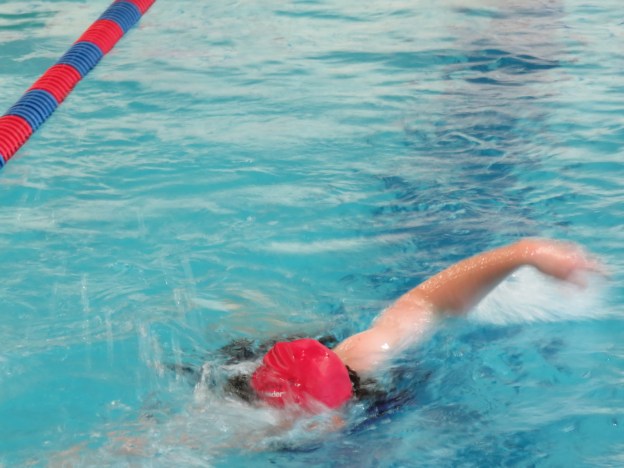
Marilyn swimming!

“The Mother of Women’s Swimming:Charlotte “Eppy” Epstein

O mermaid bold, long may you hold/ The wreath you’ve won by swimming,/And spoil for gents their arguments/ Regarding Votes for Wimmen! “To a Lady Swimmer,” William F. Kirk 1914.

I love to swim. So it is no surprise that I spent much of the first week of the 2024 Paris Olympics watching the swim competition. I cheered on Team USA as they won twenty-five medals in the thirty-nine events in the Paris La Défense Arena. As I yelled “Go! Go! Go!” at the screen during the 1500 freestyle, Katie Ledecky’s last race, my granddaughter admonished me. “Your screaming isn’t going to make a difference,” she said. Hey! Maybe it did! Ledecky won the fourteenth medal she had earned over four Olympics. 

Ledecky, Torri Huske, Jenny Thompson, Dara Torres, Janet Evans, Donna de Varona, and every woman who dove into an Olympic pool has a Jewish woman to thank. Charlotte “Eppy” Epstein, considered the “Mother of Women’s Swimming in America,” was not an exceptional swimmer herself but believed that athletic competition was as important for women as it was for men. Her determination and leadership impacted not only the sport of swimming but also how women perceived their own bodies and their place in the world.

As Glenn Stout recounted in his 2009 book, Young Woman and the Sea, How Trudy Ederle Conquered the English Channel and Inspired the World, until Epstein transformed women’s swimming, societal norms discouraged women from swimming or, in fact, from “breaking a sweat” anywhere but in the kitchen. Social bias against women’s participation in sports was the norm. This was best represented by Olympic founder Baron Pierre de Coubertin of France, who thought women’s competition in athletics was “physically dangerous for such delicate flowers and morally offensive.” 

Even if they could get in the water, the standard female bathing costumes hindered women swimmers. Kristin Toussaint described them in a 2015 Boston Globe article: “black, knee-length, puffed-sleeved wool dresses worn over bloomers with long black stockings, bathing slippers, and even ribboned swim caps.” In 1907, Annette Kellerman, an Australian competitive swimmer and vaudeville star, was arrested for indecency by Massachusetts police for wearing a one-piece bathing suit that ended in shorts above her knees. “Kellerman may have been thoroughly covered,” Toussaint said, “but to her fellow bathers, she may as well have been naked.”

Epstein changed the narrative in 1914 when she founded the National Women’s Life Saving League, which offered the “delicate flowers” a place to swim and take lessons. Using negotiating skills she learned through her job as a court reporter, she convinced the Amateur Athletic Union (AAU) to permit women to register with their organization for the first time and to sponsor competitive women’s meets. According to Stout, Epstein worked “behind the scenes … extolling the advantages of having a women’s swim association managed by women while deftly praising the example set by the AAU as an organizing body without peer —essentially killing the organization and its male overseers with kindness.” 

In 1917, she struck out on her own, creating the New York City Women’s Swimming Association (WSA) to further advance the sport. She successfully battled the United States Olympic Committee, enabling American female swimmers and divers to compete in the Olympics in Antwerp, Belgium. Through her efforts, swimming dresses and bloomers were replaced with outfits closer in style to Annette Kellerman’s. The success of the American women’s swim team led to the inclusion of track and field and other sports for women in future Olympic Games. 

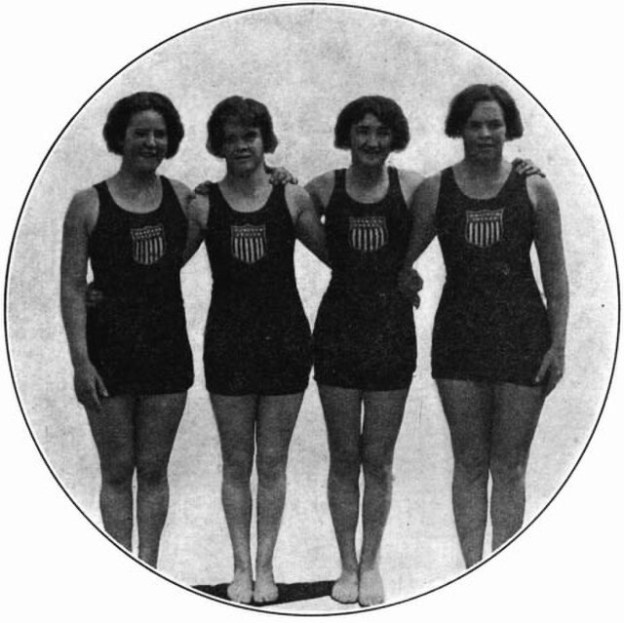
Epstein served as the women’s swimming team manager for the 1920, 1924, and 1932 Olympics. Her swimmers and divers dominated the games, holding fifty-one world records over the course of her twenty-two years of coaching. Her protégées included Eleanor Holm, Aileen Riggin, Helen Wainwright, and Gertrude Ederle. Epstein also served as chair of the national AAU women’s swimming committee.

Her Jewish roots became part of her legacy. The WSA team swam at the Young Women’s Hebrew Association of New York for national championship meets in the 1920s. In 1935, Epstein served as chair of the swimming committee of the Second Maccabiah Games. In 1936, she refused to attend the Berlin Olympic Games and withdrew from the American Olympic Committee in protest of the United States’ participation in the “Nazi Olympics.”

During her lifetime, Epstein also used her position to battle for women’s suffrage, staging “suffrage swim races” with her teammates, and fought for further bathing suit reform, distance swims, and additional competitive events for women. She continued to have a major influence on swimming until her death in 1938, just short of her fifty-fourth birthday. She was inducted into the International Swimming Hall of Fame and the International Jewish Sports Hall of Fame.

“By motivating young women to follow their passions in a sport that did not yet fully accept them, Epstein truly changed the way women thought about swimming,” according to Women in Swimming (Betsey Bennett. “Charlotte Epstein and the Swimming Suffragettes.” Women in Swimming. October 25, 2018). “And her impact did not end in the pool; once women gained freedom over their bodies in sports, they were better able to achieve liberation in other facets of society.”

On Wednesday, July 31, after binging on a morning of Olympic events being broadcast on NBC, I headed for the small pool in our Colorado rental complex. I swam 1500 meters in over an hour, approximately four times Ledecky’s time of 15:30.02 minutes in Paris earlier that day. I may not be setting any world records, but I too am a beneficiary of efforts of the small Jewish powerhouse from Brooklyn. I did not fear being arrested for wearing a TYR swimsuit, and no one feared that this “delicate flower” could not survive the multiple laps. I tip my Speedo swim cap to you, Eppy!

In 2024, Disney+ released the film Young Woman and the Sea based on Glenn Stout’s 2009 book. The movie tells the story of Epstein’s most well-known protégé, Gertrude Ederle, the first woman who swam the English Channel. Sian Clifford, who played Epstein, said the movie is “a beautiful, inspiring story that should have been told before.” 

“Charlotte Epstein serves as a symbol of the critical efforts of a Jewish sportswoman to improve the competitive opportunities and quest for physical emancipation of American women using their bodies in aquatic sports,” wrote Linda Borish in her 2004 paper. (“The Cradle of American Champions, Women Champions … Swim Champions’: Charlotte Epstein, Gender and Jewish Identity, and the Physical Emancipation of Women in Aquatic Sports.” The International Journal of the History of Sport_, Vol. 21, 2 (March 2004): 197-235.

All women swimmers—or all women athletes for that matter—have Eppy to thank. 

Originally published August 16, 2024. Updated July 2025.

Note: First Place Winner, 2025 Florida Press Association’s Sports Feature Story, Category C (Small newspapers).

SOURCES

Borish, Linda. “The Cradle of American Champions, Women Champions Swim Champions’: Charlotte Epstein, Gender and Jewish Identity, and the Physical Emancipation of Women in Aquatic Sports.” www.researchgate.net. March 2004.

“Charlotte ‘Eppy’ Epstein.” International Jewish Sports Hall of Fame.Website: http://www.jewishsports.net/BioPages/Ch

Charlotte Epstein. Jewish Virtual Library. Website: https://www.jewishvirtuallibrary.org/epstein-charlotte

“Sian Clifford Spills Secrets on ‘Young Woman and the Sea’ at Premiere.” Website: https://www.youtube.com/watch?v=F3sXvDepTr8

Stout, Glenn. Young Woman and the Sea, How Trudy Ederle Conquered the English Channel and Inspired the World. Houghton Mifflin Harcourt. 2009.

Toussaint, Kristin. “This woman’s one-piece bathing suit got her arrested in 1907.” July 2, 2015. https://www.boston.com/news/history/2015/07/02/this-womans-one-piece-bathing-suit-got-her-arrested-in-1907/

Charlotte Epstein. Photo Credit: Robert SlaterGreat Jews in Sports, (New York, Jonathan David Publishers, Inc., 1983), p. 65.

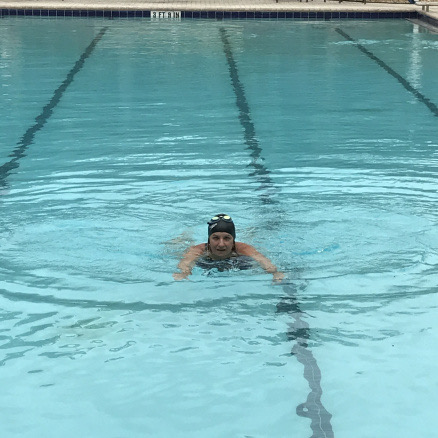
Thank you, Eppy! Here I am doing the American crawl in our pool in Solivita!

The Weather by Frances Cohen

This story was written by my mother, Frances Cohen, in ~2006, after she and my father, Bill Cohen, moved into Coburg Village, an independent living facility in Rexford, New York. A natural storyteller, my mother joined a writing group and wrote down many of her stories for posterity. It is a joy to share them with you!

The weather plays an important part of our life. At times, we wish that we could change the weather, but as we have learned it is one of the things in life we cannot change. 

Sometimes prayers help. On two occasions, our prayers were answered when we planned outdoor receptions. One was for the retirement party Bill and I planned at our cottage on Lake Champlain during the summer of 1983. The second was at the wedding reception for my granddaughter that was held on my daughter and son-in-law’s front lawn in Clifton Park in October 2007. At both parties, the weather was perfect: sunny, 72 degrees, with no wind. We considered it a miracle! 

Our prayers did not work when Bill, my daughter Marilyn and I had to travel from Keeseville to Rockland County for our son Jay and our future daughter-in-law Leslie’s engagement party in December 1970. A Nor’easter started the day we were supposed to leave, so we delayed the trip until the next morning in hopes the weather would improve. Unfortunately, the snow only got heavier. By the time we arrived in Albany, the New York Thruway was closed. Determined not t miss the party, we decided to take Route Nine for the rest of the trip. The roads and visibility were terrible. Atone point, Bill stopped at a railroad crossing as the gate was down and the lights were flashing. The snow was so thick that Marilyn, who was sitting in the back seat, thought we were actually on the tracks and began screaming in fear. When we all calmed down, we continued on the trip. We arrived in Pearl River at 11 o’clock at night, sixteen hours after leaving Keeseville for what should have been a four-to-five-hour trip. It was one of the most difficult trips we ever made. In 1980, the year before we retired, our cousins invited us to visit them in Florida. When the day of our flight arrived, we left our cottage on Lake Champlain to drive to Montreal, the closest airport. When we crossed the border to Montreal, the snow was piled so deep that drifts were at places two stories high. As we crossed over a bridge near the airport, Bill lost control of the car, and we did a complete 360-degree turn, landing in a soft snowbank. Fortunately, there was no damage, so we were able to continue the trip to the airport. When we arrived in Florida, it was 85 degrees, and our cousins welcomed us in summer attire. Bill and I looked at each other and said, “This is paradise!” We couldn’t change the weather, but we could change our location. Right then and there, we decided that before next winter, we would sell our business, have a going-out-of-business sale, and spend our winters in Florida and summer at our cottage by the lake. 

We were fortunate to be snowbirds for many years. It was the best of both worlds: Beautiful summers on Lake Champlain and warm, balmy winters in Florida. We thought we had it made—until Hurricane Wilma hit in 2005. 

At that point, Bill and I were living full time in a condominium in Wynmoor, an over-fifty housing complex in Coconut Creek, Florida. The Weather Channel and local officials had warned us in advance of the incoming hurricane, and we had made sure to purchase water, canned food, and extra batteries. The night the hurricane hit, we did a lot of praying. The winds and rain were very strong, and we were very frightened. We were so thankful that our building had been spared any serious damage. We woke up to no electricity and no air conditioning in the 85-degree heat. For the first few days, we stayed in our condominium, living on the canned goods that we had purchased before the hurricane. When the electricity finally came back in our condominium, we decided to go food shopping for milk, eggs, and other food to restock our pantry and refrigerator. At that point, we were able to see the actual extent of the damage in the area. We saw lots of fallen trees, some of which had crashed into parked cars. With all the wires down and traffic lights out, getting to even the supermarket was almost impossible. 

When we finally got to Publix, the store was dark and eerie as it was powered by back-up generators. We learned as the week went on that thousands of trees had been destroyed in our residential area. More tragically, a number of other residential areas, including Hawaiian Gardens, the original complex we had moved out of only four years before, were so badly damaged that they were unlivable and eventually had to be completely torn down. 

In the middle of all this stress, when I was getting in the car to take another trip to the supermarket a week after the hurricane hit, I caught my foot on the curb while trying to get out of our parked car and broke a bone in my leg. That was the final straw. Our children felt strongly that we needed to get out of Florida and its hurricanes and move back up north. By spring, 2006, we were settled in Coburg Village, four miles from my daughter and son-in-law. At Coburg, we don’t need to drive, as the shuttle takes us everywhere. Our children are close enough so they can go shopping for us if the weather is too bad. So, when bad weather comes, we are able to just look out the window and enjoy our cozy apartment. Now we can be thankful for the snow so that grandchildren can ski, the rain that makes our flowers and gardens grown, and the beautiful sun that makes us all happy. 

The photo of me with a rubber chicken was taken in Keesevile around 1954 after a bad snowstorm. No idea why I had a rubber chicken!

Music to our ears; NRO pop concerts

As we have done since our Mountain Girl was born in 2015, Larry and I are settled into our rental in Summit County, Colorado, to escape the Florida heat and to enjoy family time.
Each summer, we look forward to attending performances of the National Repertory Orchestra (NRO) in Breckinridge.. Eighty young musicians are selected every year through national auditions to perform with the NRO.  NRO alumni may be found in countless orchestras both the in the United States and abroad.  Along with performances at the Riverwalk Center in Breckinridge, the talented performers participate in free “pop up” concerts offered throughout the county. We have fortunately been able to attend several NRO events throughout our stay.
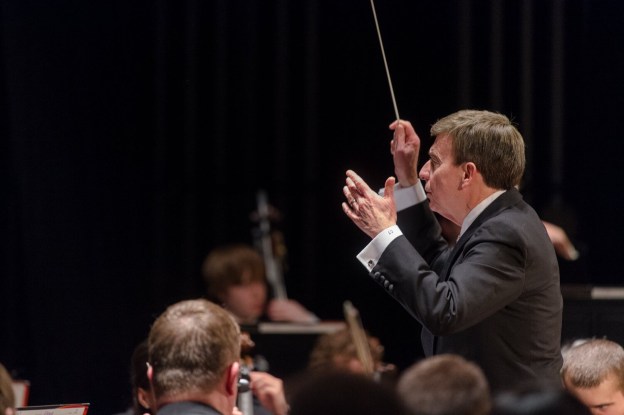
For the past three years, we have attended the Pops concert, led by conductor, showman, and clarinet player extraordinaire Carl Topilow.  Now serving as Conductor Laureate, he was Music Director and Conductor of the NRO for 42 years. In addition to his appearances with the NRO, Topilow is the Founding Conductor and Music Director of the Cleveland Pops Orchestra and has appeared as guest conductor for more than 130 orchestras.  
The son of Jacob and Pearl Topilow, he was raised in Bayonne, New Jersey.  A 2011 article by Violet Spevack in the Cleveland Jewish News spoke of Topilow’s performances in Jewish venues, including at Yom Kippur services and Sisterhood meetings. “Topilow is endearingly ‘one of us,’wrote Spevack, with his Yiddish ta’am (flavor) and chutzpadik (audacious) shticks,” He and his brother and pianist Dr. Arthur Topilow, often perform together, including for a July 2016 NRO event that included klezmer music, the dance-oriented Jewish tradition from Eastern Europe.  
On July 8, 2023, Larry and I brought our then eight-year-old granddaughter to her first concert performance. In the days before the event, we explained to her about the protocols for the concert: her need to sit quietly, to be attentive, to applaud at appropriate times, and to avoid any actions that would distract from other concert goers. Outside of asking if there would be a ‘half time’ (she and her father are huge Denver Nuggets fans), our Mountain Girl was well prepared. She even stood up and yelled “Bravo!” at the appropriate times.
The entertaining concert included themes from The Wizard of Oz, The Lion King, and The Godfather, as well as Topilow’s signature selections from Fiddler on the Roof.  We particularlyenjoyed Topilow’s imitation of the sounds of the shofar on his clarinet — Tikiah! T’Ruah! Shevarim,—played by the illustrious violinist Issac Stern in the movie version of the Jerry Bock/Sheldon Harnick classic.
Later in the season, we took our granddaughter along with her parents to a performance of The Lion King. The Disney animated classic was shown in its entirety on the big screen above the orchestra as 80 musicians, led by conductor Jason Seber, performed the score in precise timing with every scene. “Once you watch a movie accompanied by the power of a live orchestra, you’ll be spoiled for life,” wrote Shauna Farnell in an NRO article in July 2023. She was right. We loved it!
This year, Larry and I repeated our Pops visit. Topilow and his iconic red clarinet lead a small line of brass and wind musicians into Riverwalk with a somber rendition of “Just a Closer Walk with Thee,” a gospel song frequently played at New Orleans jazz funerals. Once on stage, he led the orchestra in a rousing “When the Saints Go Marching In.” He showed off his clarinet expertise in the final number, the Cantina theme from John Williams Star Wars soundtrack.
Although she was unable to attend this year’s Pops concert, our Mountain Girl was she joined us for the NRO’s showing of Star Wars: The New Hope, again replete with the symphony lead by Jason Seber replacing the entire musical score. The Force was with us, as we enjoyed every minute. 

Sources
A special thank you to Carl Topilow for his input into the article
Farnell, Shauna. “The National Repertory Orchestra presents Disney’s ‘The Lion King’ in Concert Live to Film.” www.nro.org website. July 23, 2023.
NRO website. www.nro.org
Spevack, Violet. “Maestro Carl Topilow, Cleveland Pops mark a decade together.” Cleveland Jewish News. October 4, 2011.
Topilow, Carl. www.carltopilow.com


Come hell or high water, the celebration must go on!

A version of this story was published in the (Capital Region, New York) Jewish World on October 26, 2016.

As we Floridians were waiting out Hurricane Matthew’s departure on a very rainy, windy Friday, I was thinking about those people up and down the East Coast who were more strongly impacted by the storm. Would their homes survive intact? Will family and friends be safe? Along with these worries, I thought of people who had had the misfortune to be celebrating a special event— a wedding, a bar mitzvah, a retirement party— in the middle of this major weather system. 

What do you do when bad weather creates chaos? Reflecting on our own experiences and the shared experiences of friends and relatives, I’ve learned that most people let their smile be their umbrella—or snow suit!

My brother Jay and his wife-to-be Leslie planned their engagement party on December 28, 1969, in Rockland County. My parents, my sister Bobbie, and I were scheduled to make the trip from Upstate New York the day before when a crippling snowstorm hit the Northeast.  With my father white knuckled at the wheel, we made it down the Northway to Albany only to find the Thruway was closed. Determined that the four of us would not miss the party, Dad continued the trip down Route 9.  What should have taken six hours took us twelve. The storm, which dumped over twenty-six inches of snow by the time it ended, is still recorded as the third greatest snowstorm in Albany’s history. The memories of our ride from hell were forgotten as we celebrated Jay and Leslie’s engagement the next day in sunshine and relatively warm temperatures. 

On  June 12, 1968, Betty Schoenberg was walking into Washington Square Park for   her NYU graduation when the skies opened up, and the rain fell in torrents.  Many attendees —including Betty— gave up and left, but a few hardy souls shivered under umbrellas. The storm made the front page of the next day’s New York Post:  “Soaked! “ the caption read. “The show did indeed go on despite the rain that pelted the assemblage without a letup.”

When Betty got home, she realized that the rain had soaked through her white dress, her black raincoat, and her purple graduation gown. Her clothes were ruined, and her skin had turned black from the raincoat’s dye run-off. She wrote a letter of complaint to the graduation committee, who offered to pay for her cleaning bills. She never did follow through, but almost fifty years later she still has the letter, the dry cleaning receipt, and  a clipping of the newspaper article in her memory box. 

My friend Lynn Urgenson recalls going to her daughter’s college graduation at CW Post on Long Island. The day before the event was warm and sunny, but by that morning, the temperature dropped into the low forties. Lynn wore several layers of clothing over her original outfit, but her only pair of shoes were her sandals. “ I wound up putting my feet into my purse,” said Lynn. “My teeth were still chattering hours after Caren had picked up her diploma.” 

In 2000, a spectacular mid 70-degree day preceded the largest snowfall of the entire winter season in the Capital Region and the second heaviest all time April snowstorm on record.  For the Huber family, it made Debi’s daughter Arielle’s bat mitzvah more memorable. “Some of my husband’s relatives from Florida definitely freaked out,” said Debi, “as they weren’t used to snow at that point in their lives with many years of living in the Sunshine State.” Fortunately, all of the guests had arrived before the freak storm, and the celebration went on as planned—once the parking lot of the synagogue was plowed out.

Not that the weather is always perfect in Florida. Rosanna and Norm Steele’s son and his bride were to be married on the beach near the Steele’s condo on Siesta Keys on September 25, 2004. The day before the wedding, Jeff called his parents to say that he and Julie were getting married that night as Hurricane Jeanne was bearing down on Florida the next day. Fortunately everyone— the caterer, the photographer, the florist, the violinist—worked with the wedding planner to pull the event off as planned. What was to be the rehearsal dinner became the “After Wedding Dinner,” safely held in a near-by clubhouse. The hurricane rolled in as Rosanna was bringing in the last of the food she had prepared. “Luckily, we didn’t lose power until the dinner was over,” Rosanna said. 

The Steele wedding story didn’t end there. With all flights cancelled, all of the out-of-town guests stayed longer than expected in the rented rooms—without power, cable, and air-conditioning. “ The good far outweighed the bad, “ recalled Rosanna.”   We got to spend some very valuable time together as a family.”

Jason  Freeman and Gretchen Walker’s  wedding day in the spring of 2008 was bright and sunny with one small glitch— fifty mile per hour wind gusts. The four chuppah holders  became flag bearers when the white traditional covering shredded in the wind. “The weather didn’t ruin the wedding at all,” recalled Jason, “as everyone relaxed and didn’t worry about the details.” 

Fortunately for us, Hurricane Matthew took a little hook to the right just in time for the Orlando area to miss the brunt of the storm. By Friday afternoon, I had baked a pumpkin bread and invited a group of women over to play mah jongg. Other areas of the coast were not so lucky. And some day, someone in those effected will be sharing the story of a special event in his/her life in which an unwanted guest named Matthew played a part. 

Where did the last fifty years go?

Come my love and we will wander, just to see what we can find. If we only find each other, still the journey is worth the time. 

Along with school opening and all that is happening in the world, September is a memorable month for Larry and me. 

 Fifty years ago on September 8, 2024, Larry and I got married in Upstate New York. For those who have been reading my column for a while, you may remember many of the stories. We met at a Purim (not porn as some people misheard!) party held by the Jewish singles club in Albany New York. It was love at first sight, and we got engaged six months later. Our wedding was held on a relatively hot September afternoon, the week after Labor Day to accommodate Larry’s parents’ store’s school opening weekend and at two p.m. to accommodate Hebrew school hours. Despite the fact that the rabbi barely knew us, he gave a very long talk, of which we remember nothing. The reception was provided by the Sisterhood, who served chicken, peas (Larry hates peas!), and un-Kosher wine provided by my mother whose label was covered with aluminum foil. The band forgot the words to our first dance (“He Touched Me,” by Barbra Streisand. On reflection, it was a dumb choice. If we got married today, Larry and I would choose “Moon River.”) My father got a little tipsy (totally out of character) and thanked Keeseville National Bank for the loan that paid for the wedding. 

If the wedding and reception was not perfect, our honeymoon was a disaster. Twelve hours into our stay in Quebec City, Larry woke up in agonizing pain from what was later diagnosed as a kidney stone. The next morning, I drove Larry to a hospital and drove myself to a $9 a night rooming house across the street. Three days later, newly relieved of his stone through surgery, Larry sat in the passenger seat while I started the drive back to my parent’s home on Lake Champlain. Mistaking the Canadian kilometer per hour speed limit for the United States miles per hour speed limit, I hit 90. Larry told me to pull over, and he would drive. When we arrived three days early at my parents’ cottage on Lake Champlain, they initially thought the marriage had already tanked. (Fifty years later, despite the fact that I am an excellent driver, I still defer to Larry to drive when we are in the car together.)

Thus began the “getting to know you” stage of our marriage. In that first year, a co-worker of Larry’s noticed that my usually slow-to-anger husband was banging drawers and mumbling expletives under his breath. “What IS your problem?” Helen asked. “Never get married!” Larry shouted. “She leaves her shoes in the middle of the room,” he steamed. “When I got up to go to the bathroom, I tripped over them.”

A half a century later, we have learned to accept each other’s quirks. Larry is a terrible backseat driver; I leave cabinet doors open, lights on, and discarded shoes all over the house. Larry is quiet and private; I am talkative and too forthcoming. Larry thinks often in mathematics and statistics; I am more focused on the written word. Case in point: Larry thought our 49th anniversary was more exciting because 49 has a square route; I had to use this column to share an essay on our fiftieth. In the glow that surrounded our memorable anniversary, I could come up a handful of things about Larry that bother me. Larry came up with fewer. 

When my parents celebrated their fiftieth anniversary, we had a huge party at our home in Clifton Park. The four children and their spouses had chipped in to give Mom and Dad their first ever and only cruise. I will never forget the joy and amazement when they opened up the envelope with the voucher.

Of course, we all thought they were old. As a matter of fact, I had commented earlier that summer that it was a ridiculous that a couple were getting divorced after 35 years of marriage. Why bother starting over at that late stage?

Now, we are the ones celebrating a milestone anniversary. The past fifty years have flown by in a flash, a blur, a nano-second. We have a lifetime of memories and experiences and ups and downs and ins and outs. We have enjoyed working in career fields we loved, raising two children, watching them grow, spread their wings, and fly onto new adventures; sharing friendships; and sharing close family ties only enhanced most recently by mishpachah (extended family) and three grandchildren.

Despite the speed the last half century has sped by, I will not trade one moment of our lives together for anything else. Larry is my best friend, my soul mate, my companion, the wonderful father of my children and the amazing Zayde of our grandchildren. For his 75th birthday, I wrote a list of the same number of things I love about him. In the past year, I’ve added several more. 

How will we celebrate? Our children gave us a weekend at a beautiful bed and breakfast. Later this fall, we will be taking a trip to Italy.. But most importantly, I will never ever lose sight of the fact that marrying my Larry was the best decision I ever made. And thankfully, he feels the same way about marrying me.

Celebrating our Fiftieth in Winter Park, FL

Do Something! The Gift of Giving Back

For Jews, the High Holy Days is a time for us to turn inward, to reflect on our lives, not only where we have been but also where we hope to go in the coming year. So much of the world needs our help. What can one person do? How can one person make a difference? 

In the Pirkei Avot, Rabbi Tarfon writes,“It is not incumbent upon you to complete the work but neither are you at liberty to desist from it.” That quote has been in my email signature for several years and serves as a reminder to me and those that read it that we can all can make a difference. No, we cannot save the world. But our inability to do EVERYTHING does not give us a pass on doing nothing. 

This truth is found in the often-told starfish midrash. An old man is walking along the beach in which hundreds of starfish have been washed along the shore during high tide. As he walked, he came across a little girl who is throwing the starfish back into the ocean. “You realize that you will not be able to make much of a difference,” the old man tells the little girl. She picked up another starfish and threw it as far into the water as she could. “I made a difference to that one.” 

It reminds me of “starfish” moment. On a recent trip to the beach, Larry and I were walking along the edge of the water. As Larry was enjoying the waves and the birds, I was picking up garbage and sticking it in a plastic bag I brought with me for that purpose. A broken styrofoam cup. A short length of cord. A lone flipflop. And a dozen or so plastic caps from water bottles. 

“You can’t pick up every bit of litter on the beach,” Larry said.

“Yes. But can do something!”

 Yes, Larry was right. I am not going to pick up every piece of litter on a beach. But I can at least fill up a plastic bag with some of it. 

Giving away my freshly baked challahs also gives me a chance to do something Early into the pandemic, I started baking three or four challahs a week. At least one of the challahs went to someone in our community who needed cheering. The first one went to a friend whose wife was in a memory unit at the hospital. Week after week, we delivered challahs to people who had lost their spouse, who faced illness; who got bad news from their families. My small challahs were small tokens of love and caring. My challah baking has slowed down in recent months, and I usually make extras to tuck in the freezer to pull out as needed. It just filled my need to do SOMETHING!

For the past ten years, my writing has been a way for me to feel as if I am making a difference. Initially my writing focused on my family stories. In the past eight years, I have become captivated by telling other people’s stories, the lives of Holocaust survivors. So much has been written already: fictional accounts, memoirs, graphic novels, poetry, plays. Many of have become classics: Elie Wiesel’s Night;Prima Levi’s Man’s Search for Meaning; William Styron’s Sophie’s Choice, and Anne Frank’s Diary of a Young Girl. Then why do I continue to interview Holocaust survivors and their families?

Writing these stories allows me to do my part to make the world never forget. Each story is a statement against Holocaust denial. And having each story published has brought feelings of pride, comfort, and maybe some peace to the subjects and their family. Following Rabbi Tarfon’s advice, my inability to write everything doesn’t mean I cannot continue to do something. 

And what happens when one person joins others to make a difference? Fortunately, I am surrounded by people in my 55+ community who are also doing their part to help people in the greater Poinciana area. Solivita has over 200 clubs, and many of them support the local community. The Do Unto Others Initiative (DUO) has raised over $260,000 in 11 years to support the work of the St. Rose of Lima Food Pantry. Another club, Solivita Friends Helping Those In Need provides similar support for St. Vincent de Paul St. Ann’s Food Pantry in Haines City. Solivita Friends of Elementary Education Schools (SoFEEs) provides nourishment, school supplies and seasonally appropriate clothing to local elementary schools. In the past nineteen years, Stonegate Women’s Golf Association (SWGA) has been able to provide over $300k to local community charities. The Solivita Performing Arts Council (SPAC, Inc.) has raised over $139,000 since its inception, providing grants to help local schools purchase and maintain instruments, fund band and choir concerts, produce school theatrical productions, fund thespian workshops and support art projects. Since 2006, the Solivita African Cultural Club Education Fund, Inc. as given out approximately $225,000 in scholarships to local students. SOLABILITY, a club consisting of individuals of varying abilities, provides activities accessible to all. Members of the Butterfly Club provide financial support for our beautiful butterfly garden; volunteers keep it weeded and in control. Our Book Circle, which has over 30 book clubs under its umbrella, donates books and financial help to Polk County Schools. The Shalom Club makes an annual contribution to the Perlman Food Pantry or Jewish organizations supporting local families. The organizations above represent only a small sample of ways individuals have joined together to help those in need. 

So, yes, one person can make a difference. Wishes for a sweet, healthy 5785. May it be a year in which each of us make a difference. 

My wonderful community, Solivita

Thanks to the leadership of numerous Solivita clubs and organization for providing the information for this article.

Celebrating in the Big Easy

A version of this story was originally published in The Jewish World and the Heritage Florida Jewish Journal in October 2018.

Simchas and celebrations are wonderful, but New Orleans celebrates every day of the year. A city brimming with restaurants, clubs, and street musicians, it was easy to see why The Big Easy is listed consistently in the top five party cities in the United States. 

First and foremost, it is a city for foodies. The minute my husband Larry and I got into the shuttle taking us and our four friends to our lovely bed and breakfast, our driver Ryan started listing all the restaurants we needed to try. “Cafe Du Monde for breakfast; Napoleon’s for lunch; Arnauds for dinner; Dragos for a snack; Mothers for the debris Po’Boys; Rum House for tacos; Dat Dogs for franks…… ” 

“How many times can we eat in one day?” I asked as I quickly scribbled down the names.

The answer is —errr—more than three. Our first dinner was at the Cochon, where I experienced the milder Creole food while Larry got a mouthful of the hotter Cajun style. We then headed down to Royal and Bourbon Streets, the heart of the evening action. At the Spotted Cat, we listened to a fantastic jazz combo and even got an unexpected treat. The group’s leader announced that his wife had just arrived from Paris. Accompanied by the clarinet, bass, and sax, she sang a beautiful rendition of La Vie en Rosa, Edith Piaf’s signature song. Magnifique!

The next morning, we took a two-hour walking tour of the French Quarter. Our guide Kathy, a New Orleans native, laced her information with colorful stories of the founders, the builders, the business owners, and famous New Orleanians: . musicians Louis Armstrong and B.J. King; writers Truman Capote, William Faulkner, and Tennessee Williams; the pirate Jean LaFitte, and Chef Emeril Lagasse 

When I asked about the Jewish influence, Kathy shared stories about Judah Touro, who funded both the synagogue and hospital that bears his name; Malcolm Woldenberg, a New Orleans businessman whose philanthropy is honored in a park that holds the city’s Holocaust Memorial; and Allan and Sandra Jaffee, natives of Philadelphia who in 1961 turned an art gallery used for occasional concerts into Preservation Hall, forevermore beloved by jazz musicians and fans around the world.

For lunch, we each sampled the muffuletta—a sandwich that is made with Italian charcuterie and a spicy Creole olive salad—al fresco at the Napoleon. An hour later, we boarded the Steamboat Natchez, one of only two true steam powered sternwheelers on the Mississippi River today. On our two hour ride, we had a good view of another of New Orlean’s nickname, Crescent City, as the land sits like a crescent shaped bowl on the banks of the river. We went past industrial parks reflecting the economic importance of the river, areas still recovering from Hurricane Katrina in 2017, and lovely homes almost hidden by rebuilt levees that locals hope will never breach again.

After the ride, we stopped fat Cafe Beignet for the world-famous square pastries. Once finished, we hauled our confectionary-sugar-covered bodies to Drago’s for dinner. After a walk back from Riverwalk, we headed back for a swim and a soak in our B&B’s hot tub before our exhausted bodies fell into bed. 

The next day’s Garden Tour added to our appreciation of another view of New Orleans. Originally developed by the French to keep those pesky Americans out of the French Quarter, the Garden District is known for its tree-lined streets, palatial homes, and fine dining. 

We toured the Lafayette cemetery, an egalitarian final resting place for Christians and Jews; rich and poor; and, unfortunately due to multiple outbreaks of yellow fever throughout the city’s earlier history, the very young and very old.

Because of the high water table, all remains are interred in family or organization tombs, including one for destitute children and one for firefighters. Remember the expression, “I won’t touch that with a ten foot pole!”? We learned the meaning in that cemetary as room for the newly deceased is made by pushing back previous bodies to the back of the crypt with the long pole used for that purpose.We then were escorted past the homes of other famous city residents, including Sandra Bullock, John Goodman, and—the most popular—the Manning family of football fame. 

After tacos at The Rum House, we all boarded the St. Charles streetcar for a ride past Touro Synagogue, Audubon Park, and Loyola and Tulane Universities. Our timing was perfect as it started raining soon after we boarded and came down in torrents until shortly before we departed. That was my only regret that weekend: Larry and I hadn’t chiseled out time to check out the synagogue and meet with one of its rabbis, Todd Silverman, who is the son of long-time friends from Upstate New York. 

Our final dinner was at Arnaud’s, a beautiful five star restaurant off Royal Street. We had reservations in the Jazz Room, where the food, service, and ambiance were wonderful. Our meal was enhanced by a three piece jazz band that at one point stopped by each of the tables to take requests. Larry’s choice of Sweet Georgia Brown was a hit.

The next morning, we all made a dash over to the World War II Museum to view as much as we could in the two-hour window before we headed back to the airport. Yes, New Orleans is known for its music and food, but this fantastic museum is ranked by TripAdvisor as the top attraction in the city, named by USA Today as the “#1 Best Place to Learn US Military History,” and designated by Congress as America’s official museum about World War II. Artifacts and videos brought the terrible war and its history to life. 

We had arranged for Ryan, our original driver, to pick us up at the our bed and breakfast. We gave him a rundown of all the restaurants we had managed to eat our way through in three days. Then Larry and he discussed that night’s upcoming New Orleans Saints/Washington Redskins game. Before boarding our flight, two of our friends tasted po’ boy sandwiches and the rest of us ate pralines, two of the few specialities that we hadn’t consumed in the past 36 hours. It was time to leave The Big Easy—but there was one more surprise left.

Larry and I got home in time to throw in some laundry and turn on the New Orleans Saints and Washington Redskins football game. Drew Brees threw a 62 yard touchdown pass that resulted in his overtaking Peyton Manning’s record—another hometown native— to become the National Football League’s career passing leader. When I texted my “mazel tov” to Ryan, he texted back a thank you and a picture of the scoreboard proclaiming the Saint’s quarterback’s accomplishment.

Between the levees on the Ole Mississippi and the levity on Bourbon Street, I may not want to live in New Orleans. But Larry and I are already thinking of another trip. After all, we need to spend more time in the city’s museums. We need to enjoy a visit with Todd, and we have at least another 1,200 restaurants to try. As they say in Louisiana creole, “Laissez le bon temps rouler!” (Let the good times roll!) 

10/18/18

As a Jew, I will not vote for Donald Trump as he fails to reflect my values. [Revised 10/10/2024]

On November 5, 2024, Americans will be voting in what many view as the most consequential elections in our history. As I make my selections, it will be imperative that my choices reflect the values that are important to me not only as a Jew but also as a human being, those values concerning freedom, truth, justice, equality, intelligent leadership, and empathy. 

In a recent poll by the Jewish Democratic Council of America, 72% of Jewish voters backed Vice President Kamala Harris, and 25% supported former President Donald Trump. In 2021, the Pew Research Center published “Jewish Identity and Belief, ” a study based on a survey of Jews as to what attributes are most essential to being a Jew. Based on five of its most essential, here are some of the possible reasons why so few Jews back candidate Trump:

Remembering the Holocaust:” DonaldTrump has praised dictators, including Vladimir Putin (“a genius” and savvy”) Victor Urban (“fantastic”); and Kim Jung-un (“tough, smart guy.”) This alone should disqualify him for office. Taking a page from his dictator friends’ playbook, he recently posted on his website Truth Social that he will lock up political opponents.”“WHEN I WIN, those people that CHEATED will be prosecuted to the fullest extent of the Law, which will include long term prison sentences.” Furthermore, according to the Jewish Democratic Council of America (JDCA), Donald Trump has mirrored the fascist rhetoric of Hitler and Mussolini through his antisemitic tropes, including the vile “duel loyalty” lie. He has accused Jewish Democrats as hating Israel and their religion, calling them “fools” and needing to have “their head examined.” On September 19, 2024, Trump asserted, “If I don’t win this election the Jewish people would have a lot to do with that,” (Note: Jews make up only 2.5% of the U.S. adult population).Even J.D.Vance, Trump’s vice president choice, wrote privately to an associate in a 2016 email that he viewed Trump as “America’s Hitler.”

Trump’s recent rhetoric has been as disconcerting if not more dangerous. In two separate talks to Jewish groups in Washington D.C. on September 19, Trump asserted, “If I don’t win this election the Jewish people would have a lot to do with that.” 

His comments were immediately excoriated by prominent Jewish groups. including the American Jewish Committee. “Whoever a majority of the Jewish community votes for, Jews — roughly 2% of the U.S. population — cannot and should not be blamed for the outcome of the election. Setting up anyone to say ‘we lost because of the Jews’ is outrageous and dangerous. Thousands of years of history have shown that scapegoating Jews can lead to antisemitic hate and violence.” 

“Leading an ethical and moral life:” According to the Washington Post, Trump made 30,573 false or misleading claims over the 4 years of his presidency. Along with six corporate bankruptcies, his legal woes include indicted or alleged crimes including Trump University, hush money payments, sexual abuse and defamation, falsified business records, and attempts to overthrow the results of the 2020 election show. Most recently, Trump’s lies about the federal response to Hurricane Helene, with claims that hurricane money was spent to house illegal immigrants, has complicated the recovery. “It is paramount that every leader, whatever their political beliefs, stops spreading this poison,” White House spokesman Andrew Bates wrote in the memo, adding: “This isn’t about politics — it’s about helping people.”

Working for Justice and Equality in Society:” Coupled with his being on the wrong side of the law as enumerated above, Donald Trump has known to align himself with and has emboldened dangerous far-right wing extremists. He dismissed the neo-Nazi and white supremacists’ 2017 deadly demonstration in Charlottesville, North Carolina, with his infamous,“There were good people on both sides.” He has disparaged immigrants, the disabled, Gold Star parents, veterans, prisoners of war, veterans, Haitians, Blacks, Muslims and, as noted above, all his political opponents. 

Being Intellectually Curious:” In 2018, Trump defended himself against negative reports regarding his mental capacity to handle the presidency with a tweet stating he was “very smart” and “a very stable genius. On 5/21/2021, New York Times reported on information shared by 10 then-current and former officials involved in the president’s intelligence briefings. They stated Trump frequently ignored information with which he disagreed, veered off in tangents, demonstrated a short attention span, and relied on conservative media and friends for information. 

Caring about Israel:” Trump repeatedly states that as president he did more for Israel than any other president, citing the 2020 Abraham Accords. As we commemorate the first anniversary of the October 7, 2023, massacre, however, his rhetoric demonstrates his serious lack of support for Israel. His initial comments a few days later were to praise Hezbollah, another terrorist group, as “very smart,” Recently, on the event’s first anniversary, he used a conservative talk show’s podcast to put the spotlight on his own grievances.“Israel has to do one thing. Israel has to get smart about Trump,” he was quoted in The Times of Israel,” because they don’t back me.” John Bolton, Trump’s former national security advisor, warns that the former president cannot be trusted. “ Trump’s support for Israel in the first term is not guaranteed in the second term, “ said Bolton, “because Trump’s positions are made on the basis of what’s good for Donald Trump, not on some coherent theory of national security.”

When someone shows you who they are,” wrote Maya Angelou, “ believe them the first time.” This election day, we can choose a path, a future in which democracy can continue forward. Please join me in voting for Kamala Harris.

Sources:

Britzky, Haley. “Everything Trump says he knows ‘more about than anybody.’” Axios. January 5, 2019.

Cillizza, Chris. “Trump’s ‘very stable genius’ tweet shows he isn’t.” CNN. January 7, 2018. 

DeValle, Lauren et. Al. “Jury finds Trump must pay $83.5 million to E. Jean Carroll. CNN. January 26, 2024. 

“Hear Trump praise dictators at New Hampshire rally.”CNN. November 12, 2023

Holmes, Kristin Andrew Millman,  “Trump praises ‘fantastic’ Viktor Orbán while hosting Hungarian autocrat at Mar-a-Lago for meeting and concert.” CNN March 3, 2024.

Jewish Democratic Council of America Website https://jewishdems.org/

Kelly, Laura. “Trump says ‘Jewish people would have a lot to do’ with his loss ‘if that happens.” The Hill. September 20, 2024.

Kessler, Glenn, Salvador Rizzo, and Meg Kelly. “Trump’s false or misleading claims total 30,573 over 4 years.” Washington Post. January 24, 2021.

Magid, Jacob.“Trump: ‘Israel has to get smart about Trump, because they don’t back me’”The Times of Israel. October 7, 2024.

Markoe, Lauren. ‘Outrageous and dangerous’: Jewish groups blast Trump after he said Jews would bear blame if he loses.” Forward. September 20, 2024.

Pew Research Center. “Jewish identity and belief.” May 11, 2021 (https://www.pewresearch.org/religion/2021/05/11/jewish-identity-and-belief/)

Rodriguez, Sabrina and Justine McDaniel. “As Trump makes false claims about hurricane relief, White House calls it ‘poison.’” Washington Post. October 4, 2024

Savage, Charlie and Maggie Haberman, Jonathan Swan and Michael Gold. B “Trump Steps Up Threats to Imprison Those He Sees as Foes.” New York Times. September 9, 202

Sheffy, Steve. “Your Republican Friends need to know the facts.” The Times of Israel. September 11, 2024.

Soifer, Halie. “Not just about defeating Trump: Why Kamala Harris is the next president that Jews need.” Forward. August 22, 2024.

Slattery, Gram and Helen Coster. “J.D. Vance once compared Trump to Hitler. Now they are running mates.”Reuters. July 15, 2024.

U.S. News Staff. “All of Trump’s Legal Woes” U.S. News. Aug. 28, 2024.