Category Archives: Jewish Interests

Why I am not voting for Donald Trump

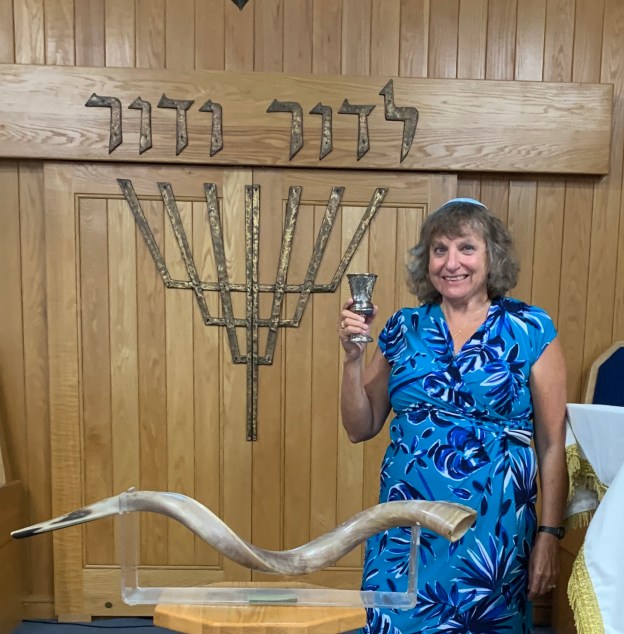
Marilyn Cohen Shapiro reciting Kiddish at Congregation Shalom Aleichem, Kissimmee, Florida

This article is in response to “Donald Trump: Social Justice President” (Rabbi Sanford Olshansky, Heritage Florida Jewish News, Aug. 28, 2020). 

The High Holy Days will be very different this year for all of us.

Rather than meeting fellow congregants in our synagogues, we will be Zooming. As the first day falls on Shabbos, Reform Jews will have to wait until the closing moments of Yom Kippur to hear the sound of the shofar over the Internet. Holiday meals will be lonely affairs as most families are practicing social distancing. Fasting on the holiest day of the year will be made even more difficult when people are not sharing the experience with others.

It did not have to be this bad. Other countries are opening up. Because of this administration’s failure to address the COVID-19 pandemic and — worst yet — its attempt to call it a “hoax,” the United States has over 6 million confirmed cases and over 189,000 deaths as of Sept. 4, with an upsurge expected this fall. Employment is at 8.4 percent overall (compared to 4.7 percent under Obama) but much higher among Blacks (13.0 percent), and Hispanics (10.5 percent). Both small businesses and large corporations are facing closures or uncertain futures. 

The president and his followers have made a health issue a political issue. The country has been torn apart on the issue of wearing a piece of cloth. “The dispute over masks embodies the political dynamics of the campaign,” writes Tara McKelvey in a BBC news article. “It also reflects a classic American struggle between those who defend public safety and those who believe just as deeply in personal liberty.” Meanwhile, all respectable medical personnel view masks as our first defense against the virus.

For those fortunate enough not to have suffered devastating health or economic effects, the impact of the pandemic still has been emotionally difficult. Parents of children fear sending their children to school. Nursing home residents cannot see their families. Grandparents cannot see their grandchildren. Six months into the pandemic, people are feeling lonely, isolated, depressed. 

Meanwhile, since George Floyd’s murder, the United States has come face to face with its long history of systematic racism, and the president has only fueled the flames. His comments and policies have impacted Latinos, Muslims, Blacks, Dreamers, Africans (“shit-hole countries”), Asians (“kung fu” flu), and Jews. Even the disabled — including those who suffered physical or emotional injuries as a result of their military service (“losers” and “suckers”) — have been the target of the president’s disrespect and scorn. 

Jews and non-Jews alike have questioned why I don’t support Trump as he is “good for the Jews.” His history of anti-Semitic comments prove clearly to me that he is not. In 2017, the president stated soon after the white supremacist protests in Charlottesville, Virginia that there was “good on both sides.” His inability to denounce neo-Nazis demonstrates to me that the lessons of World War II and the Holocaust mean nothing to him. Later that year, after the massacre at the Tree of Life synagogue, Trump’s initial reaction was to criticize the synagogue. “If they had some kind of a protection inside the temple … maybe it could have been a very much different situation.” In August 2019, he accused American Jews of being “disloyal” to Israel by voting for Democrats. In December 2019, speaking at the Israeli American Council referred the dual loyalty cliché, and then went on to call Jews involved in real estate “ brutal killers, not nice people at all.” As recently as last week, Mary Ann Mendoza, a Trump supporter was pulled from the RNC line up after protests of her promotion of anti-Semitic and QAnon conspiracy theories on her Twitter Feed. 

The president is the antithesis to every moral tenet of Judaism. He is a bully, a liar, a cheat, a womanizer, and a self-absorbed, unempathetic narcissist who has no respect for anyone who does not fawn over him — unless they are despots. 

His June 1, 2020, photo in front of what is considered the “Church of Presidents” is one the most egregious example. In the middle of peaceful protests, law enforcement officers used tear gas and other riot control tactics to forcefully clear peaceful protesters from Lafayette Square and surrounding streets, creating a path for the president and senior administration officials to walk from the White House to St. John’s Episcopal Church. Reverend Gini Gerbasi, the rector, had helped organize more than twenty priests and lay volunteers to provide water, food, and hand sanitizer as a “peaceful presence in support of protesters.” As they were packing up before the 7 p.m. curfew, armed riot police carrying riot shields entered the churchyard, forcing everyone to evacuate. Minutes later, the president and his entourage entered the square. Brandishing an upside-down, back-facing Bible, Trump posed for photographers for what he perceived was his “law and order” demeanor.

The publicity-stunt-gone wrong met with overwhelming condemnation. Rev. Gerbasi’s comments reported in the Washington Post were especially hard hitting. “People were protesting the fact that their government had been enslaving, incarcerating, overlooking and brutalizing them for generations — and the government brutalized them again,” she stated in a Washington Post article. “Religious people, who were literally wiping away the protesters’ tears, were driven off the church property with brute force and fear. All so that Trump could use the church as a backdrop and wave the Bible like a prop. It was beyond offensive. It was sacrilege.”

“We need our President, and all who hold office, to be moral leaders who help us to be a people and nation living these values,” stated Bishop Michael B. Curry, Presiding Bishop of the Episcopal Church. “For the sake of George Floyd, for all who have wrongly suffered, and for the sake of us all, we need leaders to help us to be ‘one nation, under God, with liberty and justice for all.’” Donald J. Trump is not that president. The only path for our country and democracy is for the overwhelming numbers of Americans to recognize this failure and vote for Joe Biden on Nov. 3. Then, and only then, can all of us sound the Shofar in the future with peace, joy and hope.

Marilyn Shapiro lives in Kissimmee, Fla. This article was first published in the (Orlando) Heritage Florida Jewish News on September 18, 2020.

A version of this article originally appeared in the Jewish World News, a bi-weekly subscription-based newspaper in upstate New York.

Honor the Memory of Ruth Bader Ginsburg. VOTE!!!

I will never forget where I was when I heard of Supreme Court Justice Ruth Bader Ginsburg’s passing.

My husband Larry and I were in front of our computer, chatting with our fellow Congregation Shalom Aleichem members before our Rosh Hashanah Zoom service was to begin. “Ruth Bader Ginsburg passed away,” interjected a member who had just gotten the breaking news on his phone.

All chatter stopped. Then there were murmurs of “Oh No!” “Oh my God!”

I was devastated. My heart turned cold as I thought about what will happen to our Supreme Court if the current administration pushed through another Conservative, anti-abortion, anti-gay rights individual. Larry saw my face and knew what I was thinking.

Impact
“It is Rosh Hashanah. For the next 24 hours, we take time to celebrate her life,” he told me. “We will worry about its impact later.”

Within hours of the announcement of her death Friday night, an outpouring of affection for the first Jewish woman appointed to the country’s highest court had already begun. People spontaneously gathered on the front steps of the Supreme Court building, where she had served as a judge for 27 years, bearing candles and singing Amazing Grace. In other places in the country, crowds gathered to say Kaddish, and to remember her. At Central Synagogue in New York City on Rosh Hashanah morning, Rabbi Angela W. Buchdahl spoke at the virtual service from New York City’s Central Synagogue. She honored Justice Ginsburg in an eloquent spoken and musical tribute to “a real tzaddik, a woman of justice.” As pictures of the late justice’s life were displayed on the screen, the rabbi sang a beautiful rendition of Psalm 150 (Halleluhu / Praise God in His sanctuary) to the melody of Leonard Cohen’s Hallelujah. I cry every time I watch it.

In the days that followed, I read many Jewish interpretations of the timing of Justice Ginsburg’s death. One midrash stated that Jews who dies between Rosh Hashanah is fast-tracked to heaven as they are true “tzaddikim,” people of great righteousness. With the fact that Rosh Hashanah fell on Sabbath this year, the significance is deemed to be even greater.

Replacement?
As  many Jews and non-Jews celebrated her life, however, Republicans were already planning her replacement. This incredible woman was not even cold when Trump announced that he would name his pick. His sycophants quickly fell into line. Forget that in 2016, President Obama’s nomination of Merrick Garland was blocked by many of the same Republicans. “The American people should have a voice in the selection of their next Supreme Court Justice,” stated Mitch McConnell in March 2016. “Therefore, [Justice Anthony Scalia’s] vacancy should not be filled until we have a new president.” This did obviously did not hold true for the current administration.

What was even more disturbing to me was the president’s attempt to besmirch her legacy. Clara Spera, Justice Ginsburg’s granddaughter, had asked her ‘Bubbe’ in her last days if there was anything wanted to say to the public that hadn’t been said. Ginsburg stated, “My most fervent wish is that I will not be replaced until a new president is installed.” President Trump publicly suggested that the Democrats had fabricated Justice Ginsburg’s dying wish. “It sounds so beautiful,” said the president in an interview on Fox and Friends,” but that sounds like a Schumer deal, or maybe Pelosi or Shifty Schiff” (There is no limit to the depths of indecency this man can go.).

This afternoon, while I was writing this article, Senator Mitt Romney signaled that he is on board with the Senate’s taking up a new Supreme Court nominee during the current election year, an announcement that almost ensures the president’s pick will be confirmed. The news has hit me as hard as when Nov. 9, 2015, I learned that Donald J. Trump was to be our new president.

What Shall We Do?
“I am so, so sad,” I shared on my Facebook page. “Women’s rights will be gone. The Affordable Care Act will be on the chopping block. The election may come down to the Conservative, Trump-leaning Supreme Court. Goodness knows what is next.”

My daughter Julie Shapiro wrote a letter to her to her Colorado Senator Cory Gardner. By supporting another Trump-appointed justice, she told him that he and his cohorts are stealing the rights and protections of Americans, particularly those of women, immigrants, minorities, elderly and other vulnerable populations. Accusing him of being on “the wrong side of history,” Julie voiced her concern for her five-year-old daughter.“ It may take a generation or more but I hope someday my daughter’s daughter will live in a country that defends rather than undermines its democratic principles. A country that looks back ruefully but with relief for having overcome this chapter in which people like yourself snatched power from the deserving and flattered yourselves in your delusion that you were helping those that you continuously hurt.”

Ruth Bader Ginsburg, a legal pioneer for gender equality and the second woman to serve on the Supreme Court, has died. The possibility of a Supreme Court with a Conservative majority is becoming more of a certainty. Where do we go from here?

November 3 is coming quickly. Honor Ruth Bader Ginsburg. Keep hounding your representatives, even if many don’t appear to care for anything beyond their own self-interests. Work to get out the vote. Write postcards and letters. Participate in phone banks and texting sessions. And on November 3, vote as if your life and the lives of our children and grandchildren depend on it. And then on January 20, you can share my joy as we welcome a new, better day in America.

The Jewish World, September 22, 2020

Being Born: The World, The Jewish World, and me!

Happy Birthday to me! Happy Birthday to The Jewish World! And Happy Birthday to the World!

It was Labor Day—how fitting!  On Sept. 3, 1950, as my mother’s doctor had a noon golf date, Frances Cohen accommodated his schedule by delivering me a little after 9 a.m.

The Jewish World came along 15 years later. Inspired by Jewish community leaders with the idea that a newspaper would strengthen the community, Sam Clevenson published its first issue for Rosh Hashanah 5716 on Sept. 23, 1965. He believed it would help unify the Jewish communities of Albany, Schenectady, Troy, and the surrounding area. After his passing in 2008, his children, Laurie and Jim, took the helm, packing the paper with more local news, adding a dynamic web site and weekly e-newsletter to expand the readership.

What’s in the ‘World’
The bi-weekly covers local religious events and a wide range of local, national, and international news that impacts and strengthens our Jewish community. It is also a valuable source for happenings in the world of art and culture. Over the years, I have clipped recipes, jotted down the names of books and movies, and have learned much about the world through a Jewish lens.

The recent rise of Jew-hating has made our local newspaper even more important. “For 54 years The Jewish Worldhas monitored perils to your existence,” Jim Clevenson recently said. “We finger the foes of freedom, the nemeses of peace, while celebrating the successes of our crusaders for justice, black and white, Jewish and Gentile.”

‘There goes my heart’
While my husband, Larry, and I had been longtime subscribers and readers, my personal connection to The Jewish World began in 2013. While covering the Capital District Hadassah’s special events banquet, I visited the office in Schenectady to speak to Jim Clevenson. In my pre-retirement life, I had worked in public relations as both a volunteer and as part of my job at the Capital District Educational Opportunity Center, a division of Hudson Valley Community College. Jim asked if I would be interested in writing news articles for the paper. I countered with an offer to write personal columns based on my many years as an upstate resident. My first article, “There Goes My Heart,” was published Aug. 15, 2013. Laurie and Jim (and readers) must have liked it. Over the past seven years, I have published 148 articles in Sam Clevenson’s brainchild.

Since Larry and I moved to Florida in 2015, I have expanded my horizons by becoming a regular contributor to the Heritage Florida Jewish News. My articles have been posted on numerous websites, the Jewish War Museum, Growing Bolder cancer survivors website, the US Pickleball Association, and most recently the Australian-based Jewish Women of Words (I have gone international!) I have compilations in two books, There Goes My Heart (2016) and Tikkun Olam: Stories of Repairing an Unkind World (2018). Two books are in the queue: Keep Calm and Bake Challah, a third collection of essaysand Fredyl’s Stories, family stories that I co-wrote with my mother, Frances Cohen (Of Blessed Memory). My blog, theregoesmyheart.me, presents my stories as well as articles about my writing adventures.

My articles, books, and blog would not have been possible without the help and support of Laurie and Jim Clevenson. They have provided the space in the paper plus advice and guidance.

The lonely ‘Zoom’
This month, The Jewish World and I also share our birthdays with the world. Rosh Hashanah 5781 begins on Friday, Sept. 18. Of course, the High Holy Days will be very different this year for most of us. Rather than meeting fellow congregants in our synagogues, we will be “Zooming.” As the first day falls on Shabbos, Reform Jews will have to wait until the closing moments of Yom Kippur to hear the sound of the shofar over the Internet. Holiday meals will be lonely as most families are practicing social distancing. Fasting on the holiest day of the year will be made even more difficult when we are not sharing the experience.

But I will still celebrate. I will bake round challahs, roll matzoh balls and drop them in simmering chicken soup, and cook up my traditional chicken, roasted potatoes, and candied carrots. Larry and I will do a brachah over the wine asking for a sweet, better year ahead. After we have finished our Zoom service, I will pull out the most recent Jewish World and catch up on what is happening from the only local paper that focuses on Jewish news—what you need to know.

It’s not just the virus
Before Corona-19 we were already a polarized nation crazed with resentment of blacks, Jews, and foreigners. Now we’ve heard echoes of ‘The Jews have poisoned the wells’! The Jewish World promotes Jewish life and culture, and stands for Jewish traditions of rationality and love. We believe good people must stand together to encourage and facilitate light. This is our mission and duty as Jews.

What you can do
To celebrate The Jewish World’s 55th birthday, I ask you to support the paper you are holding in your hands or reading on-line. Renew your subscription. The Clevensons shared with me that a new office staffer is managing the database, and non-payers may find their mailboxes a little emptier on every other Friday.

Give subscription gift certificates to your kids and friends! To carry on the Clevenson legacy call Cynthia Traynahan in the office, (518) 344-7018. She knows all the special discounts.

With Corona-19 disrupting most businesses, The Jewish World needs extra help: visit GoFundMe at gf.me/u/xunxx5.

I also request that you keep in touch with me! I love to hear from readers. E-mail me at shapcomp18@gmail.com , via my Facebook page at Marilyn Cohen Shapiro, Writer, or on Twitter at @shapiro_marilyn. Thank you!

The Jewish World, September 15, 2020

Too many questions! What I miss most during the pandemic is certainty.

This article was written in May but never got onto my blog. I am catching up with my posts now. When reading, think of where we all were before Summer 2020 started. Marilyn 9/8/2020.

Yes, I know the old adage that says life changes on a dime, and that you never know what will happen tomorrow. But now my life is filled with too many questions regarding the future. Will Larry, my husband, or I contract COVID-19? If we do, will we die? How about my children and grandchildren? What are their chances of getting the disease?

The Drill
We know the guidelines. Practice social distancing. Wash your hands. Avoid touching your face. Wear a mask. But will that be enough? We have gone to stores three times since March 6. The first time was to Publix, during a “senior’s only” hour. Huge mistake. The store was mobbed, most people were not wearing masks, and the wait at the checkout was a minimum of 30 minutes. We switched to Instacart. Just recently, however, we ventured out to Publix and Lowes, donned in masks and gloves, for some targeted shopping. I would estimate 80% of the people and almost all the employees (except one young woman sorting produce) were wearing masks. Were we safe? Every time we are in a public place, we reset the clock to see if symptoms occur in the next 14 days. The biggest uncertainty is “When will this end?”

End Agenda
The first thing on our end agenda will be to see our children and grandchildren.This week, we cancelled our summer plans. As we had done annually for the past five years, we had booked our plane flights and rentals in Colorado for eight weeks. Going there gave us a chance to escape the summer heat and enjoy  the beauty of the Rockies. The best part of the summer was being close to my daughter, son-in-law, and granddaughter. Along with meeting with them for dinners or concerts, we often were recruited to bring our granddaughter to pre-school or pick her up. We often watched her so that Julie and Sam could get some private time.

We have worked with our rental person so that we can use the condo at a future date. But when will that be? August? September? Next summer?

The pandemic has also put our meeting our new grandson on hold. Prior to his birth in March, we had made plans to fly out and stay at a bed and breakfast blocks from their home.

Longing For Connection
My children have been wonderful about keeping in touch through video conferencing. Adam and Sarah often arrange the screen so that our new grandson fills the picture. We have seen him poop, burp, yawn, sleep, and squirm. We have hear him cry and sigh and make what Adam calls his “pterodactyl” sounds. But we haven’t held him. When will that day arrive? Our granddaughter, with the help of her parents, also checks in often. We talk, read or tell stories to each other, and bake chocolate chip cookies together “virtually.” But—again the but—when will we be able to actually hug her and kiss her beautiful “punim” with those big blue eyes and wonderful smile?

Of course, we are not alone in this pandemic. Everyone faces an uncertain future, whether it be as trivial as getting a haircut (and a long-overdue hair color!) or as critically important as having necessary surgery. For parents working from their kitchen tables, they daily juggle their workload and their childcare and even home schooling. Will daycare resume this summer? This fall? Next January? Is it safe even to send the children?

For those working outside the home—especially those on the front lines—they wonder if they will bring the virus home with them. For those who have been furloughed or—worse—lost their jobs, they wonder when they will able to return to work. When they are, are the benefits of a paycheck worth the risk of also exposing themselves and/or their families to COVID-19? Now that Florida has eased up restrictions, a beautician told her client that her husband is battling cancer. “If I go back to work, I may bring the virus home. Do I stay safe or have money for food, rent, and other necessities?”

As most of my friends are also grandparents, they speak to me of so many missed opportunities including a Mother’s Day visit, or a high school or college graduation. Even those who live close to their families must watch their grandchildren play from10 feet away or on the other side of the fence.

What is one of the saddest parts of the virus are those whose loved ones are in assisted living or nursing homes. One friend shared with me the loss of a parent who passed away “from a broken heart” when he realized that he could not see his family in the foreseeable future. Another friend is limited to FaceTime with his wife who, even though physically two miles away, could be on the other side of the moon. My friend Allison, a member of my writing group, has her 99-year-old mother in a medical crisis in Trinidad, and she can only call her siblings to get updates. There is one certainty: many people who do not survive will die without being surrounded by their family. Many will also grieve alone.

Certainty And Control?
Before COVID-19 (BC) life had been more certain. Or was it? “The pandemic has handed out a stark reminder that the idea of us humans ever having had a locus of control is a complete myth,” Allison shared in a note to the other members of our writing group. “Now that’s a different type of loss— thinking we’ve lost something that we never really had.”

This morning’s headlines carried a glimmer of hope. The manufacturer Moderna said that the first coronavirus vaccine to be tested in people appears to “be safe and able to stimulate an immune response.” Reading further dimmed my excitement. The vaccine was tested on eight healthy volunteers ages 18 to 55. Will this be the answer? Or will several other possibilities in the queue turn out to be the answer? Meanwhile we wait and hope and deal as best we can with these very uncertain times.

A version of this article originally appeared in the Jewish World News, a bi-weekly subscription-based newspaper in upstate New York, in the May 28, 2020, issue.

Hairy tales from the pandemic become a focus

With all that has been happening in the world since February, the discussion of hair grooming, seems to take up a great deal of time and space.

Six weeks after our life went into lockdown, my husband Larry was looking more and more like Bernie Sanders. Trips to the barber were not an option, and he had purchased through the internet electric hair clippers. Larry could easily get the front and sides, but I was responsible for the “back forty.” As I held the buzzing clippers in my shaking hands, visions of a Big Bang Theory episode in which Penny accidentally shaved a chunk out of Sheldon’s hair flashed in front of my eyes. Fortunately, the clippers were fairly idiot proof. Five minutes later, and the job was done. Larry looked more like himself.

Larry, along with many of his friends, have resorted to do-it-yourself grooming. Others have used this time to grow beards and ponytails. In our retirement community, grayer and balder versions of their long haired, bearded Sixties self are a badge of honor. 

For my women friends, it is not so much a matter of length as a matter of color. More and more crowns betrayed the grey that years of Clairol had covered. The big question was not, “When will this pandemic end?” No, it was replaced by the more looming question: “Should I go natural? “When restrictions lifted in June, most women ran back to their hairdressers, begging them to do their magic. A few, however, used this opportunity to allow nature to take its course. One of my friends  consulted “a Silver Foxy” Facebook page 

Along with a number of less desirable traits, I did inherit my mother’s genes when it came to hair color. Frances Cohen maintained her dark hair into her seventies. One of her favorite stories was a bout a conversation her hairdresser had with another client. “I want the same color that Fran uses,” said the fifty-something from her perch in front of the mirror. “What Fran has doesn’t come in a bottle,” the hairdresser. Just before the pandemic, I decided to stop highlighting my hair and was surprised to see that my natural brown color had little to no gray. While I questioned my sanity for ‘blonde-that sometimes-looked grey’ treatments I had done for years, my friends just kept saying how lucky I was that I had not spent all the time and money many had expended for years to change my hair color.

In the meantime, another hair-raising adventure was happening in San Francisco. My grandson Sid was born in March with a head of fine brown hair. One month later, he lost all the hair on top, which matched his father’s own male pattern baldness. Unlike Adam, however, my grandson soon recouped the hair on top but lost it on the sides. At five months, he now sports a beautiful brown mohawk. This entire tonsilatory adventure is now captured in a series of pictures chronically the ups and downs of Sid’s hair length.

My grandson may not care about the way his hair looks, but that is not the case for my five-year-old granddaughter. Two weeks ago, Sylvie, who had not gotten more than a trim since March, asked her mother to cut her hair “short like Abigail,” a character from Spirit, her favorite animated show. Julie was hesitant as the last attempt at a shorter style resulted in meltdown. But apparently it made all the difference when it was Sylvie’s choice. Julie texted her relief soon after she lay down the scissors. “I cut it once and she made me cut it again even shorter. She’s very happy!”

Following the text was a picture of my granddaughter sitting in a laundry basket with a huge smile. It was a perfect haircut.

Less than twelve hours later, we heard the familiar ding of Julie’s text message sound. “Well crap. She loved her haircut so much and was so excited… she snuck in her room and cut more off. It was so short on one side I had to shape it into short bob/pixie cut. No pictures available as she is in tears right now.”

The tears continued the next morning through breakfast and through a sad walk to pre-school. After a twenty-minute discussion on the buildings steps, my granddaughter finally was ready to show her face and bob. Unbeknownst to Julie at the time, my son-in-law Sam promised a trip to the toy store after he picked her up that night. Sylvie returned home clutching a “wish list” unicorn that thankfully ended further tears. 

A day later, we FaceTimed with my Colorado family and made sure to tell Sylvie how much we loved her short hair. When she commented that it was “too short,” we reassured her that her hair, unlike her Zayde’s and her Uncle Adam’s, DOES grow back.

Yes, between buzz cuts and bald spots and unplanned bobs, I will always remember all the hair raising adventures from this pandemic. 

A version of this article originally appeared in the Jewish World News, a bi-weekly subscription-based newspaper in upstate New York, in the August 20, 2020, issue.

Chocolate Almond Heaven

How will I celebrate a milestone birthday during the pandemic?  That hoped-for week away with my family is out. A party at my home is out. Heck! My husband Larry and I can’t even head to my favorite restaurant and indulge in a filet mignon and my free birthday brownie sundae. But there is a silver lining. An Abbott’s frozen custard stand is less than 33 miles away from our Florida home!

The history of one of my culinary favorites began in 1902 when a young and enthusiastic Arthur Abbott traveled the Eastern seaboard with summer carnivals. He eventually found his way to Rochester, New York, where opened a stand across the street from Charlotte Beach on the shores of Lake Ontario and near a bustling amusement park.  

According to Abbott’s website, as word of his frozen concoction spread, people lined up from morning to night. From his newfound success, Arthur was able to buy and train his own racehorses. When he struck it rich after Blue Man won the Preakness, Abbott, in his 70’s, retired in 1957 and turned over his scoops to fellow frozen custard lovers Lenny and Tibby Schreiber. 

For many years, Tibby’s parents owned a kosher meat market in what used to be during the 1930’s, the heart of the Jewish community on Joseph Avenue in Rochester. The franchise is now run by the Schreibers’ daughter Gail Drew and her family. To this day, Abbott’s supports  the Tibby Schreiber Scholarship at the Jewish Home of Rochester for the children of employees of the skilled nursing home who are heading off to college. 

Brenden Drew grew up in the family business where he started taking out the trashing and washing dishes. He now is responsible for business development and franchising. “Every day it is an honor and a privilege to help grow the family business,” Brenden said. “Our family loves supporting our communities and making each one of our guests happy and so do each one of our local owners who truly live the brand”

It took the Shapiros a few more years to discover Abbott’s. In the early 90’s, Larry and daughter Julie went to Western New York for a track and field competition. They spent the night before the race with Larry’s sister and her husband, who lived in Rochester. They grabbed dinner on Charlotte’s Beach, followed by dessert at Abbott’s.

Larry was hooked from the first lick of his chocolate almond cone and soon introduced the rest of us to it.  Everyone who knows me knows how much I love ice cream. But Abbott’s chocolate almond frozen custard is in a class by itself. The chocolate  custard is rich and smooth and creamy and delicious. What makes it outstanding are the roughly chopped  roasted almonds that are stuffed into the custard. As one reviewer on Yelp raved, “It is like sex in frozen form!”

Whenever we went to Rochester, we made sure Abbott’s was on our agenda. Fortunately, as our son Adam spent four years at University of Rochester, so we had plenty of chances to make a stop when we were there.

Sometimes once was not enough. In 2003, Larry and I went to a wedding that was held in a church in Rochester. On the way to the reception, Larry and I stopped at Abbott’s for a pre-dinner cone. The next day, we went with the bride’s parents to another Abbott’s for a second helping. They knew how much we loved this stuff. When Larry had surgery on a torn Achilles tendon a couple of years later, they had the company ship out a couple of quarts to him. He graciously shared it with me. 

At this point, we thought Abbott’s was only located in Rochester. In 2012, however, Larry and I were on  Naples, Florida, strolling down Fifth Avenue, when Larry began running down the street. “Come on! Come on! I have a surprise for you!” And there in front of us was an Abbott’s frozen custard! Yep! Time for another chocolate almond cone.

The Naples franchise closed. Thankfully, another one of Larry’s sisters spends their winters in Vero Beach, and every time we visit her and her husband, we hit Abbott’s. They don’t even have to be there. We celebrated Larry’s 70th birthday by going to a beach farther down the coast and stopping at Abbott’s on the way home.

Vero Beach is 100 miles away, not conducive to regular visits. And we don’t get to Rochester very often. So imagine our joy in discovering that an Abbott’s opened up in Winter Garden, only 33 miles up the road. We celebrated Father’s Day 2020 with our first visit. It was almost as wonderful as we imagined, but we think they didn’t hear our request for chocolate ALMOND, as we realized halfway through our cones that the familiar crunch was missing. Two days later, we had to get a bike tire fixed, and we were only 16 miles away from Abbott’s. So what is a thirty-two mile round trip detour for the love of frozen custard? And this time we not only got plenty of almonds, but the size small was bigger than the previous Sunday’s medium. Heaven!!

We made our third trip up a couple of weeks later. Another bike tire blew, and did another detour. I am sure we will squeeze another visit before my Labor Day weekend birthday. We are running out of bike tires, but we can find another reason.

When we make our trip up for my birthday cone, I will pack a cooler and plenty of ice and we will bring extra home, including a quart for friends in our community who previously lived in Rochester.  It may not be the celebration for which I hoped to kick off my eighth decade. But it’s a sweet start!

A version of this article originally appeared in the Jewish World News, a bi-weekly subscription-based newspaper in upstate New York, in the August 6. 2020, iissue.

A version of this article originally appeared in the Jewish Observer of Central New York, a bi-weekly subscription-based newspaper in upstate New York, in the June 2021 issue.

A version of this article originally appeared in the Heritage Florida Jewish News, a weekly subscription-based newspaper in Central Florida in its August 14, 2020 issue.

A version of this article originally appeared in the Jewish Observer of Central New York, a bi-weekly subscription-based newspaper in upstate New York, in the June 2021 issue.

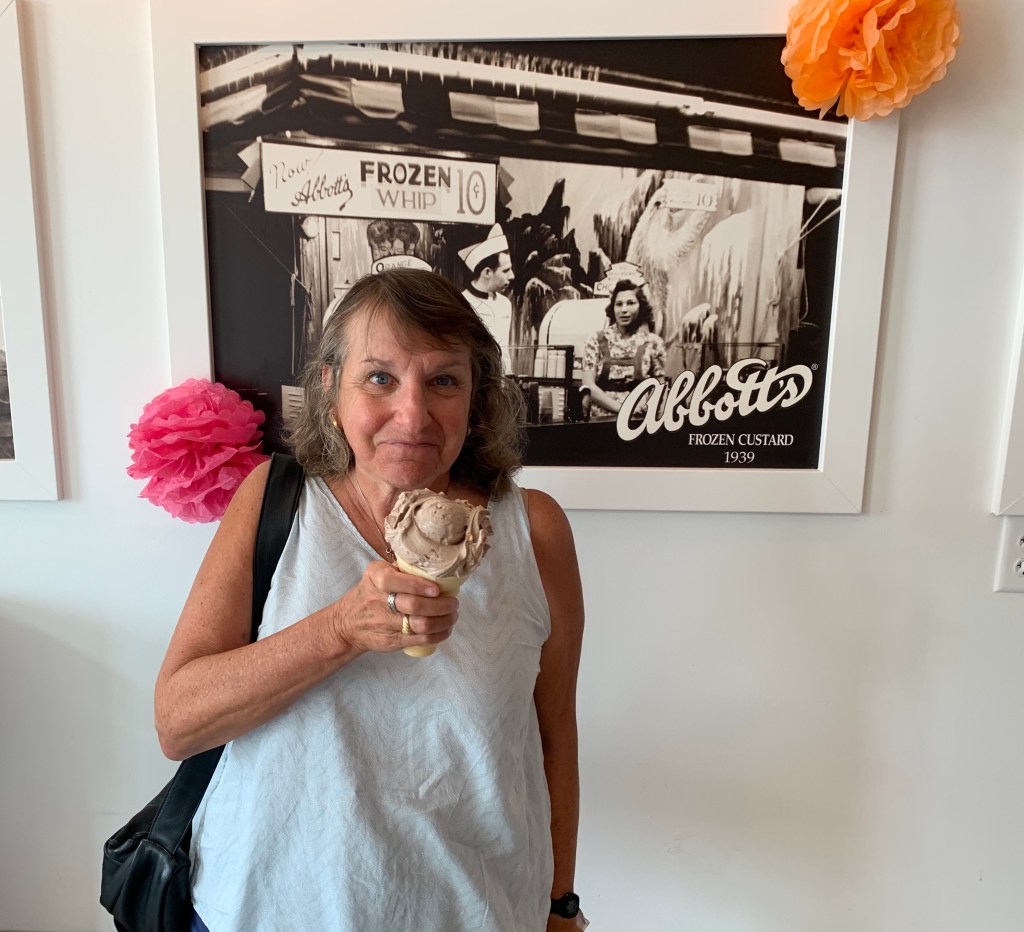
My pre-birthday trial run to Abbott’s Frozen Custard in Winter Garden, Florida

I have had enough. Black lives matter.

In 1994, I attended, along with a number of my colleagues from the Capital District Educational Opportunity Center, an Office of Special Programs (OSP) conference in downstate New York. After the opening night’s dinner, I wandered over to  venders’s tables that had been set up in an adjoining room.  The items included many  that reflected the African-American population which OSP served: Kente cloths, African artwork, Maasai beaded bracelets.

I also saw books including The Autobiography of Malcolm X and Black Like Me.  I stopped dead in my tracks, however, when I saw The Secret Relationship Between Blacks and Jews. A quick scan through the thin volume told me all I needed to know: it was an sickening, highly exaggerated  claim that Jews had a disproportionately large role in the black slave trade relative to their numbers.

Livid, I raised my voice to the vendor. “How can you sell a book filled with  anti-Semitic lies and garbage?” I demanded. “This is a New York state-run conference!” 

The vendor told me it was his right to sell anything he wanted. I marched back into the dining room, found our EOC director, and expressed my anger. When he downplayed the situation, I blew up. “If you don’t find a way to get rid of that book, I will walk out of this conference, get a bus home, and contact everyone I can in New York State to tell them that the OSP is condoning anti-Semitism,” I said.  “I won’t stay here if that vendor remains under this roof!”

Seeing not only my rage but also my determination, the director brought me over to the woman who ran the conference. She said, “I will take care of it.” The vendor wasn’t asked to leave, as I had hoped, but the book was no longer on his table—or any other table at that conference.

I later learned I was not alone in my reaction to the 1991 Nation of Islam publication. When Dr. Tony Martin, a black professor at Wellesley College, assigned the book to his introductory African-American history class soon after its 1991 publication, Jewish students protested and four national Jewish groups recommended the professor’s job status be reviewed. [He remained on staff as a controversial figure until his retirement in 2017.] Both the Simon Wiesenthal Center and the Anti-Defamation League of B’nai B’rith have published rebuttals comparing the book  to “the most infamous works of antisemitic propaganda in the 20th century.”Most importantly, the book’s thesis has since been refuted by mainstream historians, including the American Historical Association.

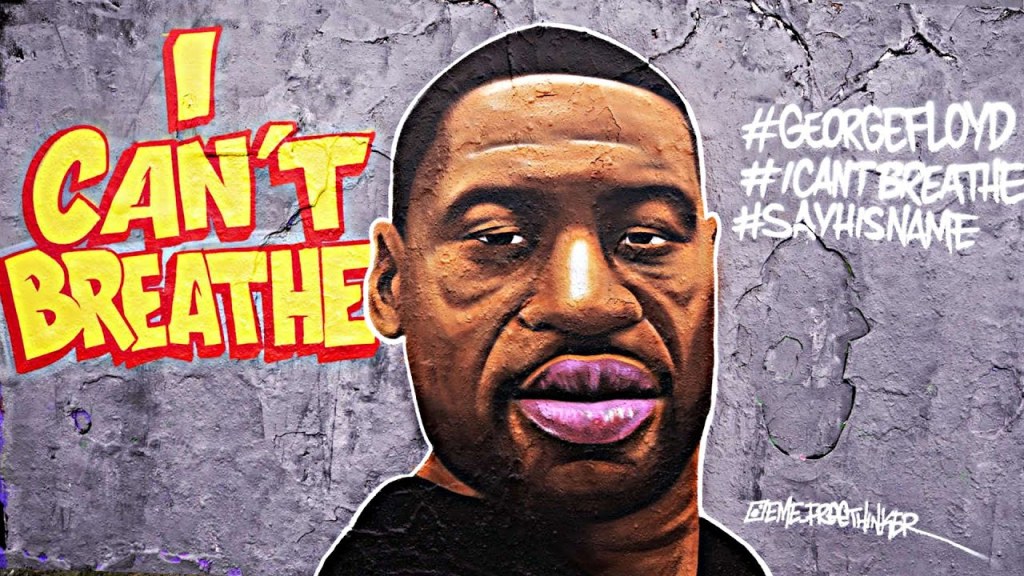
I had forgotten about that incident for twenty-six years. But when I saw the video of  George Floyd dying under the knee of a callous, arrogant white policeman on May 25,  I felt that same rage—and more. And I understood the incredible anger and massive protests that followed. If I could be so vociferous about a book, African-Americans, Caucasians, Asians—the entire world —had every right to say, “I’ve had enough. Black lives matter.”

In the weeks that have followed Floyd’s killing, I have become even more “woke.” Through discussions with friends, participation in newly found groups on social justice, and through voracious reading of both books and articles on the topic, I have learned that my empathizing with those who are the victims of systemic racism falls deeply short of fully experiencing their pain and anguish. It is time for me to speak out with the same voracity for George Floyd and against 400 years of systemic racism in our country.

I have always felt that as a Jew I understood discrimination, racism, and prejudice. Hadn’t I had students in my first teaching job draw swastikas around my picture in the school yearbook? Hadn’t I been  told that I was good at “wrangling a bargain” because I was Jewish? Hadn’t I read hundreds of books and articles bout the Spanish Inquisition and the Holocaust and attacks on Israel?

But I started to listen, really listen and reflected on my life as a privileged white person. When my son was home from college on his summer break, Adam used to go for his run at night to avoid the heat. I worried that he would be hit by a car. But I never had to worry that he, like Trayvon Martin, would be stalked and even killed because he was “in the wrong neighborhood.”

I reflected on s my Upstate New York neighbors, a bi-racial couple, had experienced. Their son was pulled over by the police because he was driving his father’s red sports car. The same young man was almost arrested when he was locking up his family’s restaurant, as the police thought he was breaking in.

The first week of the protests, I stopped by to chat with my Florida neighbor and just blurted out, “I am so sorry for all you have been through as a Black mother.”

“I know you have a good heart, Marilyn,” she told me. “But we’ve been fighting this battle for 400 years.”  One of her battles: When her family was living in Philadelphia, her son was asked to visit some of his white friends in their neighborhood. “I sat him down and told him no,” she said. His being in that section of town was too dangerous for a young Black man.

My friend Mayra opened up to me about her life as a Hispanic woman married to Robin, a Black man. Her family wouldn’t talk to them for years. Meanwhile, Robin, who had a very successful position as a supervising editor for a major network, had been pulled over and slammed against walls more times than he could count as police had questioned why he was driving in his own neighborhood.  Another time, Robin and Mayra were guests at a large party  of one of the network executives. Robin was talking to a co-worker close to the front door of the large home.  Incoming guests assumed he was the hired help and kept handing them their coats and pocketbooks

Another friend shared her story of how her husband Bill* was the victim of road rage, an encounter that began on a toll road ended just inside their community’s security gates. The car with a white man at the wheel drove through a parallel gate, pulled along beside him, and cut him off.   The man then jumped out of his car, berating Bill for passing him on the parkway ,and demanded to know why he was in the 55+ community “You obviously don’t live here,” he was told. The driver’s wife, who was in the passenger seat,  offered to get out their gun. Fortunately, the incident ended when Bill drove away.  Because it was captured on Bill’s dashboard camera, it is being investigated as a hate crime. But I know that his residency would never have questioned if Bill were white. 

I am somewhat ashamed to admit that before May 25, I didn’t “get it.” But I am trying to catch up. I feel like the demonstrator at a June 2020 Black Lives Matter protest in Bethel, Ohio, who held a sign reading, “I’m Sorry I’m Late. I Had a Lot To Learn.” May the memory of George Floyd be a blessing to his family and our country. And may we all continue to learn and move forward to a more equitable world. 

*Not his real name.

A version of this article originally appeared in the Jewish World News, a bi-weekly subscription-based newspaper in upstate New York.

SOURCES

https://www.washingtonpost.com/archive/opinions/1993/10/17/half-truths-and-history-the-debate-over-jews-and-slavery/6b2b2453-01da-4429-bd50-beff03741418/

https://www.washingtonpost.com/archive/opinions/1994/02/11/farrakhan-101-at-wellesley/6e55eea2-e9f1-44b9-8dd5-d2bfd36d3fbf/

https://en.wikipedia.org/wiki/

The_Secret_Relationship_Between_Blacks_and_Jew

https://en.wikipedia.org/wiki/Tony_Martin_(professor)

Looking for the Silver Lining

Glass half full!

When you’re chewing on life’s gristle….Always look on the bright side of life. Monty Python

If these were normal times, my husband Larry and I would have already flown out to San Francisco to meet our new grandson. If these were normal times, I would be writing this column in Colorado, where we would have settled into a summer rental close to our daughter, her husband, and my four year old granddaughter. These are NOT normal times! Because of COVID-19, Larry and I are staying in our home in  Florida for the first time since we moved here five years ago. 

The two of us are both very disappointed, but we are finding  silver linings. We are healthy, we are safe, we are in a community that offers walking trails and swimming pools. We have discovered tree-lined streets, serene ponds,  and quiet trails that we had not explored before until we began 

And we have re-discovered each. We have never in our 46 years of marriage spent this much time together, and we are loving it. We walk or bike together almost every morning and then cool off in one of the neighborhood pools. In the afternoon, we sit on the lanai, where we work on crossword puzzles and read books. After dinner, we play three games of Yahtzee  (I won the championship in May; as of this writing, Larry is  in the lead for June.) Then we settle onto our couch to watch shows on Amazon Prime or Netflix. In some ways,  I feel as if we are on some type of extended honeymoon.

Many of our friends, who are like Larry and I are fortunate enough to be retired and not dealing with health or financial issues, have shared with me how sheltering in place has resulted in hidden blessings. 

My cousins Ruthie and Yaacov Kiflawi, who live in Washington State, have found joy in their own surroundings. They spend hours on their deck, which overlooks the Little Spokane River. Teri Chaves, who would normally be up and out of her home at 9 am, now sleeps in and then takes a leisurely walk. She then enjoys her morning coffee on her screened-in porch while watching the abundant Florida wildlife.

Teri is also using this time for intellectual pursuits and learning.  In anticipation of a 2021 post COVID 30th anniversary trip to Italy with her husband Mike, Teri is learning Italian with the help of a phone app. Susan Hoff-Haynes  is learning Spanish with the same app and has also taken several Great Courses. Michelle Moriya has audited free on-line courses from several prestigious universities, including Harvard, Yale, and Princeton. 

Others are testing out their green thumb. Sarah Rubin designated a corner of her lanai for an herb garden; Susan sent me pictures of her raised garden beds behind her home in Upstate New York. Virginia  Allain, who is complete her family’s genealogy research, is also working on establishing roots into the soil by planting  her 2020 Pandemic Victory Garden. “It serves as an affirmation that I intend to be around for months to come despite this virus,” Virginia wrote in her blog. The Victory Garden. (https://findingmymom.wordpress.com/…/the-victory-garden/.)

 Candace Thompson stated that the months in quarantine have been the best months of her life, giving her an appreciation for little things “A simple ride in the car really brings me joy now where it would’ve been nothing more than something else to do prior to the pandemic.”  In what she calls a  “true sense of agency and empowerment,” she planned ahead of the curve by stocking up on foods, creating reading and movie lists, subscribing to streaming services, and downloading workout videos on YouTube. Since sheltering in place, Candace has also joined several community-based advocacy groups that hold Zoom discussions on topics including COVID-19, racism, and the upcoming elections. 

Zoom and other collaborative technologies, are being used to make closer connections with friends and family. Her friend Marilyn Tayler, who also is participating in the advocacy groups, is using the collaborative technologies to connect with old friends. Naomi Biderman Allen FaceTimes daily with her grandchildren, talking to them about their day and reading them bedtime stories. 

For some families, the pandemic has meant even more time with their extended families. Since Pennsylvania’s stay-at-home order, Howie and Sandie Vipler have stepped in as the full-time day care providers for their two granddaughters, age 1 and 4. “Time—especially with our grandchildren— has become more precious since this virus has struck,” said Howie.

The pandemic has also brought the-strangers-who-live-next-door together. In March, Joy and Ross Aronson are enjoying  sidewalk chats—while social distancing—with people in her community whom she had never met as they all take their daily walks. An animal lover, Joy was also pleased to meet up with people who were walking dogs that they had rescued from shelters, another positive result of sheltering in place. 

In some cases, unexpected illnesses have resulted in life-saving interventions. While vacationing in South Carolina, Ira Smolowitz complained of COVID-19-like symptoms. His symptoms of dizziness and  shortness of breath, they soon learned, were signs of a heart attack.  Emergency surgery, five days in ICU, and three months  of virtual doctor visits later, Ira feels blessed to be on the road to recovery. Ira’s wife Judy has been his rehab coach and number one cheerleader.  “It’s a tough time to have medical need,” said Judy, “but we made it.”

In a similar situation, Richard Porter, a friend from Texas, had triple bypass on March 13. The day after he was released, Dallas issued a shelter in place order and the hospital that was to provide follow-up services closed its doors to non-COVID 19 patients,  His wife Betsy, who spent her career as a nurse, willingly took over Richard’s cardiac rehab. Neighbors helped by providing meals and dog walking services. On May 13, Rich celebrated 60 days of recovery by completing a 3.5 mile walk. “We saw the silver lining in the slowing down of our lives that helped in Rich’s successful recovery,” said Betsy.

Sunny Hersh rediscovered—“for the umpteenth time”—how much she respects and loves her family. Her husband Scott has been painting the house and cooking wonderful meals. Her children are doing an incredible job of balancing their parental and career responsibilities. Even though her attention span seems to be getting shorter and shorter, Sunny said still “has enough bandwidth to dream about the future and appreciate all of the above!”

Others, are creating their own “silver lining” scenarios. Becky and Mark Silverstein, who have cruised 47 times in the last 20 years,  re-imaged their shelter-in-place experience as SHIP (Shelter-In-Place) life. Their bedroom is now their cabin and their lanai as the balcony They watch television and listen to music in their  “entertainment venue.” They enjoy breakfast and lunch at the “buffet” at the kitchen counter and dinner at their dining room table. 

Only one week into SHIP life, the Silversteins hit-err— an iceberg. That first Friday, they dug into their weekly pre-Shabbat house cleaning, which included changing the sheets, cleaning the toilet, and “swabbing the decks.” “We were rudely reminded that we are not just passengers,” Becky said ruefully.“We also are serving as the crew.” 

Okay, not totally smooth sailing. But Becky and Mark, as many of us fortunate enough to be healthy and financially able to cruise safely through this pandemic, can always find a silver lining.

A version of this article originally appeared in the Jewish World News, a bi-weekly subscription-based newspaper in upstate New York in the June 25, 2020, issue.

Keep Calm and Bake Challah

Every Friday afternoon since the corona virus has turned our world upside down, I have been baking fresh challah. I revel in the process: the measuring, the gradual rising, and especially the eating. But it has become so much more. As Roche Pinson wrote in her book, Rising: The Book of Challah, “We make challah from a place of commitment to nourish ourselves and our families in a way that goes beyond mere physical feeding and watering.”

Even though I can’t remember ever baking a challah before,  two recent encounters with fresh-out-of-the-oven loaves motivated me. Last August met my future daughter-in-law’s parents in their home at their weekly Shabbat dinner. Along with the candle lighting and the kiddish, we all joined in the prayer over Carol’s freshly baked challah, a tradition she has maintained for decades. The taste of her delicious bread stayed with me throughout the coming months.

On one of the last services at our synagogue in Kissimmee before services were suspended, we congregants enjoyed home baked challah made by Liz Ross. The daughter of a Jewish mother and an Inuit chief, Liz had discovered her spiritual roots as an adult. As the only Jew in  Unalakleet, Alaska, her only choice was to make her own challah to accompany her holiday meals. Years of experience yielded a wonderful, sweet bread. 

On that first quarantined Friday, I decided a home made challah would be a perfect comfort food.  I pulled out my friend Flo Miller’s challah recipe that I had stored in a recipe file for years and gathered all the necessary ingredients: yeast, flour, sugar, butter. I mixed and kneaded the sticky dough with my KitchenAid’s dough hook and covered it with a cloth tea towel. After it had risen, I shaped the dough into three challahs, brushed on the egg wash, and let it rise again.  Once out of the oven, Larry and I dropped one of the loaves over on the doorstep of a friend who was spending Shabbos alone in  as his wife was in isolation in the memory unit of a nearby nursing home. 

As the two loaves waited under my mother’s challah cross stitch covering, I lit the Shabbat candles that we had placed in my Grandma Annie’s brass candlesticks. Larry recited the Kiddish over the Manischewitz wine, and then we both recited the HaMotzei over the warm braided bread. We sat down to our first Shabbat dinner in quarantine. 

The following week, Larry and I headed to Publix at 7 a.m. as part of a “seniors only” shopping trip. I immediately headed to the baking aisle to stock up on my bread making supplies.  I obviously was not the only one baking. Yeast, like toilet paper and hand sanitizers,  had completely disappeared from the shelves, with flour, sugar, and eggs in short supply. We grabbed what we could and headed home.

Fortunately, the flour, sugar, and egg situation improved. Initial attempts on purchasing yeast online, however, were miserably unsuccessful. Amazon offered a three-pack of Fleischmann’s for $25, price gouging at its worst. I sent out an all-points bulletin on FaceBook, and three friends dropped off some packets they had in their cupboards. They each got a challah in return. Soon after, Amazon offered a one-pound bag of yeast. Despite the fact it was twice the normal price, I snapped it up.

Thus began my Friday ritual of making the bread and giving one or two of my loaves to others. As a thank-you for two homemade masks. As a “Mazel Tov” on finishing chemotherapy. As a wish for safe travels to their summer home.  If the bread came out of the oven too late for delivery before sundown, we dropped it off the next day with a suggestion to warm it up, toast it, or make it into French toast.

Each week, I tweaked the process. Too much flour made the bread tough. An extra egg yolk made for a richer taste. Covering the bowl with a tea towel and then loosely wrapping it in a garbage bag helped in the rising. Slamming the ball of dough on the counter a few times removed extra gases—and relieved tension! Raisins were a wonderful addition. Creating a challah with six braids or more will take more practice.

One night, when an afternoon nap killed chances for my normal bedtime, I went on YouTube and found a series of  challah baking videos made by Jamie Geller, the “Jewish Rachel Ray.” An Orthodox Jew who made aliyah to Israel in 2012 with her husband and six children, Jamie’s  demonstration added a spiritual component that touched me. Although she is a professed “shortcut queen,” Jamie said she eschews a dough hook in favor of kneading the bread by hand to infuse her love into the loaves. She uses that time to pray for her children, her family, for people in need of r’fuah sh’leimah [complete healing].” 

The  next Friday, I used an electric mixer to start the process but then turned the dough onto my floured countertop and began kneading. Like Jaime, I prayed for my children and grandchildren, who are physically so far away but always in my heart. I prayed for the wellbeing of my friends and family. I prayed for my friend Kathy who is on her way to recovering from COVID-19. I prayed for Minnie, a beautiful baby born at 29 weeks who will be spending her first weeks of life in a NICU unit. I prayed for Jesse, who just lost his wife Heddy to cancer. And I prayed for all those impacted by COVID-19, the sick, the grieving, the lonely, the unemployed, the hungry. Was it my imagination, or did the challah taste especially sweet, especially delicious that Friday night?

This week, the need for prayers is even greater. Along with the pandemic and devastating unemployment numbers, our country is marked with racial strife and protests—both peaceful and violent. So this Friday, I will knead my challah dough with additional prayers —for George Floyd (May his memory be a blessing) and his family, for our country, for the future of democracy. And as the beautiful, sweet braided loaves rise for the final time, I will call my elected officials to repeat the words of Jonathan Greenblatt, CEO of the Anti-Defamation League, “We stand in solidarity with the Black community as they yet again are subject to pain and suffering at the hands of a racist and unjust system…. Systemic injustice and inequality calls for systemic change. Now!” Blessed are You, Adonai our God, Sovereign of all, who brings forth bread from the earth. Amen

A version of this article originally appeared in the Jewish World News, a bi-weekly subscription-based newspaper in upstate New York.

Marilyn Cohen Shapiro, a resident of Kissimmee, FL, is a regular contributor to the (Capital Region NY) Jewish World and the Orlando Heritage Florida Jewish News. She is the author of two compilation of her stories, There Goes My Heart (2016) and Tikkun Olam: Stories of Repairing an Unkind World. (2018). Both books available in paperback and e-book format on Amazon. You can read more of her stories on her blog, theregoesmyheart.me. 

Mulling the Essentials While Sheltering In Place

Some day—hopefully in the near future—the COVID-19 pandemic will be behind us. Medical interventions to those infected will alleviate  the pain, suffering, and deaths. A vaccine may be developed that can prevent others from becoming ill. Social distancing will no longer be necessary. We can go back to our lives, our jobs, our schools, our vacations, our celebrations.

Larry and I have been sheltering in place since March 10, leaving our house only for daily exercise and essential outings. We consider ourselves very fortunate.  We still get our pension checks and our social security. Even though we are  considered more vulnerable because of our age, we are—so far—not dealing personally with COVID-19 illness. We are not trying to balance working from our kitchen table while home schooling our children. We have few appointments and fewer deadlines. 

These past few weeks have given us a perspective as to what is important in our lives. Once we have the required essentials such as toilet paper, masks, disinfectants/hand sanitizers, and a well-stocked kitchen, what do we deem necessary to get through the COVID-19 pandemic? Here is my own Top Ten List.

  1. Real News

Larry and I have gotten a newspaper delivered to our doorstep since we bought our first house in 1976. When we moved to Florida, we immediately subscribed to the Orlando Sentinel. I can’t imagine my morning coffee without the news, and our life would be a little emptier without the comics and puzzles. In the same way, I look forward to getting the Jewish World  in my mailbox every two weeks to get the Jewish perspective. We have on-line subscriptions to the Washington Post, the New York Times, and the New Yorker. They were invaluable to me before the pandemic but even more important now. 

  1. Exercise

Now that the pickleball courts, the pools, and the gym are all shuttered, Larry and I alternate between riding our bikes and taking long walks every morning. We get some fresh air and have the opportunity to wave and say hi to  friends and neighbors.

  1. A Sarong

If we were up north, we would probably be living in sweatshirts and pants. As Florida’s temperatures rarely go below 75 degrees, I love my sarongs.They are comfortable and no-fuss and keep the laundry to a minimum.

  1. A Kindle

Through the miracle of modern technology, I have access to public library with just a few clicks of the computer. If the book isn’t available, I place a hold and get an email telling me when it is available. Best reads so far: The Giver of Stars by JoJo Moyes and She Said; Breaking the Sexual Harassment Story That Help Ignite a Movement by New York Times writers Jodi Kantor and Megan Twohey.

  1. Amazon Prime and Netflix

We can’t go to the movies, and every live performance has been cancelled. But we finally have the time to watch all those series that were on our to-do list. Larry and I can recommend Unorthodox, Schitt$ Creek, and Bomb Girls. I also have The Marvelous Mrs. Maisel and The Crown in my queue. 

  1. My Writing

Our calendars are pretty bare, but I still have my deadlines for the articles I write for the two Jewish newspapers.. Writing gives me a purpose. Recently, my articles about COVID-19 have helped me cope and put things in perspective. Once the article is published, I put it onto my blog and my FaceBook page. I love the sense of accomplishment I get from completing an article and love the feedback I get from those that follow me. (Hint! Hint! theregoesmyheart.me)

  1. Dinner

With all the restaurants closed and take-out options few and far between in our area, dinner is a main event. We even have a nightly happy hour with homemade hors d’oeuvres  Every Friday, we have a Shabbat meal complete with a kiddish, candle lighting, and a homemade challah. Ironically, along with toilet paper and hand sanitizer, yeast has also been in short supply. I finally bit the bullet and overpaid for a pound of yeast on Amazon so I don’t have to worry about finding it in our supermarket. I make three or four loaves a week and drop off one or two to neighbors who need some cheering up. 

  1. Our Lanai

Our lanai, which looks out on a small pond and a heavily wooded area, is our favorite place in our home. We are entertained by Florida wildlife, including a resident alligator,  an assortment of birds, and a rare bobcat sighting. It is where Larry and I spend our afternoons, reading  our books and doing  our puzzles. The lanai table is my office, where I do my writing. And it is where we eat dinner every night. 

  1. Video Chats

The hardest part of our quarantined life is not being with family and friends. Our trip to California to see our grandson and our summer plans for Colorado are on indefinite hold. At least four times a week, we FaceTime with our almost five-year-old granddaughter. We read her books, tell her stories, and watch her play. We usually end the call with her “reading” a book she has memorized to us. Holding our grandson is impossible, but my son and daughter-in-law are good about setting up the camera so we can watch him for a chunk of time. We Skype with Larry’s side of the family on Sunday morning and Zoom with my side of the family on Monday night. 

  1. 10.Our Support System

Absolutely nothing that I listed above would not be possible without those who continue to work. People still deliver our newspaper, our mail, our packages we have ordered on-line. In our community, people still mow our lawns and pick up our trash and recyclables. Those who work in essential businesses— pharmacies, supermarkets, gas stations— still  fill prescriptions, stock shelves and run cash registers. A delivery service drops our groceries on our front porch. Most importantly, our first responders and all those who work in the medical field put their own lives on the line every day to try to save the lives of family members and friends who have been infected. I am so grateful to every one of them. We can best show our appreciation by doing whatever we can to prevent further spread of this epidemic. Stay safe Stay healthy. Stay home!

A version of this article originally appeared in the Jewish World News, a bi-weekly subscription-based newspaper in upstate New York.