Category Archives: Jewish Interests

A Meshugganah Summer

This was, to say the least, a different summer in Rockies. No matter how well one can plan for time away, life still happens. Meshugganah!

After eight wonderful days in California with my son Adam and his family, we flew into Denver and then headed for my daughter Julie’s home in Summit County. While unpacking, I realized my Kindle was lost in transit. I wish I had been able to brush the loss off as a human error, but I spent too much time trying to track it down (no luck at Southwest Airlines, either airport, or Enterprise), deciding on whether to order a replacement (thank goodness for a well-timed Amazon Prime Days sale) and beating myself up for losing it in the first place.

Although Summit County normally experiences the monsoon season in late July, this year it started soon after we arrived. Two days were complete washouts, but “weather” came in most days in early afternoon. As a result, most evening outdoor concerts, a favorite summer activity we have done in the past with family and friends, were cancelled.

Meanwhile, as has happened throughout the country, this very contagious COVID variant hit Summit County hard—and close to home. On July 1, the day we moved into our rental, we stocked up on groceries at City Market, along with many other maskless vacationers. We brought home chicken, produce, ingredients for challah baking, and COVID. By July 3, Larry was feeling under the weather; by July 5, he tested positive.

My May encounter with the nasty virus somehow protected me from this variant, but Larry was not spared. He was down for the count for five days and, as he was still testing positive, isolated for five more. He missed out on our Mountain Girl’s birthday party, several trips to Main Street to get her mango bubble tea, and many games of Sorry! FaceTime may be a blessing when we are in Florida; it was a poor substitute when our rental was literally a stone’s throw from their house.

We also both passed on the planned weekend getaway with Sam’s family in Granby, Colorado. Sam’s parents, Marilyn and Bill, who are also our dear friends, cancelled their second attempt to see us when Larry was hit by a mean head cold.

Although I hiked almost every day during Larry’s illness by just walking out of our rental, we were able to take our first hike together two and half weeks into our stay. Outside of my taking another one of my famous pratfalls on one, Larry being attacked by mosquitos despite the bug spray on the second, our almost getting caught in a thunderstorm on the third; and encountering a snake on the fourth, we had finally were able to spend quality time together on the trail.

By this time, Larry was well past COVID and colds. On July 21, Marilyn and Bill drove up from Fort Collins with plans for the seven of us to attend the National Repertory Orchestra’s annual pop concert in nearby Breckinridge. An hour before we were supposed to leave, the Mountain Girl came home from the fourth day of science camp with a live jelly fish and a lively case of COVID. The four grandparents went to the concert while Julie and Sam stayed home. Wisely, Marilyn and Bill drove the two hours back home immediately following the concert to avoid further exposure. The parents, however, were not so lucky. All three—five if you include the dog and “Jelly”—were now in quarantine. Sigh! We are back to FaceTime visits.

Meanwhile, a funny thing happened on our way to the Lake Dillon Theater. Soon after the NRO family no-go, we got an email stating both musicals for which we had purchased tickets were cancelled due to a COVID outbreak among the cast and staff. Yes, any live indoor performances in any “forum” were just an “impossible dream.”

And yet, despite lost electronics; despite monsoons, despite curtailed concerts and cancelled curtain calls; despite pratfalls and pests and the pandemic, Larry and I remained focused on the positive (no pun intended). Several mornings, with the help of FaceTime, Larry and I followed the Tour de France with Adam (who loves cycling) and our grandson (who kept asking for Elmo on the “TV”). For eight nights, Larry and I watched historical wins at the World Track and Field Championships out of Eugene, Oregon (Go Sydney McLaughlin! Go Armand Duplantis!). I researched future stories, wrote, articles, worked on my fourth book, and updated my blog. One of the pictures I took on a hike was featured in a local newspaper, prompting a friend email with the subject line, “Thinking of you…as a photographer!”

Once healthy, Larry resumed playing pickleball with the Summit County Pickleball Club (“We play with an altitude!”), along with doing several more hikes with me. Thanks to the local library and my new Kindle, I read lots of books. And even though Southwest has yet to locate my old Kindle, I was assured by a lovely woman in the Denver office that as it is one of 9000 items accumulated by the central lost and found office, I have a good chance of it being recovered by Chanukah. (Chag Sameach, Larry! You have been regifted!)

By the time we left the mountains, all my family members had completed recovered from COVID. We were safe and in one piece. We did not have to cancel entire vacations due to illnesses, a fate that befell two close relatives. We are not grieving and traumatized like so many families in Buffalo, Ulvalde, Highland Park, and other sites of senseless violence. And no matter what the weather, we spent six weeks basking in the beauty and cooler temperatures of the Colorado Rockies.

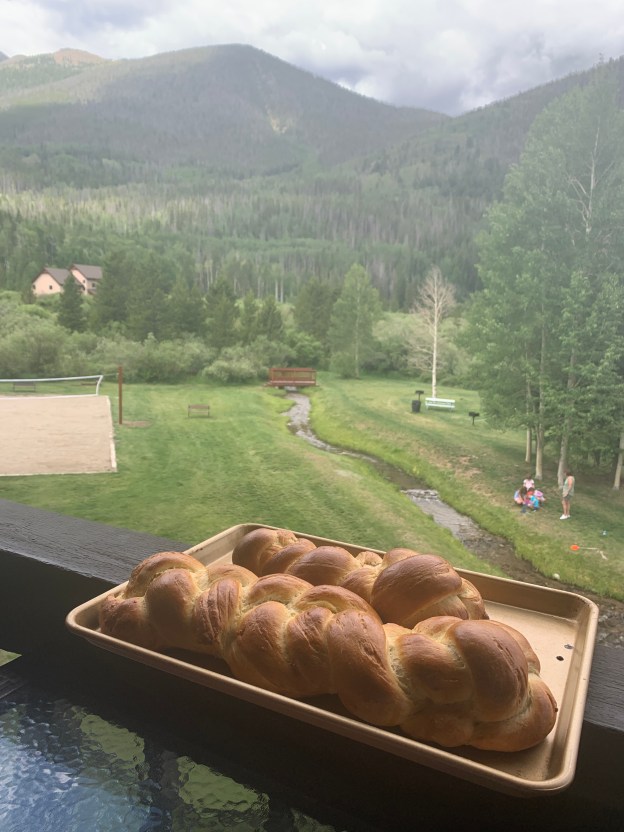
Furthermore, as I have done since the beginning of the pandemic, I kept calm and bake challah.On a Sunday afternoon, as a torrential rain storm raged outside our balcony, I cooked up dinner for my quarantined family—chicken, rice, carrots, and two freshly baked braided loaves. I kneaded in prayers for their quick recovery and prayers of gratitude for all the joy and happiness and love we have experienced this very different summer. 

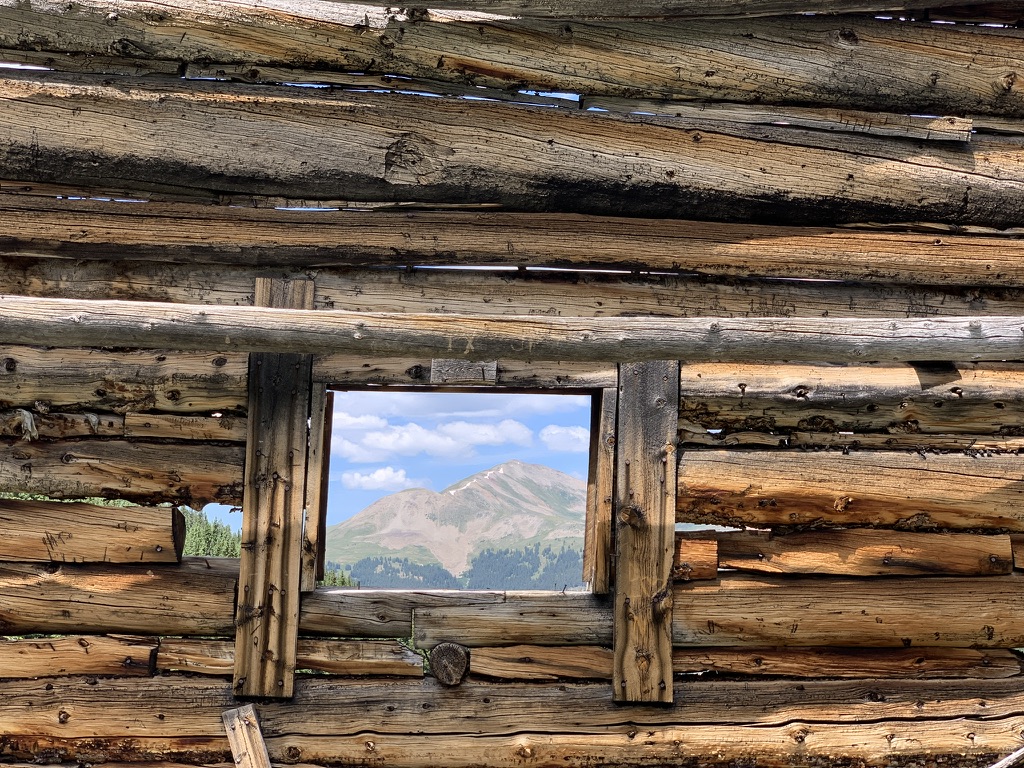
View of the Rockies at Mayflower Gulch. This picture was featured in an issue of the Colorado Summit Daily.

I would do it all over again: Dealing with Aging Parents

My parents would have celebrated their 82nd anniversary on August 20. In honor of their memory, I am publishing this article which was first published in The Jewish World on January 15, 2015.

When my parents moved up from Florida to Coburg Village in 2005, we knew they were settling into a place that offered them independence and the kind of life they wanted to lead. As it was only four miles from our home, Larry and I, as well as my siblings, had peace of mind knowing we were close enough to be there when they needed us and to watch over their physical and emotional health. At times, however, providing that oversight was not easy.

Every Sunday, Larry and I had a standing date with my parents to go out to eat at a local restaurant. Mom’s favorite choice was a Chinese buffet as she loved spareribs and anything fried. Dad said he preferred Italian, although his choices in those restaurants were sometimes more McDonalds than mangiare bene. He once insisted on our driving to an Italian restaurant in Schenectady in the dead of winter and proceeded to order minestrone soup and chicken nuggets.

One week, on the advice of friends, we decided to take them to Verdile’s, a landmark Italian restaurant in Troy. As was the custom, Larry and I picked them up in the front of their building. I helped my father get into the front passenger seat, helped my mother get into the back seat behind Dad, and took my place behind Larry. Larry put the car in gear and headed to our destination. Around two miles down the road, my father said, “Oh, damn! I forgot my teeth!”

“We’ll turn around and get them,” offered Larry.
“That’s okay,” said Dad. “I can just gum my food.”
Larry ignored him and turned the car around.
When we got back to Coburg, I took my parents’ keys, went through he foyer, ran up the stairs to their second-floor apartment, unlocked the door, grabbed a set of dentures out of a bowl in the bathroom, wrapped them in a paper towel, relocked the door, and headed back to the car.

“Thanks, Marilyn,” said Dad, as he started putting them into his mouth. A second later, he yelled, “Hey! These aren’t my teeth!”

“Oh, they must be mine!” Mom chimed in from the back seat. “I forgot them, too! Hand them back, Bill!”

As Mom was getting her bridge into her mouth, I went back to the apartment, found the second bowl with Dad’s teeth on the bathroom vanity, and ran back to the car. Now that all the dentures were in place, we were ready to complete our trip to Verdile’s.

All was fairly quiet for a couple of miles. “I read an interesting article in Consumer Reports this week about one of my prescription medicines,” Dad piped up. “You know how I am always having to run to the bathroom? Well, that’s one of the side effects of one of the damn pills I have to take.”

“You have congestive heart failure, Dad,” I said. “Your doctor put you on diuretics to prevent fluid from building up in your lungs. You’ve landed in the Ellis Hospital emergency room three times since you moved here when you failed to take them.”

“Well, the heck with all these doctors!” said Dad. “I am tired of constantly having to pee. I’ve decided to stop taking them. Haven’t swallowed any of those suckers for four days!”

I immediately conjured up in my mind another ambulance ride for Dad and another lost day of work for me. Meanwhile, I thought Larry was going to drive off the road.

Mom patted my hand and whispered to me, “I’ll take care of this, sweetheart. Don’t worry.” By the time we got to the restaurant, all four of us were on edge, hungry, and ready for a good dinner. Fortunately, Verdile’s lived up to its reputation. Our pasta-based meals were delicious, and the staff was friendly, kind and accommodating. Judging from the demographics of the people sitting around the room, the staff in the restaurant was obviously used to serving senior citizens.

As our waiter cleared the table before he brought coffee, my mother popped out her bridge and wrapped it in a napkin. Although I was used to this in our own homes, I was a little grossed out that she was doing it in public. I also worried she’d lose the bridge—an expensive proposition.

I started to stammer an explanation and warning to the waiter. “Err…please don’t take the napkin. My mother’s teeth are in it.”

He broke out in a big smile. “Don’t worry! We’re used to that here. Can’t tell you how many times we’ve had to do a dumpster dive for a set of false teeth or a hearing aid!”

We drank our coffee, paid the bill, and drove my parents back to Coburg Village. The next day, I called my mother, and she assured me that Dad was back on his water pills.

“Thanks for dinner, Marilyn,” Mom said. “Dad and I really enjoyed our afternoon with the two of you. We’ll have to come up with another fun place to eat next Sunday.”

“Sure, Mom,” I said aloud. “Let’s do that!” In my mind, however, I was thinking, ‘Let’s just make it less exciting.’

The four of us enjoyed many more Sunday outings until my father’s passing in November 2008. Larry and I kept up the tradition with my mother until her death in March 2011. To this day, despite the misplaced teeth, the medical revelations, and the not-so-healthy Chinese buffets, we fondly remember those Sunday dinners we shared with Mom and Dad.

From Golden Books to Goldbugs: Adventures in Reading Aloud

I am nestled in my mother’s arms in a living room chair. As I listen to Cinderella and The Brave Little Tailor, my two favorites from the Little Golden Books collection, her lap feels different. My four and a half year status as the youngest Cohen is coming to a close. Soon, my mother will be busy with the new baby. Not long after that, I would be reading on my own. At that moment, however, with my two older siblings at school, I am wrapped up in undivided love. 

As a lifetime bookworm, it is no surprise that one of my earliest memories involves my mother reading to me. When Larry and I became parents, we wanted to create these same memories.

Adam’s first favorite was also from the Little Golden Books collection. Corky, written by Patricia Scarry, is the story of a little black dog whose contentious relationship with his boy’s favorite teddy bear is redeemed when he finds the lost lovely. We read and re-read that little book until it was held together with scotch tape, hope, and a prayer. Corduroy, Don Freeman’s classic about nocturnal adventures of a shopworn teddy bear’s search for his missing button in a locked department store, became his second choice before lights out.

When we discovered Go Dog Go, Larry morphed into the master story teller. As Adam sat transfixed, Larry emoted each line of P. D. Eastman’s story about a group of highly mobile dogs who operate every conceivable conveyance  in pursuit of work, play, and their final mysterious goal SPOILER ALERT a dog party! Larry’s rendition of “Do you like my hat?” is etched into my auditory memory.His asides—“That’s so silly!” and “ Maybe they are going to the tree to pee?”—kept Adam and, later, Julie entertained for hours. Even today, whenever I see a several canines playing together—a very common site in Colorado—I repeat Eastman’s lines to anyone who will listen: “Big dogs and little dogs and white dogs and black dogs……

When both children graduated from picture books, Larry and I moved onto chapter books. When Julie was in first grade, I introduced to her Anne of Green Gables. She so loved L.M..Montgomery’s classic story of a Prince Edward Island orphan that she was reading it on her own by the next year. Her original paperback collection now has a place of honor on her daughter’s book shelf. 

The chapter books saga continued on a six hour trip from our home in Upstate New York to our Thanksgiving visit to my siblings in Pennsylvania. The miles flew by as we laughed and commiserated over Peter Hatcher’s attempts at dealing with his little brother Fudge in Judy Blume’s Tales of a Fourth Grade Nothing, Beverly Cleary’s Ramona series soon followed. We supplemented our own voices with books-on-tape, leading to Adam’s discovery and lifetime love of J. R. R. Tolkien.

The first Harry Potter came out in 2003, years after we stopped reading to our children. Three years later, Larry, Adam, and Julie caravanned cross country in two cars. Julie had J. W.  Rowling’s latest on cassettes, and the two siblings listened together,  often leaving Larry to drive solo. They finished in time for her to peel off in Colorado and for Larry and Adam to drive—Potterless—to California.

And then came grandchildren, and this Gammy was glad to read our Mountain Girl classics that she had read to her mother and uncle. She soon had her own copies of Corky, Corduroy, and Cinderella. Zayde gladly read her Go Dog Go, complete with asides and exaggerated , emotive expositions.

By 2015, a new group of classics had appeared on the scene. I, even more than our Mountain Girl, fell in love with William Stieg’s Sylvester and the Magic Pebble. I teared up every time the little donkey, who had accidentally turned himself into a rock, reappears as himself and knows that no desire is more important than a family’s love. Since my college Kiddie Lit course, I had loved the illustrations of Paul Zelinsky and purchased several of his books so I could share the artwork with my granddaughter. After reading, Anna Dewdney’s Llama Llama Red Pajama, I stopped some potential tantrums by laughing requesting that she stop her “llama drama.” 

During the pandemic, we were unable to see Mountain Girl in person for over 14 months. Thank goodness for FaceTime! Ever since she was three years old, Zayde had spent hours telling his granddaughter his creative stories about an entire cast of denizens of the forest, including the Big Bad Wolf, his wife Wendy and their triplets; the mayor of the forest Morty Moose and his wife Marion; and an imported Florida alligator named Allie. The Mountain Girl connected with Zayde on social media for up to four to five hours a week to hear his increasingly outlandish tales. When Larry’s voice gave out, I took over with either library or purchased book, culminating in my reading and then re-reading to her the entire Ramona/Beezus collection. 

Our San Francisco Kid was born the week the pandemic closed down his city. By the time he was two, he was fully engaged in playing with, watching, wearing, and reading anything about trucks. Go Dog Go was an early favorite as Eastman’s dogs were illustrated in every mode of transportation. Then he discovered Richard Scarry’s Cars, Trucks, and Things That Go. During our recent visit, we watched as he pored over the pictures with the fervor of a Yeshiva student pouring over his tractates. When I learned that a tiny goldbug was hidden on each page, I became obsessed with finding them. I then passed that obsession onto my grandson. “Goldbug!” he would shout when we located one, and we would slap each other five. A week after we left, Adam reported that his son had mastered finding the goldbug on every page, each discovery accompanied by “Goldbug!” and high five.

As our second granddaughter was born seven weeks prematurely this past spring, she is obviously a long way away from understanding the power of reading. As she was named after my mother, I will be supplying her with all the books in Russell Hoban’s Frances the Badger series.The stories have no trucks, but hopefully her big brother will like them anyway.

This past week, our Mountain Girl celebrated her seventh birthday. As Uncle Adam and Aunt Sarah watched on FaceTime, she unwrapped their presents, two classic trilogies.  Lord of the Rings was Adam’s obvious choice. His Dark Materials was Julie’s suggestion for Phillip Pullman’s strong female protagonist. After everyone signed off, our Colorado family cracked open Tolkien, our San Francisco family searched for Scarry’s Goldbug, and Gammy and Zayde kvelled that the joys of reading to children aloud—whether it be Golden books or Go Dog Go or goldbugs–continues,

A version of this article originally appeared in the Jewish World News, a bi-weekly subscription-based newspaper in upstate New York.
From Go Fish to Rummikub

“Let’s RummiKub!” read the email blast from my friend Hedy. She and her husband Harvey loved playing the game, and she decided to start a club in our community.

RummiKub! The last time I had played the popular tiled game was with my mother, Frances Cohen, over seven years ago.  She had played weekly with a group of women friends when she lived in Florida. When she and my father moved to an independent living community four miles from our home in Upstate New York, her game set came with her. Within a month, she had found another RummiKub group. She loved the socializing, challenging her mind—and winning. My mother was very good at finding ways to dispose of all  her tiles by adding to other accepted combinations of straights and matching numbers on the game table.

Before cell phones, before computers, adults and children played games —card games, board games—with real people. My siblings and I gathered around the old oak dining room table and played Old Maid, Go Fish, War, and—my favorite—Gin Rummy. We also enjoyed beating each other at board game as Chutes and Ladders and Candy Land gave way to Clue, Scrabble, and Monopoly.

Once my parents purchased their cottage on Lake Champlain in 1966, those games became even more important. When bad weather kept us inside, my mother would pull out a deck of cards or the Scrabble set to keep us—and eventually—the grandchildren busy. One Monopoly game was good for an entire rainy afternoon.

In college, my friends and I would gather a few times a week for pinocle. We would sit around the round table in the common area outside our suites in Paine Hall at SUNY Albany. I left college and pinocle behind, but games were still in the cards for me. 

The first time I met my future husband Larry’s family, his Bubbe Rose challenged me to a game of gin rummy. She let me win almost every time those first few months.Once Larry and I were engaged, the gloves were off. I rarely won again.

Playing card and board games against each other have always been part of our marriage—with varying levels of success. When we first were married, we tried Mille Bourne, but Larry always won, and I refused to play anymore. We played Scrabble on snowy nights while the children were asleep. He once put down four tiles to spell “oije.” When I challenged him, he said it was a popular word in New Jersey as in “I had the oije to go out for a hamburger.” I urged him to remove the tiles. He still won the game.

Yahtzee is hands down our long-time favorite. The game, which requires the players to roll five die three times each turn to get one of the eleven  required combinations is part chance, part luck. Larry usually wins. (Do you see the pattern here?) No matter. I pack Yahtzee into my suitcase every time we go on vacation. If the need arises to fill in some free time, we can resort to an activity together, infinitely better than burying our heads into computers and playing Solitaire (me) or Angry Birds (Larry).

We also played games with our children. By age four, Julie was so good at Memory that Larry was the only one who enjoyed losing to her. Clue, Uno and Sorry! dominated our lives for many years. Adam and Julie pulled out Monopoly to play with friends and each other until the sets literally fell apart. 

The tradition continues. Larry and I joined Julie and her husband Sam for an overnight stay in a hut buried in the woods at ten thousand feet in the Rockies. The hut had no running water, a wood stove, and an outdoor bathroom but —it had Monopoly. Julie gleefully proclaimed victory after a two-hour marathon game. Over one Thanksgiving, I taught Adam gin rummy, and after the first hand he won the next four games against me. (Do you now see the pattern?)

When I lived in Upstate New York,  several of my friends were in Mah Jongg groups. “Do you Mahj?” they would ask. No, I didn’t. My mother-in-law Doris had played, but I didn’t have a “Clue” as to what the game entailed.

 It wasn’t until I moved to Florida and was asked again if I “Mahjed,” did I give the ancient Chinese game a try. I loved it! It had, in my mind, the best elements of every game I had had ever loved: Go Fish, Gin Rummy, Yahtzee, and RummiKub. As my sister-in-law inherited her mother’s set, I quickly purchased my own. I even brought the set with me—along with Yahtzee—on a recent cruise. I played with friends four mornings while at sea, so it was worth schlepping the three pound tote on board. 

Initially, Larry and I took Hedy up on her offer. About forty people meet every other Sunday in a community room to play RummiKub. Larry and I  realized after we had played a couple of games that Mom’s set was missing a tile, a blue three. A friend lent me her unused set, but it didn’t have the same meaning as playing with the same tiles that my mother  had used for so many years. (If anyone has  an incomplete RummiKub game with a blue three still in the bag, send it my way please! My mom and I will thank you! ) Alas, I had been spoiled by Mah Jongg. It challenged me more than Rummikub, and we haven’t returned since the pandemic closed the meetings down.

Surprisingly, Larry and I didn’t resort to games to get us through the pandemic. For the first month, we played Yahtzee every night. I was losing too many matches, however, so we switched to crossword puzzles. Larry would print out two copies of the same puzzle; we would work solo. Larry often finished first, but if we were both stuck, we worked together to complete it.

My Colorado granddaughter has also developed an early love for games. She has played with her Gammy and Zayde Pete the Cat, Fish, War, Old Maid, and Candy Land. When she turned seven, we gave her Sorry!, the the most adult game we have played with her. We love the challenge, and she is good! I recently asked her if she would like to learn Mah Jongg, and she said no.  Considering I don’t have a set up here in the Rockies, that will have to wait. Maybe we can start with Rummikub?

In the end, just like my mother and my mother-in-law, I love meeting regularly with friends and family to share a game, food, and conversation. Games not only bring people together but also bring back memories of time spent with those you love and with whom you share a history. As they say in New Jersey, I “oije” everyone to give games a try.

A version of this article originally appeared in the Jewish World News, a bi-weekly subscription-based newspaper in upstate New York.

A Father’s Day story: Boats, Bugs, and Bats

In June 2008, my father and I spent our last Father’s Day together. He and my mother had moved up to an independent living facility in Upstate New York four miles from me. Two years later, his health had deteriorated, and he passed away November 2008. People may remember Bill Cohen for his stores in Keeseville, his community service, his pride in his family. What I remember—and treasure—most about my father were the stories about him that my siblings and I share again and again. Many of them centered on boats, bugs, and bats. 

Having spent summers as a child with his grandfather Archik Pearlman on Lake Champlain, my father always dreamed of owning a boat. In 1965, he purchased a pink indoor-outdoor that my mother immediately “christened” Nisht Neytik, Yiddish for “not necessary.” During the summer, Dad rented space on a public dock in Port Kent, five miles from our house. And each Sunday, Dad would coerce us all to take a ride—when we could go. Unfortunately, the boat spent more time in the shop than in the water. And when it was in the water, Dad was always panicking about the weather or the gas situation. One time, we took a long ride out to a nearby island, and my father realized that we may not have enough gas to return. We were nervous wrecks until we finally pulled back into our slot.

In 1966, my parents bought a cottage on Willsboro Bay. Soon after, Dad purchased an outboard with slightly better reliability. Larry and I were married in 1974, and in 1975, we went up to the lake for Memorial Day. Dad gave Larry a pair of waders Dad had picked up second hand and asked him to put up the docks for the boat. Before Larry was knee deep, the waders-riddled with tiny holes filled up with water. Think Lake Champlain in May, when the water temperature barely reaches 60 degrees. Larry has never forgiven him. 

For the next several years, the boat was anchored either on the dock or on an anchor about 200 feet from shore. Dad still loved boating, but only if the weather was perfect. For hours before we were supposed to go out, Dad kept his ear near the radio next to his chair, which was set for the weather station. If there was the slightest chance of rain, he refused to go through with the ride. When we children and eventually our spouses were old enough to go on our own, Dad installed a CB radio in the outboard so he could check up on us every few minutes. In an blatant act of defiance, Larry would turn it off. Dad never forgave him.

As much as my father loved boats he DESPISED bugs. He kept a can of Raid next to his favorite chair on the back porch of the cottage and used it frequently—and liberally— to kill any passing fly or wasp. When the Raid wasn’t enough, he got a outdoor fogger which he used with the same careless abandon that he used the aerosol can. One beautiful summer night, Laura was putting food on our set table when my father passed by the outside of the window with the fogger in his hand. A potent cloud of pesticide permeated the air. Laura never forgave him. 

When the Raid and the fogger failed, Dad called in the Big Guns. He purchased an electric bug zapper and hung it on the limb of the huge oak in front of the cottage. As the sun set across the lake, we heard from inside the cottage a quick zap as the first bug hit the grid, then a second, then ten, then twenty. Before we knew it, every bug between Willsboro and Burlington five miles across the lake was headed for the bug zapper. It took about 30 minutes for the ten foot machine to become completely clogged. So much for Dad’s war against the bugs.

Dad was more successful with bats. The cottage was always a gathering place for the family. One summer weekend, Larry and I were in one bedroom; my sister Bobbie and her husband and Emil were in another; and my sister Laura was in another. In the middle of the night, I headed to the bathroom. As I reached for the toilet paper, I realized that a bat was sitting on the top of the roll. Trying not to wake anyone, I ran back into our bedroom and shook my husband Larry awake.

“There’s a bat in the bathroom!” I whispered.

Larry awoke groggily with a “Wha……t?” He climbed out of bed, checked out the bat in the dim light of the night light, and suggested we close the door and wait until morning. 

“But what is someone else has to go to the bathroom?” 

“What are you two doing?” Our whispered conversation had woken up my sister.

The bat, tired of squeezing the Charmin, flew out of the bathroom and began swooping through the cottage. 

“Damn!” I cried.

By this time, Emil, Laura, and Mom were wide awake. We watched the bat circle above us, all of us talking at once with suggestions .

“Hit it with the badminton rack?” 

“How about a broom?”

“Does Raid work on bats?”

“How about the fogger?

At that moment, my father, who can sleep through a five alarm fire a block from our house (Yes. He did. Keeseville, New York, February 14, 1964. But I will save that story for another time), finally appeared in the doorway of his bedroom in his teeshirt and boxers. Without a word, he crossed the room, grabbed the fishing net that he kept in the corner explicitly for this purpose, and in one fell swoop, caught the bat in its web. He opened the front door, shook the frightened but still alive bat out of the netting, and came back into the cottage.

“Now everyone go back to sleep,” my father stated. 

Boat lover. Bug hater. Bat rescuer extraordinaire. But most importantly, My Dad. Whether he is with me or not, I will celebrate every Father’s Day in his memory with love.

Note to my readers: While editing my blog, I realized that I had never published this story I had written in 2019 for Father’s Day about my beloved father, Wilfred “Bill” Cohen (Z’L). It’s a little late for Father’s Day, but it’s never too late to honor my father’s memory.

A version of this article originally appeared in the Jewish World News, a bi-weekly subscription-based newspaper in upstate New York.

Oshinsky Story Published in The Forward

I am proud to announce that my three part story about Harry Oshinsky, a World War I Jewish immigrant, was published in The Forward, one of the most influential American Jewish publications.

Over fifty years ago, the Forverts published a series of stories in Yiddish by Chonie “Harry” Oshinsky, describing his childhood in a shtetl in Lomza Gubernia, his two-year trek to Brooklyn and his life in “di goldene medine,” the golden land. 

Many years later, Oshinsky’s son, Lenny Oshins, brought an English translation of the story to me, his friend and  a writer, for a potential article. Using the manuscript as a basis, I retold his story in three chapters, including details I discovered during my own research that help shed light on the history surrounding Harry’s extraordinary life. 

The three articles were originally published in The Jewish World, a bi-weekly subscription based newspaper located in upstate New York. The original article may be found on the web at https://jewishworldnews.org. I appreciate all the support Laurie and Jim Clevenson of The Jewish World has given me and my writing over the years.I also appreciate the help of Rukhl Schaechter, the editor of the Yiddish Forverts, in preparing the story for publication in The Forward.

Here are the links to the article as published in The Forward:

To read Part One: “From Bialystok to Brooklyn: A Jewish immigrant’s trek across three continents,” click here.

To read Part Two: “Two Jewish teenagers escaping Bialystok arrive in Harbin, China,” click here.

To read Part Three: “A Jewish teen from Bialystok lands in a Chinese prison,”  click here.

More about Marilyn:  Since retiring from a career in adult education and relocating with my husband Larry from Upstate NewYork to Solivita, I is now writing down my own family stories as well as the accounts of ordinary people with extraordinary lives. I have been a regular contributor to the bi-weekly publication, The Jewish World (Capital Region, New York), since 2013. My articles have also been published in Heritage Florida Jewish News and several websites including the Union of Reform Judaism, Jewish War Veterans of the United States of America, Growing Bolder, the Memorial Scrolls Trust (England), and Jewish Women of Words (Australia). I am the author of two compilations of my stories,There Goes My Heart (2016), Tikkun Olam: Stories of Repairing an Unkind World.(2018), and Fradel’s Story, (2021) a collection of essays co-written with my late mother, Frances Cohen. All three books are available in paperback and e-book format on Amazon. My fourth book, which will be published in late 2022, is entitled Keep Calm and Bake Challah: Surviving the Pandemic, Politics, and Other Life’s Problems. I am also working on a fifth book, Under the Shelter of Butterfly Wings: Stories of Jewish Sacrifice, Survival, and Strength.

More about The Forward: Founded in 1897 as a Yiddish-language daily newspaper, The Forward is considered one of the most influential American Jewish publications. I, along with many of my friends and family with Jewish heritage, remember my own maternal grandparents reading Forverts, the original daily Yiddish paper, when I visited them in Coney Island in the 1950s and 1960s. In 1990, an English-language weekly offshoot began publication; in 2019, it became an online newspaper. A more detailed description of The Forward  may be found on Wikipedia.

Mature or aged, venerable or old?

Outside the window of grandparents’ apartment on Coney Island Avenue, the subway zipped past. I watched it as it sped away, wishing it was taking me to the bus station and back to our home 300 miles north on the Canadian border.

I was fifteen years old, and my mother Fran, my sister Bobbie, and I were in the middle of our annual summer visit to our maternal grandparents. Grandma Ethel and Grandpa Joe were in their mid 80’s, old by my teenage standards. They were Lithuanian Jewish immigrants, and they had both had hard lives. They conversed with each other and my mother, their “Fradel,” in Yiddish, their English passable but unmistakably foreign to American ears. Grandma Ethel was short and soft and wore baggy house dresses and support hose rolled down to her orthopedic shoes. Grandpa Joe was just as short, with stooped shoulders and a scratchy beard. He smelled like a combination of pickled herring, old clothes, and dried urine. 

I had just gotten off the phone with a girlfriend, who told me she was having a party that Saturday. Would I be home?

We were scheduled to leave on Sunday, but I begged my mother to leave two days early. A typical teenager, I loved my friends more than my family.

At first my mother refused to change her plans. Grandpa Joe had been increasingly more disoriented and forgetful, showing the first signs of dementia. Grandma Ethel, who had a history of heart problems, seemed particularly frail. In the end, my mother acquiesced to my selfish demands, and the three of us left early Friday morning.

We got back to the North Country in plenty of time for the party. But plans had fallen through, and it had been cancelled. “I guess we could have stayed longer,” I told my mom. Mom only shrugged her shoulders.

Late one evening three weeks after we returned. Mom got the phone call she had been dreading. Grandma Ethel had prepared a Shabbos dinner, put the covered challah on the table, lit the two candles in their silver holders, and then sat down for a minute to take a short nap. She never woke up. 

My mother flew down to New York the next morning, her first plane ride. When she got there, Grandpa was bereft. “The paramedics hadn’t tried hard enough to save her, Fradel!” he cried bitterly. All my mother’s attempts to explain that any effort to revive her 83-year-old damaged heart would fail did not heal my grandfather’s pain.

Right after the funeral, my parents packed up the remnants of my grandparents’ life into the trunk of our station wagon: Grandma Ethel’s good china, the Sabbath candlesticks, some photos, and Grandpa’s personal belongings. Everything else was given to relatives and friends. We then drove the back to the North Country.

With my two older siblings in college, my mother moved Grandpa into my brother Jay’s room. Consumed with grief, Grandpa Joe was a sad figure. He spent most of the day sitting on our living room couch, weeping. His only two forms of solace were the car rides on which my mother took him several times a week and my playing Yiddish songs for him on our piano.

For the most part, however, I resented my grandfather’s presence. He was old, sad, frequently unshaven, and “smelled funny.” One of my most regrettable memories: He was walking around the block to my father’s store, and I intentionally walked on the other side of the street as I did not want to be associated with him. 

Within a year after Grandma Ethel’s death, Grandpa Joe’s cognitive abilities had further declined. We had to keep the front door locked after he walked out of the house in the middle of a cold winter’s night in his pajamas.His continuing physical decline also made it difficult for my mother to continue as caregiver. Grandpa Joe was moved into a nursing home less than a half mile from our home, where his grief and unhappiness only increased. A few months later, he passed away, I am sure happy to be reunited with the love of his life.

As I write this story, my husband Larry and I am in California meeting my six week old granddaughter, who is named after my beloved mother. and reuniting with our son Adam, daughter-in-law Sarah, and our two year-old grandson. We soon will be flying out to Colorado to spend time with our daughter Julie, son-in-law Sam, and seven-year old granddaughter. All three of our beautiful grandchildren are young—too young to be more interested in friends than in family. They are hopefully years away from being teenagers who are embarrassed by grandparents who will at that point be not that much younger than Grandma Ethel and Grandpa Joe.

Larry and I pride ourselves in being “young” septuagenarian. We can still walk around with our infant granddaughter on our shoulders to help her burp, play on the floor with our San Francisco Kid as he pushes his multiple trucks, and hike with our Mountain Girl up trails close to their Rocky Mountain home. But will they ever look at us in the same way I saw my own grandparents?

Recently, I had a conversation with one of our Special Olympic athletes.

“I am THIRTEEN,” he said proudly.

“That’s wonderful,” I said, “I am a little older than you. I am 71.”

“That is SO sad,” he replied. “Don’t you wish you were young again?”

“No,” I told him. “I love this age. I have children and grandchildren. I have a lifetime of good memories with plans to make many more.”

This brief conversation brought home to me the fact that in the eyes of my grandchildren and yes, even children, we are old. At least six years ago, my niece shared with me her and her husband’s concerns regarding the future of “taking care of” her recently widowed mother-in-law as well as her own parents, who are a few years older than us. I told her how glad I was that my own children did not need to have this conversation. “Don’t kid yourself, Aunt Marilyn,” she told me. “All of us first cousins worry about all of you older people.” Ouch!

I have already made Larry promise me that no matter where life takes us, he will make sure that the long hairs that grow my chin are plucked and I never smell like urine. Meanwhile, I hope that our three grandchildren love us despite how we look or smell or talk. And no matter what, I will love them and their parents to the moon and back.

A version of this article originally appeared in the Jewish World News, a bi-weekly subscription-based newspaper in upstate New York.

Love in time of retirement

Ah! Young love! This is the time in life where two individuals cannot get enough of each other! Each moment away from one another is agony, and even when they are together in the same room, there is a desperate need to touch and hold and talk. Their wish is to share every waking moment together.

Yes, my husband and I were like that once. We met, we courted, we married, and we spent the next thirty-six years of our lives juggling our relationship with children, jobs, and outside commitments.

Then, Larry and I retired, and we got our wish. We were together twenty-four/seven, but we weren’t young anymore. As a matter of fact, living under the same roof resulted in a period of major adjustment.

Please don’t get me wrong. I love my husband dearly, and I am so grateful that we have had the opportunity to retire in good health. It is just that—well —love in the time of retirement may test even the closest relationship. 

Our first battle took place soon after Larry retired. We were in the kitchen, cleaning up after dinner. As was our usual routine, Larry was putting away the leftovers while I was putting the dirty plates in the dishwasher. He looked over while he was closing the refrigerator door and offered, “Here, Marilyn, let me show you how to load a dishwasher.”

I stopped mid-dish and stared at him. “What do you mean by that?”

“You’re not doing it right. I can show you how to do it properly.”

“So you mean to tell me I have been loading this thing WRONG for the last three decades?” 

“Yes, my way is much more efficient!” We had a brief, spirited discussion as to whether he wanted to accept my tried and true way of doing it or if he wanted to wash dishes on his own for the rest of our married life. Thankfully, he saw it my way.

The second conflict occurred six months later when I retired. I planned to set up my calendar and some files in our home office. When I tried to find room on our computer desk, not an inch was available. “Larry,” I said, “do you think you can organize all those piles on the desk so that we can share the space?”

“I retired first!” was his response. “I already claimed the desk. You will need to find another spot.”

Initially, I managed to carve out a few inches of blank oak, but it wasn’t worth the fights that ensued when I moved any of his piles, which he referred to as his “filing system.” I eked out a two-inch crevice between the computer and the printer that allowed me to prop up a few folders. It took three years to have the sense to get my own lap top so I could have the flexibility to work on any surface in the house. 

Over the next few months, we played an uneasy game of adjusting. Larry spent a great deal of time following me around closing cabinet doors and drawers I continually left open, a bad habit I had had my entire life. I learned to accept the fact that he was king of the television remote. He could watch several television shows simultaneously, including a couple of basketball games, reruns of The Big Bang Theory, and a showing of a favorite movie. I found this tolerable as long as I was multi-tasking on the couch—doing a crossword puzzle, checking emails, reading a book, and cutting coupons—while he ruled the remote. My annoying habit cancelled out his.

I am not the only person who has experienced post-retirement angst. One friend, whose son had been in a playgroup with our son over thirty years earlier, told me that her husband had acquired this overwhelming need to be with her wherever she went. Grocery shopping, dropping off mail at the post office, running to the drug store for a prescription, was now regarded by Steve as a two-person outing. “If Larry isn’t busy,” Fern suggested, “maybe we can arrange a weekly playdate between our two husbands. Then I can get out of the house by myself for a couple of hours.”

My friend Judy commented that only after they were both retired did she realize how ‘uber-organized’ her husband was. A week before they left for their two-month stay in Florida, Judy was haphazardly stacking clothing on her bed and throwing cosmetics and toiletries into a bin. Charlie strolled into the bedroom and opened up his file marked “Florida.” It included a detailed list of everything he needed to pack, including the number of pairs of socks, shirts, and shoes he was bringing. Another list included restaurants in Naples, with notes on ratings and menus. He even planned their drive down to Florida in minute detail: He had researched hotels and restaurants en route on Trip Advisor, printed out weather forecasts from weather.com, and created a chart of estimated travel times between stops from Google maps. “He researches every single detail and isn’t willing to leave anything to chance,” Judy said. “It’s driving me nuts!”

Quite a few of my friends have commented that their retired husbands, who managed people all their working life, feel the need to manage their wives. “Marty loves to come up with projects,” Melanie shared with me over coffee. “He suggests these projects on a weekly basis, pointing out, for example, that the linen closet needs to be reorganized or the bookshelves in the fourth bedroom need to be cleaned out. Of course, Marty is the idea person. I am the person who is expected to implement his projects.”

When I talk to couples about adjusting to retirement, I find that the wives are much more forthcoming about their experiences. The men I spoke to, for the most part, were oblivious.

This is not just part of our generation. Joanne, a friend from North Dakota, remembered mediating a fight between her in-laws. After many years of farming acres of wheat and soy, the husband had decided to help his wife with her vegetable garden. While they were cutting up potatoes for planting, he insisted that each potato mound have five eyes. The wife explained that she had always limited the mounds to three eyes. When he tried to drag his daughter-in-law into the discussion, Joanne demurred, saying, “I am sure it all depends on the year.” Joanne said, in the end, they decided on four eyes, a nice compromise.

Compromise—the bottom line as two people learn to live their dream, to spend most of their time together. Maybe love is relearning give-and-take and embracing each other’s quirks.

My favorite piece of advice came from a man who held a high position in the federal government for many years before he and his wife retired. “I get to make the big decisions,” he explained. “Who should run for president of the United States. Whether or not we should go to war with Russia. And she makes the less important decisions, such as where we live, what we eat, with whom we spend our time, when and where we are going on vacation. It works out really well for us.” As I hope it works out for all the retired love birds I know and love.

The retired lovebirds 2022

A version of this article originally appeared in the Jewish World News, a bi-weekly subscription-based newspaper in upstate New York.
Holocaust Stories Needed!

“You really need to talk to Harry.”

My friend Marilyn Glaser gave me this advice before one of our Friday night Shabbat services in our Florida synagogue. I was aware that Harry Lowenstein was a Holocaust survivor. But Marilyn, the shul president, knew I was a writer, and she knew his story needed to be preserved.

By this time, I had been writing for the (Capital Region, NY) Jewish World for over four years. The majority of my stories had been about my family: growing up in a small North Country town in New York; meeting my husband in 1973 to learning to live with him after our retirement in 2010; raising two children; moving to “The Sunshine State” in 2015. Up until that point, I had not tackled biographies. Fortunately, Harry was a willing story teller.

 As I sat at his kitchen table, I was riveted by his description of four years of hell, first in a ghetto and then in Nazi concentration camps. After liberation, Harry returned home to find that every one of his relatives had been murdered by the Nazis. He eventually made it to the United States, married Carol Sainker, raised three children, and owned and operated a clothing store in Kissimmee. Meanwhile, he was determined to carry on his family’s legacy. “I saw a synagogue burn,” said Harry, “and I was determined to build another one.” With the contributions from friends and fellow Holocaust survivors, the Lowensteins raised enough money to build our synagogue.

After Harry’s story was published, my writing became more diversified. I was still writing my sometimes funny, sometimes poignant family stories, but I also took pleasure from interviewing what I referred to as “ordinary people with extraordinary lives.” A woman who has raised over $150,000 for cancer research after losing her 32 year old daughter to leukemia. A man whose introduction to a doomed ship as a boy resulted in his becoming a “Titanic fanatic;” a group of former Catskill workers celebrating a reunion.

But the stories that moved me the most were about who lived through—or died in—World War II. Jewish soldiers. Concentration survivors who were haunted with their memories until their passing. Righteous gentiles who had rescued others from the horrors. 

I have never been shy about my retirement avocation and never fail to tell friends and strangers I am a writer. This summer, I shared this information with Eva Nozik, who was visiting Summit County, Colorado. 

“My aunt, Golda Goldin Gelfer, who recently passed away, was a Holocaust survivor,”Eva said.”You need to talk to her children.” 

She set up a Zoom call with Anna Livits and Sofia Zukerman, Golda’s two daughters, and other members of the Goldin family. The Nazis, they told me, invaded Glusk, Belarus, on June 22, 1942, Golda’s 14th birthday. Six months later, Germans and local supporters rounded up and murdered over 1000 Jews, including Golda’s mother Elke and her two sisters, Chaisoshe (19) and Malka (8). Golda and her father Meir escaped certain death by hiding in an attic and eventually finding their way into the forest. The two soon joined Soviet partisans in their efforts to sabotage the Nazi offensive until Belarussian liberation on July 4, 1944. Several revisions (and many nightmares about the Holocaust) later, it was finished and ready The Jewish World’s next issue.

Even before it was published,, Anna expressed her gratitude. “I don’t have enough words to thank you for the work you have done,”she wrote me in a December 13 email. “I had a dream today that my mom was smiling. It’s like  she was in peace that we remember her family, Elke, Chaisoshe, and Malka.”

The descendants of Meir and Elke Goldin have more stories to tell. They are eager to recount Golda’s time in the woods, her life in the Soviet Union after the war, her move with her children to the United States. They also want me to connect with the son of a cousin who survived “murder by bullets” by falling into the pit.And, by the way, they have a friend whose parents survived the Warsaw ghetto. 

Meanwhile, I have other stories on my “To Be Written” file. My cousin Eric (Z’L) Silverman came over on a stolen visa just before the war. Trudi Larkin Wolfe’s parents, both concentration camp survivors, recently passed away, but their oral history is preserved on video as part of Stephen Spielberg’s Shoah project, and she and her sister will fill in any gaps. Ruth Gruber, a brilliant Jewish woman who was appointed by the FDR administration to oversee the Oswego Project, a refuge for Jews that is the subject of a New York State Museum exhibit. And I made a promise to a friend that I would write an article about his father, who came to the United States in the early 1900s via, of all places, China.

After hearing Golda’s story at the most recent meeting of SOL Writers, my group of fellow writers said that I am “a woman on a mission.” “You make the unbearable bearable,” one said. “Keep writing.”

Despite my passion, I initially questioned about pursuing more stories about this terrible time in humankind’s history.The Holocaust has already been the subject of innumerable novels, memoirs, plays, movies, and, and even children’s books.

I found the answer in a teaching from Pirkei Avot, a compilation of the ethical teachings and maxims from Rabbinic Jewish tradition. It is not incumbent upon you to complete the work,” wrote Rabbi Tarfon (46 CE-117 CE), “but neither are you at liberty to desist from it.” (Pirkei Avot 2:21) When the Anti-Defamation League reports that Facebook, Instagram, and other social media platforms have “cracks in enforcement” that allow Holocaust deniers to disseminate hate speech; when a school administrator in Texas can tell a group of educators during a training session to “have an opposing view” when teaching the Holocaust; when 77 years after Soviets liberated Auschwitz, anti-semitism is on the rise; I must continue to tell the stories. My writing will certainly not “complete” the work of masters such as Elie Wiesel, Victor Frankel, and Steven Spielberg. But I cannot use that as an excuse.Whether my articles and, in the future, my book is widely read or languishes in an Amazon warehouse, at least I did not “desist.”

But I need help. If any of you have a Holocaust story you would like to be preserved in writing, please contact me via email at shapcomp18@gmail. com. Those who were lost as well as those who survive deserve to have their lives remembered and honored. Never again.

A version of this article originally appeared in the Jewish World News, a bi-weekly subscription-based newspaper in upstate New York.

Hat Tricks, or All’s Well That Ends Well

“I’m organized. I just can’t find anything.” Saying on CJ Bella Co. Tea Towel

Spending a good part of last summer in Colorado with our six-year-old granddaughter reaped incredibly wonderful moments for my husband Larry and me. The first hugs after a year of seeing her only on Zoom because of the pandemic. Reading her books and playing Candy Land and War and Pete’s Birthday Party. Having her knock on the door of our rental at 8 a.m. on a Sunday morning with a newspaper in her hand and her announcement, “I am here for breakfast.” Extending my stay so I was able to join my daughter Julie and son-in-law Sam in walking her to her first day of first grade. I made enough memories to almost sustain me until we can see her again.

What was not incredibly wonderful was keeping track of all the items our six-year-old dynamo left behind. Larry and I had rescued her baseball butterfly hat from the local recreational center’s lost and found. Julie found her lost raincoat at her Fun Club two weeks after my granddaughter had left it there. In the meantime, Julie had to buy another one in a larger size. It was a little big, but Summit County was getting above average rain in July, and there was no choice.

Both Julie and Sam dealt with the lost-and-found-problem quite calmly to a point. But when Julie realized that their daughter’s favorite hat was missing the day before they were to leave for their planned one-week rafting trip, well, Julie lost it—her cool that is!

The first we heard about the missing hat was on the Sunday morning before their trip.

“Come over for pancakes,” Julie’s text read. “And can you check your condo to see if you have the butterfly hat?” 

Yes, our granddaughter was wearing a hat on Friday. She had it in the car when we drove down to Main Street for some bubble tea at the Next Page Book Store. In the picture I had taken of her sitting on Zayde’s lap listening to a story in the town promenade, she was hatless. But I vaguely remember taking the floppy hat festooned with butterflies and dragon flies from her outstretched hand before she hung upside down from the ropes at the playground in Walter Byron Park. I thought I had stuffed it in my pocket and returned it safely when we drove her home.

But it wasn’t in their house. And it did not appear to be in our condo. Or in our car. Or at the condo’s pool area. When we arrived at their house that morning, Julie was flipping her oatmeal pancakes with obvious annoyance.

“I can’t believe that people don’t keep track of her things when they are responsible for watching her,” she said, digging her barbs into both her parents and poor Sam. “First one hat; then a raincoat, now another hat!.Doesn’t anyone ever check to see if she has left anything behind?”

Even though I was thinking, “Maybe the child needs to be responsible!” I kept my mouth closed. Besides, Julie’s guilt trip was working. After breakfast, I walked the two minutes back to our rental and did a second, more thorough search. I checked pockets and backpacks and drawers. I checked under the bed and under the couch and under the seats of our car. It was nowhere to be found. 

By the time I got back to their house, Julie and Sam were fully engaged in getting ready for their seven day trip. Having to limit myself to under fifty pounds of stuff for our nine weeks Out West, it actually looked easier than gathering everything they needed for camping and rafting. Larry and I entertained our granddaughter with books, puzzles, and games, trying to stay out of the way of the oars, coolers, rucksacks stuffed with clothing and towels, bottles of suntan lotion and bug spray, sleeping bags, a paddle board, and enough food and drink for a small army.

By the time we finished lunch, I needed a break and a possible chance at redemption. 

“I’m walking downtown to see if I can find the lost hat,” I said. “If that fails, I will see if I can find a replacement.”

I first checked the bookstore’s lost and found. Lots of sunglasses a set of keys, but no hat. I then walked through Walter Byron Park, Someone had hung up a slightly worn “Get high in Colorado” teeshirt on the park sign, but no hat. I then walked back to Main Street and began checking out the hat racks that were set up in front of many of the stores, another exercise in futility. Too big. Too small. Wrong print. Wrong color. I stuck on my mask and began checking out inside inventories. I finally saw a possibility. Right size. Pink (Her favorite color). No butterflies, but lots of bright flowers. I snapped a picture, texted it to Julie, and then followed it up with a phone call.

“The hat wasn’t in the bookstore or the park, so I decided to check the stores,” I said. “Look at the picture on your text. I think you will love it.”

“Mom,” Julie replied a few seconds later. “ The hat is adorable, but we are not missing the floppy dragonfly hat.We are missing the baseball butterfly cap!”

“She wasn’t wearing her baseball butterfly cap on Friday,” I said testily. “She was wearing her floppy butterfly hat.”

“That’s her dragonfly hat as it has dragonflies and butterflies,” Julie said. “We have that one!” Then she added sheepishly. “I guess you and Dad didn’t lose it after all.” Long pause. “Hey, at least you got your exercise in!”

She was right. By the time I got home, I had walked over three miles looking for a hat that we had never lost in the first place.

I also realized that we had seen a girl’s butterfly baseball cap the day before at the REI in the next town over. I called the outdoor retailer and asked the clerk to put it aside for my daughter. No longer feeling magnanimous or generous, I made no move to pick up either the hat or the cost. After realizing the Fun Club lost and found box was locked up because of a field trip, Julie drove over to Silverthorne and bought it herself.

The following Sunday night, Julie, Sam, and my granddaughter returned from their camping trip, First thing Monday morning, Mother and Daughter walked over to Fun Club, where the missing hat was waiting in the lost and found box. 

“This warrants a story, you realize,” I told her the next day while sitting at her kitchen table on my computer. Julie just shrugged. And I started typing away.

A version of this article originally appeared in the Jewish World News, a bi-weekly subscription-based newspaper in upstate New York.