Category Archives: Upstate New York

Holding on tight to my Jewish roots….

Since the year that we met, my husband Larry and I have attended Rosh Hashanah—the Jewish New Year—services. We hear the shofar, listen to melodies that we only hear on the High Holy Days, and greet our friendswith L’Shana Tova—Have a good year!

Attending High Holy Day services as an adult is different from my experiences as a child growing up in Keeseville, a small upstate town of two thousand people about ninety minutes south of Montreal. My uncle Paul had opened Pearl’s, one of a chain of small department stores he had established in Vermont and Upstate New York. He hired my father to manage it. Although my parents had both grown up in New York City in Jewish neighborhoods, they had lived most of their married life in overwhelmingly Christian communities. In 1952, however, they found themselves in a town where they were the only Jewish family except for a childless couple, a lawyer and his wife. The next Jewish family didn’t move in until the mid-sixties. 

To offset the effects of our non-Jewish environment, my parents immediately joined Congregation Beth Shalom, a Reform temple in Plattsburgh. We attended High Holy Day services and, depending on the weather conditions for the fifteen-mile drive, Shabbat services on Friday night. Saturday services were only held for the boys’ bar mitzvahs; all the girls were confirmed at age sixteen.

In addition to attending services, my parents were insistent on their children getting a Jewish education. For a span of twenty years, our father made the trip up Route 9 every Sunday with whatever number of his children between the ages of five to sixteen were taking religious school lessons. We would arrive in Plattsburgh a half hour early. Then Dad would take us to the newsstand across the street from the temple on Oak Street. He purchased the New York Times for himself and comic books for us, our perk for going to Sunday School. My brother Jay chose Superman; Laura and Bobbie, Archie and Richie Rich; and I, Classics Illustrated. Dad would then wait for us in his idling car —It got cold in that parking lot in the winter—reading the paper and smoking Kents. Over the years, all of us learned Jewish history, customs, and ethics. Jay learned Hebrew for his bar mitzvah. The three of us girls’ Hebrew education was limited to the six-word Shema and blessings over bread, candles and wine. When we got home from school, Mom would have an elaborate dinner waiting for us—brisket, roasted potatoes, candied carrots, pickles, and delicious spiced apples from a jar—another perk for our going to Sunday school. 

As residents of Keeseville and members of a temple in Plattsburgh, we were caught between two worlds. As we did not live in Plattsburgh, we often viewed ourselves as outsiders at Temple Beth Israel. My mother, in particular, did not feel comfortable with many of the congregants.  A daughter of poor Russian immigrants, she often felt inferior to those who were third or fourth generation German Jews who historically regarded themselves as more educated and refined than those from the shtetls—the small towns with large Jewish populations which existed in Central and Eastern Europe before the Holocaust.

The residents of Keeseville were generally welcoming to our family, and we rarely experienced anti-Semitism. There were moments, however, that are etched in my memory. My parents were usually included, but there were occasional “lost” invitations to events, and we knew some viewed us as different. On rare occasions, the insults were more direct. When I was around six years old, I was playing on my front lawn with my doll. A teenaged boy who lived up the street came by and, giving the Nazi goose salute, yelled “Heil Hitler!” I ran inside crying. Jay, four years older than I, ran out of the house to chase him down and punch him in the nose. When Jay was in high school, the local priest advised his young female parishioners that it was best not to date “Hebrews.” Obviously, this did not help Jay’s social life.

The High Holy Days emphasized this “otherness” even more strongly. We did not attend school on Rosh Hashanah and Yom Kippur.  My father closed the store, an event worthy of coverage in the Essex County Republican. Jay, who played football for Keeseville Central, missed every game that fell on the two major fall holidays, again newsworthy enough to make the local paper. 

Everyone in Keeseville knew that the Cohens celebrated their Jewish High Holy Days, but I was still sensitive to our being the only children missing school. One Rosh Hashanah, I was pushing my doll carriage in front of the house when I was overcome with embarrassment. What if someone saw me and wondered if I were playing hooky? I went inside to avoid the potential scrutiny and a visit from the truancy officer. 

My feeling of “otherness” continued as the seasons changed. Beginning in November,  I often had to explain that Chanukah was not the “Jewish Christmas,” and no, we didn’t have a Christmas tree or a  Chanukah bush. As soon as we returned to school from the Thanksgiving break, the music classes I attended and, later, the choruses I joined in junior senior high, were filled with Christmas music. I could handle “Little Town of Bethlehem” and “Deck the Halls.” When it came to the line in “Silent Night” which stated “Christ the Savior is born,” however, I would just mouth the words. The token inclusion of the song “I Had a Little Dreidel” didn’t make me feel that the school was sensitive to my religion and culture

Other events brought their challenges. Passover often fell around Easter, and I watched my Christian friends devour bunny shaped chocolate eggs and jelly beans while I nibbled on my dry matzoh and butter. Once again, I felt different. In high school, my World History textbook reduced the Holocaust to the iconic 1943 picture from the Warsaw Ghetto of a German soldier pointing his machine gun at a little boy, clad in a coat with the yellow star, holding up his hands in terror. I can still remember looking down and crying silent tears while the teacher quietly and sympathetically moved on to the next topic. I understood clearly that the horror of the persecution of the Jews was diminished by this negligible treatment of the Holocaust in our textbook.

For many years, I saw other Jewish children mostly at Sunday School. As I got older, I joined a Jewish youth group and finally had Jewish friends. For the most part, however, our friends were our Christian classmates from Keeseville. We all dated in high school, but my parents pressed upon us their wish we would leave Keeseville after we graduated and make our lives in settings with more Jewish people. 

In part because of my desire to be with other Jews, I enrolled in University of Albany in 1968. While at college, I attended High Holy Day services at Congregation Beth Emeth, but that was the extent of my Jewish participation until I met my future husband in 1973.

Larry and I attended High Holy Day services at Congregation Shaara TFille, the then-Orthodox shul—synagogue—in Saratoga to which his family belonged. What a dramatic difference for me! Men sat in the center pews, and the women, although not behind a mehitzah, (a curtain which separated the men from the women), sat in the back or on the sides. Most of the service was in Hebrew, and everyone prayed at what seemed to be lightning speed. Page numbers that were displayed on a chart on the bima provided my only means of following along with the prayer book. The services were much longer than those at Temple Beth Israel, and even the rabbis, with their black beards, payots (side curls), and yarmulkes (skull caps), were strange to me. In many ways, it was as foreign to me as the churches I had attended on occasion with my Christian friends.

After Larry and I were married, we bought a home in Clifton Park, a suburb of Albany, New York, in part because we knew that a synagogue had recently been built in the community. We joined in 1983, and we found that the Conservative service was a good compromise between Larry’s Orthodox shul and my Reform temple. Ten years later, I celebrated my own bat mitzvah on my father’s eightieth birthday, my way of honoring his commitment to our Jewish education. 

Throughout my life, people assume that I, like many Jews, was brought up “downstate,” in New York City or Long Island. When I tell them about growing up in Keeseville, they comment, “That must have been hard!”

It had its challenges, but it also offered wonderful opportunities. I grew up in a loving, close knit family, developed lifelong friendships, and enjoyed the beauty of Lake Champlain and the Adirondacks. I proudly identify myself as an Upstate New Yorker, with roots still entwined in that tiny town an hour south of the Canadian border. 

Because of my unique upbringing, rather than losing my Jewish identity, my faith grew stronger. I could never take being a Jew for granted. And having a faith I had to hold on so tightly to maintain makes each High Holy Day, each Jewish milestone, even sweeter.

A version of this story was published in The Jewish World, August 29, 2013. I am finally posting it on my blog eleven years later!

Marilyn and Larry Rosh Hashanah 1973 (Shh! We were engaged but didn’t tell anyone yet!)

Weathering Tempest Ian; Marilyn expresses gratitude.

As hurricane season ramps up in Florida, I remember last year’s Hurricane Ian.

Five days before our community in Central Florida was predicted to feel the effects of Hurricane Ian, phone calls, texts, emails, and Facebook posts expressing concern for our safety began arriving  from around the country and the world. 

Arizona: “Is the hurricane going to Florida near you?”

South Carolina: “Thinking of you and this crazy hurricane path.” 

Vancouver: “Sounds like you guys could be getting some potentially nasty weather!!”

England: “Stay safe!  Bit of a bugger these hurricanes.”

Massachusetts: “You still have time to fly to our house in Boston.”

New York: “Where shall we send the flowers?”

When my husband  Larry and I left New York State, we were glad to leave snow and cold and blizzards behind. We also were fully aware that moving to Florida meant we would face the possibility of hurricanes. Therefore, when looking for a home, we decided to steer away from the Florida coasts, which historically took the brunt of these storms.

Not Our First

We immediately had fallen in love with 55+ active adult community south of Orlando because of what it offered. Furthermore, the homes were well-built, with underground electrical wires and excellent drainage.

Our first experience with Florida hurricanes was with Irma in 2017, and that had given us more confidence in our ability to withstand these mega-storms. This confidence was further boosted by experience of people who have lived in our community for over twenty years. In a text thread with fellow SOL Writers, one of the long-timers assured another member, who was experiencing her first Florida hurricane. “I’m one of those pioneers who have weathered several hurricanes here,” wrote Kathy Glascott. “Actually, that should be a selling point for Solivita – the community that survives hurricanes well! “As I learned later, all the homes were built in compliance with 2002 Florida Building Code(FBC), which mandated that new construction be able to withstand hurricane-force winds and feature shutters or impact-resistant glass in all openings.

Prep for the Storm

We also knew how to prepare for the storm. Immediately following Rosh Hashanah, we went into full “A-Hurricane-Is-Coming” mode. We made a quick run to the supermarket to add more canned food to our already full panty. We brought inside all potential flying projectiles: lanai furniture, plants, lawn ornaments, and hoses. We filled empty orange juice jugs saved just for this type of emergency with water. For extra measure, I filled the bathtub as well as several big pots. We even squeezed in our fourth COVID vaccine booster shots, figuring if we had any side effects we were already stuck inside. 

Then it was a waiting game as Ian was getting larger and more ominous by the hour. The Weather Channel (TWC) showed a cone that covered all of Florida. Larry kept track of the storm in the office, switching between The Weather Channel, the local news, and some mindless programming to ease the stress. I followed Ian’s path on the television set in our kitchen, where I was working on a Mixbook family album and the final edits for my upcoming book. (Yes, I really did this. Maybe I feared that the projects needed to be completed before we lost electricity for goodness knows how long.)

 Taking It In Stride

By 5 pm Wednesday, Hurricane Ian had touched down near Punta Gorda, about 120 miles away from our home, with 140 mph sustained winds.The scenes on the news in the hours that followed were terrifying to watch: massive flooding, destroyed buildings; boats piled on the shore. TWC meteorologists were in the middle of it. At one point, Jim Cantore was nearly hit in the head with flying debris. All I could think was, Is it worth losing your life to report on this? Thankfully one of the men in charge told him to find shelter. As faithinhumanity later tweeted: “I’m curious. When applying for this position of field weatherman was it the first line under job requirements or was it buried in the fine print ‘Must be Suicidal.’” (sic)

Meanwhile, our community was feeling the impact of Hurricane Ian. The rain was coming down in sheets, turning the small pond behind our house into a river. Fortunately, the water stayed well below our lanai, spreading north to south behind the homes on either side of us.

By eight p.m., darkness was closing in. We FaceTimed with our children, assuring them—especially our seven-year-old granddaughter— that we were fine and safe. Larry and I each finished off a big bowl of ice cream, reasoning that our half gallon of Breyer’s Vanilla Bean would melt if the power went off. On the last minute advice of our friends in England, we transferred a couple of bottles of white wine to the frig. We did a last minute check to ensure that all our other emergency gear—candles, matches, crank-up radios, smaller flashlights, cork screw, were in working order.

Oops

My only moment of concern was when I realized that almost every one of the ten D battery in the house was dead. Larry and I salvaged enough for our two larger flashlights and added D batteries to our shopping list.

As the wind and rain pummeled our house, we watched more television, grateful that we had not yet lost electricity. Exhausted, we went to sleep near midnight. Both of us woke up during the night for updates using both the twenty-first century method of checking the internet and the old-fashioned tried-and true-method of opening our front door. So far, so good. 

Minimal Impact

Larry and I woke up at 7 a.m. to the news hat  Ian had been downgraded to a tropical storm  but was still producing strong rains, heavy rains, and winds up to 65 mph. Later that morning, as the storm headed northeast to wreak more destruction, we realized that we were very fortunate.Our house and immediate property was undamaged. The power had remained on. The pond remained well below our lanai. By late Thursday afternoon, the rain and wind had stopped, and the sun was peaking through the remnant clouds. We spent the rest of the day restoring our house to pre-Ian condition.

Larry and I woke up Friday morning to beautiful sunshine. A long walk through our neighborhood showed little damage. Over the next few days, we learned that a few trees had been uprooted, some houses had sustained damage to their lanais, and low-lying roads had been flooded. Our initial assessment, however, proved to be correct. Our community had been minimally impacted by Hurricane Ian. 

Unfortunately, that is not true for so many others. Property data and analytics provider CoreLogic projected storm surge and flood losses from Hurricane Ian to run between $41 billion and $70 billion. As of October 17, over 117 Floridians had lost their lives. Half the deaths were attributed to individuals who chose not to leave their homes despite evacuation orders. Many others, however, lost their homes and lives in areas where experts called the flooding “unprecedented,” “historic,” and potentially ’a 500-year flood event.’

Gratitude

Exactly a week almost to the minute when we were completing final preparations for Hurricane Ian, Larry and I were observing Yom Kippur with fellow congregants of Congregation Shalom Alechiem. We recited the powerful U­netanah Tokef prayer which asks “Who shall live and who shall die, who shall perish by water and who by fire?” We had survived, and we are grateful. And we are grateful for all who were in touch with us throughout the storm.  Massachusetts, we hope to visit without a hurricane! Albany, I love roses, which I will place in my still-intact dining room.

In one of my zany, punch drunk moments before Hurricane Ian hit, I took this picture with my emergency provisions: a head lamp, a half gallon of ice cream, and a bottle of wine (which we saved for AFTER the hurricane passed us by.)

Never Mind the Bucket List! Just Live It!

One winter afternoon while living in the Capital District, Larry and I had lunch at a Chinese restaurant with a former co-worker of his who was planning on retiring in a few more months.

“Can you two give me some guidelines as to what I should do when I leave the job?” she asked. She knew that she had to do something. She couldn’t picture herself just sitting home and having no structure to her life. “I certainly don’t want to be bored!” she explained.

Four years earlier, Larry and I were both in our last months of work after long careers in public service and education. People were continually asking us what we were going to do after we retired. Larry had a simple, straightforward plan: We would travel, and we spend more time volunteering for Special Olympics. 

I, however, fearing boredom, felt the need to line up more ducks to keep me happy. What would I do with my life once I did not fill my time with a forty plus hour a week job? I too sought advice from friends and relatives who had retired before me on how I could survive all the “free time.”

“What free time?” commented a former superintendent of schools, who has spent his retirement volunteering on numerous boards and organizations. “If you want to be in control of your time, keep on working.“ 

“You’ll never look back,” a former co-worker stated. “You will wonder how you ever worked as your days will be so full.”

I wasn’t convinced.

Larry retired in May 2010, but I still headed to the office for seven more months. I left the house at 7:30 each morning after kissing my sleeping husband’s head as he nestled under the covers. He made up for it by having dinner ready for me when I arrived home. However, my desire to join him pushed me into a pre-retirement blitz at work. I confirmed my retirement date with my boss, went to a New York State Education Teacher’s Retirement System seminar to line up the paperwork, and began cleaning out my files. Then I turned my attention to creating and implementing my retirement bucket list.

First on the list were all those hobbies that had been put on the back burner. The short list, in addition to travel and Special Olympics, included the following:

  1. Read all the books on my “Read Before I Die” list;
  2. Complete the crewel piece I started twenty years earlier;
  3. Learn how to knit;
  4. Update my fifty photo albums;
  5. Organize the two drawers in my file cabinet filled with my children’s artwork, report cards, and special projects; 
  6. Relearn French;
  7. Learn Spanish;
  8. Put together all of my stories and my mother’s stories into a book. 

Yes, this woman was going to be productive in her golden years!

Although I already had a number of unread books on my book shelves, I hit a couple of used book sales and downloaded numerous classics onto my Nook. I purchased orange and royal blue yarn and needles to knit Larry a Syracuse University scarf. On impulse I also bought Red Sox theme flannel to make him a throw to commemorate his favorite baseball team.

At the office supply store, I selected new photo albums to replace the ones that were falling apart as well as file folders, labels, and markers for my home organization project. I downloaded a language app for my français redux and purchased a Spanish for Dummies for my español. Mom’s files were piled six inches thick into a drawer, ready to polish and publish.

Throughout this entire process, Larry looked on with a mix of mild amusement to outright incredulity that I needed to prepare so much. And he feared all these projects and books and anticipated classes were going to fill my dance card so much we won’t have time to just be.

After all the planning and anticipation, my last day of work arrived. On December 17, 2010, I fought the traffic on the Northway and Route 7 one last time. I completed the required written instructions to my successor, signed my exiting papers, and said my final goodbyes. Then I drove my last rush hour trip home to Clifton Park. It was time to tackle that bucket list!

I reflected on all this planning over the dinner with Larry’s co-worker. I thought of the hundreds of unread books on my shelves that had been passed over for more current ones in the local library. An added bonus: I could get them in big print, a big advantage for my “golden years” eyes.

I tried to work on the Elsa Williams crewel piece. My eyes had changed since I started it, and I doubted it would ever be finished. 

The knitting? Abandoned after four unsuccessful attempts at learning how to cast on. The Red Sox throw? I pinned it together, but I never took out the sewing machine to stitch up the sides. My friend, Judy Lynch, finished it up for me a few years later.

The pictures were still in envelopes, the photo albums still unwrapped. This was 2014, the digital age, and I needed to think of tossing most of them, scanning the favorites, and putting them into a digital album. My children strongly encouraged me to toss—not organize—all the childhood memorabilia I had saved. I haven’t had time to refresh my French or learn Spanish; I needed time to work on my own English as I edited and re-edited my stories and my mother’s story for The Jewish World. At least I was working on one of those items on my bucket list. 

So what did we do those first four years since we retired? We traveled to Machu Picchu, the Galápagos Islands, the Danube, Bryce and Zion. When we were home, we spent time volunteering for Special Olympics—coaching track and field and bowling. Yes, in the end, Larry’s simple, straightforward approach to retirement was the most realistic.

Most importantly, the most satisfying activities of the retirement years in Clifton Park were in many cases activities that were never on my radar. Weekly visits to a couple of friends at Daughters of Sarah nursing home evolved into my volunteering at their memory enhancement unit. After taking Zumba at a local elementary school, I realized how much I loved exercise classes and joined the YMCA. 

Over dim sum on that cold winter afternoon, Larry and I offered this advice to our friend: Yes, you can speculate as to what you would like to do once you leave your job for the last time. However, you may never get to many of them. As a matter of fact, you should just kick the bucket—the bucket list that is. Let life take you where you had only dreamed of going. And that is actually the best retirement advice of all.

Update as of February 2024,: Over fourteen years after my retirement, I am really proud that I accomplished #8 on my list, having published since my retirement four books! I was forced to organize the two drawers in my file cabinet filled with my children’s artwork, report cards, and special projects (#5) during our move to Florida. As to the other six, status pretty much unchanged, except my “Books to Read Before I Die (#1), it has only grown exponentially. So many books, so little time! Meanwhile, we are loving our life in Florida and our time with our children and three grandchildren ! We are very, very grateful!

A version of this article originally appeared in the January 30, 2014, issue of Jewish World News, a bi-weekly subscription-based newspaper in upstate New York.

Interviewing Tevye and Golde? Sounds crazy, no? But I did it!

Recently I had the honor and privilege of interviewing “Tevye” and “Golde” to help promote Fiddler on the Roof’s United States National touring company. Speaking to Jonathan Hashamonay and Maite Uzel, who play, respectively, the irrepressible Bible-quoting dairyman and his loving but nagging wife, was one of the highlights of my writing adventures. The story was published in The Jewish World on Thursday, April 13, prior to Fiddler’s return to Proctors Theatre in Schenectady, New York, on April 26 and 27. Below is the link to the article! L’Chaim! Enjoy!

https://jewishworldnews.org/new-fiddler-as-politics-money-torpedo-our-american-shtetl/

Photo of Jonathan Hashamonay and Maite Uzel used with permission from Joan Marcus via Bond Theatrical Group (www.bondtheatrical.com)

Schooling in the Olden Days

While in Frisco, Colorado, in August 2015 to welcome our new granddaughter, Larry and I visited the nearby Dillion schoolhouse, a two-room museum that was built in 1883 and served as the town’s main educational facility until 1910. Walking into that old building with its wooden floors, dusty chalkboards, and old-fashioned seats transported me back in time to my own experience in a two-room school house in the 1950’s.

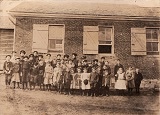
When our family moved to Keeseville, all classes from kindergarten to twelfth grade were held in a big brick structure on top of Main Street that was built in 1936, when improved methods of transportation allowed for consolidation of the the area’s small one-and two room school houses.By the mid-fifties, however, a growing population fueled by the near-by Plattsburgh Air Force base necessitated the construction of a new elementary school. In the meantime, students were shipped off to other locations. My brother Jay spent fourth grade in the town’s old shirt factory. Two years later, I was part of the the group of students who were bussed the four miles to the two-room school house in Port Kent. 

I am not sure how the teachers felt about being transported back in time one hundred years, but we students loved it. The building itself was comprised of two huge rooms that were linked by a connecting door. Two wooden stoves provided the heat, the old oak floors were scuffed and the bathrooms were far from modern.  However,  it was fun for us in Mrs. Smith’s second grade class to be next door to the third grade class. The school was set on a hill in a large grassy lot that overlooked Lake Champlain. Lessons were punctuated with the sounds of train whistles from the Port Kent railroad station and horns from the ferries that transported cars to and from Burlington, Vermont.

Each day, we would be taught reading, writing, and arithmetic. The school would transport lunches, and we would eat at our desks. We loved our teacher, Mrs. Smith, who was sweet and kind and looked a great deal like Loretta Young. My friend Julie Thompson Berman had special memories of Mrs. Smith: A left hander, her second grade teacher tried to “convert her” until Julie’s father set the teacher straight; having Mrs. Smith was a relief.

Most of the students walked up to the high school and took buses to Port Kent, but some of the students lived in Port Kent. Steven Bullis and Barbara Klages lived within walking distance of the school. Barbara lived in a huge house right next to the railroad tracks. The trains went roaring past her front porch several times a day, and I thought she was the luckiest person in the world. No matter where we lived, the intimacy of the small school resulted in friendships that have lasted a lifetime. Along with Barbara and Steve, I met Julie, Betsy, Linda, Betsy, and Mike in Port Kent, and most of us remained classmates and friends throughout our graduation in 1968. It was also while in Port Kent I had my first heartbreak: I was in love with Jay Sussdorf, who moved away at the end of second grade. 

One of my clearest memories was our performing in Hansel and Gretel. As I had been a witch that past Halloween, I got to play the villain to Julie’s starring role as Gretel; she pushed me into the “oven,” a table covered in black construction paper with a drawing of the fireplace.

The next September, we started the school year in Port Kent. The elementary school was finished over the winter vacation, and we started going to classes there in January, 1958. The new school was shiny and modern and beautiful. However, looking back, I have fonder memories my year and a half in that little red schoolhouse than I do about the new building.

Ironically, many years later, Adam and Julie had the opportunity to attend school in a similar building.  Both children went to the Clifton Park Nursery school in the little red school house on the corner of Moe and Grooms Road. As a cooperative preschool, Larry and I participated as a helping parent in Adam and Julie’s classrooms on a rotating basis. One of Julie’s earliest memories is Larry coming in on Halloween as a clown with a big red honking nose. She thought she was the luckiest child in the world to have such a funny, talented father. Both children loved going  to nursery school in that old building with its wooden floors, huge old windows, and parent-made shelves lining the walls filled with toys and books and arts and craft material.

My Mountain Girl’s elementary school in Frisco, a modern building with a huge playground, is only a few blocks from her home. I doubt if she will follow in the footsteps of her grandmother and mother. However, she is  learning  about the history of her small Rocky Mountain town: the Ute Indians who originally lived along its rivers, the mountain men who trapped beaver in this territory in the first half of the nineteenth century, the miners and their families who settled the town in the 1870’s. She enjoys picnics and concerts in the town’s historic park, where she plays in original buildings that once served as homes, a jail, a chapel, a saloon and brothel! And she can explore the the Schoolhouse Museum, with its wooden floors, dusty chalkboards, and wooden seats. And on one of our visits, I will share the stories of my own adventures in a two-room schoolhouse on top of a hill overlooking Lake Champlain. 

A version of this article originally appeared in the Jewish World News, a bi-weekly subscription-based newspaper in upstate New York, on August 6, 2015.

Larry’s classic clown outfit in 1985. Adam and Julie were delighted!

A Father’s Day story: Boats, Bugs, and Bats

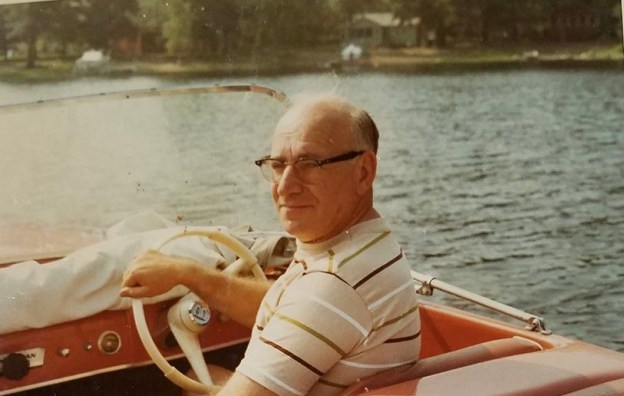
In June 2008, my father and I spent our last Father’s Day together. He and my mother had moved up to an independent living facility in Upstate New York four miles from me. Two years later, his health had deteriorated, and he passed away November 2008. People may remember Bill Cohen for his stores in Keeseville, his community service, his pride in his family. What I remember—and treasure—most about my father were the stories about him that my siblings and I share again and again. Many of them centered on boats, bugs, and bats. 

Having spent summers as a child with his grandfather Archik Pearlman on Lake Champlain, my father always dreamed of owning a boat. In 1965, he purchased a pink indoor-outdoor that my mother immediately “christened” Nisht Neytik, Yiddish for “not necessary.” During the summer, Dad rented space on a public dock in Port Kent, five miles from our house. And each Sunday, Dad would coerce us all to take a ride—when we could go. Unfortunately, the boat spent more time in the shop than in the water. And when it was in the water, Dad was always panicking about the weather or the gas situation. One time, we took a long ride out to a nearby island, and my father realized that we may not have enough gas to return. We were nervous wrecks until we finally pulled back into our slot.

In 1966, my parents bought a cottage on Willsboro Bay. Soon after, Dad purchased an outboard with slightly better reliability. Larry and I were married in 1974, and in 1975, we went up to the lake for Memorial Day. Dad gave Larry a pair of waders Dad had picked up second hand and asked him to put up the docks for the boat. Before Larry was knee deep, the waders-riddled with tiny holes filled up with water. Think Lake Champlain in May, when the water temperature barely reaches 60 degrees. Larry has never forgiven him. 

For the next several years, the boat was anchored either on the dock or on an anchor about 200 feet from shore. Dad still loved boating, but only if the weather was perfect. For hours before we were supposed to go out, Dad kept his ear near the radio next to his chair, which was set for the weather station. If there was the slightest chance of rain, he refused to go through with the ride. When we children and eventually our spouses were old enough to go on our own, Dad installed a CB radio in the outboard so he could check up on us every few minutes. In an blatant act of defiance, Larry would turn it off. Dad never forgave him.

As much as my father loved boats he DESPISED bugs. He kept a can of Raid next to his favorite chair on the back porch of the cottage and used it frequently—and liberally— to kill any passing fly or wasp. When the Raid wasn’t enough, he got a outdoor fogger which he used with the same careless abandon that he used the aerosol can. One beautiful summer night, Laura was putting food on our set table when my father passed by the outside of the window with the fogger in his hand. A potent cloud of pesticide permeated the air. Laura never forgave him. 

When the Raid and the fogger failed, Dad called in the Big Guns. He purchased an electric bug zapper and hung it on the limb of the huge oak in front of the cottage. As the sun set across the lake, we heard from inside the cottage a quick zap as the first bug hit the grid, then a second, then ten, then twenty. Before we knew it, every bug between Willsboro and Burlington five miles across the lake was headed for the bug zapper. It took about 30 minutes for the ten foot machine to become completely clogged. So much for Dad’s war against the bugs.

Dad was more successful with bats. The cottage was always a gathering place for the family. One summer weekend, Larry and I were in one bedroom; my sister Bobbie and her husband and Emil were in another; and my sister Laura was in another. In the middle of the night, I headed to the bathroom. As I reached for the toilet paper, I realized that a bat was sitting on the top of the roll. Trying not to wake anyone, I ran back into our bedroom and shook my husband Larry awake.

“There’s a bat in the bathroom!” I whispered.

Larry awoke groggily with a “Wha……t?” He climbed out of bed, checked out the bat in the dim light of the night light, and suggested we close the door and wait until morning. 

“But what is someone else has to go to the bathroom?” 

“What are you two doing?” Our whispered conversation had woken up my sister.

The bat, tired of squeezing the Charmin, flew out of the bathroom and began swooping through the cottage. 

“Damn!” I cried.

By this time, Emil, Laura, and Mom were wide awake. We watched the bat circle above us, all of us talking at once with suggestions .

“Hit it with the badminton rack?” 

“How about a broom?”

“Does Raid work on bats?”

“How about the fogger?

At that moment, my father, who can sleep through a five alarm fire a block from our house (Yes. He did. Keeseville, New York, February 14, 1964. But I will save that story for another time), finally appeared in the doorway of his bedroom in his teeshirt and boxers. Without a word, he crossed the room, grabbed the fishing net that he kept in the corner explicitly for this purpose, and in one fell swoop, caught the bat in its web. He opened the front door, shook the frightened but still alive bat out of the netting, and came back into the cottage.

“Now everyone go back to sleep,” my father stated. 

Boat lover. Bug hater. Bat rescuer extraordinaire. But most importantly, My Dad. Whether he is with me or not, I will celebrate every Father’s Day in his memory with love.

Note to my readers: While editing my blog, I realized that I had never published this story I had written in 2019 for Father’s Day about my beloved father, Wilfred “Bill” Cohen (Z’L). It’s a little late for Father’s Day, but it’s never too late to honor my father’s memory.

A version of this article originally appeared in the Jewish World News, a bi-weekly subscription-based newspaper in upstate New York.

There’s a good vegetable store and a lovely park down the street…

If I were still living in Upstate New York, I would be thinking about planting my flower garden. Thinking—not planting—as it never seemed safe to put the annuals into  the ground until Memorial Day weekend. Before I knew better, I had planted the fragile blooms too earlier and watched them die before they even rooted, hit by a late frost.

Not that I or any member of our family were known for our green thumbs. My family’s track record for killing all but the most hardy plants dates back to August 1952, when we moved into our house in Keeseville, New York. While the inside of the house needed plenty of work, the previous owner, Laura Gardener (how appropriate!) kept a beautiful yard.A huge hedge of tiger lilies bordered the front of the house alongside a pristine lawn. In the back was a beautiful flower garden filled with fragrant phlox, lovely lilies of the valley, rose bushes, and a bird bath. At least that was what Laura and Jay, my two older siblings, remembered. By the time I first could recall the yard, it had already shown the neglect that my parents, who grew up in New York City apartments, had bestowed on Ms. Gardener’s labors. Sadly, it never regained its floricultural splendor while the Cohens lived there.  

When I was around twelve, my father decided to put in a vegetable garden in our side yard. As with most of my father’s projects, he was the idea man and I was the unwilling implementer. We may have gotten some tomatoes that year, but by the next spring, grass was growing on the small plot and the experiment was over.

The idea man/implementer plan also worked for my father over twenty years later at the family cottage on Lake Champlain. One fine June morning, Dad showed me the roll of black mulch he had gotten on sale. “It’s for my vegetable garden,” my father announced. “ Dad,” I said. “You don’t have a vegetable garden!” “I will soon,” he told me, pointing a tray of tomato and pepper plants and a hoe resting on a small patch of land next to the garage. “Start digging.” For the rest of that summer during my weekend visits, I was like the Little Red Hen—planting, weeding, watering. Dad, however, was in charge of harvesting— proudly showing off “his” yield.

Meanwhile, Larry and I were already living our own “Better Homes and Gardens” experience. On a beautiful fall day in 1988, our realtor showed us our future home.We liked the house but especially loved the large front yard and woods offering privacy in the back. When a squirrel ran across the plush lawn, we were sold. (To this day, I swear that the owner had hidden behind a tree and released that rodent on purpose.)

While Larry mowed, I planted. On or soon after Memorial Day, I would go to the local garden place and fill my car with red impatiens, begonias, salvia, and some coleus. I would clean up the rock garden on the side of our property and the area underneath the bushes along the front. I would dig and plant and water and weed until my back hurt. In a throwback to my making-mud pies-days, my favorite part was getting dirty, so dirty I often had to strip off the top layer of clothes in the garage before walking back into the house. 

By the end of July, however, my enthusiasm had wilted with the humidity. I had grown tired of the heat, the bugs, the occasional snake, and the sight of almost everything I planted failing to thrive. I encountered success in only two areas: Although the other annuals usually died an early death, the impatiens continued to bloom until the first frost. In addition, my hosta plants were the envy of the neighborhood, growing ridiculously big and needing separating every season until I had hosta growing around three sides of the house. 

Any attempts at our growing a vegetable garden provided a bounty— not for us but for the wildlife and the insects. As had happened with my flowers, early June’s enthusiasm was followed by August’s failure-to-thrive. I learned that the vegetable stand on the corner of Grooms and Moe Roads was a tastier, less work-intensive alternative to hours in a garden to gather a few tomatoes and sad looking peppers.

After mowing lawns and raking leaves for over 35 years, Larry had turned over those jobs to our neighbor’s son, who had started a lawn care business. Maybe it was time for me to hang up my gardening tools as well.

I found my escape when we relocated to Florida. Our community has a home owner’s association (HOA), whose fees include lawn care. I can leave all our landscaping chores to the wonderful people who descend on our property every Tuesday. After they mow our lawn and trim our bushes in trees, the workers munch on the cookies I gratefully place on their water cooler. A few extremely hardy potted plants on my lanai satisfy any urge I have to tempt fate to kill the un-killable. 

Not all my neighbors have abandoned in their gardening gloves.Many have turned their lanais into a virtual greenhouse with hundreds of potted plants, fountains, ponds, and even in one friend’s home, a koi pond! For others, the lanai also serves as a vegetable garden, with shelves of herbs and large planters filled with tomatoes, a variety of peppers, and even eggplants. On our frequent walks, we have seen screened in courtyards filled with raised beds filled with flowers and vegetables. And each month, one home sports a “Yard of the Month” sign in recognition of the owners’ dedication to their outdoor displays of flowers and landscaping. 

Thank you, but no thanks. Outside of an occasional snip on a wayward bush, I am happy with our lawn service. If I want to see lush gardens, my husband Larry and I can take stroll in Bok Tower Gardens, a beautiful 250 acre garden and bird sanctuary only a short 40 minute drive. Now that we are vaccinated, we will again be able to enjoy Epcot’s annual International Flower and Garden Festival, complete with topiaries of our favorite Disney characters. Yep, this girl has switched out her hoe-hoe-hoes for a simpler life. Ho! Ho! Ho!

A version of this article originally appeared in the Jewish World News, a bi-weekly subscription-based newspaper in upstate New York, in the April 15-April 24, 2021, issue.

Image courtesy of cdc on upsplash.com.

Being Born: The World, The Jewish World, and me!

Happy Birthday to me! Happy Birthday to The Jewish World! And Happy Birthday to the World!

It was Labor Day—how fitting!  On Sept. 3, 1950, as my mother’s doctor had a noon golf date, Frances Cohen accommodated his schedule by delivering me a little after 9 a.m.

The Jewish World came along 15 years later. Inspired by Jewish community leaders with the idea that a newspaper would strengthen the community, Sam Clevenson published its first issue for Rosh Hashanah 5716 on Sept. 23, 1965. He believed it would help unify the Jewish communities of Albany, Schenectady, Troy, and the surrounding area. After his passing in 2008, his children, Laurie and Jim, took the helm, packing the paper with more local news, adding a dynamic web site and weekly e-newsletter to expand the readership.

What’s in the ‘World’
The bi-weekly covers local religious events and a wide range of local, national, and international news that impacts and strengthens our Jewish community. It is also a valuable source for happenings in the world of art and culture. Over the years, I have clipped recipes, jotted down the names of books and movies, and have learned much about the world through a Jewish lens.

The recent rise of Jew-hating has made our local newspaper even more important. “For 54 years The Jewish Worldhas monitored perils to your existence,” Jim Clevenson recently said. “We finger the foes of freedom, the nemeses of peace, while celebrating the successes of our crusaders for justice, black and white, Jewish and Gentile.”

‘There goes my heart’
While my husband, Larry, and I had been longtime subscribers and readers, my personal connection to The Jewish World began in 2013. While covering the Capital District Hadassah’s special events banquet, I visited the office in Schenectady to speak to Jim Clevenson. In my pre-retirement life, I had worked in public relations as both a volunteer and as part of my job at the Capital District Educational Opportunity Center, a division of Hudson Valley Community College. Jim asked if I would be interested in writing news articles for the paper. I countered with an offer to write personal columns based on my many years as an upstate resident. My first article, “There Goes My Heart,” was published Aug. 15, 2013. Laurie and Jim (and readers) must have liked it. Over the past seven years, I have published 148 articles in Sam Clevenson’s brainchild.

Since Larry and I moved to Florida in 2015, I have expanded my horizons by becoming a regular contributor to the Heritage Florida Jewish News. My articles have been posted on numerous websites, the Jewish War Museum, Growing Bolder cancer survivors website, the US Pickleball Association, and most recently the Australian-based Jewish Women of Words (I have gone international!) I have compilations in two books, There Goes My Heart (2016) and Tikkun Olam: Stories of Repairing an Unkind World (2018). Two books are in the queue: Keep Calm and Bake Challah, a third collection of essaysand Fredyl’s Stories, family stories that I co-wrote with my mother, Frances Cohen (Of Blessed Memory). My blog, theregoesmyheart.me, presents my stories as well as articles about my writing adventures.

My articles, books, and blog would not have been possible without the help and support of Laurie and Jim Clevenson. They have provided the space in the paper plus advice and guidance.

The lonely ‘Zoom’
This month, The Jewish World and I also share our birthdays with the world. Rosh Hashanah 5781 begins on Friday, Sept. 18. Of course, the High Holy Days will be very different this year for most of us. Rather than meeting fellow congregants in our synagogues, we will be “Zooming.” As the first day falls on Shabbos, Reform Jews will have to wait until the closing moments of Yom Kippur to hear the sound of the shofar over the Internet. Holiday meals will be lonely as most families are practicing social distancing. Fasting on the holiest day of the year will be made even more difficult when we are not sharing the experience.

But I will still celebrate. I will bake round challahs, roll matzoh balls and drop them in simmering chicken soup, and cook up my traditional chicken, roasted potatoes, and candied carrots. Larry and I will do a brachah over the wine asking for a sweet, better year ahead. After we have finished our Zoom service, I will pull out the most recent Jewish World and catch up on what is happening from the only local paper that focuses on Jewish news—what you need to know.

It’s not just the virus
Before Corona-19 we were already a polarized nation crazed with resentment of blacks, Jews, and foreigners. Now we’ve heard echoes of ‘The Jews have poisoned the wells’! The Jewish World promotes Jewish life and culture, and stands for Jewish traditions of rationality and love. We believe good people must stand together to encourage and facilitate light. This is our mission and duty as Jews.

What you can do
To celebrate The Jewish World’s 55th birthday, I ask you to support the paper you are holding in your hands or reading on-line. Renew your subscription. The Clevensons shared with me that a new office staffer is managing the database, and non-payers may find their mailboxes a little emptier on every other Friday.

Give subscription gift certificates to your kids and friends! To carry on the Clevenson legacy call Cynthia Traynahan in the office, (518) 344-7018. She knows all the special discounts.

With Corona-19 disrupting most businesses, The Jewish World needs extra help: visit GoFundMe at gf.me/u/xunxx5.

I also request that you keep in touch with me! I love to hear from readers. E-mail me at shapcomp18@gmail.com , via my Facebook page at Marilyn Cohen Shapiro, Writer, or on Twitter at @shapiro_marilyn. Thank you!

The Jewish World, September 15, 2020

This Bibliophile LOVES Libraries!!

Marilyn surrounded by one of her favorite things….books.

Recently, my husband Larry and I saw The Public. We knew little about the movie when we joined a sparsely filled ballroom in our community. By the time the end credits rolled, however, the two of us as well as others in the audience agreed it was one of the best movies of which we had never heard.

Written, directed, and starring Emilio Estevez, the plot centered on a fictionalized account of an act of civil disobedience that turns into a standoff with police when homeless people in Cincinnati take over the public library to seek shelter from the bitter cold. Sweet, interesting, and well-acted, the movie had not garnered much praise or hype, but it gave a compassion view of the homeless. More importantly, it was Estevez’s love letter to public libraries. The camera often captured not only the beauty of the building but also the beauty of literature, with views of large posters of Thoreau and Frederick Douglas and Jane Austin prominently displayed. 

My own love of libraries started when I was five years old. When the books in our house weren’t enough, I walked to the small but well-stocked red brick building around the corner from our house in Keeseville. An early and voracious reader, I once did two trips to the library in one day to replace the picture books I had taken from the six foot shelf and finished in an hour. On my third trip, the librarian told me that I needed to read “bigger books” and walked me to the bookshelf that backed up to Cat in the Hat and Curious George. Embarrassed but intrigued,I soon fell in love with classics by such writers as E.B. White, Marguerite De Angeli, and Beverly Cleary. When I was thirteen, my father introduced me to Ed McBain and the 87th Precinct, and took out one a week, along with other popular fiction. That little brick building remains as one of my favorite places from my hometown.

By the time I went to college, the library became a source of research and studious solitude. Whether exploring the shelves or figuring out how to thread the microfiche into the machines, I used the library throughout my undergraduate and graduate studies, conscientiously detailing my information on 3X5 index cards. In those days before computers, I also spent hours painstakingly typing in the source information into footnotes on the bottom of the white paper I had rolled into my Smith Corona.

When Larry and I purchased our first home in Clifton Park, I signed up for my first card in the library that was housed in an old schoolhouse provided in 1971 by the local school district for $1 a year. It looked and smelled like my old haunt in Keeseville. I was a little sad when the town built a newer but more institutional-like building a few miles away.

 As a child, I had been told that when it came to food, my eyes were bigger than my stomach. When it came to books, my eyes were bigger than my brain. With the new library’s increased size and volume, I started on a habit that I continue to this day, often taking out eight to ten items at a time. Fiction, non-fiction, DVD’s, tapes, magazines…whatever the library had to offer went into a huge tote bag I brought with me for that purpose. I also took care of Larry’s love for non-fiction, bringing him home books by David McCullough and Walter Issacson.

By that time, our children Adam and Julie were born, the tote bag also held children’s books. As a rite of passage, got their first library card as soon as they could sign their names. 

By the early eighties, I was debating whether to return to work or return to college for a master’s in Jewish Women’s Studies. After viewing the cost and the time, I decided to go the independent studies route. The wonderful librarians filled my requests for numerous books both on the shelves and available in area public and college libraries. I immersed myself in everything from Susan Brownmiller to Betty Friedan to Anzia Yezierska.When I finally returned to the classroom in 1986, I continued using resources from our local library to keep up with their ideas.

Sometimes, the library provided us withTMI—too much information. In high school, Julie did a research paper on Charles Dodgson, better known by his pen name Lewis Carroll, an English author most well known for Alice’s Adventures in Wonderland and its sequel Through the Looking-Glass. Uncovering Dodgson history, which included a complicated relationship with the child Alice Liddell, who served as a basis for his most famous character, as well as his photographs of half nude children. In retrospect, Carroll is viewed as “a man you wouldn’t want your kids to meet.” 

In 2006, Shenendehowa opened up a beautiful new library almost triple in size of its previous facility. I visited the library at least once a week, carting home bags of books, magazines, and dvd. As many other town residents, I attended authors’ lectures, concerts, and special events, including a Holocaust Remembrance. 

When we moved to Kissimmee in 2015, Larry and I signed up for a library card even before all our boxes were unpacked. The Osceola library branch on Doverplum reminds me of the one story structure that Clifton Park built in the 90’s. Yes, t is smaller, but the librarians and its expansive website keep me in between the covers of enough books for me to satisfy my book addiction for the next hundred years.

Meanwhile, empty nesters since 2001, Larry and I travel more frequently. On one trip to Jamaica, I packed seven books for the seven day stay. Larry (and Larry’s back) protested. Soon after, I found out that the library had an extensive ebook collection. I now was able to travel with more books than I could ever read in one week on a device weighing less than 8 ounces. Although I still love the feel of a real book, I am grateful I have an alternative for travel (and reading in bed with the lights off). And through the miracles of the internet, I am now able to manage my account electronically, including my holds, loans, renewals, and all e-book downloads.

Not that we never buy books. I am a firm believer in independent bookstores, and I force Larry into everyone I see. We hit four in four cities in a recent trip in Alaska, and I visit The Next Page, a wonderful community resource in Frisco, Colorado. Each time my need to support these stores often wins over the need to stop stuffing our bookshelves. 

Thankfully, the easy access to libraries throughout my life has helped our pocketbooks. According to according to a 2018 study by Pew Research, the average hardcover book retails for an average of $27.50. As my yearly goal is to read 100 books, I save $2750 a year using my library, and that doesn’t even include the price of magazines and DVDs!

In The Public, the Jeffery Wright character states, just before he joins the standoff with the homeless, “The public library is the last bastion of democracy that we have in this country!” The American Library Association agrees. “Libraries ensure people have access to information and lifelong learning regardless of age, education, ethnicity, gender, language, income, physical limitations or geographic barriers,” states their website.  “With over 17,000 library buildings and bookmobiles in communities, public libraries are essential community institutions that deliver the resources their communities need to thrive.” Libraries have helped me and my family thrive, and I, like the characters in The Public, will continue to support them. 

A version of this article originally appeared in the Jewish World News, a bi-weekly subscription-based newspaper in upstate New York. in the October 17, 2019, issue.