This article was published in the Orlando Heritage Florida Jewish News on February 23, 2024. Thanks to Christine Sousa, Editor, for all her support!
This March, Marilyn Shapiro celebrated a milestone in her writing career: the tenth anniversary of her blog, There Goes My Heart.
Wait! You don’t know she has a blog? And if you knew, you have never typed www.theregoesmyheart.me into your browser? Well, you don’t know what you have been missing!
In 2014, with only about 10 stories published in the Capital Region, New York’s The Jewish World, Shapiro decided that she needed a blog as another way to share her stories and to appease her inner geek. After researching a few options, she chose WordPress, “a web content management systems that was user friendly for even newbies like me,” she shared.
Along with home page and contact pages, Shapiro posted her first 10 blog posts. Leading the list was “There Goes My Heart,” her very first article that was published in August 2013. Fittingly, Shapiro chose it as the name for her blog. She was in business!
When Shapiro and her husband, Larry, moved to Florida in 2015, with over 20 articles under her belt, she met with a neighbor who taught computer classes in the Shapiro’s community. Working with her, Shapiro was able to add more bells and whistles, including a Home Page menu that provided access to her increasing list of articles. A “Follow” button encouraged readers to sign up to get my blog post delivered to their email accounts.
By 2018, with two published books to her credit, she added a “Marilyn’s Book” page. Along with a summary of her essay collections, it offered the user the ability to click directly onto the Amazon website, where one could purchase a Kindle or paperback version.
Shapiro now has four books listed: “There Goes My Heart” (2016), “Tikkun Olam: Stories of Repairing an Unkind World” (2018), “Fradel’s Story” (August 2021), and “Keep Calm and Bake Challah: How I Survived the Pandemic, Politics, Pratfalls, and Other of Life’s Problems” (2023). She even offers a preview of her fifth book, “Under the Shelter of Butterfly Wings: Stories of Jewish Sacrifice, Survival, and Strength.”
Many of Shapiro’s articles are personal: her ancestors’ lives in the shtetl before immigrating to America; her childhood in a small town in Upstate New York; meeting Larry at a Purim party, their years raising two children; their retirement years, their travels and their growing family. Some are humorous: Their love affair sealed in (a kidney) stone. Her daughter’s not-so-welcoming attitude when Shapiro volunteered to chaperone her daughter’s school trip. Receiving the moniker “Bubbe Butt Paste” after the birth of their first grandchild. And some are more profound: Larry and Marilyn’s visit to a Holocaust memorial after the Pulse tragedy in Orlando; wintering through the pandemic; reflecting on the Israeli-Gaza war during the eight days of Chanukah.
In 2017, Shapiro wrote an article about Harry Lowenstein, a Holocaust survivor (published in the Heritage, “A Holocaust survivor revisits his past,” May 19, 2023).
“Its impact on me resulted in expanding my writing to include heartfelt stories about ordinary people with extraordinary stories to tell: other Holocaust survivors, righteous gentiles, Jewish immigrants, cancer survivors, and advocates for the less fortunate. The interviews and research necessary to write the articles have expanded my knowledge on many topics, which I have hopefully passed on to my readers,” Shapiro said.
Ten years later, Shapiro’s blog continues to grow and flourish. She has approximately 220 articles, many with accompanying photos. She has 447 followers, a number that I hope will continue to grow. And thanks to hashtags such as #Jewishlife, #Holocaust, #Hanukkah, #neworleans, and even #pickleball, I get “Likes” from around the world. The page “Marilyn’s published articles from around the world” now includes those from Orlando’s Heritage Florida Jewish News, as well as websites as far away as Australia.
If you are a subscriber and are enjoying Shapiro’s blog, she would love to hear from you. You can type a note in the “Comment” section at the end of the blog, and she will respond. Shapiro also encourages readers to share her posts and even her blog address with friends and family who may enjoy them.
“And for those of you who still haven’t given my blog a try, take a look!” Shapiro added.
Shapiro’s blog is at www.theregoesmyheart.me. Usually she posts every two weeks, so you will not be overwhelmed with emails from her.
Who knew that one article in 2013 would lead to so much? For this writer and computer geek, Shapiro is having fun!
“Have money set aside and have flesh on your bones.”
This was the advice given to a friend who grew up as the daughter of Holocaust survivors. Her parents instilled in her and her brother the need for hyper-vigilance in case the unthinkable happened again. The couple’s circle of friends, fellow survivors of Nazi Germany, expanded the advice to include a ready passport and a warm coat in which money and jewels were sewn into the lining.
Since 2015, I have been researching and writing stories about Holocaust victims as told by themselves or their children. Each story relives in me the sacrifice, the terror, and the strength shown by the targets of Hitler’s Final Solution. And it comes down to this: Although they comprised a mere 1.7% of the population of Europe when Hitler came to power in 1933, over six million men, women, and children were murdered for the crime of being Jewish.
Hitler’s campaign against the Jews didn’t start with guns and ghettos and gas ovens. It started in 1933 with words: slow building propaganda effort to denigrate Jews, their accomplishments, and achievements. Those words were reinforced with images: distorted drawings of Jews as controlling octopi, fat bankers, and Christ killers. Words and images morphed into book bans and book burning. These actions grew into increasingly more restrictive laws regarding where Jews could work, shop, seek medical attention, and live. By November 10 , 1938, Kristallnacht, “Night of the Broken Glass,” Jews had neither rights nor means to escape. Trapped, two-thirds of Europe’s Jewry were murdered by bullets, beatings, starvation, or the gas chamber.
Unfortunately, the lessons of the Holocaust has done little to end Jew hatred. According to the Anti-Defamation League, antisemitic incidents in Florida have doubled since 2020, with 269 incidents of assault, harassment, and vandalism reported. This rise has been seen across the United States and the world. In a recent interview with Steven Colbert, Stephen Spielberg commented, “Not since Germany in the ’30s have I witnessed antisemitism, no longer lurking but standing proud with hands on hips like Hitler and Mussolini — kind of daring us to defy it. I’ve never experienced this in my entire life. Especially in this country.”
On June 10, 2023, neo-Nazis had held a rally not far from the gates of Disney World, in which they waved posters with swastikas, Nazi flags, the Florida state flag and posters supporting Ron DeSantis, the governor of Florida. While other Florida leaders across party lines immediately stepped up to condemn the actions, DeSantis has yet to comment. As noted in an article in the 6/12/2023 Tallahassee Democrat, “While the governor has been quick to tout his pro-Israel support and legislation, his office has in the past been slower to weigh in on public antisemitic displays.”
Books and course work pertaining to the Holocaust have been caught up in Florida’s legislators fight against “woke” education. History of the Holocaust, an on-line course, and Modern Genocide were rejectedfor including topics on social justice and critical race theory. A third book was allowed after “politically charged language” was removed.
As a result of complaints from parents in Martin County, Florida, Jodi Picoult’s The Story Teller, a novel about a friendship between a former Nazi SS officer and the granddaughter of an Auschwitz survivor, was taken off the district’s shelves for “sexually graphic scenes, including depictions of sexual assault by Nazi guards. Picoult, a bestselling author who saw 19 more of her books targeted by anti-woke advocates denounced the move. “Books bridge divides between people, said Picoult. “Book bans create them”
Florida’s current climate comes chillingly too close to what happened in Nazi Germany. Despite the fact that transgender people make up approximately 1% of the nation’s population, the Republican legislators in Tallahassee have passed bills restricting transgenders from using public bathroom, denying them gender affirming medical treatment and drugs, and limiting the rights of parents of transgender children. In response to Tallahassee’s attempts “to erase Black history and restrict diversity, equity, and inclusion programs in Florida schools.” the NAACP justifiably issued a travel advisory to African Americans, people of color and LGBTQ+ individuals
Since 2021, DeSantis and the Republican legislature have passed bills that, as reported in a 4/23/2023 Washington Post article, will give us an idea what “Make Florida America” would look like under a DeSantis presidency. Restrict third-party registration groups, which have long been in the forefront of signing up Black and other minority voters. Eliminate campus diversity programs. Prohibit state and local governments from making investments based on environmental, societal and governance (ESI) benchmarks. Ban abortions after six weeks, Expand “Don’t Say Gay” to include all grades (K-12) in public schools. Make it easier to sue news media for defamation and win. Make it harder to sue insurance companies. Allow gun owners to carry concealed weapons without permit or proof of training. Allow DeSantis to run for president without resigning the governorship and without having to disclose his travel records while campaigning around the country.
Florida residents have a choice. We can leave, finding a place—hopefully that does not require passport and a warm coat that conceals valuables—that is more accepting. Or we can stay and fight with our words and our images and our vote. Thomas Kennedy, a Florida activist, stated in a 6/27/2023 Miami Herald article that the current far-right climate may serve as a motivation for change. “If we don’t at least check these….far-right figures that are starting to create a laboratory for extremist policies in Florida,” said Kennedy, “the Florida of today could become the America of tomorrow.” Remember this as we celebrate our country’s birth and look ahead to our country’s future.
Anne Frank, born on June 12, 1929, was the celebrated diarist who described her life while hiding with her family from the Nazis in an Amsterdam, Holland attic. After capture and deportation, she died in the Bergen-Belsen concentration camp in late winter 1945.The following story, first published in 2018, tells the story of another Jewish child who hid with his family in Holland during World War II and survived to share his story.
Anne Frank is one of the most well known figures from the Holocaust. But she and her family were not the only ones to go into hiding to avoid capture by the Nazis and their collaborators. While some Jews lived in the open with changed identities, others, like the Franks physically hid to avoid certain deportation and almost certain death. Dutch Nathan and his family were one of many who relied on others to help them.
Gert “Dutch” Nathan was born on January 5, 1932, in Duren, Germany, the second son of Wilhelm (“Willy”) and Hilde (nee Friesem) Nathan. Willy had a cattle hauling business which extended throughout Europe. He did not have a formal education, but he was street smart—Dutch remembers that his father could “outcalculate a calculator.” The Nathans lived a mostly secular life in Germany, with observation of major Jewish holidays and his mothers’ lighting of Shabbat candles.
In 1938, after Hitler’s rise, the family moved sixty miles west to Valkenburg, The Netherlands. “Holland had proclaimed neutrality when war broke out in September 1939, as they had done in World I,” said Dutch, “so my father thought our family would be safe.”Willy took a job with the De Valk bus company, a former competitor, where he continued his cattle business.
On May 10, 1940, Hitler’s forces invaded the self-proclaimed “neutral” country. Five days later, after the bombing of Rotterdam, the Dutch forces surrendered. By 1942, the situation began to deteriorate for fellow Jews. Willy made the following arrangements with his friend, Johan Kengen, a member of the Dutch Underground: If the Nathans were in danger of deportment. Willy would pay for the family to stay in the home of Kengen’s fiancé’s aunt and uncle for “a few days” until the Nathans could be spirited away to England. Willy also made arrangements for neighbors to move most of the furniture and bedding to the house next door. Whether the neighbors were paid or volunteered as an anti-Nazi action still remains a mystery to Dutch.
The plan was put into effect a few month later. While walking from the bus station into the De Valk building, Willy was stopped by a friend and fellow employee: Germans were waiting for him to arrest him and deport him and his family to the concentration camp.
Father quickly stole a bike and peddled the ten miles home. Dutch and his older brother Fredo were instructed to leave their house one hour apart to walk the two miles to a house “located on the right hand side just before the road crossed the railroad tracks” with a warning to “not speak to a soul.” Willy and Hilde arrived later that evening, expecting to hear soon from the Underground of their clandestine trip to England.
Unfortunately, the days turned into week, and the Nathans were still in hiding. Other people, including downed pilots, had priority in the Underground escape plan. To further cover the facts of extra activity in the “safe house,” an elaborate ruse was planned. Johan and the elderly couple’s niece Ann quickly arranged their wedding. At the reception, Johan picked a huge fight with Ann’s parents, who resolved that they would have no contact with the couple until Johan apologized. The newlyweds moved into the house by the railroad tracks, bringing the number to eight.
As weeks turned into months, tensions grew. The Nathan’s spent most of their time in a small main floor bedroom. Ann was prone to hysterical outbursts, and Willy and Johan would have to physically restrain her to keep her from running outside and giving their situation away. Meanwhile, Hilde was anguishing over the fact that she had not been able bring her parents with them. She was haunted by their deaths in the concentration camp for the rest of her life.
Johan’s government job determining the number of animals that farmers could slaughtered provided a means to get extra meat and milk, but food was still scarce. Dutch and Fredo, 10 and 12 respectively, spent most of their days quietly reading books and avoiding the shaded windows so no shadows would be seen.
Along with possible discovery, the occupants lived in fear of the potential impact of living near the railroad track.The noise from the passing trains provided an extra buffer but also an extra danger: Allies strafed German trains. They hoped that these attacks would not hit the house, either killing all of them or forcing the Nathans out into the open, thus exposing their dark secret.
In the second half of 1944, the southern half of Holland was liberated by American troops. (The remaining areas of the Netherlands were not liberated until May 1945.) The Nathans stayed inside for a few more days to make sure they were safe.
Once they realized they were actually free, the Nathans stepped into fresh air for the first time in twenty-six months. “I walked a few feet and collapsed,” remembered Dutch. When asked if he had been overcome with emotion, he said, “I hadn’t used my legs in 26 months and initially had no muscle tone to walk more than a few feet.
Before they could move back into their home, however, Americans bombed Valkenburg. One of the casualties was the Nathan’s home. “No one understood why the brick home next door burned so much,” said Dutch. “The furniture hidden in the attic acted like a tinderbox, and flames shot up in the air for hours.”
In May 1945, the remaining areas of the Netherlands were liberated. Free but homeless, the Nathan family moved into a neighbor’s home until 1946, when they obtained visas to move to United States, where several of Willy’s siblings lived. Willy built a crate the size of a truck and filled it with everything they had accumulated since the end of the war—including a piano.
Dutch, now sixteen, enrolled in City College to learn English, adding to his previous background of German, French, and Dutch. At 18, he enlisted in the army and volunteered to go to South Korea. When he returned home, he found employment in whatever “made money.”
In 1979, Dutch, who had been married twice before, met Sue Cohen. He proposed shortly after the meeting, but it took ten years for her to say yes. During this time, Dutch started the Stretch Lace, a Sharon Massachusetts-based company that manufactured and sold elastic shoe laces. (“Tie once, never Tie Again!”) Although his invention was successful, Dutch admitted that he didn’t know marketing and sales. He eventually sold the business, but Easy Laces are still available today and are worn by such celebrities as Brooke Shields. They lived in Sharon for most of their married life before retiring to Kissimmee, Florida, in 2007.
In 1982, Sue and he were invited by residents of Duren, Germany, to return to the Nathan’s original home. They were treated royally and met with church members as well as school children. Sue’s main mantra to everyone she met was “Just remember! The Holocaust DID happen.” Although their visit was supposed to last a week, Dutch felt uncomfortable. He rented a car, and the two of them toured Europe, driving over 4000 miles before returning to Massachusetts
Almost seventy-five years after his liberation, Dutch graciously shared the story that he spent most of his life trying to put those terrifying time behind him. “I try not to think about those things,” said Dutch. “It is over and cannot be undone. His story, however, as those of the fewer and fewer remaining Holocaust survivors, must be told. As Sue Nathan told the people in Germany during the 1982 visit, “Remember. The Holocaust DID happen.” And we Jews and righteous people everywhere will never forget.
A version of this article originally appeared in the November 8, 2018, issue of the Jewish World News, a bi-weekly subscription-based newspaper in upstate New York.
A shorter version of this story was published in the Orlando Sentinel on January 8, 2023. This is the full article as published in The Jewish World in its January 5 issue.
“In the end we will remember not the words of our enemies but the silence of our friends.” Martin Luther King, Jr.
On December 19, 2022, President Joe Biden used the White House’s Chanukah celebration to call out the rising anti-Semitism in the United States. “Silence is complicity,” he stated. Biden joined Second Gentleman Doug Emhoff and other notable Jews in lighting the first ever official White House hanukkiah, which was created by the Executive Residence Carpentry Shop out of wood removed from the building in 1950 during a Truman-era renovation “Today, we must all say clearly and forcefully that anti-Semitism and all forms of hate and violence in this country have no safe harbor in America. Period,” Biden said.
This theme echoed the president’s tweet earlier in December. The remarks came one day after Ye, the rapper, formerly known as Kanye West, announced “I like Hitler” during an anti-Semitic rant on right-wing conspiracy theorist Alex Jones’ InfoWars show and five days after Donald Trump dined with Ye and white supremacist Nick Fuentes. “The Holocaust happened. Hitler was a demonic figure,” stated Biden. “And instead of giving it a platform, our political leaders should be calling out and rejecting anti-Semitism wherever it hides. Silence is complicity.” Trump, meanwhile, has yet apologize or to condemn the men he dined with at Mar-a-Lago. He has hidden behind an excuse of innocence, claiming he didn’t know who Fuentes was.
Condemnation
Some Republican leaders were swift of their condemnation of Trump’s actions. “Trump was wrong to give a white nationalist, an anti-Semite and Holocaust denier a seat at the table,” stated former Vice President Michael Pence. “And I think he should apologize for it, and he should denounce those individuals and their hateful rhetoric without qualification.” Senate Minority Leader Mitch McConnell echoed Pence’s words. “There is no room in the Republican Party for anti-Semitism or white supremacy,” he said. “[A]nyone meeting with people advocating that point of view, in my judgment, are highly unlikely to ever be elected president of the United States.”
House Minority Leader Kevin McCarthy denounced Fuentes, stating that the white supremacist “has no place in this Republican Party,” but follow-up statement which supported Trump was blatantly untrue. “I think President Trump came out four times and condemned him and didn’t know who he was.” According to CNN and other reputable news sources, Trump claimed four times that he didn’t know Fuentes but never denounced him or his views.
While condemning anti-Semitism, many other Republicans who spoke out condemned the ideology but avoided invoking the former president’s name. As a matter of fact, when PBS reached out to 57 Republican lawmakers to condemn the meeting, two-thirds never responded. Many, like McCarthy, have put the blame on Ye and Fuentes for showing up.
The silence is also deafening in my own state of Florida .In January, a small band of white supremacists converged in Orlando, where they chanted “White power!” and roughed up a Jewish student. Governor Ron DeSantis’ press secretary suggested on Twitter that the white supremacists were actually “Democrats pretending to be Nazis.”The governor himself is yet to speak about the Trump/Ye/Fuentes debacle.
In March 29, 2022, article in New York magazine, Jonathan Chait opined that DeSantis’ silence may be rooted in his own strategy to obtain the 2024 Republican nod for the presidential candidate. Chait went soon to say that it may be even more deeply rooted in what Chait called the Republican presidential candidate hopeful’s “unembarrassed courtship of right-wing extremists.”
Look Who Is Talking?
So who is speaking up? Certainly the Anti-Defamation League, whose response was immediate and unequivocal. “Former President Trump’s dinner with anti-Semites Ye and Nick Fuentes underscores the ugly normalization of extremist beliefs — including anti-Semitism, racism and other forms of bigotry,” said Jonathan Greenblatt, its National Director and CEO. He went on to warn that the dinner further emboldened extremists.
And thankfully, many others have refused to be silent. Government officials, religious leaders, journalists, athletes, entertainers, and many others have raised their voices against anti-Semitism.
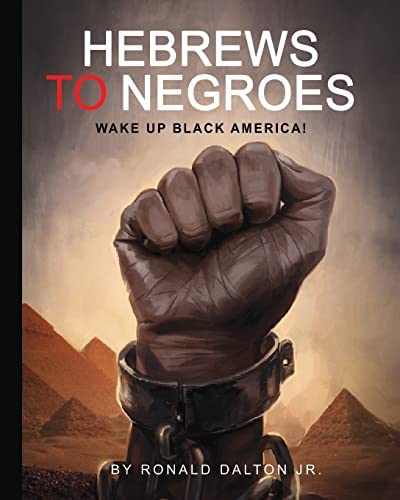
In November, over 200 leaders of the entertainment industry, including Mila Kunis, Debra Messing and Mayim Bialik, released a letter through the non-profit entertainment industry organization Creative Community for Peace urging Amazon and Barnes and Noble to stop its sale of the highly inflammatory book and film, Hebrews to Negros: Wake Up Black America. “At a time in America where there are more per capita hate crimes against Jews than any other minority, overwhelmingly more religious-based hate crimes against the Jewish people than any other religion, and more hate crimes against the Jewish people in New York than any other minority, where a majority of American Jews live,” the letter reads, “it is unacceptable to allow this type of hate to foment on your platforms.”
Survivors
There is another powerful but diminishing group that continues to bring the reality of the Holocaust and anti-Semitism to the forefront: Holocaust survivors. January 27, 2023, marks the 78th anniversary of the liberation of Auschwitz. Most of the survivors are in their eighties and beyond; the oldest known survivor, Yisrael Kristal, died at 113 in 2017. Through the efforts of Steven Spielberg , the Shoah Visual History Foundation has recorded over 55,000 stories Holocaust survivors in more than 50 countries and more than 30 languages. Events such as the International March for the Living and venues such as the United States Holocaust Memorial Museum and other Holocaust museums across the country and world also bear witness.
“There are very few survivors left, and I want the world to know that there was a Holocaust,” Estelle Nadel, an 88-year-old Holocaust survivor who has talked to hundreds of groups for over forty years stated. “There’s so much denial, that every time I get a chance to tell my story, I feel like I’m doing something against it.”“Justice will not be served until those who are unaffected are as outraged as those who are,” wrote Benjamin Franklin. President Biden knows this, as should all who wish to push back agains hate.
Standing in front of the Bielefeld, Germany, railroad station in June 2018, Harry Lowenstein traced his fingers onto the all-too-familiar names etched into the Holocaust memorial. David, his father, Bernhardine, his mother, and his sister Klaere. Aunts and uncles and cousins. Friends and neighbors. During the Nazis’ terror, his family and hundreds of Jews from surrounding areas had stood on the station’s platform before being herded onto railroad cars for the journey to ghettos, concentration camps, forced labor camps, and for most, gas chambers and death.
The then 87-year- old Floridian— the last living Jew from an entire area who had survived the Nazis and WWII— had returned home to honor those whom he had lost, to thank those who risked their lives to help in his survival, and to present his message of tolerance and equality.
Surviving The Holocaust
Harry (nee Helmut) Lowenstein was born in 1931 in Fürstenau/Hoexter Germany, the second child of a cattle/horse trader and his wife. After years of mounting anti-Semitism, Kristallnacht, the “night of the breaking glass,” unleashed the Holocaust in November 1938. It demonstrated to Jews and others across Germany the brutality and determination of Hitler’s war agains the Jews. In their small rural village, the Lowensteins watched their synagogue burn and then experienced increasingly harsher restrictions. While most Christians in the town slammed the doors of their homes and businesses in the faces of their Jewish neighbors, the owners of one small bakery risked their lives by slipping Harry lifesaving loaves of bread. It was a kindness that Harry would never forget.
On Dec. 12, 1941, hundreds of Jews, including the 21 members of the Lowenstein’s extended family, were rounded up and brought to the Bielefeld train station. Hollering SS guards brandishing rifles herded the Jews into crowded rail cars, where they began the almost 1,000 mile journey to the Riga ghetto in Latvia. As it was the first night of Chanukah someone lit the traditional candles, said the traditional prayers and sang Ma’oz Tzur, Rock of Ages. The entire train soon joined in. That last sweet memory would help sustain Harry for the next six years. To this day, Harry tears up every time he hears the song.
The Next Day Comes
After several months in the crowded ghetto, groups of Jews were moved into the Riga-Kaiserwald concentration camp. Harry managed to escape the gas chambers by working in an auto repair shop housed in the complex. He still remembers the unrelenting, intentionally cruel actions by Nazi guards and the fear of beatings, punishment, and execution. “I thought to myself, I will somehow survive,” said Harry. “You learned to live minute to minute—not even hour by hour—to make sure the next day comes.”
In the fall of 1944, as the Russian army drew closer, the Nazis began to evacuate Riga-Kaiserwald. Thousands of Jewish prisoners, including Harry’s remaining family (his father had been murdered earlier) were shipped by boat to Danzig and then by barge to the Stutthof concentration camp in Poland. He lost touch with his family. On March 9,1945, as Harry remembers it, the camp was liberated by the Red Army. Harry’s “next day”—and freedom—had finally come.
The 14-year-old returned to Fürstenau in hopes of reuniting with family. The hopes were in vain. He was the lone survivor. First finding shelter for a short time with kind neighbors, Harry lived for a year with the family who had acquired the house of his family. In 1946, he was placed in a Jewish children’s home in Hamburg. In 1952, after arriving in the United States via Paris, the 21-year -old found his way to Kissimmee, Florida, where he joined his uncle’s apparel store. In 1956, he married Carol Sainker, had three children, and eventually operated his own apparel store. With fellow Jews, including many Holocaust survivors, the Lowensteins helped to found Congregation Shalom Aleichem and then build a synagogue in Kissimmee. “I saw one synagogue burn,” he said. “I wanted to build another.”
The Return
His wife Carol died in February 2017, just before their 60th anniversary. During Carol’s long illness and his year of mourning, Harry had begun to reappraise his past.
Fritz Ostkaemper, who had been a chairman of a Holocaust museum in Höxter, came across Lowenstein’s name as part of a research project tracking the Jewish families from the Westfalia area. Ostkaemper encouraged Harry to return to his childhood home. A previously planned trip to say Kaddish at his grandparents’ gravesite in Fürstenau evolved into a family trip through Europe with his daughters Karen Pridemore and Berna Lowenstein and her husband Greg Fitzgibbons.
After tours in Switzerland, the Netherlands, and Luxembourg, Harry and his family arrived in Germany and traveled to the Bielefeld railroad station. They stood silently in front of the “Each Person Has a Name” memorial. Dedicated in 1998, the monument displayed the names of the 1840 Jewish victims from Westfalia who had been murdered by the Nazis. A further inscription contains Psalm 78.6 in Hebrew and in German: So the next generation would know them, even the children yet to be born, and they in turn would tell their children.
Ostkaemper drove the visitors to Höxter in a limousine provided by the town’s mayor, Alexander Fischer. Harry, with the help of a translator, gave a 15-minute address. The evening ended with a dinner in a beer garden hosted by the community. “Most of the survivors never returned,” Fischer stated in follow-up article in a Westfalia newspaper. “Therefore it [is an] even greater honor to be able to welcome Harry Lowenstein in his former home. This way we set an example against intolerance and racism.”
The following morning, the group traveled to Fuerstenau, where Harry was born. The burned out synagogue had been repurposed into a garage/warehouse. Harry gave a tour pointing out where the bima had been and where the family pews had been located. Harry then sought out the bakery owners that had saved him from starvation. As a large crowd watched, media cameras flashed, and videotape whirled, Harry and the elderly couple hugged each other. Harry was finally able to thank them for their long-ago kindness. “Danke Schoen” he said repeatedly. “Thank you.”
Despite its modernity, the citizens of Fuerstenau had not forgotten its past. In front of each home or area previously inhabited by Jews, was a Stolperstein, a 3.9 inch cube bearing a brass plate inscribed with the name and life dates of victims of Nazi extermination or persecution. Harry found his plate:
Here lived Helmut Lowenstein. Born 1931. Deported 1941 to Riga. [Deported] 1944 to Stutthof. Rieben. February 1945: Death March. Freed. For all the rest of his family, in place of BEFREIT- freed– was the word ERMORDET– murdered.
Zachor
The Jewish cemetery was surprising well kept, according to Harry, and he recited the Kaddish at his grandparents’ graves. His final stop was in nearby Bredenborn to visit with the family with whom he had found shelter for the first year after his liberation. In speaking with local residents of Fuerstenau, Harry was told that a permanent memorial planned for a prominent spot in Fuerstenau had been stymied by uncertainty where it should be placed and by a lack of funds. Harry railed against their excuses. “After 70 years, you should have made a permanent memorial!”
Harry pledged 50% of the funds needed. The permanent bronze plaque was erected in 2021 near the foot of the church and in the middle of the town at a crossroads that everyone must use. He missed the unveiling of the memorial due to the pandemic.
What advice does Harry Lowenstein give as a Holocaust survivor? His message on parting: “Treat each human being equally, no matter who they are.That’s all.“
Sources:
Thank you to Wolfgang Mueller for translating the articles in the Westfalen-Blatt newspapers from German to English.
I listened to Trudi Wolfe-Larkin and Marilyn Wolfe tell the incredible story of their parents’ Holocaust survival. Then through the sisters’ efforts, I watched over six hours of interview that Yolie and Irving Wolfe, their parents, had recorded for Steven Speilberg’s Shoah Foundation.
I knew that their story must be written and preserved for the Wolfe family and posterity.
Trudi Wolfe-Larkin and Marilyn Wolfe learned at an early age that their parents, were Holocaust survivors.No, Irving and Yolie Wolfe did not have a number carved into their arms, but they had emotional and, for their father, physical scars of their lives under Nazi Germany.
Through their childhood, the two siblings overheard conversations Yolie had with other survivors who were their parents’ close friends. As Trudie and Marilyn learned more about the Holocaust, they would ask questions. Although Irving brushed off any inquiries with “I don’t want to talk about it,” Yolie was more forthcoming and shared more details with her children when she felt they were old enough to absorb the horrors. In 1995, when they were in their sixties, Yolie and Irving finally shared the full extent of their experiences in ten hours of combined interviews that are part of the United States Holocaust Memorial and Museum.
Irving Wolfe was born in Czestohowa, Poland, in 1926, the third of the four children of David and Gittel Wolfowicz. Although they celebrated the major Jewish holidays, they were not a religious family. David provided a comfortable life as the owner of successful women’s coat manufacturing company. When the family located to Sosnowiec, their large apartment housed their father’s business.
All of this changed in September 1, 1939, when Germany invaded Poland. Sosnowiec was one of the first towns to fall, and persecution of its 30,000 Jews was swift and brutal. The synagogue was burned, and beatings and arrests of its prominent leaders began immediately. Jews were forced to wear yellow stars and faced restrictions. Nazi round-ups ranging from small groups to thousands of Jews crammed into a local soccer stadium resulted in deportations to concentration camps.
Thirteen-year-old Irving, who many thought had Aryan features, was drafted into delivering papers and messages for the Jewish underground. As the noose tightened, Jews were forced to move into smaller Jewish areas. By June 1942, the Wolfowicz family, along with the remaining population of Sosnowiec and Jews from surrounding communities were herded into the Środula district. Soon after, Irving was caught up in a round-up. As he had no identification papers, he was arrested and sent to a forced labor camp.
Over the next three years, he and fellow prisoners dug ditches, cleaned cesspools and latrines, and built more barracks to house more Jews who would either be used for forced labor or would be sent to the gas chambers.
In all of his time in a variety of forced labor camps, Irving remembered no acts of kindness from his captors. Each day was a series of kicks, slaps, and beatings. He and fellow prisoners subsisted daily on an eighth of a loaf of bread and watery soup.Prisoners were awakened in the middle of the night and forced to run around the compounds in the bitter cold. And they were forced to watch fellow prisoners who committed even the smallest infraction executed by the Germans.
The lowest point in what were horrible circumstances came in the fall 1943. One night, an SS guard charged into the area, demanding to know who had stolen a potato. When Irving refused to name the guilty party, he was severely beaten in front of his fellow prisoners. The man he saved never forgot Irving’s kindness, and they remained fast friends throughout their lives.
The remaining years passed in a blur of pain and hunger and disease, which included a bout with typhus that nearly killed him. His final stop was the Reichenbach, which he had “helped” build. On May 9, 1945, Irving and other survivors woke up to silence. All the Germans had left the camp, but those that were left behind were afraid to leave as they didn’t know if the electric barbed wire fences was still operational. The next day, Russian soldiers, led by a Jewish captain, liberated the camps.
Irving returned to Sustevich, his former home, where he learned that the ghetto had been liquidated in 1944, and Irving’s parents and sisters had been killed in Auschwitz. His older brother, who had been arrested earlier in the war, was never heard from again.
The war had done little to curb the virulent anti-Semitism that had always existed in Sustevich, Irving reported, and he was greeted with taunts of “They should have killed you too.” He relocated to Krakow for job training, only to be witness to the first pogrom in post WWII. On August 9, 1945, false accusations of “blood libel” —Jews murdering Christian children for their religious rituals—resulted in attacks and beatings of Jews; the robbing and vandalism of their homes; the destruction of a synagogue, and the murder of a 56-year-old woman who was a Holocaust survivor.
Irving decided to find safety in the Wetzlar displacement camp in the Frankfort district of the American-occupied zone, After hospitalizations due to tuberculosis and skin infections at the site of his 1943 beating, Irving enrolled in a precision mechanics program at the Organization for Rehabilitation through Training (ORT), which provided rehabilitation for Holocaust survivors. While there, he filed the paperwork needed for his planned emigration to Israel. His plans changed, however, when he met another Holocaust survivor.
Yolie Goldstein was born in Sarospattak, Hungary, in 1927, the youngest of five children. Her father, a tailor, headed a religious family. He attended a minion each morning, and the family kept kosher.
The Nazi’s “Final Solution” came to Hungry much later than it had to Poland as Hungary had originally aligned with the Axis Powers. Hungary, which had never followed the draconian measures against its Jewish population, attempted to establish an armistice with the Allies, but in March 1944, German forces occupied Hungary and began rounding up 800,00 Jews who had previously been protected by the previous government’s policies.In June 1944, the Goldstein family, including Yolie’s parents, her brother Jack, and her sisters Dawn and Rosalie, were packed with fellow Jews in packed train cars for the three day trip to Auschwitz.
Yolie’s mother was determined to keep Yolie, her youngest, close. But
Yolie’s mother was determined to keep Yolie, her youngest, close. But during the selection process, a German guard quietly told Yolie’s mother to let her join her sisters. The three sisters were processed, shaved, showered in ice cold water with lye soap, and given raggedy dresses. Hope of seeing their mother again disappeared like the smoke from the nearby chimney that towered over the camp. “Those first weeks were the worst,” Yolie said in her Shoah Foundation interview. “We were sitting around doing nothing and waiting to die.”Yolie clearly remembers seeing the ‘angel of death,’ Dr. Josef Mengele, several times during those first months in the concentration camp.
In September 1944, the three sisters were among the 300 women selected by the Nazis to work in a munitions factory, where they built airplane parts. The living situation was similar to what Irving had experienced: sleeping conditions in barracks overseen by the SS, a near-starvation level diet, and fears of beatings and execution. The only ray of hope were rumors of Germany’s pending defeat.
In late winter, the surviving factory workers were forced to march to another munitions factory, only to find it had already been shuttered. They were then sent to Bergen-Belsen, where Yolie and others faced a nightmare many considered greater than Auschwitz.
Yolie and her sisters joined the 60,000 starving and mortally ill people who were packed together without food, water or basic sanitation. They saw with horror thousands of unburied bodies lying in the open. The long-awaited end to their captivity came when British forces liberated the camp on April 15, 1945, only a few days after their arrival.
While Yolie’s re-entry to post-imprisonment life was supported by the Red Cross, Dawn and Rosalie had contracted tuberculosis. When she visited her two hospitalized sisters a few weeks later, Yolie could barely recognize the pale skeletons under the white sheets any better than Dawn and Rosalie could recognize the young woman with the new clothes and the styled hair.
The three siblings returned to Sarospattak, Hungary, where they were reunited with their brother Jack, who had survived the Javesno concentration camp. By 1946, Abraham, the oldest, returned from his imprisonment in Russia. It was confirmed that both parents had been murdered in concentration camps. Miraculously, however, all five siblings had survived.
Soon learning that such papers were difficult if not impossible to obtain in Hungary, the three refugees relocated to the Wetzlar DP camp in Frankfort Germany. While the DP camp provided food, Yolie cooked their meals in “pots” that were re-purposed cans. Yolie enrolled in sewing classes at the nearby ORT.
Yolie and Irving met and soon “became an item.” Despite their language differences—she spoke Hungarian; he spoke German—they communicated through “the language of love.” Irving originally planned to go to Israel. As their relationship blossomed, however, Yolie persuaded him to come with her to United States. They were married in 1949.
Through her aunt’s sponsorship, Yolie, who was three months pregnant, arrived in New York City at the end of December, in time to see the ball drop on New Year’s Eve in Times Square. Six months later, and shortly before the birth of their daughter Trudi, Irving joined his wife. After a brief time in an apartment in Asbury Park, New Jersey, they eventually bought a house in nearby Bradley Beach, New Jersey. Their second daughter, Marilyn, was born in 1954. After initial employment as a salesman in Army-Navy store, he opened up WOLCO Uniforms, which specialized in school jackets and embroidery. While Abraham remained in Israel and raised a large family, Jack, Dawn, and Rosalie came to the United States through the same aunt’s sponsorship. The siblings remained close throughout their lives.
Trudi and Marilyn speak lovingly of their parents and the life they made for themselves for their daughters. They are proud that they not only survived but also provided a “normal” life free of the anger and guilt felt by many other Holocaust survivor families.
During the Shoah interview, Yolie was asked if she had ever given up and stopped believing in a future. “It was all we had,” said Yolie. “There has to be something at the other side.”
And why, after over fifty years, are the daughters willing to share their story for posterity? “It has to be told,” said Trudi, who joined in parents at the end of the Shoah interview. “By having your histories done, perhaps that will bring it into the future where the children—tomorrow’s future—can learn about it and did it exist.”
Sources
Taped testimonials for Shoah Foundation by Yolie and Irving Wolfe, 1995
A version of this article originally appeared in theJewish World News, a bi-weekly subscription-based newspaper in upstate New York, in the May 10, 2023 issue.
It was not until Estelle (nee Enia Feld) Nadel was in her forties that she could share with her grown children the full account of her experiences as a Holocaust survivor. Now, knowing that there are few left to speak out against those who deny that six million Jews were murdered in history’s most horrible chapters, she feels compelled to share her story with the world.
Estelle was five years old and living with her parents and four siblings in Borek, Poland, when World War II broke out. Her father Reuven and older sister Sonia worked in a nearby refinery; her older brother Moishe worked at an airport. Her mother Chaya supplemented their meager living by raising and selling vegetables. An excellent baker, Chaya used those skills for the weddings and christenings of their non-Jewish neighbors.
Although life as Jews in Poland deteriorated rapidly under German occupation, Reuven, a devoutly religious man, remained optimistic. “He always told us that nothing will happen to us, that [God] will take care of us,” Estelle said. His attitude changed on a day in 1942, when the Germans ransacked the Feld home looking for weapons and valuables, of which they had none.
Two weeks later, the Nazis began rounding up the Jews for deportation. Chaya, Estelle, and her two younger brothers, Stephan and Mel, watched in horror as they crouched in a nearby field. Reuven, Sonia, and Moishe were herded into nearby cattle cars, taking them to places unknown. Realizing they could not return home, Chaya found a hiding place in the attic of a sympathetic neighbor’s home. Three months later, another Polish neighbor recognized Chaya when she was on one of her nocturnal searches for food. She was arrested, brought to the local jail, and shot that morning by a German who was responsible for killing any found Jews.
The three siblings remained together in their hiding place until Mel, who was fair and blond, left in hopes that he could pass as a non-Jew. Soon after, the Gestapo pulled Estelle and Stephan out of their hiding spot, beat Stephan, and moved them to the same jail in Jedlicze where Chaya had been killed three months earlier. The jailer threw the two into the basement, where they spent a cold, terrifying night, certain they would follow their mother’s fate in the morning.
A small barred window high up in the cell became their salvation. First Stephan squeezed through the tight opening. A few minutes later, Estelle also escaped.
The seven-year-old found herself frightened and alone when she realized that her brother had abandoned her. She wandered into a garden in a nearby home, where a woman spotted her and furtively brought her inside. The woman, the wife of one of the Polish jailers, refused to hide her, but she agreed to Estelle’s pleas to take her through the fields to the local bathhouse. From there, Estelle found her way to where her uncle, her aunt, who was ill with cancer, and their daughter were being hidden by the Karowskis, a Polish Christian family. The following morning, Stephan joined them. The group hid for two years in an attic over a stable, where they could not even stand up.
In 1945, Russian soldiers marched in and liberated the area where Estelle and her family had been hidden from the Germans. The group returned to Borek, and Estelle and Stephan were reunited with Mel. Her aunt died of cancer soon after the reunion. Despite their “freedom,” they knew people were still hunting down Jews. The refugees obtained false papers and left Poland first for Czechoslovakia and then Russian-occupied Hungary. The uncle, his sister with whom he had been reunited, and his daughter left for Australia upon the invitation of another relative.
The three siblings then fled to a safer haven, American-occupied Austria, where they landed in a displaced person’s camp. An American soldier, hearing that they were orphans, suggested the three siblings go to America. The Joint Distribution Committee, part of the Hebrew Immigrant Aid Society (HIAS), agreed to sponsor the orphans.
After two years of setbacks and red tape, and Estelle, now 12, and Stephan arrived in New York City on April 1, 1947. They reunited with Mel, who had arrived earlier and had already obtained work. “He already had a job in New Jersey and was all dressed up. He looked already like an American,” Estelle recalled in a January 27, 2022, interview with Dianne Derbey for KOAA News5 in Colorado.
While Stephan started his own job search, Estelle stayed in a hotel room watching American television to learn English. Soon after, Stephan told his sister that he could not care for her; she would be better off in foster care. Initially crushed by her brother’s decision, Estelle was adapted by a Long Island family. They later relocated to California, where the seventeen-year-old Estelle met Fred Nadel. The couple married and spent most of their lives in the San Fernando Valley, California. Fred ran a scrap metal business, and Estelle operated a jewelry business while raising their three sons.
It took many years for Estelle to talk about the six years of terror and displacement during WWII. Although she never hid the fact that she was a Holocaust survivor, it was only when her children were adults that Estelle could share her story with them. She took the advice of her daughter-in-law, who was a teacher, and began speaking about her experiences in a local school. Over the next forty years, Estelle told her story in hundreds of venues, including schools, religious organizations, and other public forums, first in California and later in Wyoming and Colorado, where she and Fred moved to be closer to their children and grandchildren. She and her two brothers also videotaped their experiences through Spielberg’s Shoah Visual History Foundation.
Before their move to Colorado, Estelle, two of her brothers, and several other relatives visited Poland to retrace their past lives. They confronted the man who turned in their mother, who indefensibly had no remorse. The three had a tearful heartfelt reunion with members of the Karowski family. Stephan had a face-to-face with the German prison guard, who said that he had placed them in that particular cell in hopes they could escape through the barred window.
On Holocaust Memorial Day on that same trip, Estelle and family members joined others in the annual International March for the Living (MOTL). The participants, who numbered in the thousands, walked silently from Auschwitz to Birkenau, the largest Nazi concentration camp complex built during World War II. It was there through its Book of Names that Estelle was able to confirm her father, sister, and brother had been murdered in Auschwitz.
Estelle returned to the MOTL event four more times as both a participant and as one of the survivors through the Los Angeles-based Builders of Jewish Education (BJE), which sponsors an experiential education program for high school students to learn about their Jewish past, present, and future. In 2022, after a two-year hiatus because of the COVID-19 pandemic, the number of survivors able to attend had been so reduced that the first-person accounts were now being provided via Zoom.
Surviving the Holocaust was a matter of faith; speaking about her experiences was a matter of truth. “It took me many, many years to be able to talk about it,” Estelle said. “I’ve talked now, hundreds of times, and things have not changed. I still cry every time. I re-live the whole scenario.” Before her death in November 2023, she completed a middle grade graphic book with co-author Bethany Strout and illustrator Sammy Savos. The Girl Who Sang: A Holocaust Memoir of Hope and Survival, describing her experiences, was published by Roaring Book Press in January 2024.
Although her life was filled with pain and loss, she still called her survival and her life a miracle. As a witness to the Holocaust’s horrors, she felt compelled to speak out and to rebuke those who deny that it happened. “There are very few survivors left, and I want the world to know that there was a Holocaust,” she was quoted in a May 19, 2020 article for BJE. “There’s so much denial that every time I get a chance to tell my story, I feel like I’m doing something against it.” She also hoped that the efforts of her and other Holocaust survivors to tell their stories would prevent future holocausts. “People need to remember what can happen when others demonize races or ethnicities or religions,” she said. “When the stories remain crystalline, maybe the world will see fewer genocides.”
In 2021, ADL reported 2717 antisemitic incidents throughout the United States, a 34% increase over 2020. The recent mass shooting in Highland Park, Buffalo, Colorado Springs, and Virginia, are deplorable testimonies to the level of hate in this country. More recently, the New York Times YT has reported on the “unsettling stream of anti-semitism. [“Between Kanye and the Midterms, the Unsettling Stream of Antisemitism,” 11/4/2022] More recently, the NYT has reported on the “unsettling stream of anti-semitism].Then why does the online behemoth Amazon continue to sell material that profits from that hate? And more personally, why am I trying to be a David to Amazon’s Goliath?
Much has been written recently about the Kyrie Irving’s eight-game suspension after the Brooklyn Nets’ basketball star tweeted a link to a documentary containing antisemitic messages. Hebrews to Negros: Wake Up, Black America, is based on book of the same name by Ronald Dalton, Jr, which espouses virulent misinformation including Holocaust denial and claims of an international Jewish conspiracy.
Although too few members of the Nets team spoke out against Irving’s actions citing reasons as insubstantial as “I just want to play basketball,” other notable athletes spoke up.”Charles Barkley said that The National Basketball Association’s (NBA) commissioner, Adam Silver, himself Jewish, “dropped the ball” when the NBA didn’t immediately suspend him. Shaquille O’Neal said “we gotta answer for what this idiot has done.”
The most eloquent quotes came from Kareem Abdul Jabbar. In June 2020, the retired basketball player admonished celebrities who failed speak out against the antisemitic comments by Ice Cube, DeSean Jackson, and Stephen Jackson. “If we are going to be outraged by injustice, let’s be outraged by injustice against anyone.” He reiterated his concerns after what he perceived as a tepid response to the recent anti-Semitic comments by Kayne West and Kyrie Irving. “A number of Blacks expected support from Jews during the Black Lives Matter movement, and they got that help,” he stated. “But when the reverse was necessary, we ended up with silence…for weeks.” He went on to say, “If we don’t protect everyone, we don’t protect anyone. “
What many people, including myself until recently, may not be aware of is that Amazon offers both the book and DVD version movie on its website. The controversy has only caused a massive spike in sales. On November 4, Hebrews was the number one book in Amazon’s Religion and Spirituality and Social Sciences categories. As of Monday, November 28, the book was ranked #1 in the Christian education category in Kindle. What is even more disturbing to me is that Audible, a division of Amazon, is now offering the audio book as one of its free options with a trial membership.
Requests by the Anti-Defamation League (ADL), and other groups to stop its sale were first met with deafening silence. In a letter addressed to Amazon’s CEO Jeff Bezos, Jonathan Greenblatt, ADL’s CEO, stated, “By platforming this film, and other clearly hateful content, you are knowingly and willingly propagating antisemitism.”
Other influential groups have also taken on the fight. On November 10, over 200 leaders of the entertainment industry, including Mila Kunis, Debra Messing and Mayim Bialik, released a letter through the non-profit entertainment industry organization Creative Community for Peace urging Amazon and Barnes and Noble to stop its sale. “At a time in America where there are more per capita hate crimes against Jews than any other minority, overwhelmingly more religious-based hate crimes against the Jewish people than any other religion, and more hate crimes against the Jewish people in New York than any other minority, where a majority of American Jews live,” the letter reads, “it is unacceptable to allow this type of hate to foment on your platforms,” Soon after, Barnes and Noble, as well as Apple, removed the material. Amazon, however, had not.
As I read all this disheartening news on the days leading up to Ere of Yontiff, the Wednesday before Thanksgiving, the Jewish activist in me kicked in. In the midst of my husband Larry and I prepping a 22-pound turkey, assembling stuffing, and peeling five pounds of potatoes for our eleven guests, I got onto Amazon’s customer service chatline, expressed my concerns, and then was told that my remarks were being forwarded to the business department. I then hammered out a letter to the editor regarding the issue and emailed it my local paper, Orlando Sentinel, who published it on Saturday, December 3, issue with the headline, “Kyrie Irvings hurtful views still spreading.” A victory!
On Cyber-Monday, I upped the ante when, through the same Amazon chatline, I requested a callback from a real person with whom to speak about my concerns. Judging from the typing in the background, the representative took copious notes. After a couple of brief holds, I was told that the issue was passed to the appropriate channels. My comments regarding what I regarded as “offensive” material would be reviewed and someone would be in touch at an indeterminant date. Later that day, I got a follow-up email from the Amazon representative. “I am delighted for the warm and nice approach you gave me on the call,” she wrote. “It was indeed a pleasure helping you.” As gratified as I was by her lovely note, I rightfully held off pressing “Yes” to the “Did I solve your problem?” button.
I also Googled to find other outlets selling the book or DVD. Only one other retailer, BooksaMillion, has continued the sale. An Etsy seller removed its sale immediately after I wrote him stating that its sale was violating its anti-discrimination policies. Another victory!
Alas, in the end, requests by the Anti-Defamation League and other groups to stop its sale have been rejected. Amazon CEO Andy Jassy, himself Jewish, stated on 12/1/2022 that the online retail behemoth has “to allow access to those viewpoints, even if they are ….objectionable and they differ from our particular viewpoints.”
If the ADL and the Creative Community for Peace have not been able to persuade Amazon leadership, why am I entering the fray? I feel as if I am David battling Goliath, ending unknown. But stone by stone, I will keep using my slingshot. Or maybe, during this Hanukkah holiday, I should feel more like the Maccabees, who overcame incredible odds to vanquish a much larger enemy.
I got encouragement from a fellow SOLWriter and a dear friend, Ginny Campbell, who wrote in response a draft to my Orlando Sentinel submission, stating that my letter and work as a writer was “shining a light in a dark world. ” What a beautiful metaphor for me to contemplate as we celebrate the Festival of Lights! Ginny’s words will add an extra glow to my Hanukkiah candles.
In the midst of your holiday shopping please do your part to shine a light in a dark world. Please urge Amazon and other retailers to remove these titles and others that profit off attacks on targeted populations. Rather than give more stuff to people who already are overwhelmed with stuff, consider contributions to the ADL, which is fighting anti-Semitism every day. We all need to lessen the fire of hatred, not add to its flames.
I realized early in my adult life that there is a big difference between the career I envisioned and the job I actually had.
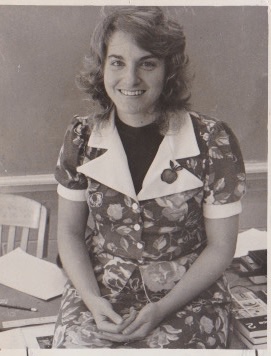
I wanted to be a teacher for as long as I can remember. I would set my dolls around my stand up chalk board and teach them the alphabet. By the time I was in high school, I knew I wanted to go to college for a degree in teaching. My love of reading, combined with my interest in creative writing, made English education the right choice. Keeseville Central had a day every spring called Student Teacher’s Day. Those of us who were interested and considered responsible were allowed to take over the classes of the teachers for the entire day. In both my junior and senior years, I had the opportunity to take over for two of my English teachers. I spent hours preparing lessons on Greek and Roman mythology, The Outsiders by S. J. Hinton, and vocabulary. I absolutely loved this opportunity to play “teacher for a day,” and it confirmed my career path.
For my first two years at Albany State, I fulfilled several credits taking required courses, including American and English literature survey courses as well as biology, French, and music. By my junior year, however, I was taking classes that allowed me to learn and participate in the classroom. My methods course required our putting together a unit plan on a specific topic, and my submission on the theme of War and Youth, not only received an A but also was used as a model for several years in the English education department. In my senior year, I finally had a chance to actually teach through my student teaching assignment in a high school in Schenectady, New York.
I thrived in front of a class, and I flourished putting together the lesson plans, the quizzes, the tests. I spent hours planning and producing the necessary paperwork, but it was worth every minute to implement it. I was rewarded in the end with a five plus out of five score for my student teaching, with my advisor writing in his evaluation that I was a born teacher who was a natural in front of the classroom.
As the graduation date grew near, I started applying for a teaching position. It was a tough time to get a job; there were not very many openings, and despite excellent evaluation, I couldn’t even get an interview. In late June, however, a month after graduation, a break came through. A high school English teacher had handed in his resignation the last day of school as he had decided to start a master’s program, and the principal wanted to fill the position before he left for his summer vacation. I interviewed for the job and was hired on the spot.
There was only one difficulty: the teacher I was replacing taught very unusual classes. Along with a standard tenth grade English class, he also taught numerous electives on such topics of supernatural fiction, science fiction, the police state in literature, and the American cinema. Because students had already chosen their courses that spring, I would be responsible for developing and implementing the curricula for the classes. Over that summer, I read the novels and started creating plans.
The tenth grade students I greeted that first day took the change in teachers in stride, but the juniors and seniors who had signed up for the electives were disappointed to find that their anticipated teacher was gone and instead had a new, young teacher with high ideals and higher expectations.
This challenge was even made more difficult by what I learned from the students. My predecessor had held seances during the supernatural classes, and the students in the cinema had spent time making movies. The initial comments from many entering my classroom were “Who are you? And what happened to the fun guy?”
I was at a complete loss in the Police State in Literature course: The books ordered for the class included Brave New World, 1984, and Night. Meanwhile, many of the students were reading two or three years below grade level, certainly way below the level of the novels attached to the course. Especially problematic for me was teaching about the Holocaust. I was one of two Jewish teachers in the entire district in a school district with no Jewish students.
The result was an absolute disaster. Despite a supportive principal and and supportive faculty, I was in over my head. I spent every minute out of class working on lesson plans, projects, quizzes, including most weekends, but the plans that had served me so well in Methods and student teaching fell flat. In addition to my difficulty with the implementation, I also was challenged by maintaining discipline. I was twenty-two years old, highly idealistic, and totally out of tune with those students who lacked motivation and any interest in what I was trying to do. Although the majority of the students were good, a small group made it a point to see if they could disrupt my class. They talked, they threw spitballs, they refused to participate. It was a horrible year. After spending years dreaming about being a teacher, I realized that nothing I had done in college had ever prepared me to handle a real class, a real job.
By June, I was exhausted, stressed, and seriously wondering if I could learn enough from my first year to handle a second year in the classroom. But the worst moment of that first year was yet to come. About three weeks before graduation, yearbooks came in, and students were passing around their own copies for signatures from classmates and from teachers. Two seniors, the children of highly respected members of the community, came up to me with their yearbooks. With big smiles on their faces, asked me to autograph my picture. When they handed them to me, I was shocked and stunned to see that they had both drawn swastikas around my picture. I slammed the books shut, refusing to sign and making some comment about how some day they would look back on their yearbooks with shame. I told the principal, who called them in, but I don’t remember the outcome of that discussion.
I did return in September. I was more confident, more organized, more prepared, but I found teaching high school an uphill battle, a completely different experience than what I had dreamed. I left in January, eighteen months after I started, enrolled in University of Albany’s master program in reading, and subsequently got a job teaching adult education. It was in that scenario that I found my niche; classes were small and individualized, low-key, and I found it easy to relate to adult students, many of them highly motivated and focused in their wish to improve their reading and writing skills and obtain their General Equivalency Diploma (GED).
It has been almost fifty years since I walked out of my first teaching position. I still think back to that experience and wonder if I could have done more to find a way to hold on until I gained enough experience and maturity to handle the real high school classroom. I also wonder what happened to those two students who got so much pleasure that day from seeing my face when I saw those hated Nazi symbols next to my picture. Did they forget about it as soon as they graduated? Did their yearbooks land up on a dusty shelf, never to be looked at again? Or do they occasionally pull out that book like I have done with my own high school yearbook, reminisce over pictures of their friends and their club shots. Or do they come across my picture and felt regret, embarrassment, and shame?
A version of this article originally appeared in theJewish World News, a bi-weekly subscription-based newspaper in upstate New York, in the February 27, 2014, issue.





 There Goes My Heart