Tag Archives: #jewishimmigrants

Growing Up in Coney Island by Frances Cohen

I have published this blog on September 1, 2024, what would have been Frances Cohen, my mother’s 107 birthday.

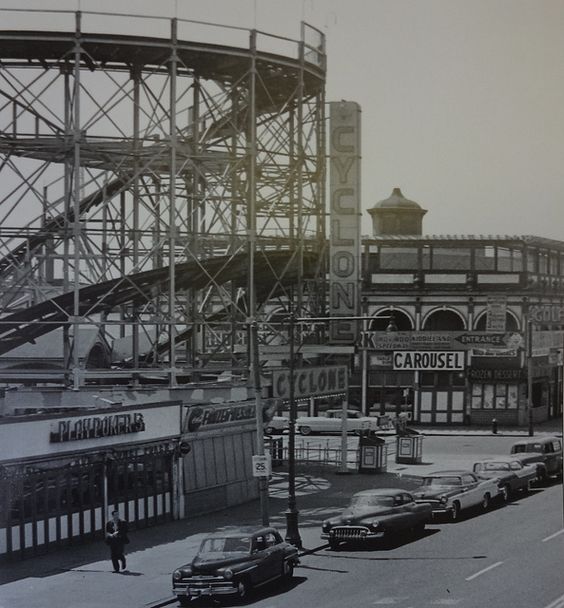
I spent most of my early childhood in Coney Island. I loved living in that special section in the New York City borough of Brooklyn, especially during the summer.

We did not have many of the conveniences that we have today. Rather than a refrigerator, we had an icebox. The iceman delivered ice every other day. We
had a pan under the ice box. When we forgot to empty the pan, there would be a
huge puddle on the floor. There were no supermarkets, just local grocers. Milk,which was not homogenized, was purchased from the grocer. It was stored in a large metal buckets and ladled out. As the ladle was often left out with the milk uncovered, flies and roaches swarmed around the bucket. Mice licked the ladle until they were chased away by the store’s resident cat. When we brought the milk home, the cream was on the top, and my mother would make whipped cream with a hand beater. I grew up before radios, washing machines, dryers, and dishwashers. Even toilet paper was yet to be invented. We used orange wrappers and pages from the Sears catalog.

I lived two blocks from the beach and the boardwalk. I loved to go swimming in the ocean and walking the boardwalk. We had two big amusement parks within walking distance, Luna Park and Steeplechase. I preferred Luna Park as it had a circus. It was such fun watching the clowns, the animals, and especially the men and women on the trapeze. Nearby was the famous Nathan’s hot dog stand, where we could buy a hot dog with sauerkraut for five cents.

As there were no televisions, we went to the movies every Saturday. For ten cents, we saw a double feature along with newsreels, a serial, and cartoons. We bought a penny’s worth of candy and enjoyed the entertainment. On rainy days, we stayed indoors, drawing pictures with crayons and reading books from the library. We did not have as many toys as our grandchildren and great grandchildren have today, so we improvised. My brother made a train out of drawers from my father’s Singer sewing machine.

As all little girls, I loved to play with dolls. My mother had bought me a small celluloid doll with moving arms and feet that I could even bathe. I wanted a new doll carriage, but we were in the midst of the Great Depression, and my parents could not afford to buy me one from the store. So, we became creative. A shoebox became my doll carriage. My mother made a hole at the end of the shoebox and put a string through it so I could pull the carriage. The top of the box became the hood. She also gave me scraps of material which I made into a pillow, a carriage cover, and clothing for my doll. With a child’s imagination, I thought that my doll and doll carriage were the most beautiful in the world.

It was convenient to live near the beach, but my neighborhood was not the best. It was all pavement—no flowers and no lawns. One summer, my second-grade teacher thought it would be a good summer project to learn how things grow. The last week of school, she had us bring in a small wooden cheese box and a small potato. She helped us put the dirt that she supplied into the bottom of the box. We cut up the potato, placed it in the dirt, and then covered the potato with more dirt. I placed the potato plant on the fire escape and watered it every day. In July, I was happy to see some green leaves. My parents and teacher had never told me that potatoes grow underground. So, when August arrived, I got so angry that no potatoes had grown on the leaves, I just dumped the plant. I was so surprised to find four little potatoes!

Looking back, I had a very happy childhood. Although we did not have much money, I never felt deprived!

page30image60310128

My Mom the Story Teller

Ever since I could remember, my mother, Frances Cohen, was the family story teller. Give her an opening, and she would regal any audience with stories of her grandparents’ and parents’ lives in Russia, of her early years of marriage to “My Bill,” of their life in small towns and smaller apartments in the North Country, and of raising four children, watching them leave for college and for marriage, and their returning with her grandchildren to visit her and my father in their beloved cottage on Lake Champlain.

For many years, these stories were always told orally. Mom shared them when the family got together around the old oak table in the dining room, when she visited friends, and when her children’s friends came to visit. What was fascinating was that no one ever got tired of hearing them.  As a matter of fact, she was highly regarded as the family historian.  If anyone needed to know who was related to whom and how my father’s side was related to my mother’s side and what really happened between those two cousins—well, you just had to ask Fradyl, and the truth would be known.

As my parents got older, my mother realized that she needed to record these stories.  We never were one for video cameras and tapes, so she began writing them down on lined paper, usually from the six by eight notepads. .  The writing was messy, with words misspelled and whole sections crossed out, but she began to put them down on paper.  

My parents retired in 1981 and spent the next nineteen years living six months in Florida and six months on a cottage on Lake Champlain.  As it became too difficult to maintain two homes, they sold their cottage to my brother and sister-in-law, and my parents lived in Florida permanently.  When I went to visit, my mother would tell me the stories as I transcribed them onto paper.   Unfortunately, these scraps of paper remained in their original state for several years.

In 2007, after a number of health setbacks, we children insisted that my parents sell their condo in Florida and move back up North to be closer to the family.  Everyone decided that the best location would be close to Larry and me, and on May 1, 2007, they moved into Coburg Village, an independent living facility only four miles from our home.

Initially uncertain about leaving Florida, their friends, and their independence, my parents soon realized that this was an ideal living arrangement that provided nightly five-course dinners in a lovely dining room, a shuttle service that brought them to grocery stores and doctor’s appointments, live entertainment and numerous clubs.

Soon after moving in, my mother called me to tell me she was joining Coburg’s monthly writing group to polish all those stories she carried in her head and on those scraps of paper.  The night after her first meeting, however, she phoned to tell me she wasn’t sure she would fit in.  “Most of them have college educations and write beautifully, Marilyn,” she lamented.  “They will look down on my family stories as being silly and boring.” However, when she brought her first story to the group, her accounting of why she and my father moved to Coburg, she was surprised to find that the group enjoyed her writing style.  “They loved my story, Marilyn! They said I have a real flair for story telling!” After that, my mother’s voice in phone calls after the monthly Wednesday meetings was filled with pride.

Mom rarely had difficulty finding a topic and writing it down with paper in pen. However, the group leader requested that the stories be typed so they could be published in the semi-annual collection and distributed to Coburg resident.  My mother asked me, “my daughter the English major,” to type them, and, while I was at it, to do some proofing and minor revisions so that they would read more smoothly. 

Thus began our five-year collaboration.  Every month, about a week before the group met, my mother would give me her hand-written story, and I would bring over the typed version by Sunday afternoon.  If I didn’t have it done by Sunday night, the phone calls would begin.  “Marilyn, if you don’t have the time, just bring back my copy and I’ll read it from the original.”  I would assure her that it would be delivered in time for her meeting, even resorting to sending the final copy to her via the Coburg fax machine.

The oral stories evolved into written documents, always original, always entertaining. She wrote about the Old Country: how her mother’s mother died in childbirth and how the two children were raised at first by an uncaring stepmother and then by a loving women who raised them and the seven others that followed; how my father’s father escaped from Russia in a cart filled with hay; what it was like living in Regalia and Vilna at the turn of the century with the fear of pogroms always on the Jewish population’s mind.  She wrote about her mother’s family coming to America:  how her Uncle Sam saved enough money to bring over his sister Ethel; how Aunt Lil turned down a job at the Triangle Shirt Factory a month before the fire because she thought it looked unsafe; how Grandpa Joe left his future bride at the jeweler’s as collateral until he got a second opinion of the diamond ring they were purchasing.   And she wrote about our family: how she and Bill met on a blind date; how they raised four children in various small towns in the North Country, and, and how they came to buy their cottage on Lake Champlain.  The stories were funny, sad, and painful, but they were always ready the first Wednesday of every month for her meeting.

When my father passed away in November, 2008, my mother’s contribution for December was an open letter to my father. She wrote that she was moving into a smaller apartment down the hall, but “Wherever I go, you also go in spirit.” Grieving quietly, she continued with her life at Coburg, going to the concerts, visiting with friends and family who were always stopping by to see her, and continuing with her writing.  All of the children asked her to write about our birth and early childhood, but she always postponed those stories, focusing on the Old Country, her childhood, her Bill. 

On December 22, 2010, my mother had a heart attack. The doctors recommended Hospice and living her remaining time to the fullest.  She complied, enjoying visits from the children, grandchildren, her cousins, and the many friends she had made in Coburg and Clifton Park. She kept writing, and in February, with my sister Laura and I sitting close by, she shared her story: “The Birth of My First Child,” in which she described her joy in having a beautiful little girl and her fears that she would not be able to be a good mother.  The last words, written in pencil on the bottom, were “To be continued……” She died four weeks later, one day before the March meeting.

My parents were not wealthy people, and had little of material value: a wedding ring, two beautiful framed pictures of my father at thirteen and my mother at six, a few nice dishes.  As my siblings and I sadly dismantled Mom’s apartment, my daughter was surprised that I wanted so little.  “It’s ok, Julie,” I said, “We have her stories.”

And we do….Over one hundred typed pages as well as a file of her handwritten notes that she had kept over the years. What a gift to her family, her friends, and all who knew and loved this amazing woman!

Was It the cabbage soup? How one romances a nice girl in 1912.

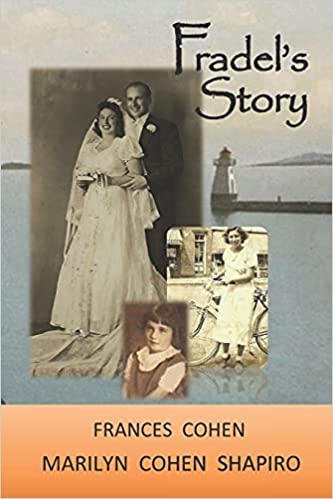
This story was written by my mother, Frances Cohen. A master storyteller, Mom joined a writing group when she was 87 years old. This is one of her many tales about her life captured in Fradel’s Story, available on Amazon in both Kindle and paperback format. Click here for the link. I have posted this on August 20, 2024, which would have been my parents’ 74th anniversary.

They say that all marriages are made in heaven.  My parents also had help from my Grandma Vichna.

My mother Ethel was the oldest daughter of nine children, who all eventually immigrated to the United States from a small hamlet called Rogala, which was part of Lithuania.

Joining the wave of Jewish immigrants who came to the United States at that time, Ethel, only fourteen years old, arrived at Ellis Island in 1899.  It was the era of horse and buggy.  Garfield was president of the United States.  It was quite an ordeal for a child to leave her parents, cross an ocean by steerage and then find a way to support herself.  But with the help of her older brother Sam, who had come to America a few years earlier, Ethel settled in New York City, got a job, and lived with different relatives.

Two years after Ethel arrived in America, Ethel’s older brother Sam married and moved to Baltimore.  My mother was really struggling, as she worked in a factory making umbrellas for only three dollars a week.  So her brother and his wife invited her to come and live with them in Baltimore.  While Ethel was living in Baltimore, four more of her siblings arrived in the United States.

In 1910, Ethel’s father passed away and the six children who had settled in the United States saved up $75 to pay for steerage for Grandma Vichna and the three youngest children.  The four of them settled in the Lower East Side of Manhattan.

  It was a very difficult time for Grandma.  She was in a new country, not knowing the language or the customs.  But Grandma was an amazing woman and kept her family afloat.  And with all her problems, she was most worried that her Ethel was 27 years old and not married.

Every Sunday, all the friends from the Old Country would love to congregate at Grandma’s as she was an excellent cook.  One day, a young man by the name of Joseph Cohen came to visit.  He told Grandma that he had a job in a factory as a tailor making $13 a week, a good wage at that time, but was lonely and sleeping at his sister’s on a cot.  Grandma said, “What you need is a wife, and I have just the girl for you….my Ethel!”

The problem was that Ethel was living in Baltimore, but that situation was soon solved when Joseph courted Ethel by writing letter and traveling the long way to visit.  Ethel eventually returned to New York City to live with Grandma and be closer to Joseph.

And so the romance continued to blossom.  Every Sunday, Joseph came to visit to see Ethel and to feast on Grandma’s cabbage soup and other goodies.  Joseph bought Ethel a warm winter coat and other presents.  (Later I would tease my mother that she was a kept woman!).  After courting Ethel for several months, Joseph took Ethel to the jeweler and they picked out a diamond engagement ring.  Wanting to make sure the price offered was fair, Joseph left Ethel for security so he could have the ring appraised, returned soon, and purchased the ring for $100.

Soon, Grandma Vichna was busy arranging a big wedding for her Ethel.  In 1912, one could rent out a banquet hall for a big event.  The host didn’t pay for the hall, but everyone who attended had to pay a 25-cent “hat check.”  All the friends from the Old Country helped cook up a storm, and my parents were married in January 1912.  

The week after my parents were married, my mother made a cabbage soup.  My father said, “Ethel, please dot no make cabbage soup.  I am tired of cabbage soup.  I don’t even like cabbage soup!”  My mother replied, “You always thanked my mother for her delicious soup.”  My father replied, “It was the proper thing to do.  I didn’t like the soup!  It was my way of saying thank you for giving me a lovely bride!” 

Ten months after the wedding, my brother Eli was born.  I followed in 1917.  My parents shared over fifty-four wonderful years together until my mother passed away in 1966 at the age of 82. Bereft, my father left New York City came North to live with my family until he joined his beloved Ethel in 1968.

A version of this article originally appeared in the Jewish World News, a bi-weekly subscription-based newspaper in upstate New York.

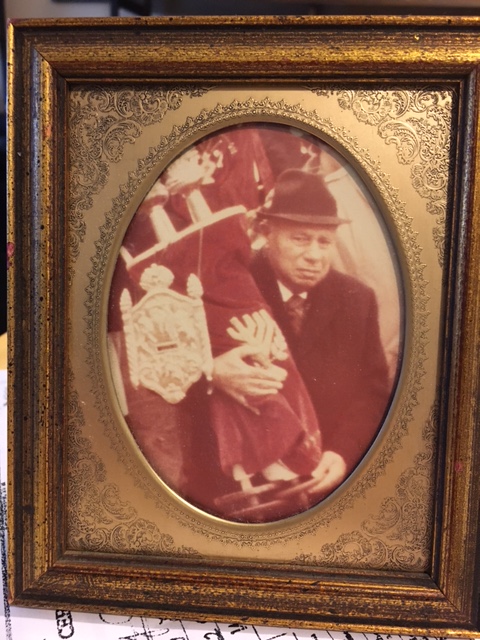
Grandma Ethel and Grandpa Joe ~1950. I love the love seen in my grandfather’s eyes.

Sherpa or schlepper?

As many of you head out to family vacations, I am posting this story that was originally published in The Jewish World in July 2018.

A sherpa? Or a shlepper? When it comes to packing, I’m both!

I have a friends who has the art of packing down to a science. No matter where they go or how long they stay, they manage to fit everything into a shove-into-the-overhead bin carry-on. Part of their strategy is resourcefulness, and part is just bad experience: their luggage was lost twice on the way to their destination,  and they vowed never to be in that situation again.

The proverbial schlepper,* I can’t even go to the supermarket with less than a trunkful. Shopping lists and coupons. Shopping bags. Ice packs. Light jacket. (Why do supermarkets have to keep their stores so cold?) Rain coat. Water bottle. Library books to drop off on the way home. The trunk is filled before I even back out of the driveway. 

My purse alone could keep me going for a week. I am absolutely addicted to those click baits on the Internet that list everything one should carry at all times. Along with the regulars—keys, wallet, cell phone, sunglasses, regular glasses for driving, hand sanitizer, lip gloss—I come fully prepared for minor emergencies. A charger and headphones in case my phone battery dies. A small pad of paper and a pencil in case my writing mu.se hits. A tweezer and a nail file for quick fixes. A traveling toothbrush and floss. And a whistle that I purchased in Colorado to help scare away bears and to signal rescuers in case I am lost in the woods. (I bring the whistle on cruises in case I get stuck on a floating door like Rose in the Titanic. In Florida, it helps me feel safer when I am alone in a parking lot.)

So packing for a trip—whether it be a weekend in a family member’s home  or eight weeks in a rental—usually results in a stuffed suitcase. You’ve probably heard the rule to “lay out everything you want to bring and then only pack half the amount?” Somehow or another my suitcase only gets heavier the closer the deadline for our departure approaches. 

I wonder how my grandparents handled their trips from Eastern Europe at the beginning of the twentieth century. Did they carry a steamer trunk? Or was everything in a huge satchel?  My father’s father carried brass Shabbat candlesticks and prayer books. From my research, I learned that clothes took second place to food for the journey on the boat. Fearing that kosher food wouldn’t be available, immigrants carried loafs of black bread and huge chunks  of salami to sustain them until they arrived at Ellis Island. I can only imagine the odor in steerage of unwashed bodies, unwashed clothes, and smelly deli.

When I traveled to Peru and Ecuador, I schlepped a suitcase that weighed slightly under the fifty pound limit. Not only did I overpack but also I spent too much time pawing through my suitcase looking for a pair of hiking socks or the dressy top I needed for dinner. I vowed never to travel like that again. In all subsequent trips I managed to reduce the weight and the stress caused by overpacking.

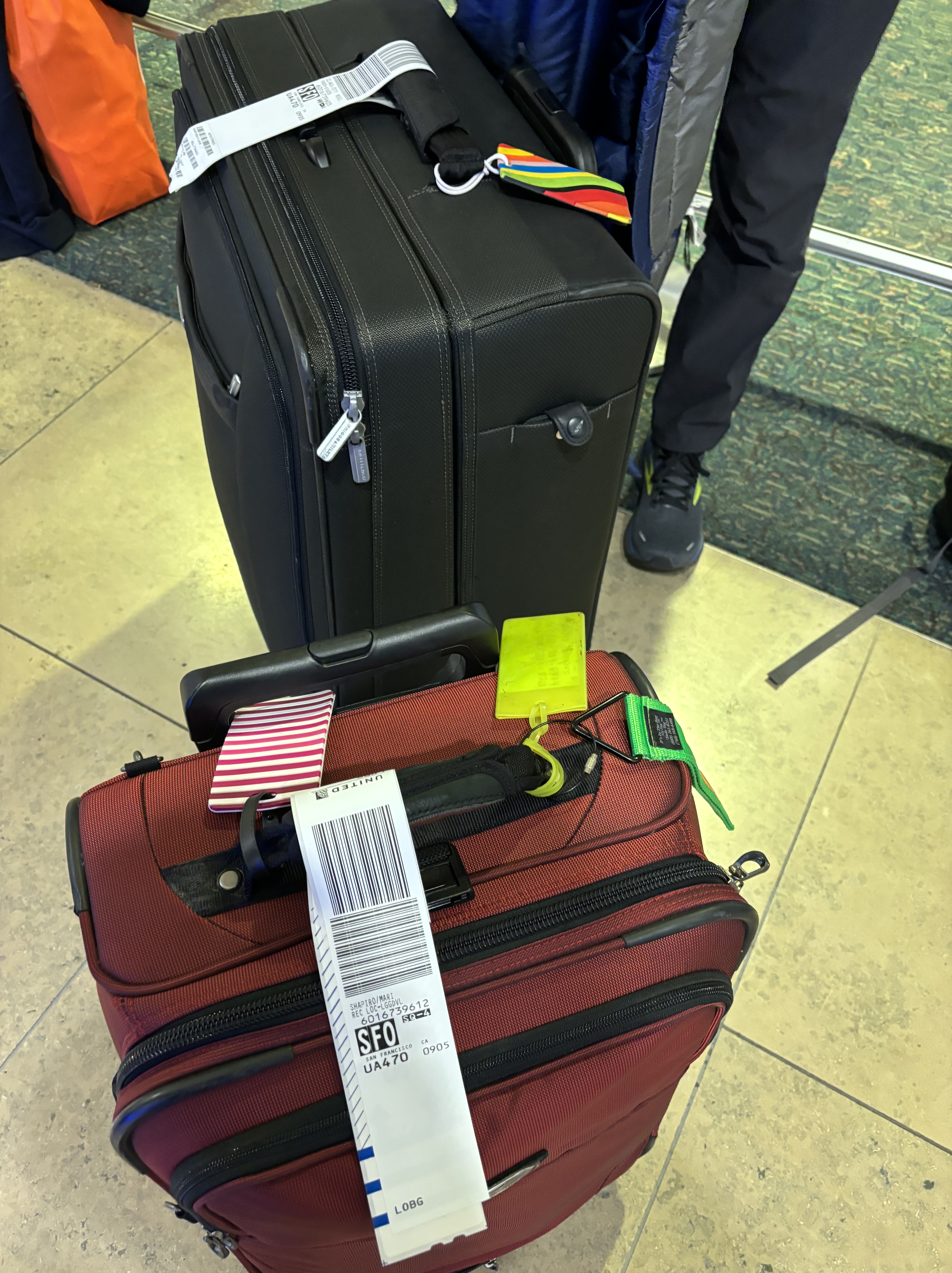
Of course, this strategy only works to a point. At four o’clock in the afternoon before our recent flight out west, the zipper on my fifteen year old suitcase broke.  We had to  make an emergency trip to JCPenney to replace it with another the same size but with cool 360 degree wheels, which made the unexpected purchase a little sweeter.  Larry invariably weighs his bag and mine at the airline’s check-in, getting some perverse satisfaction knowing that mine outweighs his by at least five pounds. 

Which brings me to my sherpa role. For those unfamiliar with all the books written about treks up Mount Everest, Sherpas originally referred to a tribe in Nepal.  According to Wikipedia, along with their role as humane and courageous mountain guides, they often carried necessary equipment for their foreign trekkers and mountain climbers. 

Larry serves as the sherpa when it comes to the paperwork needed for the trip. But I carry the responsibility for the first-aid kit, the electric toothbrush, lotions and potions, the guide books, the contact information, extra batteries.  Thanks to modern technology, some of the bulk has been reduced through cell phones and electronic readers. However, I do often remind Larry that the extra pounds in my luggage are a direct result of my sherpa role. 

And I have learned some strategies for packing over the years. First of all, I have a master packing list that covers every climate, state, and country. The list is printed out two weeks before we leave, and I check off items as they get piled onto the guest bed. . With the additional use of packing blocks—the various sized zipped bags that fit neatly together—I have also been able to separate out clothes based on the needs: dressy clothes in one bag; warmer outfits when the temperature drops; my bathing suit, cover-up, and flip-flops in a small bag to grab as needed. Larry and I have also become huge fans of quick dry options  that result in fewer items of clothing and less time in coin-operated laundries. 

As I write this, Larry and I are between two trips. After spending a long weekend in San Francisco with our son Adam, we flew to Colorado and spent another five weeks in a rented condo a mile away from our daughter’s family home in the Rockies. We just flew back to Florida for a week, giving us enough time to turn around and head for a seventeen day trip to Norway and Iceland. Fortunately, the weather in Colorado is similar to that of these two European countries, so packing will be simple. I will leave half of the stuff I brought to the Rockies home and repack only the clothes I actually wore on the trip. Running shoes, exercise clothes, dressy tops, the heavy fleece, the jeans stay behind. Instead, I will fill my bag with lots of layers that don’t show dirt and dry quickly Who knows? Maybe it can all fit in a carry-on. And that will make Larry, me, and all the baggage handlers very happy. 

*A schlepper is a Yiddish word for someone who carries things or is a servant.

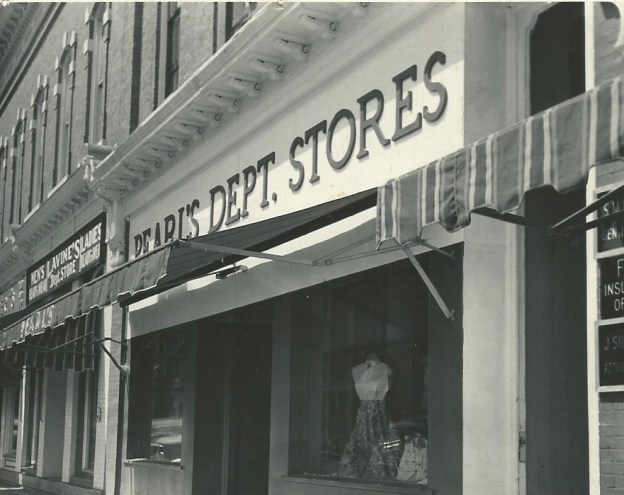
Our Family’s Business Pearl’s Department Stores Written by Frances Cohen

This story was written by Francis Cohen, my mother, soon after she and my father moved into Coburg Village in 2006 and my mother joined a writing group.

The story of Pearl’s Department Store is a very interesting one as it involves so many of my mother’s family, the Pearls.

Let’s start at the beginning. Uncle Paul, my mother’s twenty- year-old brother, was living on the lower East Side in New York City with his family in a crowded flat. With very little education and a short, skinny build, he was only able to get a job in a sweatshop making $7 a week. After seeing a doctor for a persistent cough, Paul was diagnosed with consumption, a direct result of poor working conditions and a poor diet. It was suggested that he leave the city.

My grandmother Vichna had a sister Ittel, and she, her husband Archik Perelman, and their family lived in Burlington Vermont. Lil encouraged him to pay them a visit. Paul liked the North Country, and his health improved in the country air near Lake Champlain. With Lil’s financial support, Paul started in the peddling business, learning the trade from Archik and initially following his routes.

Paul went door to door with a pack on his back peddling his wares throughout Vermont and Upstate New York. He soon expanded the business so that it would not compete with Archik’s territory. After saving enough money, Paul managed to get a horse and wagon. Since he was doing well, he asked his brother Joe to join him in his rounds.

As the two brothers peddled their way through Vermont, they realized that the farmers and families to whom they sold merchandise found it difficult to pronounce their last name, which was Ossovitz. The customers, who knew Paul and Joe as the nephews of the peddler Archik Perelman from Burlington, Vermont, referred the two of them as the “Perelman Boys.” For simplicity’s sake, my uncles gave their last name as Perelman.

A year after they started their partnership, Uncle Paul and Uncle Joe decided to open a store in the small village of Alburgh, Vermont. They bought a piece of land with a barn on it. While the store with its second- floor apartment was being built, Paul and Joe slept in the barn with the horse and wagon. Many years later, Paul related to me that they didn’t need an alarm clock as the horse would wake them. Simplifying their name even more, Paul and Joe named the new store “Pearl’s Department Store,” and the family legacy began. Three of the brothers, Joe, Paul, and Morris, eventually legally changed their name to Pearl. Sam, the oldest, was the only brother to keep the surname Ossovitz. Thereafter, however, all the relatives identified themselves as part of “the Pearl family.”

Paul and Joe soon established a second store in Swanton, Vermont. When war was declared in 1917, Uncle Paul was drafted into the Navy. Joe ran the store while Paul served his country. When the war was over, Paul was happy to come back to Alburgh. Soon after Paul’s return, Joe announced that he and his wife Leona wanted to go back to New York City.

In 1923, Paul married Bertha Leibesman, the second cousin born the year Lil came to America. They lived in the apartment over the store. “Birdie,” as she was known by her family, was very bright and was a big help in making Pearl’s Department Store a success. Within a few years, they were owners of a chain of twenty-two stores in upstate New York and in Vermont. They became very wealthy, the most successful of the nine Ossovitz children.

In the 1930s, the country was in the midst of The Great Depression. Many members of the family needed help, and Uncle Paul was in a position to do so. Uncle Paul’s philosophy was, “Helping someone with a handout only helps them temporarily. It’s more important to give a man a job.”

Over the years, many family members came to work for Pearl’s Department Store. Six of his siblings and/or their husbands worked for the chain, as did fourteen of the grandchildren. My husband Bill and I were one of the first grandchildren to work for Uncle Paul. Uncle Joe and his family also moved back up from New York City and resumed management of the Swanton, Vermont, store

All the stores were successful. The people in these small villages loved to shop at Pearl’s. The managers and their staff were friendly, and the store carried clothing and a great deal of other useful merchandise at prices the average family could afford. Stores were scattered throughout Vermont and New York. The central store and warehouse were in Glens Falls and were eventually run by Paul’s son Elliot and his family.

By the 1960s most of my aunts and uncles had retired.Most of the grandchildren had left Pearl’s to open their own businesses, and local people continued managing the stores. When Paul died in the 1990s, his son Elliot took over the management of the stores.

Time brings many changes. By the 1970s, many superhighways were completed, including the Northway. The small towns became bedroom communities. It brought an end to the small-town, family-owned stores. People now preferred to travel on the superhighways and shop in big malls.

The last Pearl’s Department Store went out of business in 1983, seventy years after who once was known as Pesach Israel Ossovitz had first started peddling with a pack on his back. But the Pearl family will always be grateful to our Uncle Paul for his setting up businesses for so many and supporting many others when they opened their own stores.

For more information about Pearls and similar businesses, check out #afamilyofstores.com. Managed by my brother, Jay Cohen, the website gives a detailed description of many of these stories, inlcuding those in Upstate New York and Vermont.

A version of this article originally appeared in the Jewish World News, a bi-weekly subscription-based newspaper in upstate New York.

The Lost Mural

My father, Bill Cohen, (Z”L) loved to play Jewish geography, and he proudly shared with us how the  first synagogue in Burlington was founded in his grandfather’s kitchen.  As we lived on the New York side of Lake Champlain, we visited many aunts, uncles, and cousins who lived in the Queen City and the surrounding areas. One was Uncle Paul Pearl (born Pesach Ossovitz), who learned the peddling trade from his uncle Archic Perelman and went on to oversee 27 Pearl’s department stores in Upstate New York and Vermont. And then there were Uncle Moe Pearl, who owned several businesses in the area, and his wife Bess; Ruth (Pearl) Kropsky and her husband Isidore; and Aunt Ida and her husband Max Ahrens. May their memories be a blessing and live on in Congregation Ohavi Zedek and its beautiful “Lost Mural.”

When the Pels family attended the High Holy Day services in September, 2022, Congregation Ohavi Zedek had a welcome addition: the restored “Lost Mural” in the foyer, completed in June 2022 by the Lost Mural Project. The story of the mural began almost 150 years earlier, in the kitchen of one of its founding members, Isaac Perelman.

Although Jews had settled in Burlington as early as 1848, the 1880s saw an influx of Eastern European Jews facing persecution by Russians in all phases of their personal, professional, and religious lives. Others came up from New York City to escape work in the sweatshops; a few migrated from Plattsburgh, New York, as it didn’t have an orthodox shul. Most became peddlers in northern Vermont, selling their wares from horse or man-drawn carts. 

Initially, a group of ten Jewish men—only two had families with them, met for services in members’ homes, a former coffin shop, or the second floor of an office building. By 1885, the Jewish community of Burlington, Vermont, recognized the need to organize a synagogue. Eighteen men met in the kitchen of Isaac Perelman, an immigrant from Čekiškė, Lithuania. Having already procured a lay leader/Kosher butcher, they purchased a lot for $25, formerly the site of an old stone shed at Hyde and Archibald streets. With $800, they built a synagogue building, naming their new shul Congregation Ohavi Zedek (Lovers of Justice).

Over the next few years, the Jewish population of Burlington continued to grow, fed by the founders. Isaac and his wife Sarah alone had six surviving children; his brothers Aaron and Jacob also had large families. By  1906, there were 162 Jewish families. The area in Burlington, dubbed “Little Jerusalem,” was laid out like the shtetls in the residents’ native Lithuania with houses and kosher bakery, kosher dairy, and a kosher butcher. The Jewish community built two more synagogues, including Chai Adam (Life of Man), and Ahavath Gerim (Love of Strangers). In 1910, the three synagogues built a Hebrew Free School together in 1910, the Talmud Torah.

In 1910, Chai Adam commissioned a 24-year-old Lithuanian immigrant and professional sign painter named Ben Zion Black to create a mural for $200. Upon completion, the project featured prayer walls and a painted ceiling. The centerpiece was a 25-foot-wide, 12-foot-high three part panel, created in the vibrant and colorful painted art style present in hundreds of Eastern European wooden synagogue interiors in the 18th and 19th centuries. The mural featured the Ten Commandments in its center and golden Lions of Judah on either side, with the artist’s rendering of the sun’s rays adding light. Blue and red curtains and pillars filled the side panels, all representing the artist’s interpretation of the Tent of the Tabernacle as described in the Book of Numbers and the Book of Exodus.

In 1939, amid a decline in the Jewish population, Chai Adam merged with Ohavi Zedek. After 1952, several buyers purchased the former Chai Adam building, which later became a carpet store and warehouse. In 1986, a developer purchased it with plans to renovate the building into multiple apartments. Recognizing that the future of the mural was in jeopardy, Aaron Goldberg,  the archivist for Ohavi Zedek synagogue and a descendant of Ohavi Zedek’s founding immigrants, persuaded the new owner to seal the mural behind a false wall, in 1986. Goldberg, archivist Jeff Potash; Shelburne Museum’s curator of collections, Richard Kershner; and architect Marcel Beaudin hoped to reclaim the mural at a later date.

Before being hidden, Ben Zion Black’s daughters took and paid for archival quality photographs of the mural. Renovations destroyed much of the painting, but a wall covered the mural over the ark.

In 2010, Goldberg partnered with his childhood friend and former Trinity College of Vermont history professor Jeff Potash to establish the Lost Mural Project with plans to establish a new home for the mural and restore the work to its original glory. They reached an agreement with the Offenhartz family, the next owners of the Chai Adam building, that the mural would be uncovered and donated to the Lost Mural Project. This was done with the understanding that the Lost Mural Project would be solely responsible for all costs of stabilizing, moving, cleaning and restoring the Lost Mural. 

In 2012, after over two decades, workers removed the false wall. A curator reported that Black’s creation had sustained extensive damage with “the painting hanging off its plaster base like cornflakes.” Over the next three years, the Lost Mural Project raised substantial funds from individuals, businesses, and foundations for the mural’s paint to be stabilized. In May 2015, workers moved the mural, encased in steel and weighing approximately 500 pounds, to Ohavi Zedek. 

Following the mural’s move, the Lost Mural Project committee incorporated, rebranded and tirelessly sought funding for the mural’s cleaning and full restoration with the help of its board and Madeleine Kunin, the former Vermont governor and US ambassador to Switzerland. By 2022, they had raised over one million dollars from local, state, national, and international donors.

In 202, two conservators hired by the Lost Mural Project began the painstaking task of cleaning the mural. Using the archival photos taken in 1985, they used a gel solvent and cotton swabs to remove darkened varnish, dirt, and grime from the painting’s surface. The next year, a second team of conservators from Williamstown Art Conservation Center in Massachusetts began the infill, coloring and final restorations. According to Goldberg, the COVID-19 pandemic was a blessing, as it gave the team of workers the space and quiet needed to complete the project in the shuttered shul. 

“So many things could have gone wrong with the mural, but it survived through fate and circumstance,” says Goldberg. “It’s not just a surviving remnant. It’s a surviving piece with an astonishing history.” 

Ohavi Zedek’s Senior Rabbi Amy Small, who saw the 2022 restoration step by step, views the Lost Mural Project as a universal immigrant story. “It’s significant not only to the Jewish community and the descendants of those early settlers of Burlington, but also to other immigrants in the United States, which offered safety for Jewish and other families fleeing from many parts of the world.”

The Preservation Trust of Vermont presented the Friends of the Lost Mural with its 2022 Preservation Award. “The Lost Mural…not only exemplifies the rich history of creativity and resilience in Burlington’s Jewish community,” stated Ben Doyle, its president. “It inspires all of us to remember that the Vermont identity is dynamic and diverse.”

In June 2022, the completed project’s unveiling took place amid much fanfare. The Friends honored Governor Kunin for her contributions, and a Vermont Klezmer band provided the music. Dignitaries both in attendance and through Zoom highlighted the importance of the project. Joshua Perelman, Chief Curator & Director Of Exhibitions And Collections, National Museum Of American Jewish History called the mural “a treasure and also a significant work, both in American Jewish religious life and the world of art in this country.”

Many of the descendants of the original Lithuanian Jews who settled in Burlington over one hundred and fifty years earlier were present, including descendants of Isaac and Aaron Perelman. 

“[The mural] tells us a remarkable story of a thriving Jewish immigrant community from Lithuania and the successful efforts of their descendants to preserve their cultural legacy today,” H. E. Audra Plepyte, the ambassador of Lithuania to the United States stated in remarks shared with Ohavi Zedek. “The Lost Mural is not lost anymore.

The Lost Mural Project, an independent secular nonprofit, is seeking donations to replicate the green corridors on the original painting that did not survive. Its educational mission is to share the story of the Lost Mural and the lost genre of the East European wooden painted synagogues with people and facilities around the world.More information, including details of the Mural’s miraculous journey, can be found at https://www.lostmural.org/donate.

Originally published September 20, 2022. Updated May 26, 2025.

SOURCES

Thanks to Aaron Goldberg , Jay Cohen, Janet Leader, Rob Pels, and Rosie Pels for their contributions to this article. 

Rathke, Lisa. “Long-hidden synagogue mural gets rehabbed.” August 17, 2022. AP Wire story; numerous sources.

Sproston, Betty. Burlington Free Press. February 22, 1995.

https://lostmural.squarespace.com/ekik-lithuania

https://www.news4jax.com/entertainment/2022/08/16/long-hidden-synagogue-mural-gets-rehabbed-relocated/

https://www.sevendaysvt.com/vermont/burlingtons-lost-mural-is-restored-to-its-original-glory/Content?oid=35853053

https://www.smithsonianmag.com/smart-news/synagogue-mural-restoration-vermont-apartment-180980614/
Oshinsky Story Published in The Forward

I am proud to announce that my three part story about Harry Oshinsky, a World War I Jewish immigrant, was published in The Forward, one of the most influential American Jewish publications.

Over fifty years ago, the Forverts published a series of stories in Yiddish by Chonie “Harry” Oshinsky, describing his childhood in a shtetl in Lomza Gubernia, his two-year trek to Brooklyn and his life in “di goldene medine,” the golden land. 

Many years later, Oshinsky’s son, Lenny Oshins, brought an English translation of the story to me, his friend and  a writer, for a potential article. Using the manuscript as a basis, I retold his story in three chapters, including details I discovered during my own research that help shed light on the history surrounding Harry’s extraordinary life. 

The three articles were originally published in The Jewish World, a bi-weekly subscription based newspaper located in upstate New York. The original article may be found on the web at https://jewishworldnews.org. I appreciate all the support Laurie and Jim Clevenson of The Jewish World has given me and my writing over the years.I also appreciate the help of Rukhl Schaechter, the editor of the Yiddish Forverts, in preparing the story for publication in The Forward.

Here are the links to the article as published in The Forward:

To read Part One: “From Bialystok to Brooklyn: A Jewish immigrant’s trek across three continents,” click here.

To read Part Two: “Two Jewish teenagers escaping Bialystok arrive in Harbin, China,” click here.

To read Part Three: “A Jewish teen from Bialystok lands in a Chinese prison,”  click here.

More about Marilyn:  Since retiring from a career in adult education and relocating with my husband Larry from Upstate NewYork to Solivita, I is now writing down my own family stories as well as the accounts of ordinary people with extraordinary lives. I have been a regular contributor to the bi-weekly publication, The Jewish World (Capital Region, New York), since 2013. My articles have also been published in Heritage Florida Jewish News and several websites including the Union of Reform Judaism, Jewish War Veterans of the United States of America, Growing Bolder, the Memorial Scrolls Trust (England), and Jewish Women of Words (Australia). I am the author of two compilations of my stories,There Goes My Heart (2016), Tikkun Olam: Stories of Repairing an Unkind World.(2018), and Fradel’s Story, (2021) a collection of essays co-written with my late mother, Frances Cohen. All three books are available in paperback and e-book format on Amazon. My fourth book, which will be published in late 2022, is entitled Keep Calm and Bake Challah: Surviving the Pandemic, Politics, and Other Life’s Problems. I am also working on a fifth book, Under the Shelter of Butterfly Wings: Stories of Jewish Sacrifice, Survival, and Strength.

More about The Forward: Founded in 1897 as a Yiddish-language daily newspaper, The Forward is considered one of the most influential American Jewish publications. I, along with many of my friends and family with Jewish heritage, remember my own maternal grandparents reading Forverts, the original daily Yiddish paper, when I visited them in Coney Island in the 1950s and 1960s. In 1990, an English-language weekly offshoot began publication; in 2019, it became an online newspaper. A more detailed description of The Forward  may be found on Wikipedia.

From Bialystok to Brooklyn: Part Three

The Oshinsky Story Part Three: Making it to America

Simova, Poland ➡️ Bialystok, Poland ➡️ Minsk, Russia ➡️ Moscow ➡️ Viana, Russia ➡️ Erkutcsk ➡️ Chita, Siberia ➡️ Harbin, China ➡️ Chanzhou, China ➡️ Darien, China ➡️ Sent back to Harbin ➡️Yokohama➡️Hawaii➡️San Francisco➡️Chicago➡️Brooklyn!

Unlike most Eastern Europeans fleeing pogroms and poverty to America through ships sailing across the Atlantic Ocean, Harry “Chonie” Oshinsky took a journey over three continents. His trip took a dangerous turn in Darien, China, where he and his fellow travelers were arrested, accused of being part of a murderous gang. Here is the last installment of Harry’s incredible journey. 

 Harry and his two friends were thrown into a prison, where they sat on a stone floor, fed a diet of foul rice, and listened as the Chinese prisoners who shared their cell were beaten with a rope. An attempt at a hunger strike backfired, and the three hand-bound boys were taken by train back to Harbin. 

Miraculously, Der Forvertz carried a story of their arrest, which triggered a protest in the Yiddish newspaper. Harry’s sister, when she herself read in New York about the arrest of Chunya Oshinsky and two other boys, she realized for the first time that her little brother was alive. 

Soon after, authorities transferred Harry and the others from the Russian commandant’s office to a prison near the Jewish Committee House, a place Harry and Yankel had stayed at earlier in their journey. Although the bottom floor held hardened criminals, the three were taken to the second floor, where they joined approximately thirty other political refugees who were held. They experienced good conditions: they received food, decent beds, and daily morning access to fresh air. Ironically, some of the other prisoners were actually paying money to be there. “This was so much better than being on the front lines and risking one’s life in battle!” they told Harry. Again, Harry’s tailoring skills proved useful, as the overseer often called on him to do alterations for himself and others.

As the prison stay extended into its fourth month, Harry realized that his only chance of release was to have money sent to him from America. Not knowing the address of his four siblings, he sent a desperate plea to Yankel, whom he hoped had already made it to America. He mailed a letter to The Goldbergs, 22 Ludlow Street, New York. “Just as a bird gets lost from his home in a tree and gets caught and put in a birdcage,” Harry wrote, “so this has happened to me.”

A few weeks later, Harry again faced the Russian commandant. The officials in the consulate had never been able to confirm he was a murderer; however, they conscripted him into the army. Before reporting, he made one last trip to the Jewish Committee House. Fate shone on him again, as two hundred rubles had been sent from America for his release.

On a bitter cold winter’s night in March 1917, Harry and three other Jewish refugees began their three-day trek on foot back across China into Japan. Once over the border, they traveled by train and boat. 

They arrived at the Japanese seaport of Yokohama in time to hear the news that Czar Nicholas II had been overthrown. Three weeks later, on April 10, 1917, Harry and his companions boarded the Shino Maru.

When the ship stopped in Honolulu, Harry was filled with “sheer happiness and joy” when he touched American soil for the first time. His twenty-four-hour stopover was almost extended when a tour of the island resulted in a chance meeting with a Jewish men’s clothing store owner. After hearing Harry’s story, the owner offered him a job as a tailor and salesperson. “I thanked him for his goodness,” Harry later recalled, “but I was determined to go to New York to be with my family.”

The Shino Maru arrived in San Francisco on April 29, where all immigrants were processed through Angel Island. The next morning, a representative of HIAS met with Harry to arrange for his train trip across the United States.

 Harry arrived at Grand Central Station during the first week of May 1917. He heard his name being called; it was Yankel Goldberg, his friend with whom he had traveled until their separation in Yokohama. His siblings Zalman David and Leah did not recognize Harry until Yankel shouted to them, “Here! Here he is! This is your brother Chonie!” They fell into each other’s arms, kissing and crying. After a two and a half year journey, Harry was finally reunited with his siblings.

Settling in Brooklyn, Harry found employment in a factory that sewed soldiers’ uniforms. In a few weeks, he was making enough money not only to rent his own apartment but also to help support his siblings. He enrolled in night school to learn English and in dance school to improve his social life. In his spare time, he explored New York City and attended lectures about the ongoing war and politics. 

The November 11, 1918, armistice brought relief to Harry. knowing he would not have to return to Europe to fight in the war. He was able to send a letter home. “I am alive and living in America.” A few weeks later, he received an answer. “Everyone is alive!” His sister reunited with her fiancé, who had been a prisoner of war; Poland was an independent country.

Eventually, Harry earned enough money to bring his younger draft-eligible brother Yitzchak from Poland to America. With Harry’s help, Yitzchak found a job as a salesperson in a Lower East Side candy store. 

After Harry’s parents passed away, his sister, now married with her own family, remained in Poland. Tragically, she and her family were later killed in the Holocaust.

During the Depression, Harry supplemented his income by opening a candy store he opened with his brother Yitzchak. The business remained in the family throughout their lives.

 In 1927, Harry met Frieda, a young woman from his own area in Poland, and they were married that August. Harry and Frieda had two sons, Leonard and Robert, who both shortened their surname to Oshins. Both married and had children of their own. Robert and his wife Natalie settled in Schenectady, New York, and were active members of Congregation Agudat Achim. After a career working for the post office, Lenny and his wife Bobbe moved to Clifton Park, New York, to be closer to their daughter Cindy and her family and joined Congregation Beth Shalom.

 Harry passed away in 1976, but he left his legacy and his history in a 12,000 word autobiography that was originally published in Yiddish in Der Forverts in the late 1960s. Lenny Oshins gave me a copy of the document, which had been translated into English by Simon and Anne Paktor, friends of Robert and Natalie in Schenectady. 

Lenny (Z”L), it took me way too long to write your father’s story. I hope you, your parents, your wife, and brother are all reading this in heaven and kvelling over a life well-lived.

Originally published March 17, 2022. Updated May 26, 2025.

Lenny and Robert Oshins

No Opposing View to the Holocaust!

“You make sure that if you have a book on the Holocaust that you have a book that has an opposing view,” a Carroll County,Texas, administrator recently told a group of educators during a training session on what books were allowed in their library. Fierce backlash resulted in an apology and an investigation, but to many it hammered home the fear, denial, and outright ignorance that surrounds the teaching as well as recognition of the reality of the systematic murder of six million Jews. For that reason, there will never be “too many stories” about the Holocaust, including that of Galina “Golda” Goldin Gelfer (Z’L).

On June 22, 1941, Golda woke up on her 14th birthday to a beautiful sunny day in Glusk [now known as Hlusk], Belarus. Despite her family’s status as Jews in a highly anti-Semitic country, she and her family—her father Meir, her mother Elke, her eight year old sister Malke, and a large extended family— were happy in their small shtetl. Then, their world changed when news that Germany had declared war on the Soviet Union. Five days later, Nazis marched into their town. Soon after, Golda’s older sister, Chaisoshe returned home to join her family after Minsk University was evacuated, walking the last 30 miles with a friend. With limited means of escape, the entire Jewish population was trapped.

All Jews were registered and forced to wear yellow stars on the clothes and post the yellow stars on their homes. A Judencrat (Jewish council of three men) was formed to organize labor. While Chaisoshe remained hidden in their homeMeir and Golda worked long hours in menial jobs: cleaning and plowing the streets, digging up bricks, and mucking out horse stalls. All other work by Jews was forbidden.“We performed useless task mainly to make us feel we were slaves,” Golda later wrote in an autobiographic essay in The Holocaust DID Happen. (Southern California Council for Soviet Jews, 2010) 

For the next five months, as reports of mass executions of Jews in neighboring villages were reported, Golda and her family lived in absolute fear. On December 2, 1941, their worst nightmare was realized when they learned in the early morning hours that Nazis were beginning to round up all the Jews in Glusk for a “death march.” As the Goldin dressed in multiple layers of clothes and hastily packed bundles of food, they made plans to split up, run, and hide. Chaisoshe and a college friend were first to leave.“ You have some friends,” Elke told her husband. “Take a child. You may survive.” As Meir took Golda’s hand, Golda grabbed Malka’s. But Elke insisted that her youngest child hide with her in their shed.

Meir, Golda, and another relative they found in the street began frantically knocking on the doors of their Russian neighbors, begging for places to hide. But they were repeatedly turned away because of fear, ignorance, or indifference.The circle of Germans, politsaislocal collaborators, and dogs surrounding them grew tighter.

The three finally found refuge in the attic of an abandoned store on the main street. They climbed up to a loft filled with hay and silently watched the street below. The streets were soon filled with dushegubka, trucks modified to divert engine exhaust into a sealed internal gas chamber, As the Nazis forced women and children into the black-topped vans, Golda recalled in 2010 Yad V’Shem video, could hear a single woman screaming in agony as the van moved towards a former hospital that the Germans had converted into the slaughterhouse.

When these precursors to the gas chambers used in the concentration camps could no longer keep up with the number to be killed, the remaining Jews were herded together by Germans and the politsais. They were helped by local residents who joyfully made a game out of rounding up anyone trying to escape. “Jude! Jude,” they would yell to the Nazis, who would then shoot the “offender” and leave the corpse on the street. The numb, terrified victims could do little but march to their almost certain deaths.

Throughout the terrifying day, Meir, Golda, and the cousin heard the sounds of gunfire from Myslotino Hill, an area two and a half miles outside of Glusk. They learned later that over 1000 Jews men, women, and children were killed in a volley of bullets and then thrown in pits prepared earlier by the Germans. 

At two a.m., all was quiet. Praying that somehow members of their family had survived, the three fugitives descended from the hideout and began walking to the town’s outskirts.They narrowly missed falling into the hands of a roving band of Russian murderers who were “drunk on blood and vodka” and bragging about the number of Jews they had killed.

The threesome began their trek through deep snow and bitter cold to Zhivun, a village 23 miles from Glusk. As Meir had been born, raised, and, as an adult, done business there, they hoped to find help. While in route, Meir and Golda hid in the forest while the relative attempted to enlist the aid of friends. The two heard a volley of bullets, and the cousin never returned. 

Meir and Golda had better luck. For the next six months, Golda stayed with the local peasants helping with housework and, when necessary, being spirited from home to nearby forest to another home to escape discovery by the Nazis.Meanwhile, in between trips back to Zhivun, Meir worked with the partisans, members of the resistance movements who lived in the forest. The war had not lessened their anti-semitic feelings as they were initially reluctant to accept Meir into their circle. Meir, however, proved to be worthy comrades, helping the partisans to bomb railroads, ambush German convoys, and do whatever they could to fight the German forces.

During this time, two eleven year olds they encountered in Zhivun who had also escaped from Glusk gave Meir and Golda the bad news regarding the Goldin family. The two children initially had hidden with Elke and Malka until Elke told them to go back into the village where she correctly believed their blonde hair and blue eyes would help them blend in with the Gentile population. Two days later, a Belarussian neighbor and his son, with whom the Goldin had had a close relationship before the Nazi invasion, came to search for valuables and steal the cow. They found Elke and Malka hiding in the hay and turned them over the Nazis, who killed them. Chaisoshe and her friend met the same fate two days later when four local teenagers found their hiding place and turned them over to the Germans for bounty money. Meir and Golda later learned that 32 members of the Goldin family they had left behind had been killed.

Once he was established with the partisans Meir went back to Zhivun to get his daughter, who was at fifteen now old enough to participate in the guerrilla warfare. In addition, a Jewish doctor who joined the ragtag group enlisted the help of Golda and a 17-year-old Jewish refugee in providing needed medical assistance. (The two woman remained lifelong friends.)

Meir and Golda survived in the forest for the next two years, living as did the real-life partisans portrayed in the 2008 movie Defiance. They finally gained their “freedom” on July 4, 1944, when Belarus celebrated heir victory over the Germans (The Germans and Soviets continued fighting through May 1945).“Freedom,” however, still had its limitations. When they first met with Red Army soldier, their initial comment was, “I thought the Nazis killed all of you Jews!” Meir, Golda, and the new families they created after the war lived in the Soviet Union until the 1980s, when, upon Golda’s insistence, relocated to the United States.

Golda’s story has been saved for posterity in her two hour interview in Russian as part of Steven Speilberg’s Shoah project. In addition, her descendants continue to carry on her and the Goldin legacy through their family reunions, Zoom meetings throughout the pandemic, and through their sharing this story with me. No, Texas, there is no “opposing view to the Holocaust.” Just ask those, like Golda, who lived to tell their tale. 

A version of this article originally appeared in the Jewish World News, a bi-weekly subscription-based newspaper in upstate New York.

Route to Jewish life in States not always the same story

My family, like those of most of my Jewish friends, can trace their roots from Eastern Europe and Russia. The stories of our lives have been captured again and again in movies and literature: Our grandparents, facing religious persecution and the fear of pogroms in Russia and Eastern Europe, fled to the Goldene Medina, the Golden Country—America. Most landed at Ellis Island and started their lives and the lives of their children in New York City’s Lower East Side. But other friends have shared stories that represent a more circuitous route. One such person is Gilda “Hilda” Kilman Gallant, whose own history starts not on Hester Street but in Havana.

Hilda’s parents, Simon Kiman and Golda Szejerman, were both born in Poland. When they were small children, their families immigrated to Cuba in 1925 and 1929, respectively. Growing up in the same Jewish neighborhood in Havana, the two eventually fell in love and married in 1950. Hilda was born eleven months later. By 1957, the Kimans were a family of five, with the birth of two more daughters, Rose and Julie. 

Despite political tensions and the 1952 coup that resulted in the subsequent dictatorship under Fulgencio Batista, the Kimans lived a happy, comfortable life. Simon and his brother owned and managed a successful small variety store, while Golda was a full-time homemaker. Although they continued to speak Yiddish within their home, they also learned Spanish, the language of their adopted country. Hilda and Rose attended a Jewish parochial school, where they were taught secular subjects, including Spanish, in the morning. After a break for lunch, the traditional main meal, they returned in the afternoon for Hebrew lessons and Judaic studies.

In 1959, Cuba’s political world was upended. Open corruption and oppression under Batista’s rule led to his ousting by the 26th of July Movement, and Fidel Castro soon assumed leadership. Under his communist rule, Castro nationalized all businesses. The communist government prohibited private ownership, resulting in Simon and his brother losing their store and livelihood. As conditions in all areas, including education, deteriorated, the family decided to leave Cuba. Failing to secure American visas, Simon and Golda applied to and gained acceptance into Israel. A few months later, Hilda’s maternal aunt, uncle, and grandmother also emigrated to Israel and lived across the hall from the Kiman’s. Simon’s family eventually immigrated to the States and settled in Philadelphia.

Out from under Castro’s iron thumb, Simon and Golda still found life in the United States very difficult. Simon, who had no formal education or training, worked a job in an orange packaging factory. Golda supplemented his salary by learning the diamond cutting trade. Struggling with Hebrew, they continued to mostly speak Spanish and Yiddish with other immigrants of similar background. Hilda and her sisters adjusted well to life in Israel as children.

When Hilda was approaching her 16th birthday, Simon and Golda yearned to be with their family in the States. They sent her to Philadelphia to live with her father’s sister and husband and her paternal grandmother. She shared a room with her cousin Henry in a tiny home. Although she received much love, she missed her parents and sisters very much. 

Although she found math and science courses relatively easy, Hilda found courses that required English proficiency a struggle. Fortunately, several wonderful teachers took her under their wing and provided extra help before and after school. “Henry also helped by introducing me to American TV,” said Hilda. “It turned out to be a great tool in learning a new language.”

Rose soon followed, and in 1968, just before Hilda’s high school graduation, her parents, youngest sister and grandmother finally obtained visas to enter the US. The family was finally reunited. Hilda’s parents purchased a small food/variety store and then a clothing store, and the entire family found happiness in the very large and tight-knit Cuban Jewish presence in Philadelphia.

After high school, Hilda’s aunt insisted she continue her education. “You are in America,” she told Hilda. “Women don’t rush off to get married and have babies after high school. You need to go to college.”

Hilda enrolled at Gratz College in the Judaic studies program. She worked full time during the day as a bookkeeper to help support her family and took classes at night and on Sunday. Because of her time in Israel, Hilda spoke fluent Hebrew and became friends with many of her Israeli classmate, along with a part-time native Philadelphian.

Stuart Gallant had grown up in the “City of Brotherly Love,” the only child of first-generation Americans and the grandson of Eastern European/Russian refugees. Along with his public school education, Stuart attended the usual 3-days-a-week Hebrew school through his bar mitzvah. The rabbi of their Conservative synagogue, of which his parents were co-founders, enticed Stuart and some other boys to engage in additional learning, including Torah reading and leading services. Raising the stakes, the rabbi then insisted that his students attend Shabbat services weekly “Until my high school graduation, I became a fixture at the shul,” Stuart said. “I read Torah on Saturday morning, taught Hebrew school and bar/bat mitzvah students, lead junior congregation and, in my senior year, served as president of the local chapter of United Synagogue Youth.”

After he graduated high school, Stuart enrolled into Drexel University for a degree in electrical engineering. Struggling to balance his new classes and the slew of Jewish holidays that fell on during his first weeks on campus, Stuart had to cut back on his attendance at services. His “school vs. shul” decision resulted in falling out with the rabbi. He stopped going to services, even avoiding driving near his synagogue. 

Despite his estrangement from formal religion, Stuart enrolled in Gratz College part-time to further his Jewish education. During one of his classes, he noticed the lovely young woman who spoke fluent Hebrew. Intrigued by what he thought was her Israeli background, Stuart asked her out. On their first date, however, Hilda called her parents to alert them she might be late coming home because of the bad weather. “She certainly wasn’t speaking Hebrew,” said Stuart. It was only after that phone call he learned about Hilda’s Cuban-Jewish background. As a matter of fact, throughout their courtship and their marriage, Stu could not converse with Hilda’s grandmother since he never learned fluent Spanish—or Yiddish. 

After completing his masters at Drexel, Stuart began a career in biomedical engineering that took him and Hilda to Minneapolis, Baltimore, and eventually to California. Hilda initially stayed home to raise their two sons, Joshua and Avi. She eventually used her strong accounting skills in several jobs, including Stuart’s own medical device start-up company.

The “school vs. shul” decision long behind him, Stuart, along with Hilda, became actively involved in their synagogues through their lives. Stuart has served on synagogue boards; Hilda called on her background in Judaic Studies to teach in a Jewish-nursery school. 

For Hilda, the journey that started in Cuba has recently brought her only 400 miles from her birthplace (although she stated she would never visit!). In 2021, Hilda and Stuart moved to Florida to be closer to their children and grandchildren, who live on the East Coast. Wherever they go, Hilda and Stuart’s rich background and warm presence will be a blessing.

Originally published May 27, 2021.Updated May 25, 2025.