Tag Archives: #Pandemic

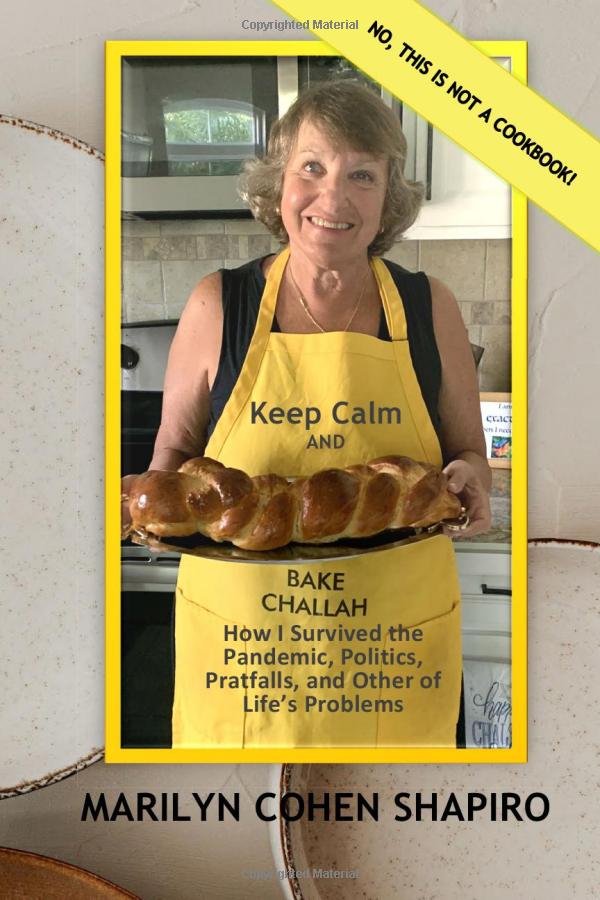
Keep Calm and Bake Challah is on Amazon!!

I am proud to announce that my fourth book, Keep Calm and Bake Challah: How I Survived the Pandemic, Politics, Pratfalls and Other of Life’s Problems,is out and available on Amazon in both Kindle and paperback formats.Hope you enjoy reading the the fifty-three articles I wrote during the pandemic as much as I enjoyed writing them! For those who have been following my blog for a while, you will now have many of those posts in one place for your reading pleasure.

Below are a sampling of the story topics:

Unmoored

Originally published in Jewish World News on June 24, 2021, the following essay reflects my feelings after fifteen months of lockdown. This is one of the essays found in my fourth book, Keep Calm and Bake Challah: How I Survived the Pandemic, Politics, Pratfalls, and Other of Life’s Problems.

Since my husband Larry and I have had our second COVID shots, our pre-pandemic life and its commitments are slowly resuming. We have waded out into the unknown, first a toe into the water with outdoor concerts and patio-only dining, then walking up to our knees with visits and in-home dinners with vaccinated friends, then plunging in with indoor restaurant dining and non-virtual club meetings. Recently, I was in a restaurant with four friends when I realized I had walked in, sat down, ordered, and hadn’t thought of COVID or even masks for a full half hour. That, I say, is progress.

Then why am I feeling shaky? Uncertain? Unmoored? 

Since March 2020, when the world shut down, my husband Larry and I filled the empty hours that stretched in front of us with small gems. I finally put together Fradel’s Story, a collection of articles written by my mother and about my family. We took long walks and longer bike rides through unexplored areas of our community. We spent hours and hours on our lanai, reading, doing puzzles, eating leisurely dinners, and watching the wildlife in our pond. Each Friday, we celebrated Shabbat with candles and wine and homemade challah. And we spent hours and hours on video conferencing sessions with family, friends, our synagogue, and our clubs. 

Now our calendars is filling up and overflowing. We have not yet given up many of the activities that kept us going for sixteen months of isolation, but we are also adding more and more semblances of our previous life. And as what happens to me whenever I try to juggle too much I began dropping balls. I missed a planned luncheon, showed up an hour late for a book club, and completely forgot to call my brother and sister-in-law to wish them “Mazel tov” on their fiftieth anniversary. For goodness sakes, I even failed to send in an article to the Jewish World for its last issue, something I had not done for years. Had I learned nothing from the pandemic?

Jodi Rudoren captured many of my feelings in a March 5, 2021, editorial in the Forward where she admitted that she didn’t want to go back to the old “normal.” “This terrible, horrible very bad year of isolation has also had an abundance of silver linings,” she wrote, “and I worry we’ll snap back to our old ways without truly learning the lessons this crisis has brought.”

So now, like Ms. Rudoren and many others, I am finding my own “better normal.” I don’t want to give up some of the things I savored: the more leisurely life, our long dinners on the lanai with cold beer or coconut rum and (Diet) cokes or wine; the challah baking, the puzzles. On the other hand, I look forward to meeting friends for dinner and plays and indoor get-together, resuming exercise classes, and, most of all, traveling to see my family. 

I am not alone in my feelings, as I found out on a ZOOM with my SOL Writers group. Ginny said that she feels as if she was emerging from a long illness, where stepping back into the world in her weakened state is difficult. “I feel untethered,” she said. “It is as if I am floating around finding my center.” Gail shared that she felt as if she were in a “waiting room,” in between her old life and her “new normal.”

Along with the difficulty of finding one’s balance, there is still the specter of COVID-19 hanging over all of us. Although all of the SOL Writers have had both vaccines, each found that she still was a “little too vigilant,” “a little too cautious,” and most importantly, “a little distrustful.” When “accosted” by a fellow shopper who demanded to know why she was still wearing a mask, Ginny avoided confrontation by calmly saying, “You care as much about what I think as I care about what you think.” After ‘losing’ what she feels has been a year of her life, Mary Ann said she no longer has the energy or patience to squander what remains of her time for “idiots” who still think that the virus was a hoax. “These people are ‘energy vampires,’” commented Aya.

The reality of a resurgence has been felt by friends in England, who now are concerned of a virus variant from India that is more contagious. “Portugal opened up, and many people flew there for a vacation,” they  told us. “Then there was a spike in cases.”Portugal’s Covid rates increased enough for England to revoked their green status, resulting in vacationers scrambling to return home before they faced a 14-quarantine. Our friends are not optimistic about traveling for a long while. 

In the States, there is more confidence, and Larry and I are ready for our next big step. We will soon be flying out to see our son and daughter-in-law and meet our grandson, who was born one day before San Francisco closed down. Then we head to Colorado, to spend time our daughter, son-in-law, and beautiful granddaughter. Extra masks and hand sanitizer are already packed, along with gifts, warm layers for San Francisco “summers” and hiking clothes and boots for Rocky Mountain trails. 

We know that COVID and its aftermath will impact our visit. Outdoor concerts, farmers markets, and indoor plays and dinners are still “To Be Determined.”

No matter, Larry and I will just be happy to finally be with our family and return to at least that piece of normalcy. We will take long walks along the ocean in San Francisco and long hikes in the woods in Colorado. Each Friday, we will sit down with them for Shabbat dinners with wine, candles, and freshly baked challah. Larry will find quiet moments to do puzzles and read. I will put the final touches on Fradel’s Story [to be completed in time for what would have been my mother’s 104th birthday on September 1] and continue writing stories about living through the pandemic. And I will savor all that I learned as I move forward into our “new normal.”

Sources:

Demony, Catarina. “Portugal halts easing of COVID-19 rules in Lisbon as cases rise.” Yahoo News June 9, 2021.

Rudoren, Jodi. “Confessions of a Lockdown Addict.” Forward. March 5, 2021.

Rudoren, Jodi. “Small Talk and Other Skills I’m struggling to re-learn as we build a better normal.”  Forward. June 11, 2021

Photo courtesy of Nick Fewings on Unsplash.

A version of this article originally appeared in the June 24, 2021, Jewish World News, a bi-weekly subscription-based newspaper in upstate New York.

Guess Who Got Covid?

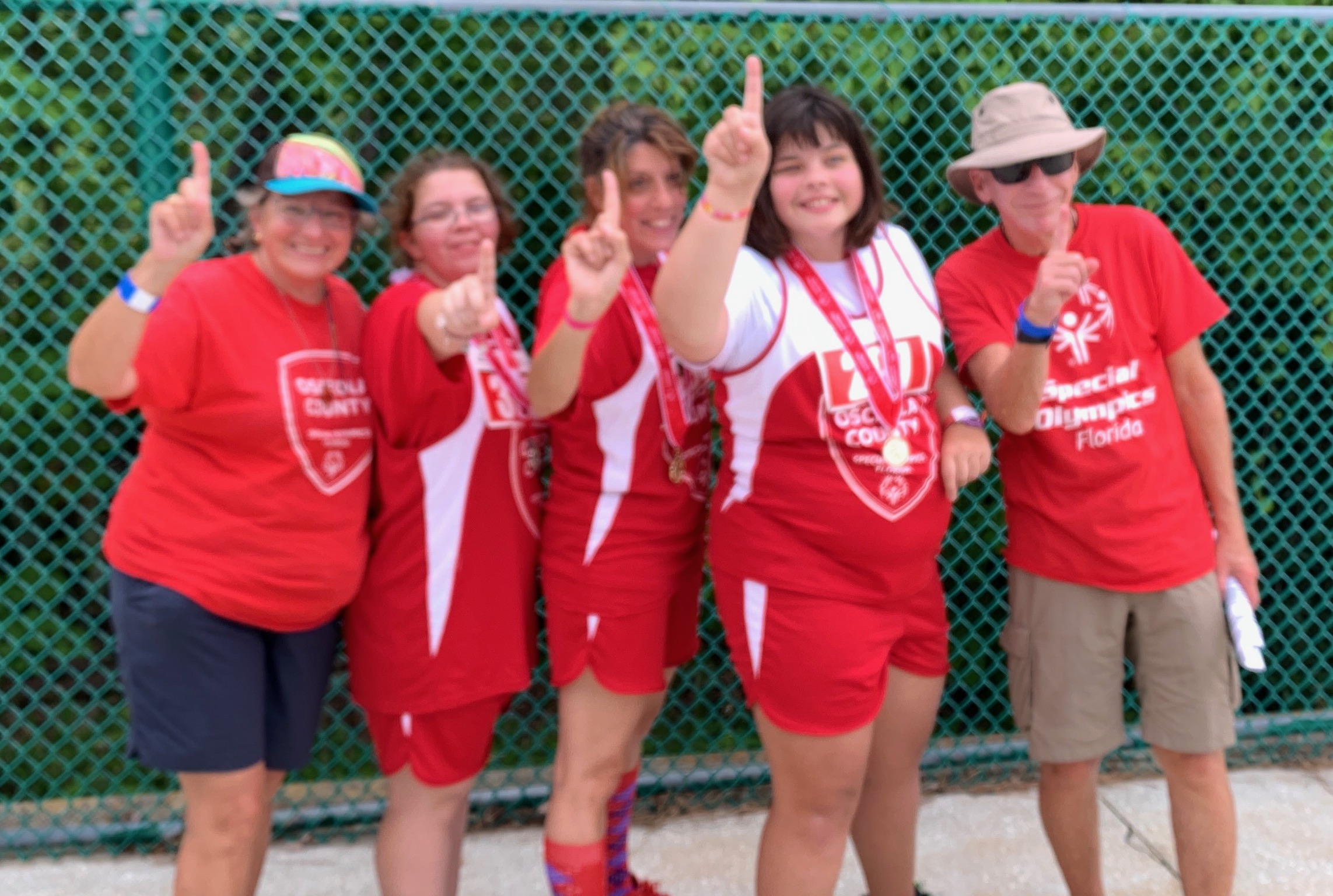
Note: As I post this article, Larry and I had just finished up our Special Olympics Florida state meet with our track and field team. We had a wonderful, exhausting, and incredibly rewarding two days with all of our “stars.” In this article, I reflect back on last year’s 2022 SOFL State Games and its aftermath.

Guess who contracted COVID?

After months and months of being careful, I had pressed my luck. As Special Olympics Track and Field coaches, Larry and I attended the Florida State Special Olympics game with eleven athletes from Osceola County on May 20 and 21, 2022. All of our events, which took place in the ESPN Wide World of Sports Complex in Orlando, were supposed to be outdoors. Plans changed quickly when torrential rains and strong winds swept in moments after we had parked our car. Our team, along with several other teams from a variety of sports, spent the first two hours sheltering in the Advent Health Building lobby. The “close encounters of the super-spreading kind” happened again that night when rain delayed and then finally resulted in the cancellation of opening ceremonies. Although Larry opted not to wear a mask, I made sure I had my KN95 covering my face whenever I was inside. Outside, however, I eschewed protection, hoping for the best. 

Fortunately, the weather improved the second day of competition. By Saturday afternoon, however, I was exhausted. I tried to hydrate, but I was totally wiped. “Maybe I’m getting too old for this,” I thought to myself. Or maybe I was just feeling the effects of two sleep-deprived nights, two mornings of 6 a.m. alarms, and my putting on at least eight miles corralling our athletes to various venues in 90 degree heat and 90% humidity.

By the time our last athlete had claimed his second place medal in the 400 meter walk, even Larry, who had shown no signs of slowing down, was ready to get out of the heat and go home. We stopped for a late lunch, drove home and collapsed on our couch. After a slow walk on Sunday morning, we went to Publix for our second booster shot. Then we spent the rest of Sunday with a repeat performance on the couch.

On Monday, I attempted my usual walk but felt as if I were plowing through mud. By Tuesday afternoon, exhaustion was accompanied by congestion and a runny nose. “Just a head cold,” I thought. It took me until Wednesday to administer the home test.

You know how it usually takes 15 minutes to see the results? Forget that. Within thirty-seconds of putting the disgusting drops into the assigned spot on the test strip, the “positive” line showed up.

“I have COVID,” I texted my husband, who was at a ROMEO [Retired Old Men Eating Out] luncheon. Unfortunately, he didn’t read the text and only learned the news on a phone call when he was driving home. His passenger quickly put on a mask. Sorry Rich! That is the proverbial “Shutting the barn door after the horse has bolted.” Fortunately Larry and he didn’t come down with it.

I never have been a good “patient” in that I have no patience for being sick. When Larry came home from his outing, he found me on the computer, a box of Kleenex and a cup of tea by my side, interviewing someone for my Holocaust Torah story while typing away. “Get off the damn computer, put on a mask, and go lie down,” he told me.

Exhausted, congested, and realizing that I couldn’t leave the house anyway, I gave up. I spent the next three days sacked out on the couch catching up on Outlander. Note: There is no better way to veg out than spending twenty hours with Jamie and Claire as they romped their way through pre-Revolutionary War America.

Later than evening, Larry made dinner for both of us, something he did every night for the next eight nights. And to top it off, he made me an ice cream sundae every night to help “soothe your scratchy throat.” At least that is the way we justified 350 calories of pure bliss. Larry, meanwhile, was earning enough “Best Husband in the World” points for a lifetime.

By Sunday, I was feeling well enough to resume my work on the Holocaust Torah story. I even had enough energy to take a short (masked) walk and to water my drooping houseplants. As was the case for so many others who contracted “the plague,” however, it took me another two weeks to get over the fatigue. 

Do I have any regrets about going to the Special Olympics State meet? Not one bit. Seeing our athletes competing in their events, coming down off the awards platform, finding their way to their parents, and beaming with pride, brings so much joy it was worth spending the two days in a sure fired “petri dish.”And how could I not hug my athletes when they finished a great race or threw the softball farther than they ever had or showed me their medal?

So where do we go from here? Yes, I may get COVID again, but having it may have helped me build up some immunity. Larry was spared this round but will he contract it in the future? Only time will tell.

On March 25, 2020, Jewish World published my first “pandemic” story. “As I write this, we are in the second week of our own national crisis,” I stated. “Larry and I worry about our friends and family—especially our own children.” Over the ensuing months, I wrote about how COVID and its forced locked-down impacted us: our first sad Passover seder for two; our hours and hours on Zoom; our trimmed down wardrobe (on my not slimming down body); our hopes for a more sensible approach to COVID with a new president; our tentative steps back into the world with masks and bottles of hand sanitizer and vaccines and boosters; our joy in finally reuniting with our children and grandchildren, and, of course, my baking dozens of loaves of challahs I baked throughout the long months.

It is now time to put all these stories, published every two weeks in Jewish World, into a book. Keep Calm and Bake Challah: Surviving the Pandemic, Politics, Pratfalls, and Other of Life’s Problems will be finished and available on Amazon in June 2023.

And it is time to move on. Yes, we will test before visiting our children. Yes, we will mask when necessary, especially in unavoidable crowded venues including planes and other public transportation. Meanwhile, I will continue to keep calm, bake challah. and learn to live in the “new normal” in the Age of Covid.

A version of this article originally appeared in the Jewish World News, a bi-weekly subscription-based newspaper in upstate New York.

A Meshugganah Summer

This was, to say the least, a different summer in Rockies. No matter how well one can plan for time away, life still happens. Meshugganah!

After eight wonderful days in California with my son Adam and his family, we flew into Denver and then headed for my daughter Julie’s home in Summit County. While unpacking, I realized my Kindle was lost in transit. I wish I had been able to brush the loss off as a human error, but I spent too much time trying to track it down (no luck at Southwest Airlines, either airport, or Enterprise), deciding on whether to order a replacement (thank goodness for a well-timed Amazon Prime Days sale) and beating myself up for losing it in the first place.

Although Summit County normally experiences the monsoon season in late July, this year it started soon after we arrived. Two days were complete washouts, but “weather” came in most days in early afternoon. As a result, most evening outdoor concerts, a favorite summer activity we have done in the past with family and friends, were cancelled.

Meanwhile, as has happened throughout the country, this very contagious COVID variant hit Summit County hard—and close to home. On July 1, the day we moved into our rental, we stocked up on groceries at City Market, along with many other maskless vacationers. We brought home chicken, produce, ingredients for challah baking, and COVID. By July 3, Larry was feeling under the weather; by July 5, he tested positive.

My May encounter with the nasty virus somehow protected me from this variant, but Larry was not spared. He was down for the count for five days and, as he was still testing positive, isolated for five more. He missed out on our Mountain Girl’s birthday party, several trips to Main Street to get her mango bubble tea, and many games of Sorry! FaceTime may be a blessing when we are in Florida; it was a poor substitute when our rental was literally a stone’s throw from their house.

We also both passed on the planned weekend getaway with Sam’s family in Granby, Colorado. Sam’s parents, Marilyn and Bill, who are also our dear friends, cancelled their second attempt to see us when Larry was hit by a mean head cold.

Although I hiked almost every day during Larry’s illness by just walking out of our rental, we were able to take our first hike together two and half weeks into our stay. Outside of my taking another one of my famous pratfalls on one, Larry being attacked by mosquitos despite the bug spray on the second, our almost getting caught in a thunderstorm on the third; and encountering a snake on the fourth, we had finally were able to spend quality time together on the trail.

By this time, Larry was well past COVID and colds. On July 21, Marilyn and Bill drove up from Fort Collins with plans for the seven of us to attend the National Repertory Orchestra’s annual pop concert in nearby Breckinridge. An hour before we were supposed to leave, the Mountain Girl came home from the fourth day of science camp with a live jelly fish and a lively case of COVID. The four grandparents went to the concert while Julie and Sam stayed home. Wisely, Marilyn and Bill drove the two hours back home immediately following the concert to avoid further exposure. The parents, however, were not so lucky. All three—five if you include the dog and “Jelly”—were now in quarantine. Sigh! We are back to FaceTime visits.

Meanwhile, a funny thing happened on our way to the Lake Dillon Theater. Soon after the NRO family no-go, we got an email stating both musicals for which we had purchased tickets were cancelled due to a COVID outbreak among the cast and staff. Yes, any live indoor performances in any “forum” were just an “impossible dream.”

And yet, despite lost electronics; despite monsoons, despite curtailed concerts and cancelled curtain calls; despite pratfalls and pests and the pandemic, Larry and I remained focused on the positive (no pun intended). Several mornings, with the help of FaceTime, Larry and I followed the Tour de France with Adam (who loves cycling) and our grandson (who kept asking for Elmo on the “TV”). For eight nights, Larry and I watched historical wins at the World Track and Field Championships out of Eugene, Oregon (Go Sydney McLaughlin! Go Armand Duplantis!). I researched future stories, wrote, articles, worked on my fourth book, and updated my blog. One of the pictures I took on a hike was featured in a local newspaper, prompting a friend email with the subject line, “Thinking of you…as a photographer!”

Once healthy, Larry resumed playing pickleball with the Summit County Pickleball Club (“We play with an altitude!”), along with doing several more hikes with me. Thanks to the local library and my new Kindle, I read lots of books. And even though Southwest has yet to locate my old Kindle, I was assured by a lovely woman in the Denver office that as it is one of 9000 items accumulated by the central lost and found office, I have a good chance of it being recovered by Chanukah. (Chag Sameach, Larry! You have been regifted!)

By the time we left the mountains, all my family members had completed recovered from COVID. We were safe and in one piece. We did not have to cancel entire vacations due to illnesses, a fate that befell two close relatives. We are not grieving and traumatized like so many families in Buffalo, Ulvalde, Highland Park, and other sites of senseless violence. And no matter what the weather, we spent six weeks basking in the beauty and cooler temperatures of the Colorado Rockies.

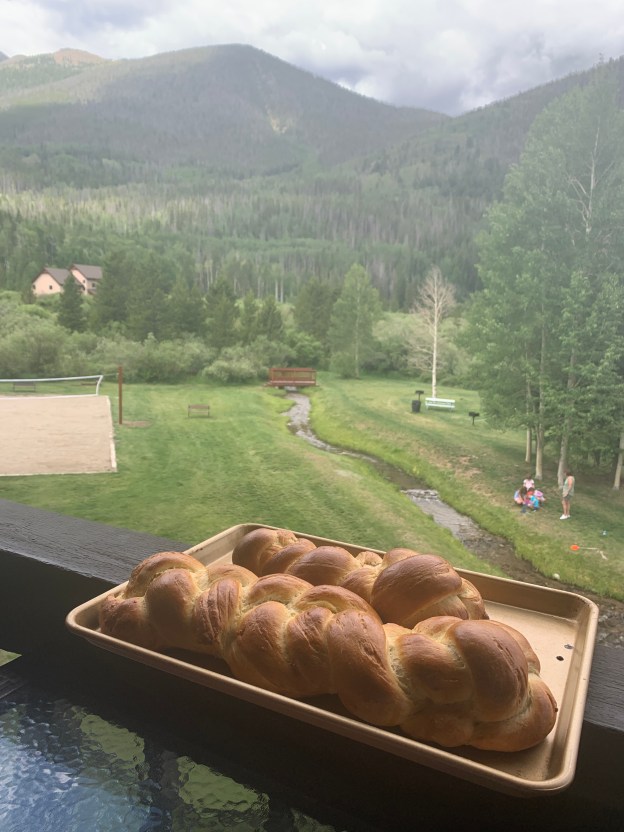
Furthermore, as I have done since the beginning of the pandemic, I kept calm and bake challah.On a Sunday afternoon, as a torrential rain storm raged outside our balcony, I cooked up dinner for my quarantined family—chicken, rice, carrots, and two freshly baked braided loaves. I kneaded in prayers for their quick recovery and prayers of gratitude for all the joy and happiness and love we have experienced this very different summer. 

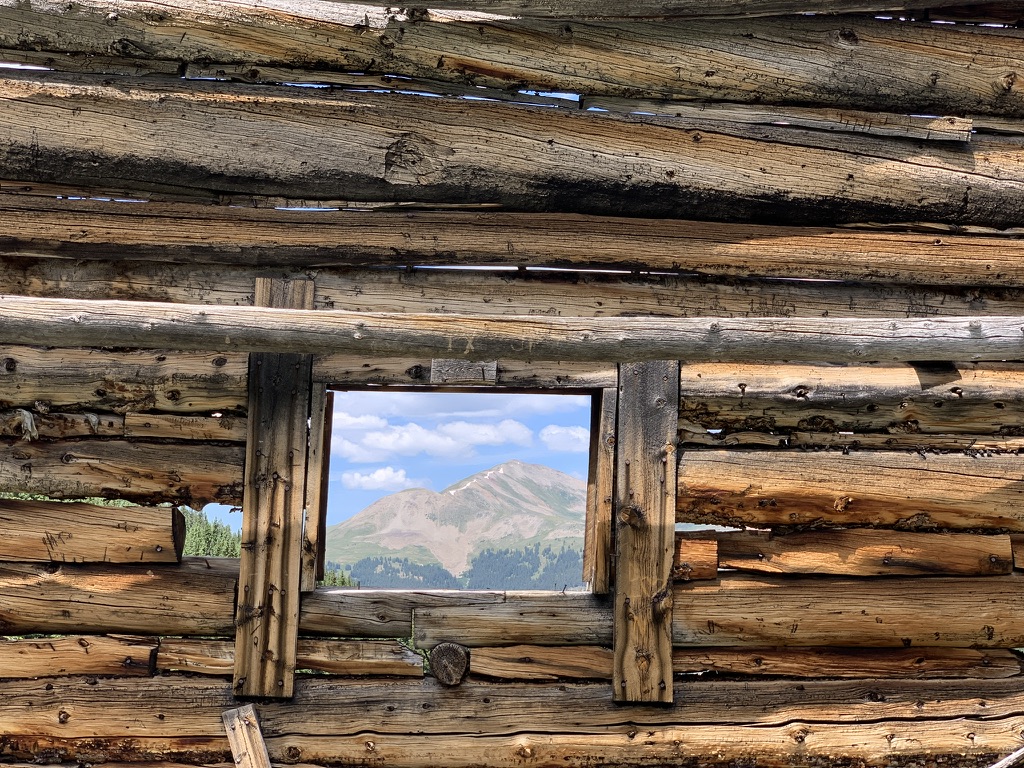
View of the Rockies at Mayflower Gulch. This picture was featured in an issue of the Colorado Summit Daily.

Oshinsky Story Published in The Forward

I am proud to announce that my three part story about Harry Oshinsky, a World War I Jewish immigrant, was published in The Forward, one of the most influential American Jewish publications.

Over fifty years ago, the Forverts published a series of stories in Yiddish by Chonie “Harry” Oshinsky, describing his childhood in a shtetl in Lomza Gubernia, his two-year trek to Brooklyn and his life in “di goldene medine,” the golden land. 

Many years later, Oshinsky’s son, Lenny Oshins, brought an English translation of the story to me, his friend and  a writer, for a potential article. Using the manuscript as a basis, I retold his story in three chapters, including details I discovered during my own research that help shed light on the history surrounding Harry’s extraordinary life. 

The three articles were originally published in The Jewish World, a bi-weekly subscription based newspaper located in upstate New York. The original article may be found on the web at https://jewishworldnews.org. I appreciate all the support Laurie and Jim Clevenson of The Jewish World has given me and my writing over the years.I also appreciate the help of Rukhl Schaechter, the editor of the Yiddish Forverts, in preparing the story for publication in The Forward.

Here are the links to the article as published in The Forward:

To read Part One: “From Bialystok to Brooklyn: A Jewish immigrant’s trek across three continents,” click here.

To read Part Two: “Two Jewish teenagers escaping Bialystok arrive in Harbin, China,” click here.

To read Part Three: “A Jewish teen from Bialystok lands in a Chinese prison,”  click here.

More about Marilyn:  Since retiring from a career in adult education and relocating with my husband Larry from Upstate NewYork to Solivita, I is now writing down my own family stories as well as the accounts of ordinary people with extraordinary lives. I have been a regular contributor to the bi-weekly publication, The Jewish World (Capital Region, New York), since 2013. My articles have also been published in Heritage Florida Jewish News and several websites including the Union of Reform Judaism, Jewish War Veterans of the United States of America, Growing Bolder, the Memorial Scrolls Trust (England), and Jewish Women of Words (Australia). I am the author of two compilations of my stories,There Goes My Heart (2016), Tikkun Olam: Stories of Repairing an Unkind World.(2018), and Fradel’s Story, (2021) a collection of essays co-written with my late mother, Frances Cohen. All three books are available in paperback and e-book format on Amazon. My fourth book, which will be published in late 2022, is entitled Keep Calm and Bake Challah: Surviving the Pandemic, Politics, and Other Life’s Problems. I am also working on a fifth book, Under the Shelter of Butterfly Wings: Stories of Jewish Sacrifice, Survival, and Strength.

More about The Forward: Founded in 1897 as a Yiddish-language daily newspaper, The Forward is considered one of the most influential American Jewish publications. I, along with many of my friends and family with Jewish heritage, remember my own maternal grandparents reading Forverts, the original daily Yiddish paper, when I visited them in Coney Island in the 1950s and 1960s. In 1990, an English-language weekly offshoot began publication; in 2019, it became an online newspaper. A more detailed description of The Forward  may be found on Wikipedia.

Keep calm and carry on? A return to tradition

Flashback to March 14, 2020. COVID-19 was the top news story. My daughter Julie and her family were leaving for the Orlando airport after a week’s stay. We had spent a few days on the beach and been delighted  by news of the birth of our grandson in a San Francisco hospital. We had cancelled our planned visit to Magic Kingdom the day before Disney announced it was closing the park that weekend. Instead, we spent hours in a community pool making sure we weren’t too close to anyone else. 

Julie’s last words as she got into her rental car were, “Mom and Dad, promise us you will stay safe!” She begged us to skip our plans to see Death Trap, which was being performed by our local theater group that evening. She must have called her brother, because Adam FaceTimed us an hour before we were to leave for the play. “If you stay home, I will keep the camera on your new grandson for the next hour.” Seeing our grandson won. We had no idea we would be feeling its effects—masks; sheltering in place; cancelled trips; cancelled events; hours of Netflix’s and puzzles; new variants; tragically, loss of friends to the virus—for the next two years.

Within the first month of the pandemic, I decided that celebrating with a Sabbath dinner every Friday would bring some joy. I polished my grandparents’ candlesticks; bought a new Kiddish cup on ebay (I must have lost mine in our move); brought out my embroidered challah cover, and located a friend’s challah recipe I had always meant to try. With some difficulty—the whole world decided along with me to make bread—I purchased flour, yeast, and sugar to make the traditional Shabbat bread. And I mixed and kneaded and braided my first challahs. Delicious! 

The following Friday, I was a little more confident. I made four small ones, and shared one with president of our (closed down) shul and one with a friend whose wife had just been placed in memory care.By April, I had totally embraced not only the baking process but also the spiritual elements. I learned that it was appropriate to say prayers during the kneading process, a way of feeding the body and the soul. I initially prayed for my family as well as our country and for all impacted by the pandemic. But my prayers soon extended to the sick, the grieving, the lonely. I kept a Mi Shebeirach list on my phone as reminders and often played Debbie Friedman’s version of the beautiful prayer as I kneaded the pliant, soft dough.

We developed a rhythm: Every Friday afternoon I baked the challahs, and just before sunset, Larry would head off in our car, delivering two or three still warm fragrant loaves to needy people in our community. When I couldn’t physically share them, I attached pictures of the challah onto an email with a note. “I kneaded prayers of healing into this loaf of bread. Thinking of you. Love, Marilyn.”

By the time Larry and I were finally able to travel to see our children and grandchildren in June 2021, I was a seasoned challah maker—to a point. Baking bread in someone else’s kitchen proved to be a challenge. In San Francisco, I realized the sound of the mixmaster cranking out the initial steps of challah process woke my grandson from his nap. In Colorado, the 9100 foot elevation resulted in loaves that looked more like amoebas. I had to learn to work around nap time and altitude. 

Meanwhile, I was tweaking my technique. I replaced the butter in my friend’s recipe with canola oil, which meant less noise and more kneading time, my favorite party of the process. Rocky Mountain challahs, I learned, needed to go into the oven immediately after braiding to prevent over-rising. A straight egg yolk wash resulted in browner, shinier loaves, which Larry wholeheartedly approved “This is the way challah is supposed to look,” he said, biting into the harder crust.

Over the past two years, I have baked and shared dozens of challahs, many that were appearing on our shul’s Zoom services. As our world finally has begun opening up, however, finding the time to make the challahs on Friday has been more difficult. I “cheat”by making seven or eight loaves and freezing 2-4 braided unbaked challahs, to be defrosted and baked when needed. (I still feel Jewish guilt when I use that shortcut!)

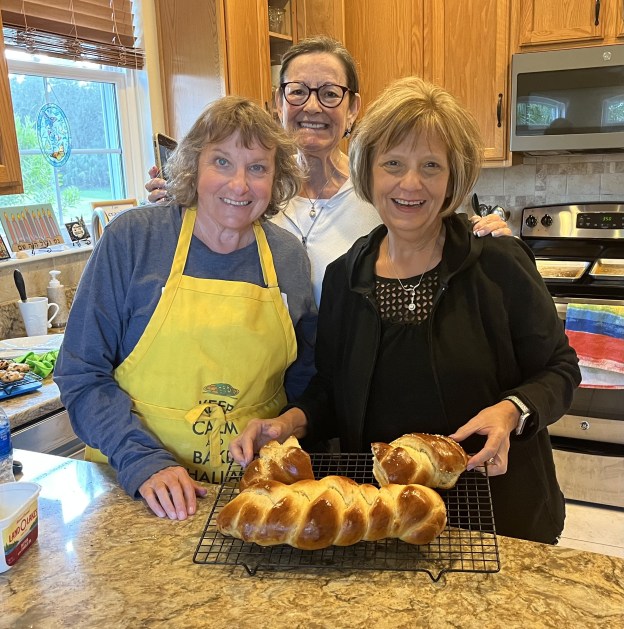
Friends have asked me if they could buy my challahs or even sell them at our Farmer’s Market. I decline, telling them emphatically I am not starting a new career. Instead, I offer them my challah “recipe,” a nearly 3000 word tome with numerous tips. Recently, I even invited two friends over for a “challah workshop.” After we all enjoyed slices oof the warm loaves smothered with butter, they went home with a batch of the still-rising dough they had prepared. They sent me pictures of their finished creations, beautiful in their own right. I am just following an old Yiddish expression: “Give people a challah, and they eat for a day. Give them a recipe, and they become challah bakers!”

Initially, I was hopeful that this would be the last article I would be writing about the pandemic. Two vaccines and two boosters later, Larry and I have pretty much resumed our lives. But there are now disturbing numbers that show another upward trend. Will we have to resume mask wearing? Sheltering in place? Only time will tell. 

When I wrote this mid-April, I was on a challah hiatus. Instead, Larry was enjoying sponge cake, Passover popovers, and matzo brie. But Passover ended next Friday. I soon will be pulling out the ingredients for the challah and donning my special apron. Stay safe, my friends.Better yet, Keep Calm and Bake Challah.

A version of this article originally appeared in the Jewish World News, a bi-weekly subscription-based newspaper in upstate New York.

Wrestle with COVID leaves survivor a changed woman

“When you come out of the storm, you won’t be the same person who walked in. That’s what this storm’s all about.” Haruki Murakami

Ever since the first cases of COVID-19 were identified, America has been divided regarding wearing masks, gathering in large groups, or, most recently, getting one of the variants of the vaccine. Heated arguments have occurred in government institutions to sports venues to houses of worship to classrooms to local bridge groups. For Kathy Glascott, a COVID-19 survivor, such protocols are not a matter of personal choice but a matter of social responsibility.

A former elementary school teacher, from Buffalo New York, Kathy Glascott was the happiest she had been in many years.  She had retired to a 55-plus community near Orlando, Florida, and, as was her style, she showed up for life. She was involved in several activities including the British Isles Heritage  Club, the Western Upstate New York club, and SOL Writers. A widow, she met her significant other Mike through the community’s Singles group, and they were having fun, going to concerts and dances and traveling to places of which she had only dreamed.“It was like being a teenager again,” she said.

Then, in February 2020, the unsettling news of a virus later identified as COVID-19 began to emerge. Heeding the early advice of medical experts, Kathy sheltered in place and tried to avoid exposure. Short on groceries, she took a risk and went for a quick supermarket run. “I didn’t have a mask because you couldn’t get them” Kathy reflected months later. “Looking back, I wish if had the damn groceries delivered.”

Soon after, Kathy began to feel unwell..One evening, exhausted and exhibiting symptom of what she thought was bronchitis exacerbated by her asthma, she had Mike take her to the nearby hospital’s ER. She had no idea that it would be  5 1/2 months until she would see anyone except through a plate glass door.

Kathy was diagnosed with bilateral pneumonia and COVID-19 and almost immediately placed in an induced coma in the ICU. She has vague memories of anything from March 27 until she woke up from anesthesia on May 5. “During that time,” she wrote months later, “my body was assaulted by machines that were surrogates for bodily organs—a feeding tube, a respirator, and catheters.”

Meanwhile, her brother Brian Joyce, a Methodist pastor in New Jersey, kept her large family and many friends abreast of Kathy’s life and death struggle through posts on her popular FaceBook page. On three occasions, Brian gave the grim news that she had been intubated and was near death. Even when the medical staff removed her from her induced coma, she was not out of the woods. She remained hospitalized for another six weeks and later continued her recovery in a rehab center where she had to learn again to hold her head up, sit, stand, walk, and swallow.

Brian warned his FaceBook followers against what he called “COVID-19 fairytales.” “It would be nice if Kathy’s story demonstrated a victory over the virus,” he posted on August 1 as his sister entered her 19th week of fighting for her life.“In reality her recovery is a daily journey through pain, loneliness, separation, therapy, small victories, and moments of great success and rising hope.”

On September 6, 163 days after she had been admitted to the hospital, Kathy was finally released. For the first two months, she stayed with her neighbor and closest friend Susan Schulman.After Kathy moved back into her own home, she continued to rely on Susan,  Mike, and others to provide a much-needed network of support. 

Over a year later, Kathy is still trying to make sense of what happened and “to fix what’s broken.” She mourns the six months of her life she lost to the virus in which her only contacts were her ever-present, albeit, wonderful medical staff members. 

Although not confirmed by her doctors, Kathy considers herself as a “long hauler,” one of unfortunate 10% of COVID-19 survivors who experiences prolonged effects of the illness. In her case, she struggles with vision problems, a chronic cough, reoccurring bronchitis, neuropathy in her feet, frequent fatigue, and bouts of PTSD. “I’m better, but I’m not the me I was before Covid,” wrote Kathy on a post in her blog This and That:Musings on Being a Writer.“I have a new normal that makes me feel diminished, stressed, joyful, discouraged, and grateful all at the same time.”

Kathy also recognizes that COVID has affected not only herself but also those with whom she is involved. This is especially seen in the impact her illness had on her daughter, Brenda Glascott, a college administrator who lives with her wife in Portland, Oregon. “Ever since I woke her in the middle of the night on March 28 to say, ‘I love you’ before I was intubated for the first time,” said Kathy, “Brenda has had to make a number of hard decisions on my behalf. And she made each one with courage and love.” Kathy has said that the hope of seeing her daughter and others who sustained her and kept her fighting in her darkest hours.

As a survivor, Kathy feels a responsibility to protect herself and others.“I try to honor the concern and love shown me by not taking unnecessary chances and by practicing safe protocols.” Those measures include limiting her exposure to others and wearing a mask even though she is fully vaccinated.

She is an outspoken opponent of those who reject such measures on the pretext of personal freedom. “If you hate wearing a mask,” reads one of her FaceBook posts, “you’re really not going to like the ventilator.” In another post, she quotes George Takei, the American actor and activist. “Telling me you are proudly unvaccinated is like telling me you’re a drunk driver. You’re not a patriot. You’re not a freedom fighter. You’re a menace.”

A writer and author of three previous books, Kathy is working on a fourth that will recount in detail her own “harrowing dance” with COVID-19. “When I think about the many people who were affected by my struggle, I am humbled by their love and concern and grateful for the outpouring of prayer and support I received,” she said. “I hope to pay it forward by sharing my own experience and encouraging others to take the necessary steps to protect themselves and help curtail the spread and continuance of this terrible pandemic.” 

A version of this article originally appeared in the Jewish World News, a bi-weekly subscription-based newspaper in upstate New York.

The Pandemic in Three Pratfalls

On a beautiful morning in theRockies, I weave my way up the two mile Mount Royal Trail. Geared up in hiking boots, pants, and my new “Mountain Mama” teeshirt, I enjoy the solitude, the sounds of mountain streams and chirping birds, and the sight of butterflies that lead me up the path. Small wooden bridges span the occasional creeks. Arriving on the bank of Rainbow Lake, I take in the beauty surrounding me before starting the trip down the Aspen Trail. 

Despite my pure joy of being in my “happy place,” I know my family worries about my frequent solo hikes. It would be generous to say their fear emanates from possible encounters with moose, elk, or bear. Unfortunately, it actually comes from encounters with rocks and roots. No, they don’t fear my being eaten by a forest denizen. They fear I might trip on the gnarled tree roots, the patches of loose stone, or the small boulders that are a part of the hiking experience. 

Not that their concerns are unfounded. Over the past 16 months, COVID-19 has not felled me. It has been my own stupid feet.

My first trip down free fall lane came early in the pandemic.” With pools and exercise classes in our 55+ active community shuttered, my husband and I were taking one of our long morning walks. It was hot, as usual. It was humid, as usual. What wasn’t usual was the dead snake lying on the sidewalk in front of us a mile into our walk.

“Watch out!” I yelled to Larry. He crossed his right leg in front of me to avoid the snake, and I I fell fast. And hard. And as I slammed face first onto the pavement, all I could think was “Damn that snake!”

I felt incredible pain and tasted the blood that was pooling in front of me. For one of the few times in my life, I was grateful my nose was more Barbra Streisand that Amy Adams, as it appeared to have taken most of the hit.

When I gingerly stood up, Larry and I assessed the damage. Scraped elbows and knees that did not require stitches? Check. Bones intact? Check. Teeth whole and still in mouth? Check. Ability to walk home. With the help of an ice pack wrapped in a towel provided by a Good Samaritan who had witnessed the accident from her front porch, also CHECK!.

Fortunately, outside of two black eyes and multiple minor scrapes, I had avoided major injuries and a trip to the emergency room.

My second adventure in face plants occurred twelve months later when the world was finally opening up. Larry and I were visiting my brother and sister-in-law in Sarasota, Florida, our first time we had been able to connect with family since COVID hit. On the second day of our visit, the four of us took a trip to Spanish Point, a 30-acre outdoor museum site. We were weaving through a section which was being set up for an evening concert. As I was wearing the required face mask, sunglasses, and a wide brimmed hat, I didn’t see that the sound bar the sound technician had placed between the bottom rungs of two of the chairs. My foot caught on the pole, and I did a hard splat in the grass. It was a second lucky “break” in that I walked away with a scraped up face, another set of black eyes, and no ER visit. 

Three months later, my luck ran out. Larry and I were in San Francisco visiting our son, daughter-in-law and sixteen-month-old grandson. On a Saturday morning, we took an easy, scenic three mile round trip hike on the Tennessee Valley Trail in nearby Marin County. We were off the trail and walking over to our parked car when I tripped over a stupid rock—or is it that stupid me tripped over an innocent rock? Fortunately, I fell right in front of a doctor and his family who were about to begin their hike. He bandaged me up with the diagnosis that nothing appeared to be broken but the cut on my forearm was deep and required stitches.

After striking out at our attempts to get help at two urgent cares (One was closed; the second “didn’t do sutures.” ) our son dropped Larry and me off at University of California San Francisco’s emergency room. At first, judging from the number of people in the waiting area, I thought that I would get in and out quickly. Four and a half hours later, however, the ER manager announced that, along with those of us cooling our heels in the waiting room, there were at least 25 ambulances lined up outside with people in worse shape than us low priority patients with mere ear infections, head bumps, and cut forearms. We should expect a possible ten hour wait.

I was about to ask for a sewing kit and a prescription for antibiotics and call it a day when—thank goodness—I was taken into a room to get patched up. Six stitches and a tetanus shot later, I was good to go. Thankfully,I have had no lingering effects from Pratfall #3.

Initially I was worried that maybe I was having balance issues. In the days and weeks that followed, others of all ages have told me of similar situations that resulted in much worse endings—broken elbows, wrists, and legs. Yes, I consider myself lucky.

As I was getting ready for my first solo hike in Colorado, my daughter encouraged me to wait for her so that she could watch over me and make sure I didn’t fall. I said no, insisting that this almost-71-year-old body was still more than capable of hiking up and down trails, thank you very much. She did meet me halfway and showed me a longer but less steep trail that I have taken on my own as well as others with Larry and my granddog.Larry and I have also tackled longer, more difficult hikes without a scratch—or splat—between us.

Our most memorable Colorado hike this summer was the one Larry and I took with my granddaughter. When we reached the Rainbow Lake area, she insisted we ford a small stream by scrambling across the logs that spanned the water. Larry questioned whether she should attempt the crossing. “Don’t worry, Zayde!” she said. “I’m a Mountain Girl I got this..” Taking my cue from her, I successfully made my way across the logs, albeit slower, more cautiously, and certainly more awkwardly. But I did it. After all, as my new teeshirt proclaims, I am a Mountain Mama. I got this!

Epilogue: Soon after sharing this story with my writing group, Larry and I spend the afternoon exploring Vail Village. In one of the stores, I decided to try on a shirt that had caught my eye. As the salesperson led me to the changing rooms. he said, “Take the room on the left,There is a lip on one on the right, and I won’t want you to trip.” 

“Do I LOOK like someone who would trip?”I bristled. He quickly backtracked, “Well, even sixteen-year-olds have tripped over it.” Not surprisingly, I didn’t buy the shirt. Before I left the store, however, I sought out the salesperson and gave him my business card with my blog address. “My next article will be The Pandemic in Three Pratfalls,” I said.”Your comment will be in it!” 

A version of this article originally appeared in the Jewish World News, a bi-weekly subscription-based newspaper in upstate New York, August 5, 2021.
“Farklempt!” Overcome with Emotion!!

Yiddish may be one of the world’s more obscure language, but it has given us words which are no less than perfect. Someone may have “nerve,” but chutzpah reflects a shameless audacity that says it better. Being a “good person” is nice, but being a mensch brings that individual to a high level of honor, integrity, kindness, and admiration. One can complain, but when one “kvetches,” he also adds a layer of whining and fretting that really captures the moment.

Another word that Yiddish does best is farklempt, overcome with emotion. I can count on one hand how many times I have ever needed to use this word or felt its power. The day I held our newborn son. Three years later, when I held our daughter. And six years ago, when I lay eyes on my two-hour-old granddaughter. And now, I can use it again: When we were finally able to hold our grandson for the first time.

Our grandson as born in March 2020, a few days before the world closed down due to the pandemic. My husband Larry and I were on Indian Rocks Beach, Florida, with my daughter Julie, her husband Sam and our granddaughter when our daughter-in law-Sarah went into labor in a San Francisco hospital. Our son Adam announced their newborn’s  official arrival late that night via phone calls and texted pictures. 

By the time Julie and her family flew back to Colorado later that week, the impact of COVID-19 on our lives exploded. We promised our children that we would “stay safe” and shelter-in-place. Larry and I had made reservations to fly out to California later in the month, but we had no choice but to cancel and wait until things improved. Little did we know at that time that that wait would stretch out for over 15 months.

Thanks to social media, we got to see a great deal of our “San Francisco Kid.” Adam and Sarah called frequently and focused the camera on our beautiful new grandchild so we could watch him sleeping, nursing, bathing. Then, as the months dragged on, we saw him learning to crawl, learning to walk, speaking his first words. But we were unable to hold him in our arms.

Larry and I tried to repeat certain rituals so that our grandchild would know us. Each time we connected, I would sing “The Wheels on the Bus.” As the months progressed, I went beyond blinkers going “left right stop” and coins going “clink clank clink.” I introduced dogs barking and ducks quaking and pigs oinking and cows mooing, “Isn’t that crazy?” I would ask him 3000 miles away. “Ducks and pigs and cows on a bus??”Larry, meanwhile, would move two fingers against his lips and say, “Bu bu bu ba!” 

By the time our plane landed in SFA in mid-June, Larry and I were beyond excited and also a little nervous. How would our grandchild  react to these two people whom he had only seen on a small screen. Would he cry? Turn away? After hugging my daughter-in-law Sarah until she couldn’t breathe, Larry climbed in front of the Honda Civic with Sarah, and I tucked in the back next to our grandson’s car seat. He looked at me as if to say, “Who is this lady?” I gently touched his arm, but he pulled it away. I softly started singing “The wheels on the bus go round and round, round and round, round and round…” His eyes got big, and he burst out into a huge smile. And Larry? As soon as we got out of the car, Larry lifted him out of the car, held him with one arm, and with the other hand, did his “Bu bu bu ba! routine.”The baby laughed and, for the first time ever, imitated Zayde perfectly. Our grandchild knew us both.

Our visit has been Grandparent Heaven. It has been  filled with hugs; “besos for bebe” (kisses for baby!) in honor of his Hispanic caregiver; beautiful smiles; hours reading Go Dog Go and Brown Bear, Bear, Who Do You See?; innumerable playings of songs by Rafi; multiple trips to city parks;a special day at the San Francisco zoo; and a few very precious baby sitting stints. As promised, I even pulled off two Shabbat dinners with fresh baked challahs and candle lighting via Zoom with the rest of our family. 

Soon Larry and I will be heading for our second “farklempt” moment. We will be flying to Colorado to be united with Julie, Sam and our granddaughter, again over fifteen months in the making. Yes, we have spent hours and hours on FaceTime with our Rocky Mountain family, but I will be overcome with emotion when I can finally hold them in our arms.

Through the past year, Larry and I have said again and again how grateful we were for our physical, financial, and financial health. But again and again, what we missed most was family. The next step will be getting all eight of us under one roof. That moment will be for me the end of this long, difficult time. Until then, I will savor our time with our family, time that has become even more precious, more important, and more cherished after so long deprived. 

A version of this article originally appeared in the Jewish World News, a bi-weekly subscription-based newspaper in upstate New York.

Fallow 2020 may help us reconnect with what we have

In her book, Wintering: The Power of Rest and Retreat in Difficult Times, British writer Katherine May recounts her own “sad” time where she was forced to hunker down after family illness. “Wintering brings about some of the most profound and insightful moments of hour human experience,” she writes, “and wisdom resides in those who have wintered.”

We are all “wintering” now through this pandemic. As we welcome good news with the rollout of the vaccines, we also grieve for those we have lost, those who remain ill, and all of us who have had our lives upended. But there WILL be a spring. I am not sure if I ever want to go back to the phrenetic pace of our previous life. 

My whole life has always been about filling up my calendar. I thought this would change once I retired to Florida, but the last five years have been even busier. My days—and in many cases Larry’s as well—were filled with concerts and theater subscriptions and annual Disney passes and movies and dinners out. I scheduled so many events that neither  Larry nor I could keep up, resulting in revelations of upcoming plans mere hours before they occurred. “You were going to tell me about this WHEN?” Larry asked, as he dressed quickly to get to an afternoon tribute band concert being held in our 55+ community. “Sorry, sweetheart,” I responded as I quickly threw on some makeup. “I thought our tickets were for the evening show!”

Our lives were also filled with trips to visit our children as well as to see places on our bucket list. When we weren’t away or running around to our innumerable commitments, we also enjoyed visits from friends and relatives. We refer to  it as “The Tourist Season,” where our sunny home in Florida looked much more enticing than their snow and ice covered homes February through April.

That life as we knew it drastically changed in March.

Our daughter Julie and her family had flown in from Colorado on March 7 for a week, just as COVID cases were beginning to spike. We stayed in a rented cottage on Indian Rocks Beach, celebrated the long distance birth of our grandson on March 8, and enjoyed the sunshine. We felt safe on the sparsely populated beach. Once we got back to  our home, however, we cancelled our plans to visit Disney World and prepared all our meals at home.

On Saturday, as Julie’s husband Sam packed up their rental car for the trip to the airport, Julie pleaded with us to shelter in place until this was over. “Stay home, Mom and Dad,” she begged. “This is really serious.”

Despite her entreaties, my husband Larry and I were still debating whether to attend our community theater group’s production of Deathtrap. “This will be our last foray for a while,” I reasoned. “We should support our friends who put so much time preparing.”

One hour before we were to leave, our son Adam called from California. “If you promise not to go to the play,” he told us, “we will spend the next hour Zooming with you so you can watch your six-day-old grandson.” We complied. Outside of trips to doctors, the supermarket, and small, socially distanced outdoor meetings , we have kept our promise for the past nine months.

But maybe, for those of us fortunate enough to have survived 2020 without major physical and financial catastrophes, this year has been a break from our normal “Rush, Rush, Rush” routine. Larry and I have found a new rhythm that has given us respite in unexpected ways.

Each morning, we exercise, sometimes together (bikes, walks) and sometimes on our own (Larry’s pickleball and my swims). After lunch, we spend a leisurely hour or two n the couch doing duplicated crossword puzzles, working silently until one or both of us say, “I need help!” I find time to write while Larry satisfies his passion for history and sports with the help of Google. After dinner, a shared affair, we watch a Netflix or Amazon movie and read. I say a prayer of gratitude every day that I am going through this difficult time with Larry, my soul mate and best friend.

We both have appreciated the power of online technology, allowing us to keep up with far flung family and friends. Adam, and his wife Sarah have kept up their part of the bargain, Face Timing with us several times a week with the camera trained on our ten-month-old grandson. Although we have yet to hold him, we have at least been part of his life, watching him sleep and poop as an infant to seeing him experience applesauce for the first time, pop his first tooth and crawl backwards. 

Thanks to his long, elaborate stories, our five-year-old granddaughter often checks in with Zayde. She asks him to retell the story of how Wicki Wolf was foiled again by the forest denizens, which include “good” wolves, moose, and even a visiting alligator who somehow survives the Colorado winters. Julie and her husband often share the screen. Frequent emailed pictures and videos of both grandchildren keep us further in touch.

True, there are times that I fear we have maxed out on Zoom. Synagogue services and board meetings. Book clubs and writing groups. Planned meet-ups with siblings and cousins and friends. But we still have much more down time that allows us to savor what we have rather than rush to taste something new. Although physically distanced, we have become more emotionally connected with the people for whom we care and even reconnected with those whom we lost touch in the frenzy of busier schedules.

As 2020 end, I know I join millions of others in being glad it is over. A popular meme summarizes those feelings: “2020. One Star. Very Bad. Would not recommend.” I look forward to a healthier, happier, and more huggable 2021. But I also hope that I will retain the lessons I have learned as I experienced my own wintering.

A version of this article originally appeared in the Jewish World News, a bi-weekly subscription-based newspaper in upstate New York, in the , January 7, 2021, issue.