Author Archives: Marilyn Shapiro

Unknown's avatar

About Marilyn Shapiro

After thirty five years in education, I have retired and am free to pursue my lifelong dream of becoming a freelance writer. Inspired by my mother, who was the family historian, I am writing down my family stories as well as publishing stories my mother wrote down throughout her life. Please feel free to comment and share.

My house was a very, very fine house….

Version 3

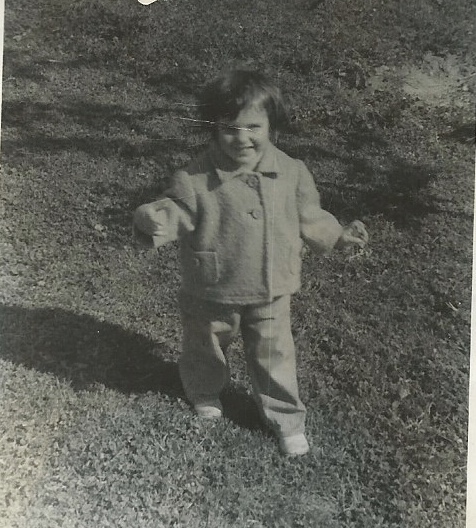
And Marilyn makes five….Me in Potsdam 1952.


My mother Frances Freydl Cohen wrote down many family stories to share with her children and grandchildren. The following story describes our home in Potsdam, New York.

In 1948, my husband and I were living in New London, Connecticut. Now that the war was over, my husband Bill was concerned that his job was insecure. When my brother Eli offered him an opportunity to become a partner in his retail-clothing store in Potsdam, New York, we decided to make the move.

The big problem was that there was a big housing shortage. The only place we could find to live was a small new two-bedroom house that was barely adequate for Bill, me, and our two children.

Our first winter in Potsdam was a very traumatic one. Our six-year-old daughter started first grade. She came home with everything but an education. First she came down with measles. One month later, she came down with the chicken pox. Each time, she gave the illness to her two-year-old brother.

Spring finally came and my parents were finally able to visit us. The couch in the living room opened to a bed, so our living room became our guest room. We bought a double collapsible bridge table and our living room also served as a dining room.

Laura wanted to take piano lessons, so my parents bought her a small reconditioned upright piano that just fit on one wall.

Things were running smoothly. Our children made friends. We made friends. We especially loved going to the outdoor movie theater in the summer. The admission for a whole family was nine dollars. We would dress the children in pajamas and they slept on pillows in the back of our red station wagon while we watched the movie.

Things changed when I realized that I was pregnant with my third child. Babies are little but take up a lot of room. The kitchen was so small that I could stand in one place, open the fridge and take a chicken out, turn around and wash the chicken in the sink, turn again and place the chicken in the oven. Where would I put a high chair in that small kitchen?

But Bill and I always planned on more children, so all the family was thrilled when our daughter Marilyn arrived in September.

Picture our home nine months later. In addition to our couch, two chairs, and a piano, we had the following in the living room:  a playpen, a baby carriage, toys, and shoes and boots on the floor as we did not have a foyer or a garage. The master bedroom now had a crib and a dressing table for the baby. As it was a new house with no trees and situated on top of a windy hill, the house was hot in the summer and cold in the winter. In addition, the basement always had water, the depth depending on the weather. Despite the crowded and less than ideal conditions, we were happy in our little home, which we called the “Rubber House” as it stretched.

We were even happier when my brother’s wife announced that they were going to have their first baby. Two months before the baby arrived, I planned a baby shower for her. The day of the shower, we collapsed the playpen and the baby shower and opened the double bridge table. Bill took our three children to my brother’s. I served tea sandwiches, dessert, and coffee to eight women. We all enjoyed opening the baby gifts.

Soon after that, I could no longer put off the gall bladder surgery that I needed since my first symptoms appeared when I was pregnant with Marilyn eighteen months earlier. The surgery was difficult and the recovery even more so, especially with three children. Fortunately, Bill and my brother waited until I recuperated fully to tell me that the store could not support two growing families.

In a short time, we decided to open a store in Keeseville, New York. Bill went to Keeseville to plan to open the new store, and I stayed in Potsdam to sell the house.

One day the agent called to tell me that he was bringing a couple to see the house. The sun was out, and it was 90 degrees outdoors and indoors. But miracles do happen. By the time they arrived, the sun went down and a strong wind came up. The basement happened to be fairly dry that week. When the couple arrived, they said our place was the coolest in town and our basement had the least amount of water.

Now that the house was sold, our family was ready to start a new chapter in our lives in Keeseville New York in our eight-room house.

My Family’s History of Immigrants

The deadliest industrial disaster in the history of New York City is intertwined with my mother’s family and, in particular, my smart, generous, resourceful Aunt Lil Osovitz Waldman.

My maternal family story began Ragola, a small shtetl town in the southeast part of Lithuania.  My grandmother’s Ethel’s birth mother Channah married Abel Buck, a radical and a “free thinker.” Abel’s unorthodox views were too much for the religious Channah and her parents. Soon after the birth of their son Rafael, the marriage was dissolved. A few years later, Channah married Elihu Hirsch Osovitz. A half-brother, Sam, soon joined Rafael.

Five years later, Abel came to their home and took Rafael with him to America. Channah, heartbroken, died a few weeks later during childbirth. Channah’s parents took Sam into their home. They placed the infant Ethel—my future grandmother—in a home with a wet nurse.

Three years later, Elihu fell in love with Faigah “Vichna” Levinson, the daughter of a prosperous couple in the baking and grocery business. At first, Vichna’s parents did not approve of their twenty-year-old daughter’s marriage to a thirty-plus widower with two children. However, their union was a love match, a rarity in those days of arranged marriages.

Ethel adored her new mother. In fact, Ethel only realized Vichna was her stepmother seven years later, when she met her maternal grandparents. During that visit, Ethel also learned that she had an older brother, Sam, in America.

Elihu was a pious man and a student of the Torah. Grandma Vichna was the breadwinner, working in her father’s store. They shared a shtetl “duplex” with another family. Each side of the small wood building held one room with a curtain in the corner hiding a bed to provide the parents some privacy. The two families shared an outhouse.

By 1899, the couple had four more children sharing their one-room house: Joe, Lil, Paul, and Rose. Fearful of the threat of pogroms, Elihu and Vichna insisted their oldest daughter cross the ocean to the Goldene Medina. Ethel’s brother Sam and her half brother Rafael Buck greeted their sister at Ellis Island. It was the first time she had met either sibling. Staying with distance cousins, Ethel got a job in an umbrella factory for three dollars a week.

Back in Ragola, behind that thin curtain, Vichna and Elihu conceived three more children: Bea, Ruth, Morris. As the oldest girl living home, Lil had responsibility for her younger siblings until she joined her sister in America when she was twelve years old.

The two sisters rented a room with a family of six children and four other boarders. Giving her age as fourteen, Lil got a job as a garment worker in a sweatshop in Greenwich Village. She viewed the location, the top floors of the crowded, airless Aisch Building, as “a firetrap.” The owners locked the doors to the stairwells and exits to prevent workers from taking too many breaks or stealing,

Ethel, struggling and unhappy with her job, accepted Sam’s invitation to move in with him and his wife in Baltimore. Meanwhile, Paul, Joe, and Rose followed their older siblings to America.

When Paul encountered health problems working in the sweatshops, Lil moved him and Joe to Burlington, Vermont. She also gave them money to purchase a wheelbarrow and enough second-hand items to peddle goods to Vermont farmers and their families. First traveling on foot and then on horse and wagon, the two brothers saved enough money to open a store in Alburgh, Vermont. This was the start of Pearl’s Department Stores, a chain that grew to over twenty-two stores in Vermont and Upstate New York.

Working in the factory on Washington Place, Lil proved to be a fast and efficient seamstress. When she demanded a raise, her boss fired her—a blessing in disguise. A week later, on March 25, 1911, the “firetrap”—the Triangle Shirtwaist Factory—was the scene of the deadliest industrial fires in New York City history. A hundred and forty-six garment works died from the fire, smoke inhalation, or falling or jumping to their deaths. According to the AFL-CIO, the tragedy led to legislation requiring improved factory safety standards and helped spur the growth of the International Ladies’ Garment Workers’ Union (ILGWU), which fought for better working conditions for sweatshop workers. By that time, Elihu had died. Lil had saved $75  to pay for the remaining family members’ ship passage. On April 11, 1911, an elegantly dressed Lil greeted Vichna (44), Bea (11), Morris (9), and Ruth (6) at Ellis Island. Lil rented an apartment on the Lower East Side of Manhattan for herself, Rose, and the four new immigrants.

Lil continued to be the main breadwinner in the family. She obtained promotions as a seamstress in various factories specializing in blouses and dresses. She often made as much as $20 a week, a a greater salary than even most of the married men with whom she worked. Her hard work came with sacrifices. Lil attended night school, but after working long hours in the shop, she often fell asleep in class. As a result, she never spoke or wrote English proficiently, relying heavily on Yiddish her whole life.

Now that the entire Osovitz family was in America, Vichna now focused her efforts on making sure that her oldest daughter in Baltimore was married. She arranged a match between her Ethel and Joseph Cohen, a lonely tailor originally from Ragola who was sleeping on a cot in his sister’s apartment. On January 14, 1912, Ethel and Joe were married in a large banquet hall filled with family and friends from the old country. Nine months and four days after the wedding, their son Eli—named after Elihu—was born. Five years later, they welcomed Frances—my future mother.

A few years later, with the entire Osovitz family finally settled in The Golden Land,  Lil married Sam Waldman, a butcher. Lil worked alongside her husband in stores in New York State: first in the city, then Long Island, St. Regis Falls, and then settling in the Syracuse area. The entire family remained close throughout their lives, as have their many descendants of the original nine siblings from Ragola, Lithuania. And all of us recognize and appreciate the powerful role our Aunt Lil played in our history.

Originally published March 16, 2017. Updated May 26, 2025

Osovitz children 1

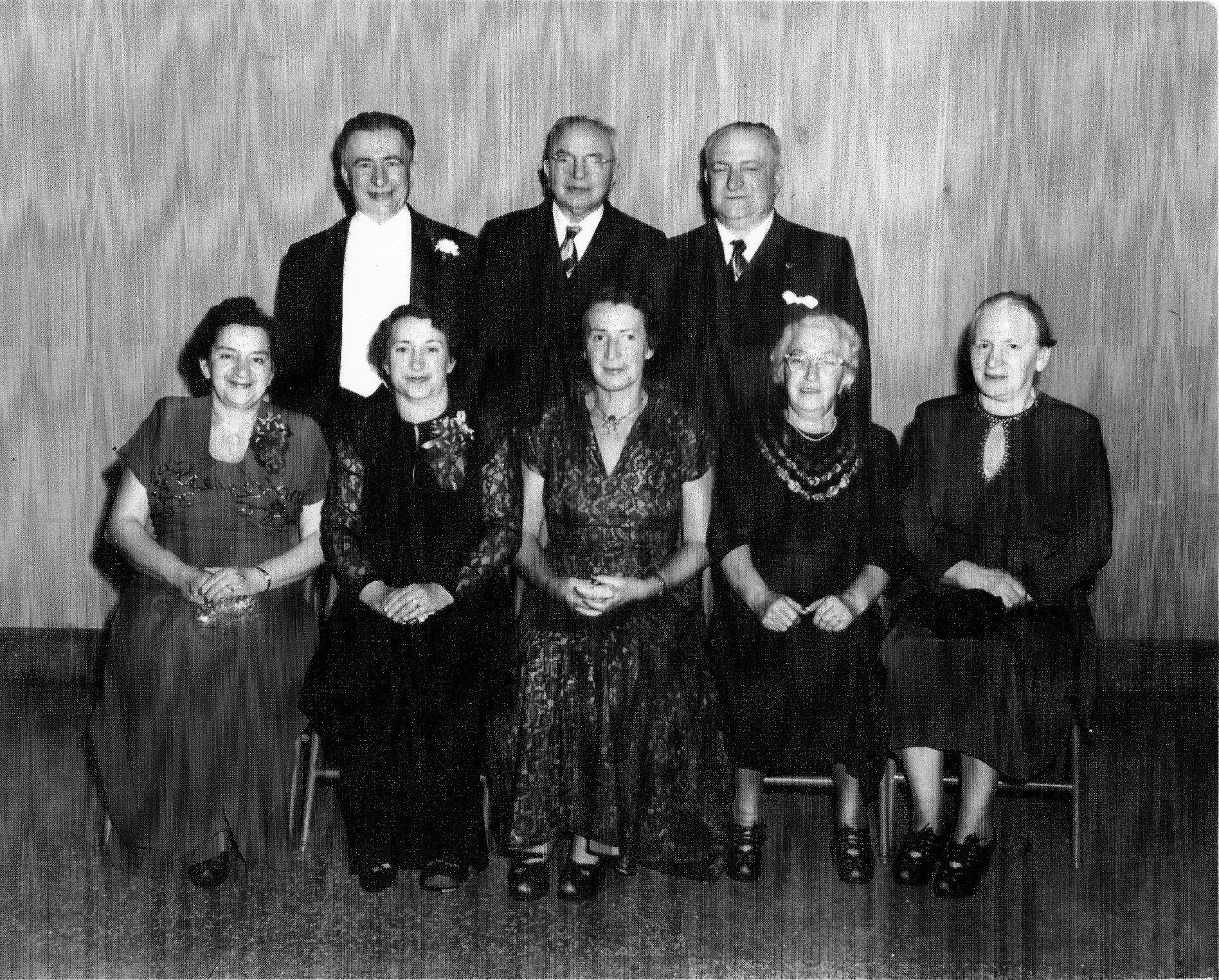
The Osovitz Family: Bottom left to right: Rose, Ruth, Bea, Ethel, and Lil. Top left to Right: Paul, Sam, and Joe. All their names were Americanized once they moved to America. Morris Pearl, the youngest of the family, passed away before this picture was taken. 


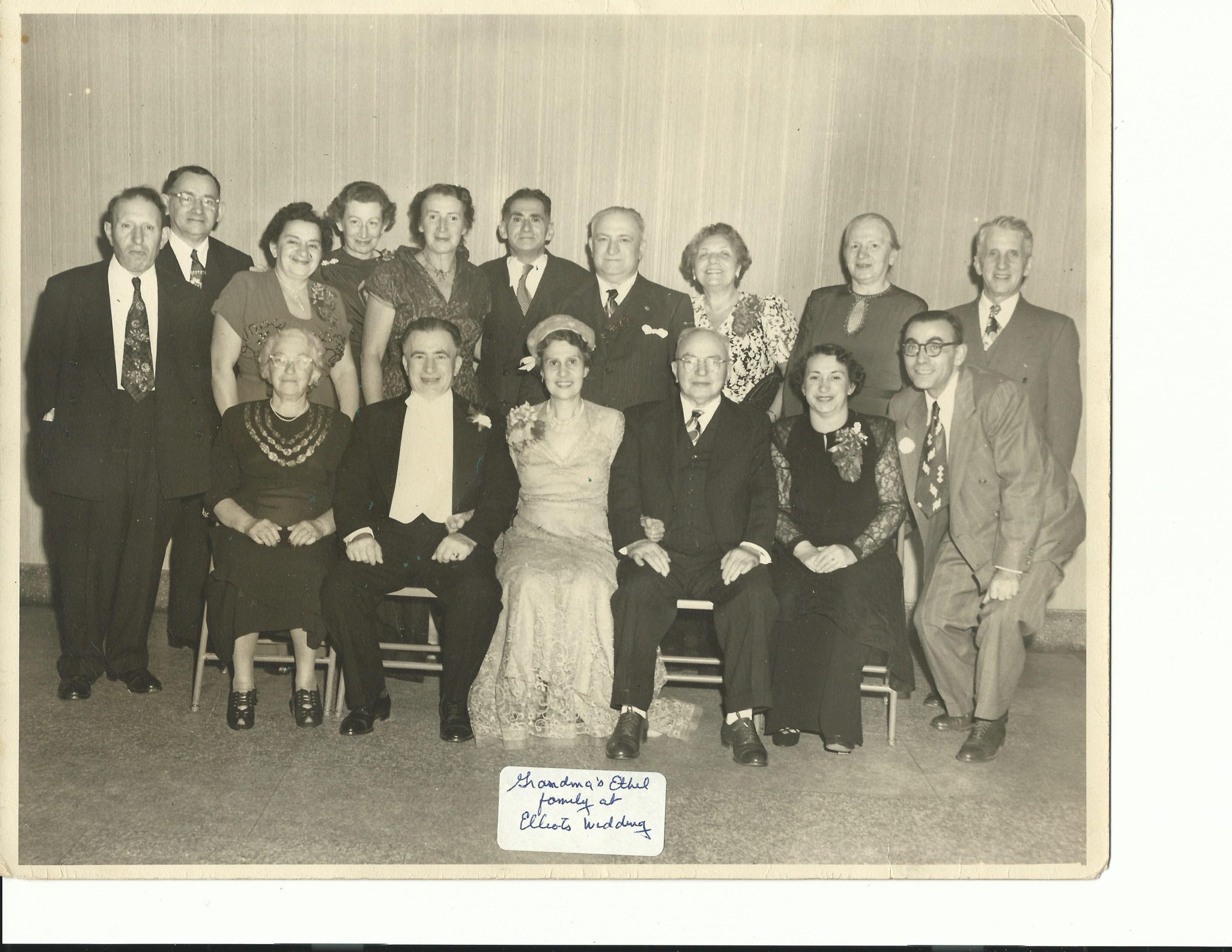
Entire Osovitz/Pearl Family. Seated: Ethel Cohen, Paul Pearl, Birdie Pearl, Sam Osovitz, Ruth Kropsky. Standing: Joseph Cohen, Ruby Helfand, Rose Helfand, Dot Pearl, Bertie Silberstein, Isadore Silberstein, Joe Pearl, Leona Pearl, Lil Waldman, Sam Waldman. Croaching: Isador Kropsky. Morris Pearl and Mary Osovitz both had passed away when this picture was taken at Elliot Pearl’s wedding

From Pizza Boy to Pizza Rabbi

My husband Larry and I missed the Pizza Boy’s bris.

Diane Silverman, the future Pizza Boy’s mom, and I met in 1977. The two of us, along with several new members, sat together at a event sponsored by Clifton Park Hadassah. Within a year, all the women around the table were expecting. Our son Adam was born in April; the Silverman’s daughter Erica came one month later. By the time the eight children were walking, the Hadassah Baby Boom mothers formed a weekly playgroup, one of us baby sat while the other moms got a break.

“Three years apart” must have been the Hadassah mantra, because six of us delivered our second child in 1981.Diane and Mark’s son arrived on March 11. Eight days later, while Todd Harris Silverman was ongoing his rite of passage into Judaism, I was having a planned caesarian-section. Obviously, Larry and I couldn’t be at their simcha. Therefore, Diane and Mark announced the birth of our daughter Julie Rose—to the large group of mutual friends.

As did our two older children, Julie and Todd grew up together. They were in the same playgroup (Hadassah Baby Boom Two), and the same nursery school class. When I went back to work, Diane watched Julie before school. It was Diane who put Julie, along with Todd, on the bus the first day of school as I was teaching my first class.

Julie and Todd were close—maybe too close! At the end of first grade, their teacher recommended the two friends be in separate classes as “Julie was leading Todd around by the nose.”

Todd was a frequent guest at our house, and he loved his pizza. Larry nicknamed him “Pizza Boy,” a moniker that stuck with him for a long time.

By this time, both of our families had joined Congregation Beth Shalom, and we parents shared responsibilities for the children’s religious school carpools.We even were each other’s helping families at their bar/bat mitzvahs.

Early in his religious education, Todd felt the strength and pull of his Jewish roots. Growing up in kosher home, Todd lived in a family that actively participated in Judaism through holidays, simchayots, and synagogue membership. Additionally, he felt surrounded by fellow Jews. “You might be hard pressed to find another kid in Upstate New York who felt like the majority of his family’s friends were Jewish,” Todd said. He realized at a young age that being “a part and parcel of the Jewish community” was important to him.

After his bar mitzvah, Todd joined Temple Gates of Heaven’s North American Federation of Temple Youth’s (NFTY) chapter. He attended summer camp for three of his four high school years at Kutz Camp, the Reform Movement’s youth leadership academy.In 1997, Todd participated in a five-week NFTY-sponsored trip to Israel. He came back bronze-skinned, twenty-five pounds lighter and his eyes opened to Israel.

His religious faith was tested in college. As a theater major at State University of New York at Oswego, Todd found few opportunities for participation in Judaism. Furthermore, the death of three people close to him—an accident, an illness, a suicide—made him seriously question what direction his life would go.

In his last year of college, help came from his NFTY connections. Todd reconnected with a fellow camper from the Kutz Camp, who invited Todd to be on staff at a summer camp in Malibu, California.

Immediately after completing bachelor’s degree in theater, Todd  headed to the West Coast. After the summer camp experience, he found a job as an elementary school teacher at Brawerman Elementary School in West Los Angeles. His experience at the Jewish day school helped confirm his the lifelong belief  that he needed to serve the Jewish people. As Todd admitted, his vision was a “romanticized version of spiritual leader, pastoral guide, educator, and keeper of the stories and traditions.”

In 2011, Todd enrolled in the Hebrew Union College-Jewish Institute of Religion. As part of his seminary training, he  lived for eleven  months in Israel, learning the language, the customs, and the politics of the Middle East. He returned to Los Angeles, where he spent another five years immersed in history, liturgy, counseling education, pedagogical instruction — everything a series of internships and student pulpits could provide.  

Upon his ordination in 2015,Todd learned of a rabbinical position opening in New Orleans, Louisiana.  His initial reaction: “There are Jews in New Orleans?”  Through the interviewing process, however, Todd learned that the Touro Synagogue, one of the oldest Jewish congregations outside the original thirteen  colonies, had a large and active membership. He felt an instant connection to both the shul and the city.

In July, 2015, he accepted  the position as assistant rabbi and  rabbinic director of lifelong learning. Along with life-cycle events and liturgical duties, Todd oversees the synagogue’s  religious school and Hebrew program and youth group activities.

Todd also continues to teach classes, including courses in .Pirkei Avot and rabbinic literature (Midrash, Mishna and Talmud). One of his favorite duties is teaching each semester a four-part  cooking class called,“In the Kitchen With Rabbi Silverman.”  Session topics have included recipes for challah, Jewish soups, Chanukah latkes and sufganiyot  (donuts); and a Middle Eastern dish of eggs poached in a cumin-infused sauce of tomatoes, chili peppers, and onions. “I love shuksuka almost as I love pizza,” said Todd

“I preach and I teach and I learn and I walk to work when it’s not 100 degrees with 110% humidity,” said Todd. “And I love every second of it.”

March 11 is Rabbi Todd Harris Silverman’s thirty-sixth birthday, That evening, he  will celebrate the holiday of Purim. He will  help lead a service, join.his fellow congregants as they twirl their groggers, and eat the traditional cookie, hamantashen. Our former Pizza Boy has grown up to become the Pizza Rabbi. I, for one, can not be prouder of him!!

The Holiday Card: Connecting with Others and Sharing Our Love

The holidays are over. The greeting cards we find in our mailbox are slowing down to a dribble.Yet,  I totally understand if they arrive even mid-January. I’ve had numerous years where good intentions to get all my cards signed, sealed and delivered before the first night of Chanukah or before Christmas Eve have failed.

We were fortunate to receive many lovely holiday cards from across the country throughout the past month.  Most were simple but attractive ones from Hallmark or American Greetings. The two handmade cards, beautifully crafted pieces of art, will get saved in my memory box to enjoy again and again. Many greetings were in the form of photo cards: a picture of my great niece and nephew with their labradoodle,; a three-generation photo from a childhood friend; a picture of two friends, Santa, and their “children”-two rescue dogs.

BRINGING US CLOSER

I especially appreciated cards that included a holiday newsletter that recapped the senders’ year and shared what their family had been up to in 2016.  Reading about relatives, friends, and their loved ones, especially those that live far away from us, brought us closer together despite the miles between us.

Happily, this year, we did not receive any form of the ‘Dreaded Holiday Letter.’ You know the kind I mean. Happy Holidays! We just bought a little present for ourselves. The red Ferrari is parked in the four-car garage next to the Lexus, the Maserati, and the Tesla.  Of course we have to find the time to drive it  as we will be working around our upcoming trip to the French Riviera and our two month cruise to South America on our yacht. 

EDITS BY FAMILY

Embarrassingly, I may have been guilty of putting a little too much enthusiasm in past holiday letters. The Shapiro Year in Review was contained in a single-spaced letter with a border of dreydels or menorahs. Before I mailed it out, I would ask Larry, my husband,  and our children, Adam and Julie, to review it. Being much more private people than me, they would eliminate many of what I considered news-worthy items. “Too much information!” they would comment. The edited letters were shorter and considerably less, well, Pollyannaish.

Last year, I decided I wanted to go the photo card route. I created my masterpiece in a very short time at the Walgreens kiosk with three pictures representing our  year. One showed  Larry and me posing with Phineas and Ferb at Disney World. Another was a picture of Julie, her husband Sam, and their month-old daughter Sylvie Rose in their backyard. The third was a picture of Uncle Adam holding Sylvie.

I didn’t get them started by Chanukah, which started in early December, so I aimed for December 24. And then New Year’s. And then Martin Luther King’s Birthday. By the end of January, I purchased cute little heart stickers to add to the photo with the intention of mailing them out by Valentine’s Day. By April, I ruled out Easter egg stickers, and the ten plague stickersI found on the internet seemed a little depressing.

Sylvie was now nine months old and looked nothing like the infant in the pictures. The photo cards went into the trash, and the odd-sized envelopes are being used to pay bills that require a check and a stamp.

A NEW IDEA

Friends in England introduced us to the Jacquie Lawson website, and since then we have sent out its beautiful animated greeting cards for all occasions—birthdays, anniversaries, get well wishes, the winter holidays— to family members and friends.

I wasn’t going to repeat the photo card disaster. This year, Larry and I decided to send e-cards for the holidays. The Chanukah card, choreographed to Chanukah Oh  Chanukah, showed a lovely tree transformed into a brightly lit menorah. Our non-Jewish friends received a card set to a medley of Christmas songs that showed a sleigh making its way through a picture-perfect English village and surrounding countryside.

WELL RECEIVED

The first night of Chanukah fell on Christmas Eve, so it gave us more time to get them ready to send out. Of course we procrastinated until December 24th. Larry worked from his computer in the office getting out the Christmas cards while I worked from my laptop in the kitchen sending out Chanukah wishes to all our Jewish friends. By the time we left for the Chanukah party at our synagogue that evening, we had sent over one hundred cards with short personal notes to friends and family across the country and world.

I was a little concerned that the recipients would not bother to open them or, if they did, they would be bored with the ninety seconds of animation. We were therefore happy to receive thank you notes back from most the recipients within hours—sometimes minutes—after we clicked the send button. The e-cards were a success!

Recently, I saw the following quote in a friend’s kitchen: “Though time and miles may separate us, we have built a bridge of lovely memories to span the distance.” No matter how we share our good wishes for the holidays, and no matter when those good wishes arrive,  they all are sent and received with love and happiness.

Shapiro family creates Star Wars tradition

img_2075

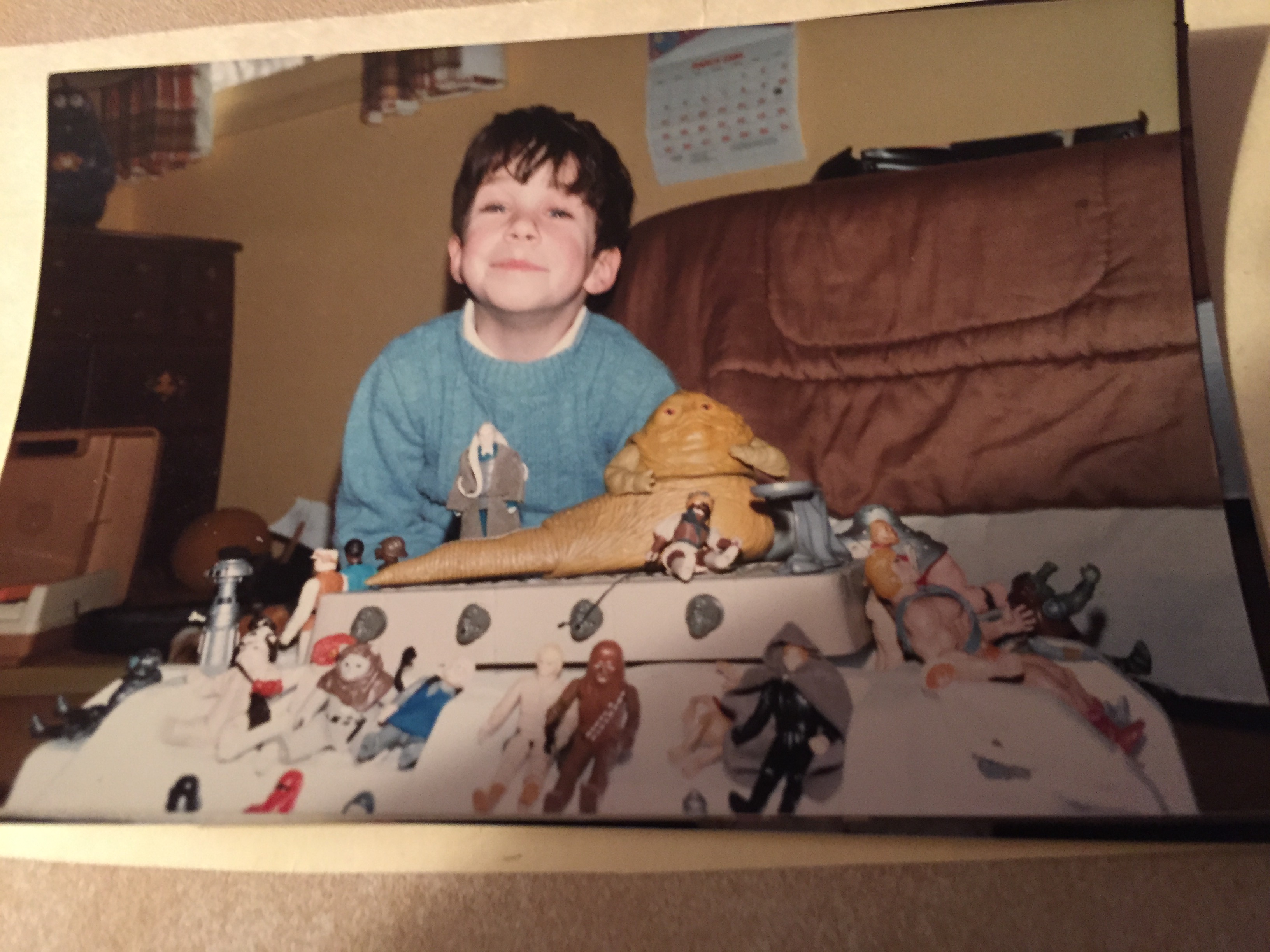
Adam with his Star Wars action figures

img_1215

Timmy Harris as a Stormtrooper

During the eight days of Chanukah, in between candle lighting and latkes, my husband Larry and I will celebrate a Shapiro tradition: We will go to see the newest Star Wars film.We have been fans since Adam caught the Star Wars bug from a future storm trooper.

How It Began

In September 1979, I began substitute teaching two to three days a week at our local high school. We left Adam in the care of a wonderful baby sitter, Sandy Harris, who lived just down the street.

Adam was seventeen months old and just beginning to talk. His vocabulary consisted of a few words—mamma, dadda, apple dus.

Less than a month later, however, Adam shocked us by announcing at the dinner table, “I know Star Wars.”

“You know Star Wars?” Larry asked, astonished.

“Yes,” said Adam. “Luke Skywalker. Han Solo. Princess Leia. Chewbacca…”

And Adam continued to prattle on, clearly stating the names of  numerous characters from the Star Wars movies.

It didn’t take us long to figure out where Adam had picked up his expanded vocabulary. Sandy’s twelve-year-old son Timmy had been enthralled with George Lucas’ blockbuster since the first Star Wars was released in 1977. Kenner Toys had the license to make the related toys, and Timmy had collected them all. He set the little action figures and their spaceships on shelves in his  room, recreating scenes from the first movie and its sequel, The Empire Strikes Back. When he came home from school, Timmy would entertain his mother’s charge by allowing him to play with his collection. Adam was hooked.

Tales, Toys Capture Imagination

That Chanukah, Larry and I purchased several action figures and a Millennium Falcon for Adam.  He got more for his second birthday and the following Chanukah.  Although he had yet to see the movie, his interest and ability to recreate scenes using his collection and other toys as props—blocks, Legos, even a blanket on top of other toys—improved.

In April 1981, Larry and I planned a surprise for Adam for his third birthday. While I stayed home with his one-month-old sister, Larry took Adam to see a re-release of the original Star Wars film. This was Adam’s first movie, and he had no idea why he and his father were sharing a  box of popcorn in a huge room filled with chairs.  The minute the music started  and the opening credits rolled, however, Adam knew exactly what was happening. Our three-year-old was transfixed for the entire length of the film.

“Yours Eyes Can Deceive You. Don’t Trust Them”

Over the next few years, Adam watched and re-watched the first two movies and, in 1983, The Return of the Jedi. As the franchise expanded, Adam’s collection expanded—sometimes with his help.

When he was around four years old, Adam asked us if he could get a new Luke Skywalker as the light saber was missing. We refused, saying he could use a toothpick or a prop from one of the other characters. A few days later, Adam brought us a headless Luke.

“It fell off,” he explained. “Can I get a new one?”

So we replaced Luke, only to have Adam bring us a headless Storm Trooper, one of the white armored minions of the evil Empire, a few days later. When the head of bounty hunter Boba Fett also went missing, we realized that Adam was biting the heads off to get us to purchase a complete toy. His gig was up.

Adam’s passion for Star Wars continued until he was nine years old, when his interest in science fiction expanded to Star Trek and Tolkien’s Lord of the Rings Trilogy. The action figures and a couple of space ships were relegated to a box in the closet. By the time the series was revived in 1999, Adam was in college. On his visits home, he would occasionally open up the box, reminisce, and put them back on the shelf.

Once you start down the dark path….

In January 2015, Larry and I came back from a trip to Florida to sub-zero temperatures, twelve inches of snow on the front yard, and a broken mailbox, the victim of the town snowplow. A day after a call into town hall, a  Clifton Park truck was parked at the end of the driveway. I opened the door, to be greeted by no other than Timmy Harris, whom I had not seen in at least twenty years.

“I’m here to fix your mailbox, Mrs. Shapiro,” Timmy said. “But first I have to ask you a question. My mother has told me for years that because of me, Adam’s first words were the names of Star Wars action figures. Is that true?”

I assured him it was and recounted the story of that night over thirty-five years ago when Adam’s vocabulary increased exponentially.

“Are you still a Star Wars fan?” I asked Timmy.

“Absolutely!” Timmy responded. “ I have a two bedroom house, with one room devoted to forty years of Star Wars collectibles. My favorite pieces are still the Kenner toys from the late 70’s.”

Not only is Timmy still a fan, but also he is part of the 501st Legion, “Vader’s Fist,” an international costuming group that “troops” as the bad guy characters from Star Wars. Along with other members, Timmy dresses up as both as a Storm Trooper, and as Boba Fett.

The 501st’s main function is as a charity organization. In 2015 alone $587,000 was donated on its behalf to various children’s charities including Make-A-Wish Foundation, Ronald McDonald houses, and local pediatric hospitals. The “bad guys doing good” are also found at science fiction and comic book conventions and new Star Wars film openings.

Star Wars costuming is gratifying on a few levels.” Timmy later shared with me “I get to contribute to something worthwhile. And as a 49 year old man who dresses up as a plastic spaceman, I get to be a 9-year-old again. That’s worth all of the time, sweat and armor pinches that we go though.”

When Larry and I moved to Florida in June 2015, Adam requested we send him very little from the house—two Adirondack photographs and a Monet print, his yearbooks, and the Star Wars action figures. And like his parents, he too will be watching Star Wars: Rogue One over his holiday break.

Happy Hanukah, and may the force be with you!

My Friend Marc


marc

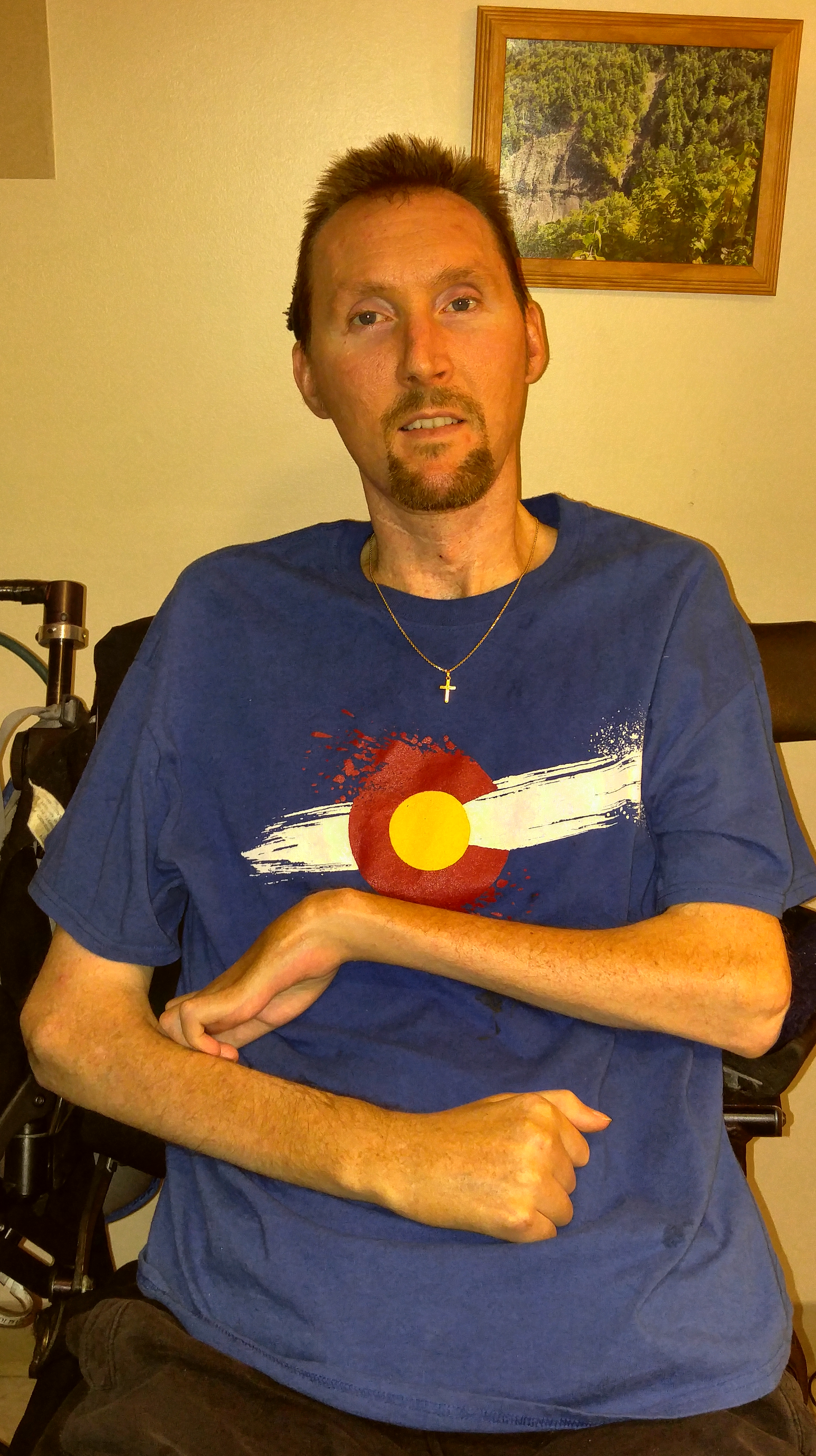
He was easy to spot. In a room full of frail, elderly people, Marc and his motorized wheelchair loomed large. His six foot four-inch thin frame rested on the chair, his head on the headrest, and his face inches away from the straw-like device that, through his breathing, powered him around the Daughters of Sarah, a nursing home in Albany, New York. 

I had come to Daughters that afternoon to visit Rose, a 99-year old friend. But she had decided to attend a lecture, and I was waiting for her in the community room. So I used my free time to strike up a conversation with the young man, a rarity among the ancient. I found out that he had lived at Daughters for eight years, he was  thirty-four years old, and he maneuvered his chair around the building chatting with young staff members for companionship—the only people in the facility close to his age. I asked him if I could visit him every week before my time with Rose, and he said, “Sure!”

Maybe because he was just two months older than my son Adam. Maybe because he is just a genuinely nice person. No matter, we just clicked. Over the next few weeks, I learned more about his situation. He had become a quadriplegic in a freak motorcycle accident when he was 16—yes, he was wearing a helmet! “Since the accident,” Marc told me later, “I really feel I haven’t had much choice in anything in life other than give up or carry on.”

His parents have been there for him since they got the life-changing  phone call that their son had been in a terrible accident. “It was my strong-willed father who especially pushed me to improve my situation,” Marc said. “He posted a sign on my computer that read, ‘What can I do today to make myself more independent?’

For the first ten years, Marc had lived with his parents in their home near Sacadaga Lake. Finding good home health care to meet his needs became more problematic, and he and the family decided that Daughters was a better option for him. 

Marc never exhibited any bitterness about his situation, and he rarely complained even when he was uncomfortable from his kidney stones or he struggled with breathing. He loved his family and Westerns and fishing and stock car racing. I picked up 101 Things You Should Know About NASCAR from the library and studied the book so I could talk intelligently with him about the sport. To my husband Larry’s amusement, I even started following the results in the newspaper and caught some of the races on the television.

Marc also liked McDonalds, so I often stopped on my way to the nursing home in one the franchise’s restaurant a mile from Daughters. The bag of burger and fries left a tantalizing trail of non-kosher, or what Jews know as ‘treif’—aromas down the hallway. It took a few times for us to find a rhythm as I fed him: two bites of the Big Mac, two fries, and two sips of soda. Repeat. He loved chocolate, so I usually brought him brownies or chocolate chip cookies, which he saved for later.

Marc owned a fully equipped handicap accessible van, which was kept in the nursing home parking lot. It took me a while to get the courage to take him for outings. One beautiful fall day, however, I asked Marc if he wanted to go for a ride. “Sure!” he said with a huge smile. He guided me through the process of opening up the back door, pushing him up the ramp, pulling his chair back to compensate for his height, and locking the mechanism in place. 

We drove up the Northway and across the Twin Bridges. We got an ice cream cone at the Country Drive-In and then sat in a small park near the Mohawk River. The autumn foliage was at its peak, and the sky was a brilliant blue. We had a little scare when the battery light on his van went on. But I managed to deliver him and his vehicle safely back to Daughters.

Over the next three years, I visited Marc on a regular basis, even after Rose passed away. Weather permitting, we would take a field trip—a Chinese restaurant, Five Guys, Wal-Mart, a local mall. Our excursions taught me much about what Marc endures. Adults watched us furtively as I fed him wonton soup; children gawked and asked their parents loud questions as the two of us browsed an aisle in the Christmas Tree Shop. When we stopped in a hair salon, the beautician first directed her questions to me until I said emphatically, “Marc is perfectly capable of telling you how he wants his hair cut.”

There were many weeks I could not visit Marc—Larry and I  were traveling, either Marc or I  was sick, or bad weather prevented me from driving the sixteen miles down the Northway. But no matter, I treasured each of those visits with him. 

When Larry and I decided to relocate to Florida, telling Marc about our impending move was one of the hardest conversations I had during that transition. Visits from other friends and family were—to me—too few and far between, and Daughters’ staff could not drive Marc in his van due to liability issues. 

As Larry and I packed up our house, we needed to find a home for four photo collages that we had created from our trips. We brought them to Marc, and he had them hung up on the wall next to his family pictures and a digital photo album we had gotten him the previous Christmas.

On the last visit before we left, Marc and I decided to keep in touch through e-mails. I also promised him that I would mail him a postcard every Monday. On my last visit, I gave him a hug and cried as I made my way across the parking lot past his big blue van to my car. 

When Larry and I came back the Albany for Thanksgiving five months later, our second stop with our rental car was Daughters. The first was a stop at Panera Bread for a brownie to bring to Marc. “We were in the neighborhood and thought you could use some chocolate,” I said, as we surprised him in his room. On the wall were the photo collages and all the the postcards that I had sent him from Florida and Colorado and California.

Marc continues to reside in Daughters of Sarah. He has had a couple of surgeries and more than a few health scares. His postcard collection grows, some I purchased during our travels and some given to me by friends and members of our community’s travel club.

In February, Marc celebrated his thirty-ninth birthday. He continues to carry on, to remain positive.

“I have some bad days when I am in pain or can’t breathe,” Marc told me. “But every day I get up and put a smile on my face. I try to make the best out of each day because I believe that someone always has it worse than I do.”

And every day, I am grateful that Marc is my friend.

Are You Listening? Really?

When you talk, you are only repeating what you already know. But if you listen, you may learn something new. Dalai Lama XIV

So many stories if we just listen. Sitting next to someone on a plane, we often stick earbuds in our ears to make sure they don’t prattle on about nothing.  But sometimes there is much to be learned from hearing—and really listening—to what others have to say.

Some of us are experts at listening. Lou, a friend and former co-worker, not only hears what the person is saying but engages his entire body: he leans forward, plants his chin in his hands and his elbows on his knees,  and looks the speaker in the eye. He nods in agreement. You know he cares about what is being said.

I think of Lou, and I want to emulate him. I am as guilty as anyone, often not really paying attention.

How many times have I sat through a rabbi’s dracha —sermon— and spent too much of my time checking my watch? Even when I have signed up for a lecture sponsored by my community’s book circle, I often find myself thinking about what I need to do later that day rather than focusing on the topic being discussed. I have missed much by being not more mindful.

Our failure to focus often carries into our daily conversations. We often are not listening to what the person is saying but rather waiting for the moment to express our own “pearls of wisdom.” And, what is worse,  what we want to say takes the conversation in a different direction. “That’s great,” we comment. “That reminds me of the time I…..” Note the emphasis is on the word “I.” To quote John Wayne, we are “short on ears and long on mouth.”

We can learn from Lou and other good listeners. Young adult author Sarah Desson describes them well: “They don’t jump in on your sentences, saving you from actually finishing them, or talk over you, allowing what you do manage to get out to be lost or altered in transit. Instead, they wait, so you have to keep going.”

How much richer our lives could be if we allow the speaker to continue talking.

Larry and I recently spent time with a group of friends in in Key West, Florida.  Before the trip, Larry had played pickleball with several people in the group, and we both had shared time around the pool and eaten lunch together. But being together for a week gave us more time to learn about each other.

Stories abounded. One woman had contracted polio when she was six, just months before the polio vaccine had come out. A very attractive woman who was visiting from England had become an actress in her sixties and is a regular on a Welch soap opera. A couple’s son had left his career as a graphic designer behind and became a tattoo artist. Several in the group had served in the military and regaled us with their stories about their experiences in basic training, in fighter planes, in submarines. Again and again, I thought to myself, “Who knew?”

Four days into our trip, Larry said to me, “I love hearing everyone’s stories!” And so did I. So many stories, so much to learn. And as my friend Lynn tells me about her own life, “You can’t make this stuff up!”

In the months ahead, I will be sharing people’s stories with you.  My friend’s son, who we have known since childhood, is now a rabbi in New Orleans. A friend in our 55-plus active adult community has turned his lifelong interest in the Titanic into a post-retirement career, as he travels the world giving lectures on the infamous boat and its many passengers. A friend of mine, a thirty-eight year old resident Daughters of Sarah Nursing Home, was paralyzed from the neck down in a freak motorcycle accident when he was sixteen. Each has a story to tell, and we all can learn by listening.

At one of the recent meetings of my writer’s group, one of the members shared a poignant story she had written about woman she had met twenty years earlier on a train stuck outside of Washington, D.C.  The writer—who was not wearing earbuds to block out conversations with strangers—learned that the woman was recently married to her childhood sweetheart. A month before the wedding, he was in a terrible accident and had suffered traumatic brain injury. Despite warnings from friends and family to back out of the wedding, the young woman realized her vow to love one another through sickness and health was sealed before the ceremony. By the time she finished reading her story, many of us were in tears. “How did you learn so much about a complete stranger?” we asked. “I don’t know,” she answered. “She talked, I listened, and I remembered.” Good advice for all of us.

I Can See Clearly Now……

img_5617

A lifetime of eye care is getting recycled!!

“Blessed are You, Adonai our God, Ruler of the universe, who opens the eyes of the blind.” Morning Blessings, Shacharit

As our congregation recited the prayer this Rosh Hashanah, this line of the traditional morning prayers took on much more meaning. After struggling with extremely poor vision since elementary school, I will no longer have to rely on corrective lenses. As Johnny Nash sang, “I can see clearly now. “

No one was surprised when I needed glasses when I was six years old. Near-sightedness was rampant in my family, and my parents and two older siblings were already wearing glasses. My vision, however, was complicated by amblyopia, a condition when the vision in one of the eyes is reduced because the eye and the brain are not working together properly. In my case, the right eye wandered towards the extreme right. In 1956, surgery was not an option. Instead, I was given a black patch to wear on my left eye to force the “lazy eye” to get stronger.

I wish my parents had been more persistent, but I was embarrassed and defiant and refused to wear the patch. The vision in my right eye continued to deteriorate, and my left eye also was very near-sighted. By the time I was in junior high school, my glasses were noticeably  thick, only adding to the self-consciousness of  teenager who also suffered from acne and what I perceived as a Jewish nose. When I was sixteen, I was fitted for a pair of glasses by an ophthalmologist who told me my vision was too bad for contact lens and predicted I would be blind by my twenties. When I brought the glasses home, they were so thick they looked like coke-bottles. I threw them across the room and cried myself to sleep.

By the time I was a senior in high school, I was able to get another pair of glasses with lighter material that were not as ugly. But in my yearbook picture, the thickness of the lenses were the dominant feature.

When I arrived at University at Albany, I was very self-conscious of my glasses,  and they proved to be a source of embarrassment. One time, my roommates thought it would be funny to hide my glasses when I was in the shower. I burst into tears and begged them to help me find them, as I didn’t have the sight to search for them. I hit my lowest moment was when my girlfriend’s cute  but clueless boyfriend didn’t respond to me when I was talking to him. “Gene,” Linda said, “ Marilyn asked you a question.” “How was I supposed to know?” he answered. “Her glasses are so thick you can’t see her eyes.”

At the end of my freshman year, I was experiencing very bad headaches. Doctors at the  University at Albany health center referred me to a local ophthalmologist. “You are extremely near-sighted,” the wonderful doctor stated. “Have you ever considered contact lenses?” I wasn’t going blind. I was a candidate for contacts!  I was measured, fitted, and scheduled to pick them up the first week of summer break.

I will never forget the day I first put those tiny hard lenses in my eyes. I walked outside and saw the leaves on the trees in all their beauty. For the first time in my life, my eyes were causing tears of joy.

The lenses not only improved my vision but also my self-confidence. Behind those coke bottles were my family’s “Pearlman-blue” eyes, eyes the deepest color blue. Helped a little by the blue tint on my lenses, my eyes became my best feature. “Has anyone ever told you that you have the most beautiful blue eyes?” strangers would tell me. “Yes, they have!” I would reply,””but you can tell me again.”

For the next fifty years, contact lens were an integral part of my life. I popped them in the minute I woke up in the morning, and I popped them out just before I went to sleep. I was literally blind without them, but the world was a bright, sharp 20/20 with them. I used eye glasses only when absolutely necessary. Regular eye appointments kept me on track.  “Lasik” surgery was not an option for many years because of the severity of my myopia. When the surgery was perfected, my doctor suggested I wait.  My family history, which had predicted corrective lenses, also predicted a high chance of the development of cataracts, a common eye problem seen in over fifty percent of the population by the age of eighty.

When I moved to Florida, I immediately established myself with a local eye doctor. Last fall, he told me that I had the beginning of cataracts. By this spring, the one in my right eye, which had been deemed as “insignificant” only months before, was growing fast and significantly impacting my vision. As soon as my husband Larry and I returned from our summer travels, I scheduled the surgery for the last week of September.

By Rosh Hashanah services less than a week later, I was able to greet fellow congregants, see the rabbi on the bima, and follow the entire service in our prayerbooks with no corrective lens in my right eye and my faithful contact lens in my left. The follow-up appointment has confirmed that my right eye is a nearly-perfect 20/25.  After surgery for the cataract in my left eye is completed, I will be free of corrective lenses for the first time in sixty years.

Because of my poor vision, I have  never felt confident climbing up the steps to the huge slides at water parks   As soon as I have medical clearance, however, a  friend and I are heading to Wet ’n Wild in Orlando.  Who knows what’s next? Sky diving?  Why not? I can see clearly now. Wheeeee!

Colorado Jewish High

img_5359

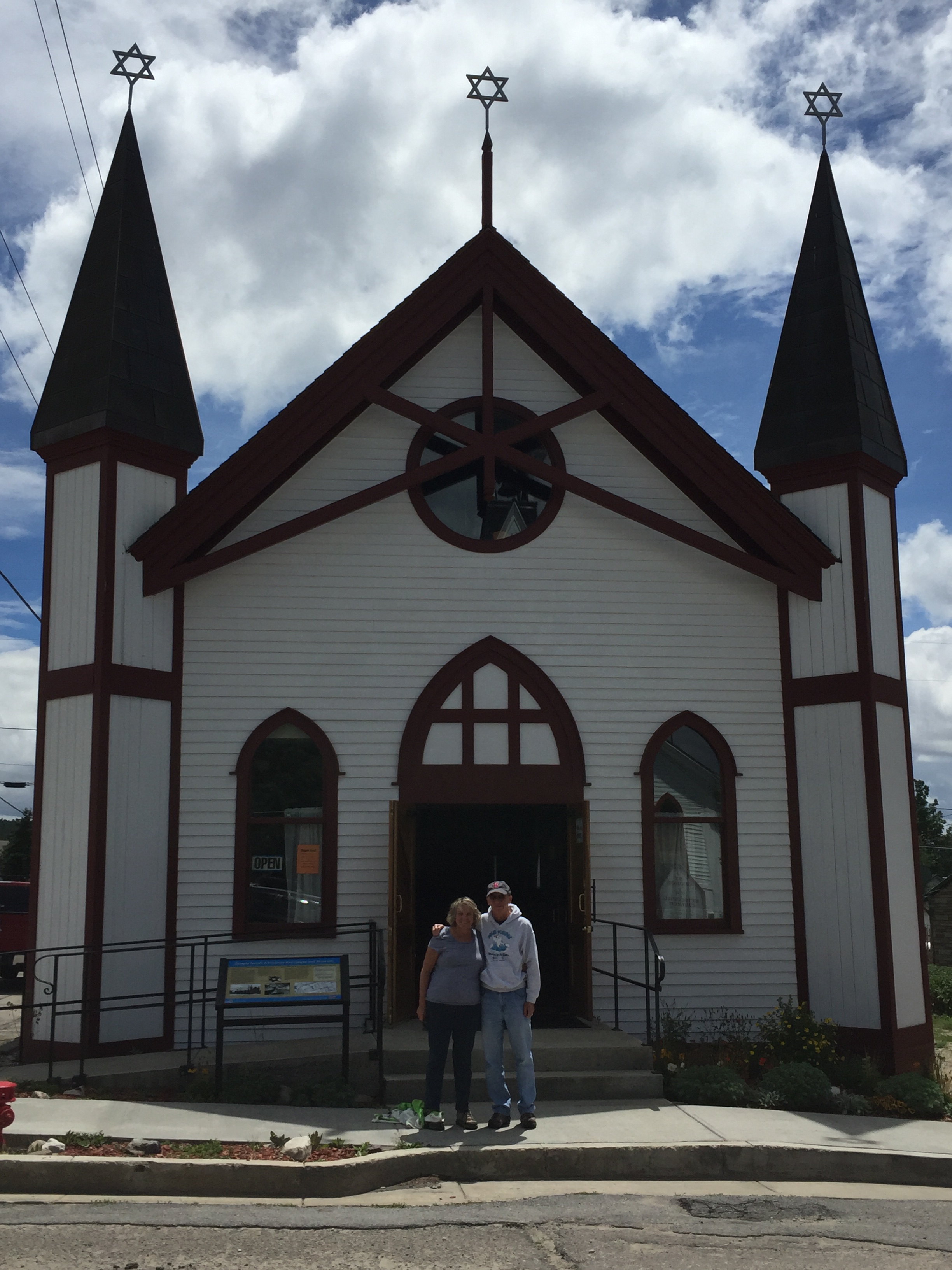
Larry and I pose outside the synagogue, now a museum in Leadville, Colorado

Rocky Mountain High: The Synagogue at 10,200 feet

While in Colorado for the summer, my husband Larry and I visited the town of Leadville, Colorado, during its Boom Day Festival, a celebration of the Old West. Gunslingers, burro races, mining skill contests, and over 100 food and craft booths filled the streets. We got ice cream cones and wandered down West Fourth Street, past a mining skills contest, where brawny men and women competed to see how many pounds of rock one could pile into a truck. And just down the street, we found the Temple Israel Foundation, a museum dedicated to a thriving Jewish community that existed in this Rocky Mountain city over one hundred and twenty years ago and the former site of a thriving synagogue.

Perched at 10,200 feet above sea level, Leadville is the highest incorporated city and the second highest incorporated municipality in the United States. It boomed in the late 1870s with the discovery of silver, resulting in an influx of migrants to this small mountain town. At its peak, the population of Leadville grew to approximately 30,000 residents.

Among the many groups of people attracted to the minefields in the high Rockies was a group of recent Jewish immigrants who migrated to the West and Colorado. Representing only 1% of Leadville’s population, the three to four hundred Jews came to Leadville for the same reasons as their non-Jewish counterparts: to improve their social and economic status, to find adventure, even to reinvent themselves. In 1879, the local opera house hosted Rosh Hashanah services, and in 1880, the Hebrew Benevolent Society purchased a cemetery for Leadville’s Jewish community. Soon after, the Jewish community built a synagogue and held its first service on September 19, 1884, the first day of Rosh Hashanah 5645.

For the next thirty-eight years, Temple Israel served a surprisingly large and active Jewish community. As a booming mining town, Leadville’s residents had amble opportunities to spend their earning on clothing and household goods, liquor, sex, and gambling. Leadville Jews provided services including dry goods stores, wholesale liquor and tobacco businesses, saloons, gambling houses, opera houses, and even brothels.

More well-known members of Temple Israel included two German immigrants, David May, the founder of May department stores; and Leopold H. Guldman, philanthropist and founder of Denver’s Golden Eagle Dry Goods Company. Benjamin Guggenheim, a first generation American and heir to the famous family’s fortune made in Colorado mines, was better known for his chivalry and death aboard the ill-fated Titanic. 

Despite its remote location, Leadville was a modern industrial city. Jewish dry goods merchants offered the latest European fashions to the ladies. The better off gentlemen often sported diamond studs to accent their wardrobe.

By the first decade of the twentieth century, the boom was over, and the town’s Jewish population declined. In 1912, the last recorded event, a wedding, took place.

From 1914 through 1937, the synagogue sat shuttered and unused. The synagogue was converted into a single family residence, and the building took on several other non-religious functions, the last as four rental apartments.

In 1983, Bill Korn, a New York City native, relocated from Boulder to Leadville to take advantage of low real estate prices and proximity to great skiing. He purchased and was in the process of renovating several properties when he learned of the former synagogue and its overgrown cemetery. Motivated by his own German Reform Judaism roots and his belief in Martin Buber’s command, “If not you then who? If not now then when?” he explored ways to obtain both properties.

In 1987, the Temple Israel Foundation was incorporated “to acquire, historically rehabilitate, and maintain” the building. Korn purchased the synagogue in 1992.

For the next several years, Korn used the four apartment rental incomes to pay off the mortgage. The Foundation obtained a grant from the Colorado Historic Fund. Finally, ninety years after the temple shut its doors, renovations to bring the building to its former glory began. The Denver chapter of B’nai Brith led volunteer efforts each June to maintain the cemetery grounds and replace markers. In 2001, the cemetery was reconsecrated, allowing Jewish burials to resume. In 2012, a permanent exhibition opened that documents pioneer Jewish life with a collection of artifacts about Leadville, its resident Jews, Temple Israel as a synagogue, and life in a mining town in the 1880s and 1890s.

While not providing regular services, the building, with its Torah and bima, is now open for special events. Today, there are, according to Korn, approximately 80 to 100 Jewish people in the entire county. Bill Korn oversees the museum, and from May through October, two full-time staff members work as both guides and researchers.

Over 3200 people visit the museum each year, said Korn. They come not only from surrounding Colorado towns but also from all over the United States and even Israel. Korn said his most special guest was the granddaughter of Leopold H. Guldman, whose emotional response to the museum brought tears to Korn’s eyes.

Larry and I celebrate Rosh Hashanah each year in Kissimmee, Florida, elevation 49 feet above sea level. During the High Holy Days, however, we pass to reflect on the lovely synagogue in the highest incorporated city in America. We will think about Bill Korn and his generous efforts to bring Temple Israel to life for future generations. And we think about the long-ago Jewish congregation in Leadville celebrating Jewish life high in the Rocky Mountains.

Originally published September 29, 2016. Updated May 26, 2025.

Finding My Voice with Help from the Jewish World

img_5461

“It was a dark and stormy night. Suddenly shots rang out!” 

Poor Snoopy! For all his “dogged” attempts, Charles Schultz’s beloved beagle has not yet published his novel. Thanks to The Jewish World, however, I have been more successful. I have published a book.

Actually, it was a bright and sunny day in June 2013, when Josie Kivort, Hadassah Capital District’s Chapter Campaign Chair, and I paid a visit to The Jewish World’s office. For the past several months, we were serving on the committee to plan the organization’s annual Special Gifts event. Jim Clevenson, the publisher of the Schenectady-based biweekly, Josie, and I met to discuss the timeline future press releases and advertisements.

I had communicated  with  The Jewish World  mostly through press releases. For years, I had worked on publicity, first as a volunteer for several organizations in Clifton Park and later as part of my responsibilities at the Capital District Educational Opportunity Center in Troy. We had been in “virtual contact” as  I had been sending the newspaper  articles that I felt would be relevant to the Jewish community.

During our discussion, I mentioned to Jim that I had retired three years earlier. Jim asked if I would be  interested in doing reporting for the Jewish World.

“I have  done enough press releases for a lifetime,” I told Jim. “However, would you be interested in publishing some short non-fiction pieces about my life as a Jewish woman, wife, and mother in Upstate New York?”

Jim agreed to give the idea a try, and he told me that I should send the articles to Laurie Clevenson, his sister and the paper’s editor-in-chief.

My first article appeared in the August 27, 2013, school opening issue. “There Goes My Heart” recalled how saying goodbye to my children—whether putting them on the bus the first day of kindergarten or dropping off at their dorms their first day of college or waving them off as they got in their own cars and drove cross country to new jobs—always brought me to tears.

I had asked my mother if the farewells ever got easier. “Oh, Marilyn,” she said. “Every time any one of you gets into the car and drives away, I think to myself, ‘There goes my heart!’”

So started my regular contributions to The Jewish World. Every two weeks, I wrote a story and submitted it for the newspaper’s consideration. Growing up as the only Jewish family in a small Upstate New York town; experiencing anti-Semitism on my first teaching job in the Capital Region of New York; participating in a playgroup for our two-year-olds; adjusting to retirement; leaving the home we shared for thirty-six years to move to Florida—these many once-private moments became very public columns.

Initially, I was  afraid I would run out of ideas. As the months progressed, however, I found that even the smallest event— biking up a steep mountain in the Rockies, visiting the Portland Holocaust Memorial, changing my granddaughter’s diaper—could morph from an idea to a story. Family and friends shared their experiences, and, with their permission, wove them into my articles.

Not that the stories always flowed easily from my brain to the Mac laptop. “Writing is easy,” wrote sports writer Red Smith. “All you do is stare at a blank sheet of paper until drops of blood form on your forehead.” I often found myself up at midnight before a deadline trying to polish what I had written. But, like some people I knew who devoted hours to quilting or photography or golf, I devoted hours to my writing.

When I moved to Florida in 2015, I joined SOL Writers, a group of women who met twice a month to share their drafts or to participate in a free write. A few of the women were published authors; others, like me, had dreams of expanding their audience. I brought in pieces I had either completed or were working on for The Jewish World. The women were not afraid to criticize but they were also generous in their praise. “You seriously need to think about putting these essays into a book,” one of my writer friends suggested.

In March 2016, I got up enough courage to contact Mia Crews, a professional editor who would be responsible for formatting the manuscript, designing  the cover, and uploading the finished product to Amazon.

Nothing prepared me for the amount of work required to go from a collection of stories to a polished book. I started editing. And editing and editing. I thought I was close to finishing before we left for our summer trip out west. However, I worked on it on the plane to San Francisco, at nights in different hotels up the Oregon Coast, and during every spare minute during our six week stay in Colorado. I enlisted Larry’s help, and we sat together on the couch in our rented condo going over the manuscript with a fine tooth comb while  two political conventions and the Summer Olympics played on the television.

When we got back to Florida, Mia and I completed the final revisions, On September 3, my sixty-sixth birthday. There Goes My Heart was launched on Amazon. I had done it! I had written a real, live book with, as a friend commented, with a cover and pages and nouns and verbs and everything!

”A writer only starts a book,” wrote Samuel Johnson. “A reader finishes it.” Thanks to Laurie and Jim Clevenson for giving me the opportunity to publish my articles. Thanks to you, my readers, who have helped me reach the finish line of my lifelong dream.