Category Archives: Purim

A star waiting in the wings?

Originally published in The Jewish World and Orlando’s Heritage Florida Jewish News in February 2025, this somehow never made my blog post. So welcome to Purim in July!

“I’m the greatest star, I am by far! But no one knows it!” Fanny Brice in Funny Girl

Purim is a time for spiels—usually funny productions that recount the tale of the disobedient Vashti, the wise Mordecai, the nefarious Haman, the beautiful Esther, and the misogynistic Ahasuerus. As always, it will have a happy ending with the villain (BOO!) getting his due and the heroine saving the Jews as well as her marriage (Yay!)

I’ve had the privilege of being in several spiels over the years, but the most life-changing occurred on March 18, 1973. A group of girlfriends and I attended a Jewish Singles Purim party at Herbie’s Restaurant in Albany, New York. In a what could only be a “b’shert” moment, Ahasuerus (Larry) chose Esther (me!) over Vashti and Libby the Lib in a Dating Game parody. “Since I ‘won,’ you,” Larry said, “would you like to share a hamantaschen?” This was certainly one of the more original pickup lines in history, and it worked. Fifty-one plus years later, we are going strong.

Since that time, I have participated in many other Purim plays that have allowed me to embrace my inner Barbra. Yes, if I could have been anything in the world, I would have been The Greatest Star, strutting my talents on Broadway. Fueled by the stacks of Broadway LPs my father brought home from his small Upstate New York department store, I dreamed a dream of a life.. n The Great White Way. In the privacy of our living room, I had washed that man out of my hair as Nellie Furbush in South Pacific; whistled a happy tune as Anna in the King and I; shared my favorite things as Maria in the Sound of Music; and pondered the simple joys of maidenhood as Guinevere in Camelot (1960).

It was Barbara Streisand’s star turn in Funny Girl, however, that made me believe in my rightful place on the Broadway stage. I was no Julie Andrews or Mary Martin or Gertrude Lawrence. I was born for the role of Fanny Brice. Heck! I even was mistaken by strangers as Barbra’s doppelgänger as we both shared a classic “American Beauty nose.”

Unfortunately, the only thing I lacked was talent. My first starring role was in 1968, when I played the female lead in our high school’s production of Seven Keys to Baldpate, a 1913 mystery/farce written by George M. Cohan. I played Mary Norton, a reporter (How prophetic!) who becomes the love interest of Billy Magee, a novelist. The “love interest” part is what resulted in one of the most embarrassing moments of my adolescence. Billy, played by my then boyfriend, and Mary, were to have a romantic smooch at the end of Act II. We were at dress rehearsal when we actually had a chance to practice the climatic scene. You can only fathom the depths of my naivety when I asked Mrs. Long, “How are we supposed to kiss?” My fellow actors roared with laughter, all except David, who found a secluded spot in the woods that weekend to work on our technique.

Unfortunately, things didn’t go well at the actual performance either. Helen Long, our school’s drama coach, dashed any hopes when she told me at intermission, “Marilyn, the audience couldn’t hear a word you said as you were talking to the back of the stage.” Gulp. 

My first opportunity to participate in a “musical” was twenty years later, when I played The Scarecrow in a Wizard of Oz parody put on by our Clifton Park Hadassah group. I am sure my Jewish -infused takeoff of “If I Only Had a Brain” knocked it out of the park. But alas! No calls from Broadway! 

My last chance at stardom was, ironically, at another Purim spiel. Our community’s Shalom Club put on a very well-received play in which my husband Larry was the narrator, hawking the goods from our sponsor. “This show is brought to you by The Hamantaschen Baking Council,” he hawked. “Remember! Hamantashen is not just for Purim anymore!” I played a Vanna White wannabe, who walked across the stage with signs to encourage the audience to cheer for Esther and Mordecai and boo for Haman. The fact that it was a non-speaking part was not lost on me. Again, alas! No opportunity to belt out “Second Hand Rose” or “My Man.”

Who knows what is in store for me this Purim? I’ve yet to be contacted by either the Shalom Club or my synagogue to strut my stuff. I promise, however, that no one will rain on my parade! If I do get a part, don’t be surprised if you hear me burst out in song—albeit slightly off key! 
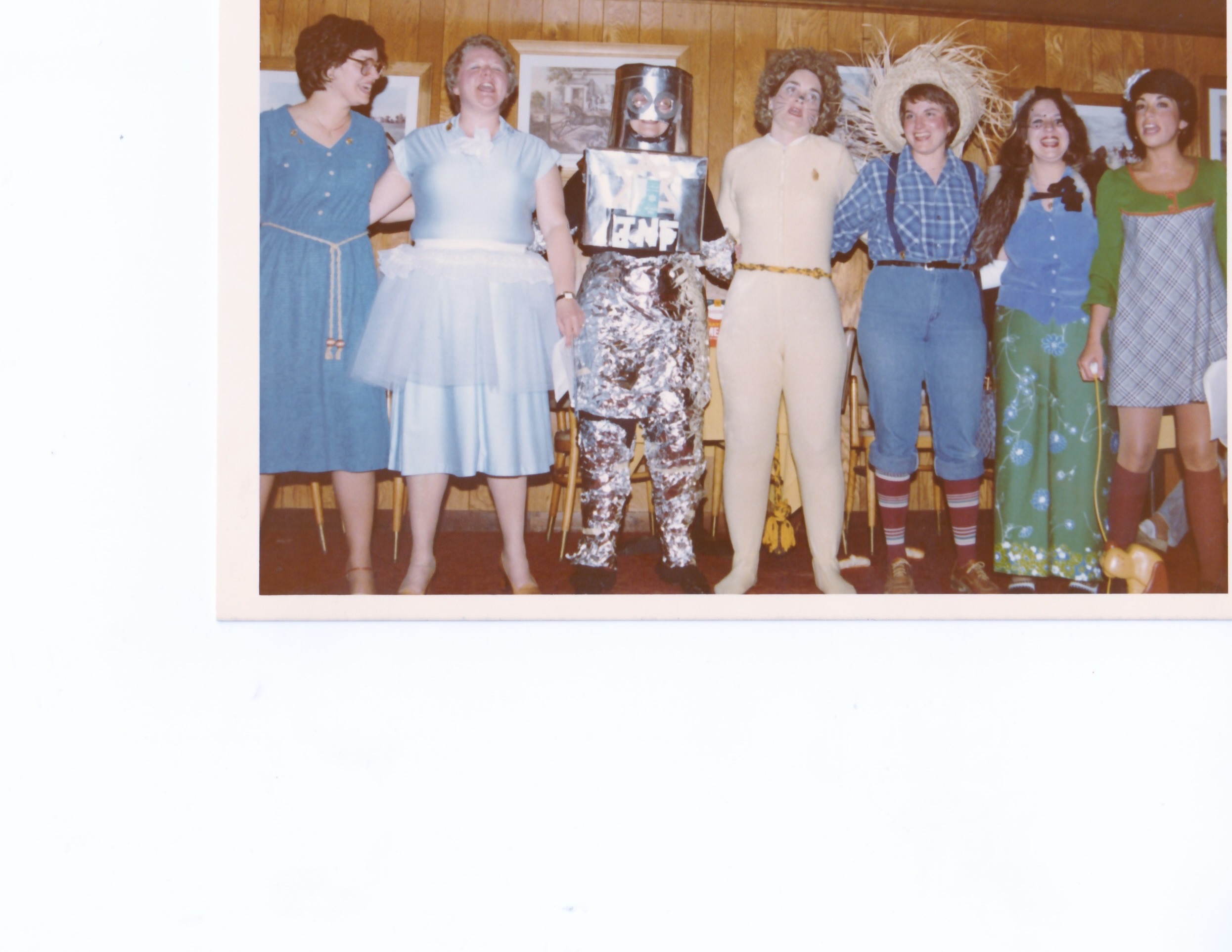
Hadassah Purim Spiel. Left to right: Diane Silverman, Becky, Unknown, Phyllis Erno, Marilyn Shapiro, Nancy Cury, Jacquie Kaplan

Over the rainbow for “Wicked” witch Elphaba

The usual costumes on Purim are straight from Shushan—Esther, Mordechai, Ahasuerus, or even the bad guy Haman. But some people treat Purim like Halloween, choosing their favorite from a gamut of options. This year, if I went with the “Halloween” option, I would don a black cape, a black hat, and lots of green face makeup. Yes, I would be Elphaba, the Wicked Witch of the West. 

So why would I choose to dress up as one who would be considered in Jewish tradition as one of the Amalekites? The Wicked Witch of the West is one of the most evil characters in all of literature and, thanks to Metro-Goldwyn-Mayer, one of the most hated characters on the movie screen. It comes from my childhood love of the book by L. Frank Baum and my adult love for anything Wicked.

The Wizard of Oz began its almost forty-year annual run on CBS in 1956 when I was six years old. Like most children, I hated the Wicked Witch and the monkeys, but I loved Dorothy and her companions. Her rendition of “Over the Rainbow” is as of today my favorite song of all time. I watched the televised movie at least ten times.

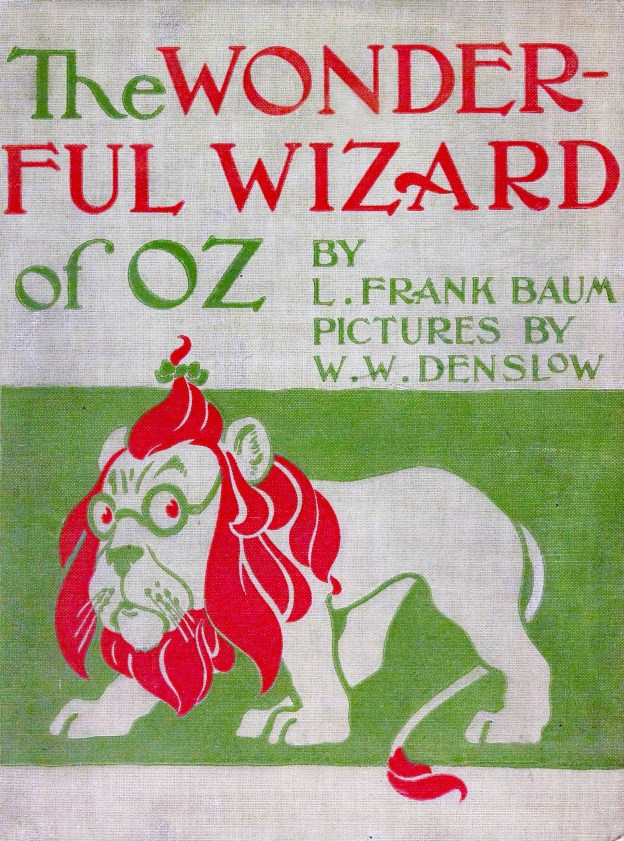
Soon after I saw the movie, my parents gave me a hardcover copy of the book. I read it so many times that the cover fell off, and the pages became torn and dog-eared. While doing some research for this story, I failed to locate the exact edition I had treasured, but I compromised and bought an illustrated copy for my Kindle.

Oz fell by the wayside for many years. Gregory McGuire’s novel was creative but long and dark. I would stick to Baum’s original, if you please.

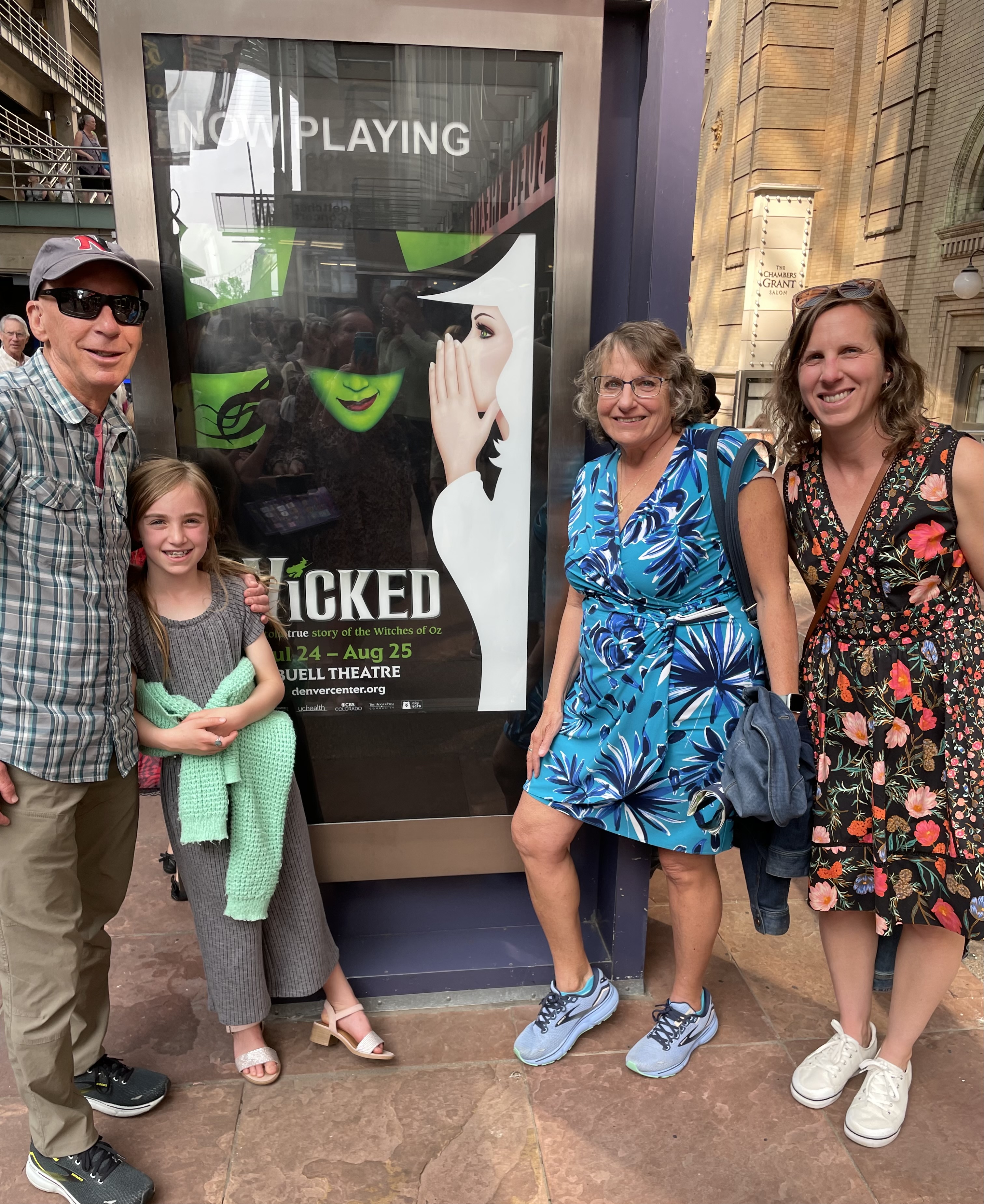
Then came Wicked. In the fall of 2004, my dear friend Melanie Bleich took a chartered bus down to Times Square. As was our tradition, we had lunch at Carmine’s. Then we headed to the Gershwin Theatre for the show. Kristen Chenowith had left her role as Glinda in July 2004, but Idina Menzel still had her role as Elphaba. The story, the costumes, but especially the music swept me away. Less than two years before we saw the show, doctors had diagnosed Melanie with non-smoker’s small cell lung cancer. She had already undergone surgery, chemo, and radiation. But that was a good day. When Elphaba and Glinda sang “For Good,” a song about friendship, I cried openly. Melanie passed away in May 2015 after a ten-year battle. To this day, when I hear the lyrics, “You’ll be with me, like a handprint on my heart,” I automatically put my hand on my own. I saw the stage version of Wickedtwo more times, once in Schenectady in 2009 and a second time in Denver in July 2024 with my Colorado family. 

How does Larry feel about my passion for Wicked? He is still suffering from his experience of seeing The Wizard of Oz at the movies when he was four years old. Grudgingly, he joined me twice to see the play. And he certainly didn’t share my excitement about the news that a movie version would hit the theaters on November 24, 2024. 

Being the wonderful husband that he is, Larry agreed to go with me soon after its Thanksgiving Day opening. We settled into our seats with a huge bucket of popcorn, got through all the previews and then VOILA! The film begins by shedding light on why Elphaba was “greenified.” About ten minutes in, the opening credits flashed on the screen. Wicked. Part One. Larry literally shouted out loud, “PART ONE! You dragged me to a two-and-a-half-hour movie, and it’s only PART ONE?

I loved it. Larry conceded he enjoyed it more than the play. It took a full year for us to return to Wicked: For Good. (I promised Larry that there would not be a Part Three.) As always, I cried when the two leads sang “For Good.” Larry cried for happy because it was over.

For weeks after seeing the movie, I was totally obsessed with the music. Alexa dutifully played songs from the movie; I scoured the internet for clips related to both the stage and movie versions, including several versions of “For Good” sung by children, various choruses, and even Cantor Avi Schwartz and Julie Benko. Not surprisingly, I play “For Good,” “Defying Gravity,” and “Over the Rainbow” on the piano more than any other sheet music I own.

So yes, Elphaba would be my Purim costume of choice, my character of choice. Unlike the one portrayed by Margaret Hamilton (a former teacher who loved children and appeared on Mister Rogers Neighbor to assure children she was not the person in the 1939 movie), Elphaba is a misunderstood outcast whose intelligence, independent spirit, and strong drive to do what is right leads her to her own happy ending.  May she always defy gravity!

Photo of The Wonderful Wizard of Oz book cover, May 17, 1900. W.W. Denslow, author. Public Domain. Courtesy of Wikimedia Commons. W.W. Denslow.

Larry, Sylvie, Marilyn and Julie at Wicked at the Buell Theatre, Denver, Colorado, on July 25, 2024.

Wicked!