Tag Archives: #jewishworldnews

How I wrote my first book

“It was a dark and stormy night. Suddenly shots rang out!” Snoopy

Poor Snoopy! For all his “dogged” attempts, Charles Schultz’s beloved beagle has not yet published his novel. Thanks to The Jewish World, however, I have been more successful. I have published a book.

Actually, it was a bright and sunny day in June 2013, when Josie Kivort, Hadassah Capital District’s Chapter Campaign Chair, and I paid a visit to the Jewish publication’s office. For the past several months, we were serving on the committee to plan the organization’s annual Special Gifts event. Jim Clevenson, the publisher of the Schenectady, New York,-based biweekly, Josie, and I met to discuss the timeline future press releases and advertisements. 

 I had communicated  with The Jewish World, mostly through press releases. For years, I had worked on publicity, first as a volunteer for several organizations in Clifton Park and later as part of my responsibilities at the Capital District Educational Opportunity Cente, a division of Hudson Valley Community College, in Troy, New York.. We had been in “virtual contact” as  I had been sending the newspaper  articles that I felt would be relevant to the Jewish community.

During our discussion, I mentioned to Jim that I had retired three years earlier. Jim asked if I would be  interested in doing reporting for the Jewish World. 

“I have  done enough press releases for a lifetime,” I told Jim. “However, would you be interested in publishing some short non-fiction pieces about my life as a Jewish woman, wife, and mother in Upstate New York?”

Jim agreed to give the idea a try, and he told me that I should send the articles to Laurie Clevenson, his sister and the paper’s editor-in-chief.

My first newspaper article appeared in the August 27, 2013, school opening issue. “There Goes My Heart” recalled how saying goodbye to my children—whether putting them on the bus the first day of kindergarten or dropping off at their dorms their first day of college or waving them off as they got in their own cars and drove cross country to new jobs—always brought me to tears. 

I had asked my mother if the farewells ever got easier. “Oh, Marilyn,” she said. “Every time any one of you gets into the car and drives away, I think to myself, ‘There goes my heart!’”

So started my regular contributions to The Jewish World. Every two weeks, I wrote a story and submitted it for the newspaper’s consideration. Growing up as the only Jewish family in a small Upstate New York town; experiencing anti-Semitism on my first teaching job in the Capital Region of New York; participating in a playgroup for our two-year-olds; adjusting to retirement; leaving the home we shared for thirty-six years to move to Florida—these many once-private moments became very public columns. 

Initially, I was  afraid I would run out of ideas. As the months progressed, however, I found that even the smallest event— biking up a steep mountain in the Rockies, visiting the Portland Holocaust Memorial, changing my granddaughter’s diaper—could morph from an idea to a story. Family and friends shared their experiences, and, with their permission, wove them into my articles.

Not that the stories always flowed easily from my brain to the Mac laptop. “Writing is easy,” wrote sports writer Red Smith. “All you do is stare at a blank sheet of paper until drops of blood form on your forehead.” I often found myself up at midnight before a deadline trying to polish what I had written. But, like some people I knew who devoted hours to quilting or photography or golf, I devoted hours to my writing. 

When I moved to Florida in 2015, I joined SOL Writers, a group of women who met twice a month to share their drafts or to participate in a free write. A few of the women were published authors; others, like me, had dreams of expanding their audience. I brought in pieces I had either completed or were working on for The Jewish World. The women were not afraid to criticize but they were also generous in their praise. “You seriously need to think about putting these essays into a book,” one of my writer friends suggested.

In March 2016, I got up enough courage to contact Mia Crews, a professional editor who would be responsible for formatting the manuscript, designing  the cover, and uploading the finished product to Amazon.

Nothing prepared me for the amount of work required to go from a collection of stories to a polished book. I started editing. And editing and editing. I thought I was close to finishing before we left for our summer trip out west. However, I worked on it on the plane to San Francisco, at nights in different hotels up the Oregon Coast, and during every spare minute during our six week stay in Colorado. I enlisted Larry’s help, and we sat together on the couch in our rented condo going over the manuscript with a fine tooth comb while  two political conventions and the Summer Olympics played on the television.

When we got back to Florida, Mia and I completed the final revisions, On September 3, my sixty-sixth birthday. There Goes My Heart was launched on Amazon. I had done it! I had written a real, live book with, as a friend commented, with a cover and pages and nouns and verbs and everything!

”A writer only starts a book,” wrote Samuel Johnson. “A reader finishes it.” Thanks to Laurie and Jim Clevenson for giving me the opportunity to publish my articles. Thanks to you, my readers, who have helped me reach the finish line of my lifelong dream. 

This article was first pubished in The Jewish World, soon after I launched There Goes My Heart in September 2016. is available in paperback and Kindle versions on Amazon.

Unmoored

Originally published in Jewish World News on June 24, 2021, the following essay reflects my feelings after fifteen months of lockdown. This is one of the essays found in my fourth book, Keep Calm and Bake Challah: How I Survived the Pandemic, Politics, Pratfalls, and Other of Life’s Problems.

Since my husband Larry and I have had our second COVID shots, our pre-pandemic life and its commitments are slowly resuming. We have waded out into the unknown, first a toe into the water with outdoor concerts and patio-only dining, then walking up to our knees with visits and in-home dinners with vaccinated friends, then plunging in with indoor restaurant dining and non-virtual club meetings. Recently, I was in a restaurant with four friends when I realized I had walked in, sat down, ordered, and hadn’t thought of COVID or even masks for a full half hour. That, I say, is progress.

Then why am I feeling shaky? Uncertain? Unmoored? 

Since March 2020, when the world shut down, my husband Larry and I filled the empty hours that stretched in front of us with small gems. I finally put together Fradel’s Story, a collection of articles written by my mother and about my family. We took long walks and longer bike rides through unexplored areas of our community. We spent hours and hours on our lanai, reading, doing puzzles, eating leisurely dinners, and watching the wildlife in our pond. Each Friday, we celebrated Shabbat with candles and wine and homemade challah. And we spent hours and hours on video conferencing sessions with family, friends, our synagogue, and our clubs. 

Now our calendars is filling up and overflowing. We have not yet given up many of the activities that kept us going for sixteen months of isolation, but we are also adding more and more semblances of our previous life. And as what happens to me whenever I try to juggle too much I began dropping balls. I missed a planned luncheon, showed up an hour late for a book club, and completely forgot to call my brother and sister-in-law to wish them “Mazel tov” on their fiftieth anniversary. For goodness sakes, I even failed to send in an article to the Jewish World for its last issue, something I had not done for years. Had I learned nothing from the pandemic?

Jodi Rudoren captured many of my feelings in a March 5, 2021, editorial in the Forward where she admitted that she didn’t want to go back to the old “normal.” “This terrible, horrible very bad year of isolation has also had an abundance of silver linings,” she wrote, “and I worry we’ll snap back to our old ways without truly learning the lessons this crisis has brought.”

So now, like Ms. Rudoren and many others, I am finding my own “better normal.” I don’t want to give up some of the things I savored: the more leisurely life, our long dinners on the lanai with cold beer or coconut rum and (Diet) cokes or wine; the challah baking, the puzzles. On the other hand, I look forward to meeting friends for dinner and plays and indoor get-together, resuming exercise classes, and, most of all, traveling to see my family. 

I am not alone in my feelings, as I found out on a ZOOM with my SOL Writers group. Ginny said that she feels as if she was emerging from a long illness, where stepping back into the world in her weakened state is difficult. “I feel untethered,” she said. “It is as if I am floating around finding my center.” Gail shared that she felt as if she were in a “waiting room,” in between her old life and her “new normal.”

Along with the difficulty of finding one’s balance, there is still the specter of COVID-19 hanging over all of us. Although all of the SOL Writers have had both vaccines, each found that she still was a “little too vigilant,” “a little too cautious,” and most importantly, “a little distrustful.” When “accosted” by a fellow shopper who demanded to know why she was still wearing a mask, Ginny avoided confrontation by calmly saying, “You care as much about what I think as I care about what you think.” After ‘losing’ what she feels has been a year of her life, Mary Ann said she no longer has the energy or patience to squander what remains of her time for “idiots” who still think that the virus was a hoax. “These people are ‘energy vampires,’” commented Aya.

The reality of a resurgence has been felt by friends in England, who now are concerned of a virus variant from India that is more contagious. “Portugal opened up, and many people flew there for a vacation,” they  told us. “Then there was a spike in cases.”Portugal’s Covid rates increased enough for England to revoked their green status, resulting in vacationers scrambling to return home before they faced a 14-quarantine. Our friends are not optimistic about traveling for a long while. 

In the States, there is more confidence, and Larry and I are ready for our next big step. We will soon be flying out to see our son and daughter-in-law and meet our grandson, who was born one day before San Francisco closed down. Then we head to Colorado, to spend time our daughter, son-in-law, and beautiful granddaughter. Extra masks and hand sanitizer are already packed, along with gifts, warm layers for San Francisco “summers” and hiking clothes and boots for Rocky Mountain trails. 

We know that COVID and its aftermath will impact our visit. Outdoor concerts, farmers markets, and indoor plays and dinners are still “To Be Determined.”

No matter, Larry and I will just be happy to finally be with our family and return to at least that piece of normalcy. We will take long walks along the ocean in San Francisco and long hikes in the woods in Colorado. Each Friday, we will sit down with them for Shabbat dinners with wine, candles, and freshly baked challah. Larry will find quiet moments to do puzzles and read. I will put the final touches on Fradel’s Story [to be completed in time for what would have been my mother’s 104th birthday on September 1] and continue writing stories about living through the pandemic. And I will savor all that I learned as I move forward into our “new normal.”

Sources:

Demony, Catarina. “Portugal halts easing of COVID-19 rules in Lisbon as cases rise.” Yahoo News June 9, 2021.

Rudoren, Jodi. “Confessions of a Lockdown Addict.” Forward. March 5, 2021.

Rudoren, Jodi. “Small Talk and Other Skills I’m struggling to re-learn as we build a better normal.”  Forward. June 11, 2021

Photo courtesy of Nick Fewings on Unsplash.

A version of this article originally appeared in the June 24, 2021, Jewish World News, a bi-weekly subscription-based newspaper in upstate New York.

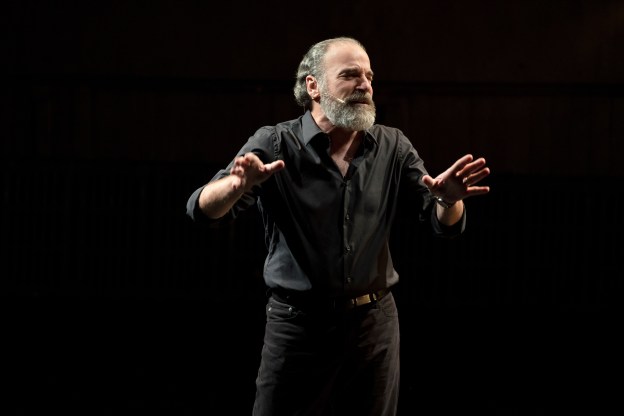
Mandy Patinkin is about joy and doing mitzvahs!

My interview and subsequent story was published in this week’s (Capital Region NY) Jewish World. Mandy’s tour includes Proctors Theatre in Schenectady as well as several venues in Florida. Mandy is a real mensch! Catch his show if you can!
https://jewishworldnews.org/singing-acting-stories-mandy-patinkin-is-about-joy-and-doing-mitzvahs/

Photo credit: JOAN MARCUS

Tour dates: http://www.mandypatinkin.org/schedule.html

Oshinsky Story Published in The Forward

I am proud to announce that my three part story about Harry Oshinsky, a World War I Jewish immigrant, was published in The Forward, one of the most influential American Jewish publications.

Over fifty years ago, the Forverts published a series of stories in Yiddish by Chonie “Harry” Oshinsky, describing his childhood in a shtetl in Lomza Gubernia, his two-year trek to Brooklyn and his life in “di goldene medine,” the golden land. 

Many years later, Oshinsky’s son, Lenny Oshins, brought an English translation of the story to me, his friend and  a writer, for a potential article. Using the manuscript as a basis, I retold his story in three chapters, including details I discovered during my own research that help shed light on the history surrounding Harry’s extraordinary life. 

The three articles were originally published in The Jewish World, a bi-weekly subscription based newspaper located in upstate New York. The original article may be found on the web at https://jewishworldnews.org. I appreciate all the support Laurie and Jim Clevenson of The Jewish World has given me and my writing over the years.I also appreciate the help of Rukhl Schaechter, the editor of the Yiddish Forverts, in preparing the story for publication in The Forward.

Here are the links to the article as published in The Forward:

To read Part One: “From Bialystok to Brooklyn: A Jewish immigrant’s trek across three continents,” click here.

To read Part Two: “Two Jewish teenagers escaping Bialystok arrive in Harbin, China,” click here.

To read Part Three: “A Jewish teen from Bialystok lands in a Chinese prison,”  click here.

More about Marilyn:  Since retiring from a career in adult education and relocating with my husband Larry from Upstate NewYork to Solivita, I is now writing down my own family stories as well as the accounts of ordinary people with extraordinary lives. I have been a regular contributor to the bi-weekly publication, The Jewish World (Capital Region, New York), since 2013. My articles have also been published in Heritage Florida Jewish News and several websites including the Union of Reform Judaism, Jewish War Veterans of the United States of America, Growing Bolder, the Memorial Scrolls Trust (England), and Jewish Women of Words (Australia). I am the author of two compilations of my stories,There Goes My Heart (2016), Tikkun Olam: Stories of Repairing an Unkind World.(2018), and Fradel’s Story, (2021) a collection of essays co-written with my late mother, Frances Cohen. All three books are available in paperback and e-book format on Amazon. My fourth book, which will be published in late 2022, is entitled Keep Calm and Bake Challah: Surviving the Pandemic, Politics, and Other Life’s Problems. I am also working on a fifth book, Under the Shelter of Butterfly Wings: Stories of Jewish Sacrifice, Survival, and Strength.

More about The Forward: Founded in 1897 as a Yiddish-language daily newspaper, The Forward is considered one of the most influential American Jewish publications. I, along with many of my friends and family with Jewish heritage, remember my own maternal grandparents reading Forverts, the original daily Yiddish paper, when I visited them in Coney Island in the 1950s and 1960s. In 1990, an English-language weekly offshoot began publication; in 2019, it became an online newspaper. A more detailed description of The Forward  may be found on Wikipedia.

Holocaust Stories Needed!

“You really need to talk to Harry.”

My friend Marilyn Glaser gave me this advice before one of our Friday night Shabbat services in our Florida synagogue. I was aware that Harry Lowenstein was a Holocaust survivor. But Marilyn, the shul president, knew I was a writer, and she knew his story needed to be preserved.

By this time, I had been writing for the (Capital Region, NY) Jewish World for over four years. The majority of my stories had been about my family: growing up in a small North Country town in New York; meeting my husband in 1973 to learning to live with him after our retirement in 2010; raising two children; moving to “The Sunshine State” in 2015. Up until that point, I had not tackled biographies. Fortunately, Harry was a willing story teller.

 As I sat at his kitchen table, I was riveted by his description of four years of hell, first in a ghetto and then in Nazi concentration camps. After liberation, Harry returned home to find that every one of his relatives had been murdered by the Nazis. He eventually made it to the United States, married Carol Sainker, raised three children, and owned and operated a clothing store in Kissimmee. Meanwhile, he was determined to carry on his family’s legacy. “I saw a synagogue burn,” said Harry, “and I was determined to build another one.” With the contributions from friends and fellow Holocaust survivors, the Lowensteins raised enough money to build our synagogue.

After Harry’s story was published, my writing became more diversified. I was still writing my sometimes funny, sometimes poignant family stories, but I also took pleasure from interviewing what I referred to as “ordinary people with extraordinary lives.” A woman who has raised over $150,000 for cancer research after losing her 32 year old daughter to leukemia. A man whose introduction to a doomed ship as a boy resulted in his becoming a “Titanic fanatic;” a group of former Catskill workers celebrating a reunion.

But the stories that moved me the most were about who lived through—or died in—World War II. Jewish soldiers. Concentration survivors who were haunted with their memories until their passing. Righteous gentiles who had rescued others from the horrors. 

I have never been shy about my retirement avocation and never fail to tell friends and strangers I am a writer. This summer, I shared this information with Eva Nozik, who was visiting Summit County, Colorado. 

“My aunt, Golda Goldin Gelfer, who recently passed away, was a Holocaust survivor,”Eva said.”You need to talk to her children.” 

She set up a Zoom call with Anna Livits and Sofia Zukerman, Golda’s two daughters, and other members of the Goldin family. The Nazis, they told me, invaded Glusk, Belarus, on June 22, 1942, Golda’s 14th birthday. Six months later, Germans and local supporters rounded up and murdered over 1000 Jews, including Golda’s mother Elke and her two sisters, Chaisoshe (19) and Malka (8). Golda and her father Meir escaped certain death by hiding in an attic and eventually finding their way into the forest. The two soon joined Soviet partisans in their efforts to sabotage the Nazi offensive until Belarussian liberation on July 4, 1944. Several revisions (and many nightmares about the Holocaust) later, it was finished and ready The Jewish World’s next issue.

Even before it was published,, Anna expressed her gratitude. “I don’t have enough words to thank you for the work you have done,”she wrote me in a December 13 email. “I had a dream today that my mom was smiling. It’s like  she was in peace that we remember her family, Elke, Chaisoshe, and Malka.”

The descendants of Meir and Elke Goldin have more stories to tell. They are eager to recount Golda’s time in the woods, her life in the Soviet Union after the war, her move with her children to the United States. They also want me to connect with the son of a cousin who survived “murder by bullets” by falling into the pit.And, by the way, they have a friend whose parents survived the Warsaw ghetto. 

Meanwhile, I have other stories on my “To Be Written” file. My cousin Eric (Z’L) Silverman came over on a stolen visa just before the war. Trudi Larkin Wolfe’s parents, both concentration camp survivors, recently passed away, but their oral history is preserved on video as part of Stephen Spielberg’s Shoah project, and she and her sister will fill in any gaps. Ruth Gruber, a brilliant Jewish woman who was appointed by the FDR administration to oversee the Oswego Project, a refuge for Jews that is the subject of a New York State Museum exhibit. And I made a promise to a friend that I would write an article about his father, who came to the United States in the early 1900s via, of all places, China.

After hearing Golda’s story at the most recent meeting of SOL Writers, my group of fellow writers said that I am “a woman on a mission.” “You make the unbearable bearable,” one said. “Keep writing.”

Despite my passion, I initially questioned about pursuing more stories about this terrible time in humankind’s history.The Holocaust has already been the subject of innumerable novels, memoirs, plays, movies, and, and even children’s books.

I found the answer in a teaching from Pirkei Avot, a compilation of the ethical teachings and maxims from Rabbinic Jewish tradition. It is not incumbent upon you to complete the work,” wrote Rabbi Tarfon (46 CE-117 CE), “but neither are you at liberty to desist from it.” (Pirkei Avot 2:21) When the Anti-Defamation League reports that Facebook, Instagram, and other social media platforms have “cracks in enforcement” that allow Holocaust deniers to disseminate hate speech; when a school administrator in Texas can tell a group of educators during a training session to “have an opposing view” when teaching the Holocaust; when 77 years after Soviets liberated Auschwitz, anti-semitism is on the rise; I must continue to tell the stories. My writing will certainly not “complete” the work of masters such as Elie Wiesel, Victor Frankel, and Steven Spielberg. But I cannot use that as an excuse.Whether my articles and, in the future, my book is widely read or languishes in an Amazon warehouse, at least I did not “desist.”

But I need help. If any of you have a Holocaust story you would like to be preserved in writing, please contact me via email at shapcomp18@gmail. com. Those who were lost as well as those who survive deserve to have their lives remembered and honored. Never again.

A version of this article originally appeared in the Jewish World News, a bi-weekly subscription-based newspaper in upstate New York.

Being Born: The World, The Jewish World, and me!

Happy Birthday to me! Happy Birthday to The Jewish World! And Happy Birthday to the World!

It was Labor Day—how fitting!  On Sept. 3, 1950, as my mother’s doctor had a noon golf date, Frances Cohen accommodated his schedule by delivering me a little after 9 a.m.

The Jewish World came along 15 years later. Inspired by Jewish community leaders with the idea that a newspaper would strengthen the community, Sam Clevenson published its first issue for Rosh Hashanah 5716 on Sept. 23, 1965. He believed it would help unify the Jewish communities of Albany, Schenectady, Troy, and the surrounding area. After his passing in 2008, his children, Laurie and Jim, took the helm, packing the paper with more local news, adding a dynamic web site and weekly e-newsletter to expand the readership.

What’s in the ‘World’
The bi-weekly covers local religious events and a wide range of local, national, and international news that impacts and strengthens our Jewish community. It is also a valuable source for happenings in the world of art and culture. Over the years, I have clipped recipes, jotted down the names of books and movies, and have learned much about the world through a Jewish lens.

The recent rise of Jew-hating has made our local newspaper even more important. “For 54 years The Jewish Worldhas monitored perils to your existence,” Jim Clevenson recently said. “We finger the foes of freedom, the nemeses of peace, while celebrating the successes of our crusaders for justice, black and white, Jewish and Gentile.”

‘There goes my heart’
While my husband, Larry, and I had been longtime subscribers and readers, my personal connection to The Jewish World began in 2013. While covering the Capital District Hadassah’s special events banquet, I visited the office in Schenectady to speak to Jim Clevenson. In my pre-retirement life, I had worked in public relations as both a volunteer and as part of my job at the Capital District Educational Opportunity Center, a division of Hudson Valley Community College. Jim asked if I would be interested in writing news articles for the paper. I countered with an offer to write personal columns based on my many years as an upstate resident. My first article, “There Goes My Heart,” was published Aug. 15, 2013. Laurie and Jim (and readers) must have liked it. Over the past seven years, I have published 148 articles in Sam Clevenson’s brainchild.

Since Larry and I moved to Florida in 2015, I have expanded my horizons by becoming a regular contributor to the Heritage Florida Jewish News. My articles have been posted on numerous websites, the Jewish War Museum, Growing Bolder cancer survivors website, the US Pickleball Association, and most recently the Australian-based Jewish Women of Words (I have gone international!) I have compilations in two books, There Goes My Heart (2016) and Tikkun Olam: Stories of Repairing an Unkind World (2018). Two books are in the queue: Keep Calm and Bake Challah, a third collection of essaysand Fredyl’s Stories, family stories that I co-wrote with my mother, Frances Cohen (Of Blessed Memory). My blog, theregoesmyheart.me, presents my stories as well as articles about my writing adventures.

My articles, books, and blog would not have been possible without the help and support of Laurie and Jim Clevenson. They have provided the space in the paper plus advice and guidance.

The lonely ‘Zoom’
This month, The Jewish World and I also share our birthdays with the world. Rosh Hashanah 5781 begins on Friday, Sept. 18. Of course, the High Holy Days will be very different this year for most of us. Rather than meeting fellow congregants in our synagogues, we will be “Zooming.” As the first day falls on Shabbos, Reform Jews will have to wait until the closing moments of Yom Kippur to hear the sound of the shofar over the Internet. Holiday meals will be lonely as most families are practicing social distancing. Fasting on the holiest day of the year will be made even more difficult when we are not sharing the experience.

But I will still celebrate. I will bake round challahs, roll matzoh balls and drop them in simmering chicken soup, and cook up my traditional chicken, roasted potatoes, and candied carrots. Larry and I will do a brachah over the wine asking for a sweet, better year ahead. After we have finished our Zoom service, I will pull out the most recent Jewish World and catch up on what is happening from the only local paper that focuses on Jewish news—what you need to know.

It’s not just the virus
Before Corona-19 we were already a polarized nation crazed with resentment of blacks, Jews, and foreigners. Now we’ve heard echoes of ‘The Jews have poisoned the wells’! The Jewish World promotes Jewish life and culture, and stands for Jewish traditions of rationality and love. We believe good people must stand together to encourage and facilitate light. This is our mission and duty as Jews.

What you can do
To celebrate The Jewish World’s 55th birthday, I ask you to support the paper you are holding in your hands or reading on-line. Renew your subscription. The Clevensons shared with me that a new office staffer is managing the database, and non-payers may find their mailboxes a little emptier on every other Friday.

Give subscription gift certificates to your kids and friends! To carry on the Clevenson legacy call Cynthia Traynahan in the office, (518) 344-7018. She knows all the special discounts.

With Corona-19 disrupting most businesses, The Jewish World needs extra help: visit GoFundMe at gf.me/u/xunxx5.

I also request that you keep in touch with me! I love to hear from readers. E-mail me at shapcomp18@gmail.com , via my Facebook page at Marilyn Cohen Shapiro, Writer, or on Twitter at @shapiro_marilyn. Thank you!

The Jewish World, September 15, 2020

Hope for the New Year Revived by Tale of Lamed Vav

The world must contain not less than 36 righteous individuals in each generation who greet the Shekhinah’s presence each day. Jewish mythology

On Rosh Hashanah we celebrate the birthday of world, the beginning of a New Year full of possibilities. In the weeks leading up to our High Holy Days, however, I have encountered many events that make me doubt those possibilities. 

Evidence of climate change impacted our summer travels. In Frisco, Colorado, we watched helicopters dump water and flame retardant on a mountain only six miles from my daughter’s home, one of many wildfires burning throughout the West.  In July, Larry and I traveled with a group on land tours of Norway and Iceland. The first country was magical; the latter was other-worldly; both were beautiful. But Norway, like most of Europe, was experiencing the hottest summer in history, and farmers were facing withering crops and dry pastures for their domestic animals. Meanwhile, Iceland had weeks of record-breaking cold and rain that resulted in rotting crops. 

We returned home to the news filled with stories of corruption and indictments at the highest levels of our government, our mailbox filled with contentious election with ads vilifying good people with lies, and, the television blasting information about the latest mass shooting, this time in Jacksonville, Florida. None of this made me feel hopeful for the coming year. 

In the final scene in Fiddler on the Roof, Tevye and his neighbors are gathering their meager belongings to leave their “tumble-down, work-a-day Anatevka” after they are evicted by the Russian government. Motel the tailor suggests to the rabbi that this would be a good time for the Messiah to come. ”We’ll have to wait for him someplace else.” the rabbi replies. “Meanwhile, let’s start packing.” Yes, I agree with that wise rabbi: we could use a miracle.  

I didn’t get a miracle, but thanks to Laurie Clevenson, editor of the Jewish World, I did get a heartfelt lesson in Jewish mythology that renewed my faith. 

In the book of Genesis in the Tanakh, God concedes to Abraham that He would spare the city of Sodom if the patriarch could find just ten righteous men. We know how that ended: Not even one such man could be found. Sodom and its sister city Gomorrah were destroyed, and Lot’s wife turned into a pillar of salt.

The Biblical passage developed into a Talmudic legend. In every generation, says the sages,  there are thirty-six righteous people upon whose merit the world is kept from entire destruction. The Lamed-Vav tzaddikim, as they are known in Yiddish,  are“humble servants of their fellows,” states an eponymous website, “tirelessly working to dry tears, show compassion, and shoulder the burdens of those who suffer.” 

The Righteous Among Us

Abraham desperately sought just ten such people five thousand years ago; in more modern times, the count is raised to the mythical Double Chai; the number 18 (meaning life) times two. These individuals are hidden, so hidden that no one knows who they are,  not even the others of the 36. When one of them dies, another is secretly “crowned,” waiting anonymously, silently, humbly for his or her call to come forward and help repair the world.

I feel we have examples of  Lamed-Vav tzaddikim in our own history. Abraham himself comes from obscurity to become the father of  the Jewish people. Against all odds, David slays Goliath; Judah Maccabee leads a rebellion against those who want us destroyed. The Lamed Vav website also gives examples of women: Ruth, an ancestor to King David, preserved not only Naomi, but future generations by being faithful. Esther, through her selfless bravery, saved her Jewish brethren from from certain destruction. And Deborah, instrumental in delivering Israel from Canaanite bondage, later served as judge. Each of these individuals came from the shadows to keep Judaism alive.

And we have all known such people in our our lifetimes. I have been fortunate to meet what I consider Lamed-Vav tzaddikim through my writing. Claudia “Clyde” Lewis supported and advocated for her sister Andrea, who was born with intellectual disabilities, resulting in Andrea living a life never initially imagined by those who wanted her institutionalized.  Tony Handler, 79-year-old seven time cancer survivor, has served as a beacon of hope for those who are diagnosed with the dread disease. The sole member of his family to survive theHolocaust, Harry Lowenstein immigrated to America to become a successful Florida, businessmen and the person behind the construction of the Kissimmee synagogue. “I saw a synagogue burn,” said Lowenstein, “and I was determined to build another one.”

I loved the entire process of writing each one of these stories: interviewing each person; researching background information; writing and re-writing draft after draft to make sure I captured their voice in a story in which they would be proud.More importantly, I loved learning about each of these tzadakim, these people who quietly have made their mark on the world to make it a better place. 


Three Leave Positive Legacies

In the past month, I believe we have lost three of the 36. Aretha Franklin, the Queen of Soul, not only moved us with her songs and her voice but also was a leader in the civil rights movement. Senator John McCain, the maverick senator from Arizona, was lauded as a war hero, a public servant, and one of America’s great champions. Admired by both sides of the aisle, Senator Charles Schumer stated that his friend was  “never afraid to speak truth to power in an era where that has become so rare.” Hours after McCain’s death, news of Neil Simon’s passing was announced. The Pulitzer prize-winning Jewish playwright had revolutionized Broadway with his funny but biting views of Jewish urban life. Each of them shaped our world with a positive, long-lasting legacy. 

Hope and Mitvahs

In a 2010 Rosh Hashanah article, Rabbi Julie Hilton Danan spoke of “the thirty-six blessed humble souls whose merit keeps society from falling apart,” those individuals whose character and deeds are so exemplary that being around them raises those around them to a higher level.  With billions of people on the planet, she suggests remembering the African saying, “It takes a village.” “If we could develop 36 lamed-vavnik communities,” Rabbi Danan suggested, “we could have the critical mass to tip the balance of human history in a new direction.”

No matter what the number, this beautiful myth offers hope that the morally outstanding individuals can somehow affect the whole world. What can we do? First we need to treat everyone as if he or she is a Lamed Vav, as we never know—despite anyone’s level in life—if that person is a chosen one. Secondly, each of us should strive to be kind, compassion, and a mensch. Maybe one of us is a hidden Lamed Vav Tzadik? And finally, we can each be doing whatever we can to be a positive force in making a difference in the lives of our family, our community, and our world.