Author Archives: Marilyn Shapiro

Unknown's avatar

About Marilyn Shapiro

After thirty five years in education, I have retired and am free to pursue my lifelong dream of becoming a freelance writer. Inspired by my mother, who was the family historian, I am writing down my family stories as well as publishing stories my mother wrote down throughout her life. Please feel free to comment and share.

Loveys “Make It Better!”


Rerun, like his distant English relative Paddington Bear, has had quite an interesting life.

Two days after my daughter Julie was born, “Big Brother” Adam visited her in the hospital with a brown stuffed bear in tow. He and my husband Larry had picked it out at the toy store that morning. They named him “Rerun,” the moniker—hats off to Charles Schultz— we had given my increasingly growing tummy during the pregnancy. Rerun took his place at the corner of the hospital bassinet, allowing Adam to recognize his sister in the nursery. Julie reciprocated the day she came home from the hospital when Adam found a Spiderman doll waiting on his pillow.

Thus began Rerun’s journey through Julie’s life. He was a permanent resident of her crib, her “big girl” bed, and her college dorm room. Rerun traveled cross country with Julie when she started her new life in Colorado. He even had a place on Julie’s bed stand after she married Sam.

And now my daughter’s daughter has her own lovey. Sylvie latched onto Foxy when Julie brought  the big-eyed Beanie Boo home from an airport gift shop. Sylvie carries him with her everywhere, tucked securely under her arm. When he isn’t being held, Foxy watches over Sylvie when she eats and when she takes her bath. And every night, Foxy accompanies Sylvie to bed, where they are joined by Rerun, who now has a special spot in the crib.

While writing this story, I posted a request on Facebook for people to share their  “lovey” story about a toy or item with which they or someone they knew were totally attached. Over a dozen people responded—with tales as far away as Israel. Anne Rothenberg shared that her grandson Amiad is attached to large stuffed dog named “Clavlavi” (“puppy” in Hebrew).  The dog has been a part of their family for almost a decade. “He is pretty bald from years of stroking and washing,” Anne said, “but the whole family loves him so much that he is included in all family pictures.”

People reached back decades into their own childhood to talk lovingly of their favorite toy or blanket. Lee Ryan, my former student, wrote, “At age sixty, I still  have Teddy.  Of course, I can be without him, but I am grateful he’s still around.”

Susan Lenigan recalled that over sixty years ago, her sister Judy had her “Kitty.” As time went by, the stuffed animal’s eyes fell out and his face became faded. During one of her visits, their grandmother  decided to “fix” Kitty while Judy was in school. She sewed on new button eyes  and painted on a new face.When Judy came home and saw Kitty, she cried and ran away from her precious companion. She gradually—and grudgingly—accepted the imposter.

Linda LaFlure Nelson also learned that loveys often were best untouched. She and her daughter still remember the sad day that Linda washed Sara’s beloved “blanky” “Sara burst into tears sobbing that it no longer smelled like her.”  Linda said. “I felt like a bad mommy.” Blanky ended up as nothing more than a smelly knotted ball of tattered material. Nevertheless, Sara, now in her thirties,  has “Blanky” tucked away in a drawer in her home.

And like Rerun, loveys have traveled the country—and world. Becky Silverstein’s daughter Evey had a crocheted pink blanket with yellow edging that Becky received at her baby shower. Whenever Evey was hurt or fussy, Becky would sing “Mr. Blankey makes it better, yes, he does.”  Evey held it all day, flipping the corners back and forth repeatedly, self-soothing and settling herself down.  It went everywhere: in the car, in the crib, in the high chair, in the playpen, on every family vacation.  Eventually, Mr. Blankey also went with sixteen year old Evey for a two week stay in Scotland and for a three month trip Israel after she graduated from the Jewish Day School in Maryland. Mr. Blankey then went to college in Boston, moved with her and her fiancee to California, and went on their honeymoon cruise in the Mediterranean.  Now Mr. Blankey has a place of honor on their bed in San Jose, California, providing a cozy napping spot for their dog, Kiwi. As Becky said, “Mr. Blankey still makes it  all better.”

Losing loveys can become  a major emergency. Sharon McLelland’s daughter’s cow, which still is “alive” with more stitches than body, once was FedEx’d overnight soaking wet as he was so needed. And those emergencies sometimes spill over to adulthood. Lynn Urgenson’s daughter Sue had a hand crocheted  “Blan-key”that she slept with even up into her adult years. When Susie moved to Israel, it was the one item Lynn forwarded to her. Unfortunately, it got lost in the mail. When the package finally was returned to Lynn six months later with “Address Unknown”  stamped on it, Lynn decided to avoid further heartache and deliver the tattered blanket in person next time she saw Sue. “My granddaughter Sarit has a beautiful one I made for her,” said Lynn, “but she doesn’t have same attachment!”

Can one avoid disaster with back-ups? My daughter has two more Foxy’s tucked away in case Sylvie loses her constant companion. Sometimes, however,  even that plan backfires. Judy Lynch’s daughter Katie slept with a stuffed panda. When Katie was twenty months old, Judy went back to work and bought a second Pandy so one bear could stay at home and the other could stay at the sitter’s. Katie became attached to both Pandys and had to have both of them in both places.  Judy recalled,”Who knows how many times we had to drive back to the sitter’s when we realized we’d left a Pandy behind!”

Fortunately, some children accept change. Jackie Betters’ grandson had a blanket named “Meme” that he slept with every night. His mom washed it so much from his dragging it everywhere with him that it got really thin. She folded it in half and sewed it. After several more washings, it got thinner. So she folded it again into a twelve inch square and, eventually into a six inch square. His mom has it tucked away in her dresser just in case he should ever need it again —even though he is a grown man with a newborn son of his own.

Now that children and parents are gearing up for school opening, don’t be surprised to find loveys hidden away to provide needed security. Over thirty years ago, Julie Thompson Berman’s son had a beloved “blankie.” All through kindergarten he carried a tiny piece of it in his pocket. He never took it out, but  he would just put his hand in his pocket, touch it, and be comforted.

Rerun. Foxy. Teddy. Clavlavi. Kitty. Pandy. Assorted pieces of tattered, smelly blankets. Each one treasured, loved, and often still part of their owners’ life.

Guess Who’s Coming to Dinner?

According to the Bipartisanship Policy Center, our country’s history of working across the aisle can be traced back to as early as 1787. Our founding fathers, struggling with congressional representation regarding the populations of the colonies, reached what later was know as the Great Compromise. It was decided that our new government would exist with a proportional House of Representatives and a Senate with equal representation. Once adopted, both sides felt vindicated.

At their best, and despite their differences, presidents and parties have work together to use compromise for the common good of our country. Lincoln created his “team of rivals” because he believed that he had no right to deprive the country of its strongest minds simply because they sometimes disagreed with him. In the last sixty years, the Civil Rights Act (1964); putting man on the moon (1977);  the Endangered Species Act (1973); the American’s with Disabilities Act (1990); welfare reform (1996), and No Child Left Behind (2001) all were put into effect because of compromise.

In the current political climate, compromise appears to be all but impossible. Lines have been drawn in the sand, pitting the Republican majority against the Democratic minority with unprecedented rancor. Nuclear options, closed door sessions, and  a proliferation of  what is regarded as “fake,” exaggerated, and even inflammatory news have torn our country apart in ways that many of us — from gifted historians to concerned citizen—cannot remember.

The battle has spilled over to our personal lives, dividing family and friends. The situation has become so flammable that recommendations on how to get along with family and friends with differing political views have become hot topics on everything from television to newspaper articles to Miss Manners. How do we deal with its aftermath when where one stands—whether to the left, to the right, or in the middle—when politics become personal?

I myself had become caught up in the “us versus them” mentality.  In the months before the election, I had spent hours watching television, listening to podcasts, and reading articles—usually with left leaning perspectives. Sharing all this news became my first priority, either through social media or animated, face to face conversations.

And it hurt me. I had cut off contact with a relative after a  Facebook fight about the election last fall, reconciling only after four months of protracted tension. One of my new neighbors, knowing how I felt about the November 8th outcome, had purposely avoided me with little more than a smile and hello. Friends invited me to their get-togethers  but suggested I leave my politics at the door. As a result, I decided that I could still do what I need to do—stay informed, call my legislators, volunteer to work during the next election cycle. However, as Miss Manners suggested in her June 25, 2017, column, I was no longer going discuss politics in social situations without mutual consent to do so.

While organizing a small dinner party, I realized how difficult the situation had become. One of the guests, whose leanings were unreservedly to the left, called to see if I was inviting a couple known for their strong Republican views. When I asked him the reason for his request, he told me that he recently had had a heated exchange with the couple regarding politics. He and his wife would feel uncomfortable attending if they were going to be there.

Even though the “Republicans” were not on the guest list for that evening, his request troubled me. Since the elections, I had heard similar comments from other friends who had questioned my continued friendship with any of “those people” who didn’t vote the way they had. I also observed many friends drawing lines in the sand. I came to the realization that enough was enough.

I didn’t have a good response for my dinner guests during that phone call, but I do now. When the issue comes up, I tell people, “I will be friends with whom I want. Politics will NOT be a decision in my friendship.”

In his book, “Tip and the Gipper: When Politics Worked,” Chris Matthews, the former Chief of Staff for House Speaker Tip O’Neill and MSNBC journalist, reported that the political battles between the House Speaker and President Ronald Reagan  were “legendary,” but they respected and even liked one another. Reagan often had both Republicans and Democrats—including O’Neill—over for cocktails. “After six,” O’Neill would insist, “we are all friends.”

The only difference with me, the avowed liberal Democrat, and Tip O’Neill is that I won’t limit my friendships to after six o’clock.  As Thomas Jefferson so wisely said over two hundred years ago, “I never considered a difference in opinion on politics, in religion, in philosophy, as cause enough in withdrawing from a friend.”

So I will continue to have friends for dinner, no matter our political affiliations. We will break bread. We will drink wine. We will laugh and enjoy each other’s company. And maybe, just maybe, once in a while we will “reach across the aisle.” We will discuss politics, learn what divides and unites us, and, if necessary,  agree to disagree. I only wish the same for our president and the members of our United States Senate and House of Representatives.

Misplacing things, but holding on to the small stuff

I have spent  half my life looking for things I’ve misplaced. I have spent the other half finding things for Larry that he claims I lost to make his life more difficult.

Recently I was visiting my daughter Julie, her husband Sam, and my granddaughter Sylvie in Colorado. That morning, I had unplugged my charging cord for my phone from the power strip next to my bed. I was sure that I had plugged it into a kitchen outlet. Later in the morning, however, the  only charger, looking mysteriously larger than mine, was connected to Julie and Sam’s iPad.

“Sam, are you using my plug to charge your iPad?” I asked.

“No,” said Sam. “That one is mine.”

I spent a good chunk of the next few hours looking for my missing cord. I looked in my traveling charger case, my pocket book, my suitcase. I rechecked the outlet next to my bed and every other outlet in the house. After we returned from a walk and lunch on  Main Street, I rechecked the outlet, my charger bag, the pocketbook, the suitcase. Then I pulled off all the bedding (maybe it got tangled in the sheets when I was making the bed?) MIA. Julie just rolled her eyes. Mom has lost something-AGAIN.

Misplacing something is part of my personality. Keys.Cell phone. Favorite water bottle. Sun glasses. Larry has grudgingly accepted that every time we head out, we have to allow enough time for me to make one more frantic trip into the house to search for my frequently lost or left behind items (which I refer to as FLI’s)

I know that my misplacing things is not tied to cognitive impairment, a concern as I work my way through my sixties. I have not yet found my cell phone in the freezer or my keys in the microwave. Thankfully, my losses are usually a result of multitasking or not giving myself enough time to put the item in its proper spot in the first place.

To compensate, I have established assigned places for the FLIs. My keys go on the key rack next to the door. The cell phone goes on the kitchen counter, plugged into the permanent charger. My favorite water bottle gets rinsed and put back into the refrigerator. On my good days, the system works.

I’ve given up on the sunglasses. After several last minute scrambles,I finally purchased several additional pairs for my pocketbook, each car, the beach bag, the lanai. This system also works—on my good days.

Larry, on the other hand, rarely loses anything. His keys, his wallet, the checkbook, even his clothes, are organized in such a way that he can find them quickly and without angst. He even has a system for items on his desk, where he can locate exactly what he needs from the piles that totally defy my sense of order.

Unfortunately, as we share the same house, our lives—and stuff—intersect. For example, we share laundry duty, but it is usually on my watch that one of his socks goes missing.

“What did you do with my Smart Wool?” he demands.

“You’re missing one?” I respond. And the search begins. The washing machine. The dryer. Then the rest of the laundry to see if it got stuck to a recalcitrant tee shirt or pair of shorts. The loss is yet to be permanent.

The second most FLI is the checkbook. Larry has a particular Spot for it. There are times, however, that I need it. Invariably, I either don’t put it back in the Spot fast enough or I don’t put it exactly where it belongs. Then, the scenario begins.

“MAR-i-lyn! Where is the checkbook?” The situation is quickly resolved. (EXCEPT when we moved into our Florida house, and one of us put the checkbook in a “safe place” before we left for a long trip to Colorado. If anyone has any suggestions as to where our “safe” place was, please contact me! Two years later, and the checks are still missing.)

Remember I said that Larry rarely  loses anything? Let me relate the Famous Missing Fleece Incident.

While still living in Upstate New York, our son Adam came home in July for a visit. One surprisingly cool morning, the three of us went on a bike ride. Larry had Adam use his road bike, and he took his hybrid.

A couple of weeks after Adam left, Larry asked me what I had done with the University of Rochester fleece he had worn on the bike ride.

“I have no idea,” I said. “I probably washed it and put it in your closet.”

“Well, it’s missing,” Larry said.

Thus began a three-month intermittent search. I checked our closet and every other closet and dresser in the house. I called Adam and asked if he had taken it back with him to California. Nada.

“Maybe you gave it to the Salvation Army,” Larry said. “I can’t believe you would give away my favorite fleece.”

At the end of October, Larry and I decided to go on a bike ride. The roads were wet from a recent rain, so we took our hybrid bikes for better traction. Halfway through the ride, it began to rain again. Larry paused to put his phone, which was in a case on the handlebar, into the saddle bag to better protect it.

“Hey! Look what I found!” Larry exclaimed. “It’s my missing fleece! I must have put it in there in July when it began to warm up on our bike ride with Adam!”

“YOU misplaced it!” I said. “Don’t you feel bad for accusing ME of losing it?”

“No, that’s okay,” said Larry. “All’s well that ends well.”

And the charging cord I “lost” in Colorado? Turns out that Sam had rolled it up and put it into a canister where he and Julie stash all their extra cords. So I actually wasn’t at fault that time either.

Elizabeth Bishop wrote: “The art of losing isn’t hard to master; /so many things seem filled with the intent /to be lost that their loss is no disaster.” In my world, losing “stuff” may be a problem. As long as I keep what is important—my family, my friends, my memories—it will just be small stuff.

Living My Values

fullsizeoutput_1a81

Larry and I at Special Olympics in Florida

The Shabbat prayer book in our synagogue includes the following meditation: ”I harbor within—we all do—a vision of my highest self, a dream of what I could and should become. May I pursue this vision, labor to make real my dream.”

On Tuesday, January 20, Donald Trump was sworn in as our forty-fifth president. Leaders as well as friends have asked us to give the new president an opportunity to prove himself. Based on his appointments, his actions, his continued negative rhetoric, the growing scandals, however, I refuse to stand with this man.

As an American and as a Jew, I shudder at the uptick of racist acts, xenophobic proclamations and bans, and the proposed loss of funding and support for public education, the arts, health care, civil rights, the disadvantaged, the environment—the list is endless.

Despite or maybe because of the current political climate, it is more important than ever for me to find “my highest self.” I must do what I can to live my values in a time where our country is led by an individual whose values do not come close to mine. I must use my moral compass  to point me in a direction that counters his rhetoric of hate. “Not all of us can do great things,” Mother Theresa said. “But we can do small things with great love.”

Up until this past presidential election, I did not consider myself a “political” person. I was—admittedly—marginally involved in the Vietnam War protests and the 1972 Equal Rights Amendment fight. Although I have voted in almost every local, state, and national election, I  have minimally involved in campaigning. The possibility of Trump becoming of president, however, stirred a level of activism in me that had me expressing my concerns on Facebook and becoming actively involved in supporting Hillary Clinton.

Now that Trump is president, I continue to be an activist. I have joined a local grassroots organization to effect change at a local level. Along with contacting my legislators through phone calls, emails, and letters, I have met with my United States House representative in House to express my concerns.

I volunteer at Special Olympics and support financially other organizations that align with those values. I subscribe to the New Yorker and the New York Times to stay more informed with media that does not provide “alternative facts.”

And I continue to subscribe to The Jewish World. For fifty years, the Clevenson family has been the voice of the Capital Region’s Jewish community. Their bi-weekly not only gives local news and events but also fair and unbiased information about the United States, Israel, and the world. If you have not already done so, subscribe to their fine paper, and consider giving a gift subscription to a friend or family member.

Tikkun Olam, the Hebrew expression translated often as “repairing the world,” is the Jewish  moral principal that states every individual should leave this world better than he or she found it. This is the vision of my highest self.  Through my voice and through my actions, I hope “to do small things with great love”—to make our country and this world a better place for our own and future generations.

Mazel Tov! Six Couples Celebrate Fifty Years of Marriage!

Four of the happy couples: Goldbergs, Grossman’s, Plass, and Secans

What does The Jewish World have in common with the following six couples? All are celebrating their Fiftieth Anniversary!

Susie and Ed Goldberg met each other at a dance at The Laurels, a resort in the Catskills. Susie, who had just turned seventeen, came back to the room that she was sharing with a girlfriend and found several young men sprawled out asleep in the beds and couch of her hotel room. She called security to have them all thrown out. The story of the “Good Girl with Chutzpah” quickly spread through the guest grapevine. Ed was impressed “if I ever go steady again, I want my girlfriend to be just like you,” he said,and then asked for her number.

After casually dating for eighteen months, the two started “going steady” once Ed was drafted into the army. When he got his orders to go to Vietnam, Ed proposed. Despite parental pressure to wait until he returned, Susie and Ed chose to have a small wedding at Temple Israel in New Rochelle, New York, a month before Ed shipped out. Fifty years later, Sue and Ed agree that many factors that constitute a great marriage:  love, communication, empathy, patience, compromise, quality time with family, with friends, and especially with each other.

“Bubbemeises”—tales from a Jewish grandmother— brought Hedy and Harvey Flechner together. They were just sixteen and seventeen when they started dating as freshmen at CUNY City University of New York. The first time she met him, Hedy’s grandmother said he was an incarnation of  her own late husband, Frank. “I’ve dreamed about this day,” she told Hedy. “He’s the man you’re going to marry. Just finish your college degree first.”

On their one month anniversary, Harvey gave Hedy a red rose, a tradition he continues every month to this day. “When he was too poor to buy a rose, he’d steal one from a neighbor’s garden,” said Hedy. Six hundred and fifty roses later, they attribute their long marriage to carefully picking their battles and following Hedy’s beloved grandmother’s advice. “Never go to bed angry,” she told the young couple. “It will take away the fun of being in bed together!” Smart woman, that bubbe!

A grandmother also had a hand in the Plass’s marriage. While spending her summer on Far Rockaway on Long Island, Mickey was introduced by her girlfriend to “the cute boy who works at the penny arcade.”  After their first date, Grandma Spitz told the soon-to-be college freshman  to finish her teaching degree before marrying Richard. “I told her I barely knew him,” Mickey recalled, “but she insisted he was The One.” They were married—the summer after Mickey graduated college The Plass’ advice: Don’t marry anyone with expectations to  change them. “Why would you want to change someone you really love?” Mickey asked rhetorically.

Chris and Bernie Grossman met at a dance at Grinnell College at the beginning of her freshman year. Bernie, a junior,  was about to ask another girl to dance when Chris “got in the way.”  They dated while at college. As they both were from the Chicago area, they continued their relationship during school breaks and even after Bernie graduated. They got engaged during the summer after her junior year. Chris took Jewish conversion classes through her senior year, and  they were married the following summer after her graduation.  Chris and Bernie follow the advice that Chris’ parents’ offered at their fiftieth anniversary: “The secret of a long marriage is to always keep in mind that the little things that annoy you about your spouse are not that important in the grand scheme of things.”

The Secans met on a blind date. Phyllis’s sister-in-law and Joel’s sister, who were friends, gave Joel Phyllis’ number. Five months later, he finally made the call and invited Phyllis to lunch at Nathan’s in Oceanside, Long Island. They had such a good time that lunch was followed by a movie,dinner, and a commitment for a date on Monday night. By Tuesday morning, Phyllis knew that this was “the love of her life.” Ever since that first night, Phyllis and Joel have built on their immediate mutual attraction by anticipating each other’s needs staying “up” when the other was “down,” and, most importantly, finding ways to keep the romance going. “Having a date night is a must,” Phyllis said.

Betty and Steve Schoenberg were fixed up by their fathers, who knew each other through their jobs with the United States Postal Service. “Eighteen year old” Steve (he was really twenty-one) asked sixteen-year-old Betty to join him on a boat ride on the Hudson River. At first regarded as passing summer romance, Betty and Steve continued to date that fall. “It was hard to say we didn’t like each other when our own parents had set us up,” recalled Betty. They got married after Betty’s sophomore year at NYU. “A good marriage takes a great deal of patience, said Betty,” and a good sense of humor—a VERY good sense of humor.

Six couples. Six decades of marriage times five. Eleven children and twenty-one grandchildren later, all have no regrets. Phyllis Secan summed up all the couple’s life-long romances in her outlook on the future: “Our marriage just keeps getting better and better.” Congratulations to happy couples and The Jewish World on their Fiftieth Anniversary. May you all go from strength to strength.

My house was a very, very fine house….

Version 3

And Marilyn makes five….Me in Potsdam 1952.


My mother Frances Freydl Cohen wrote down many family stories to share with her children and grandchildren. The following story describes our home in Potsdam, New York.

In 1948, my husband and I were living in New London, Connecticut. Now that the war was over, my husband Bill was concerned that his job was insecure. When my brother Eli offered him an opportunity to become a partner in his retail-clothing store in Potsdam, New York, we decided to make the move.

The big problem was that there was a big housing shortage. The only place we could find to live was a small new two-bedroom house that was barely adequate for Bill, me, and our two children.

Our first winter in Potsdam was a very traumatic one. Our six-year-old daughter started first grade. She came home with everything but an education. First she came down with measles. One month later, she came down with the chicken pox. Each time, she gave the illness to her two-year-old brother.

Spring finally came and my parents were finally able to visit us. The couch in the living room opened to a bed, so our living room became our guest room. We bought a double collapsible bridge table and our living room also served as a dining room.

Laura wanted to take piano lessons, so my parents bought her a small reconditioned upright piano that just fit on one wall.

Things were running smoothly. Our children made friends. We made friends. We especially loved going to the outdoor movie theater in the summer. The admission for a whole family was nine dollars. We would dress the children in pajamas and they slept on pillows in the back of our red station wagon while we watched the movie.

Things changed when I realized that I was pregnant with my third child. Babies are little but take up a lot of room. The kitchen was so small that I could stand in one place, open the fridge and take a chicken out, turn around and wash the chicken in the sink, turn again and place the chicken in the oven. Where would I put a high chair in that small kitchen?

But Bill and I always planned on more children, so all the family was thrilled when our daughter Marilyn arrived in September.

Picture our home nine months later. In addition to our couch, two chairs, and a piano, we had the following in the living room:  a playpen, a baby carriage, toys, and shoes and boots on the floor as we did not have a foyer or a garage. The master bedroom now had a crib and a dressing table for the baby. As it was a new house with no trees and situated on top of a windy hill, the house was hot in the summer and cold in the winter. In addition, the basement always had water, the depth depending on the weather. Despite the crowded and less than ideal conditions, we were happy in our little home, which we called the “Rubber House” as it stretched.

We were even happier when my brother’s wife announced that they were going to have their first baby. Two months before the baby arrived, I planned a baby shower for her. The day of the shower, we collapsed the playpen and the baby shower and opened the double bridge table. Bill took our three children to my brother’s. I served tea sandwiches, dessert, and coffee to eight women. We all enjoyed opening the baby gifts.

Soon after that, I could no longer put off the gall bladder surgery that I needed since my first symptoms appeared when I was pregnant with Marilyn eighteen months earlier. The surgery was difficult and the recovery even more so, especially with three children. Fortunately, Bill and my brother waited until I recuperated fully to tell me that the store could not support two growing families.

In a short time, we decided to open a store in Keeseville, New York. Bill went to Keeseville to plan to open the new store, and I stayed in Potsdam to sell the house.

One day the agent called to tell me that he was bringing a couple to see the house. The sun was out, and it was 90 degrees outdoors and indoors. But miracles do happen. By the time they arrived, the sun went down and a strong wind came up. The basement happened to be fairly dry that week. When the couple arrived, they said our place was the coolest in town and our basement had the least amount of water.

Now that the house was sold, our family was ready to start a new chapter in our lives in Keeseville New York in our eight-room house.

My Family’s History of Immigrants

The deadliest industrial disaster in the history of New York City is intertwined with my mother’s family and, in particular, my smart, generous, resourceful Aunt Lil Osovitz Waldman.

My maternal family story began Ragola, a small shtetl town in the southeast part of Lithuania.  My grandmother’s Ethel’s birth mother Channah married Abel Buck, a radical and a “free thinker.” Abel’s unorthodox views were too much for the religious Channah and her parents. Soon after the birth of their son Rafael, the marriage was dissolved. A few years later, Channah married Elihu Hirsch Osovitz. A half-brother, Sam, soon joined Rafael.

Five years later, Abel came to their home and took Rafael with him to America. Channah, heartbroken, died a few weeks later during childbirth. Channah’s parents took Sam into their home. They placed the infant Ethel—my future grandmother—in a home with a wet nurse.

Three years later, Elihu fell in love with Faigah “Vichna” Levinson, the daughter of a prosperous couple in the baking and grocery business. At first, Vichna’s parents did not approve of their twenty-year-old daughter’s marriage to a thirty-plus widower with two children. However, their union was a love match, a rarity in those days of arranged marriages.

Ethel adored her new mother. In fact, Ethel only realized Vichna was her stepmother seven years later, when she met her maternal grandparents. During that visit, Ethel also learned that she had an older brother, Sam, in America.

Elihu was a pious man and a student of the Torah. Grandma Vichna was the breadwinner, working in her father’s store. They shared a shtetl “duplex” with another family. Each side of the small wood building held one room with a curtain in the corner hiding a bed to provide the parents some privacy. The two families shared an outhouse.

By 1899, the couple had four more children sharing their one-room house: Joe, Lil, Paul, and Rose. Fearful of the threat of pogroms, Elihu and Vichna insisted their oldest daughter cross the ocean to the Goldene Medina. Ethel’s brother Sam and her half brother Rafael Buck greeted their sister at Ellis Island. It was the first time she had met either sibling. Staying with distance cousins, Ethel got a job in an umbrella factory for three dollars a week.

Back in Ragola, behind that thin curtain, Vichna and Elihu conceived three more children: Bea, Ruth, Morris. As the oldest girl living home, Lil had responsibility for her younger siblings until she joined her sister in America when she was twelve years old.

The two sisters rented a room with a family of six children and four other boarders. Giving her age as fourteen, Lil got a job as a garment worker in a sweatshop in Greenwich Village. She viewed the location, the top floors of the crowded, airless Aisch Building, as “a firetrap.” The owners locked the doors to the stairwells and exits to prevent workers from taking too many breaks or stealing,

Ethel, struggling and unhappy with her job, accepted Sam’s invitation to move in with him and his wife in Baltimore. Meanwhile, Paul, Joe, and Rose followed their older siblings to America.

When Paul encountered health problems working in the sweatshops, Lil moved him and Joe to Burlington, Vermont. She also gave them money to purchase a wheelbarrow and enough second-hand items to peddle goods to Vermont farmers and their families. First traveling on foot and then on horse and wagon, the two brothers saved enough money to open a store in Alburgh, Vermont. This was the start of Pearl’s Department Stores, a chain that grew to over twenty-two stores in Vermont and Upstate New York.

Working in the factory on Washington Place, Lil proved to be a fast and efficient seamstress. When she demanded a raise, her boss fired her—a blessing in disguise. A week later, on March 25, 1911, the “firetrap”—the Triangle Shirtwaist Factory—was the scene of the deadliest industrial fires in New York City history. A hundred and forty-six garment works died from the fire, smoke inhalation, or falling or jumping to their deaths. According to the AFL-CIO, the tragedy led to legislation requiring improved factory safety standards and helped spur the growth of the International Ladies’ Garment Workers’ Union (ILGWU), which fought for better working conditions for sweatshop workers. By that time, Elihu had died. Lil had saved $75  to pay for the remaining family members’ ship passage. On April 11, 1911, an elegantly dressed Lil greeted Vichna (44), Bea (11), Morris (9), and Ruth (6) at Ellis Island. Lil rented an apartment on the Lower East Side of Manhattan for herself, Rose, and the four new immigrants.

Lil continued to be the main breadwinner in the family. She obtained promotions as a seamstress in various factories specializing in blouses and dresses. She often made as much as $20 a week, a a greater salary than even most of the married men with whom she worked. Her hard work came with sacrifices. Lil attended night school, but after working long hours in the shop, she often fell asleep in class. As a result, she never spoke or wrote English proficiently, relying heavily on Yiddish her whole life.

Now that the entire Osovitz family was in America, Vichna now focused her efforts on making sure that her oldest daughter in Baltimore was married. She arranged a match between her Ethel and Joseph Cohen, a lonely tailor originally from Ragola who was sleeping on a cot in his sister’s apartment. On January 14, 1912, Ethel and Joe were married in a large banquet hall filled with family and friends from the old country. Nine months and four days after the wedding, their son Eli—named after Elihu—was born. Five years later, they welcomed Frances—my future mother.

A few years later, with the entire Osovitz family finally settled in The Golden Land,  Lil married Sam Waldman, a butcher. Lil worked alongside her husband in stores in New York State: first in the city, then Long Island, St. Regis Falls, and then settling in the Syracuse area. The entire family remained close throughout their lives, as have their many descendants of the original nine siblings from Ragola, Lithuania. And all of us recognize and appreciate the powerful role our Aunt Lil played in our history.

Originally published March 16, 2017. Updated May 26, 2025

Osovitz children 1

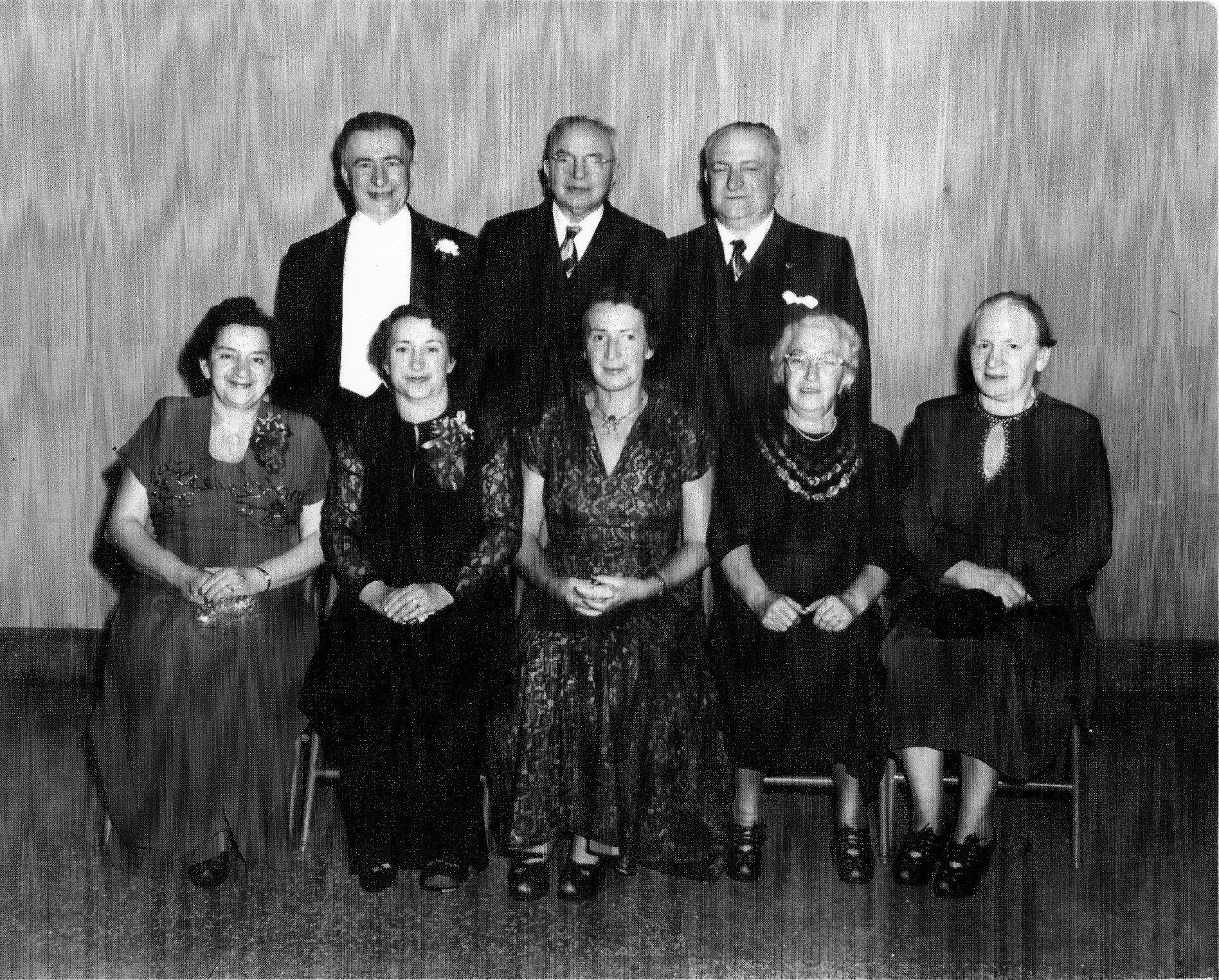
The Osovitz Family: Bottom left to right: Rose, Ruth, Bea, Ethel, and Lil. Top left to Right: Paul, Sam, and Joe. All their names were Americanized once they moved to America. Morris Pearl, the youngest of the family, passed away before this picture was taken. 


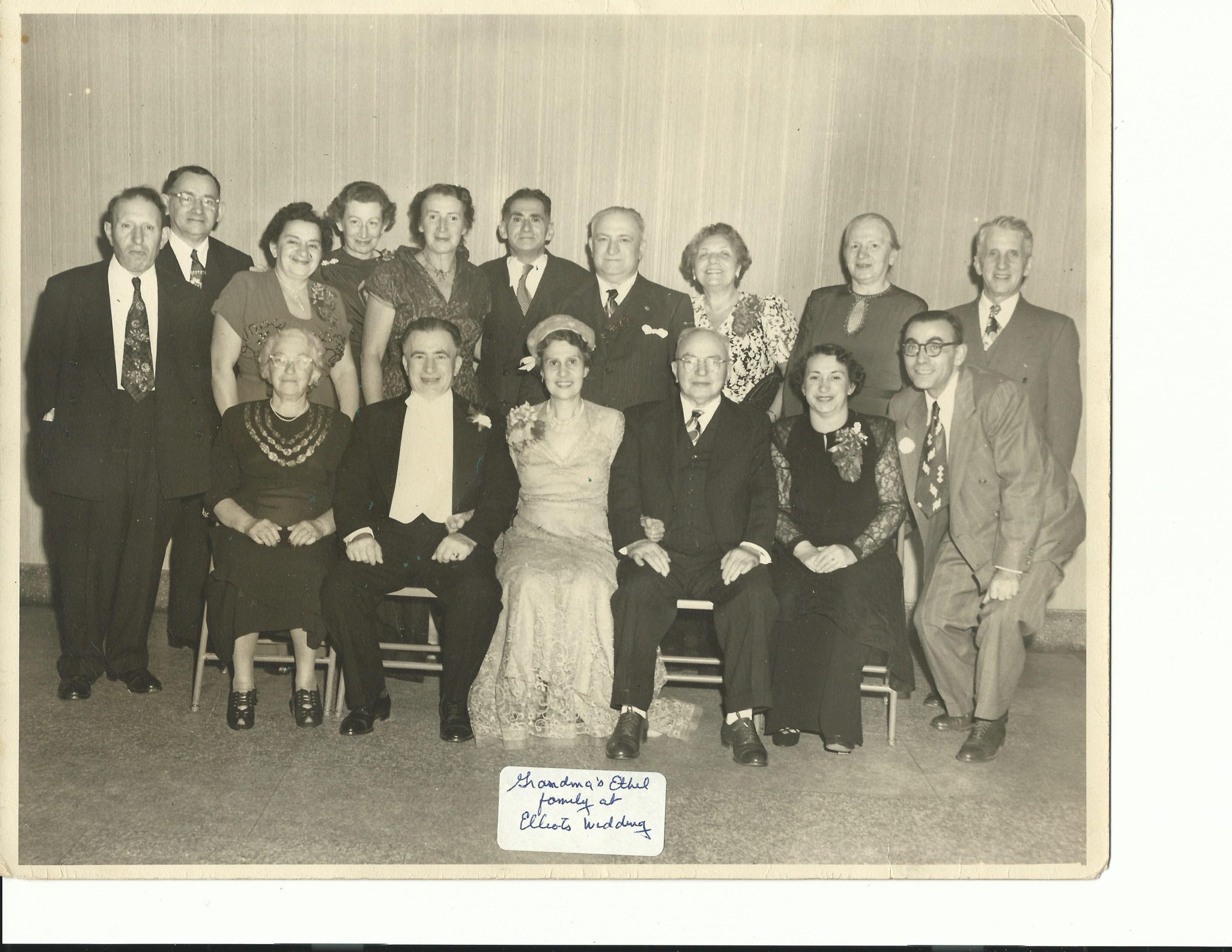
Entire Osovitz/Pearl Family. Seated: Ethel Cohen, Paul Pearl, Birdie Pearl, Sam Osovitz, Ruth Kropsky. Standing: Joseph Cohen, Ruby Helfand, Rose Helfand, Dot Pearl, Bertie Silberstein, Isadore Silberstein, Joe Pearl, Leona Pearl, Lil Waldman, Sam Waldman. Croaching: Isador Kropsky. Morris Pearl and Mary Osovitz both had passed away when this picture was taken at Elliot Pearl’s wedding

From Pizza Boy to Pizza Rabbi

My husband Larry and I missed the Pizza Boy’s bris.

Diane Silverman, the future Pizza Boy’s mom, and I met in 1977. The two of us, along with several new members, sat together at a event sponsored by Clifton Park Hadassah. Within a year, all the women around the table were expecting. Our son Adam was born in April; the Silverman’s daughter Erica came one month later. By the time the eight children were walking, the Hadassah Baby Boom mothers formed a weekly playgroup, one of us baby sat while the other moms got a break.

“Three years apart” must have been the Hadassah mantra, because six of us delivered our second child in 1981.Diane and Mark’s son arrived on March 11. Eight days later, while Todd Harris Silverman was ongoing his rite of passage into Judaism, I was having a planned caesarian-section. Obviously, Larry and I couldn’t be at their simcha. Therefore, Diane and Mark announced the birth of our daughter Julie Rose—to the large group of mutual friends.

As did our two older children, Julie and Todd grew up together. They were in the same playgroup (Hadassah Baby Boom Two), and the same nursery school class. When I went back to work, Diane watched Julie before school. It was Diane who put Julie, along with Todd, on the bus the first day of school as I was teaching my first class.

Julie and Todd were close—maybe too close! At the end of first grade, their teacher recommended the two friends be in separate classes as “Julie was leading Todd around by the nose.”

Todd was a frequent guest at our house, and he loved his pizza. Larry nicknamed him “Pizza Boy,” a moniker that stuck with him for a long time.

By this time, both of our families had joined Congregation Beth Shalom, and we parents shared responsibilities for the children’s religious school carpools.We even were each other’s helping families at their bar/bat mitzvahs.

Early in his religious education, Todd felt the strength and pull of his Jewish roots. Growing up in kosher home, Todd lived in a family that actively participated in Judaism through holidays, simchayots, and synagogue membership. Additionally, he felt surrounded by fellow Jews. “You might be hard pressed to find another kid in Upstate New York who felt like the majority of his family’s friends were Jewish,” Todd said. He realized at a young age that being “a part and parcel of the Jewish community” was important to him.

After his bar mitzvah, Todd joined Temple Gates of Heaven’s North American Federation of Temple Youth’s (NFTY) chapter. He attended summer camp for three of his four high school years at Kutz Camp, the Reform Movement’s youth leadership academy.In 1997, Todd participated in a five-week NFTY-sponsored trip to Israel. He came back bronze-skinned, twenty-five pounds lighter and his eyes opened to Israel.

His religious faith was tested in college. As a theater major at State University of New York at Oswego, Todd found few opportunities for participation in Judaism. Furthermore, the death of three people close to him—an accident, an illness, a suicide—made him seriously question what direction his life would go.

In his last year of college, help came from his NFTY connections. Todd reconnected with a fellow camper from the Kutz Camp, who invited Todd to be on staff at a summer camp in Malibu, California.

Immediately after completing bachelor’s degree in theater, Todd  headed to the West Coast. After the summer camp experience, he found a job as an elementary school teacher at Brawerman Elementary School in West Los Angeles. His experience at the Jewish day school helped confirm his the lifelong belief  that he needed to serve the Jewish people. As Todd admitted, his vision was a “romanticized version of spiritual leader, pastoral guide, educator, and keeper of the stories and traditions.”

In 2011, Todd enrolled in the Hebrew Union College-Jewish Institute of Religion. As part of his seminary training, he  lived for eleven  months in Israel, learning the language, the customs, and the politics of the Middle East. He returned to Los Angeles, where he spent another five years immersed in history, liturgy, counseling education, pedagogical instruction — everything a series of internships and student pulpits could provide.  

Upon his ordination in 2015,Todd learned of a rabbinical position opening in New Orleans, Louisiana.  His initial reaction: “There are Jews in New Orleans?”  Through the interviewing process, however, Todd learned that the Touro Synagogue, one of the oldest Jewish congregations outside the original thirteen  colonies, had a large and active membership. He felt an instant connection to both the shul and the city.

In July, 2015, he accepted  the position as assistant rabbi and  rabbinic director of lifelong learning. Along with life-cycle events and liturgical duties, Todd oversees the synagogue’s  religious school and Hebrew program and youth group activities.

Todd also continues to teach classes, including courses in .Pirkei Avot and rabbinic literature (Midrash, Mishna and Talmud). One of his favorite duties is teaching each semester a four-part  cooking class called,“In the Kitchen With Rabbi Silverman.”  Session topics have included recipes for challah, Jewish soups, Chanukah latkes and sufganiyot  (donuts); and a Middle Eastern dish of eggs poached in a cumin-infused sauce of tomatoes, chili peppers, and onions. “I love shuksuka almost as I love pizza,” said Todd

“I preach and I teach and I learn and I walk to work when it’s not 100 degrees with 110% humidity,” said Todd. “And I love every second of it.”

March 11 is Rabbi Todd Harris Silverman’s thirty-sixth birthday, That evening, he  will celebrate the holiday of Purim. He will  help lead a service, join.his fellow congregants as they twirl their groggers, and eat the traditional cookie, hamantashen. Our former Pizza Boy has grown up to become the Pizza Rabbi. I, for one, can not be prouder of him!!

The Holiday Card: Connecting with Others and Sharing Our Love

The holidays are over. The greeting cards we find in our mailbox are slowing down to a dribble.Yet,  I totally understand if they arrive even mid-January. I’ve had numerous years where good intentions to get all my cards signed, sealed and delivered before the first night of Chanukah or before Christmas Eve have failed.

We were fortunate to receive many lovely holiday cards from across the country throughout the past month.  Most were simple but attractive ones from Hallmark or American Greetings. The two handmade cards, beautifully crafted pieces of art, will get saved in my memory box to enjoy again and again. Many greetings were in the form of photo cards: a picture of my great niece and nephew with their labradoodle,; a three-generation photo from a childhood friend; a picture of two friends, Santa, and their “children”-two rescue dogs.

BRINGING US CLOSER

I especially appreciated cards that included a holiday newsletter that recapped the senders’ year and shared what their family had been up to in 2016.  Reading about relatives, friends, and their loved ones, especially those that live far away from us, brought us closer together despite the miles between us.

Happily, this year, we did not receive any form of the ‘Dreaded Holiday Letter.’ You know the kind I mean. Happy Holidays! We just bought a little present for ourselves. The red Ferrari is parked in the four-car garage next to the Lexus, the Maserati, and the Tesla.  Of course we have to find the time to drive it  as we will be working around our upcoming trip to the French Riviera and our two month cruise to South America on our yacht. 

EDITS BY FAMILY

Embarrassingly, I may have been guilty of putting a little too much enthusiasm in past holiday letters. The Shapiro Year in Review was contained in a single-spaced letter with a border of dreydels or menorahs. Before I mailed it out, I would ask Larry, my husband,  and our children, Adam and Julie, to review it. Being much more private people than me, they would eliminate many of what I considered news-worthy items. “Too much information!” they would comment. The edited letters were shorter and considerably less, well, Pollyannaish.

Last year, I decided I wanted to go the photo card route. I created my masterpiece in a very short time at the Walgreens kiosk with three pictures representing our  year. One showed  Larry and me posing with Phineas and Ferb at Disney World. Another was a picture of Julie, her husband Sam, and their month-old daughter Sylvie Rose in their backyard. The third was a picture of Uncle Adam holding Sylvie.

I didn’t get them started by Chanukah, which started in early December, so I aimed for December 24. And then New Year’s. And then Martin Luther King’s Birthday. By the end of January, I purchased cute little heart stickers to add to the photo with the intention of mailing them out by Valentine’s Day. By April, I ruled out Easter egg stickers, and the ten plague stickersI found on the internet seemed a little depressing.

Sylvie was now nine months old and looked nothing like the infant in the pictures. The photo cards went into the trash, and the odd-sized envelopes are being used to pay bills that require a check and a stamp.

A NEW IDEA

Friends in England introduced us to the Jacquie Lawson website, and since then we have sent out its beautiful animated greeting cards for all occasions—birthdays, anniversaries, get well wishes, the winter holidays— to family members and friends.

I wasn’t going to repeat the photo card disaster. This year, Larry and I decided to send e-cards for the holidays. The Chanukah card, choreographed to Chanukah Oh  Chanukah, showed a lovely tree transformed into a brightly lit menorah. Our non-Jewish friends received a card set to a medley of Christmas songs that showed a sleigh making its way through a picture-perfect English village and surrounding countryside.

WELL RECEIVED

The first night of Chanukah fell on Christmas Eve, so it gave us more time to get them ready to send out. Of course we procrastinated until December 24th. Larry worked from his computer in the office getting out the Christmas cards while I worked from my laptop in the kitchen sending out Chanukah wishes to all our Jewish friends. By the time we left for the Chanukah party at our synagogue that evening, we had sent over one hundred cards with short personal notes to friends and family across the country and world.

I was a little concerned that the recipients would not bother to open them or, if they did, they would be bored with the ninety seconds of animation. We were therefore happy to receive thank you notes back from most the recipients within hours—sometimes minutes—after we clicked the send button. The e-cards were a success!

Recently, I saw the following quote in a friend’s kitchen: “Though time and miles may separate us, we have built a bridge of lovely memories to span the distance.” No matter how we share our good wishes for the holidays, and no matter when those good wishes arrive,  they all are sent and received with love and happiness.

Shapiro family creates Star Wars tradition

img_2075

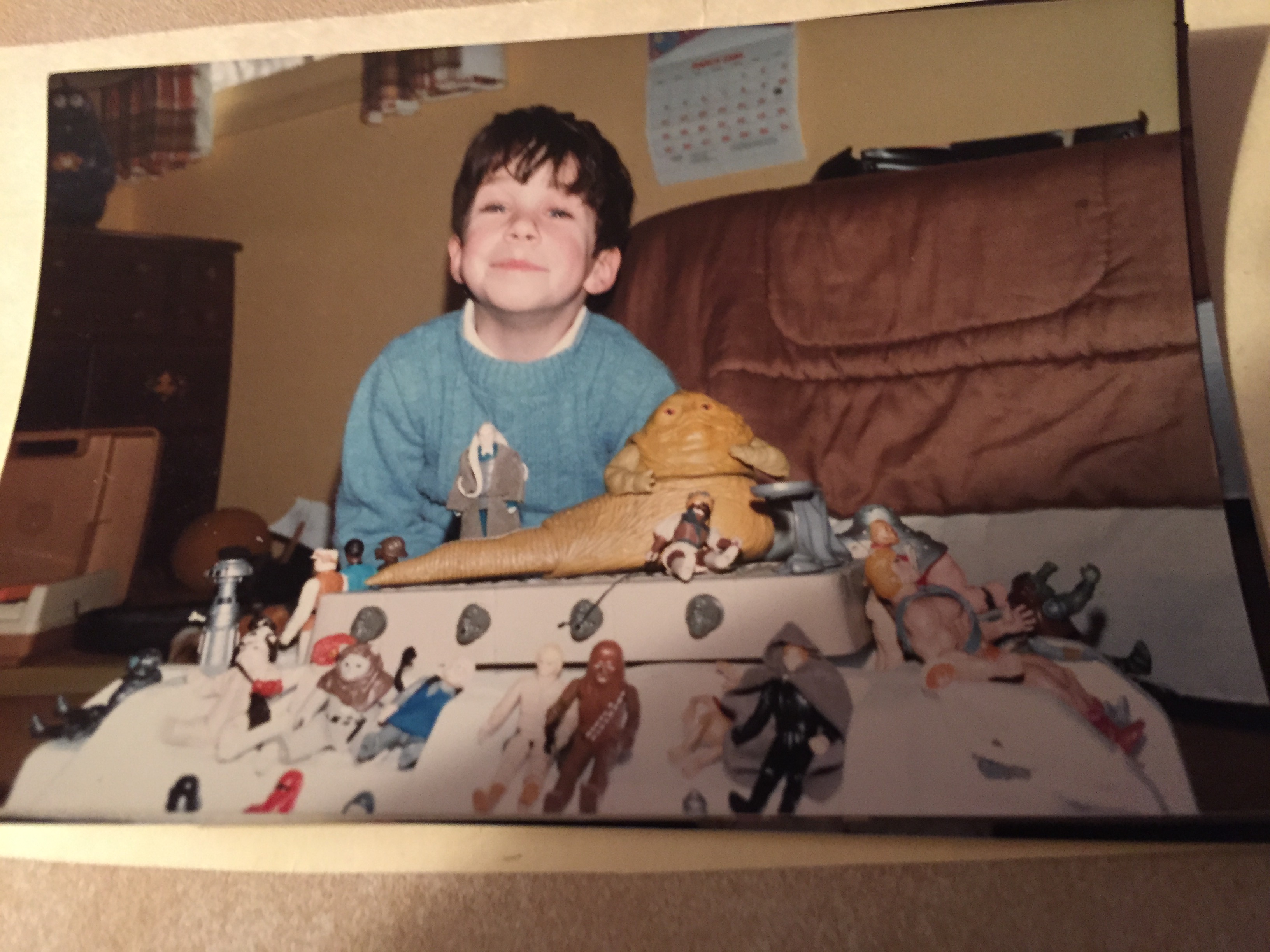
Adam with his Star Wars action figures

img_1215

Timmy Harris as a Stormtrooper

During the eight days of Chanukah, in between candle lighting and latkes, my husband Larry and I will celebrate a Shapiro tradition: We will go to see the newest Star Wars film.We have been fans since Adam caught the Star Wars bug from a future storm trooper.

How It Began

In September 1979, I began substitute teaching two to three days a week at our local high school. We left Adam in the care of a wonderful baby sitter, Sandy Harris, who lived just down the street.

Adam was seventeen months old and just beginning to talk. His vocabulary consisted of a few words—mamma, dadda, apple dus.

Less than a month later, however, Adam shocked us by announcing at the dinner table, “I know Star Wars.”

“You know Star Wars?” Larry asked, astonished.

“Yes,” said Adam. “Luke Skywalker. Han Solo. Princess Leia. Chewbacca…”

And Adam continued to prattle on, clearly stating the names of  numerous characters from the Star Wars movies.

It didn’t take us long to figure out where Adam had picked up his expanded vocabulary. Sandy’s twelve-year-old son Timmy had been enthralled with George Lucas’ blockbuster since the first Star Wars was released in 1977. Kenner Toys had the license to make the related toys, and Timmy had collected them all. He set the little action figures and their spaceships on shelves in his  room, recreating scenes from the first movie and its sequel, The Empire Strikes Back. When he came home from school, Timmy would entertain his mother’s charge by allowing him to play with his collection. Adam was hooked.

Tales, Toys Capture Imagination

That Chanukah, Larry and I purchased several action figures and a Millennium Falcon for Adam.  He got more for his second birthday and the following Chanukah.  Although he had yet to see the movie, his interest and ability to recreate scenes using his collection and other toys as props—blocks, Legos, even a blanket on top of other toys—improved.

In April 1981, Larry and I planned a surprise for Adam for his third birthday. While I stayed home with his one-month-old sister, Larry took Adam to see a re-release of the original Star Wars film. This was Adam’s first movie, and he had no idea why he and his father were sharing a  box of popcorn in a huge room filled with chairs.  The minute the music started  and the opening credits rolled, however, Adam knew exactly what was happening. Our three-year-old was transfixed for the entire length of the film.

“Yours Eyes Can Deceive You. Don’t Trust Them”

Over the next few years, Adam watched and re-watched the first two movies and, in 1983, The Return of the Jedi. As the franchise expanded, Adam’s collection expanded—sometimes with his help.

When he was around four years old, Adam asked us if he could get a new Luke Skywalker as the light saber was missing. We refused, saying he could use a toothpick or a prop from one of the other characters. A few days later, Adam brought us a headless Luke.

“It fell off,” he explained. “Can I get a new one?”

So we replaced Luke, only to have Adam bring us a headless Storm Trooper, one of the white armored minions of the evil Empire, a few days later. When the head of bounty hunter Boba Fett also went missing, we realized that Adam was biting the heads off to get us to purchase a complete toy. His gig was up.

Adam’s passion for Star Wars continued until he was nine years old, when his interest in science fiction expanded to Star Trek and Tolkien’s Lord of the Rings Trilogy. The action figures and a couple of space ships were relegated to a box in the closet. By the time the series was revived in 1999, Adam was in college. On his visits home, he would occasionally open up the box, reminisce, and put them back on the shelf.

Once you start down the dark path….

In January 2015, Larry and I came back from a trip to Florida to sub-zero temperatures, twelve inches of snow on the front yard, and a broken mailbox, the victim of the town snowplow. A day after a call into town hall, a  Clifton Park truck was parked at the end of the driveway. I opened the door, to be greeted by no other than Timmy Harris, whom I had not seen in at least twenty years.

“I’m here to fix your mailbox, Mrs. Shapiro,” Timmy said. “But first I have to ask you a question. My mother has told me for years that because of me, Adam’s first words were the names of Star Wars action figures. Is that true?”

I assured him it was and recounted the story of that night over thirty-five years ago when Adam’s vocabulary increased exponentially.

“Are you still a Star Wars fan?” I asked Timmy.

“Absolutely!” Timmy responded. “ I have a two bedroom house, with one room devoted to forty years of Star Wars collectibles. My favorite pieces are still the Kenner toys from the late 70’s.”

Not only is Timmy still a fan, but also he is part of the 501st Legion, “Vader’s Fist,” an international costuming group that “troops” as the bad guy characters from Star Wars. Along with other members, Timmy dresses up as both as a Storm Trooper, and as Boba Fett.

The 501st’s main function is as a charity organization. In 2015 alone $587,000 was donated on its behalf to various children’s charities including Make-A-Wish Foundation, Ronald McDonald houses, and local pediatric hospitals. The “bad guys doing good” are also found at science fiction and comic book conventions and new Star Wars film openings.

Star Wars costuming is gratifying on a few levels.” Timmy later shared with me “I get to contribute to something worthwhile. And as a 49 year old man who dresses up as a plastic spaceman, I get to be a 9-year-old again. That’s worth all of the time, sweat and armor pinches that we go though.”

When Larry and I moved to Florida in June 2015, Adam requested we send him very little from the house—two Adirondack photographs and a Monet print, his yearbooks, and the Star Wars action figures. And like his parents, he too will be watching Star Wars: Rogue One over his holiday break.

Happy Hanukah, and may the force be with you!